   Animals depend on physical
    features to:
       obtain food
       keep safe
       build homes
       withstand weather
       attract mates.
   Do not develop during an animal's life but over
    many generations.
   Examples:
       shape of a bird's beak
       number of fingers
       color of the fur
       thickness or thinness of fur
       shape of the nose or ears
   Defensive adaptations include:
     Predator avoidance
         Hiding and camouflage
     Group defense
     Fleeing
     Signal
         Warnings
   Many organisms avoid predators by the use of
    cryptic coloration.

   A requirement of camouflage in many cases is
    that the individual choose an appropriate
    background.
Natural selection rests on three facts:

  1.   Organisms produce more offspring than can survive.
  2.   Individuals vary in their characteristics.
  3.   Many characteristics are inherited by offspring from
       their parents.
• Some individuals will be better suited to their
  environment
       They will survive and reproduce
        more successfully than individuals
        without those characteristics.
• Future generations: contain more genes from
  better-suited individuals.
• Result: characteristics will evolve over time to
  resemble those of the better-suited ancestors.
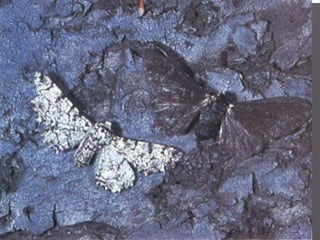
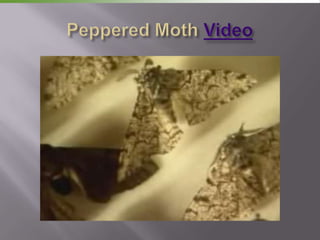
   Two Kinds:
       White speckled moth
       Black moth.
   In early 1800’s dark form was very rare.
   Dark form caused by dominant mutation that
    occurs spontaneously.
Peppered moths rest on trees and depend
on camouflage for protection.
   Unpolluted Areas: trees are covered
    in lichens and the light form of the
    moth is hard to see.
   In mid 1800’s air pollution in British
    cities covered trees with soot.
   In cities dark form became common
    and light form rare.
 Inmid 1950’s pollution
 controls were introduced in
 Britain and frequency of the
 black moth form has declined
 since then.
Adaptation and selective breeding

Adaptation and selective breeding

  • 1.
    Animals depend on physical features to:  obtain food  keep safe  build homes  withstand weather  attract mates.
  • 2.
    Do not develop during an animal's life but over many generations.  Examples:  shape of a bird's beak  number of fingers  color of the fur  thickness or thinness of fur  shape of the nose or ears
  • 3.
    Defensive adaptations include:  Predator avoidance  Hiding and camouflage  Group defense  Fleeing  Signal  Warnings
  • 4.
    Many organisms avoid predators by the use of cryptic coloration.  A requirement of camouflage in many cases is that the individual choose an appropriate background.
  • 5.
    Natural selection restson three facts: 1. Organisms produce more offspring than can survive. 2. Individuals vary in their characteristics. 3. Many characteristics are inherited by offspring from their parents.
  • 6.
    • Some individualswill be better suited to their environment  They will survive and reproduce more successfully than individuals without those characteristics. • Future generations: contain more genes from better-suited individuals. • Result: characteristics will evolve over time to resemble those of the better-suited ancestors.
  • 7.
    Two Kinds:  White speckled moth  Black moth.  In early 1800’s dark form was very rare.  Dark form caused by dominant mutation that occurs spontaneously.
  • 8.
    Peppered moths reston trees and depend on camouflage for protection.
  • 9.
    Unpolluted Areas: trees are covered in lichens and the light form of the moth is hard to see.  In mid 1800’s air pollution in British cities covered trees with soot.  In cities dark form became common and light form rare.
  • 11.
     Inmid 1950’spollution controls were introduced in Britain and frequency of the black moth form has declined since then.