Revision lesson 2
Enzymes Enzymes are biological catalysts – they speed up a biological reaction. Each enzyme is specific to a substrate.  The substrate molecules are changed into product molecules. Enzyme controlled reactions are affected by pH and temperature.
 
Optimum pH or temperature – the pH / temperature where the reaction works best. Lock and key theory- each enzyme has a unique sequence of amino acids – therefore each enzyme has a different shape.  Within this shape is a structure called an active site.  Only one type of substrate can fit into the active site, this makes enzymes specific to a reaction.  Once the substrate is attached to the active site it is turned into a product.  The  enzyme is like a lock  and the  substrate is like the key.
Definitions Optimum – the best temperature and pH that enzymes work at. Denatured – when the shape of the enzyme’s active site is changed irreversibly Substrate – the chemical that is reacting Active site – the area on the enzyme that the substrate fits into.
Denaturing enzymes If the shape of an enzyme changes it can no longer catalyse a reaction because the substrate can no longer fit into the active site.  The enzyme has become  denatured. Enzymes can be denatured by:  Extremes of pH High temperatures
 
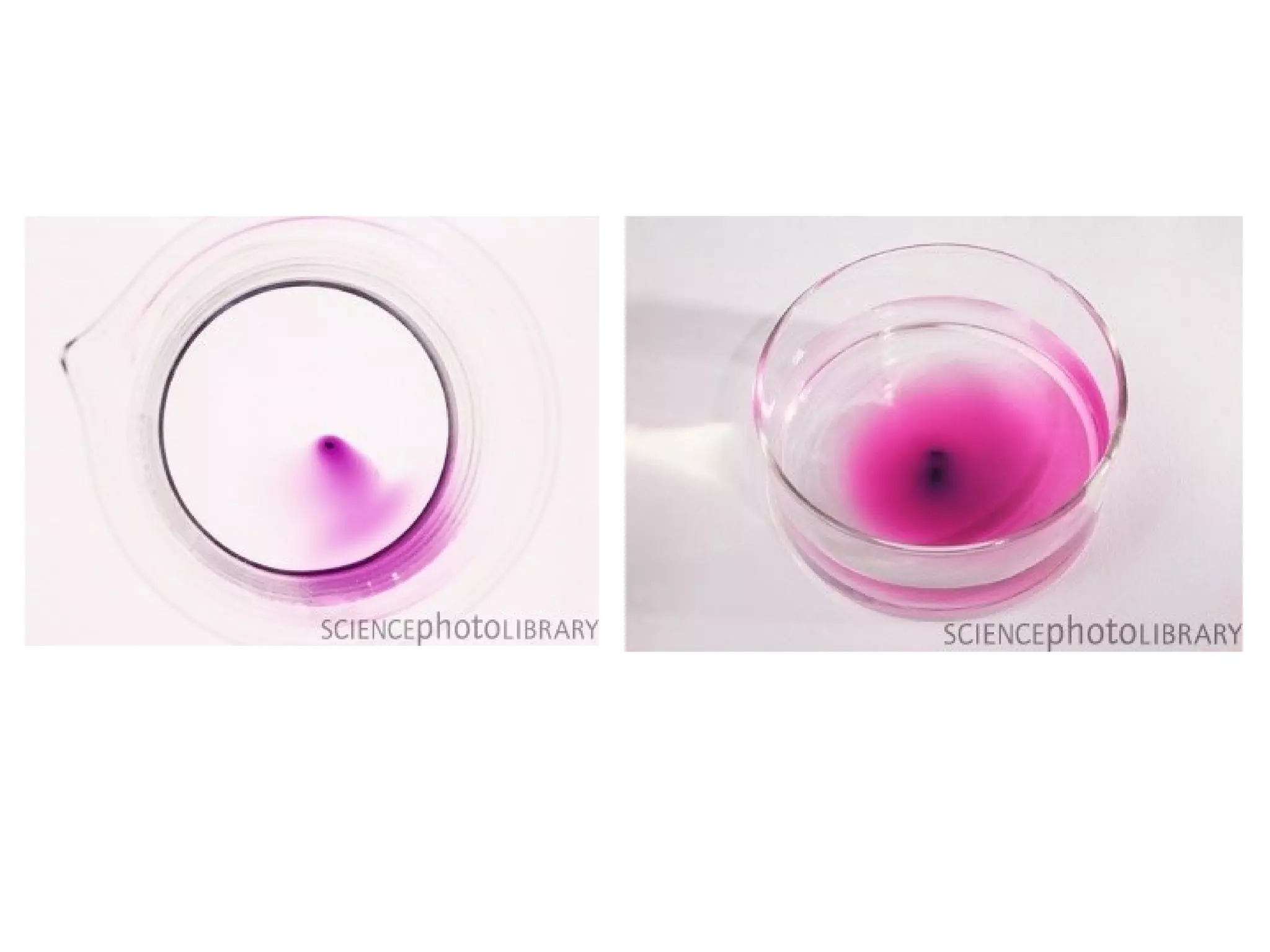
Diffusion Diffusion – the movement of a substance from a region of high concentration to a region of low concentration. Moving substances in the body Different substances diffuse in and out of the cells across the cell membranes. Oxygen – moves from the lungs into the red blood cells.  It then moves from the red blood cells into the body tissue. Carbon dioxide – moves from the body tissue into the blood, then from the blood into the lungs. After eating – digested food molecules move from the small intestine into the blood.  They then leave the blood and go into body tissue
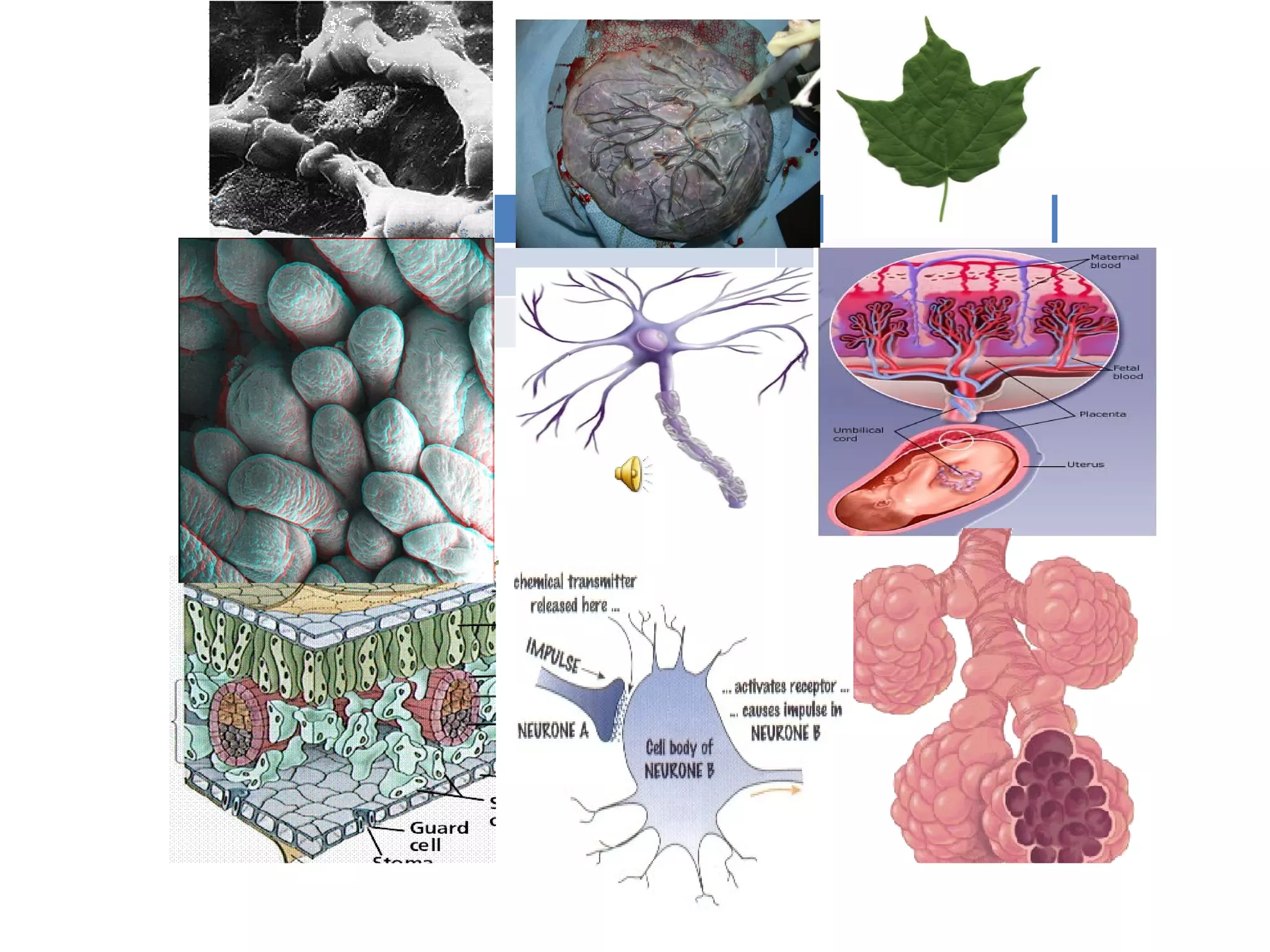
Surfaces Across Which Gases Are Exchanged Are Often Specialised in Humans by Having Large Surface Areas This is to increase the rate at which diffusion can occur Good examples in the Human Body are:-  Alveoli Villi Placenta Neurones
Diffusion Cells use diffusion to swap the oxygen they need for the carbon dioxide they no longer want: Other examples of where diffusion happens in humans: Alveoli in the lungs Villi in the intestines Oxygen diffuses in Out goes waste CO 2
Changing the rate of diffusion It can be increased by: Increasing the surface area Decreasing the diffusion distance A greater concentration difference
 
Surfaces adapted for diffusion Villi Diffusion takes place in the villi in the small intestine and the alveoli in the lungs.  Both are adapted to increase the rate of diffusion. Villus  –  produce a large surface area, villi wall have folds (microvilli).  Surface area of small intestine is approx 9 m 2 . One cell thick, food does not have to far to diffuse into the blood Good blood supply – means digested food is quickly taken away from villus so more can diffuse across to replace it Membrane of villi is permeable, this means food molecules can pass through the membrane
Alveoli  – in the lungs Breathing makes sure there is always a high concentration of oxygen in the alveoli. Good blood supply makes sure as oxygen diffuses into the blood it is replaced with blood containing very little oxygen. Alveolus is only one cell thick so the gases do not have far to travel Large numbers of alveoli – this helps to increase the surface area, so more molecules can move across at any time. Alveoli membrane is permeable to gases and is also moist; this helps to speed up diffusion.
Other substances adapted for diffusion Placenta To move substances across the placenta as quickly as possible.  To speed up movement, the placenta has: A very large surface area A very thin wall so substances only have a short distance to diffuse The leaf To increase the rate of gas exchange, the leaf has a large surface area.  The under-surface of the leaf also has many stomata through which gases can diffuse. Synapses The gap between two neurones (nerve cells).  The synapse releases a chemical that can diffuse across the gap between the two neurones.  A large surface area and short diffusion distance is important.
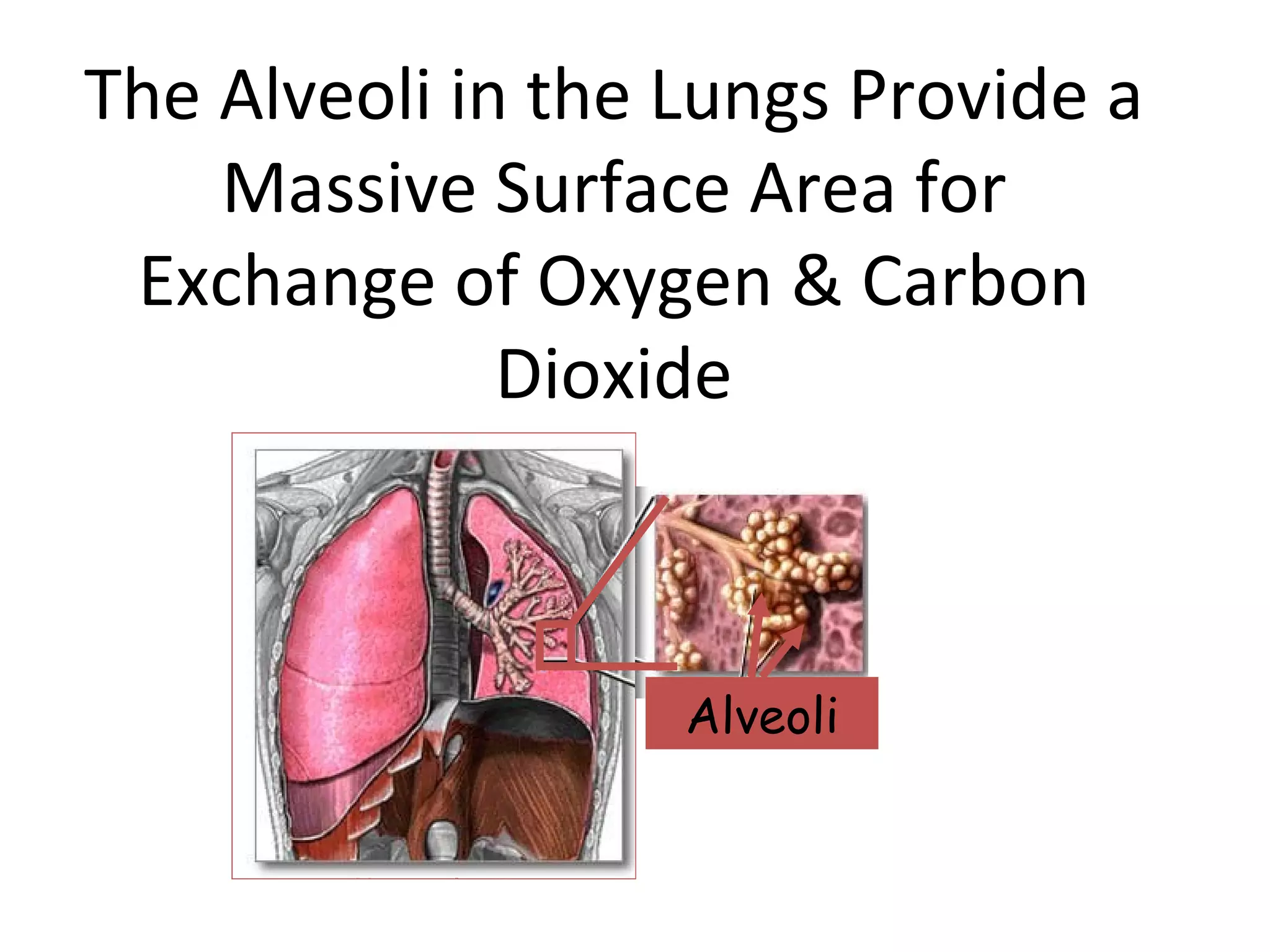
The Alveoli in the Lungs Provide a Massive Surface Area for Exchange of Oxygen & Carbon Dioxide Alveoli

OCR Biology B3 part 2

  • 1.
  • 2.
    Enzymes Enzymes arebiological catalysts – they speed up a biological reaction. Each enzyme is specific to a substrate. The substrate molecules are changed into product molecules. Enzyme controlled reactions are affected by pH and temperature.
  • 3.
  • 4.
    Optimum pH ortemperature – the pH / temperature where the reaction works best. Lock and key theory- each enzyme has a unique sequence of amino acids – therefore each enzyme has a different shape. Within this shape is a structure called an active site. Only one type of substrate can fit into the active site, this makes enzymes specific to a reaction. Once the substrate is attached to the active site it is turned into a product. The enzyme is like a lock and the substrate is like the key.
  • 5.
    Definitions Optimum –the best temperature and pH that enzymes work at. Denatured – when the shape of the enzyme’s active site is changed irreversibly Substrate – the chemical that is reacting Active site – the area on the enzyme that the substrate fits into.
  • 6.
    Denaturing enzymes Ifthe shape of an enzyme changes it can no longer catalyse a reaction because the substrate can no longer fit into the active site. The enzyme has become denatured. Enzymes can be denatured by: Extremes of pH High temperatures
  • 7.
  • 8.
    Diffusion Diffusion –the movement of a substance from a region of high concentration to a region of low concentration. Moving substances in the body Different substances diffuse in and out of the cells across the cell membranes. Oxygen – moves from the lungs into the red blood cells. It then moves from the red blood cells into the body tissue. Carbon dioxide – moves from the body tissue into the blood, then from the blood into the lungs. After eating – digested food molecules move from the small intestine into the blood. They then leave the blood and go into body tissue
  • 9.
    Surfaces Across WhichGases Are Exchanged Are Often Specialised in Humans by Having Large Surface Areas This is to increase the rate at which diffusion can occur Good examples in the Human Body are:- Alveoli Villi Placenta Neurones
  • 10.
    Diffusion Cells usediffusion to swap the oxygen they need for the carbon dioxide they no longer want: Other examples of where diffusion happens in humans: Alveoli in the lungs Villi in the intestines Oxygen diffuses in Out goes waste CO 2
  • 11.
    Changing the rateof diffusion It can be increased by: Increasing the surface area Decreasing the diffusion distance A greater concentration difference
  • 12.
  • 13.
    Surfaces adapted fordiffusion Villi Diffusion takes place in the villi in the small intestine and the alveoli in the lungs. Both are adapted to increase the rate of diffusion. Villus – produce a large surface area, villi wall have folds (microvilli). Surface area of small intestine is approx 9 m 2 . One cell thick, food does not have to far to diffuse into the blood Good blood supply – means digested food is quickly taken away from villus so more can diffuse across to replace it Membrane of villi is permeable, this means food molecules can pass through the membrane
  • 14.
    Alveoli –in the lungs Breathing makes sure there is always a high concentration of oxygen in the alveoli. Good blood supply makes sure as oxygen diffuses into the blood it is replaced with blood containing very little oxygen. Alveolus is only one cell thick so the gases do not have far to travel Large numbers of alveoli – this helps to increase the surface area, so more molecules can move across at any time. Alveoli membrane is permeable to gases and is also moist; this helps to speed up diffusion.
  • 15.
    Other substances adaptedfor diffusion Placenta To move substances across the placenta as quickly as possible. To speed up movement, the placenta has: A very large surface area A very thin wall so substances only have a short distance to diffuse The leaf To increase the rate of gas exchange, the leaf has a large surface area. The under-surface of the leaf also has many stomata through which gases can diffuse. Synapses The gap between two neurones (nerve cells). The synapse releases a chemical that can diffuse across the gap between the two neurones. A large surface area and short diffusion distance is important.
  • 16.
    The Alveoli inthe Lungs Provide a Massive Surface Area for Exchange of Oxygen & Carbon Dioxide Alveoli