Jenny HughesPontydysgu
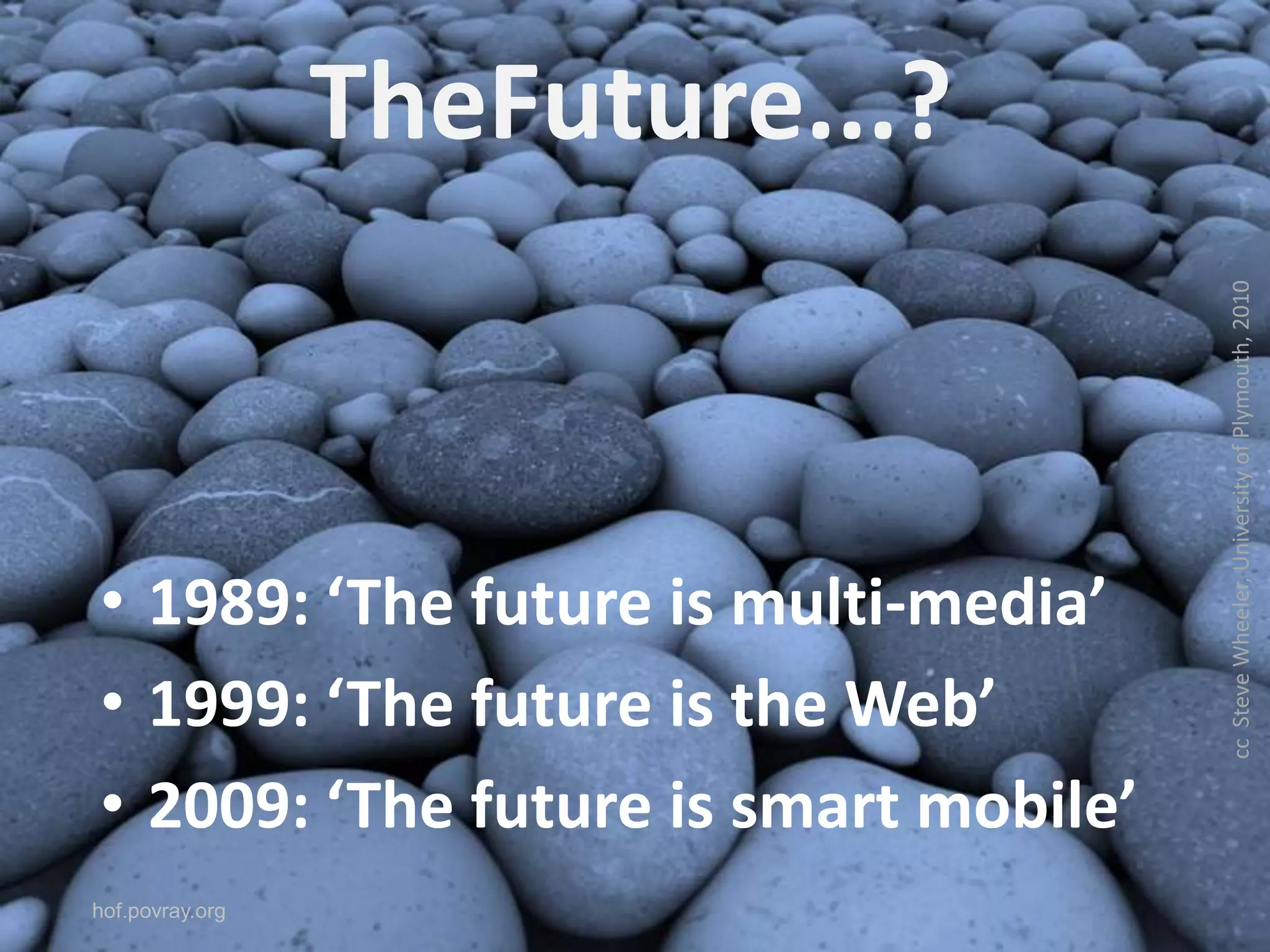
TheFuture...?cc  Steve Wheeler, University of Plymouth, 20101989: ‘The future is multi-media’1999: ‘The future is the Web’2009: ‘The future is smart mobile’hof.povray.org
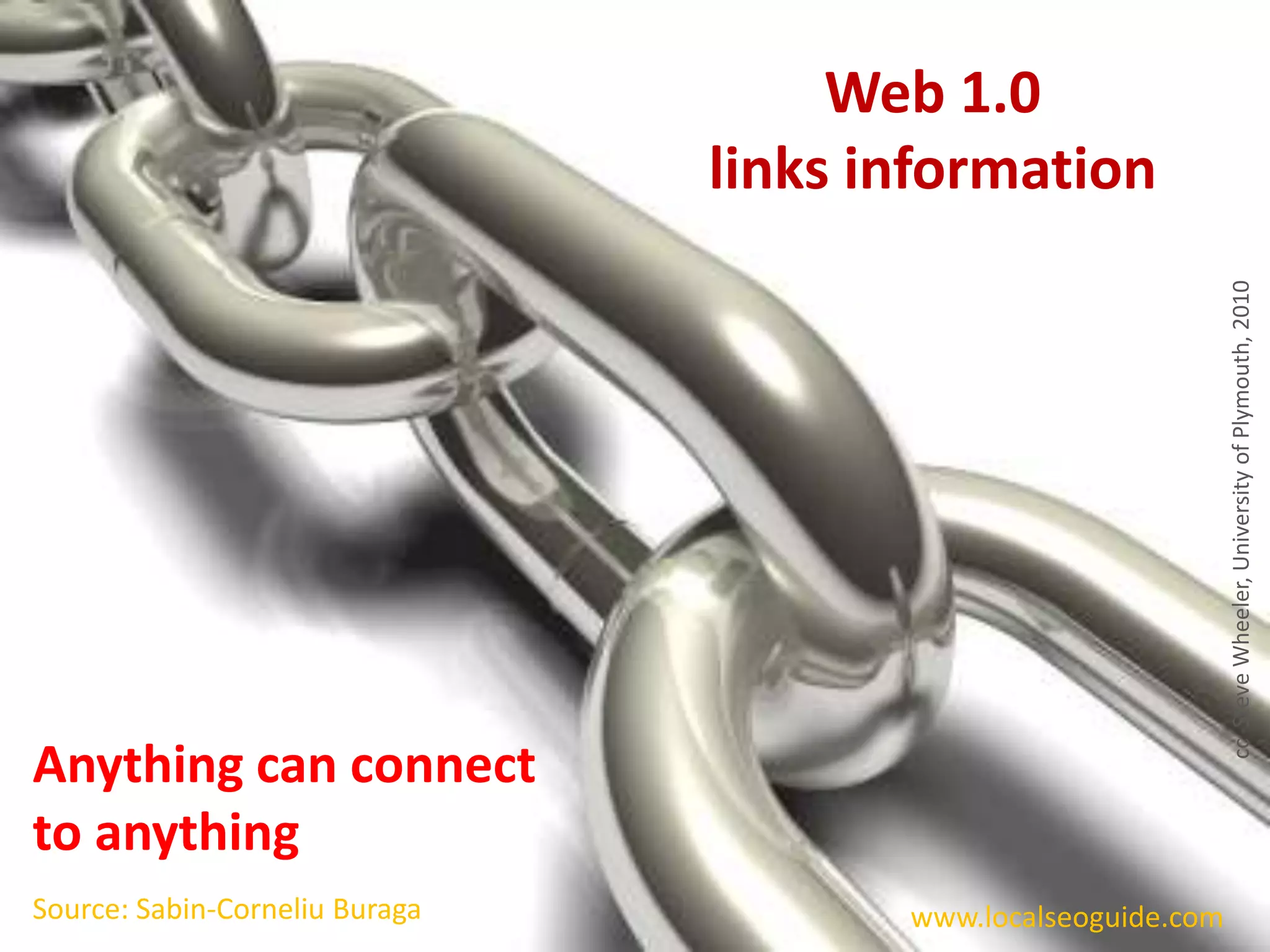
Web 1.0 links informationcc  Steve Wheeler, University of Plymouth, 2010Anything can connect to anythingSource: Sabin-Corneliu Buragawww.localseoguide.com
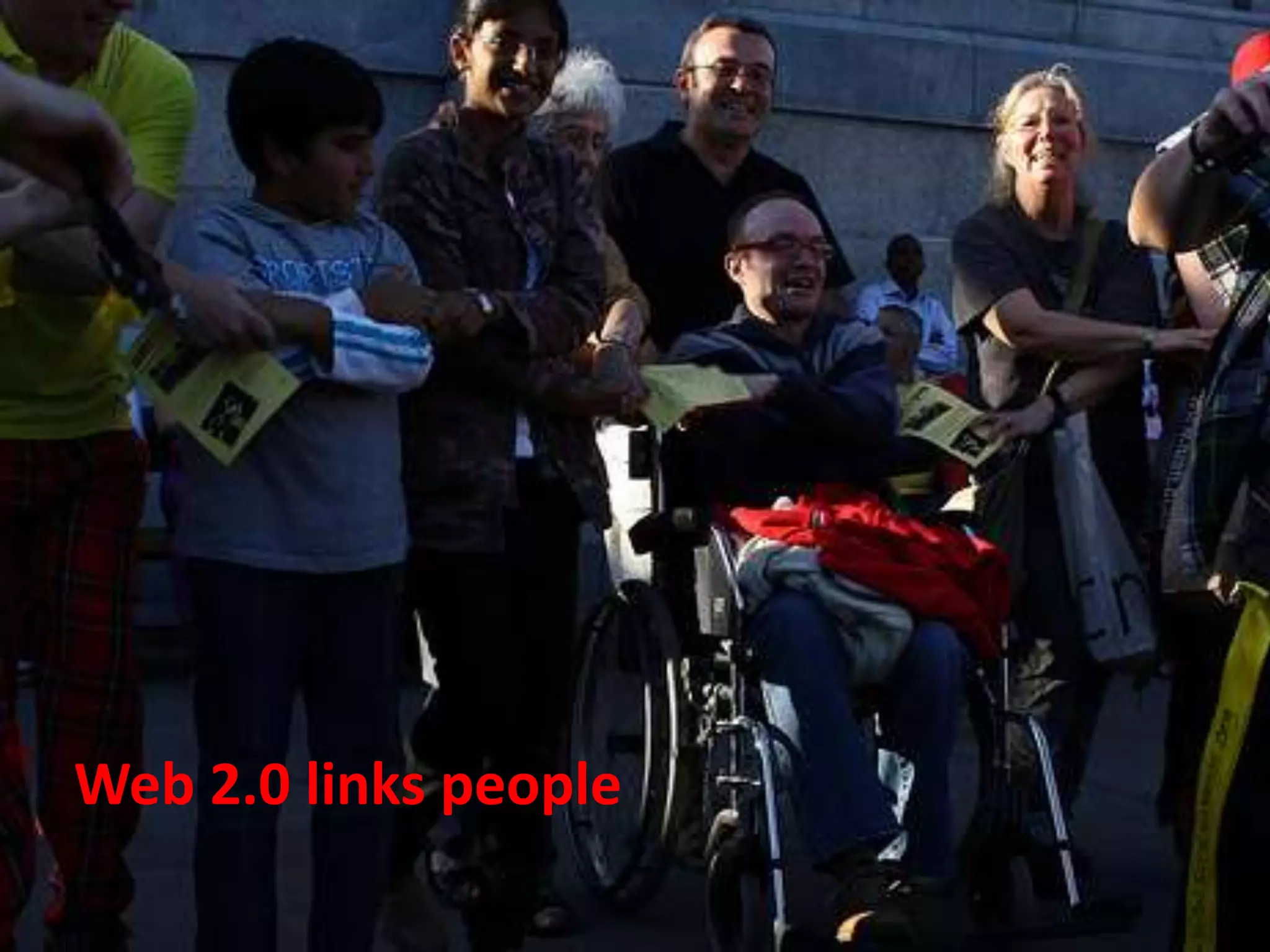
Web 2.0 links people
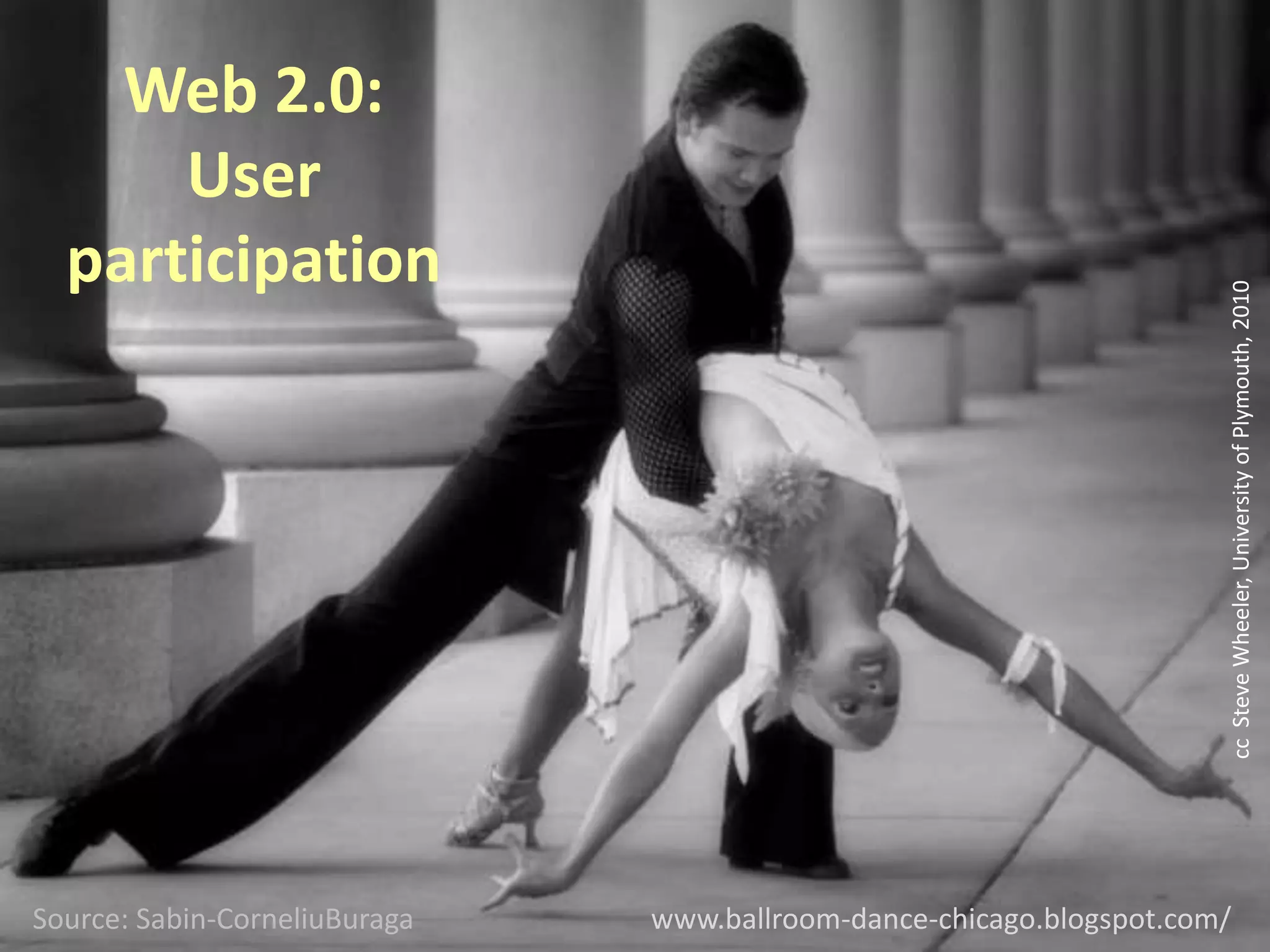
Web 2.0: User participationcc  Steve Wheeler, University of Plymouth, 2010www.ballroom-dance-chicago.blogspot.com/Source: Sabin-CorneliuBuraga
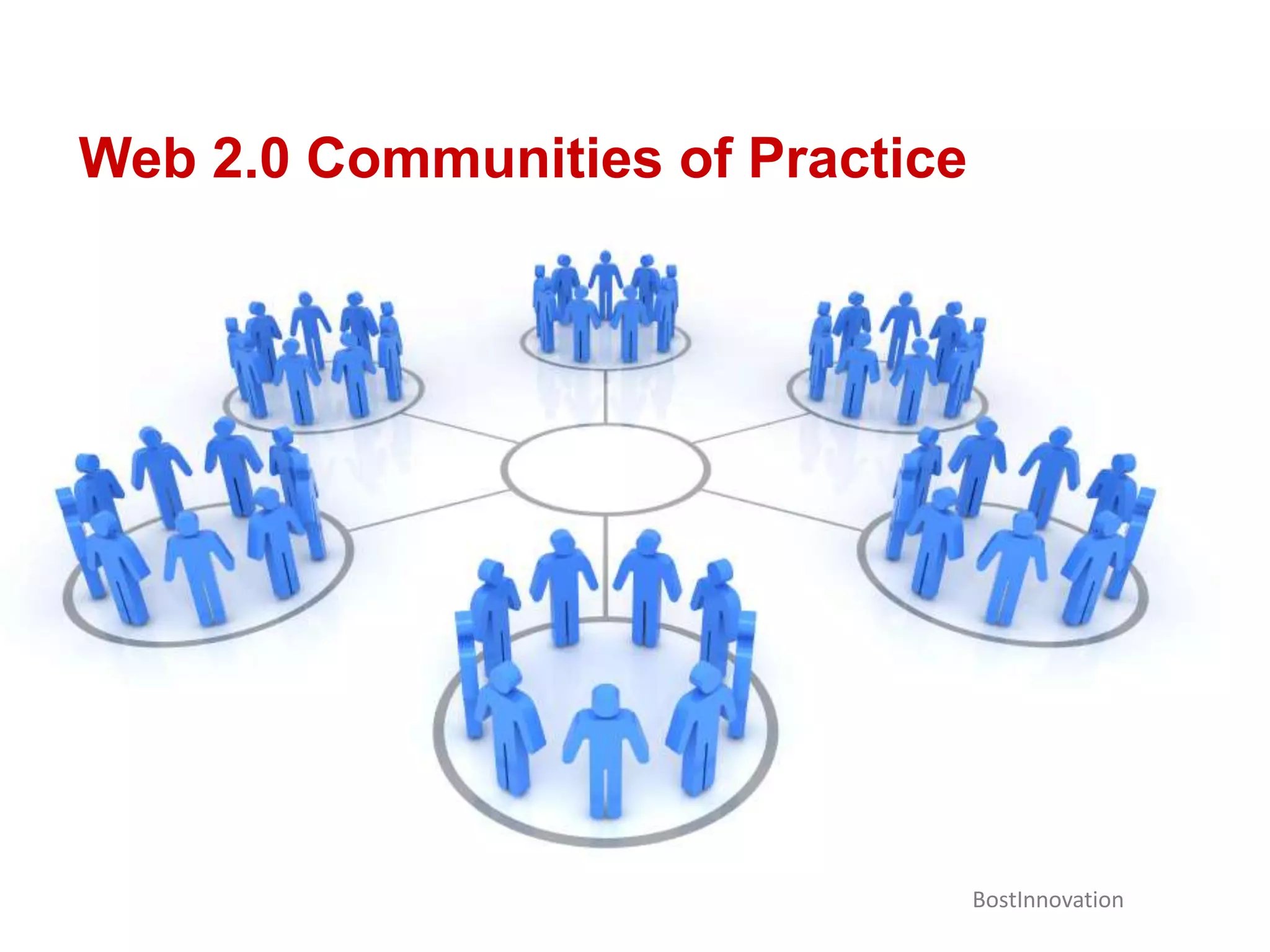
Web 2.0 Communities of PracticeBostInnovation
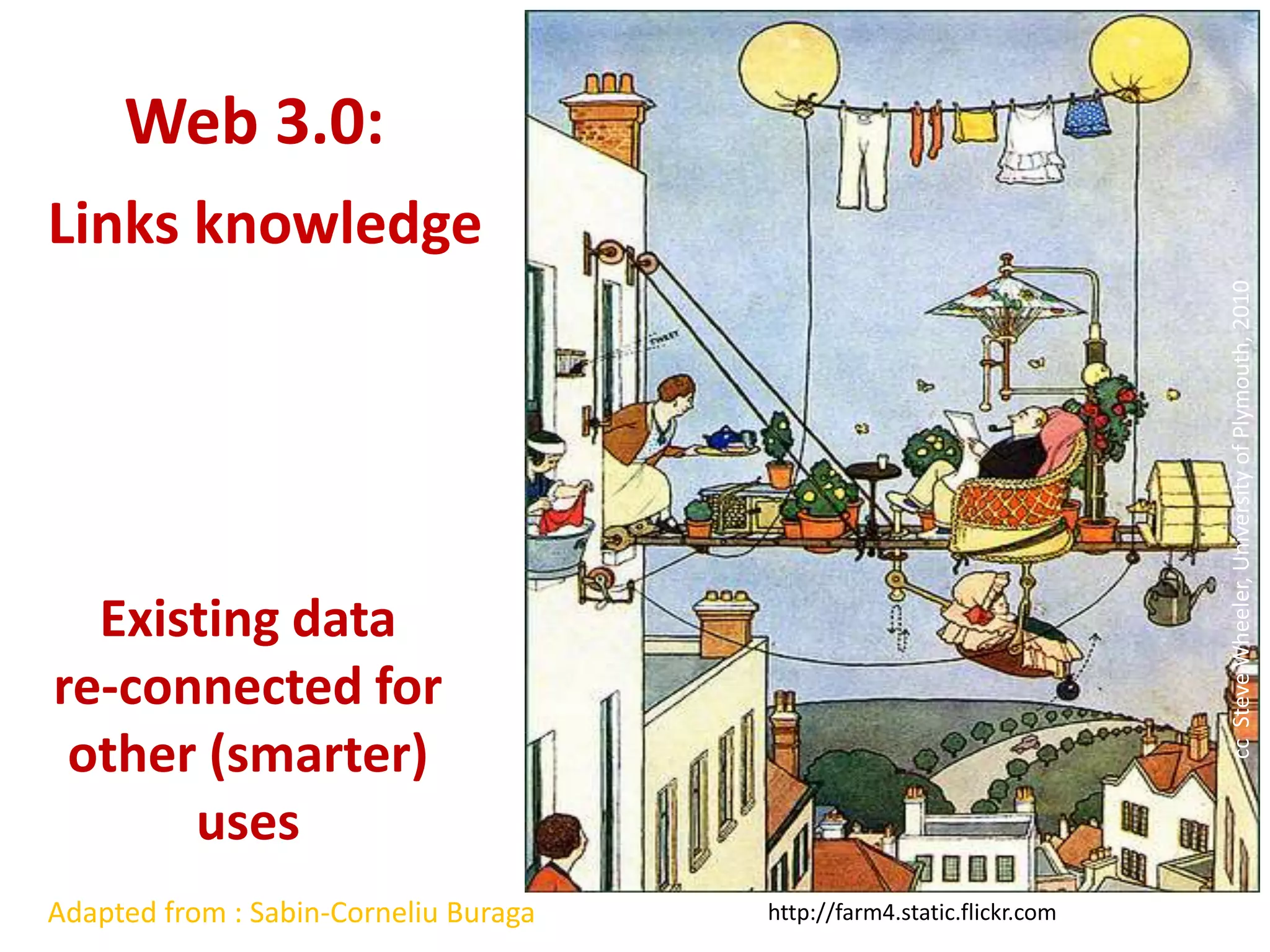
Web 3.0: Links knowledgecc  Steve Wheeler, University of Plymouth, 2010Existing data re-connected for other (smarter) usesAdapted from : Sabin-Corneliu Buragahttp://farm4.static.flickr.com
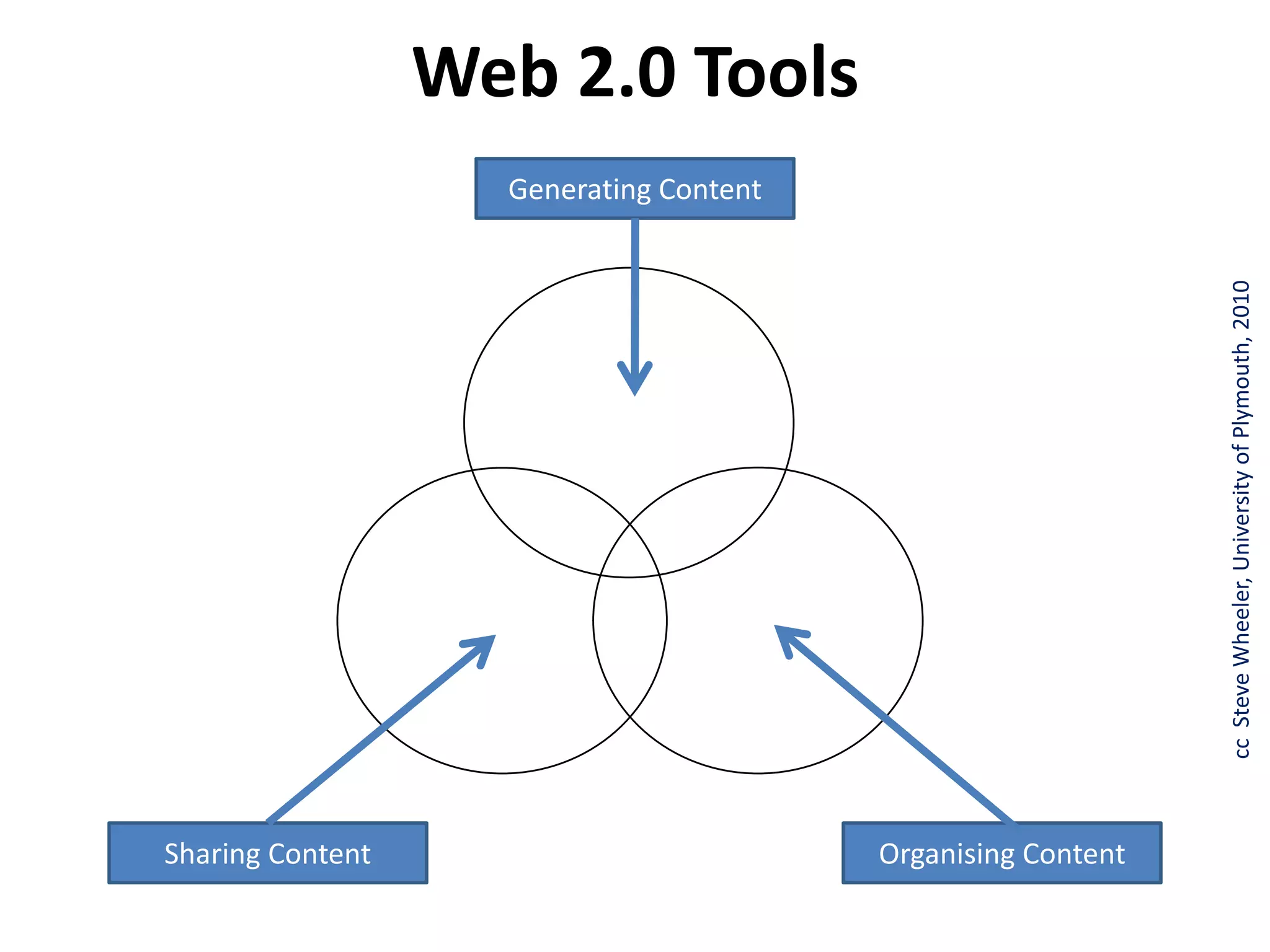
Web 2.0 ToolsGenerating Contentcc  Steve Wheeler, University of Plymouth, 2010Sharing ContentOrganising Content
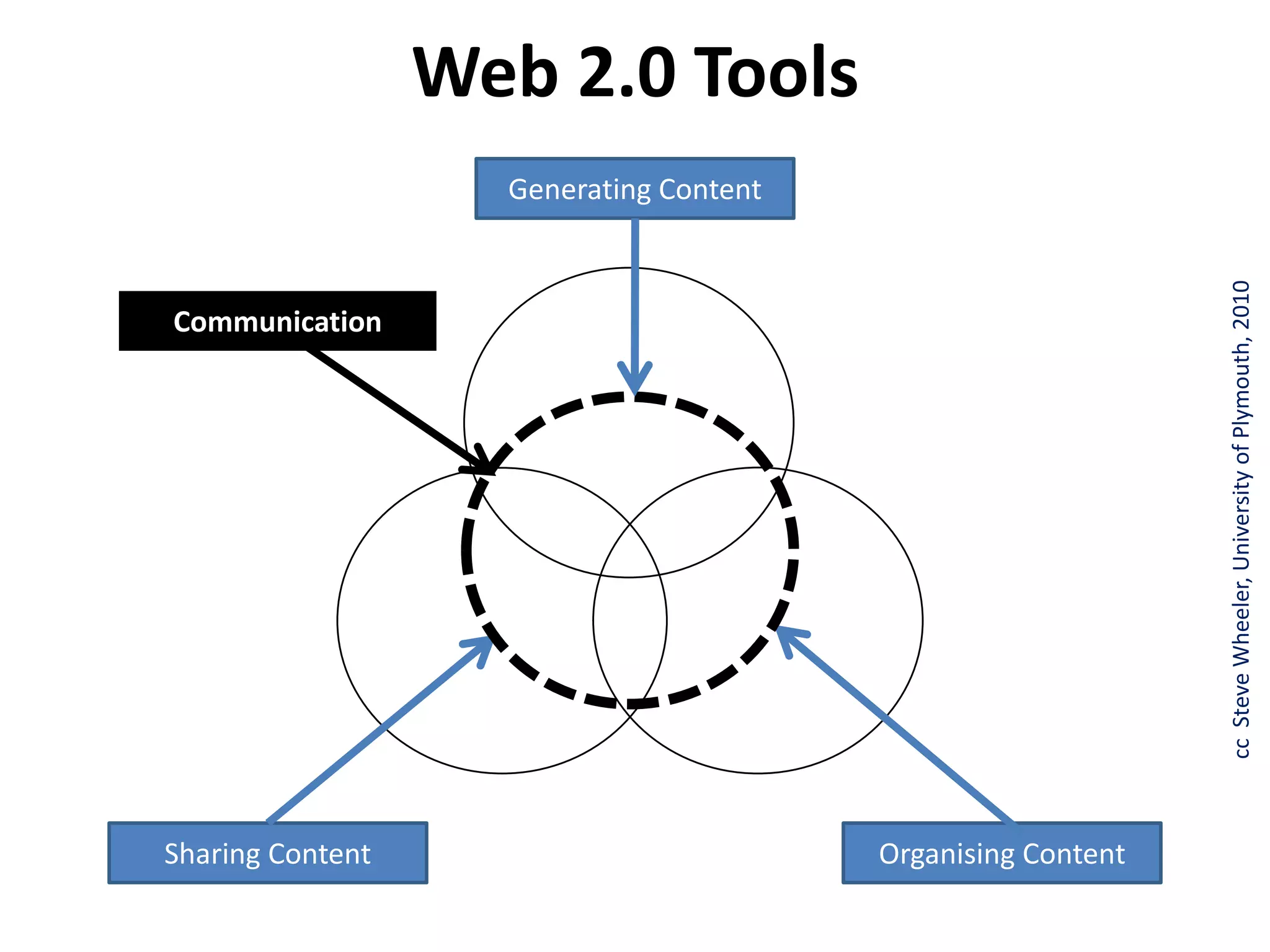
Web 2.0 ToolsGenerating ContentCommunicationcc  Steve Wheeler, University of Plymouth, 2010Sharing ContentOrganising Content
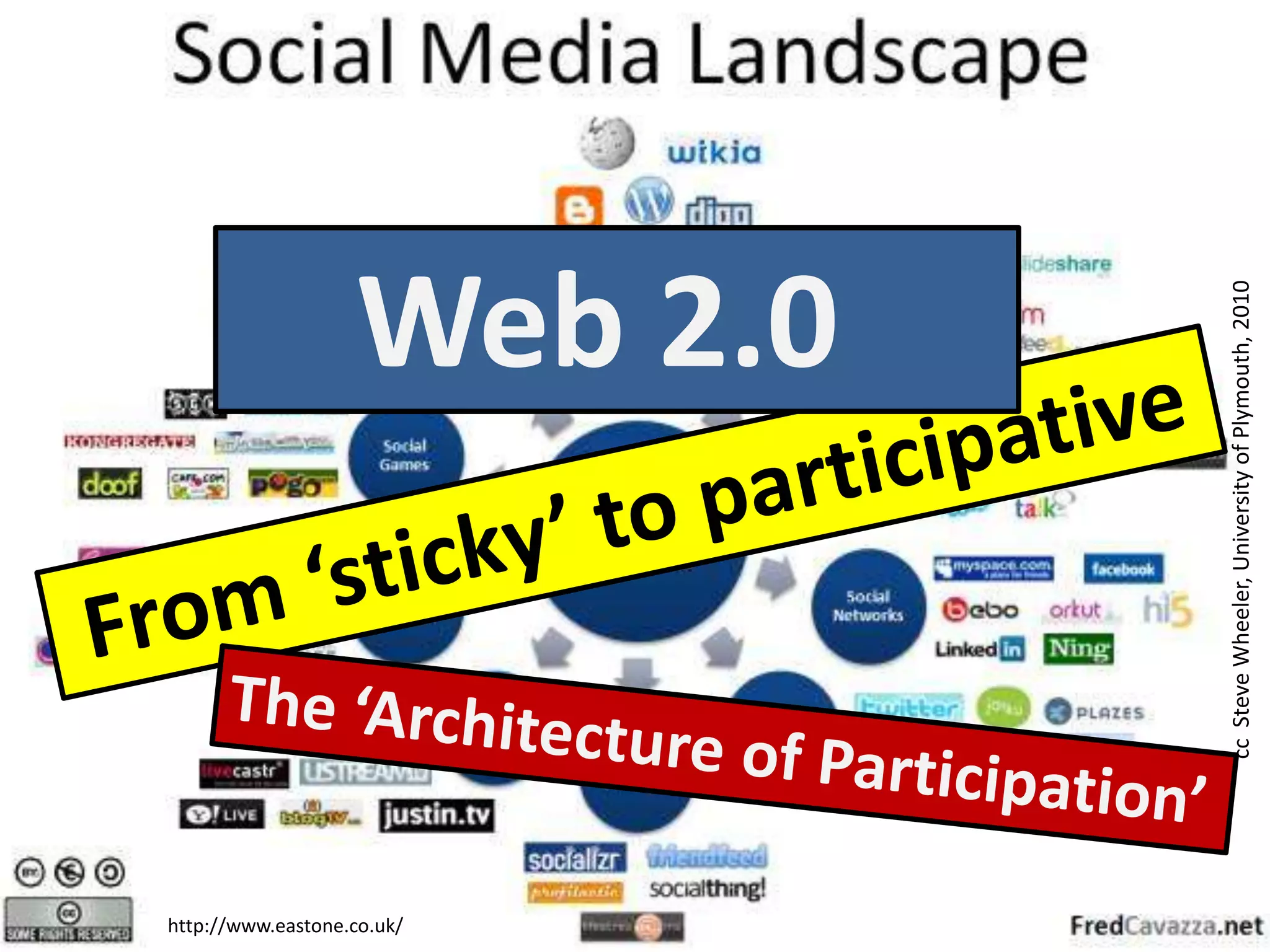
    Web 2.0      From ‘sticky’ to participative     cc  Steve Wheeler, University of Plymouth, 2010The ‘Architecture of Participation’http://www.eastone.co.uk/
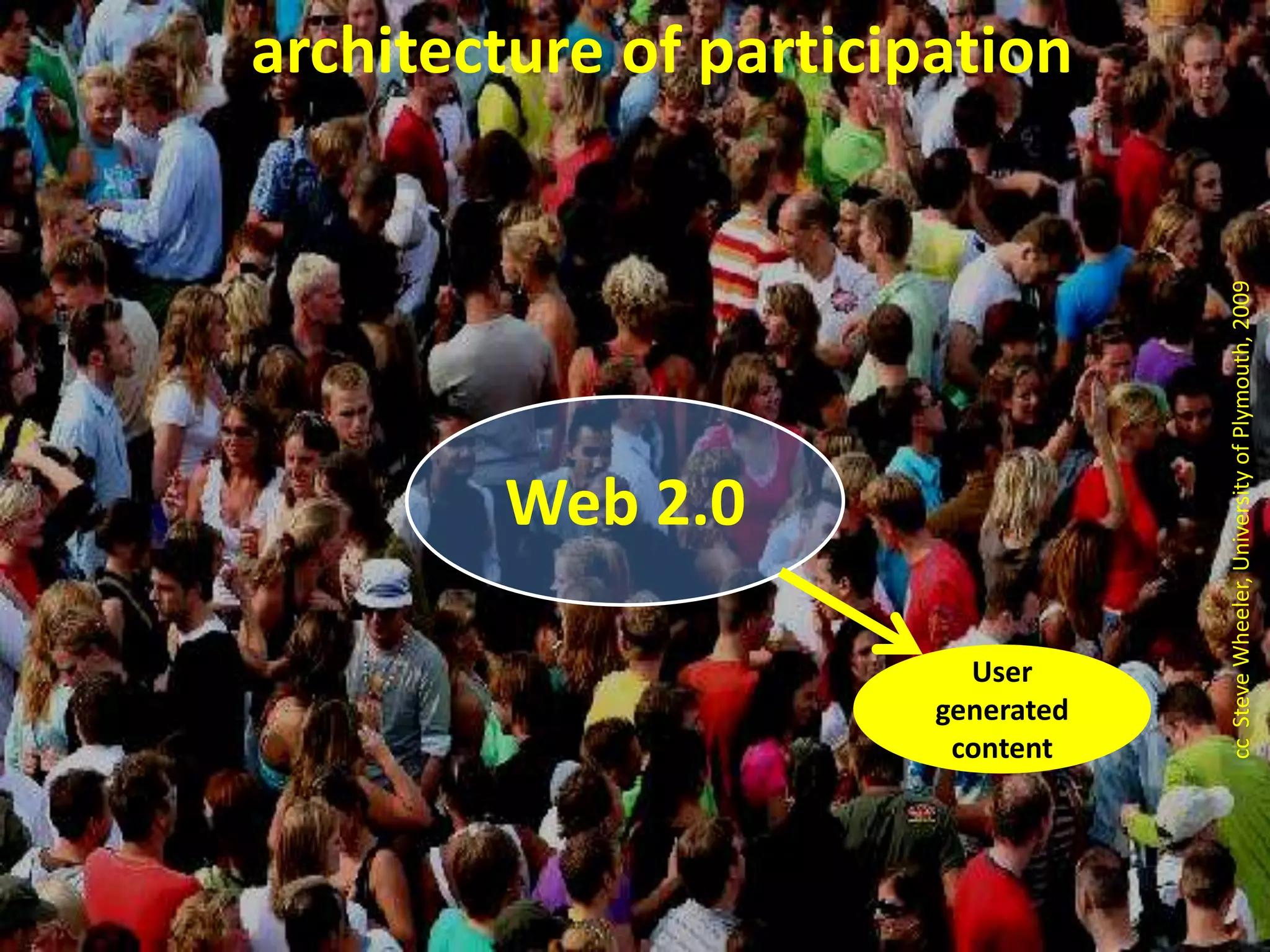
architecture of participationWeb 2.0cc  Steve Wheeler, University of Plymouth, 2009User generated content
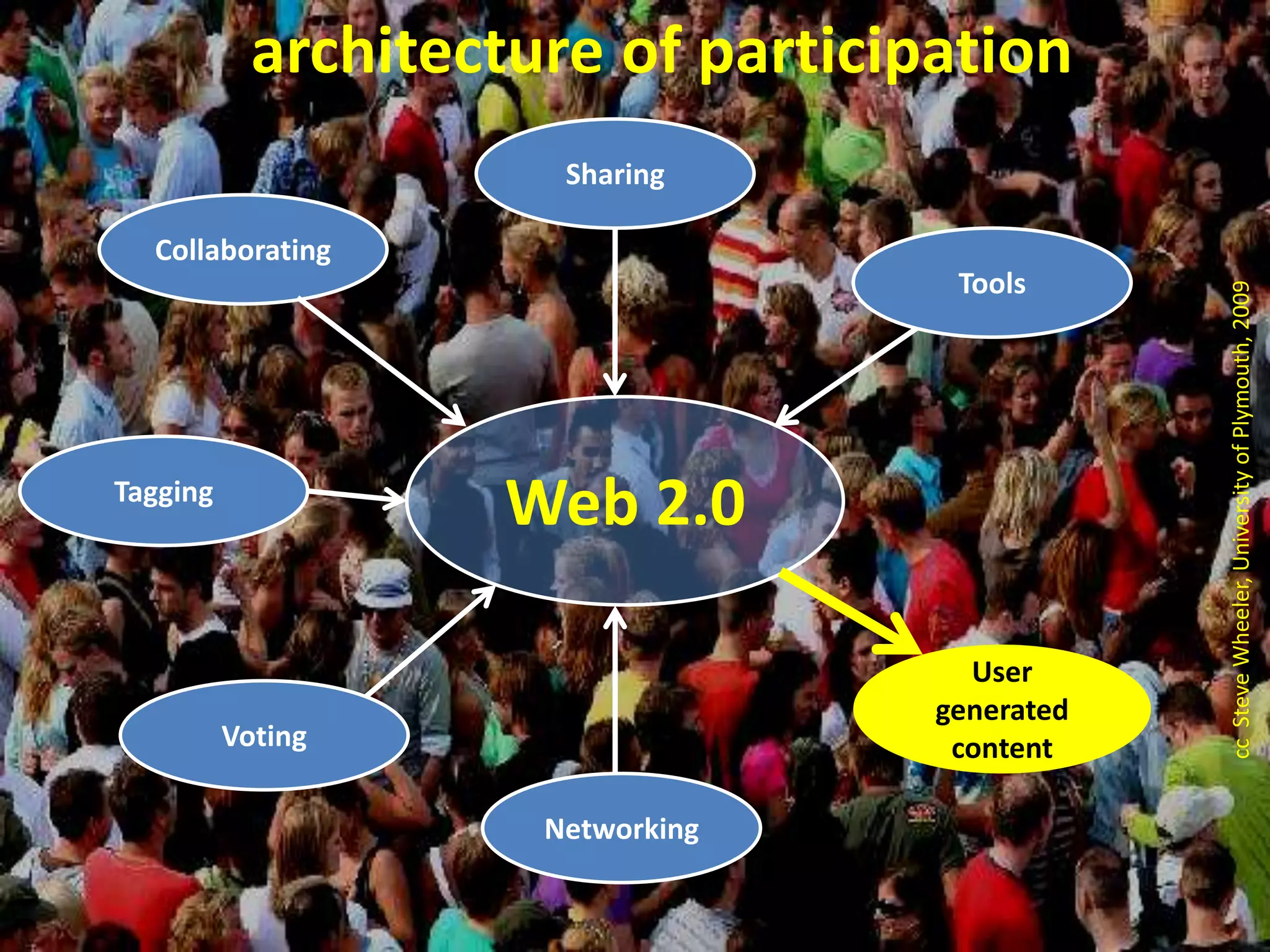
architecture of participationSharingCollaboratingToolsWeb 2.0Taggingcc  Steve Wheeler, University of Plymouth, 2009User generated contentVotingNetworking
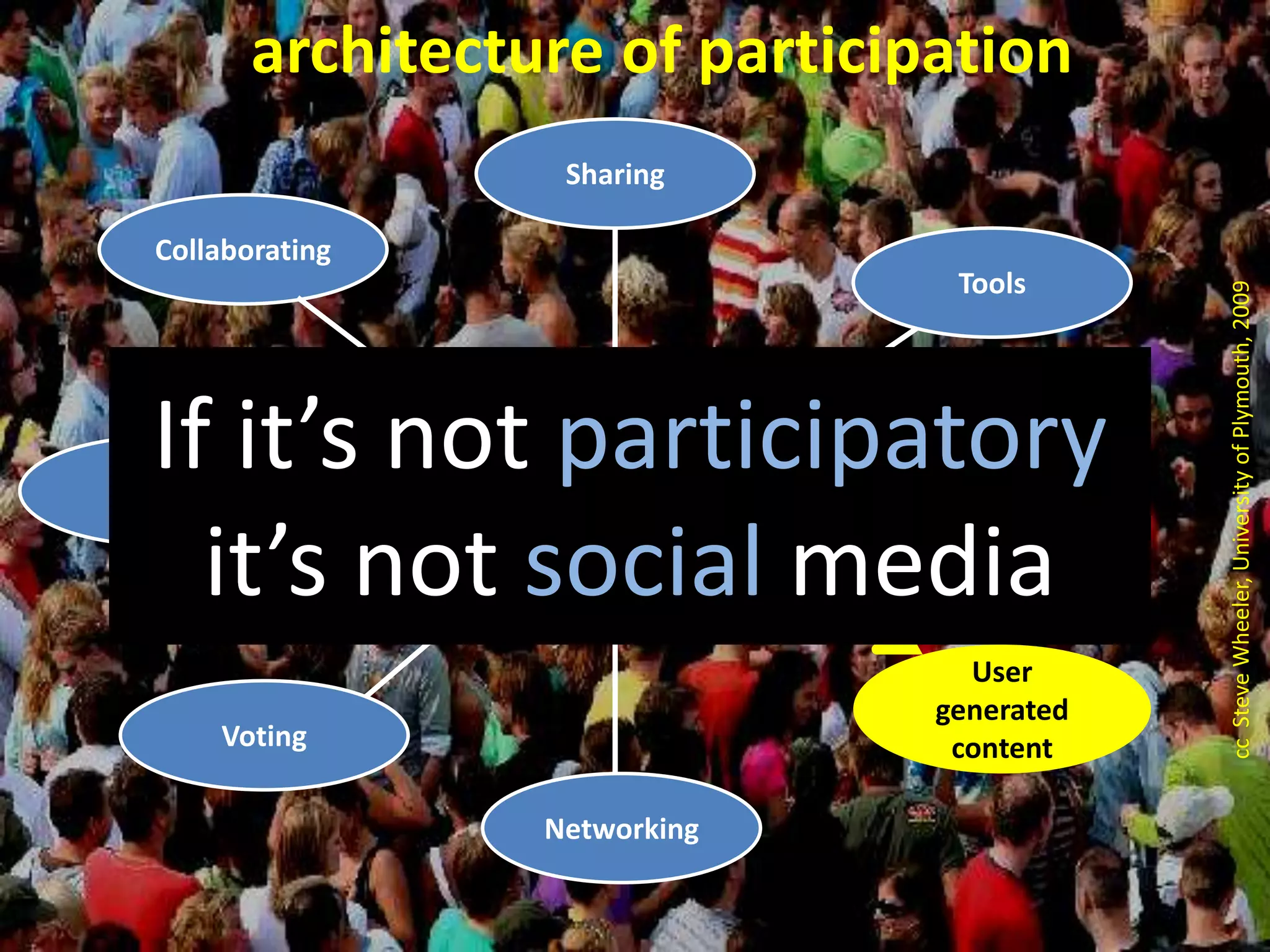
architecture of participationSharingCollaboratingToolsIf it’s not participatoryit’s not social mediaLearning 2.0Taggingcc  Steve Wheeler, University of Plymouth, 2009User generated contentVotingNetworking
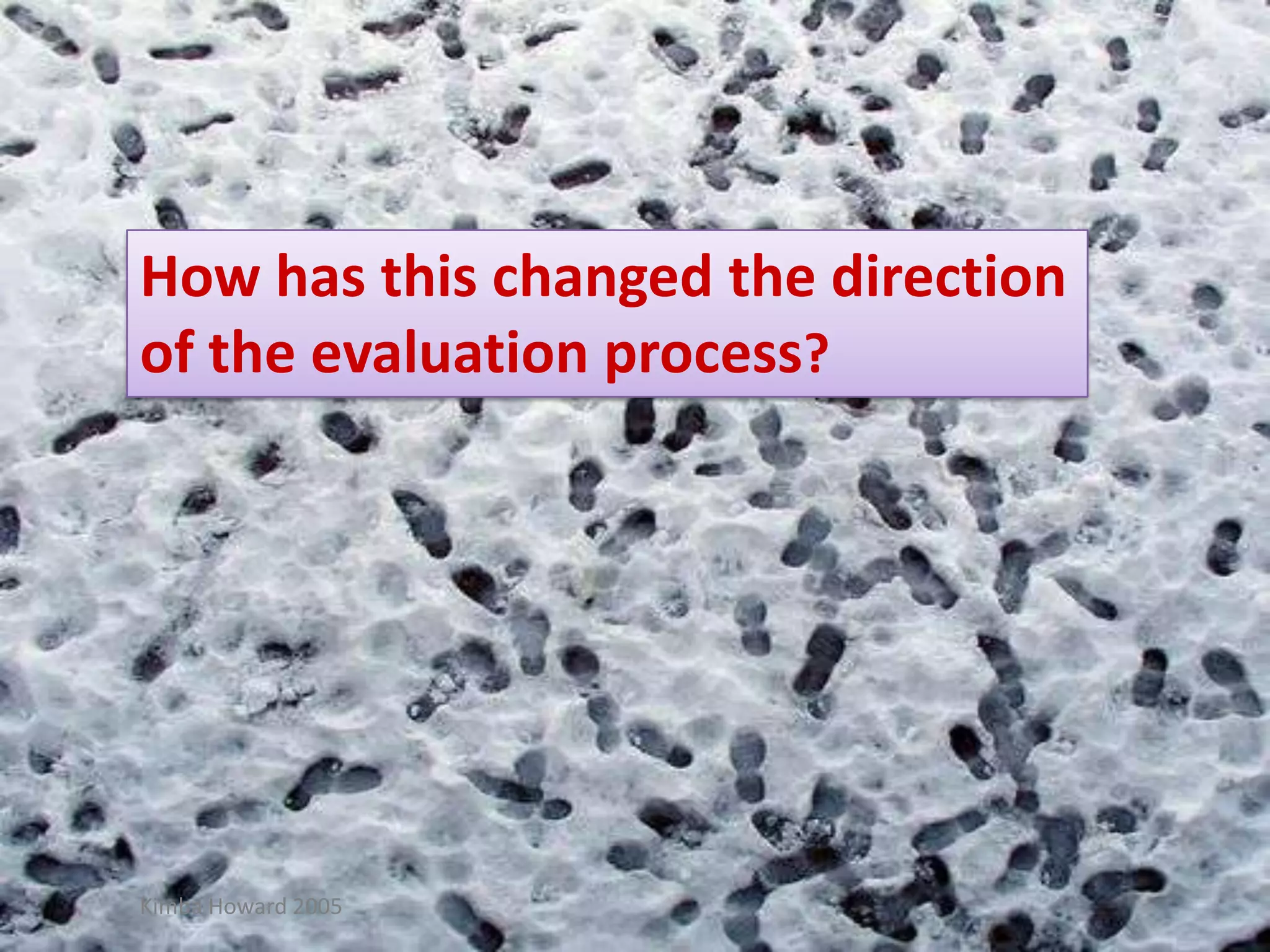
How has this changed the direction of the evaluation process?Kimba Howard 2005
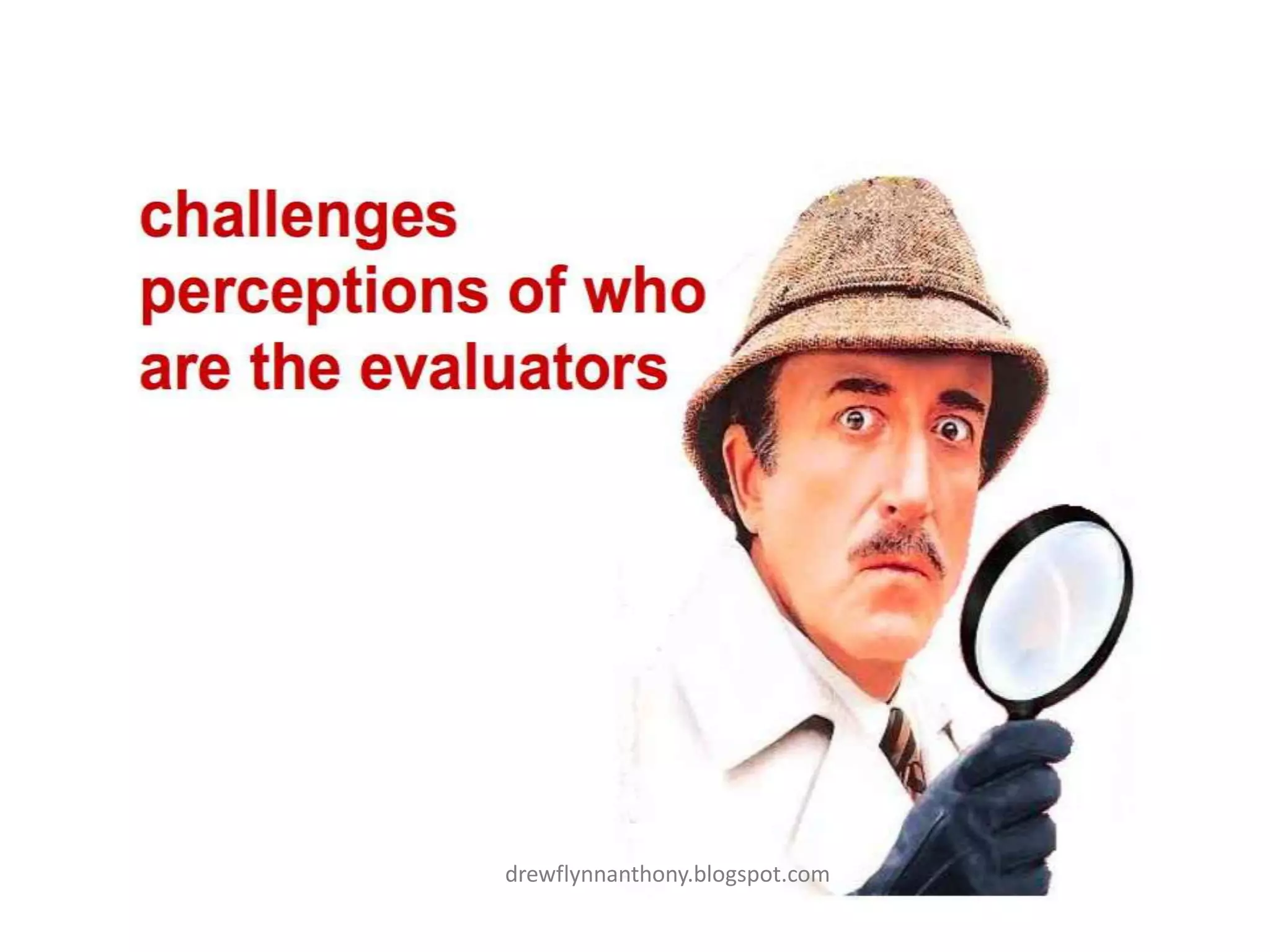
drewflynnanthony.blogspot.com
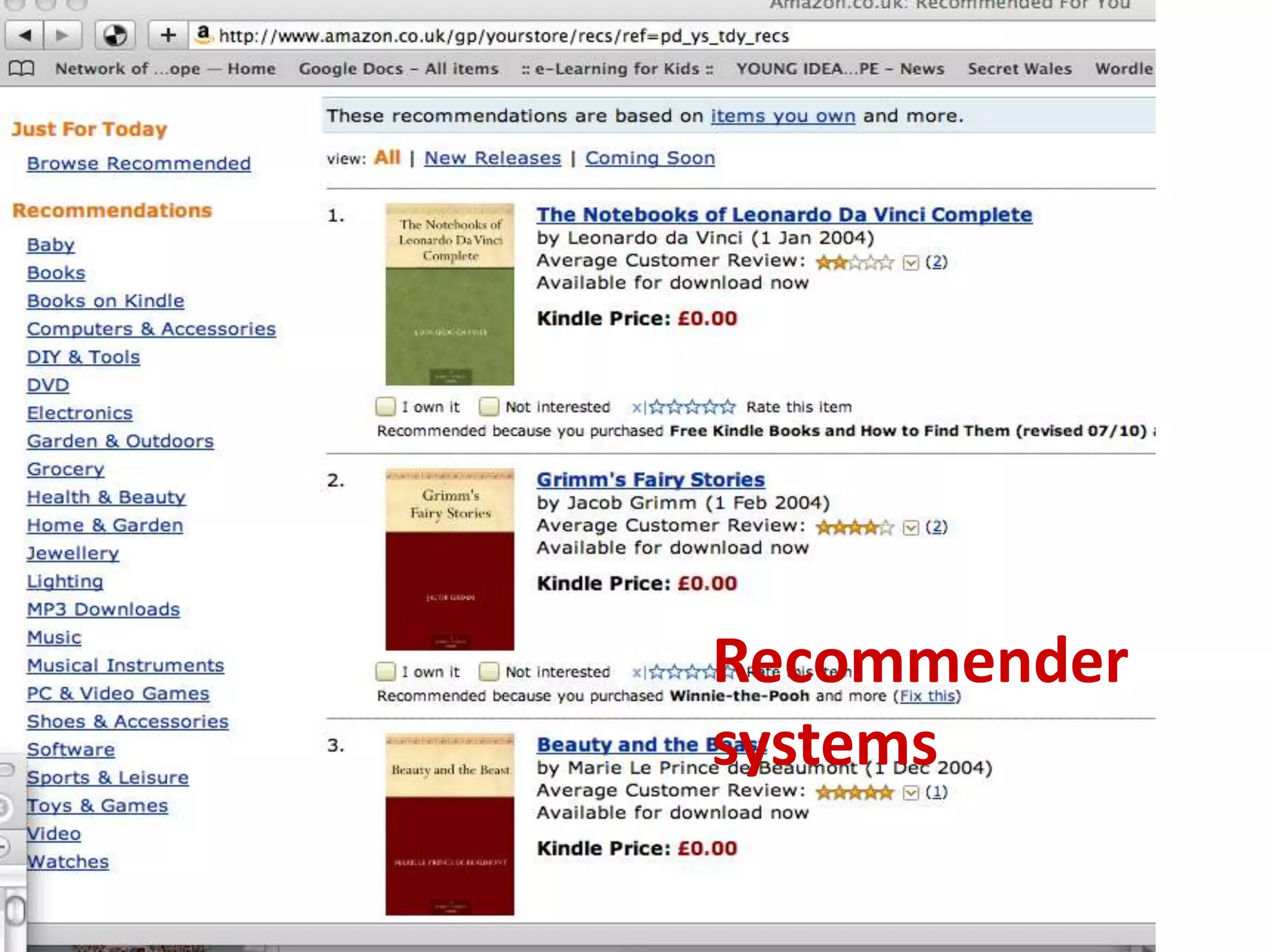
Recommender systems
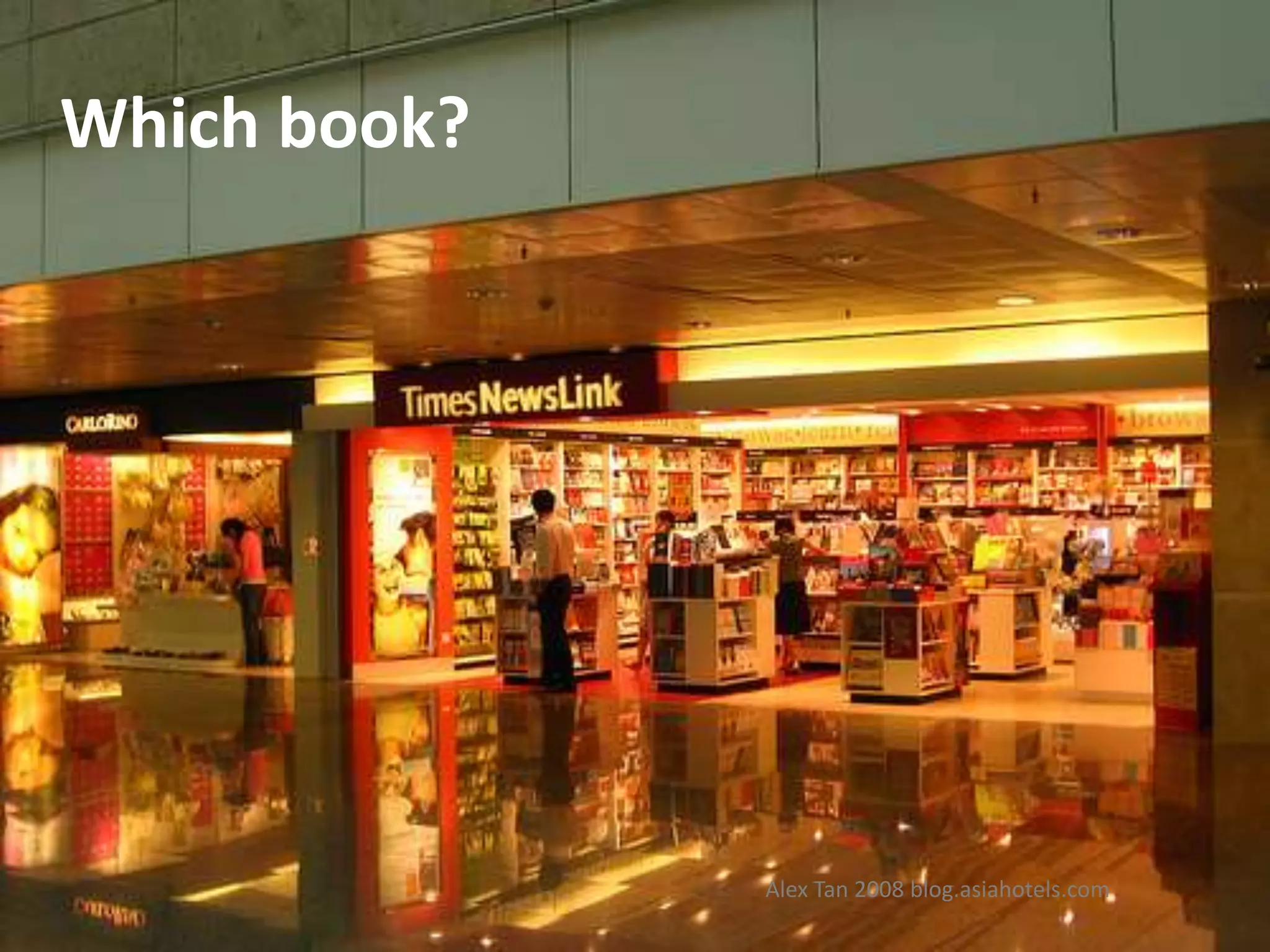
Which book?Alex Tan 2008 blog.asiahotels.com
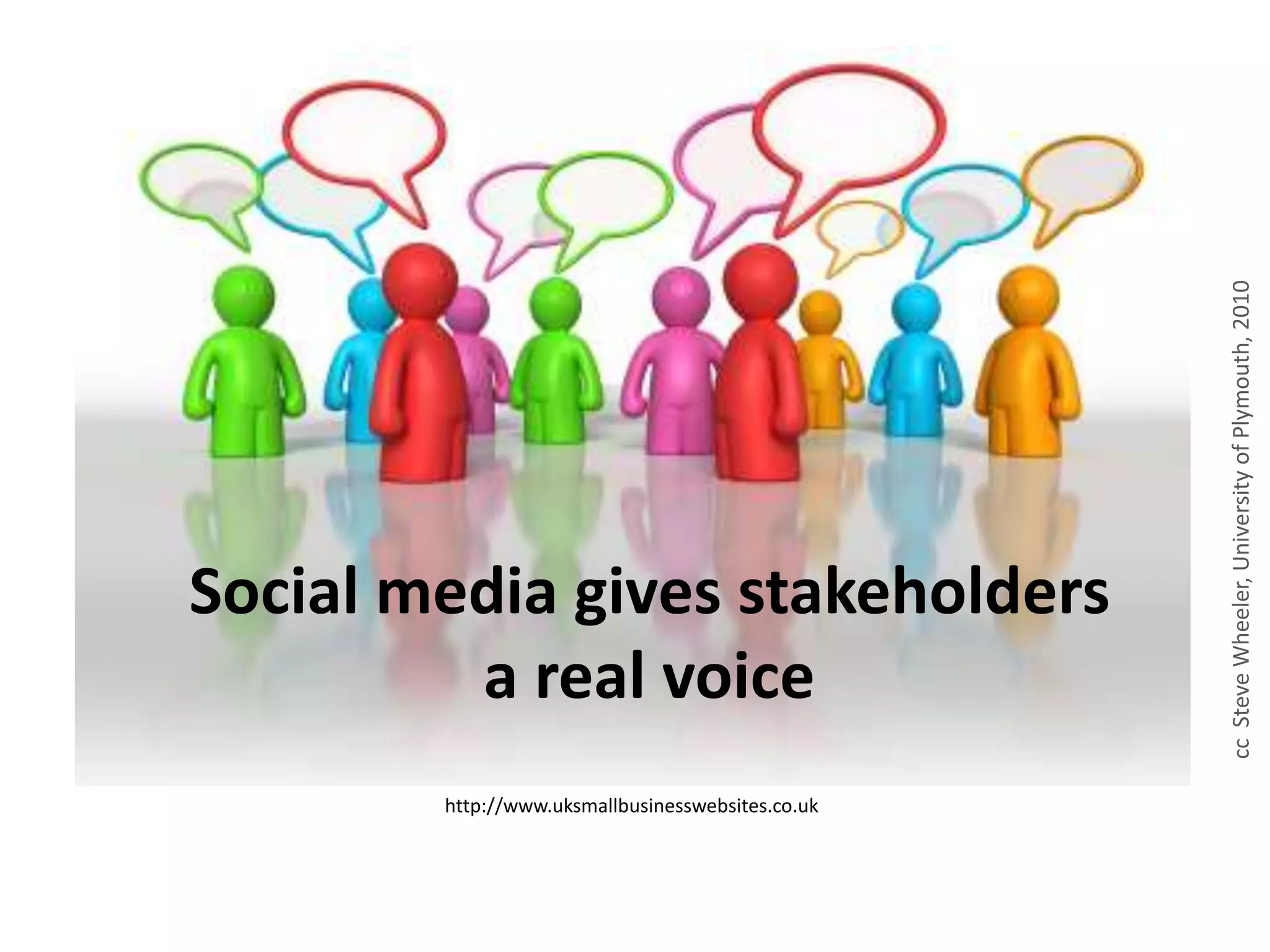
cc  Steve Wheeler, University of Plymouth, 2010Social media gives stakeholders a real voice http://www.uksmallbusinesswebsites.co.uk
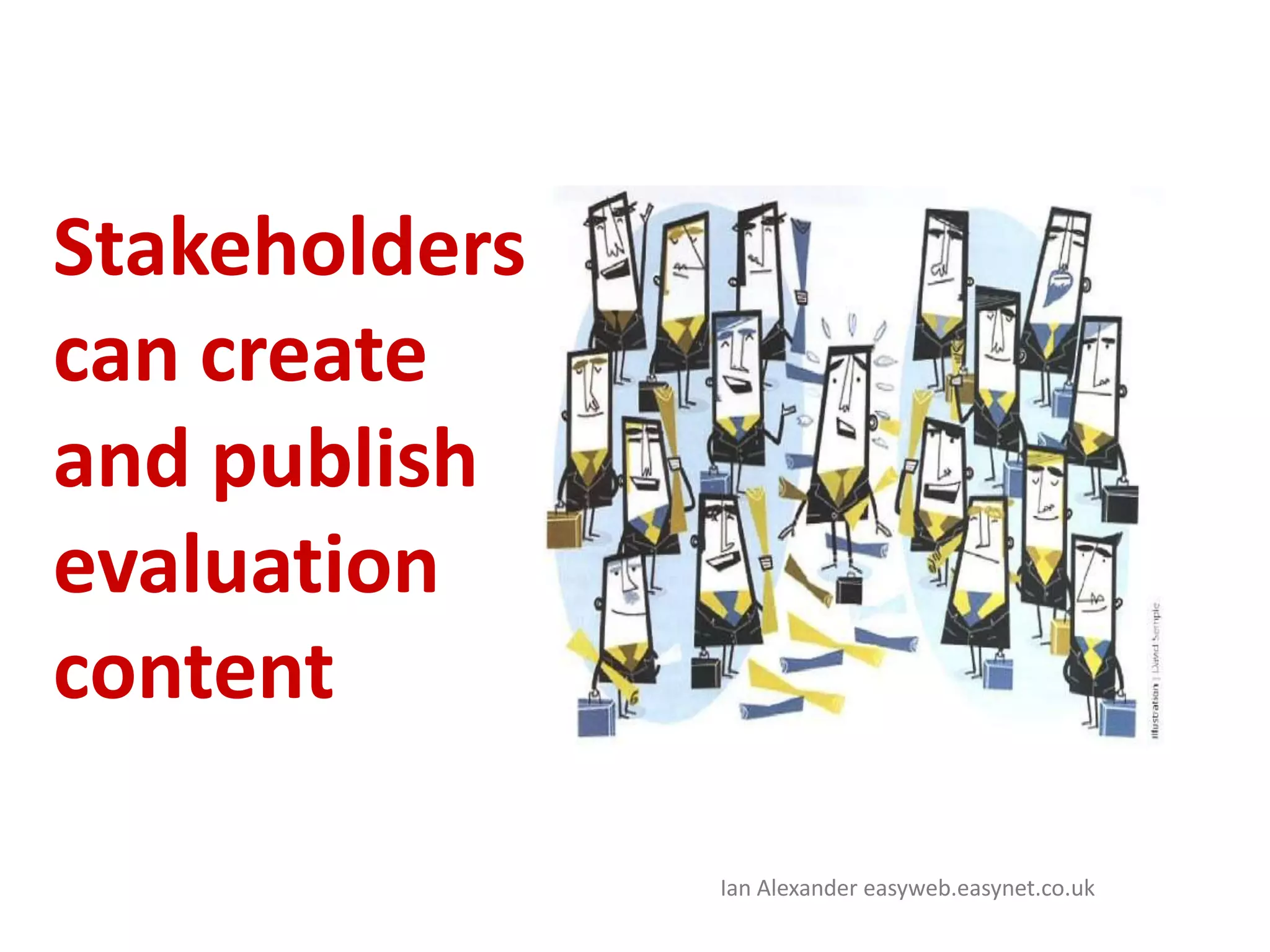
Stakeholderscan create and publish evaluation contentIan Alexander easyweb.easynet.co.uk
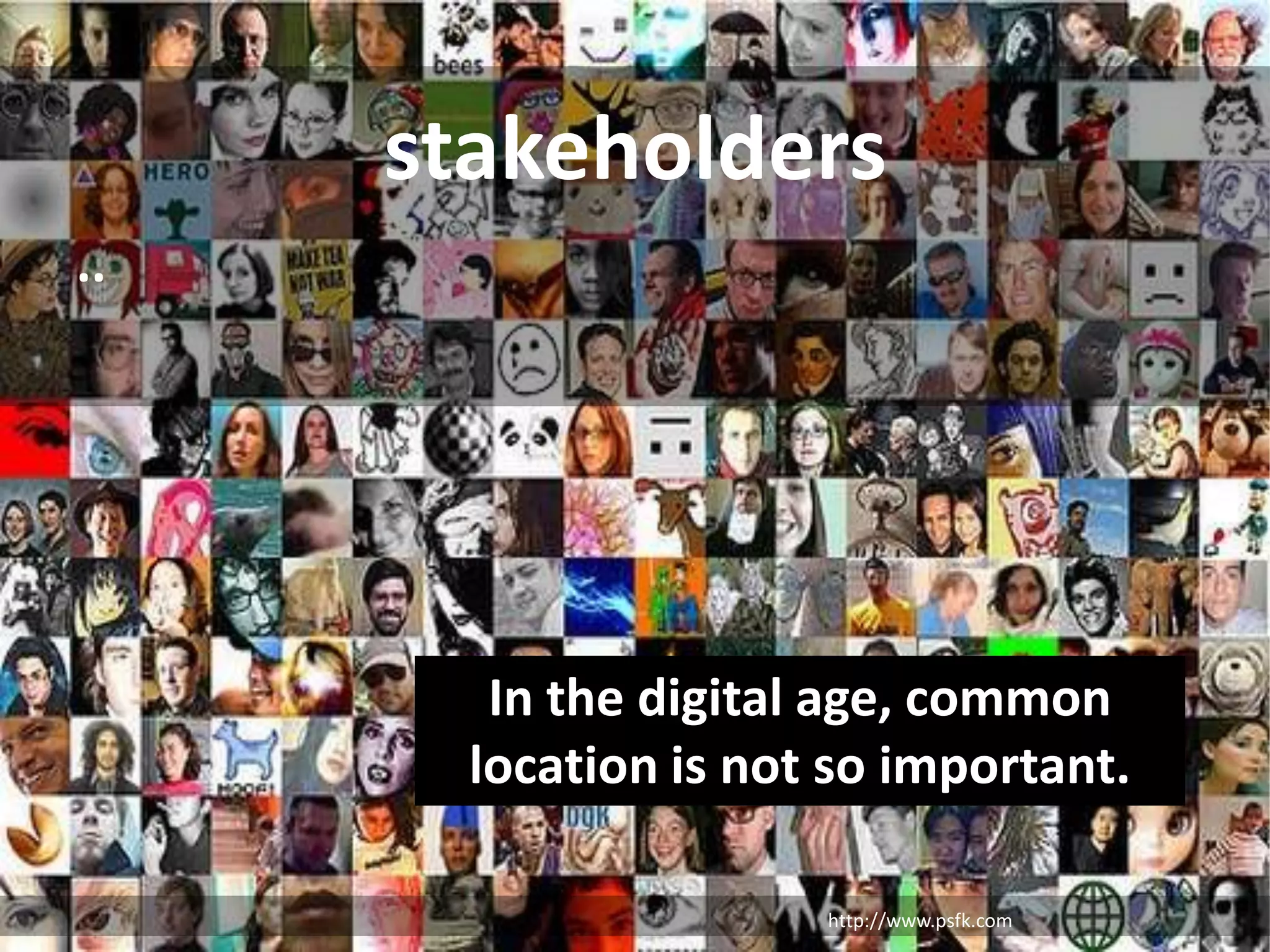
stakeholders..In the digital age, common location is not so important.http://www.psfk.com
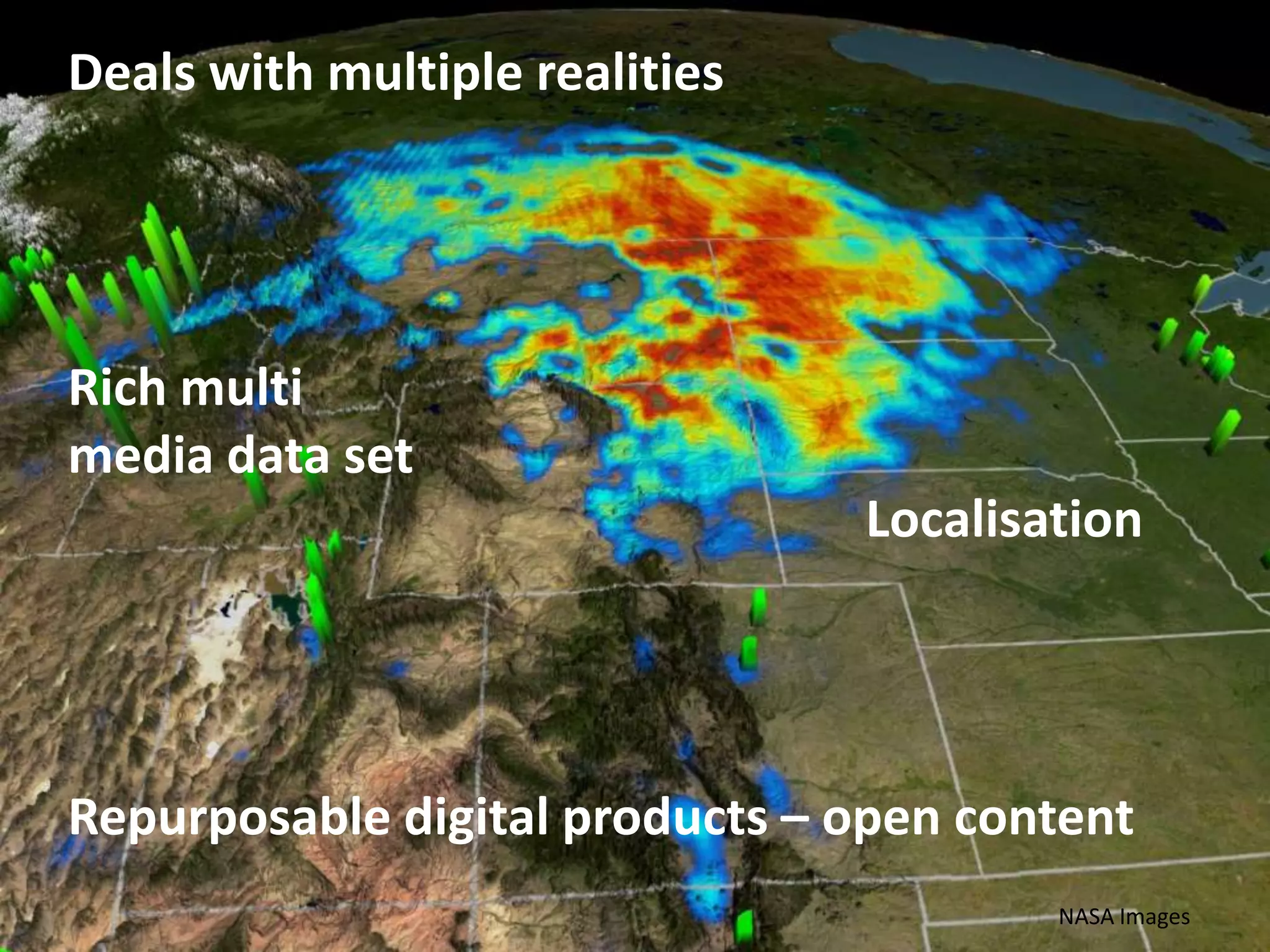
Deals with multiple realitiesRich multi media data setLocalisationRepurposable digital products – open contentNASA Images
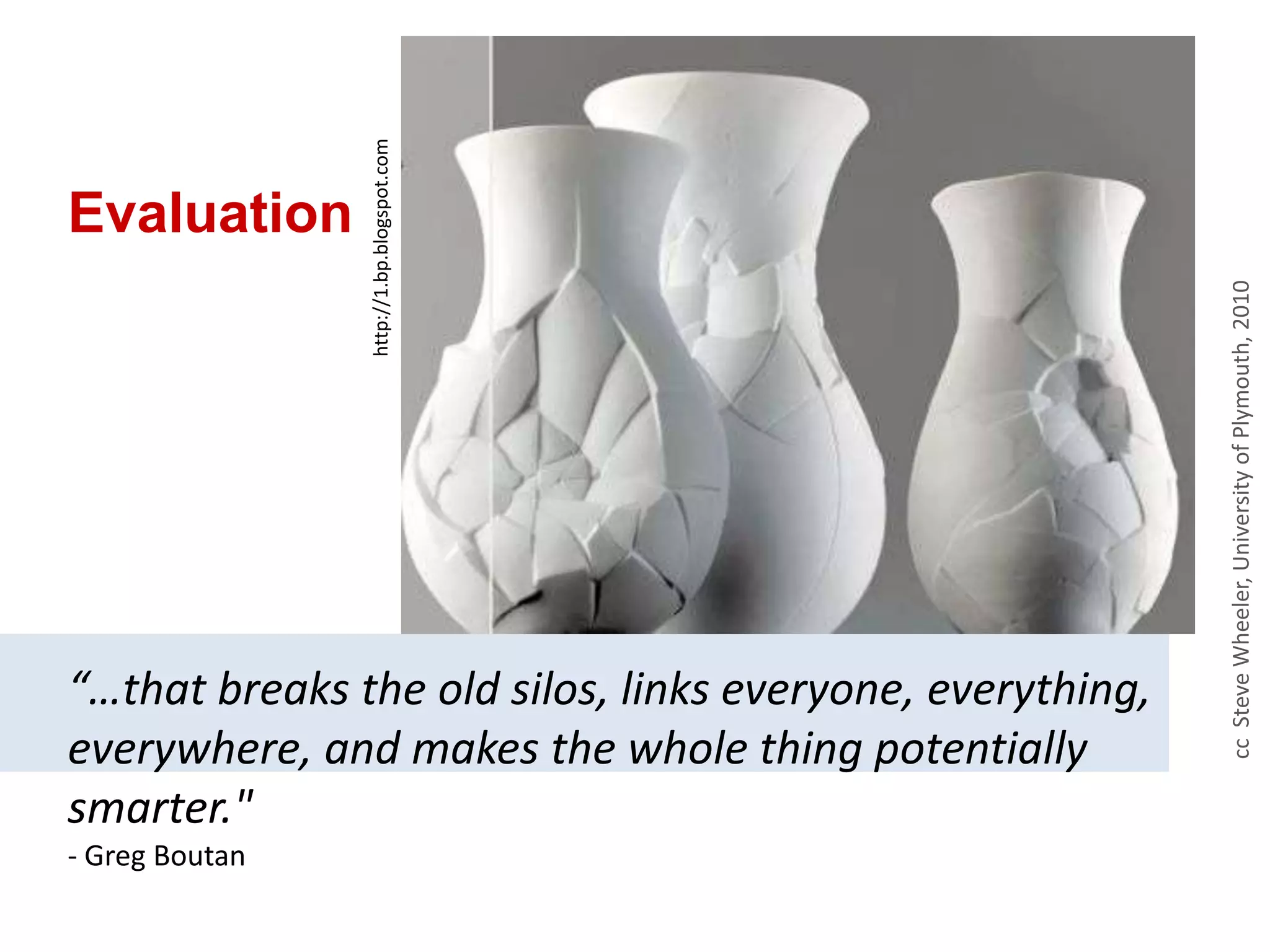
Evaluationhttp://1.bp.blogspot.comcc  Steve Wheeler, University of Plymouth, 2010“…that breaks the old silos, links everyone, everything, everywhere, and makes the whole thing potentially smarter."  - Greg Boutan
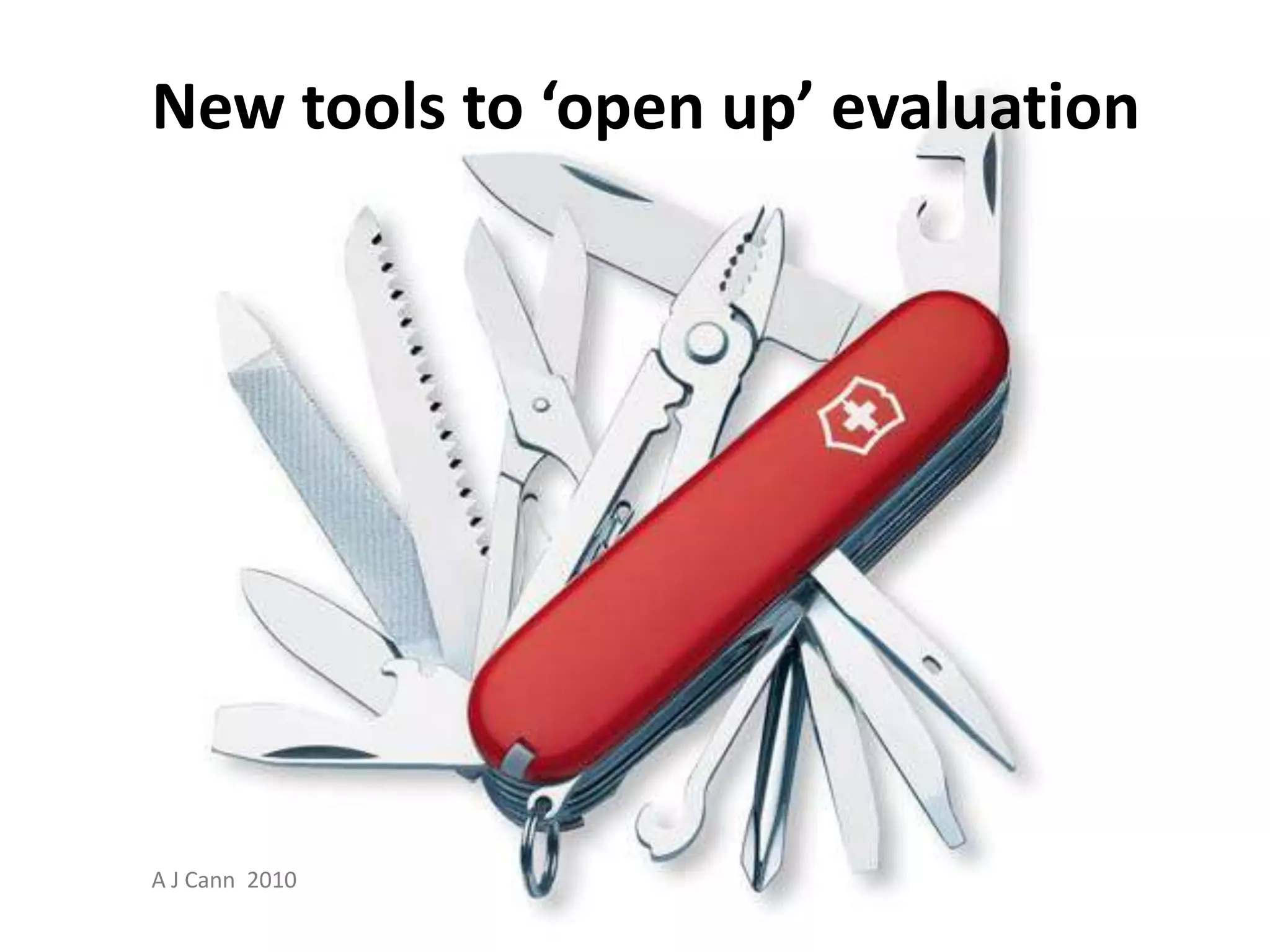
New tools to ‘open up’ evaluationA J Cann  2010
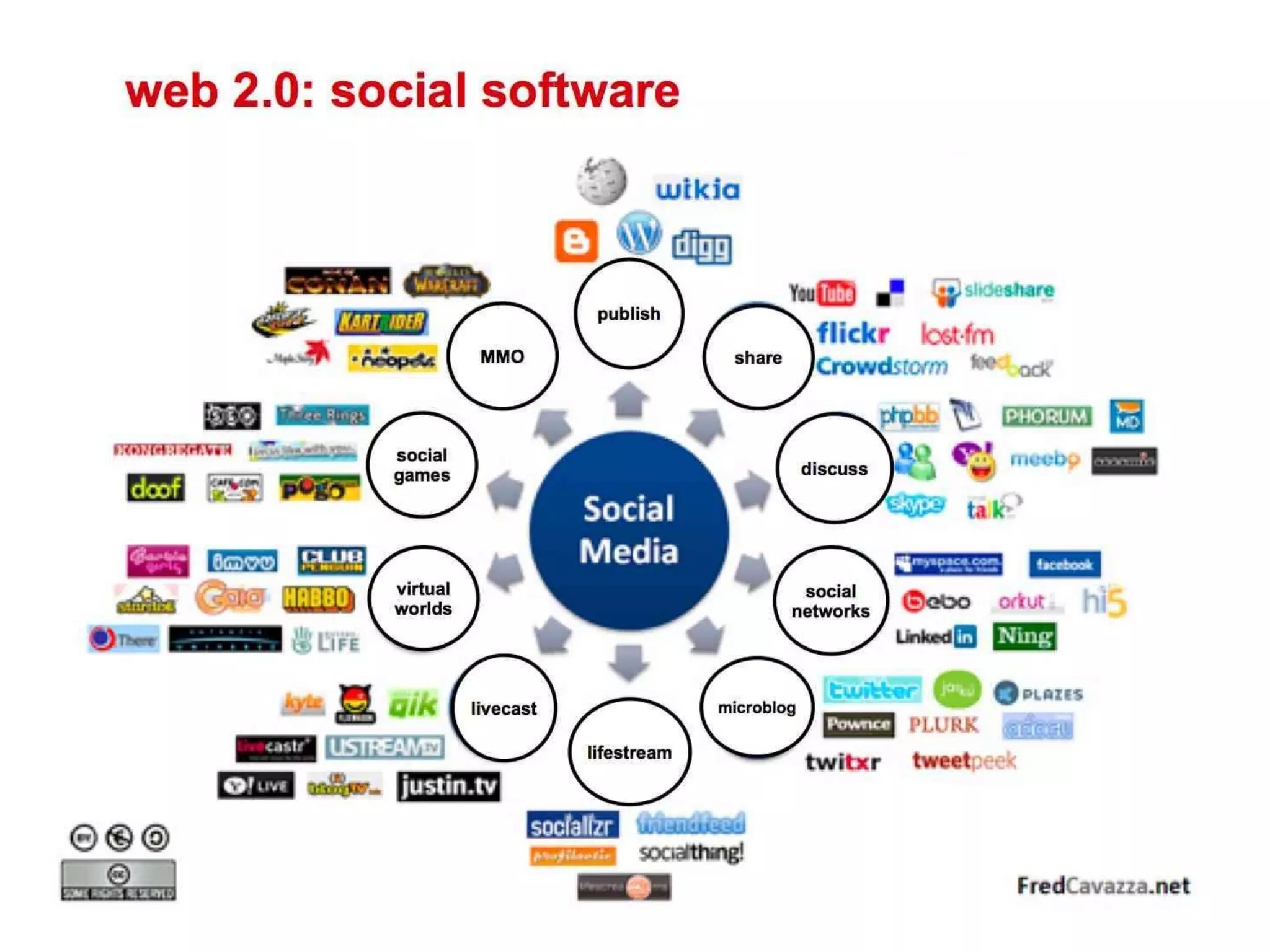
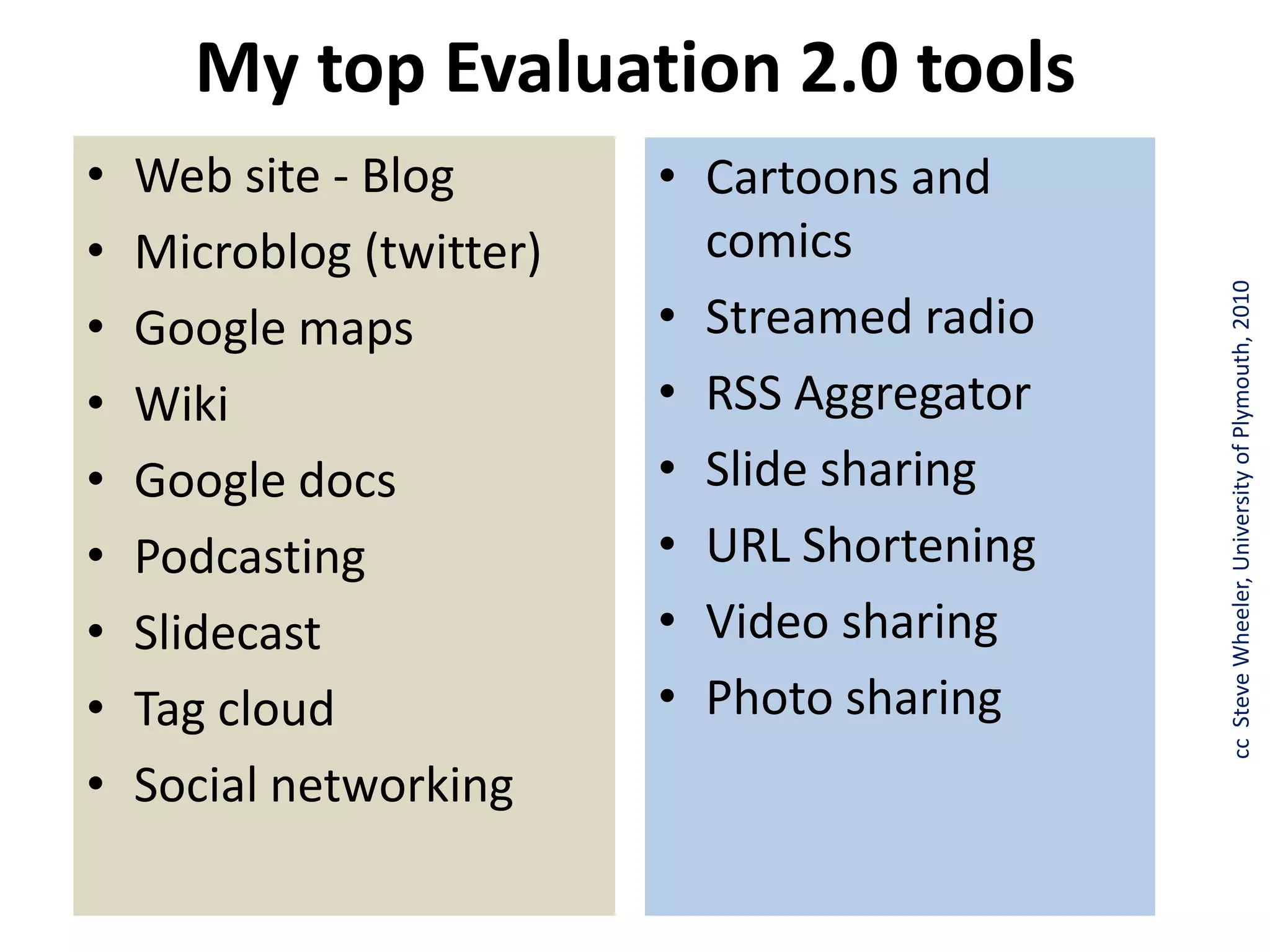
My top Evaluation 2.0 toolsWeb site - Blog Microblog (twitter)Google mapsWikiGoogle docsPodcastingSlidecastTag cloudSocial networkingCartoons and comics
Streamed radio
RSS Aggregator
Slide sharing
URL Shortening
Video sharing
Photo sharingcc  Steve Wheeler, University of Plymouth, 2010
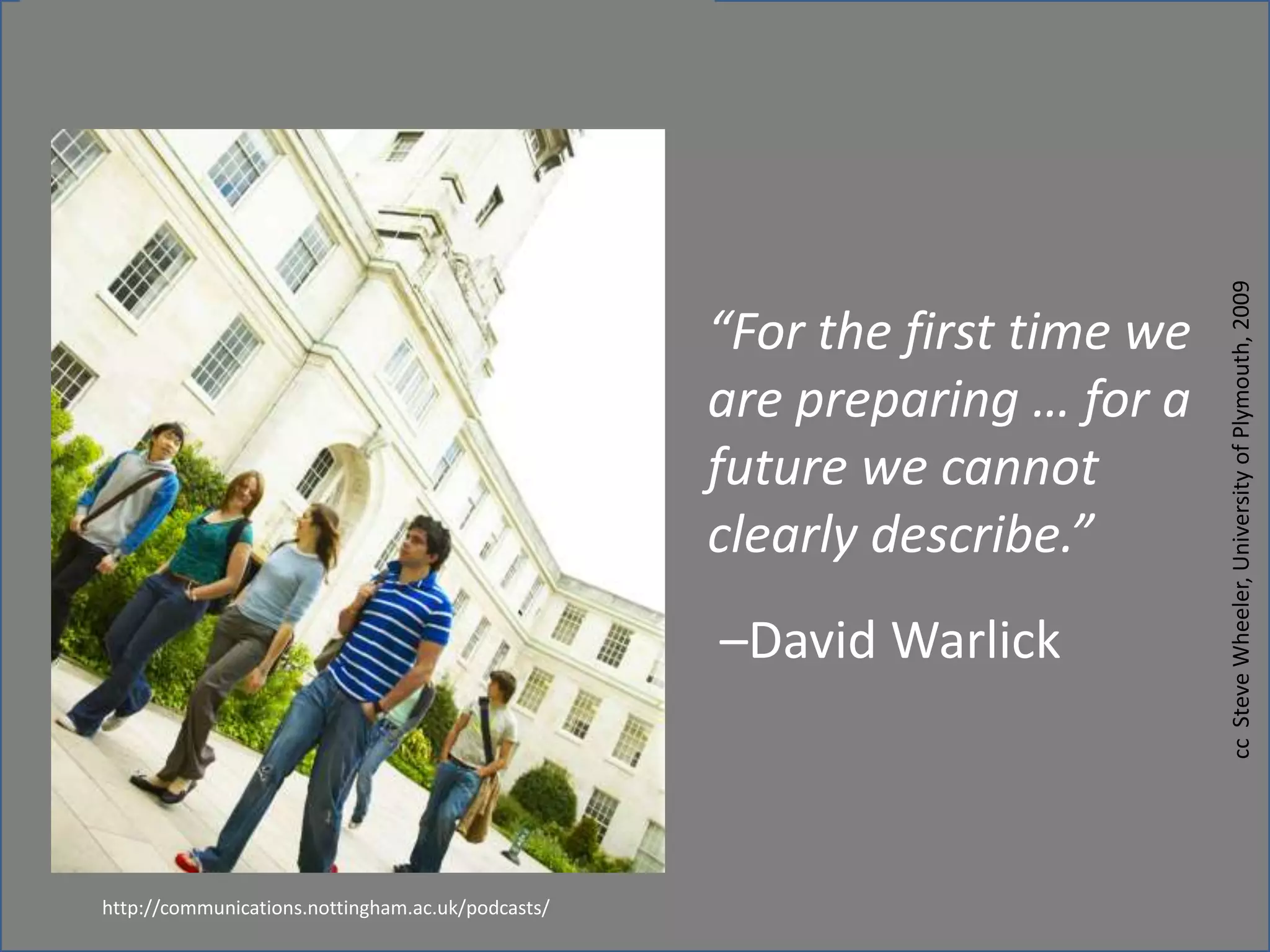
“For the first time we are preparing … for a future we cannot clearly describe.” –David Warlickcc  Steve Wheeler, University of Plymouth, 2009http://communications.nottingham.ac.uk/podcasts/
  WHY       SHOULD  WEMOVEDOWNTHIS ROAD?
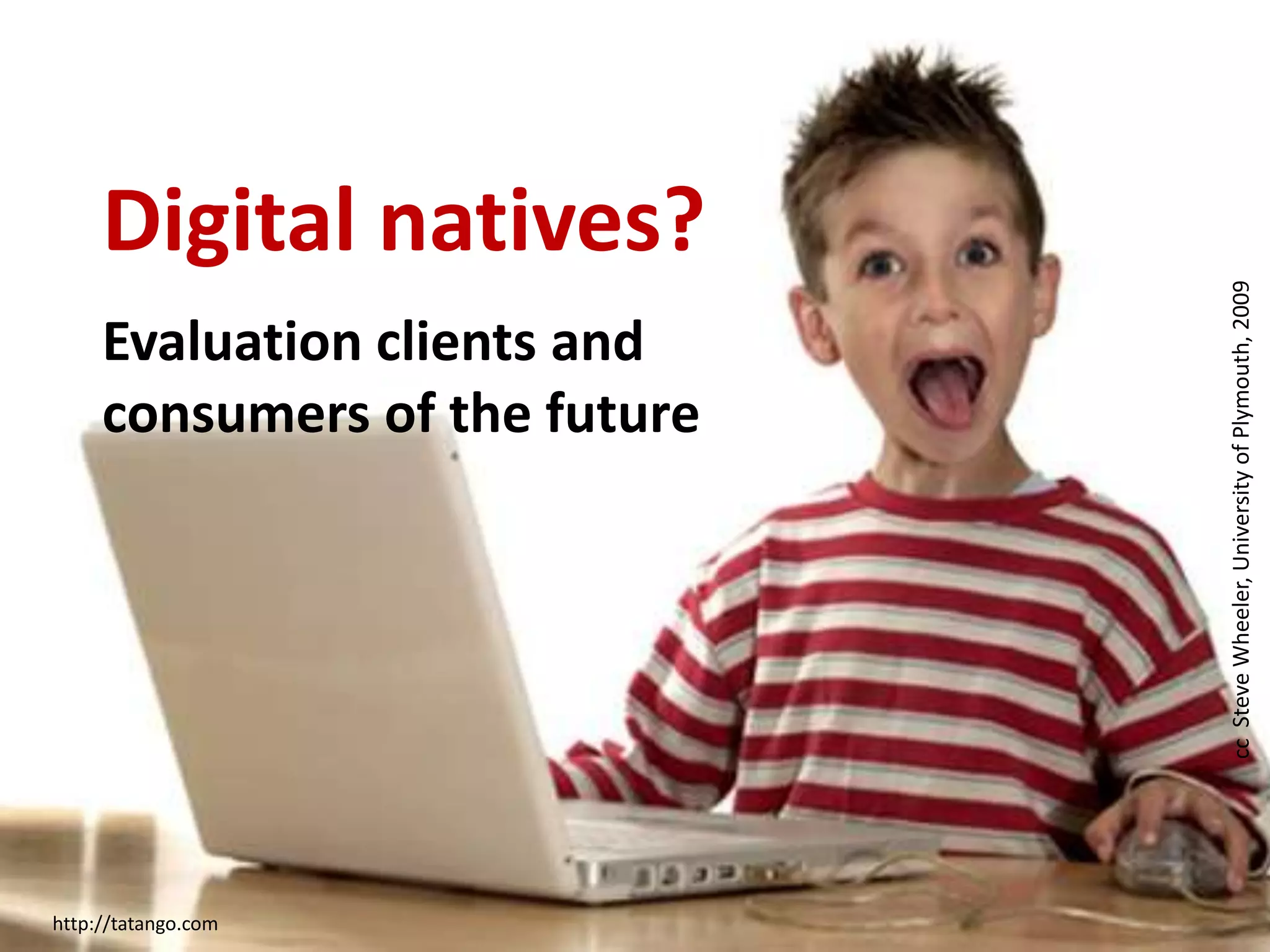
Digital natives?Evaluation clients and consumers of the futurecc  Steve Wheeler, University of Plymouth, 2009http://tatango.com
Is there a role for the evaluator and what does that look like?Alex Bogusky
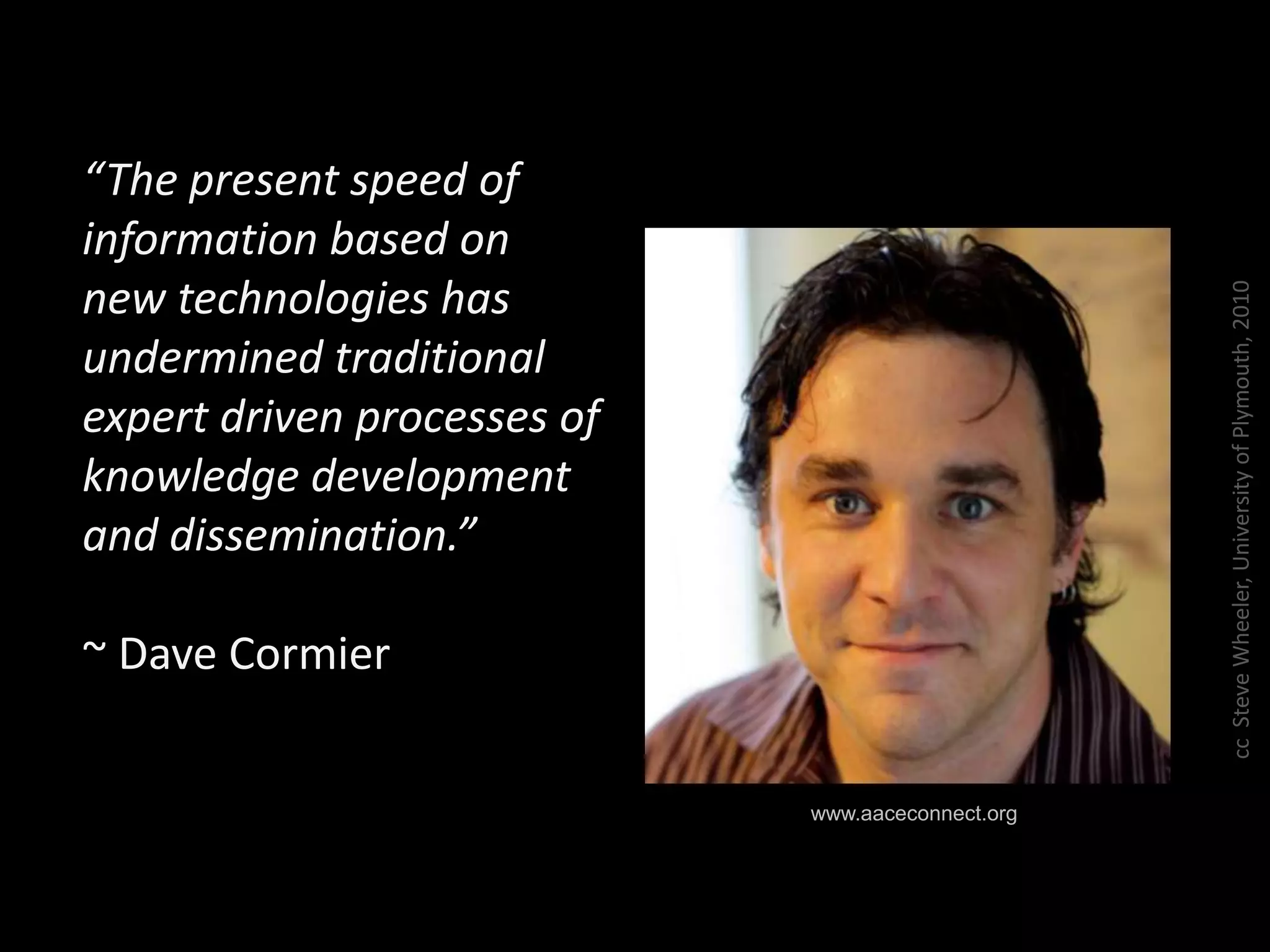
“The present speed of information based on new technologies has undermined traditional expert driven processes of knowledge development and dissemination.” ~ Dave Cormiercc  Steve Wheeler, University of Plymouth, 2010www.aaceconnect.org
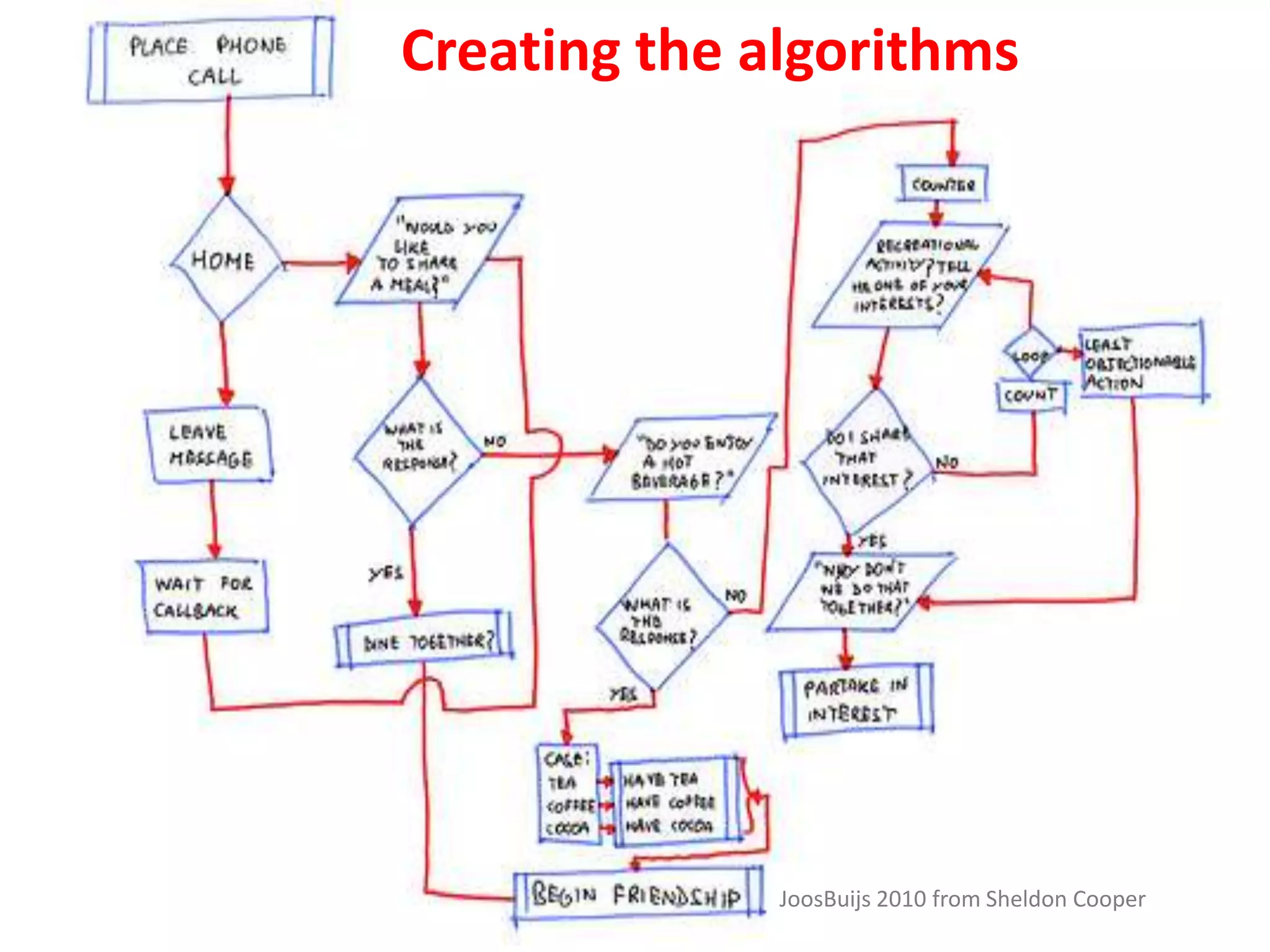
Creating the algorithmsJoosBuijs 2010 from Sheldon Cooper
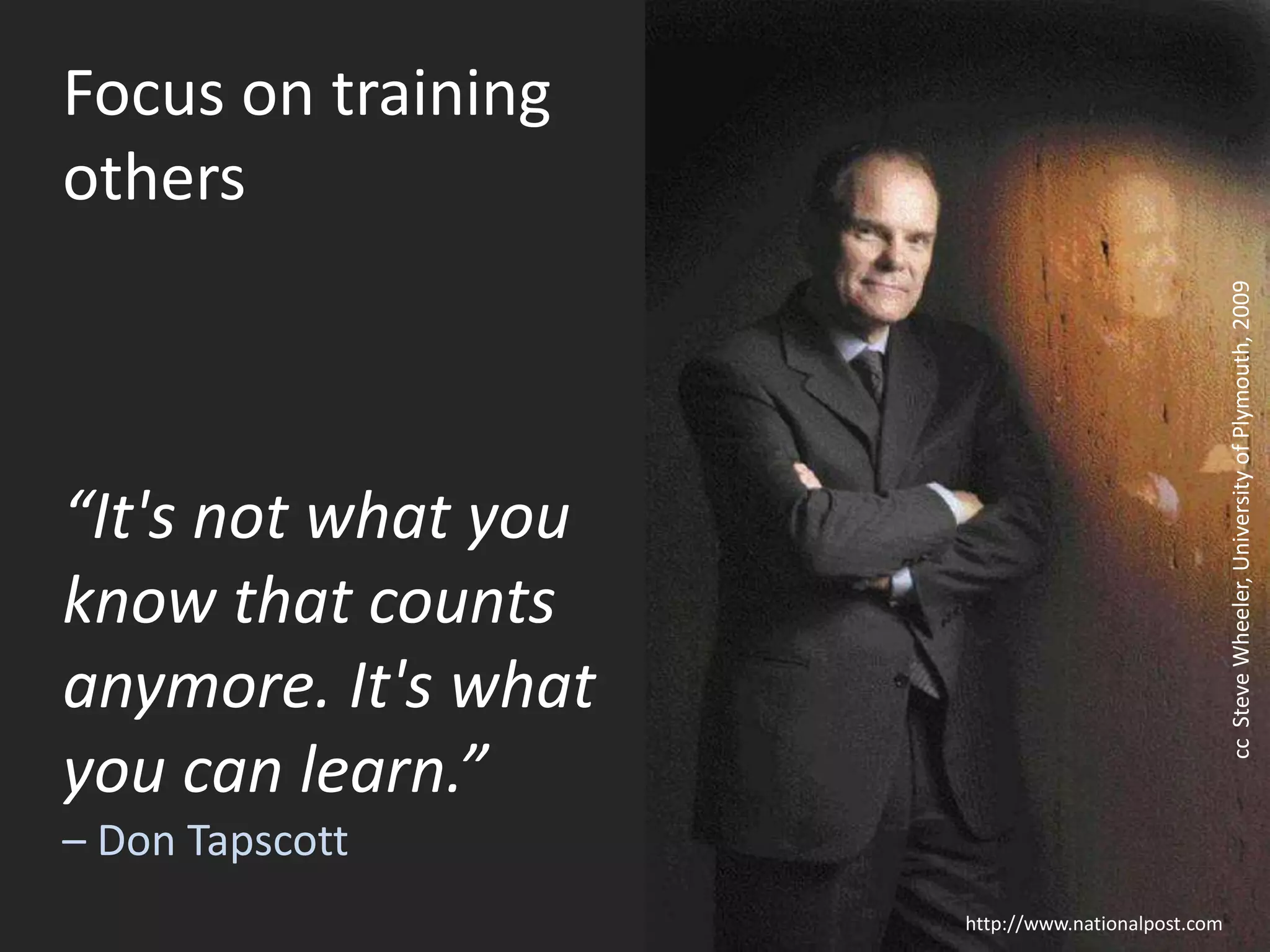
Focus on training others“It's not what you know that counts anymore. It's what you can learn.”– Don Tapscottcc  Steve Wheeler, University of Plymouth, 2009http://www.nationalpost.com
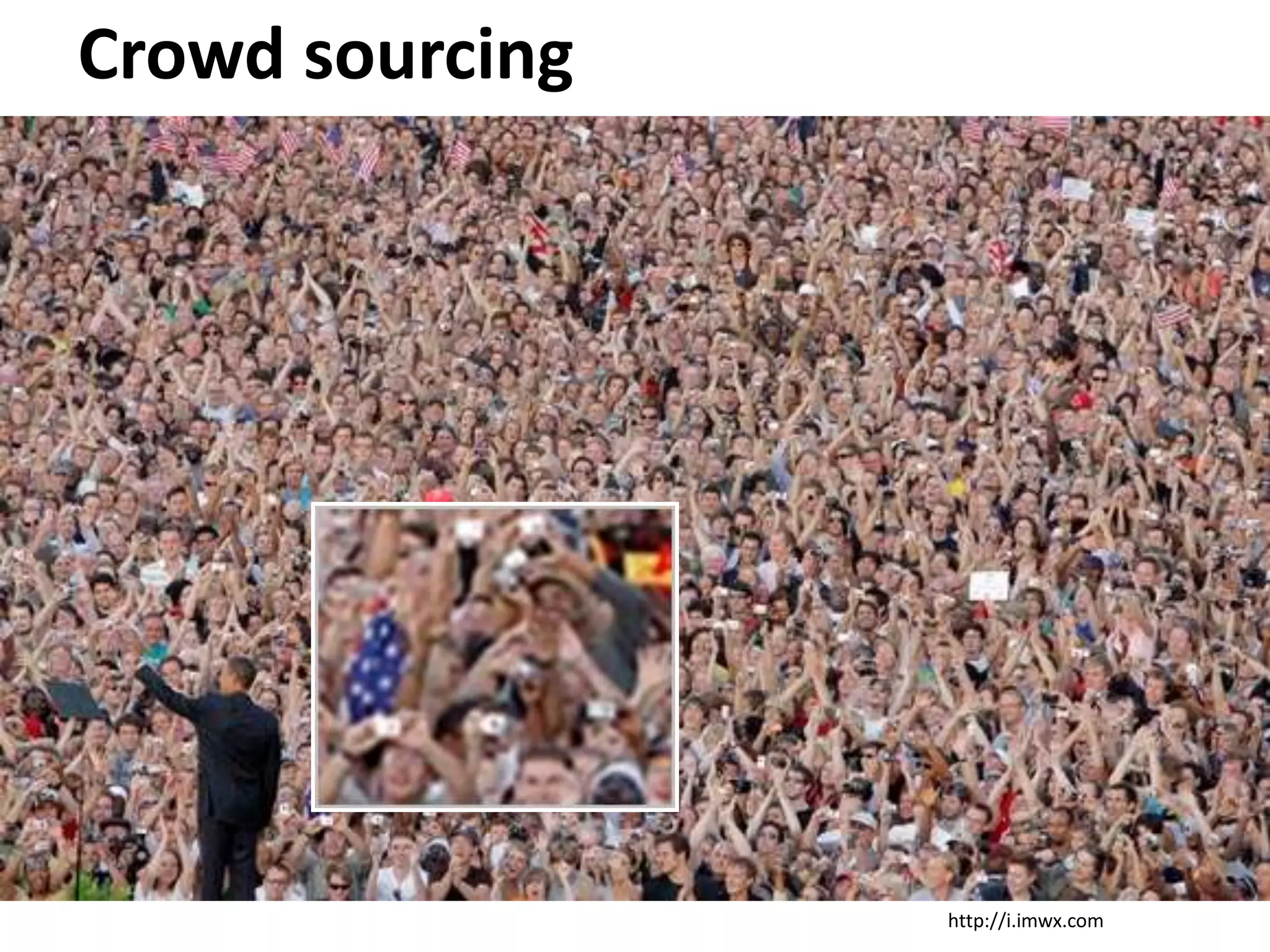
Crowd sourcingcc  Steve Wheeler, University of Plymouth, 2010http://i.imwx.com
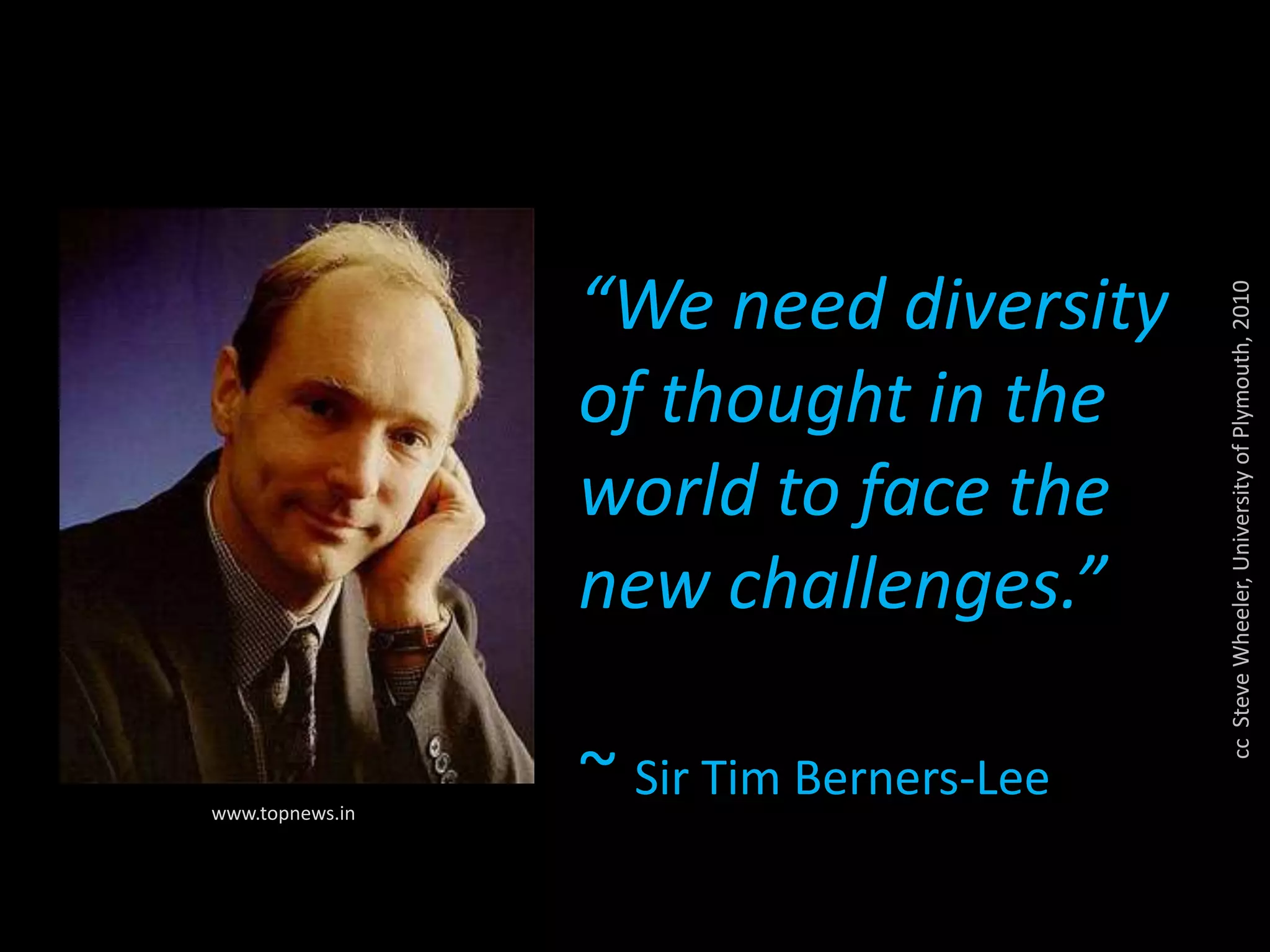
“We need diversity of thought in the world to face the new challenges.” ~ Sir Tim Berners-Leecc  Steve Wheeler, University of Plymouth, 2010www.topnews.in
Wisdom of Crowds...vsStupidity of Mobscc  Steve Wheeler, University of Plymouth, 2010
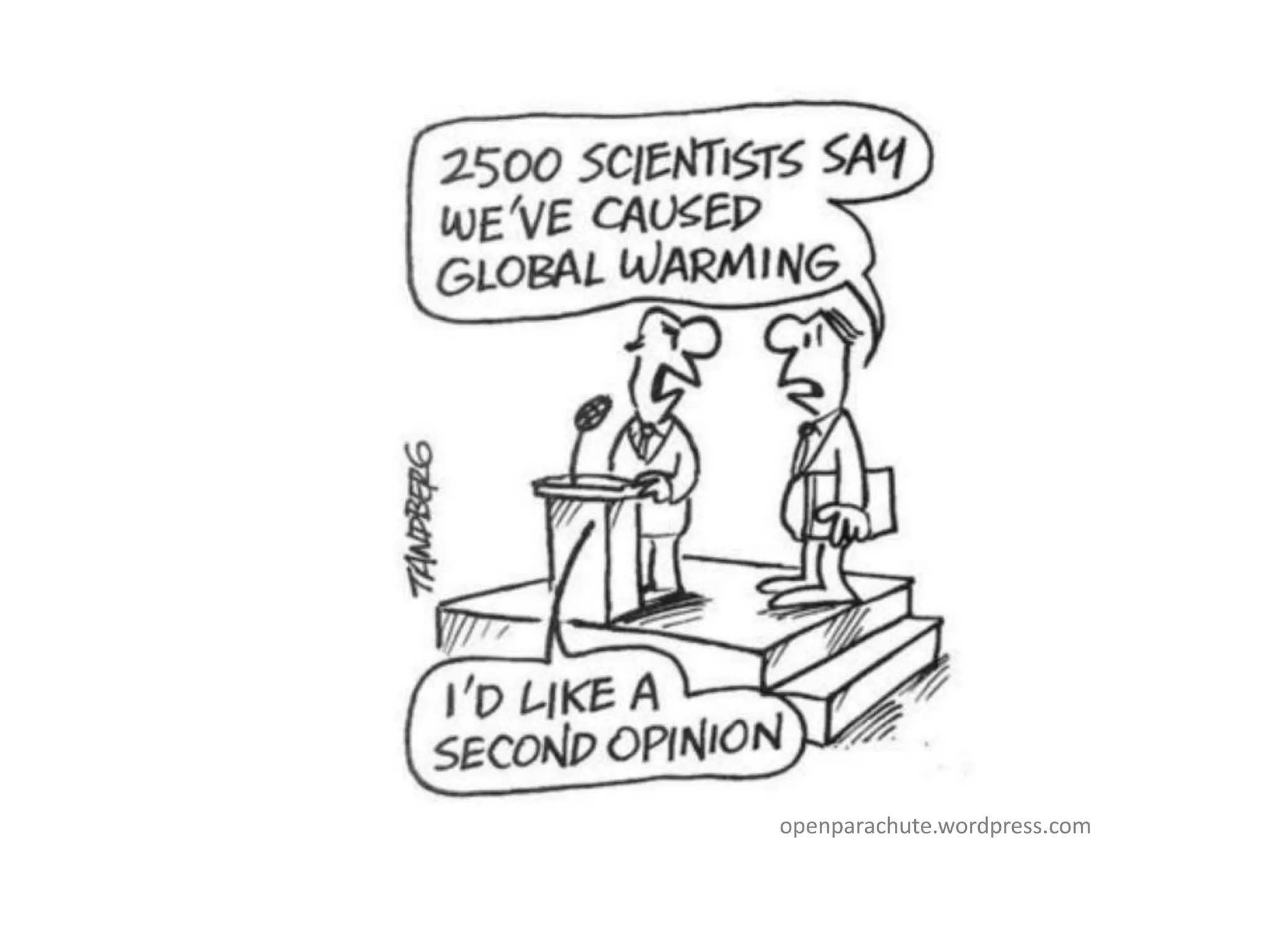
openparachute.wordpress.com
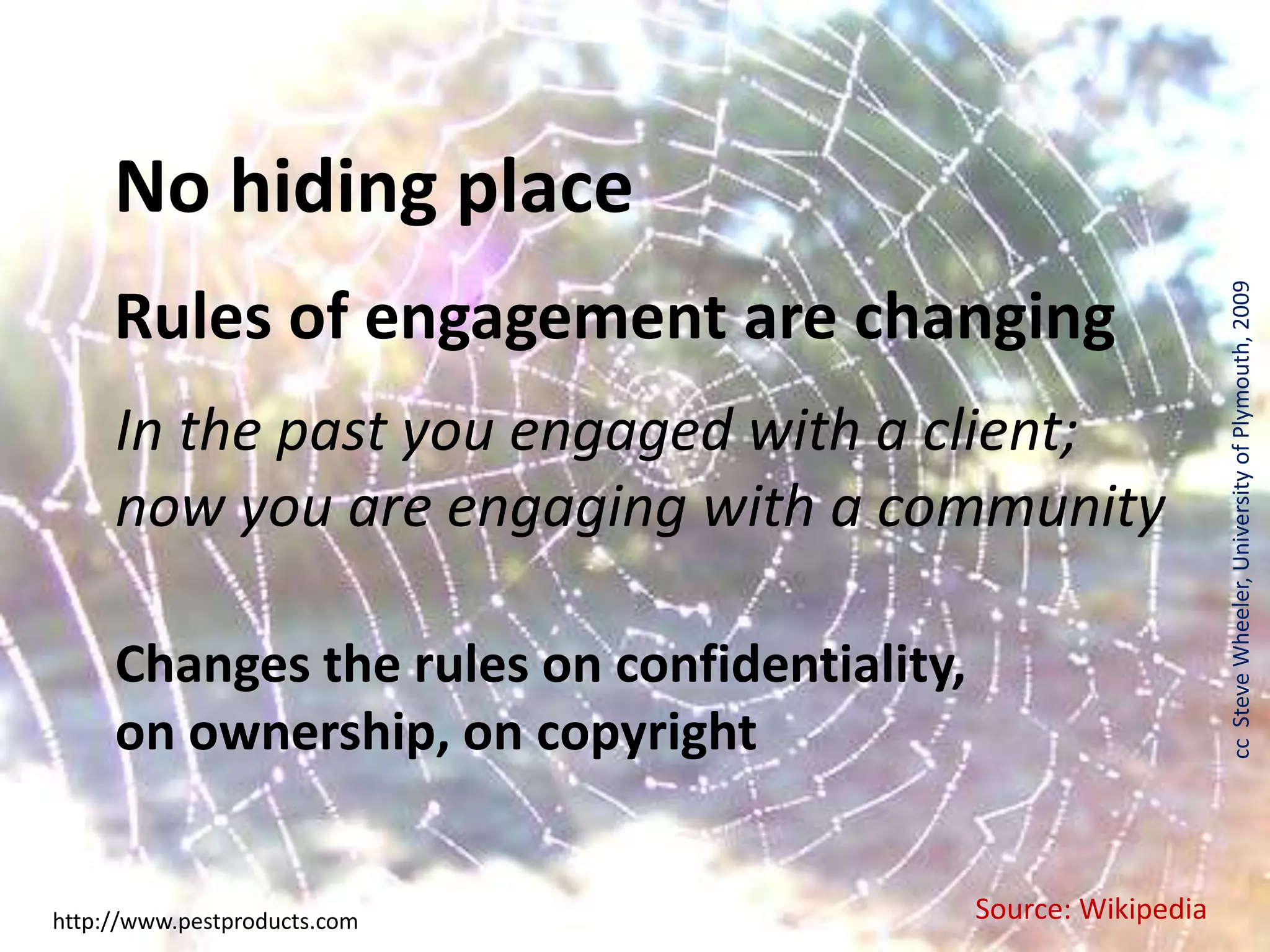
No hiding placeRules of engagement are changingIn the past you engaged with a client;now you are engaging with a communitycc  Steve Wheeler, University of Plymouth, 2009Changes the rules on confidentiality, on ownership, on copyrightSource: Wikipediahttp://www.pestproducts.com
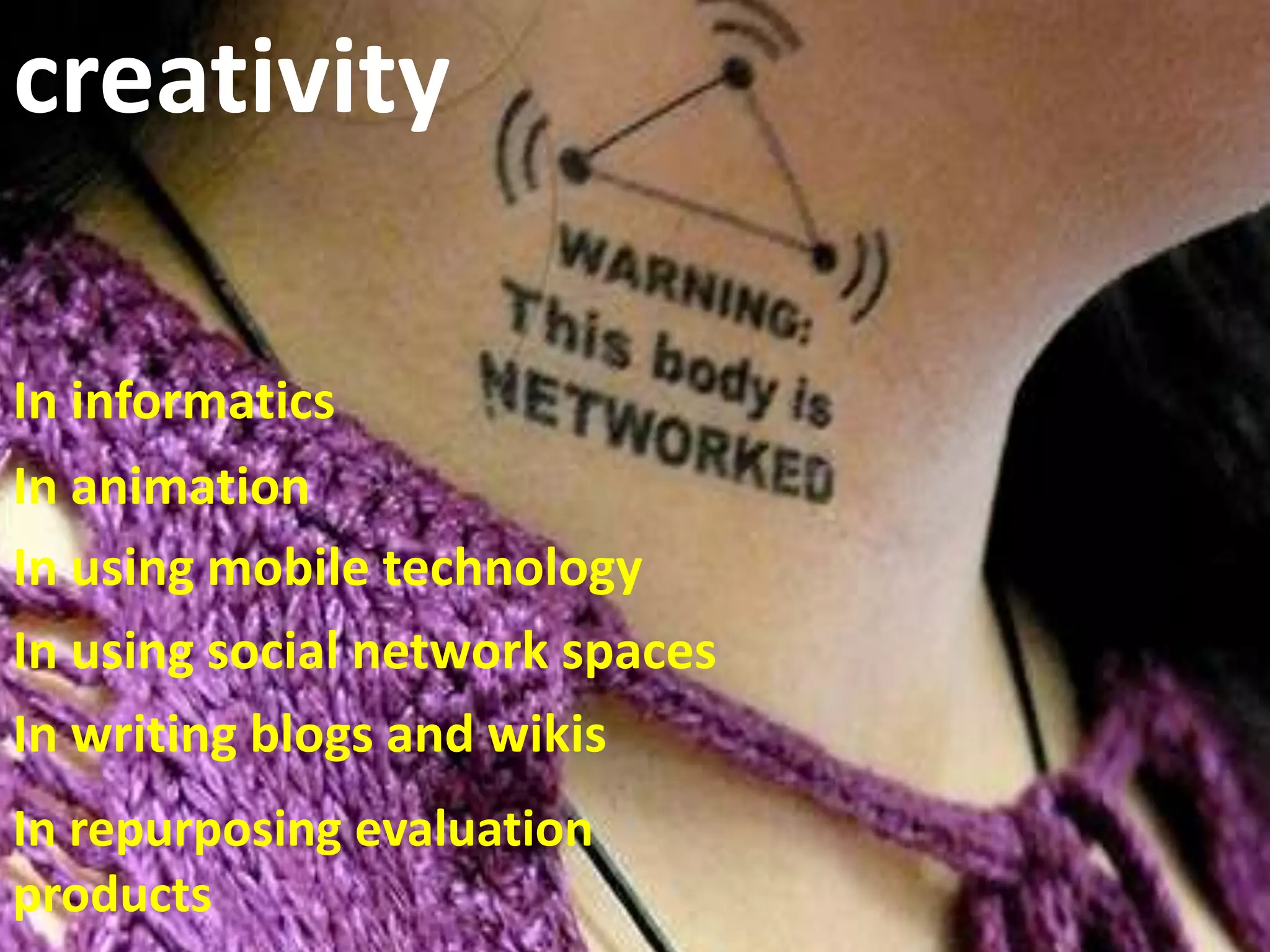
creativityIn informaticsIn animationIn using mobile technologyIn using social network spacesIn writing blogs and wikisIn repurposing evaluation products

Evaluation 2.0

  • 1.
  • 5.
    TheFuture...?cc SteveWheeler, University of Plymouth, 20101989: ‘The future is multi-media’1999: ‘The future is the Web’2009: ‘The future is smart mobile’hof.povray.org
  • 6.
    Web 1.0 linksinformationcc Steve Wheeler, University of Plymouth, 2010Anything can connect to anythingSource: Sabin-Corneliu Buragawww.localseoguide.com
  • 7.
  • 8.
    Web 2.0: Userparticipationcc Steve Wheeler, University of Plymouth, 2010www.ballroom-dance-chicago.blogspot.com/Source: Sabin-CorneliuBuraga
  • 9.
    Web 2.0 Communitiesof PracticeBostInnovation
  • 10.
    Web 3.0: Linksknowledgecc Steve Wheeler, University of Plymouth, 2010Existing data re-connected for other (smarter) usesAdapted from : Sabin-Corneliu Buragahttp://farm4.static.flickr.com
  • 11.
    Web 2.0 ToolsGeneratingContentcc Steve Wheeler, University of Plymouth, 2010Sharing ContentOrganising Content
  • 12.
    Web 2.0 ToolsGeneratingContentCommunicationcc Steve Wheeler, University of Plymouth, 2010Sharing ContentOrganising Content
  • 14.
    Web 2.0 From ‘sticky’ to participative cc Steve Wheeler, University of Plymouth, 2010The ‘Architecture of Participation’http://www.eastone.co.uk/
  • 15.
    architecture of participationWeb2.0cc Steve Wheeler, University of Plymouth, 2009User generated content
  • 16.
    architecture of participationSharingCollaboratingToolsWeb2.0Taggingcc Steve Wheeler, University of Plymouth, 2009User generated contentVotingNetworking
  • 17.
    architecture of participationSharingCollaboratingToolsIfit’s not participatoryit’s not social mediaLearning 2.0Taggingcc Steve Wheeler, University of Plymouth, 2009User generated contentVotingNetworking
  • 18.
    How has thischanged the direction of the evaluation process?Kimba Howard 2005
  • 19.
  • 20.
  • 21.
    Which book?Alex Tan2008 blog.asiahotels.com
  • 22.
    cc SteveWheeler, University of Plymouth, 2010Social media gives stakeholders a real voice http://www.uksmallbusinesswebsites.co.uk
  • 23.
    Stakeholderscan create andpublish evaluation contentIan Alexander easyweb.easynet.co.uk
  • 24.
    stakeholders..In the digitalage, common location is not so important.http://www.psfk.com
  • 25.
    Deals with multiplerealitiesRich multi media data setLocalisationRepurposable digital products – open contentNASA Images
  • 26.
    Evaluationhttp://1.bp.blogspot.comcc SteveWheeler, University of Plymouth, 2010“…that breaks the old silos, links everyone, everything, everywhere, and makes the whole thing potentially smarter." - Greg Boutan
  • 27.
    New tools to‘open up’ evaluationA J Cann 2010
  • 28.
    My top Evaluation2.0 toolsWeb site - Blog Microblog (twitter)Google mapsWikiGoogle docsPodcastingSlidecastTag cloudSocial networkingCartoons and comics
  • 29.
  • 30.
  • 31.
  • 32.
  • 33.
  • 34.
    Photo sharingcc Steve Wheeler, University of Plymouth, 2010
  • 35.
    “For the firsttime we are preparing … for a future we cannot clearly describe.” –David Warlickcc Steve Wheeler, University of Plymouth, 2009http://communications.nottingham.ac.uk/podcasts/
  • 36.
    WHY SHOULD WEMOVEDOWNTHIS ROAD?
  • 37.
    Digital natives?Evaluation clientsand consumers of the futurecc Steve Wheeler, University of Plymouth, 2009http://tatango.com
  • 38.
    Is there arole for the evaluator and what does that look like?Alex Bogusky
  • 39.
    “The present speedof information based on new technologies has undermined traditional expert driven processes of knowledge development and dissemination.” ~ Dave Cormiercc Steve Wheeler, University of Plymouth, 2010www.aaceconnect.org
  • 40.
    Creating the algorithmsJoosBuijs2010 from Sheldon Cooper
  • 41.
    Focus on trainingothers“It's not what you know that counts anymore. It's what you can learn.”– Don Tapscottcc Steve Wheeler, University of Plymouth, 2009http://www.nationalpost.com
  • 42.
    Crowd sourcingcc Steve Wheeler, University of Plymouth, 2010http://i.imwx.com
  • 43.
    “We need diversityof thought in the world to face the new challenges.” ~ Sir Tim Berners-Leecc Steve Wheeler, University of Plymouth, 2010www.topnews.in
  • 44.
    Wisdom of Crowds...vsStupidityof Mobscc Steve Wheeler, University of Plymouth, 2010
  • 45.
  • 46.
    No hiding placeRulesof engagement are changingIn the past you engaged with a client;now you are engaging with a communitycc Steve Wheeler, University of Plymouth, 2009Changes the rules on confidentiality, on ownership, on copyrightSource: Wikipediahttp://www.pestproducts.com
  • 47.
    creativityIn informaticsIn animationInusing mobile technologyIn using social network spacesIn writing blogs and wikisIn repurposing evaluation products
  • 49.
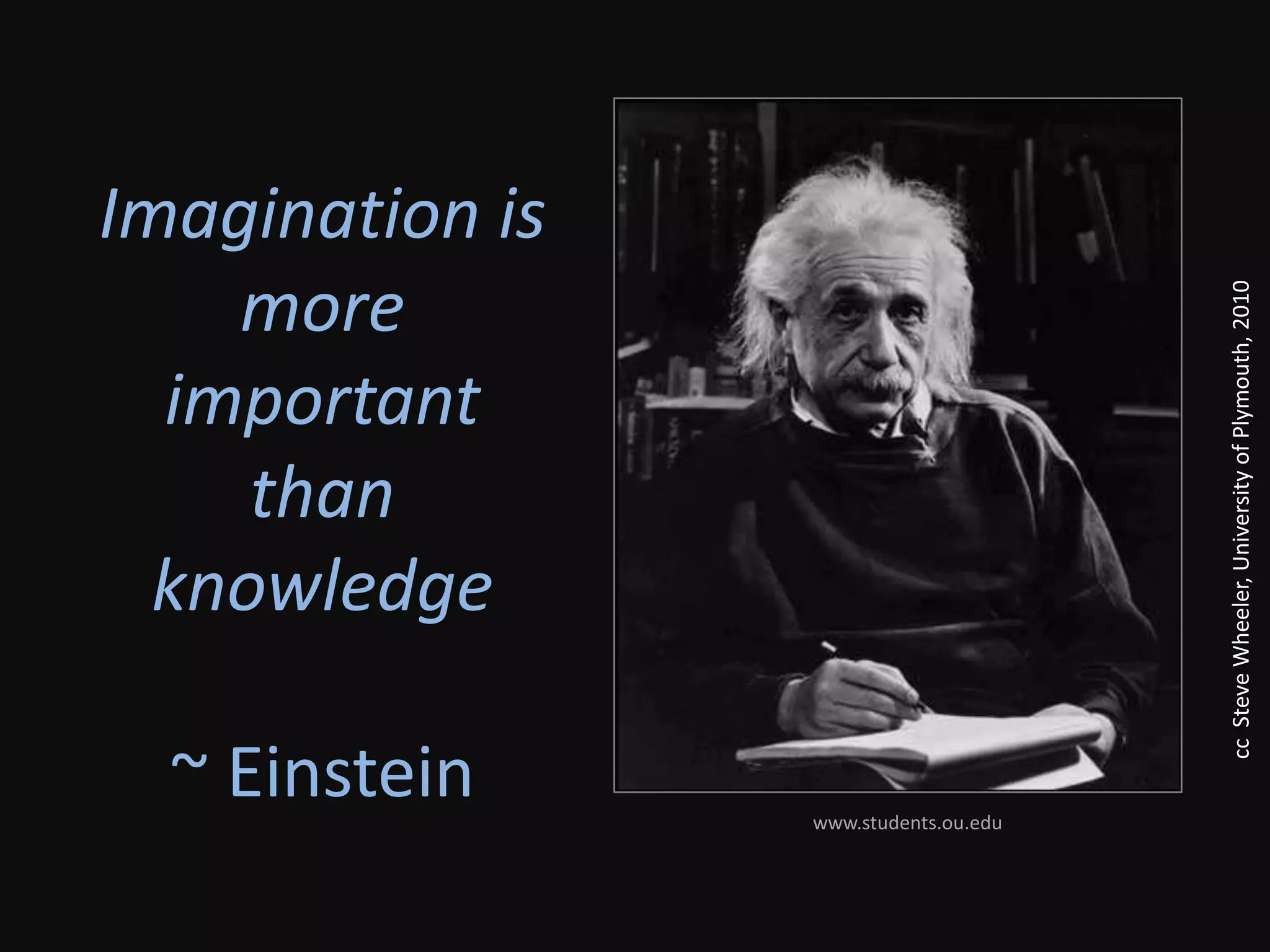
    Imagination is moreimportant than knowledge~ Einsteincc Steve Wheeler, University of Plymouth, 2010www.students.ou.edu
  • 50.
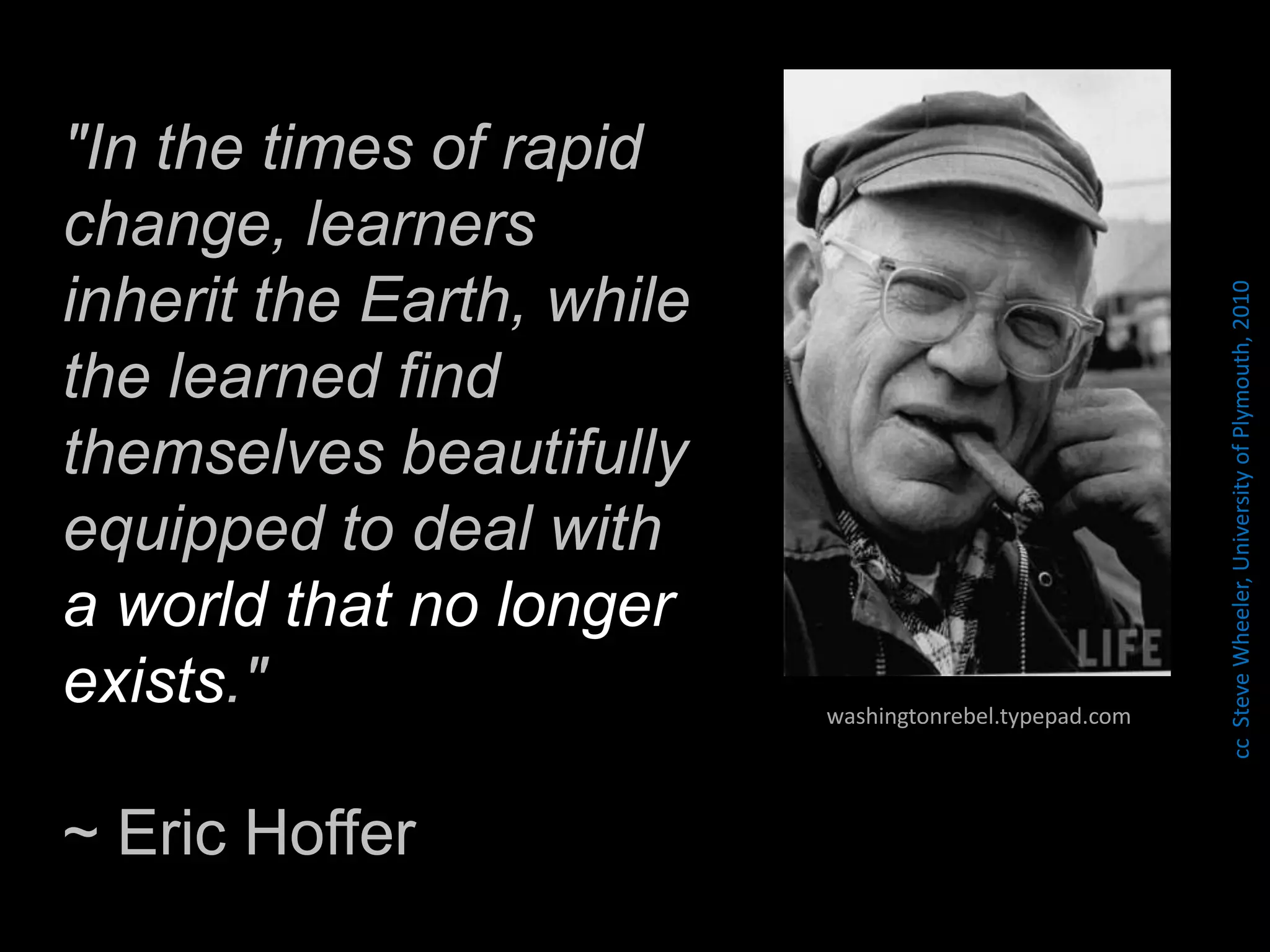
    "In the timesof rapid change, learners inherit the Earth, while the learned find themselves beautifully equipped to deal with a world that no longer exists."~ Eric Hoffercc Steve Wheeler, University of Plymouth, 2010washingtonrebel.typepad.com
  • 51.
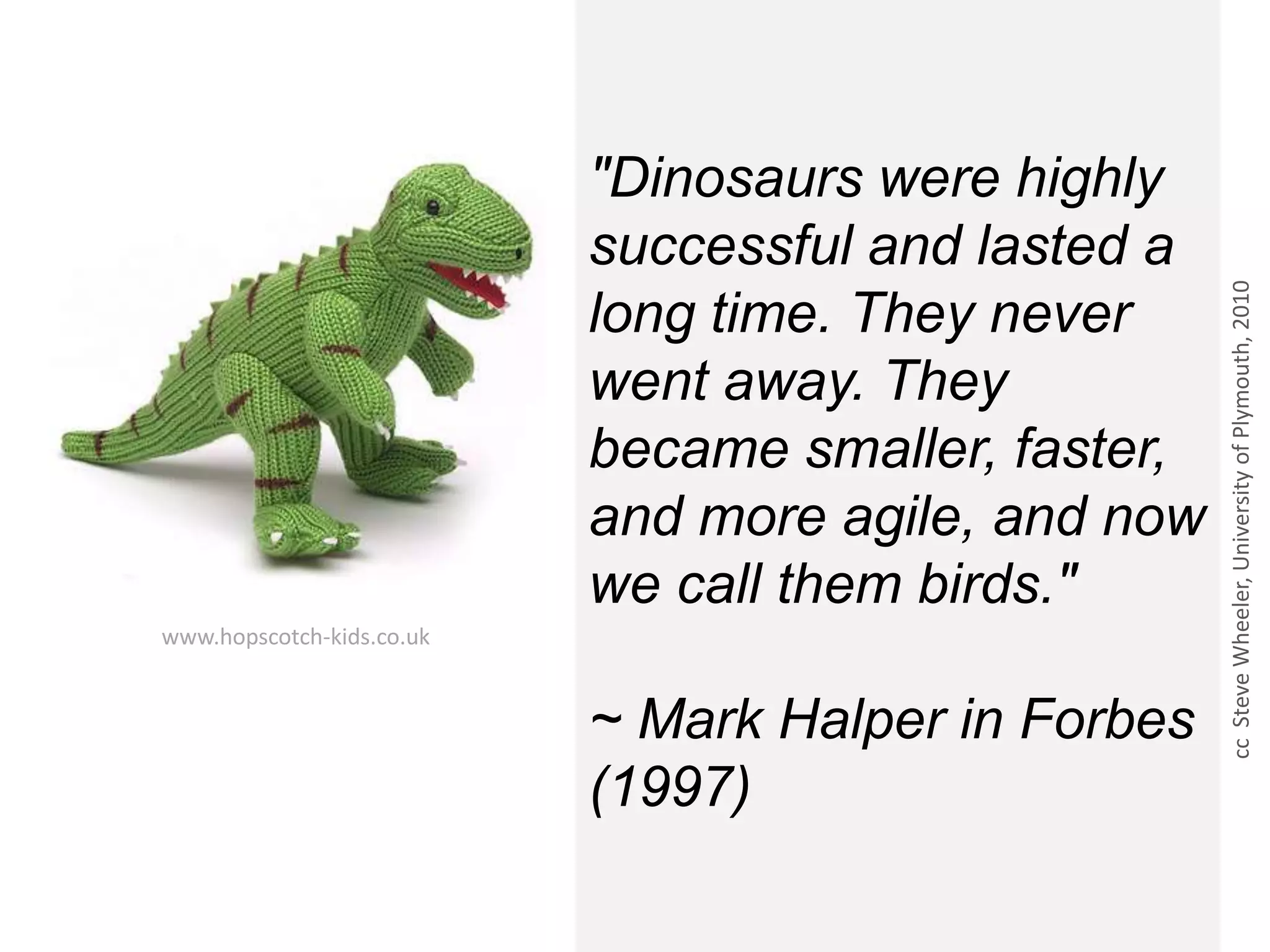
    "Dinosaurs were highlysuccessful and lasted a long time. They never went away. They became smaller, faster, and more agile, and now we call them birds." ~ Mark Halper in Forbes (1997)cc Steve Wheeler, University of Plymouth, 2010www.hopscotch-kids.co.uk
  • 52.
  • 53.
    Jenny Hughesjenhughes@mac.comPontydysgu, WalesThiswork is licensed under the Creative Commons Attribution-Non-Commercial-No Derivative Works 2.0 UK: International Licence.UKES Annual Conference, Birmingham 23 November 2010