Cassava CI Project 3:
Implementing MARS Project for
drought tolerance
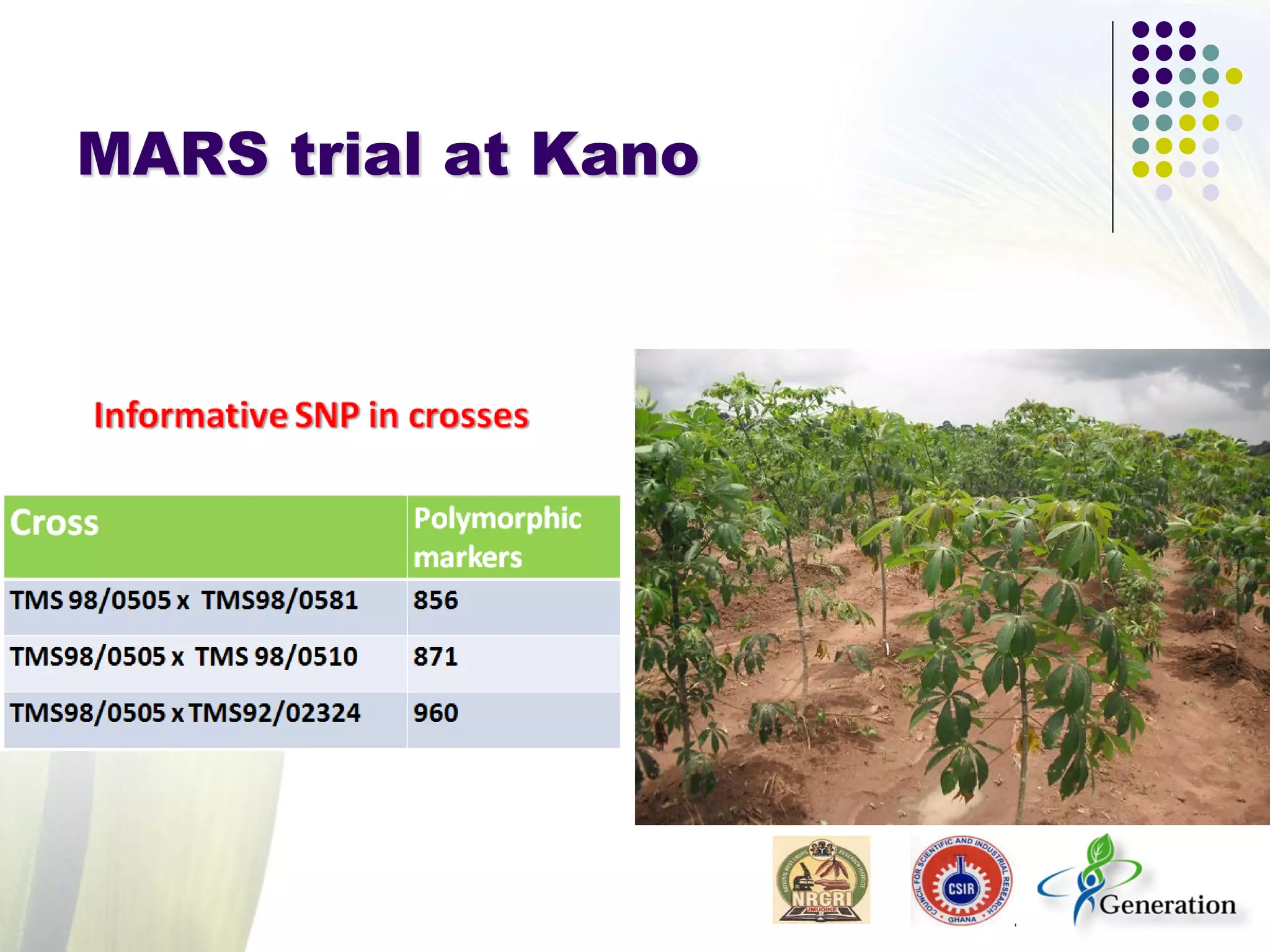
MARS trial at Kano
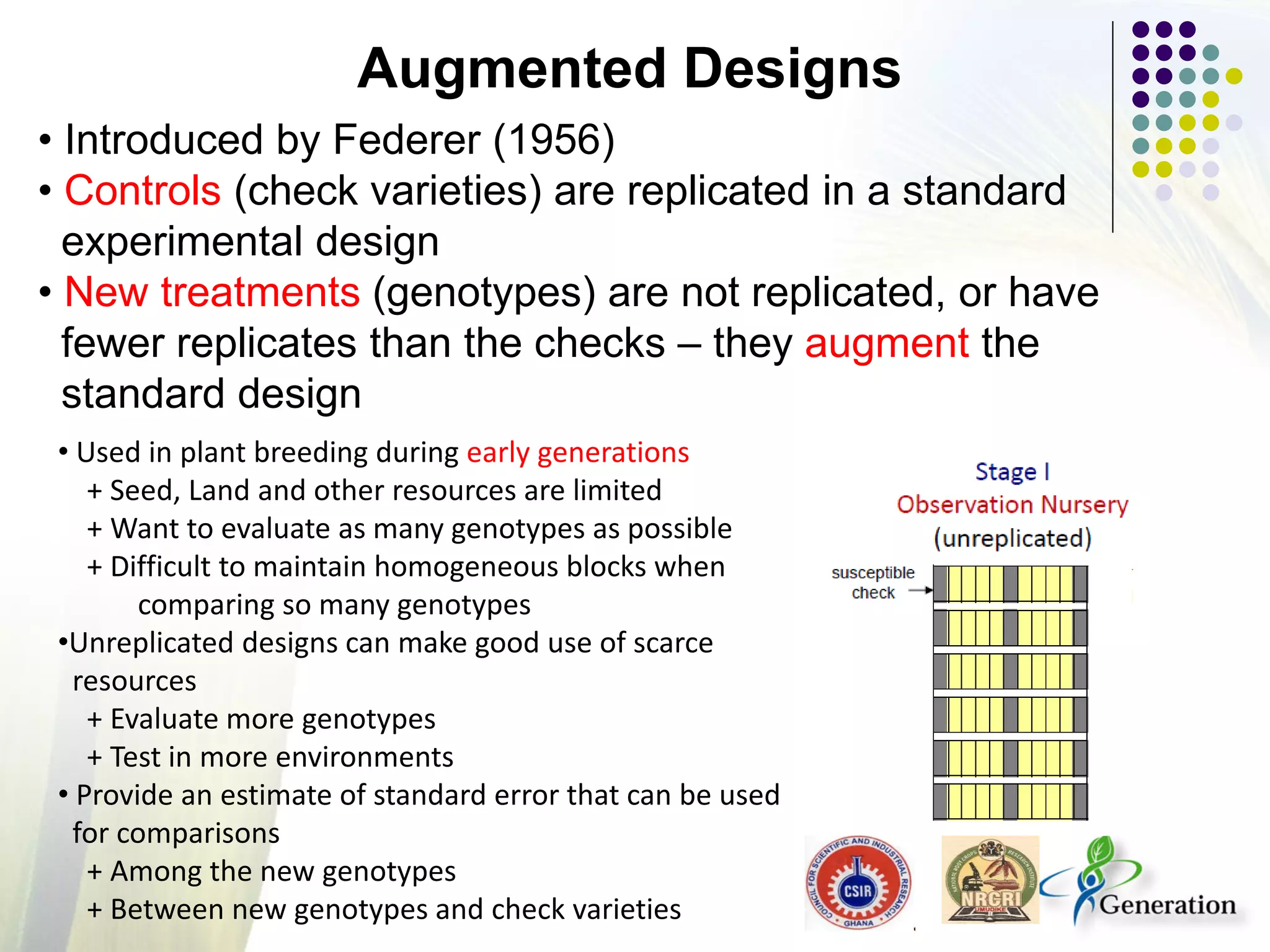
• Introduced by Federer (1956)
• Controls (check varieties) are replicated in a standard
experimental design
• New treatments (genotypes) are not replicated, or have
fewer replicates than the checks – they augment the
standard design
Augmented Designs
• Used in plant breeding during early generations
+ Seed, Land and other resources are limited
+ Want to evaluate as many genotypes as possible
+ Difficult to maintain homogeneous blocks when
comparing so many genotypes
•Unreplicated designs can make good use of scarce
resources
+ Evaluate more genotypes
+ Test in more environments
• Provide an estimate of standard error that can be used
for comparisons
+ Among the new genotypes
+ Between new genotypes and check varieties
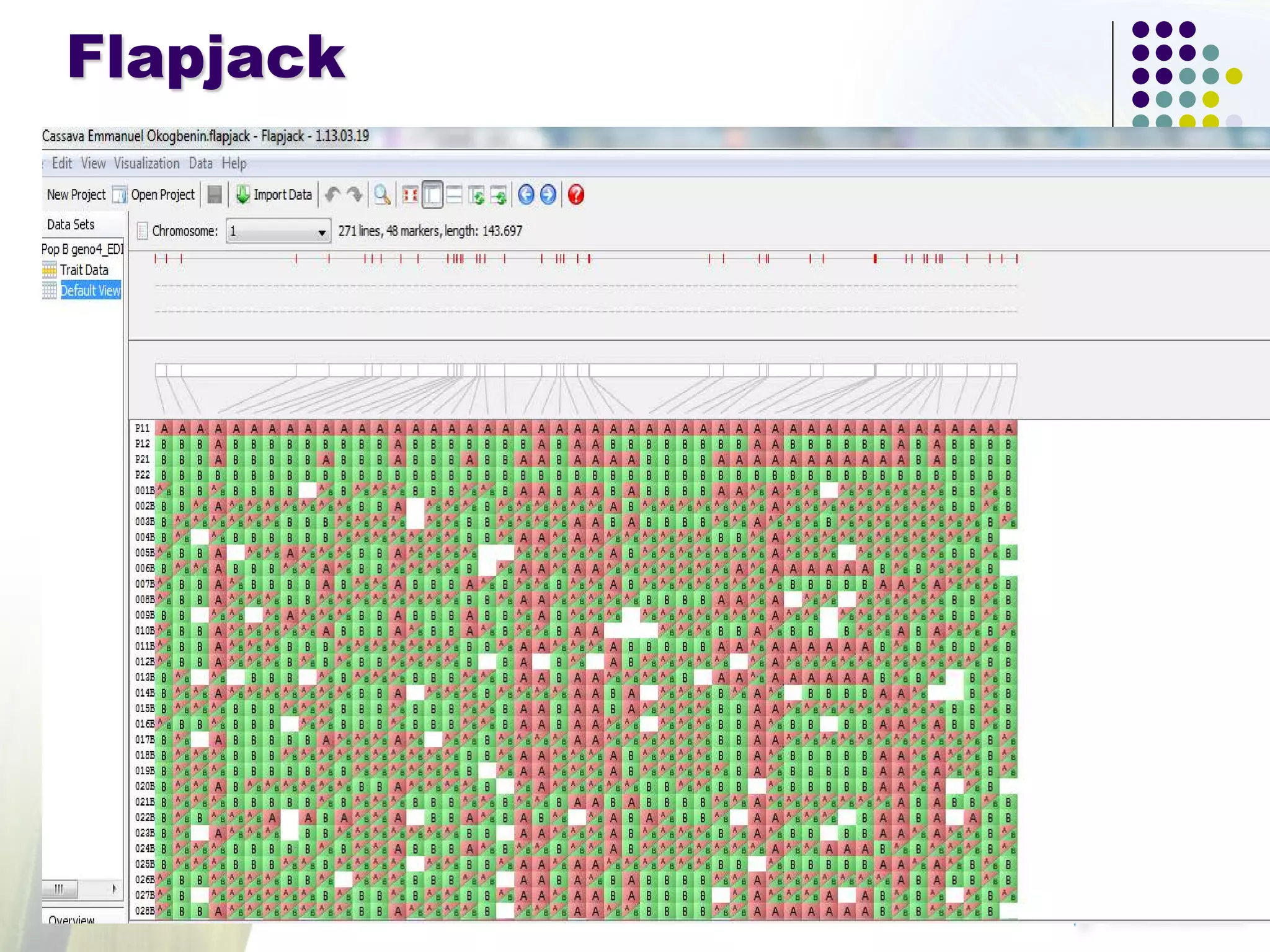
Flapjack
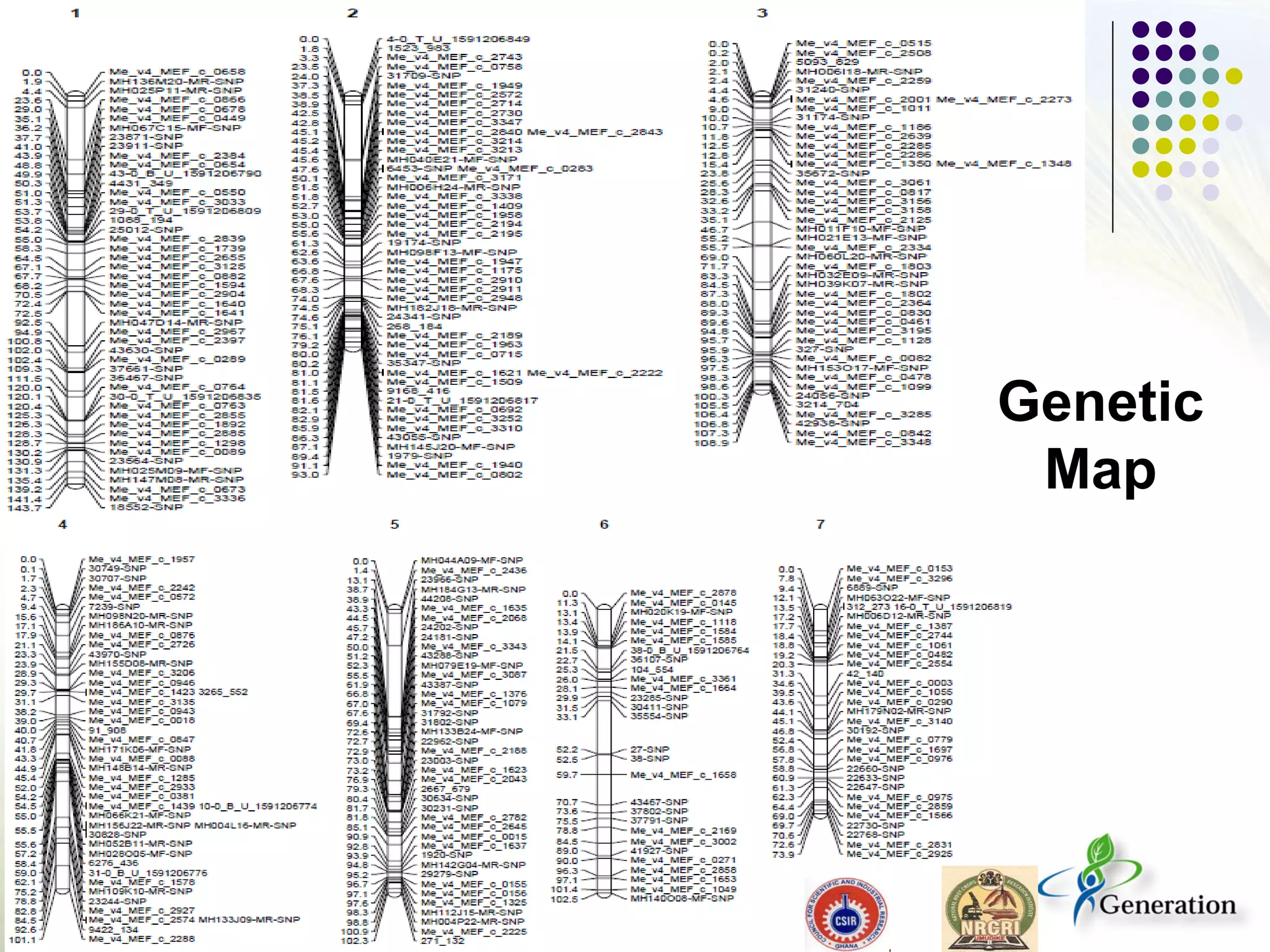
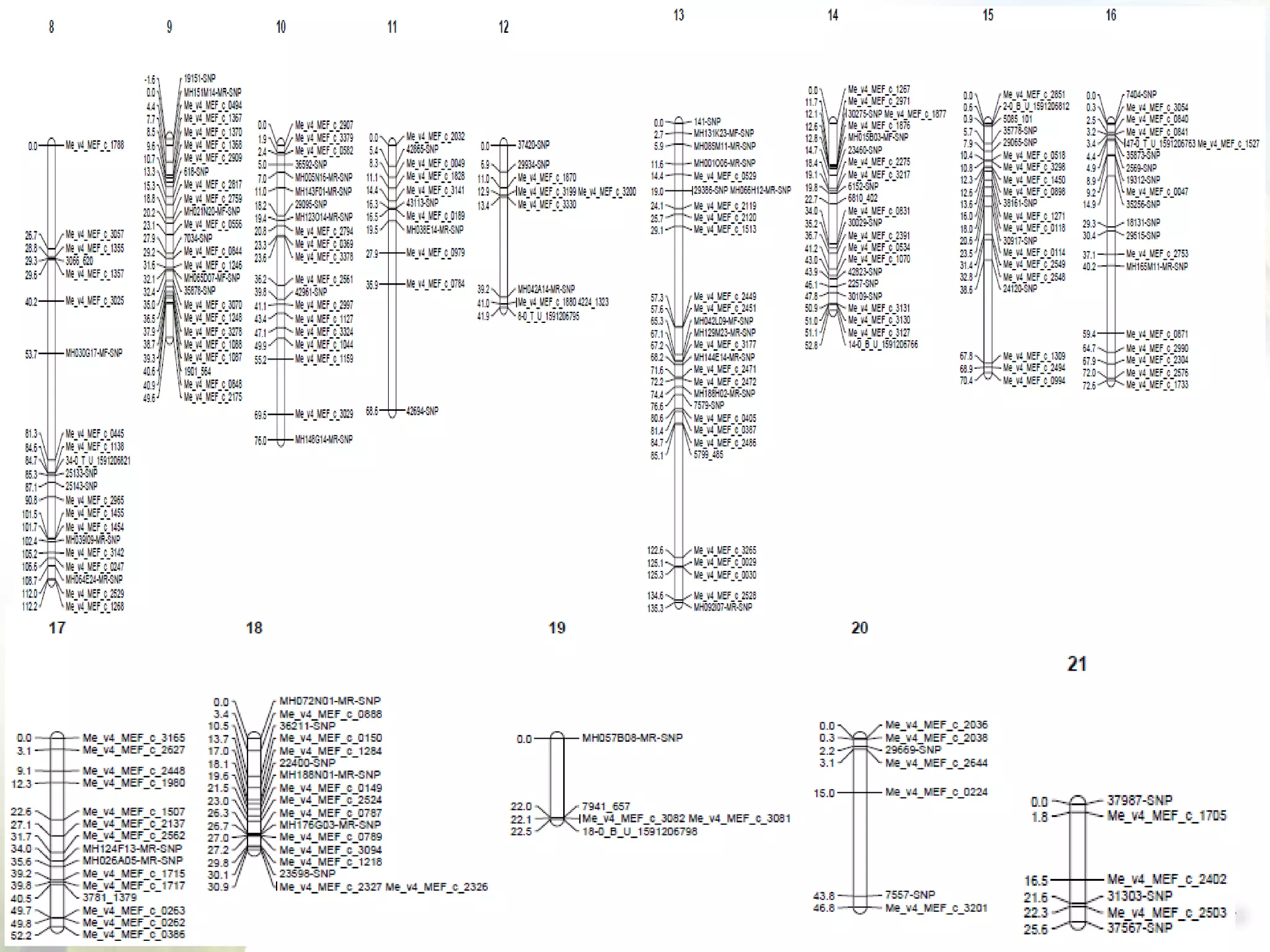
Genetic
Map
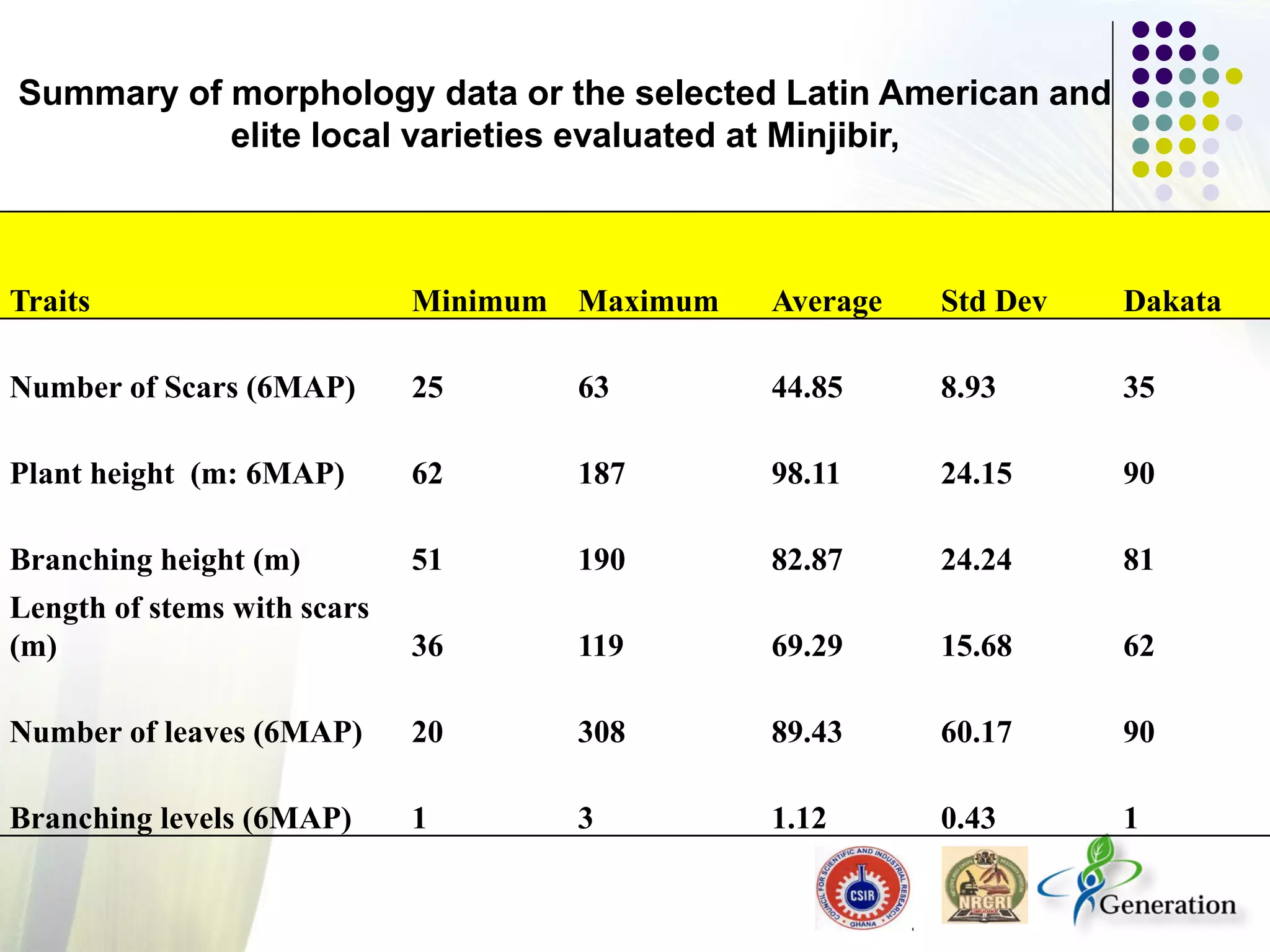
Traits Minimum Maximum Average Std Dev Dakata
Number of Scars (6MAP) 25 63 44.85 8.93 35
Plant height (m: 6MAP) 62 187 98.11 24.15 90
Branching height (m) 51 190 82.87 24.24 81
Length of stems with scars
(m) 36 119 69.29 15.68 62
Number of leaves (6MAP) 20 308 89.43 60.17 90
Branching levels (6MAP) 1 3 1.12 0.43 1
Summary of morphology data or the selected Latin American and
elite local varieties evaluated at Minjibir,
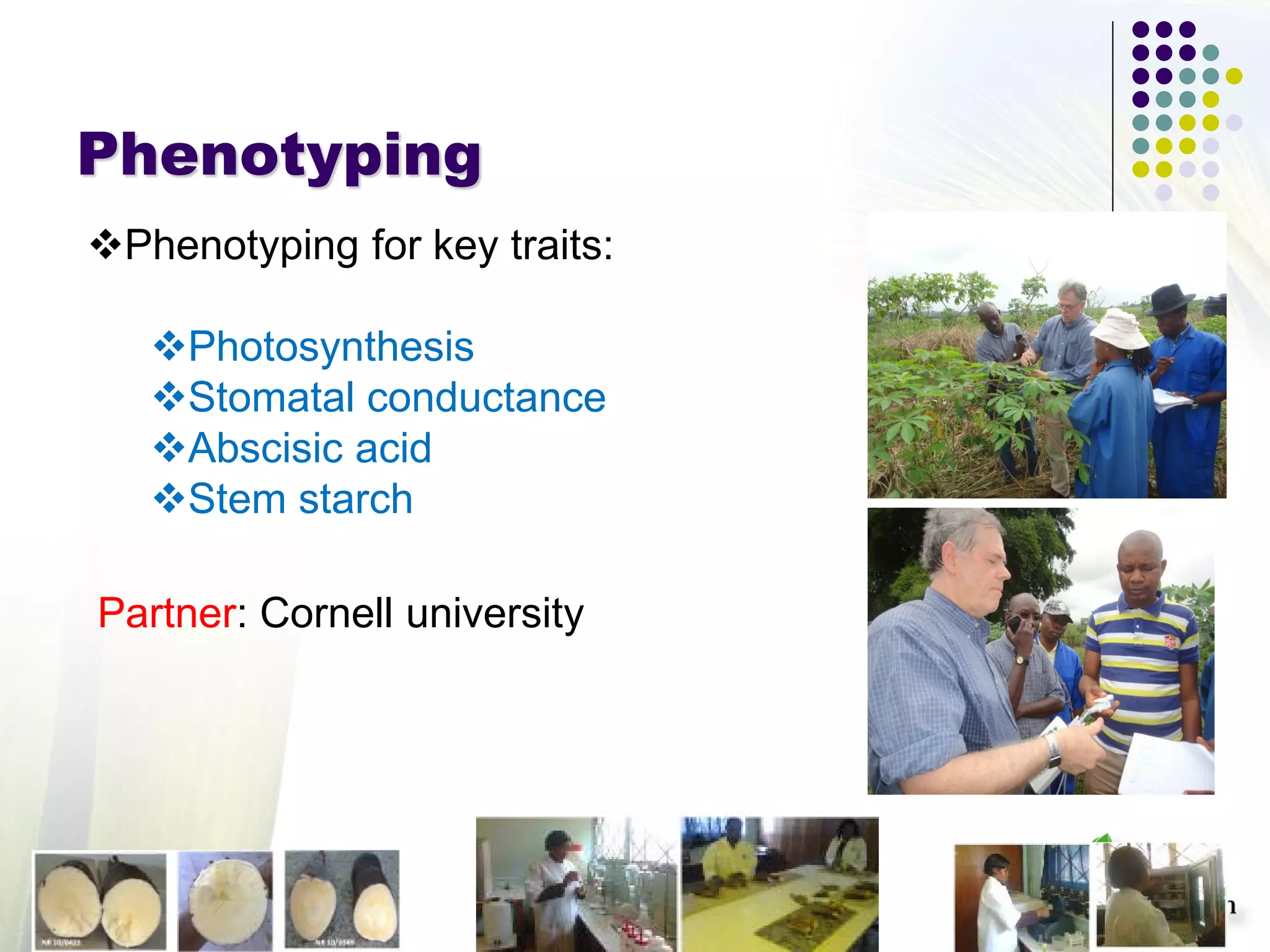
Phenotyping
Phenotyping for key traits:
Photosynthesis
Stomatal conductance
Abscisic acid
Stem starch
Partner: Cornell university
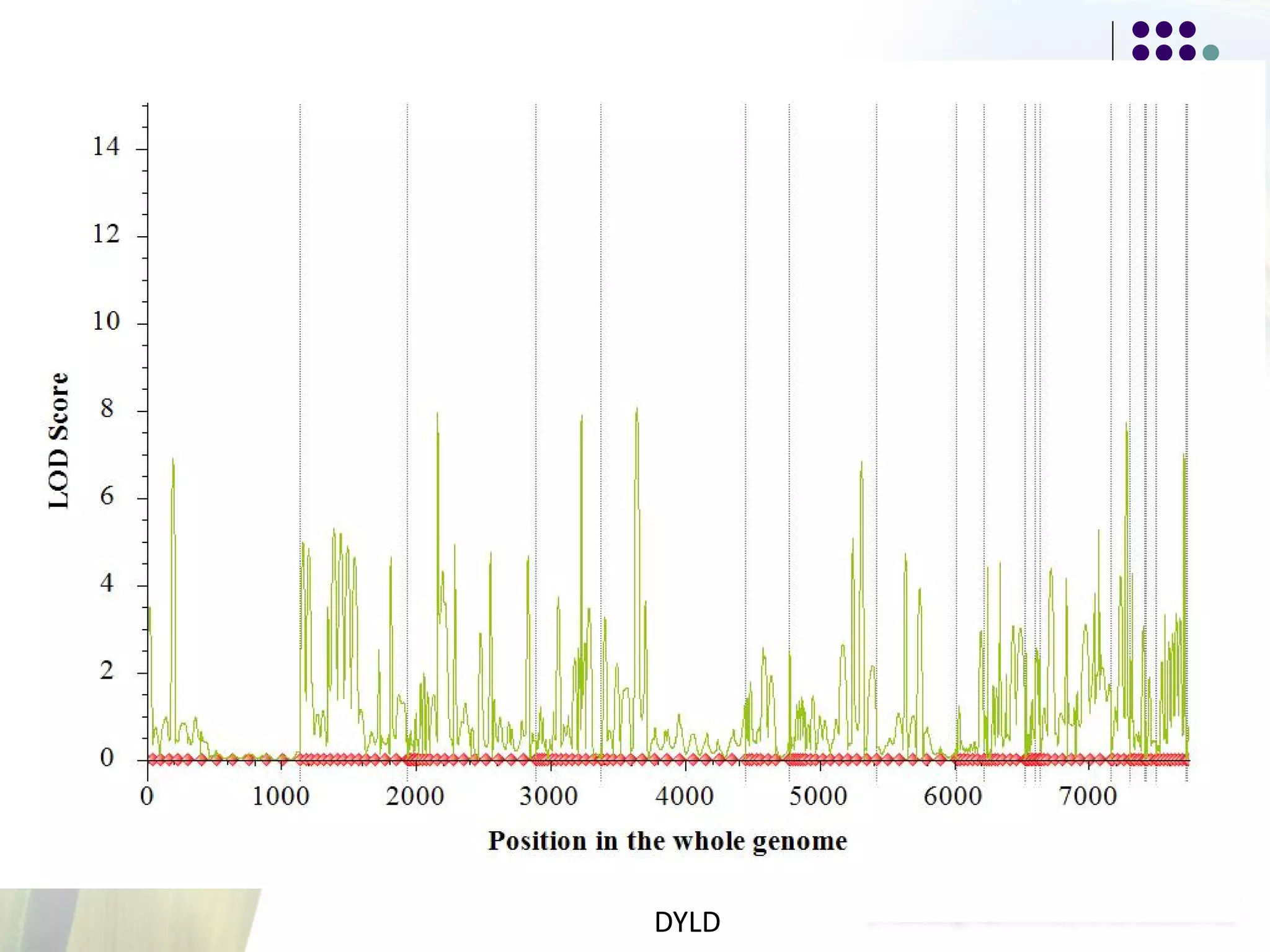
DYLD
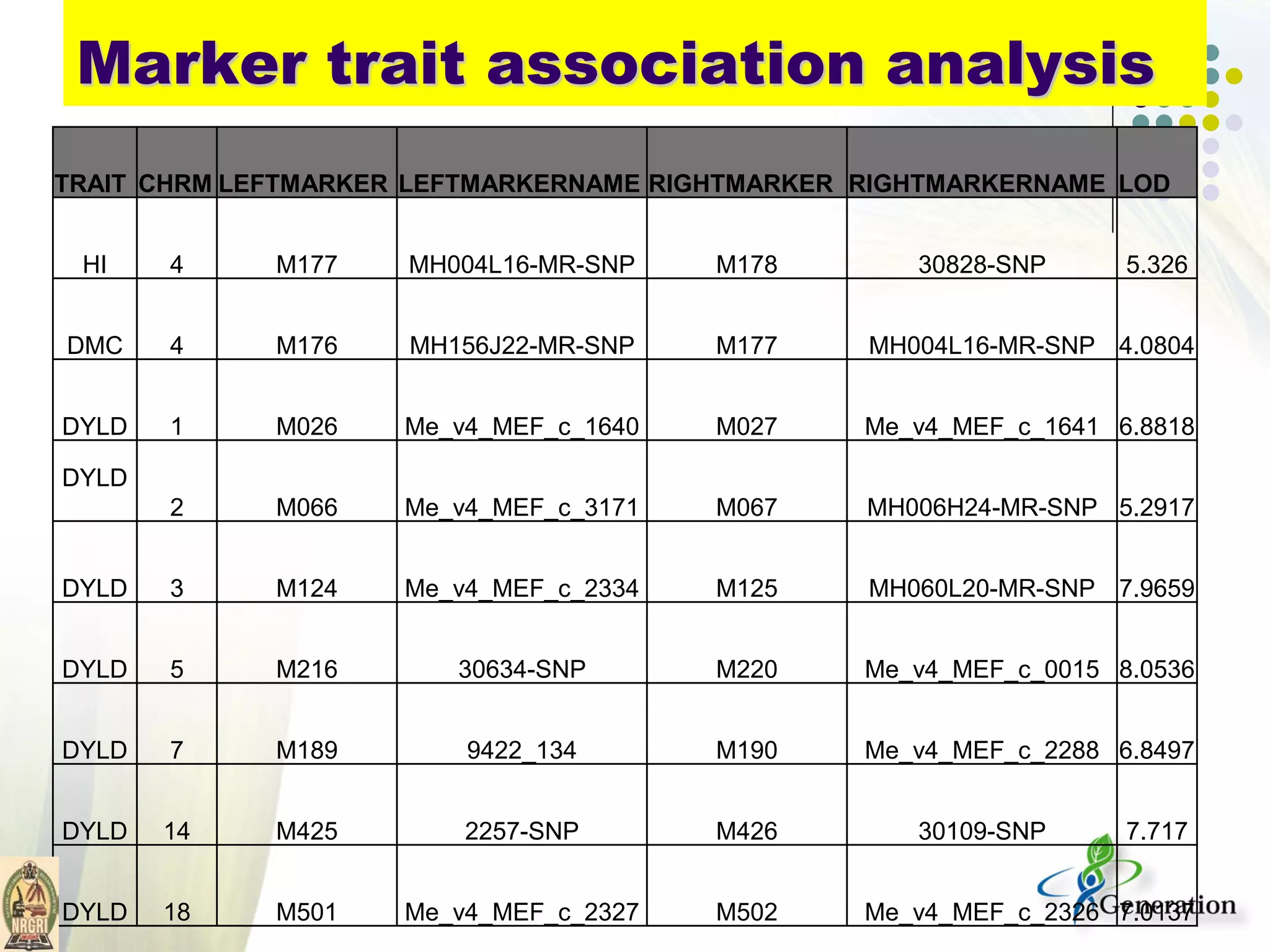
TRAIT CHRM LEFTMARKER LEFTMARKERNAME RIGHTMARKER RIGHTMARKERNAME LOD
HI 4 M177 MH004L16-MR-SNP M178 30828-SNP 5.326
DMC 4 M176 MH156J22-MR-SNP M177 MH004L16-MR-SNP 4.0804
DYLD 1 M026 Me_v4_MEF_c_1640 M027 Me_v4_MEF_c_1641 6.8818
DYLD
2 M066 Me_v4_MEF_c_3171 M067 MH006H24-MR-SNP 5.2917
DYLD 3 M124 Me_v4_MEF_c_2334 M125 MH060L20-MR-SNP 7.9659
DYLD 5 M216 30634-SNP M220 Me_v4_MEF_c_0015 8.0536
DYLD 7 M189 9422_134 M190 Me_v4_MEF_c_2288 6.8497
DYLD 14 M425 2257-SNP M426 30109-SNP 7.717
DYLD 18 M501 Me_v4_MEF_c_2327 M502 Me_v4_MEF_c_2326 7.0137
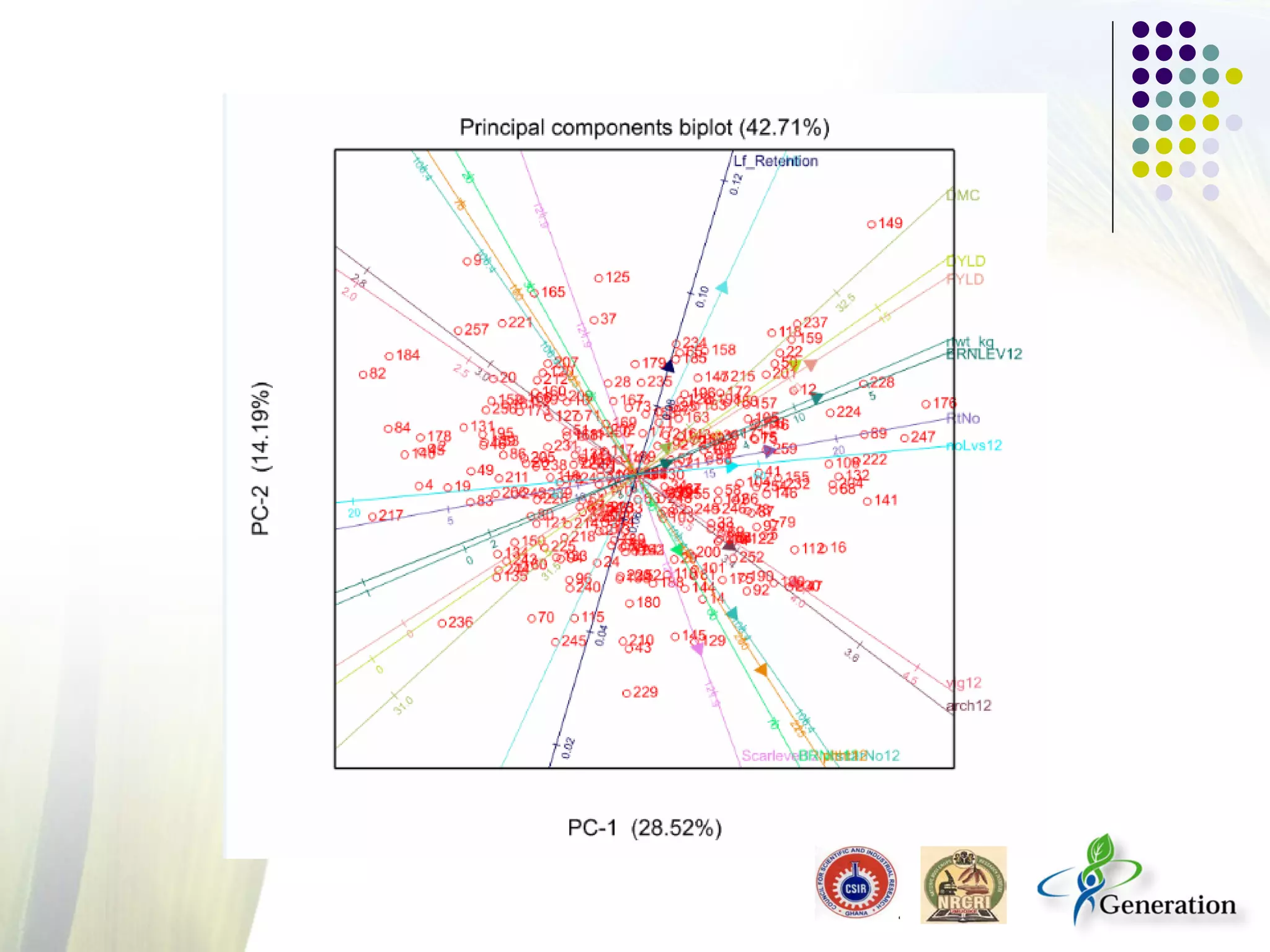
Marker trait association analysis
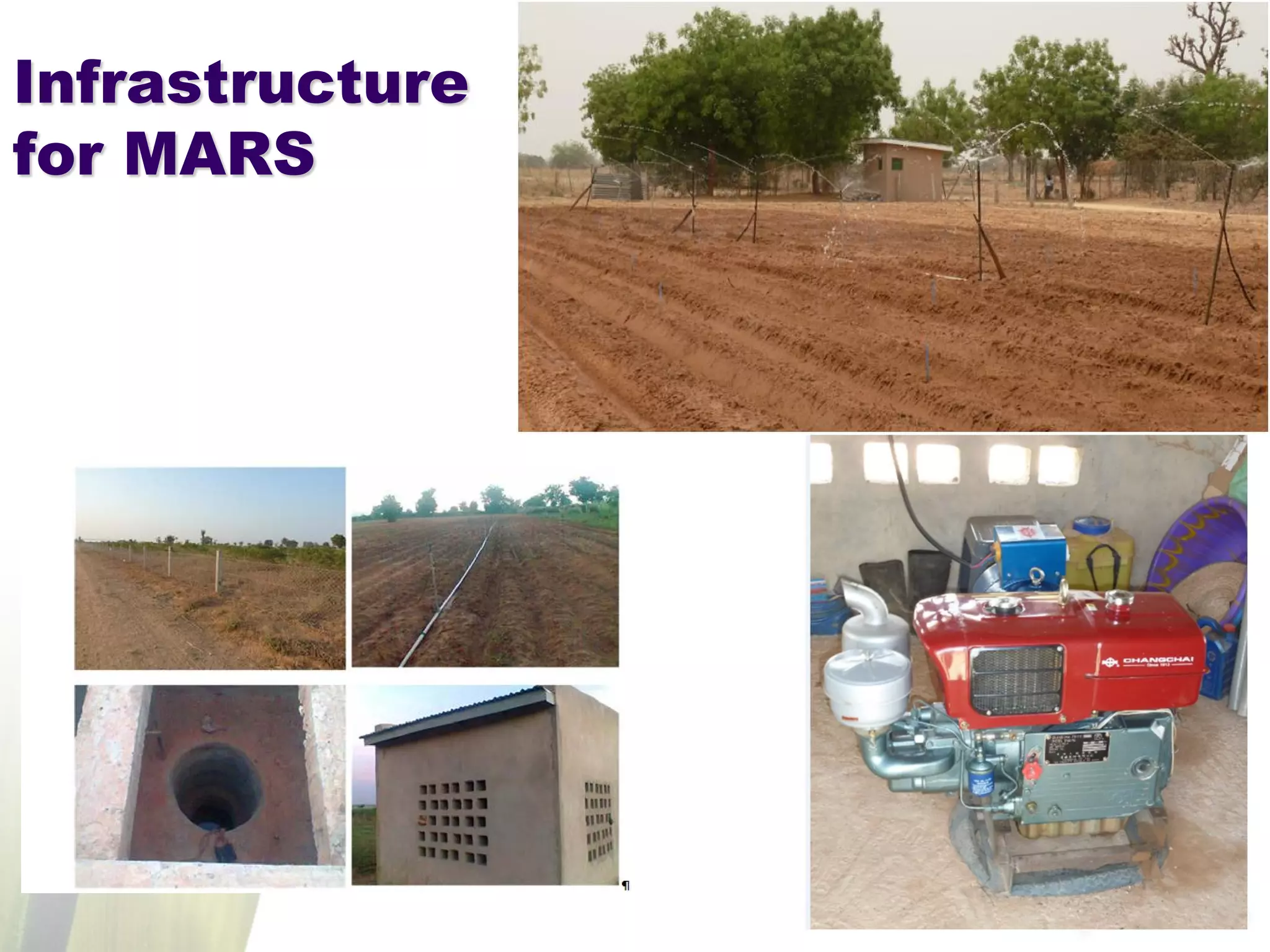
Infrastructure
for MARS
Cassava Breeding
Community of Practice:
Accomplishments in the
GCP and the Years Ahead
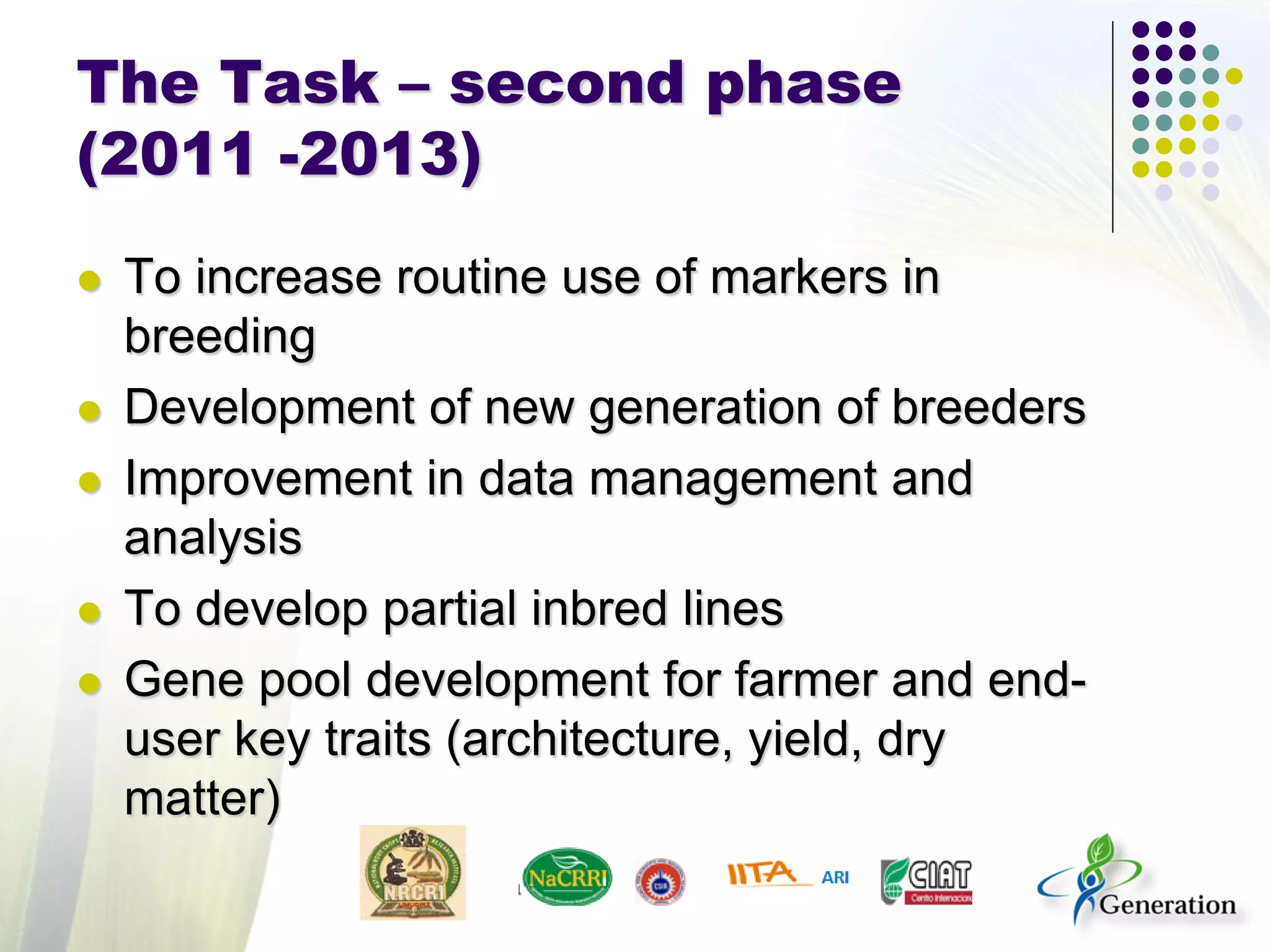
The Task – second phase
(2011 -2013)
 To increase routine use of markers in
breeding
 Development of new generation of breeders
 Improvement in data management and
analysis
 To develop partial inbred lines
 Gene pool development for farmer and end-
user key traits (architecture, yield, dry
matter)
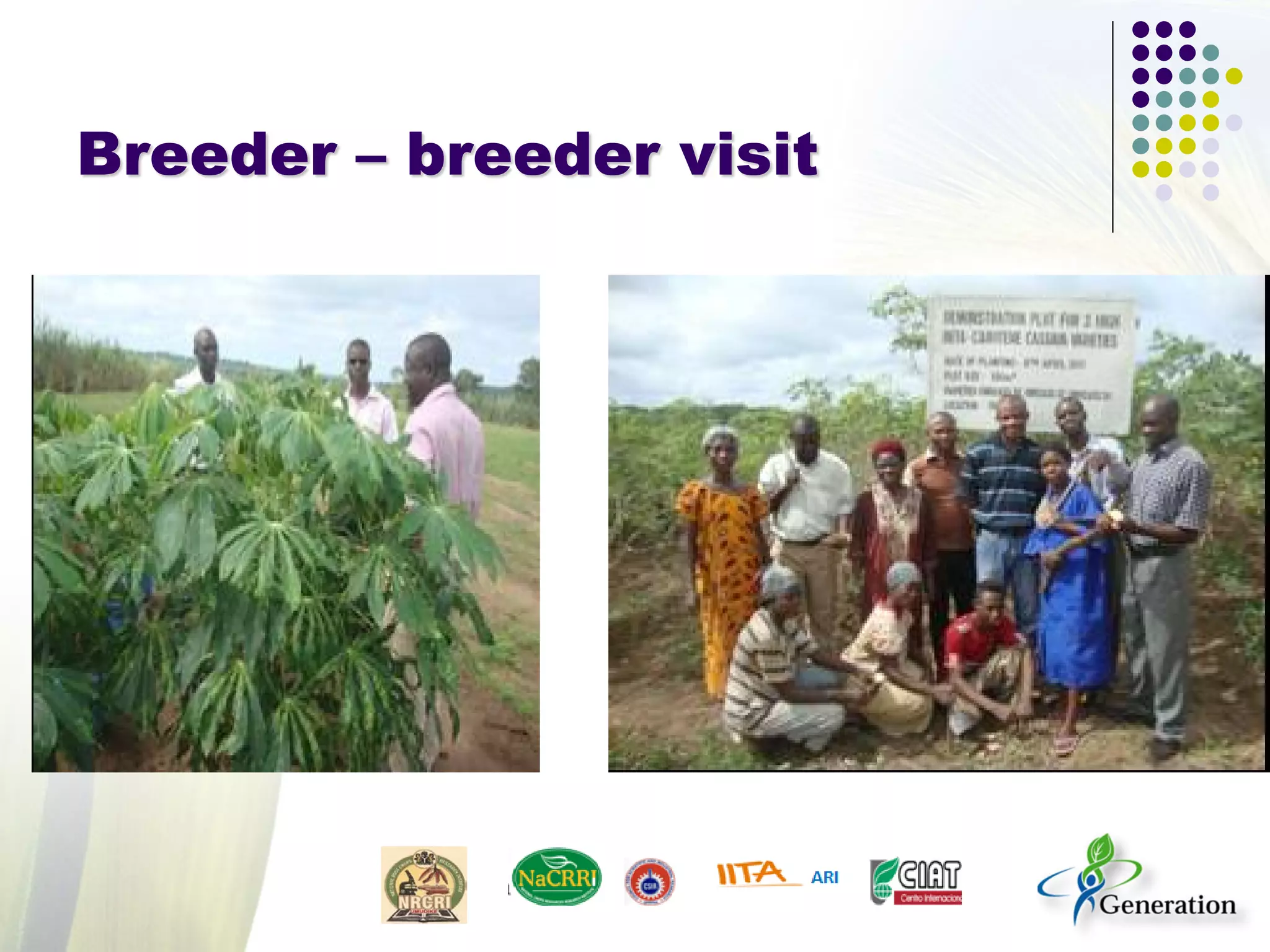
Breeder – breeder visit
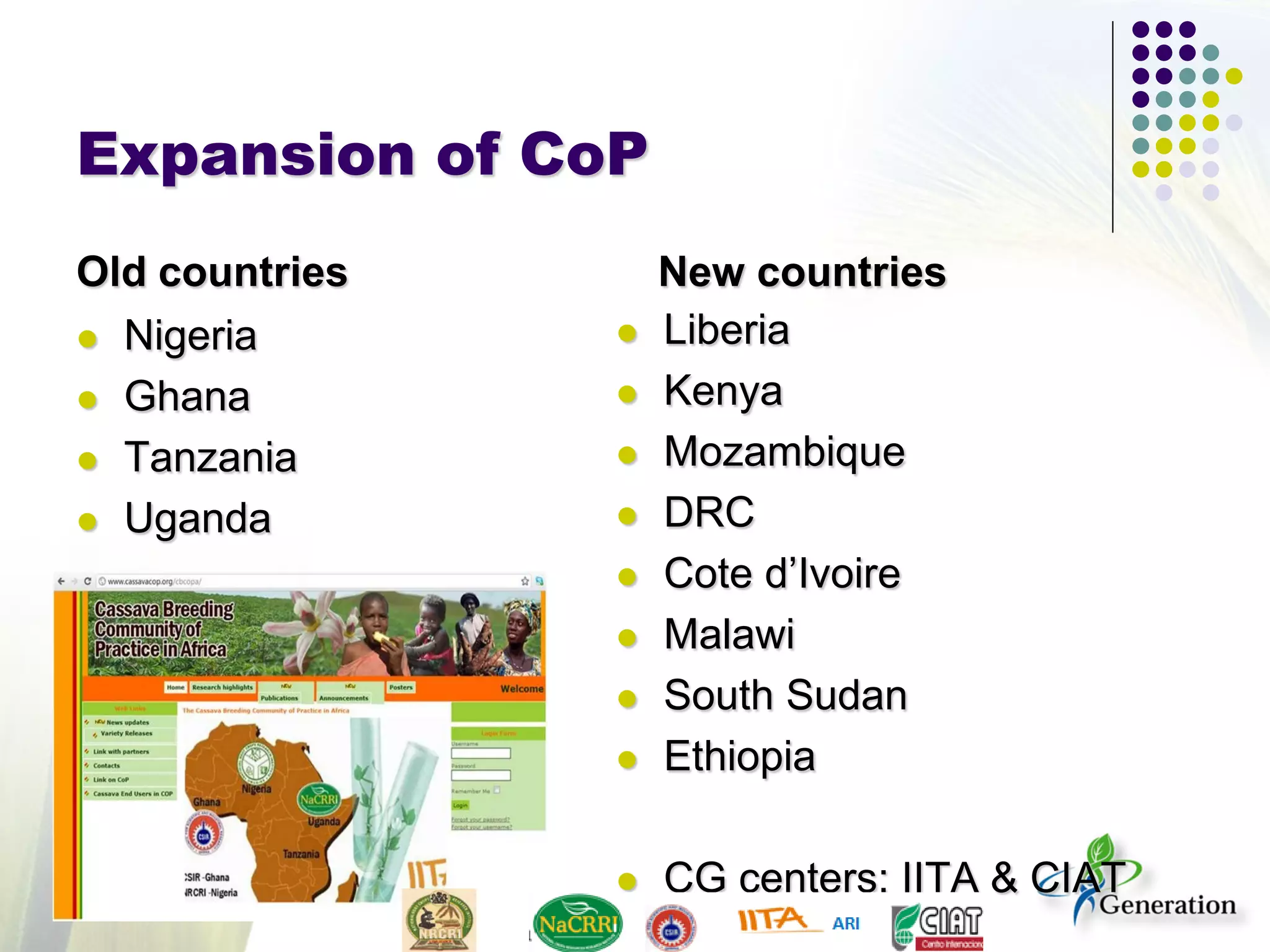
Expansion of CoP
Old countries
 Nigeria
 Ghana
 Tanzania
 Uganda
New countries
 Liberia
 Kenya
 Mozambique
 DRC
 Cote d’Ivoire
 Malawi
 South Sudan
 Ethiopia
 CG centers: IITA & CIAT
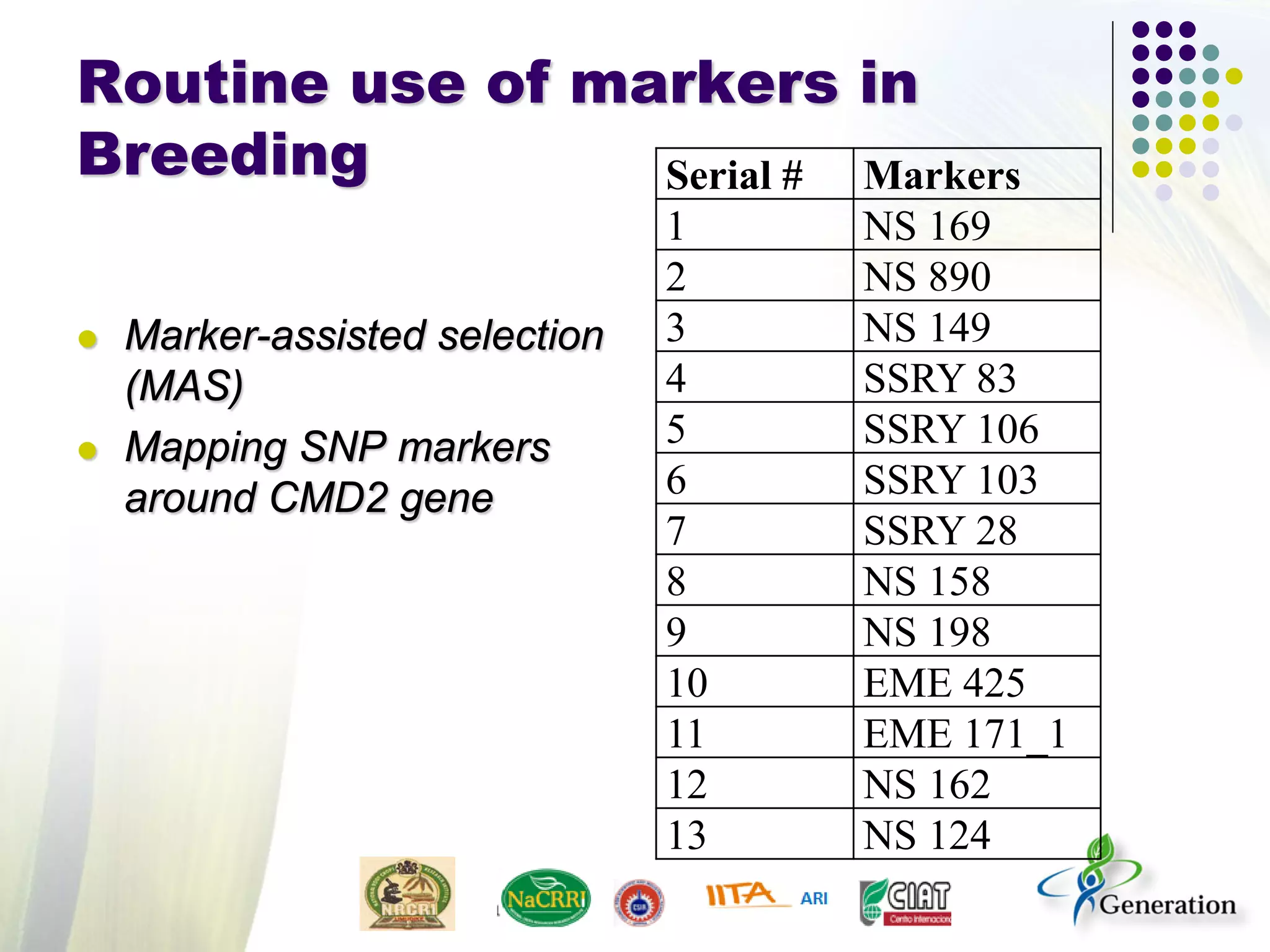
Routine use of markers in
Breeding
 Marker-assisted selection
(MAS)
 Mapping SNP markers
around CMD2 gene
Serial # Markers
1 NS 169
2 NS 890
3 NS 149
4 SSRY 83
5 SSRY 106
6 SSRY 103
7 SSRY 28
8 NS 158
9 NS 198
10 EME 425
11 EME 171_1
12 NS 162
13 NS 124
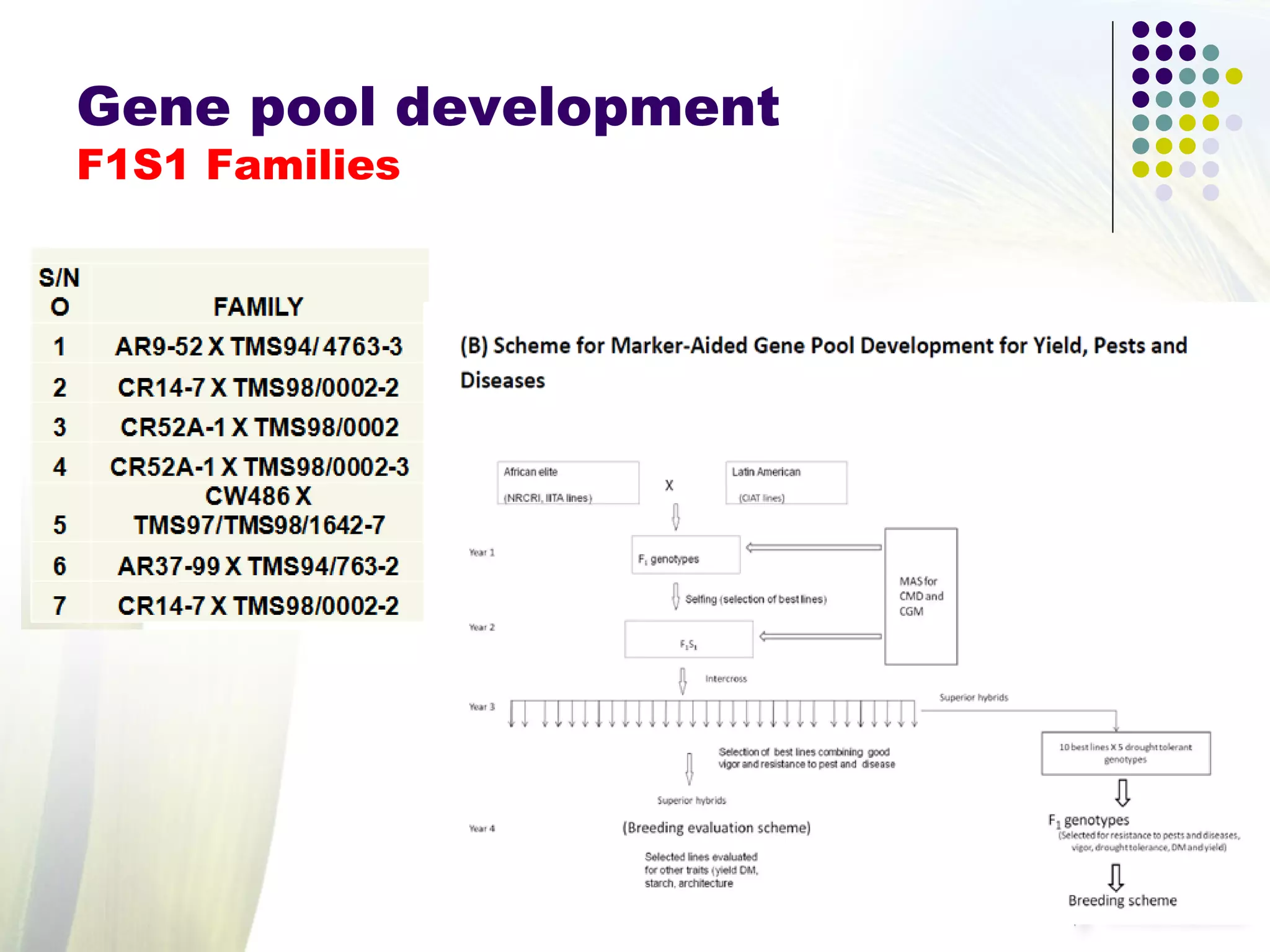
Gene pool development
F1S1 Families
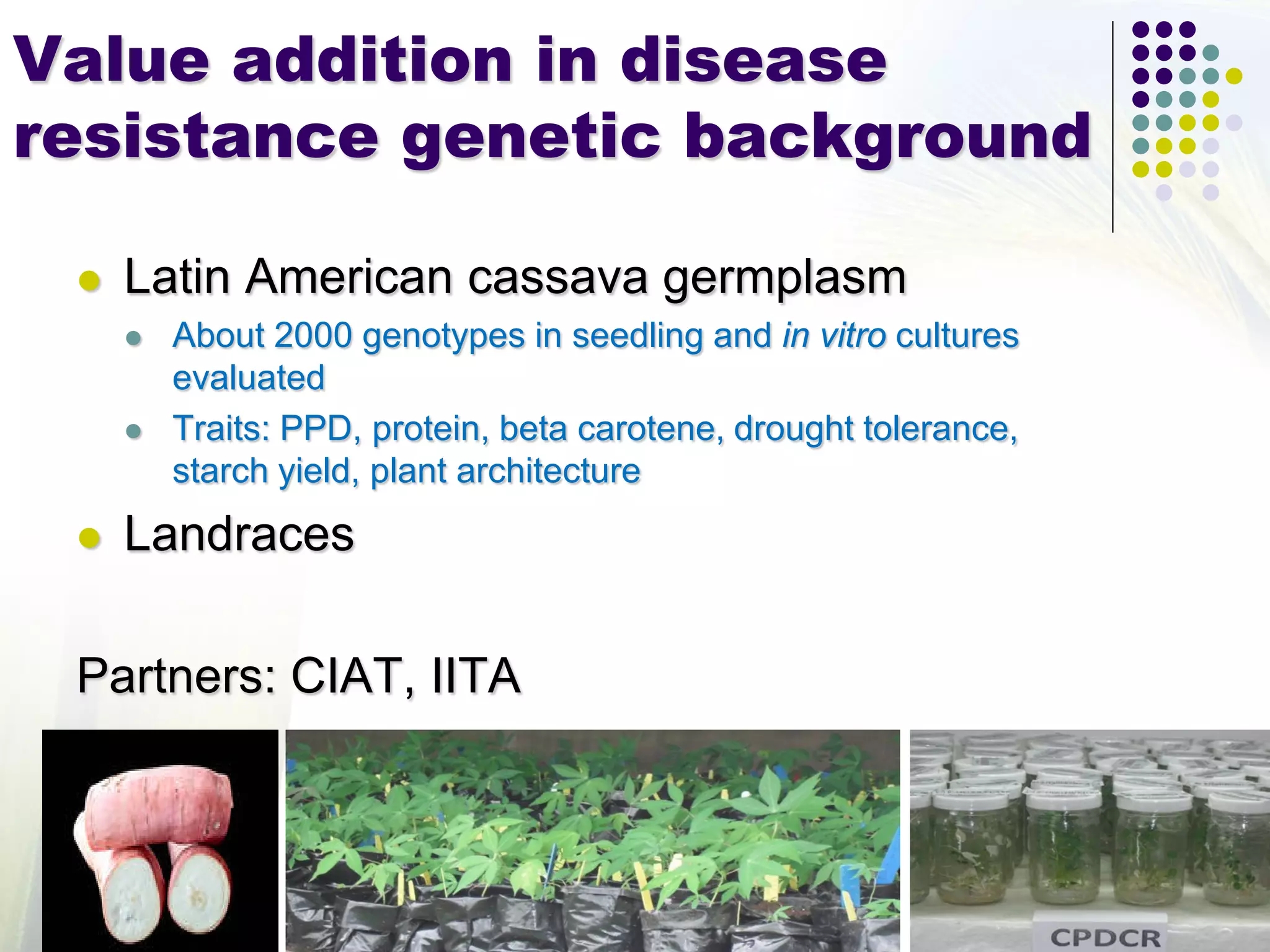
Value addition in disease
resistance genetic background
 Latin American cassava germplasm
 About 2000 genotypes in seedling and in vitro cultures
evaluated
 Traits: PPD, protein, beta carotene, drought tolerance,
starch yield, plant architecture
 Landraces
Partners: CIAT, IITA
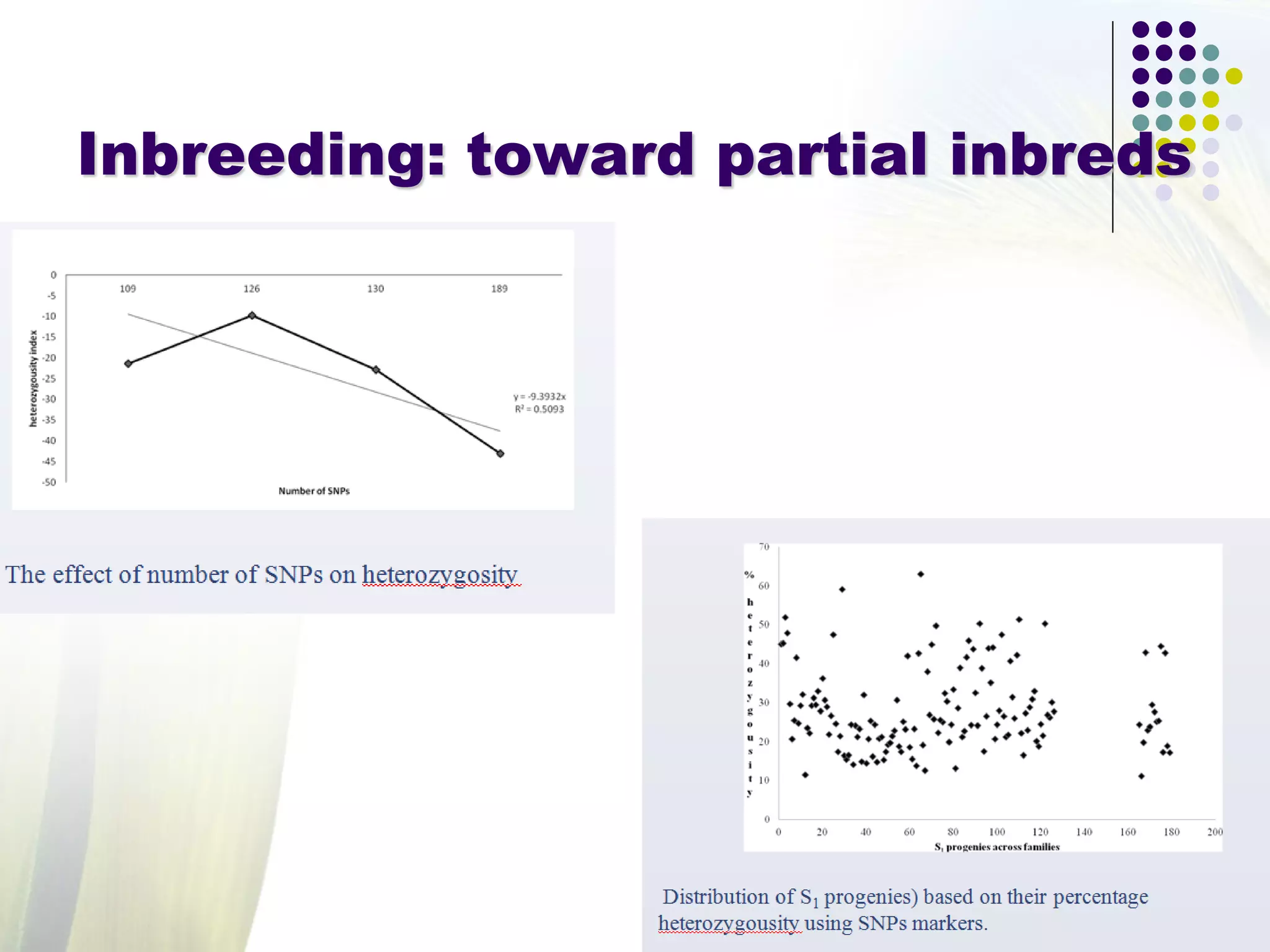
Inbreeding: toward partial inbreds
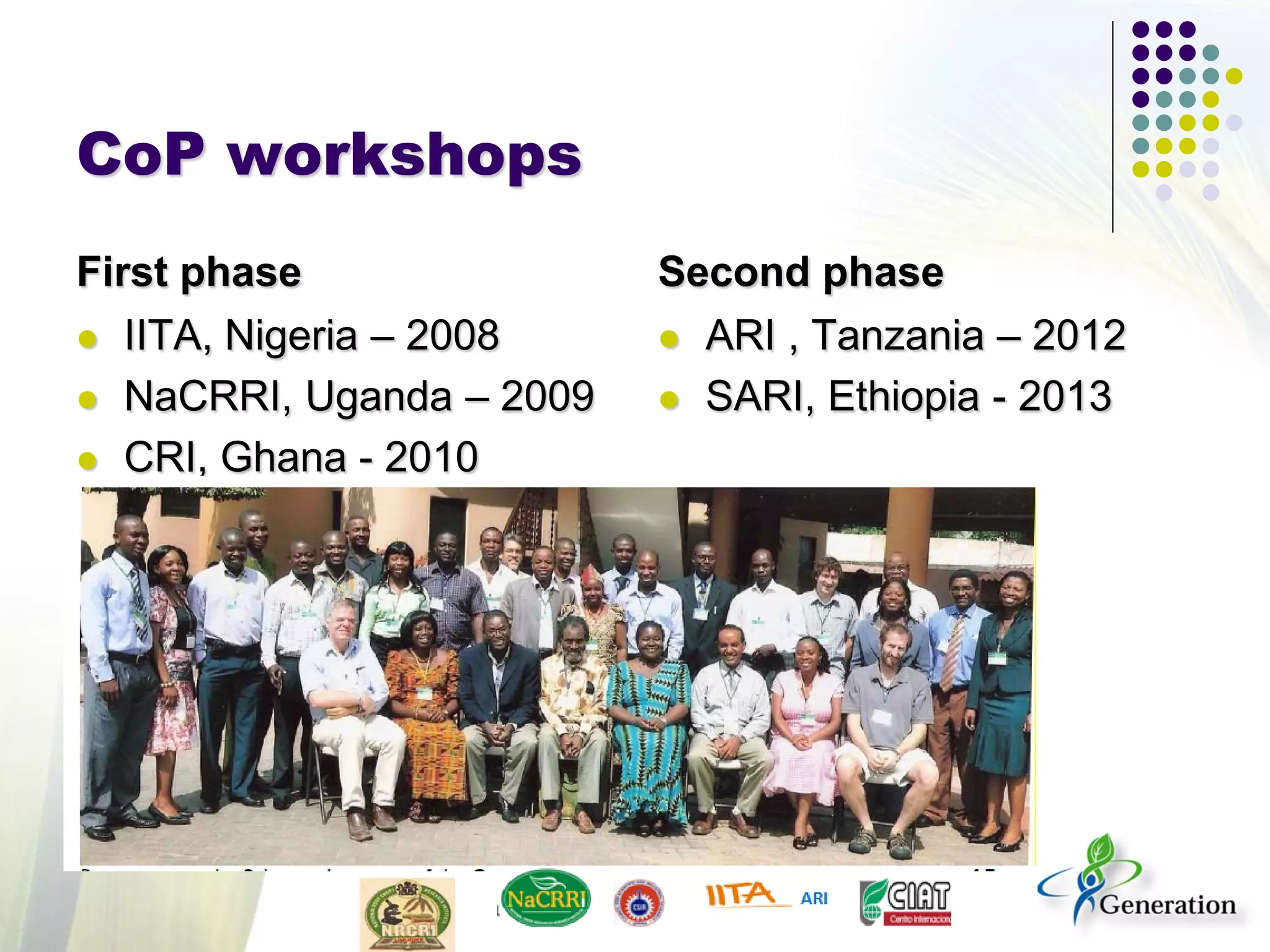
CoP workshops
First phase
 IITA, Nigeria – 2008
 NaCRRI, Uganda – 2009
 CRI, Ghana - 2010
Second phase
 ARI , Tanzania – 2012
 SARI, Ethiopia - 2013
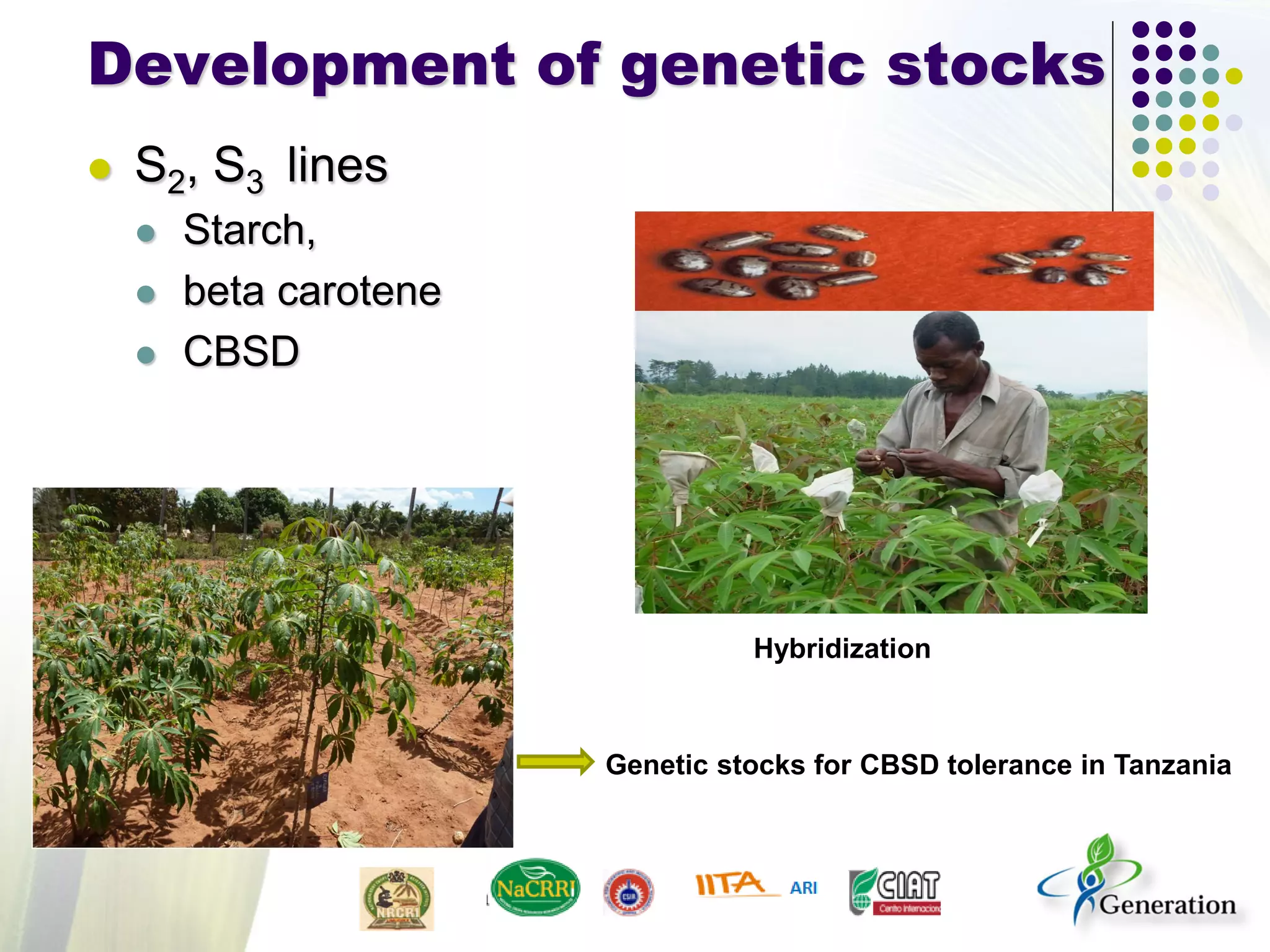
Development of genetic stocks
 S2, S3 lines
 Starch,
 beta carotene
 CBSD
Genetic stocks for CBSD tolerance in Tanzania
Hybridization
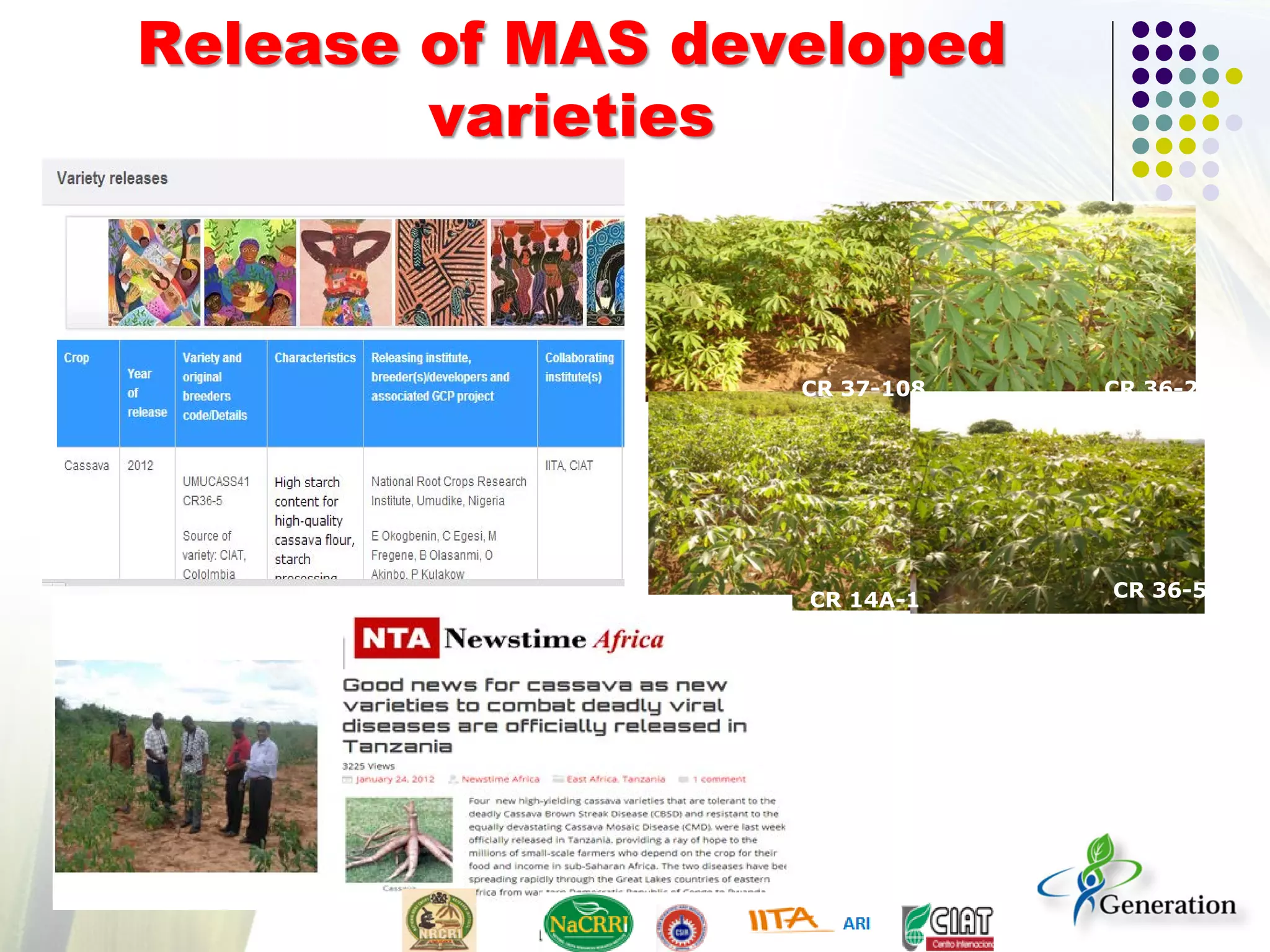
Release of MAS developed
varieties
CR 37-108 CR 36-2
CR 14A-1 CR 36-5
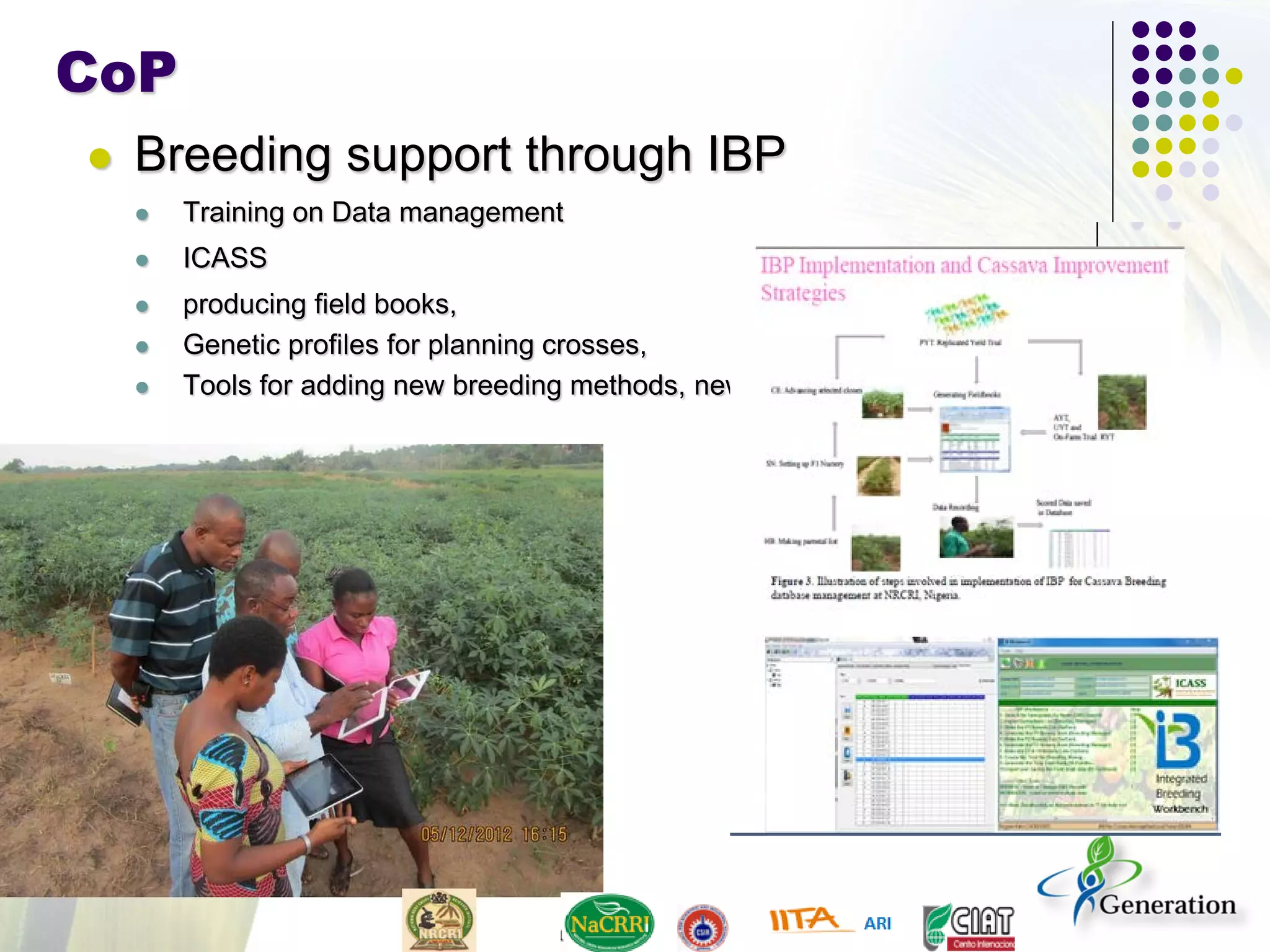
CoP
 Breeding support through IBP
 Training on Data management
 ICASS
 producing field books,
 Genetic profiles for planning crosses,
 Tools for adding new breeding methods, new data fields, and new traits
 Tim Setter
 Chiedozie Egesi
 Elizabeth Parkes
 Bright Peprah
 Joseph Onyeka
 Hannibal
 Lydia Ezenwaka
 Ugochukwu Ikeogu
 Zander Myburg
 Geoffrey Mkamilo
 Marcos Malosetti
Acknowledgement
Emmanuel Okogbenin
Xavier Delannay
Ndeye Ndack Diop
Joseph Adjerbeng
Olalekan Akinbo
Ezenwanyi Uba
 Yemi Olojede
Pablo Rabonowicz
Morag Ferguson
Melaku Gedil
Larry Butler
Fred Vaneeuwikj
Thank You!

GRM 2013: Implementing MARS Project for drought tolerance and the Cassava Breeding Community of Practice: Accomplishments in the GCP and the Years Ahead -- E Okogbenin

  • 1.
    Cassava CI Project3: Implementing MARS Project for drought tolerance
  • 2.
  • 3.
    • Introduced byFederer (1956) • Controls (check varieties) are replicated in a standard experimental design • New treatments (genotypes) are not replicated, or have fewer replicates than the checks – they augment the standard design Augmented Designs • Used in plant breeding during early generations + Seed, Land and other resources are limited + Want to evaluate as many genotypes as possible + Difficult to maintain homogeneous blocks when comparing so many genotypes •Unreplicated designs can make good use of scarce resources + Evaluate more genotypes + Test in more environments • Provide an estimate of standard error that can be used for comparisons + Among the new genotypes + Between new genotypes and check varieties
  • 5.
  • 6.
  • 9.
    Traits Minimum MaximumAverage Std Dev Dakata Number of Scars (6MAP) 25 63 44.85 8.93 35 Plant height (m: 6MAP) 62 187 98.11 24.15 90 Branching height (m) 51 190 82.87 24.24 81 Length of stems with scars (m) 36 119 69.29 15.68 62 Number of leaves (6MAP) 20 308 89.43 60.17 90 Branching levels (6MAP) 1 3 1.12 0.43 1 Summary of morphology data or the selected Latin American and elite local varieties evaluated at Minjibir,
  • 10.
    Phenotyping Phenotyping for keytraits: Photosynthesis Stomatal conductance Abscisic acid Stem starch Partner: Cornell university
  • 12.
  • 13.
    TRAIT CHRM LEFTMARKERLEFTMARKERNAME RIGHTMARKER RIGHTMARKERNAME LOD HI 4 M177 MH004L16-MR-SNP M178 30828-SNP 5.326 DMC 4 M176 MH156J22-MR-SNP M177 MH004L16-MR-SNP 4.0804 DYLD 1 M026 Me_v4_MEF_c_1640 M027 Me_v4_MEF_c_1641 6.8818 DYLD 2 M066 Me_v4_MEF_c_3171 M067 MH006H24-MR-SNP 5.2917 DYLD 3 M124 Me_v4_MEF_c_2334 M125 MH060L20-MR-SNP 7.9659 DYLD 5 M216 30634-SNP M220 Me_v4_MEF_c_0015 8.0536 DYLD 7 M189 9422_134 M190 Me_v4_MEF_c_2288 6.8497 DYLD 14 M425 2257-SNP M426 30109-SNP 7.717 DYLD 18 M501 Me_v4_MEF_c_2327 M502 Me_v4_MEF_c_2326 7.0137 Marker trait association analysis
  • 14.
  • 15.
    Cassava Breeding Community ofPractice: Accomplishments in the GCP and the Years Ahead
  • 16.
    The Task –second phase (2011 -2013)  To increase routine use of markers in breeding  Development of new generation of breeders  Improvement in data management and analysis  To develop partial inbred lines  Gene pool development for farmer and end- user key traits (architecture, yield, dry matter)
  • 17.
  • 18.
    Expansion of CoP Oldcountries  Nigeria  Ghana  Tanzania  Uganda New countries  Liberia  Kenya  Mozambique  DRC  Cote d’Ivoire  Malawi  South Sudan  Ethiopia  CG centers: IITA & CIAT
  • 19.
    Routine use ofmarkers in Breeding  Marker-assisted selection (MAS)  Mapping SNP markers around CMD2 gene Serial # Markers 1 NS 169 2 NS 890 3 NS 149 4 SSRY 83 5 SSRY 106 6 SSRY 103 7 SSRY 28 8 NS 158 9 NS 198 10 EME 425 11 EME 171_1 12 NS 162 13 NS 124
  • 20.
  • 21.
    Value addition indisease resistance genetic background  Latin American cassava germplasm  About 2000 genotypes in seedling and in vitro cultures evaluated  Traits: PPD, protein, beta carotene, drought tolerance, starch yield, plant architecture  Landraces Partners: CIAT, IITA
  • 22.
  • 23.
    CoP workshops First phase IITA, Nigeria – 2008  NaCRRI, Uganda – 2009  CRI, Ghana - 2010 Second phase  ARI , Tanzania – 2012  SARI, Ethiopia - 2013
  • 24.
    Development of geneticstocks  S2, S3 lines  Starch,  beta carotene  CBSD Genetic stocks for CBSD tolerance in Tanzania Hybridization
  • 25.
    Release of MASdeveloped varieties CR 37-108 CR 36-2 CR 14A-1 CR 36-5
  • 26.
    CoP  Breeding supportthrough IBP  Training on Data management  ICASS  producing field books,  Genetic profiles for planning crosses,  Tools for adding new breeding methods, new data fields, and new traits
  • 27.
     Tim Setter Chiedozie Egesi  Elizabeth Parkes  Bright Peprah  Joseph Onyeka  Hannibal  Lydia Ezenwaka  Ugochukwu Ikeogu  Zander Myburg  Geoffrey Mkamilo  Marcos Malosetti Acknowledgement Emmanuel Okogbenin Xavier Delannay Ndeye Ndack Diop Joseph Adjerbeng Olalekan Akinbo Ezenwanyi Uba  Yemi Olojede Pablo Rabonowicz Morag Ferguson Melaku Gedil Larry Butler Fred Vaneeuwikj
  • 28.