Career Development Group

Career paths & Networking
      Jeremy Clarke DipREC
    Jeremy.clarke@suehill.com
Today’s topics

• How to approach career development
  and job hunting
• How these techniques may differ
  depending on the stage of your career
• How to network, not only your peers but
  also with those higher up the chain
A few pointers

• Planning - know what your selling
  before you go to market
• Use internal opportunities to open
  external opportunities
• Skills assessment exercises
• Problems and solutions to be aware of
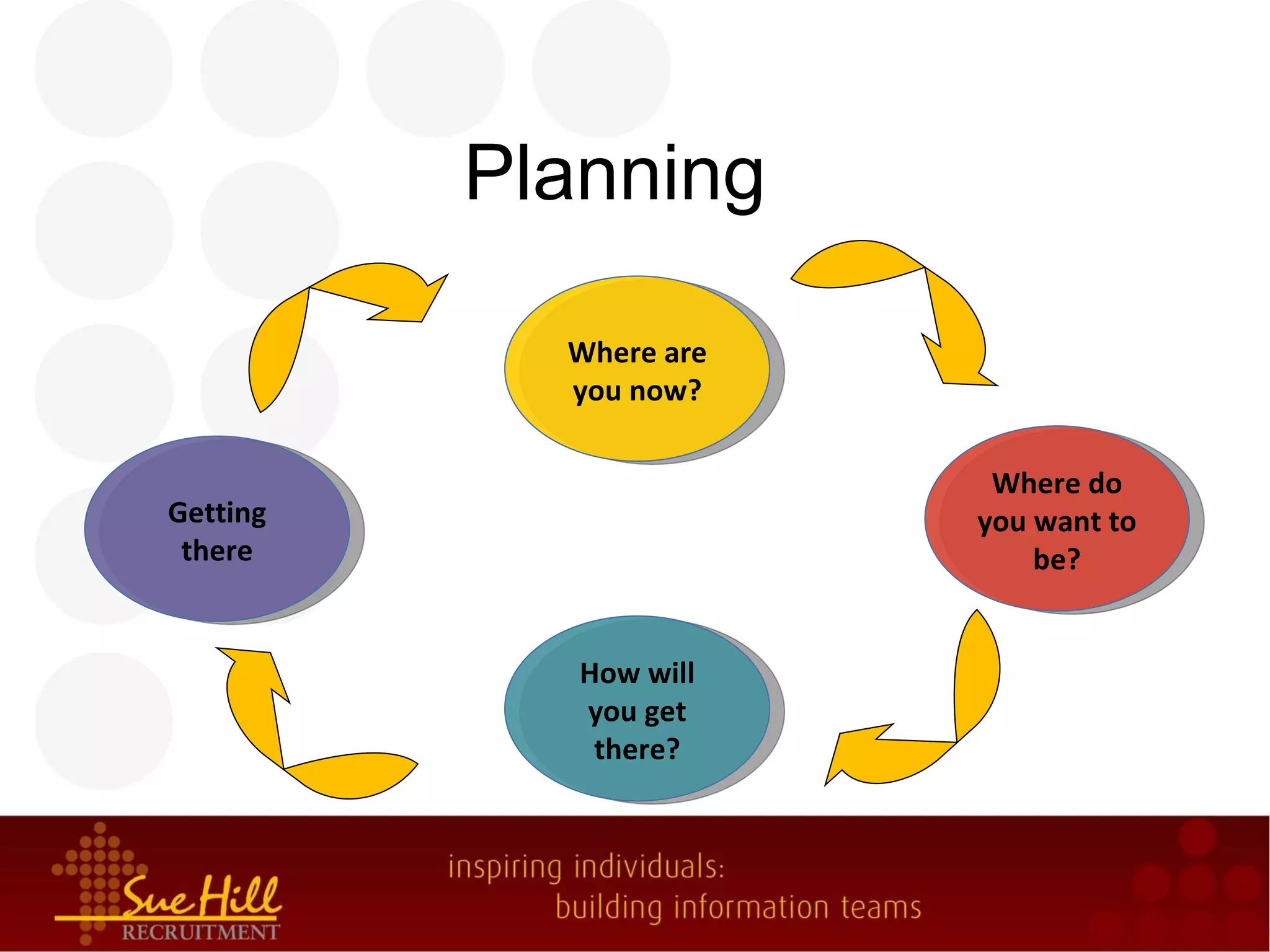
Planning

            Where are
            you now?

                         Where do
Getting                 you want to
 there                      be?


             How will
             you get
              there?
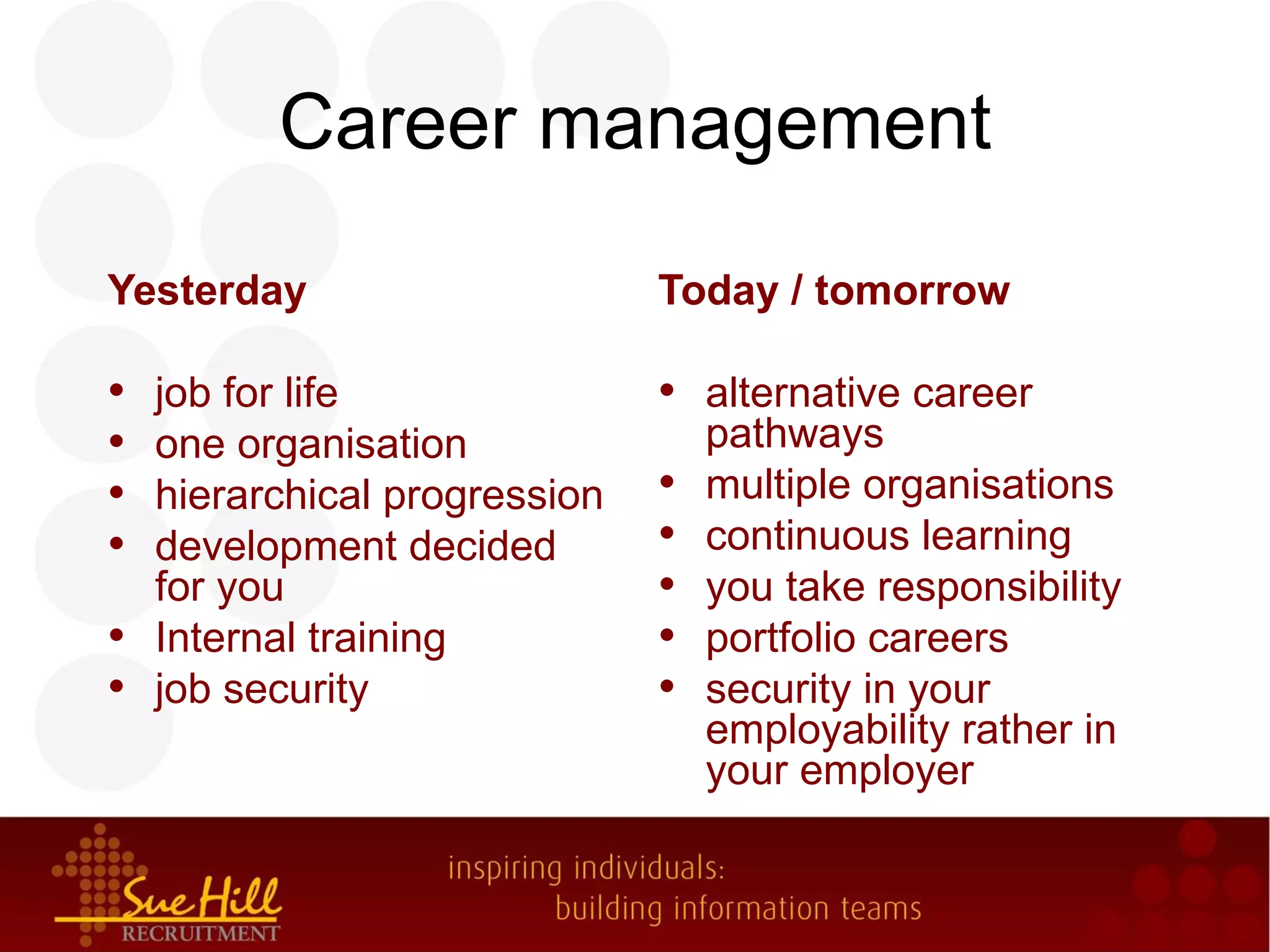
Career management

Yesterday                      Today / tomorrow

•   job for life               • alternative career
•   one organisation               pathways
•   hierarchical progression   •   multiple organisations
•   development decided        •   continuous learning
    for you                    •   you take responsibility
•   Internal training          •   portfolio careers
•   job security               •   security in your
                                   employability rather in
                                   your employer
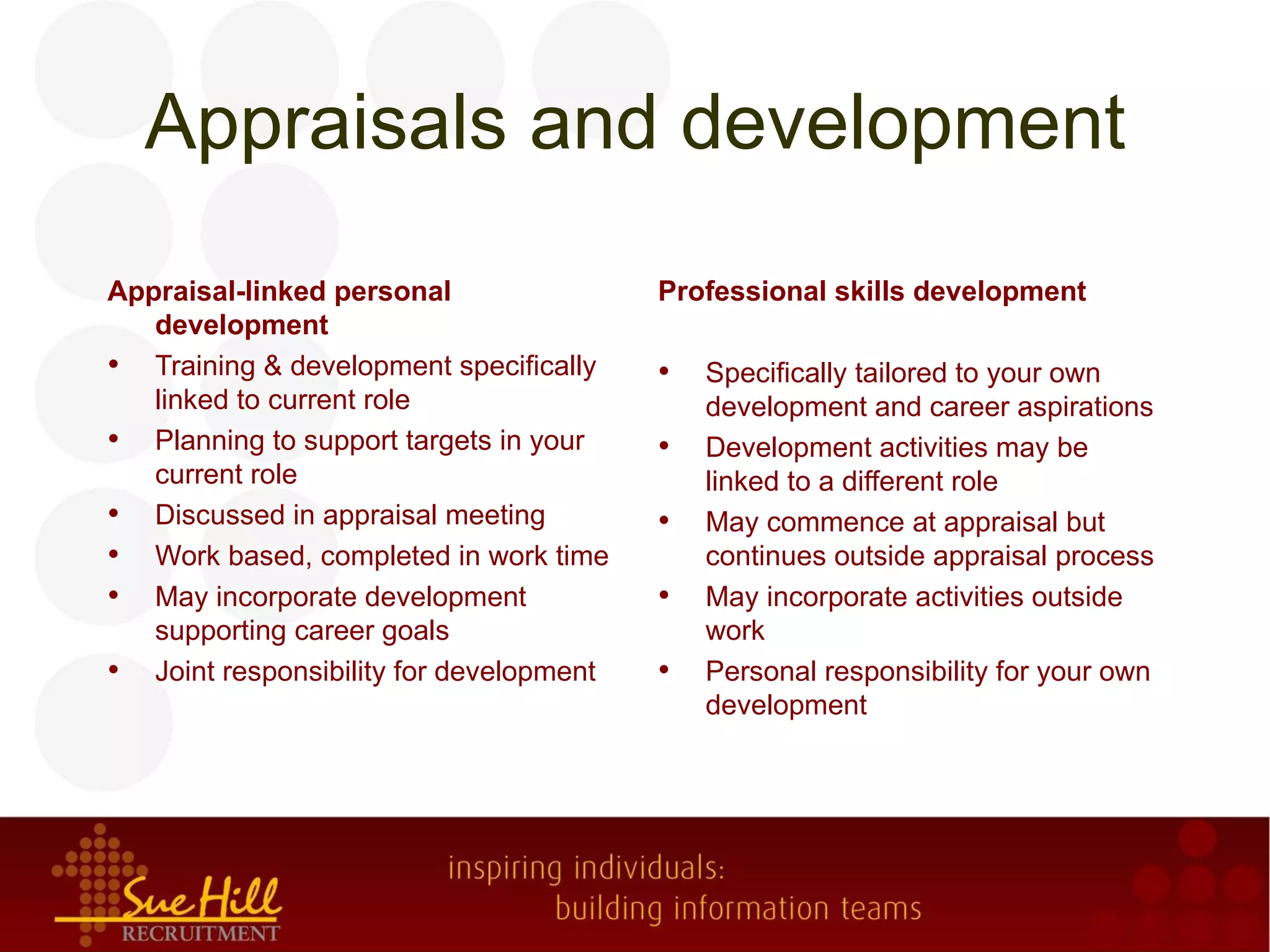
Appraisals and development
Appraisal-linked personal                Professional skills development
   development
• Training & development specifically    •   Specifically tailored to your own
   linked to current role                    development and career aspirations
• Planning to support targets in your    •   Development activities may be
   current role                              linked to a different role
• Discussed in appraisal meeting         •   May commence at appraisal but
• Work based, completed in work time         continues outside appraisal process
• May incorporate development            •   May incorporate activities outside
   supporting career goals                   work
• Joint responsibility for development   •   Personal responsibility for your own
                                             development
Obstacles and catalysts

• Getting started
• Day-to-day demands
• Maintaining enthusiasm and energy

• Support from colleagues and managers
• Measuring progress
Job hunting - directly

• Internal opportunities
• Advertising - trade/local/national press,
  online job boards
• Recruitment agencies
• Direct approaches (do your research)
• Following targeted companies
Job hunting - indirectly

•   Read – stay informed
•   Write – blog / tweet / linked / article
•   Speak – Conferences / open days
•   Networking
•   Reputation
How this differs at various levels?
          No rule changes, but other things to consider


•   Use Personal Learning Networks and Mentors
•   Keep assessing and re-assessing
•   Recognise the danger of becoming pigeon-holed
•   Keep stepping outside of your comfort zone
•   Be aware of competency frameworks for internal
    advancement
•   How are you perceived within the organisation and
    beyond?
•   How is your team perceived? Your team is a
    reflection of your management abilities
Networking - traditional

•   Pick the right event
•   Sliding scales of networking success
•   Set yourself targets
•   What do I want to find out?
•   What do I want to tell people?
•   Follow up afterwards
Networking - tips

•   Learn to smile and say hello
•   Ask for introductions
•   Approach singles
•   Prepare in advance
•   Be active in professional organisations
•   Go with your boss
•   Learn to listen
Networking - other considerations

Internal networking
• Identify peers and network to be seen as a
  good 'advert' for your service
• What message do you want to give off
Online networking
• Comment intelligently on online discussions
• Remember you are building an online
  reputation
Action points

• Take responsibility for your own
    development
•   Research emerging skill requirements
•   Identify future colleagues / future
    employers
•   Record, reflect, evaluate
•   Everything is a development
    opportunity
What next?

Jeremy Clarke CDG2012 Career paths and networking

  • 1.
    Career Development Group Careerpaths & Networking Jeremy Clarke DipREC Jeremy.clarke@suehill.com
  • 2.
    Today’s topics • Howto approach career development and job hunting • How these techniques may differ depending on the stage of your career • How to network, not only your peers but also with those higher up the chain
  • 3.
    A few pointers •Planning - know what your selling before you go to market • Use internal opportunities to open external opportunities • Skills assessment exercises • Problems and solutions to be aware of
  • 4.
    Planning Where are you now? Where do Getting you want to there be? How will you get there?
  • 5.
    Career management Yesterday Today / tomorrow • job for life • alternative career • one organisation pathways • hierarchical progression • multiple organisations • development decided • continuous learning for you • you take responsibility • Internal training • portfolio careers • job security • security in your employability rather in your employer
  • 6.
    Appraisals and development Appraisal-linkedpersonal Professional skills development development • Training & development specifically • Specifically tailored to your own linked to current role development and career aspirations • Planning to support targets in your • Development activities may be current role linked to a different role • Discussed in appraisal meeting • May commence at appraisal but • Work based, completed in work time continues outside appraisal process • May incorporate development • May incorporate activities outside supporting career goals work • Joint responsibility for development • Personal responsibility for your own development
  • 7.
    Obstacles and catalysts •Getting started • Day-to-day demands • Maintaining enthusiasm and energy • Support from colleagues and managers • Measuring progress
  • 8.
    Job hunting -directly • Internal opportunities • Advertising - trade/local/national press, online job boards • Recruitment agencies • Direct approaches (do your research) • Following targeted companies
  • 9.
    Job hunting -indirectly • Read – stay informed • Write – blog / tweet / linked / article • Speak – Conferences / open days • Networking • Reputation
  • 10.
    How this differsat various levels? No rule changes, but other things to consider • Use Personal Learning Networks and Mentors • Keep assessing and re-assessing • Recognise the danger of becoming pigeon-holed • Keep stepping outside of your comfort zone • Be aware of competency frameworks for internal advancement • How are you perceived within the organisation and beyond? • How is your team perceived? Your team is a reflection of your management abilities
  • 11.
    Networking - traditional • Pick the right event • Sliding scales of networking success • Set yourself targets • What do I want to find out? • What do I want to tell people? • Follow up afterwards
  • 12.
    Networking - tips • Learn to smile and say hello • Ask for introductions • Approach singles • Prepare in advance • Be active in professional organisations • Go with your boss • Learn to listen
  • 13.
    Networking - otherconsiderations Internal networking • Identify peers and network to be seen as a good 'advert' for your service • What message do you want to give off Online networking • Comment intelligently on online discussions • Remember you are building an online reputation
  • 14.
    Action points • Takeresponsibility for your own development • Research emerging skill requirements • Identify future colleagues / future employers • Record, reflect, evaluate • Everything is a development opportunity
  • 15.

Editor's Notes