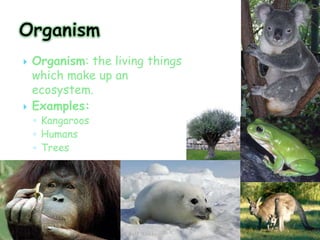
   Organism: the living things
    which make up an
    ecosystem.
   Examples:
    ◦ Kangaroos
    ◦ Humans
    ◦ Trees
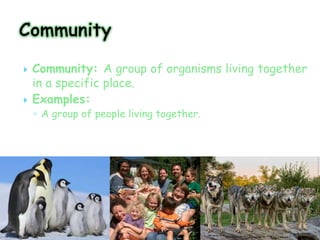
   Community: A group of organisms living together
    in a specific place.
   Examples:
    ◦ A group of people living together.
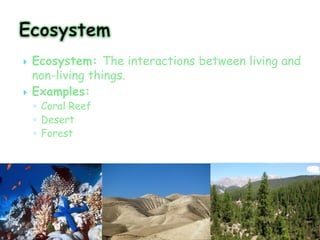
   Ecosystem: The interactions between living and
    non-living things.
   Examples:
    ◦ Coral Reef
    ◦ Desert
    ◦ Forest
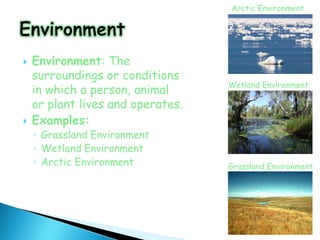
Arctic Environment


   Environment: The
    surroundings or conditions
                                   Wetland Environment
    in which a person, animal
    or plant lives and operates.
   Examples:
    ◦ Grassland Environment
    ◦ Wetland Environment
    ◦ Arctic Environment           Grassland Environment
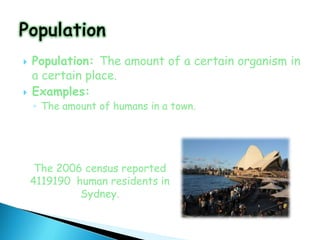
   Population: The amount of a certain organism in
    a certain place.
   Examples:
    ◦ The amount of humans in a town.


     The 2006 census reported
    4119190 human residents in
             Sydney.
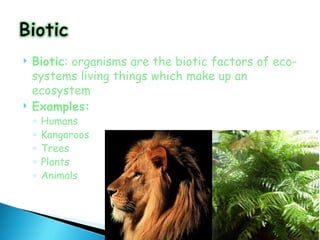
   Biotic: organisms are the biotic factors of eco-
    systems living things which make up an
    ecosystem
   Examples:
    ◦   Humans
    ◦   Kangaroos
    ◦   Trees
    ◦   Plants
    ◦   Animals
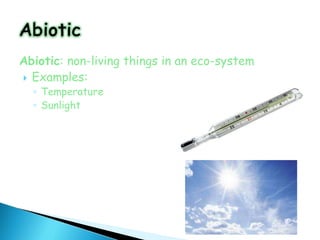
Abiotic: non-living things in an eco-system
 Examples:
  ◦ Temperature
  ◦ Sunlight
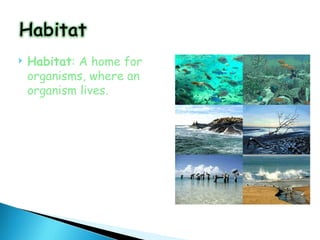
   Habitat: A home for
    organisms, where an
    organism lives.
Distribution: Information on a where a species is
located.


Abundance: Information which tells us how many
of a particular species live in an area.
Ecology definitions

Ecology definitions

  • 2.
    Organism: the living things which make up an ecosystem.  Examples: ◦ Kangaroos ◦ Humans ◦ Trees
  • 3.
    Community: A group of organisms living together in a specific place.  Examples: ◦ A group of people living together.
  • 4.
    Ecosystem: The interactions between living and non-living things.  Examples: ◦ Coral Reef ◦ Desert ◦ Forest
  • 5.
    Arctic Environment  Environment: The surroundings or conditions Wetland Environment in which a person, animal or plant lives and operates.  Examples: ◦ Grassland Environment ◦ Wetland Environment ◦ Arctic Environment Grassland Environment
  • 6.
    Population: The amount of a certain organism in a certain place.  Examples: ◦ The amount of humans in a town. The 2006 census reported 4119190 human residents in Sydney.
  • 7.
    Biotic: organisms are the biotic factors of eco- systems living things which make up an ecosystem  Examples: ◦ Humans ◦ Kangaroos ◦ Trees ◦ Plants ◦ Animals
  • 8.
    Abiotic: non-living thingsin an eco-system  Examples: ◦ Temperature ◦ Sunlight
  • 9.
    Habitat: A home for organisms, where an organism lives.
  • 10.
    Distribution: Information ona where a species is located. Abundance: Information which tells us how many of a particular species live in an area.