
Syntax and Teaching Grammar
        Lesson Three
  Dr. Rosario María Burneo
Texto guía

An Introduction to English Syntax
           By Jim Miller
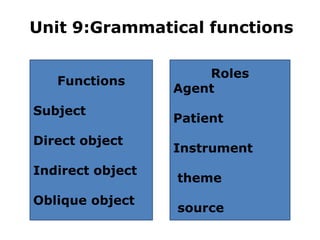
Unit 9:Grammatical functions

                      Roles
   Functions
                  Agent
Subject
                  Patient
Direct object
                  Instrument
Indirect object
                  theme
Oblique object
                  source
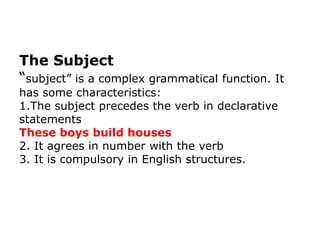
The Subject
“subject” is a complex grammatical function. It
has some characteristics:
1.The subject precedes the verb in declarative
statements
These boys build houses
2. It agrees in number with the verb
3. It is compulsory in English structures.
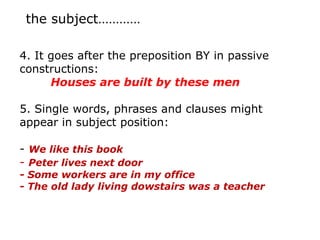
the subject…………

4. It goes after the preposition BY in passive
constructions:
      Houses are built by these men

5. Single words, phrases and clauses might
appear in subject position:

- We like this book
- Peter lives next door
- Some workers are in my office
- The old lady living dowstairs was a teacher
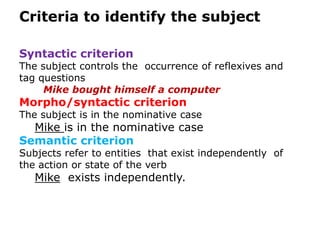
Criteria to identify the subject

Syntactic criterion
The subject controls the occurrence of reflexives and
tag questions
     Mike bought himself a computer
Morpho/syntactic criterion
The subject is in the nominative case
  Mike is in the nominative case
Semantic criterion
Subjects refer to entities that exist independently of
the action or state of the verb
   Mike exists independently.
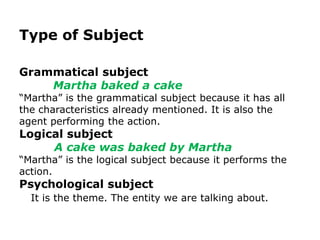
Type of Subject

Grammatical subject
    Martha baked a cake
“Martha” is the grammatical subject because it has all
the characteristics already mentioned. It is also the
agent performing the action.
Logical subject
     A cake was baked by Martha
“Martha” is the logical subject because it performs the
action.
Psychological subject
  It is the theme. The entity we are talking about.
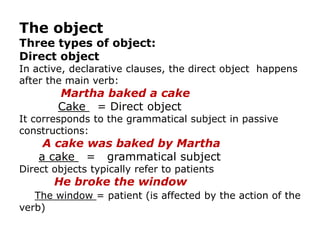
The object
Three types of object:
Direct object
In active, declarative clauses, the direct object happens
after the main verb:
        Martha baked a cake
        Cake = Direct object
It corresponds to the grammatical subject in passive
constructions:
     A cake was baked by Martha
    a cake = grammatical subject
Direct objects typically refer to patients
       He broke the window
   The window = patient (is affected by the action of the
verb)
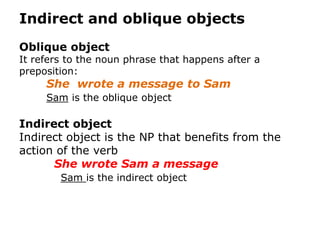
Indirect and oblique objects
Oblique object
It refers to the noun phrase that happens after a
preposition:
     She wrote a message to Sam
     Sam is the oblique object

Indirect object
Indirect object is the NP that benefits from the
action of the verb
      She wrote Sam a message
        Sam is the indirect object
God Bless you
 Thank you

Gramatical functions

  • 1.
    Syntax and TeachingGrammar Lesson Three Dr. Rosario María Burneo
  • 2.
    Texto guía An Introductionto English Syntax By Jim Miller
  • 3.
    Unit 9:Grammatical functions Roles Functions Agent Subject Patient Direct object Instrument Indirect object theme Oblique object source
  • 4.
    The Subject “subject” isa complex grammatical function. It has some characteristics: 1.The subject precedes the verb in declarative statements These boys build houses 2. It agrees in number with the verb 3. It is compulsory in English structures.
  • 5.
    the subject………… 4. Itgoes after the preposition BY in passive constructions: Houses are built by these men 5. Single words, phrases and clauses might appear in subject position: - We like this book - Peter lives next door - Some workers are in my office - The old lady living dowstairs was a teacher
  • 6.
    Criteria to identifythe subject Syntactic criterion The subject controls the occurrence of reflexives and tag questions Mike bought himself a computer Morpho/syntactic criterion The subject is in the nominative case Mike is in the nominative case Semantic criterion Subjects refer to entities that exist independently of the action or state of the verb Mike exists independently.
  • 7.
    Type of Subject Grammaticalsubject Martha baked a cake “Martha” is the grammatical subject because it has all the characteristics already mentioned. It is also the agent performing the action. Logical subject A cake was baked by Martha “Martha” is the logical subject because it performs the action. Psychological subject It is the theme. The entity we are talking about.
  • 8.
    The object Three typesof object: Direct object In active, declarative clauses, the direct object happens after the main verb: Martha baked a cake Cake = Direct object It corresponds to the grammatical subject in passive constructions: A cake was baked by Martha a cake = grammatical subject Direct objects typically refer to patients He broke the window The window = patient (is affected by the action of the verb)
  • 9.
    Indirect and obliqueobjects Oblique object It refers to the noun phrase that happens after a preposition: She wrote a message to Sam Sam is the oblique object Indirect object Indirect object is the NP that benefits from the action of the verb She wrote Sam a message Sam is the indirect object
  • 10.
    God Bless you Thank you