Chapter 33 Management of Clients with Leukemia and Lymphoma
Cancers of the Hematopoietic System Result from proliferation of malignant cells originating in: Bone marrow Thymus Lymphatic tissue
Hematopoietic Cell Disorders: Leukemia: Etiology & Risk Factors Leukemia: malignant disease of blood-forming organs (bone marrow) Common feature: unregulated proliferation or accumulation of WBCs in bone marrow, replacing normal marrow elements Proliferation in liver, spleen, & lymph nodes & invasion of nonhematologic organs Cause is unknown; some evidence of genetic influence, viral pathogenesis, or radiation/chemical exposure Alkylating agents
Hematopoietic Cell Disorders: Leukemia: Pathophysiology Classified according to: Cell line involved Lymphoid Myeloid Maturity of malignant cells Acute (undifferentiated cells) Onset of sx is abrupt; progresses rapidly Chronic (mature cells) Sx evolve over months to years
Hematopoietic Cell Disorders: Leukemia Acute leukemia:  acute lymphocytic leukemia (ALL)  acute myeloid leukemia (AML) Chronic leukemia:  chronic myeloid leukemia (CML)  chronic lymphocytic leukemia (CLL)
Hematopoietic Cell Disorders: Acute Leukemia Acute myeloid leukemia (AML) Defect in hematopoietic stem cell Affects all ages; increases with age S/S:  insufficient normal blood cells: Infection (neutropenia) Weakness/fatigue (anemia) Bleeding (thromobocytopenia) Prognosis: Older pts have worse prognosis Secondary form R/T alkylating agents have poorer prognosis
 
AML:  Complications Major causes of death: Infection Risk increases with severity of neutropenia Risk of fungal infection increases Bleeding Major bleeding can occur with platelets less than 10,000 Common sites are GI, pulmonary, intracranial
Treatment of AML Goal is remission Induction Therapy:  Aggressive chemo Requires several weeks hospitalization Aim is to eradicate leukemic cells but also eradicates normal cells Patient severely neutropenic, anemic & thrombocytopenic---very ill! Mucositis causes diarrhea, inability to eat Cytosar, Ara-C, Cerubidine, Novantrone
Tumor Lysis Syndrome  Due to massive leukemic cell destruction & release of intracellular electrolytes & fluids into systemic circ. Increased uric acid & phosphorus Increased risk of renal stones/ ARF Increased potassium/ low Ca++ Cardiac dysrhythmias Muscle cramps, weakness, tetany, confusion, seizures
Tumor Lysis Syndrome --- Tx Increased fluids Alkalinization of urine (sodium bicarb) Allopurinol to prevent crystallization of uric acid
Tx of AML---cont’d. Supportive care Blood products (PRBCs & platelets) Treat infections Neupogen or Leukine can shorten period of neutropenia
Alternative Treatments BMT (Bone Marrow Transplant) PBSCT  (Peripheral Blood Stem Cell transplant) Aggressive chemo (& radiation) to destroy patient’s bone marrow followed by infusion of donor stem cells At risk for graft-versus-host reaction
Post-remission Therapy Consolidation therapy To eliminate any residual leukemia cells Multiple treatment cycles, often with same agents used for induction but at lower doses
Chronic Myelogenous Leukemia (CML) Malignancy of myeloid stem cells---increased blast cells Bone marrow expands into cavities of long bones & cells formed in liver & spleen Enlarged, tender spleen & liver Milder than acute with more normal cells present 90-95% genetic abnormality—”Philadelphia chromosome” 22 translocated onto chromosome 9 Uncommon under 20 yrs of age
CML:  Clinical Manifestations Sx variable;  some are asymptomatic Very high leukocyte counts may lead to SOB, mild confusion Enlarged, tender spleen Malaise, anorexia, weight loss 3 stages: Chronic Transformation Blast crisis:  Sx worsen as disease progresses
Treatment of CML —chronic stage Oral administration of Gleevec (tyrosine kinase inhibitor) Oral chemo agents Hydrea, Myleran Leukapheresis:  Leukocytes removed from patient’s blood, then returned  Interferon-alfa, cytosine Given SQ daily Fatigue, depression, anorexia, mucositis, inability to concentrate
CML----Transformation Stage This stage marks the progress toward acute form (blast crisis) May have bone pain, fevers Enlarged spleen Worsening anemia, thrombocyopenia
CML---blast crisis Tx similar to induction therapy for acute leukemias Lymphoid blast crisis more likely to re-enter chronic phase Life-threatening infections & bleeding occur frequently
Treatment-- CML Potential cure with bone marrow transplant or PBSCT Greater chance of cure if done during chronic phase Considered for pts younger than 65 Imatinib (Gleevec) therapy can decrease need for transplant
Acute Lymphocytic Leukemia (ALL) Uncontrolled malignant proliferation of lymphoblasts (esp. B-cell precursor) 20% of blast cells have chromosome translocation similar to CML Most common in young children Males > females Peak at 4 yrs Uncommon after age 15
ALL Immature lymphocytes crowd development of normal cells; inhibiting hematopoiesis  Leukocyte counts may be high or low but always high % of immature cells Infiltrate liver, spleen, CNS (leading to H/A & vomiting) Bone pain 80% survive 5 yrs
Treatment of ALL Goal is complete remission Corticosteroids Vinca alkaloids May include cranial irradiation or intrathecal MTX for CNS involvement Imatinib used for those with chromosome abnormality Monoclonal antibodies being studied BMT or PBSCT may be done if illness recurs
Chronic Lymphocytic Leukemia (CLL) 2/3 are older than 60 Most common type of leukemia in US & Europe—rare in Asia Occurs more often in males
CLL--pathophysiology Most cells are mature but escape apoptosis, resulting in excessive accumulation of cells in bone marrow & circulation Elevated lymphocyte count in early stages, more than 100,000 Lymphocytes trapped in lymph nodes: Enlarged painful nodes with enlarged liver & spleen Anemia & thrombocytopenia occur in later stages Autoimmune complications:  hemolytic anemia or ITP (idiopathic thrombocytopenic purpura)
CLL---S&S Many are asymptomatic Increased lymphocyte count Lymphadenopathy Splenomegaly, hepatomegaly “ B” symptoms Fever, night sweats, weight loss Defects in humoral & cellular immunity Anergy with skin testing Infections are common
CLL--Treatment No tx required in early stages Later stages or symptomatic: Monoclonal antibodies being used more (Rituxan, Campath) At risk for infection:  Septra + antivirals used x 2 months after tx ends Fludara, steroids or Leukeran S/E Leukeran:  bone marrow suppression with risk of opportunistic infections
Diagnostic Findings Bone marrow aspiration—increase marrow & immature Lumbar puncture—blast cells in CSF Chest x-ray, MRI, CT—to detect lesions & sites of infection CBC count varies greatly; WBC may be very hi or very low Anemia Thrombocytopenia Leukopenia Lymphangiography, Lymph node biopsy—locate malignant lesions & classify
Acute & Chronic Leukemia: Nursing Diagnoses Ineffective Protection; Risk for Infection r 2   neutropenia, chemotherapy, radiation therapy Ineffective Protection; Risk for Hemorrhage r 2   thrombocytopenia 2 2  treatment Imbalanced Nutrition: Less Than Body Requirements r 2  lack of appetite, nausea & vomiting; gi proliferative changes, chemo Deficient Fluid Volume r 2  decrease in intake; cancer process; chemotherapy
Acute & Chronic Leukemia: Nursing Diagnoses--cont’d Fatigue & Activity Intolerance  r 2  anemia Disturbed Body Image; Sexual Dysfunction  r 2  change in appearance, in function, and roles Ineffective Therapeutic Regimen Management  r 2  length, complexity, expense of Tx Impaired Skin Integrity  r 2  toxic effects of chemotherapy
Nursing Considerations Mucositis:  oral + rectal areas Oral assessment & hygiene with soft toothbrushes or swabs Rinses with NS or baking soda Tx  of yeast in mouth (Mycelex, Diflucan) Cleanse & dry peri area thoroughly
Nursing Considerations Nutritional Intake Mouth care before & after meals Analgesics before eating Anti-emetics Small frequent meals of soft foods at moderate temperature Avoid uncooked fruits & vegs Nutritional supplements Daily weights/ I&O May require parenteral nutrition
Nursing Considerations Pain & comfort Tylenol to reduce fever Sponging with cool water for fever (avoid cold water or ice packs) Back & shoulder massage to ease muscle aches PCA Interrupted sleep
Nursing Considerations Fatigue Balance activities & rest Sit in chair rather than lying in bed HEPA filter mask may allow neutropenic patient to walk hallways Consider PT/ stationary bikes Encourage self-care
Nursing Considerations Anxiety Emotional support/ providing information Depression/ grief common Support spiritual well-being
Nursing Considerations:  Bleeding Precautions Assess skin, GI, GU, neuro status, VS, heart & lungs every shift Test  urine, emesis & stools for occult blood Monitor CBC/ platelets Avoid ASA No IM injections, rectal temps or supp. Use stool softeners Hold venipuncture sites x 5 minutes No flossing of teeth/ use soft toothbrush Avoid suctioning Electric razor Avoid vigorous nose blowing Pad side rails, prevent falls
Nursing Considerations:  Neutropenic Precautions Assess signs of infection every shift:  skin, mouth, lungs, GI, GU, neuro, VS including temp Monitor CBC.  Call MD for neutrophil count less than 1000 Monitor CXR, C&S reports
Nursing Considerations:  Neutropenic Precautions No one with URI or sore throat should visit or care for patient Care for neutropenic pt. first if  possible Needs private room if ANC less than 1000 No fresh flowers Room cleaned daily Change water in containers every 24 hours (e.g. O2 humidification bottles)
Nursing Considerations:  Neutropenic Precautions Eliminate fresh fruits & veg. or salads No suppositories, rectal temps or enema Deep breathing every 4 hours while awake Ambulate:  HEPA mask in halls Prevent skin dryness Meticulous hygiene including peri care
Nursing Considerations:  Neutropenic Precautions Oral hygiene after meals & every 4 hrs Do not use plastic IV catheters if ANC is less than 500;  central line preferred Inspect IV site every shift;  use aseptic technique for dressing changes Give antimicrobials on time
Lymphomas  General term for group of cancers originating in lymphatic system Results when lymphocyte (WBC) undergoes malignant change & multiplies, crowding out healthy cells & creating tumors which enlarge lymph nodes or other sites Tumors of primary lymphoid tissue (thymus & bone marrow)  Secondary lymphoid tissue (lymph nodes, spleen, tonsils, & intestinal lymphoid tissue)
Lymphomas  -- 2 categories Hodgkin’s Disease—specialized form; initiates in a single node & spreads along lymph system Viral etiology suspected  (EBV) Non-Hodgkin’s (NHL’s)—heterogeneous groups of cancers that originate from neoplastic growth of lymphoid tissue Most involve B-lymphocytes Spread is unpredictable Now 6 th  most common type of cancer in US Incidence increased in immunodeficiencies, prior CA tx
S&S of Hodgkin’s Lymphoma Painless enlargement of one or more lymph nodes on one side of the neck Mediastinal mass on CXR Pruritus (cause unknown) All organs are vulnerable to invasion Cough, jaundice, abdominal or bone pain “ B” symptoms:  fever, sweats, weight loss Mild anemia, platelets usually WNL Leukocyte count high or low Elevated sed rate Impaired cellular immunity (skin tests) Herpes zoster infections are common
Hodgkin’s Lymphoma Diagnostic Findings Lymph node biopsy: distinct, large cell—Reed-Sternberg cells Bone marrow biopsy Chest x-ray CT/ PET scan Bone scan
Treatment of Hodgkin’s Goal is cure Tx based on stage of disease 2-4 months of chemo followed by radiation  (early stages may receive radiation alone) Adriamycin, bleomycin, vinblastine & dacarbazine (“ABVD” therapy) Recurrent disease treated with high-dose chemo then BMT
Survival Rates Hodgkin’s lymphoma one of most curable forms of cancer Many cured after 1 treatment 5-yr survival 86% all races 5-yr survival 95.2% for 0-14 yr Can develop other cancers (lung, breast)---encourage healthy lifestyle to avoid risks
NHL—Clinical  Manifestations Generalized or localized lymphadenopathy; most common in cervical, axillary, inguinal, femoral Painless May wax & wane in less aggressive types S/S diffuse NHL variable & more systemic Night sweats, fever, wt loss (“B” symptoms) Hepato-or-splenomegaly Lymphomatous masses can compromise organ function
NHL: Medical Management Tx based on classification & stage of disease Early stage, localized NHL sometimes treated with radiation Widespread disease requires chemotherapy or combined treatment Tx after relapse is controversial:  BMT or PBSCT may be done if less than 60 years old
Survival Rate 5-year survival rate increased from 31% in whites (1960-1963) to 63.8% for all races 5-year survival rate for children, 0-19, 83.5% Est. 19,730 deaths from lymphoma in 2007 (18,660 NHL/1070 HL)
Multiple Myeloma Malignant disease of plasma cells (most mature form of B-lymphocyte) which produce increased amount of non-functional immunoglobulin (M-protein) Total protein levels are elevated Abnormal plasma cells also secrete substance to stimulate angiogenesis
Multiple Myeloma---S&S Bone pain in back or ribs which increases during the day Lytic lesions seen on x-ray; may develop spinal fractures Hypercalcemia: thirst, constipation, confusion Renal failure due to proteins damaging renal tubules Anemia:  Fatigue, weakness Serum hyperviscosity with bleeding from nose or mouth, or heart failure
Multiple Myeloma---Diagnosis Bence-Jones protein on serum protein electrophoresis, or in urine Lytic bone lesions on x-ray Bone marrow biopsy confirms dx:  presence of sheets of plasma cells
Multiple Myeloma----Tx No cure, even with BMT or PBSCT Chemo is primary treatment Steroids, Alkeran, Cytoxan, Adriamycin Radiation may strengthen bone at a specific lesion if at risk for fx or spinal compression Bisphosphonates, vertebroplasty for compression fx Plasmapheresis for hyperviscosity Thalidomide inhibits angiogenesis
Nursing care for Multiple Myeloma Pain control:  NSAIDs or opioids, body mechanics, braces Teach about S&S hypercalcemia Hydration important Monitor renal function; dialysis may be necessary Bacterial infections common due to impaired antibody production Needs flu & Pneumovax vaccines Watch & report signs of infection
Bone Marrow Transplantation Indications—aplastic anemia, malignant disorders, non-malignant  hematologic disorders, immunodeficiency disorders  Bone marrow types Allogeneic (donor other than patient) Syngeneic (from identical twin) Autologous (from patient) Histocompatability testing for allogeneic & syngeneic transplants
Bone Marrow Transplantation: Types Allogeneic from relative or unrelated donor with close HLA match  Previously most common  BUT highest rate m/m due to complications of incompatibility Increased use of autologous & peripheral stem cell transplants
Bone Marrow Transplantation: Types Syngeneic Donated by identical twin Perfect HLA match Eliminates rejection risk Higher rate of leukemic relapse (GVHD has anti-leukemic effect)
Bone Marrow Transplantation: Types Autologous Used for pts without donors or those who require ablative doses of chemo for an aggressive malignancy Eliminates risk of immunologic response Relapse is frequent Contamination of bm by malignant cells? Failure of pre-transplant chemo?
Allogeneic Transplant Donor preparation—extensive work-up Collection: informed consent Marrow collection Peripheral stem cell collection Recipient preparation (“conditioning regimen”) Malignant cells destroyed Marrow cavities emptied Bone marrow infused
Graft-versus-host disease: most common & potentially disastrous complication of allogeneic BMT & may occur 7 to 30 days after infusion Acute: staged R/T organ system affected  Skin, liver, GI, pulmonary, encephalopathy Chronic: occurs ~ 100 days post-transplant; resembles autoimmune collagen-vascular disorders (SLE; scleroderma; Sjogren’s); severe case is often fatal GVHD
GVHD Donor’s immune cells (T cells) attack body of “host” Reduce by  Close match of donor Drugs to prevent (cyclosporine & methotrexate) Removing T cells from donated cells Early Tx = better outcomes
Post-BMT care 1 st  100 days after BMT are crucial:  immune system & hematopoiesis recovering High risk of death from infection or bleeding Also at risk for venous occlusive disease after high-dose chemo At risk for tumor lysis syndrome & acute tubular necrosis Total body irradiation often leads to sterility, cataracts

Nrsg 200 leukemia

  • 1.
    Chapter 33 Managementof Clients with Leukemia and Lymphoma
  • 2.
    Cancers of theHematopoietic System Result from proliferation of malignant cells originating in: Bone marrow Thymus Lymphatic tissue
  • 3.
    Hematopoietic Cell Disorders:Leukemia: Etiology & Risk Factors Leukemia: malignant disease of blood-forming organs (bone marrow) Common feature: unregulated proliferation or accumulation of WBCs in bone marrow, replacing normal marrow elements Proliferation in liver, spleen, & lymph nodes & invasion of nonhematologic organs Cause is unknown; some evidence of genetic influence, viral pathogenesis, or radiation/chemical exposure Alkylating agents
  • 4.
    Hematopoietic Cell Disorders:Leukemia: Pathophysiology Classified according to: Cell line involved Lymphoid Myeloid Maturity of malignant cells Acute (undifferentiated cells) Onset of sx is abrupt; progresses rapidly Chronic (mature cells) Sx evolve over months to years
  • 5.
    Hematopoietic Cell Disorders:Leukemia Acute leukemia: acute lymphocytic leukemia (ALL) acute myeloid leukemia (AML) Chronic leukemia: chronic myeloid leukemia (CML) chronic lymphocytic leukemia (CLL)
  • 6.
    Hematopoietic Cell Disorders:Acute Leukemia Acute myeloid leukemia (AML) Defect in hematopoietic stem cell Affects all ages; increases with age S/S: insufficient normal blood cells: Infection (neutropenia) Weakness/fatigue (anemia) Bleeding (thromobocytopenia) Prognosis: Older pts have worse prognosis Secondary form R/T alkylating agents have poorer prognosis
  • 7.
  • 8.
    AML: ComplicationsMajor causes of death: Infection Risk increases with severity of neutropenia Risk of fungal infection increases Bleeding Major bleeding can occur with platelets less than 10,000 Common sites are GI, pulmonary, intracranial
  • 9.
    Treatment of AMLGoal is remission Induction Therapy: Aggressive chemo Requires several weeks hospitalization Aim is to eradicate leukemic cells but also eradicates normal cells Patient severely neutropenic, anemic & thrombocytopenic---very ill! Mucositis causes diarrhea, inability to eat Cytosar, Ara-C, Cerubidine, Novantrone
  • 10.
    Tumor Lysis Syndrome Due to massive leukemic cell destruction & release of intracellular electrolytes & fluids into systemic circ. Increased uric acid & phosphorus Increased risk of renal stones/ ARF Increased potassium/ low Ca++ Cardiac dysrhythmias Muscle cramps, weakness, tetany, confusion, seizures
  • 11.
    Tumor Lysis Syndrome--- Tx Increased fluids Alkalinization of urine (sodium bicarb) Allopurinol to prevent crystallization of uric acid
  • 12.
    Tx of AML---cont’d.Supportive care Blood products (PRBCs & platelets) Treat infections Neupogen or Leukine can shorten period of neutropenia
  • 13.
    Alternative Treatments BMT(Bone Marrow Transplant) PBSCT (Peripheral Blood Stem Cell transplant) Aggressive chemo (& radiation) to destroy patient’s bone marrow followed by infusion of donor stem cells At risk for graft-versus-host reaction
  • 14.
    Post-remission Therapy Consolidationtherapy To eliminate any residual leukemia cells Multiple treatment cycles, often with same agents used for induction but at lower doses
  • 15.
    Chronic Myelogenous Leukemia(CML) Malignancy of myeloid stem cells---increased blast cells Bone marrow expands into cavities of long bones & cells formed in liver & spleen Enlarged, tender spleen & liver Milder than acute with more normal cells present 90-95% genetic abnormality—”Philadelphia chromosome” 22 translocated onto chromosome 9 Uncommon under 20 yrs of age
  • 16.
    CML: ClinicalManifestations Sx variable; some are asymptomatic Very high leukocyte counts may lead to SOB, mild confusion Enlarged, tender spleen Malaise, anorexia, weight loss 3 stages: Chronic Transformation Blast crisis: Sx worsen as disease progresses
  • 17.
    Treatment of CML—chronic stage Oral administration of Gleevec (tyrosine kinase inhibitor) Oral chemo agents Hydrea, Myleran Leukapheresis: Leukocytes removed from patient’s blood, then returned Interferon-alfa, cytosine Given SQ daily Fatigue, depression, anorexia, mucositis, inability to concentrate
  • 18.
    CML----Transformation Stage Thisstage marks the progress toward acute form (blast crisis) May have bone pain, fevers Enlarged spleen Worsening anemia, thrombocyopenia
  • 19.
    CML---blast crisis Txsimilar to induction therapy for acute leukemias Lymphoid blast crisis more likely to re-enter chronic phase Life-threatening infections & bleeding occur frequently
  • 20.
    Treatment-- CML Potentialcure with bone marrow transplant or PBSCT Greater chance of cure if done during chronic phase Considered for pts younger than 65 Imatinib (Gleevec) therapy can decrease need for transplant
  • 21.
    Acute Lymphocytic Leukemia(ALL) Uncontrolled malignant proliferation of lymphoblasts (esp. B-cell precursor) 20% of blast cells have chromosome translocation similar to CML Most common in young children Males > females Peak at 4 yrs Uncommon after age 15
  • 22.
    ALL Immature lymphocytescrowd development of normal cells; inhibiting hematopoiesis Leukocyte counts may be high or low but always high % of immature cells Infiltrate liver, spleen, CNS (leading to H/A & vomiting) Bone pain 80% survive 5 yrs
  • 23.
    Treatment of ALLGoal is complete remission Corticosteroids Vinca alkaloids May include cranial irradiation or intrathecal MTX for CNS involvement Imatinib used for those with chromosome abnormality Monoclonal antibodies being studied BMT or PBSCT may be done if illness recurs
  • 24.
    Chronic Lymphocytic Leukemia(CLL) 2/3 are older than 60 Most common type of leukemia in US & Europe—rare in Asia Occurs more often in males
  • 25.
    CLL--pathophysiology Most cellsare mature but escape apoptosis, resulting in excessive accumulation of cells in bone marrow & circulation Elevated lymphocyte count in early stages, more than 100,000 Lymphocytes trapped in lymph nodes: Enlarged painful nodes with enlarged liver & spleen Anemia & thrombocytopenia occur in later stages Autoimmune complications: hemolytic anemia or ITP (idiopathic thrombocytopenic purpura)
  • 26.
    CLL---S&S Many areasymptomatic Increased lymphocyte count Lymphadenopathy Splenomegaly, hepatomegaly “ B” symptoms Fever, night sweats, weight loss Defects in humoral & cellular immunity Anergy with skin testing Infections are common
  • 27.
    CLL--Treatment No txrequired in early stages Later stages or symptomatic: Monoclonal antibodies being used more (Rituxan, Campath) At risk for infection: Septra + antivirals used x 2 months after tx ends Fludara, steroids or Leukeran S/E Leukeran: bone marrow suppression with risk of opportunistic infections
  • 28.
    Diagnostic Findings Bonemarrow aspiration—increase marrow & immature Lumbar puncture—blast cells in CSF Chest x-ray, MRI, CT—to detect lesions & sites of infection CBC count varies greatly; WBC may be very hi or very low Anemia Thrombocytopenia Leukopenia Lymphangiography, Lymph node biopsy—locate malignant lesions & classify
  • 29.
    Acute & ChronicLeukemia: Nursing Diagnoses Ineffective Protection; Risk for Infection r 2 neutropenia, chemotherapy, radiation therapy Ineffective Protection; Risk for Hemorrhage r 2 thrombocytopenia 2 2 treatment Imbalanced Nutrition: Less Than Body Requirements r 2 lack of appetite, nausea & vomiting; gi proliferative changes, chemo Deficient Fluid Volume r 2 decrease in intake; cancer process; chemotherapy
  • 30.
    Acute & ChronicLeukemia: Nursing Diagnoses--cont’d Fatigue & Activity Intolerance r 2 anemia Disturbed Body Image; Sexual Dysfunction r 2 change in appearance, in function, and roles Ineffective Therapeutic Regimen Management r 2 length, complexity, expense of Tx Impaired Skin Integrity r 2 toxic effects of chemotherapy
  • 31.
    Nursing Considerations Mucositis: oral + rectal areas Oral assessment & hygiene with soft toothbrushes or swabs Rinses with NS or baking soda Tx of yeast in mouth (Mycelex, Diflucan) Cleanse & dry peri area thoroughly
  • 32.
    Nursing Considerations NutritionalIntake Mouth care before & after meals Analgesics before eating Anti-emetics Small frequent meals of soft foods at moderate temperature Avoid uncooked fruits & vegs Nutritional supplements Daily weights/ I&O May require parenteral nutrition
  • 33.
    Nursing Considerations Pain& comfort Tylenol to reduce fever Sponging with cool water for fever (avoid cold water or ice packs) Back & shoulder massage to ease muscle aches PCA Interrupted sleep
  • 34.
    Nursing Considerations FatigueBalance activities & rest Sit in chair rather than lying in bed HEPA filter mask may allow neutropenic patient to walk hallways Consider PT/ stationary bikes Encourage self-care
  • 35.
    Nursing Considerations AnxietyEmotional support/ providing information Depression/ grief common Support spiritual well-being
  • 36.
    Nursing Considerations: Bleeding Precautions Assess skin, GI, GU, neuro status, VS, heart & lungs every shift Test urine, emesis & stools for occult blood Monitor CBC/ platelets Avoid ASA No IM injections, rectal temps or supp. Use stool softeners Hold venipuncture sites x 5 minutes No flossing of teeth/ use soft toothbrush Avoid suctioning Electric razor Avoid vigorous nose blowing Pad side rails, prevent falls
  • 37.
    Nursing Considerations: Neutropenic Precautions Assess signs of infection every shift: skin, mouth, lungs, GI, GU, neuro, VS including temp Monitor CBC. Call MD for neutrophil count less than 1000 Monitor CXR, C&S reports
  • 38.
    Nursing Considerations: Neutropenic Precautions No one with URI or sore throat should visit or care for patient Care for neutropenic pt. first if possible Needs private room if ANC less than 1000 No fresh flowers Room cleaned daily Change water in containers every 24 hours (e.g. O2 humidification bottles)
  • 39.
    Nursing Considerations: Neutropenic Precautions Eliminate fresh fruits & veg. or salads No suppositories, rectal temps or enema Deep breathing every 4 hours while awake Ambulate: HEPA mask in halls Prevent skin dryness Meticulous hygiene including peri care
  • 40.
    Nursing Considerations: Neutropenic Precautions Oral hygiene after meals & every 4 hrs Do not use plastic IV catheters if ANC is less than 500; central line preferred Inspect IV site every shift; use aseptic technique for dressing changes Give antimicrobials on time
  • 41.
    Lymphomas Generalterm for group of cancers originating in lymphatic system Results when lymphocyte (WBC) undergoes malignant change & multiplies, crowding out healthy cells & creating tumors which enlarge lymph nodes or other sites Tumors of primary lymphoid tissue (thymus & bone marrow) Secondary lymphoid tissue (lymph nodes, spleen, tonsils, & intestinal lymphoid tissue)
  • 42.
    Lymphomas --2 categories Hodgkin’s Disease—specialized form; initiates in a single node & spreads along lymph system Viral etiology suspected (EBV) Non-Hodgkin’s (NHL’s)—heterogeneous groups of cancers that originate from neoplastic growth of lymphoid tissue Most involve B-lymphocytes Spread is unpredictable Now 6 th most common type of cancer in US Incidence increased in immunodeficiencies, prior CA tx
  • 43.
    S&S of Hodgkin’sLymphoma Painless enlargement of one or more lymph nodes on one side of the neck Mediastinal mass on CXR Pruritus (cause unknown) All organs are vulnerable to invasion Cough, jaundice, abdominal or bone pain “ B” symptoms: fever, sweats, weight loss Mild anemia, platelets usually WNL Leukocyte count high or low Elevated sed rate Impaired cellular immunity (skin tests) Herpes zoster infections are common
  • 44.
    Hodgkin’s Lymphoma DiagnosticFindings Lymph node biopsy: distinct, large cell—Reed-Sternberg cells Bone marrow biopsy Chest x-ray CT/ PET scan Bone scan
  • 45.
    Treatment of Hodgkin’sGoal is cure Tx based on stage of disease 2-4 months of chemo followed by radiation (early stages may receive radiation alone) Adriamycin, bleomycin, vinblastine & dacarbazine (“ABVD” therapy) Recurrent disease treated with high-dose chemo then BMT
  • 46.
    Survival Rates Hodgkin’slymphoma one of most curable forms of cancer Many cured after 1 treatment 5-yr survival 86% all races 5-yr survival 95.2% for 0-14 yr Can develop other cancers (lung, breast)---encourage healthy lifestyle to avoid risks
  • 47.
    NHL—Clinical ManifestationsGeneralized or localized lymphadenopathy; most common in cervical, axillary, inguinal, femoral Painless May wax & wane in less aggressive types S/S diffuse NHL variable & more systemic Night sweats, fever, wt loss (“B” symptoms) Hepato-or-splenomegaly Lymphomatous masses can compromise organ function
  • 48.
    NHL: Medical ManagementTx based on classification & stage of disease Early stage, localized NHL sometimes treated with radiation Widespread disease requires chemotherapy or combined treatment Tx after relapse is controversial: BMT or PBSCT may be done if less than 60 years old
  • 49.
    Survival Rate 5-yearsurvival rate increased from 31% in whites (1960-1963) to 63.8% for all races 5-year survival rate for children, 0-19, 83.5% Est. 19,730 deaths from lymphoma in 2007 (18,660 NHL/1070 HL)
  • 50.
    Multiple Myeloma Malignantdisease of plasma cells (most mature form of B-lymphocyte) which produce increased amount of non-functional immunoglobulin (M-protein) Total protein levels are elevated Abnormal plasma cells also secrete substance to stimulate angiogenesis
  • 51.
    Multiple Myeloma---S&S Bonepain in back or ribs which increases during the day Lytic lesions seen on x-ray; may develop spinal fractures Hypercalcemia: thirst, constipation, confusion Renal failure due to proteins damaging renal tubules Anemia: Fatigue, weakness Serum hyperviscosity with bleeding from nose or mouth, or heart failure
  • 52.
    Multiple Myeloma---Diagnosis Bence-Jonesprotein on serum protein electrophoresis, or in urine Lytic bone lesions on x-ray Bone marrow biopsy confirms dx: presence of sheets of plasma cells
  • 53.
    Multiple Myeloma----Tx Nocure, even with BMT or PBSCT Chemo is primary treatment Steroids, Alkeran, Cytoxan, Adriamycin Radiation may strengthen bone at a specific lesion if at risk for fx or spinal compression Bisphosphonates, vertebroplasty for compression fx Plasmapheresis for hyperviscosity Thalidomide inhibits angiogenesis
  • 54.
    Nursing care forMultiple Myeloma Pain control: NSAIDs or opioids, body mechanics, braces Teach about S&S hypercalcemia Hydration important Monitor renal function; dialysis may be necessary Bacterial infections common due to impaired antibody production Needs flu & Pneumovax vaccines Watch & report signs of infection
  • 55.
    Bone Marrow TransplantationIndications—aplastic anemia, malignant disorders, non-malignant hematologic disorders, immunodeficiency disorders Bone marrow types Allogeneic (donor other than patient) Syngeneic (from identical twin) Autologous (from patient) Histocompatability testing for allogeneic & syngeneic transplants
  • 56.
    Bone Marrow Transplantation:Types Allogeneic from relative or unrelated donor with close HLA match Previously most common BUT highest rate m/m due to complications of incompatibility Increased use of autologous & peripheral stem cell transplants
  • 57.
    Bone Marrow Transplantation:Types Syngeneic Donated by identical twin Perfect HLA match Eliminates rejection risk Higher rate of leukemic relapse (GVHD has anti-leukemic effect)
  • 58.
    Bone Marrow Transplantation:Types Autologous Used for pts without donors or those who require ablative doses of chemo for an aggressive malignancy Eliminates risk of immunologic response Relapse is frequent Contamination of bm by malignant cells? Failure of pre-transplant chemo?
  • 59.
    Allogeneic Transplant Donorpreparation—extensive work-up Collection: informed consent Marrow collection Peripheral stem cell collection Recipient preparation (“conditioning regimen”) Malignant cells destroyed Marrow cavities emptied Bone marrow infused
  • 60.
    Graft-versus-host disease: mostcommon & potentially disastrous complication of allogeneic BMT & may occur 7 to 30 days after infusion Acute: staged R/T organ system affected Skin, liver, GI, pulmonary, encephalopathy Chronic: occurs ~ 100 days post-transplant; resembles autoimmune collagen-vascular disorders (SLE; scleroderma; Sjogren’s); severe case is often fatal GVHD
  • 61.
    GVHD Donor’s immunecells (T cells) attack body of “host” Reduce by Close match of donor Drugs to prevent (cyclosporine & methotrexate) Removing T cells from donated cells Early Tx = better outcomes
  • 62.
    Post-BMT care 1st 100 days after BMT are crucial: immune system & hematopoiesis recovering High risk of death from infection or bleeding Also at risk for venous occlusive disease after high-dose chemo At risk for tumor lysis syndrome & acute tubular necrosis Total body irradiation often leads to sterility, cataracts

Editor's Notes

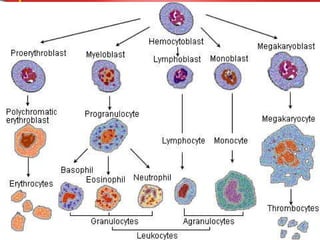
  • #7 Hematopoietic stem cell differentiates into all myeloid cells: monocytes, granulocytes (neutrophils, basophils, eosinophils), erythrocytes, and platelets.
  • #8 Acute Myelogenous (AML) or Acute Nonlymphocytic (ANLL) leukemia affects the hematopoietic stem cell that differentiates into all myeloid cells -monocytes -granulocytes: basophils, neutrophils, eosinophils, erthrocytes, & platelets
  • #26 ITP= idiopathic thromobocytopenic purpura
  • #37 See Chart 33-9 on page 1076
  • #38 See Chart 33-8 on pages 1069-70