CEMENTUM
Submitted to:DEPARTMENT OF
CLINICAL
PERIODONTOLOGY &
ORAL IMPLANTOLOGY
HOD & PROF.- DR.
RANJAN MALHOTRA
CONTENTS
INTRODUCTION
 DEVELOPMENT
 TYPES OF CEMENTUM
 STRUCURE AND COMPOSITION
 ACELLULAR AND CELLULAR CEMENTUM
 CEMENTOENAMEL JUNCTION
 DENTINOCEMENTAL JUCNTION
 PATHOLOGY
 ANKYLOSIS
 CEMENTUM RESORPTION

CEMENTUM
 CEMENTUM

is defined as
calcified avascular
mesenchymal tissue that forms
the outer covering of root.
 The cementum is the part of
the periodontium that attaches
the teeth to the alveolar bone
by anchoring the periodontal
ligament.
DEVELOPMENT OF CEMENTUM
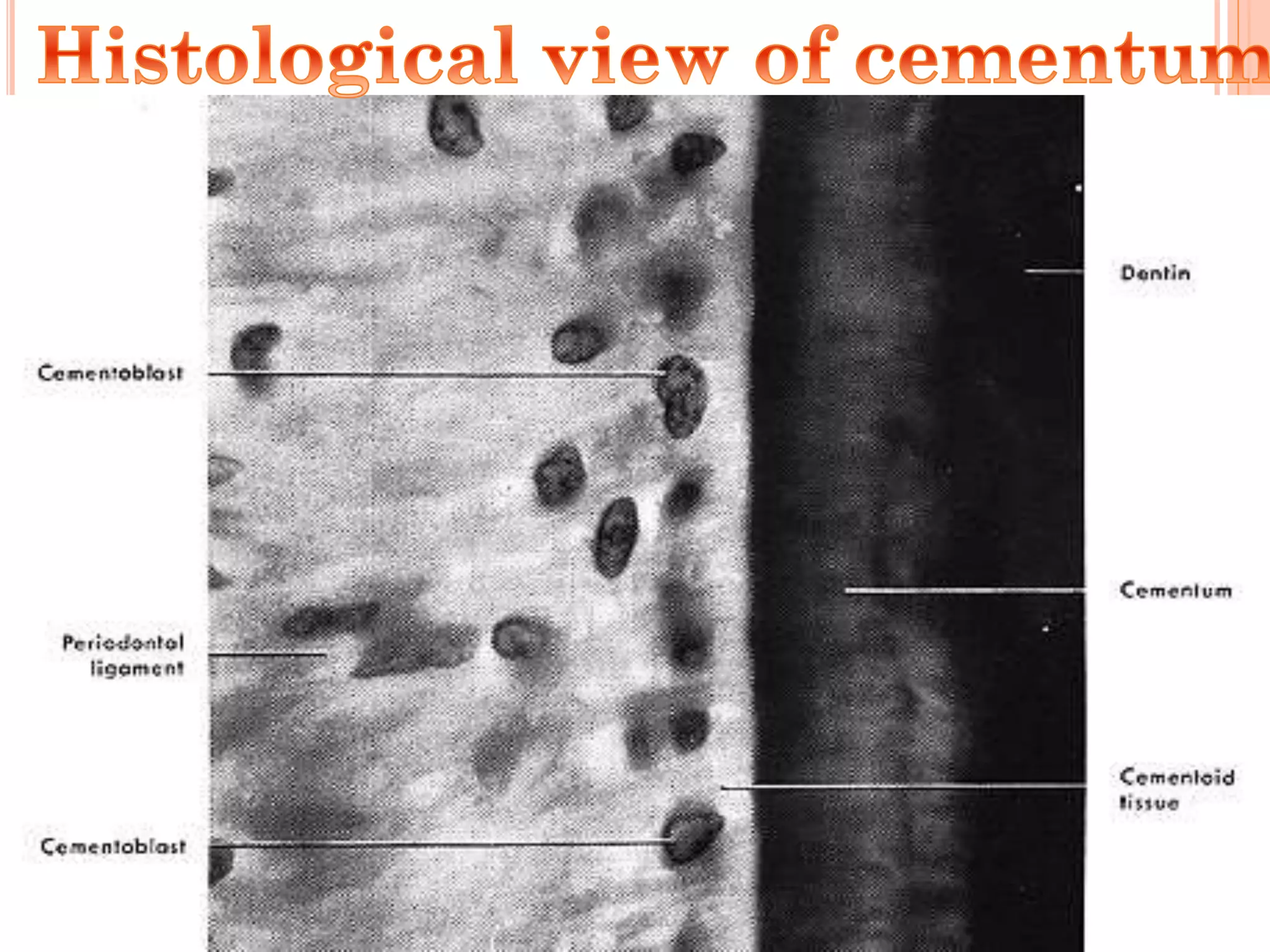
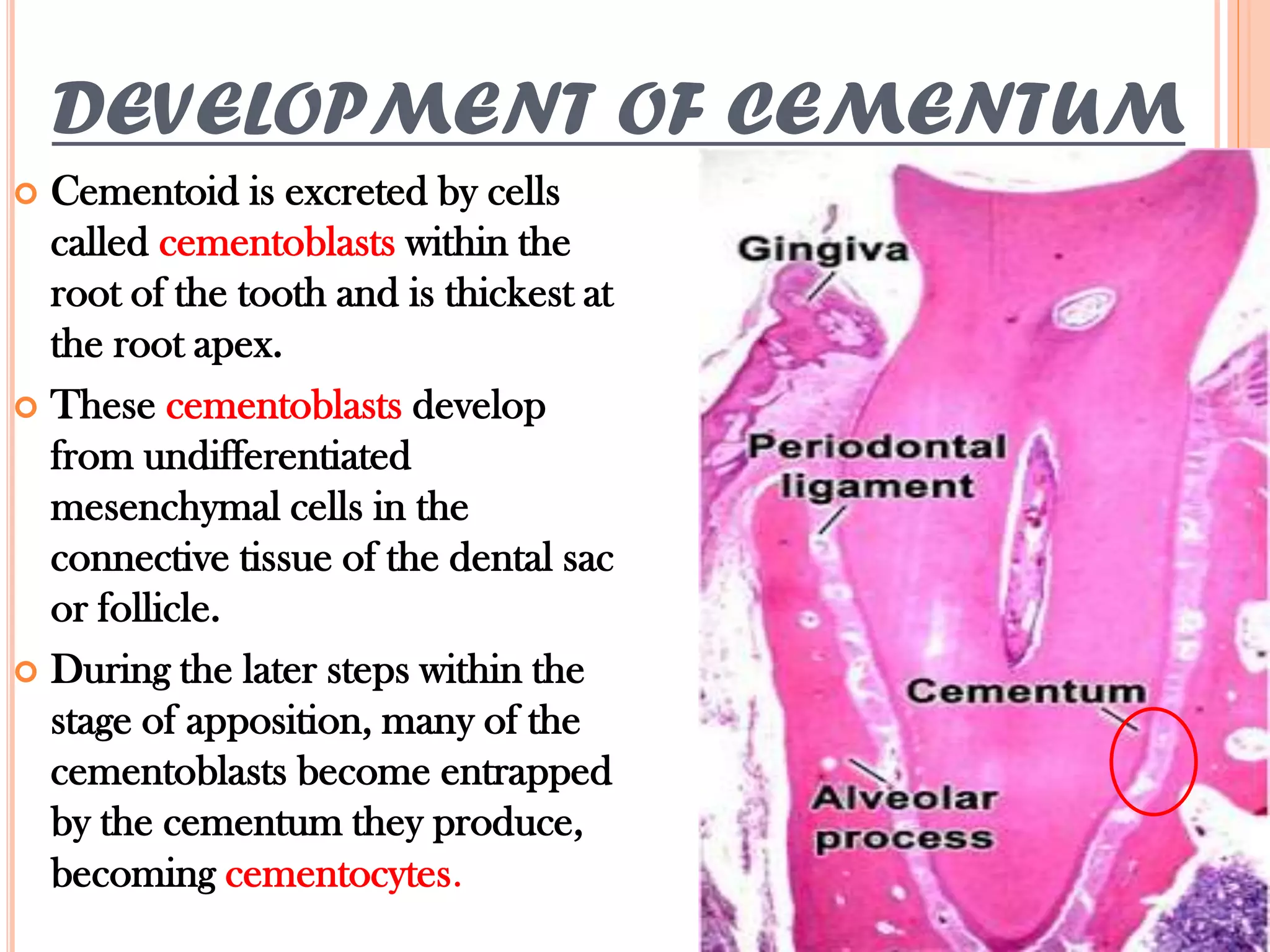
Cementoid is excreted by cells
called cementoblasts within the
root of the tooth and is thickest at
the root apex.
 These cementoblasts develop
from undifferentiated
mesenchymal cells in the
connective tissue of the dental sac
or follicle.
 During the later steps within the
stage of apposition, many of the
cementoblasts become entrapped
by the cementum they produce,
becoming cementocytes.

TYPES OF CEMENTUM:
1.ACELLULAR or PRIMARY
CEMENTUM
2.CELLULAR or SECONDARY
CEMENTUM
STRUCTURE AND COMPOSITION:






Both acellular and cellular cementum consists of:
1.CALCIFIED INTERFIBRILLAR MATRIX
2.COLLAGEN FIBRES
The two main sources of collagen fibers in cementum are:
1.EXTRINSIC or SHARPEY’s FIBRES
2.INTRISIC FIBRES
Sharpey’s fibres are embedded portion of principle fibers' of
periodontal ligament and are formed by fibroblasts.
ACELLULAR
CEMENTUM
It is the first formed cementum.
 It does not contain cells and
covers approx. cervical third or
half of the root.
 Formed before the tooth
reaches the occlusal plane.
 Thickness: 30-230 micrometers
 Sharpey’s fibers make up most
of the structure of acellular
cementum and play a principle
role in supporting the tooth.


CELLULAR
CEMENTUM
It is formed after the
tooth reaches the
occlusal plane, is more
irregular and contain
cells called
cementocytes in
lacunae.
 Cellular cementum is
less calcified than
acellular cementum.
 Sharpey’s fibres
occupy a smaller
portion and may be
less calcified.

CEMENTOENAMEL
JUNCTION






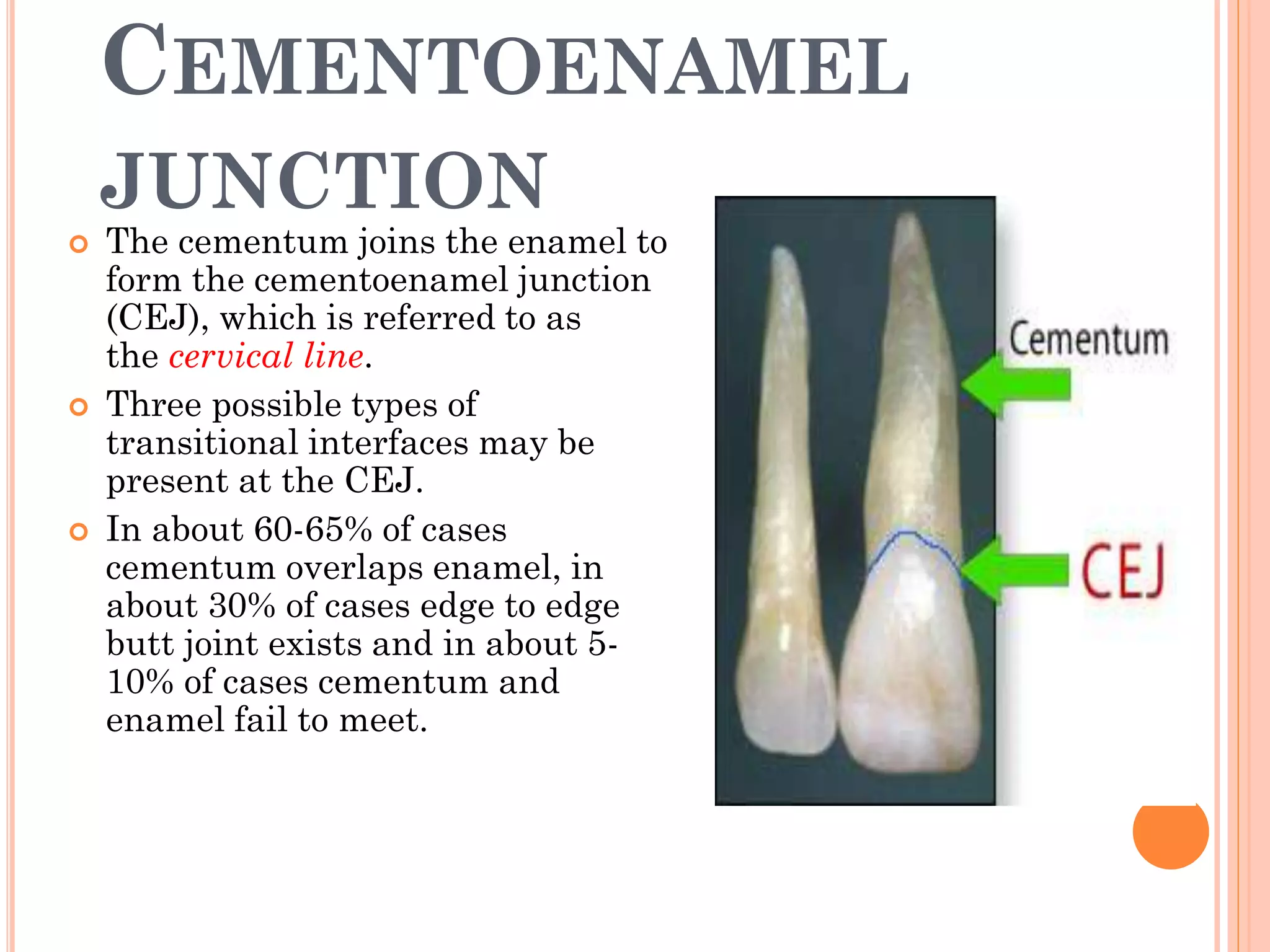
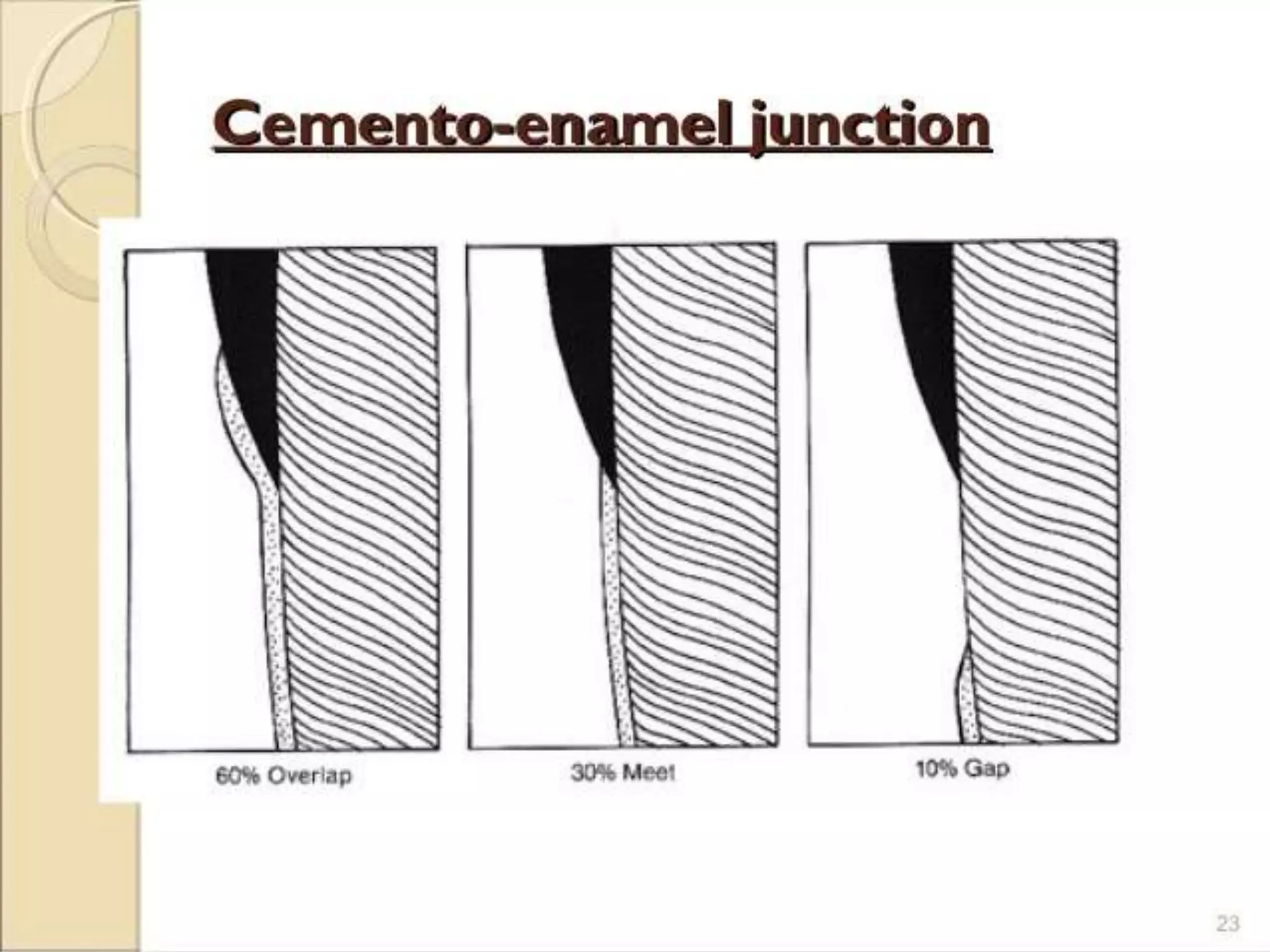
The cementum joins the enamel to
form the cementoenamel junction
(CEJ), which is referred to as
the cervical line.
Three possible types of
transitional interfaces may be
present at the CEJ.
In about 60-65% of cases
cementum overlaps enamel, in
about 30% of cases edge to edge
butt joint exists and in about 510% of cases cementum and
enamel fail to meet.
DENTINOCEMENTAL
JUNCTION
When the cementoid reaches the full thickness
needed, the cementoid surrounding the
cementocytes becomes mineralized, or matured,
and is then considered cementum.
 Because of the apposition of cementum over the
dentin, the dentinocemental junction (DCJ) is
formed.
 This interface is not as defined, either clinically or
histological, as that of the dentinoenamel junction.
 The dentinocemental junction (DCJ) is a relatively
smooth area in the permanent tooth, and
attachment of cementum to the dentin is firm.

Dentinocemental junction
PATHOLOGY


HYPERCEMENTOSIS:The
excessive build up of
cementum on the roots of a
tooth is a pathological
condition known
as hypercementosis

Cementum thickness can
increase on the root end to
compensate for attritional wear
of the occlusal/ incisal surface
and passive eruption
of the tooth.
 When cementum is exposed
through gingival recession,
it quickly undergoes abrasion
by mechanical friction
because of its low
mineral content and thinness..

The incidence of cemental caries increases in older adults as gingival recession
occurs from either trauma or periodontal disease. Cementicles are
mineralized bodies of cementum found either attached to the cemental root
surface or lying free in the periodontal ligament.
ANKYLOSIS
The fusion of cementum and alveolar bone with
obliteration of periodontal ligament is known as
ankylosis.
 Ankylosis occurs in teeth with cemental resorption.
 It results in resorption of root and its replacement by
bone tissue.
 Resorption lacunae are filled with fluid.
 It may develop after occlusal trauma.

CEMENTUM
RESORPTION:
Permanent teeth do not undergo resorption as do the
primary teeth.
 Causes: Trauma from occlusion, orthodontic
movement, periapical disease, cysts and tumors.
 It is painless.

REFERENCES-

Website- Wikipedia ,Google
Carranza’s book
Dental anatomy and
histology by dr.satish
chandra
Cementum

Cementum

  • 1.
    CEMENTUM Submitted to:DEPARTMENT OF CLINICAL PERIODONTOLOGY& ORAL IMPLANTOLOGY HOD & PROF.- DR. RANJAN MALHOTRA
  • 2.
    CONTENTS INTRODUCTION  DEVELOPMENT  TYPESOF CEMENTUM  STRUCURE AND COMPOSITION  ACELLULAR AND CELLULAR CEMENTUM  CEMENTOENAMEL JUNCTION  DENTINOCEMENTAL JUCNTION  PATHOLOGY  ANKYLOSIS  CEMENTUM RESORPTION 
  • 3.
    CEMENTUM  CEMENTUM is definedas calcified avascular mesenchymal tissue that forms the outer covering of root.  The cementum is the part of the periodontium that attaches the teeth to the alveolar bone by anchoring the periodontal ligament.
  • 7.
    DEVELOPMENT OF CEMENTUM Cementoidis excreted by cells called cementoblasts within the root of the tooth and is thickest at the root apex.  These cementoblasts develop from undifferentiated mesenchymal cells in the connective tissue of the dental sac or follicle.  During the later steps within the stage of apposition, many of the cementoblasts become entrapped by the cementum they produce, becoming cementocytes. 
  • 8.
    TYPES OF CEMENTUM: 1.ACELLULARor PRIMARY CEMENTUM 2.CELLULAR or SECONDARY CEMENTUM
  • 9.
    STRUCTURE AND COMPOSITION:    Bothacellular and cellular cementum consists of: 1.CALCIFIED INTERFIBRILLAR MATRIX 2.COLLAGEN FIBRES The two main sources of collagen fibers in cementum are: 1.EXTRINSIC or SHARPEY’s FIBRES 2.INTRISIC FIBRES Sharpey’s fibres are embedded portion of principle fibers' of periodontal ligament and are formed by fibroblasts.
  • 10.
    ACELLULAR CEMENTUM It is thefirst formed cementum.  It does not contain cells and covers approx. cervical third or half of the root.  Formed before the tooth reaches the occlusal plane.  Thickness: 30-230 micrometers  Sharpey’s fibers make up most of the structure of acellular cementum and play a principle role in supporting the tooth.  CELLULAR CEMENTUM It is formed after the tooth reaches the occlusal plane, is more irregular and contain cells called cementocytes in lacunae.  Cellular cementum is less calcified than acellular cementum.  Sharpey’s fibres occupy a smaller portion and may be less calcified. 
  • 12.
    CEMENTOENAMEL JUNCTION    The cementum joinsthe enamel to form the cementoenamel junction (CEJ), which is referred to as the cervical line. Three possible types of transitional interfaces may be present at the CEJ. In about 60-65% of cases cementum overlaps enamel, in about 30% of cases edge to edge butt joint exists and in about 510% of cases cementum and enamel fail to meet.
  • 14.
    DENTINOCEMENTAL JUNCTION When the cementoidreaches the full thickness needed, the cementoid surrounding the cementocytes becomes mineralized, or matured, and is then considered cementum.  Because of the apposition of cementum over the dentin, the dentinocemental junction (DCJ) is formed.  This interface is not as defined, either clinically or histological, as that of the dentinoenamel junction.  The dentinocemental junction (DCJ) is a relatively smooth area in the permanent tooth, and attachment of cementum to the dentin is firm. 
  • 15.
  • 16.
    PATHOLOGY  HYPERCEMENTOSIS:The excessive build upof cementum on the roots of a tooth is a pathological condition known as hypercementosis Cementum thickness can increase on the root end to compensate for attritional wear of the occlusal/ incisal surface and passive eruption of the tooth.  When cementum is exposed through gingival recession, it quickly undergoes abrasion by mechanical friction because of its low mineral content and thinness.. 
  • 17.
    The incidence ofcemental caries increases in older adults as gingival recession occurs from either trauma or periodontal disease. Cementicles are mineralized bodies of cementum found either attached to the cemental root surface or lying free in the periodontal ligament.
  • 18.
    ANKYLOSIS The fusion ofcementum and alveolar bone with obliteration of periodontal ligament is known as ankylosis.  Ankylosis occurs in teeth with cemental resorption.  It results in resorption of root and its replacement by bone tissue.  Resorption lacunae are filled with fluid.  It may develop after occlusal trauma. 
  • 21.
    CEMENTUM RESORPTION: Permanent teeth donot undergo resorption as do the primary teeth.  Causes: Trauma from occlusion, orthodontic movement, periapical disease, cysts and tumors.  It is painless. 
  • 22.
    REFERENCES- Website- Wikipedia ,Google Carranza’sbook Dental anatomy and histology by dr.satish chandra