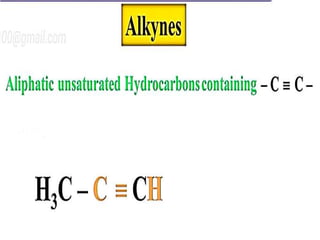
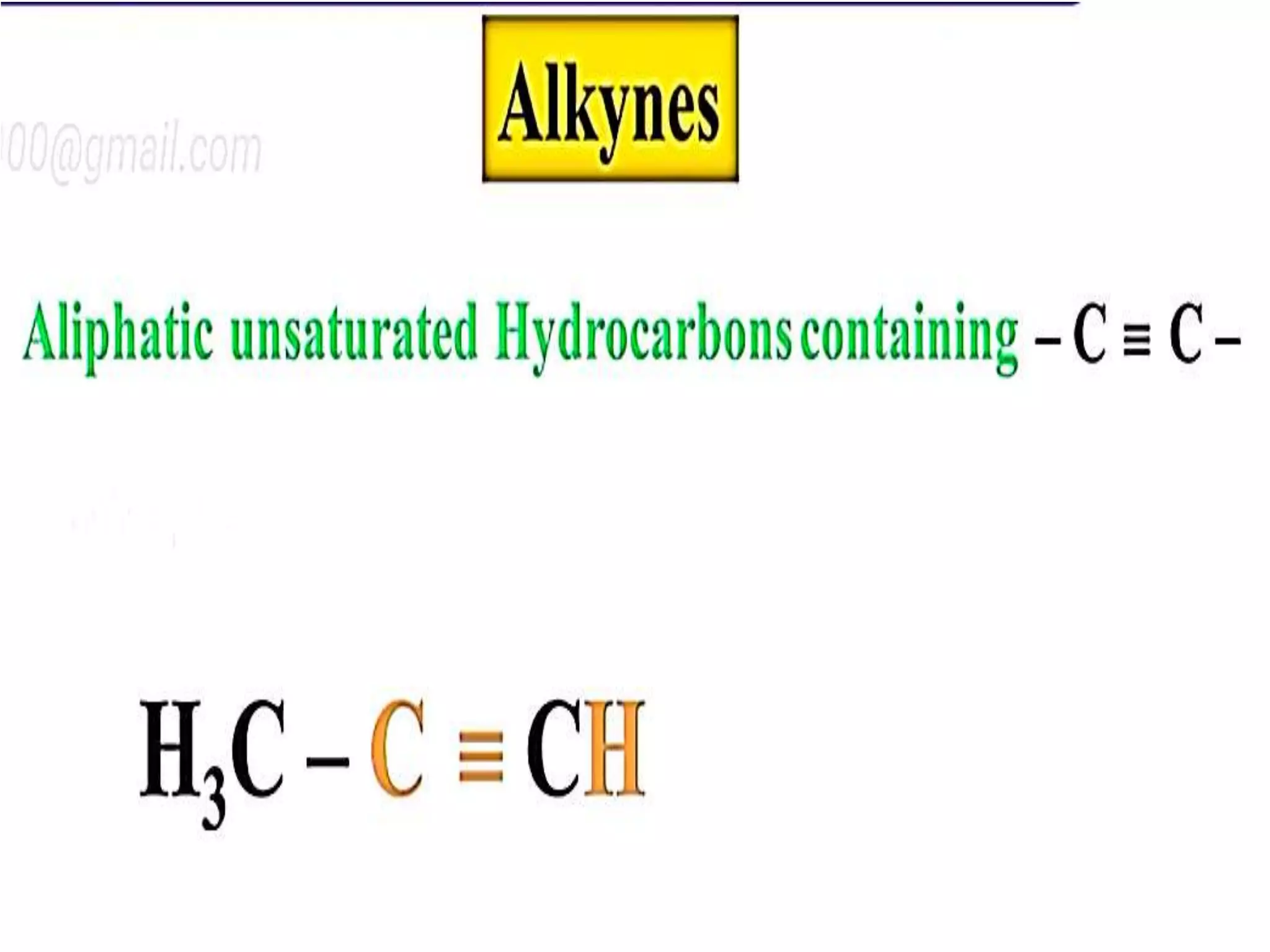
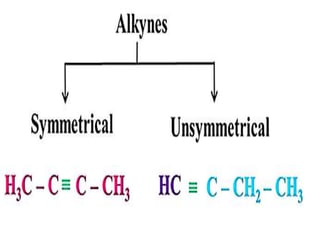
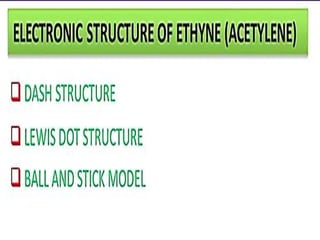
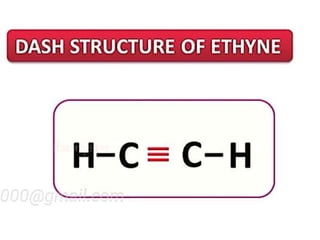
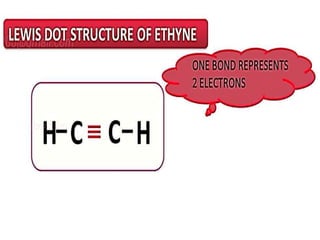
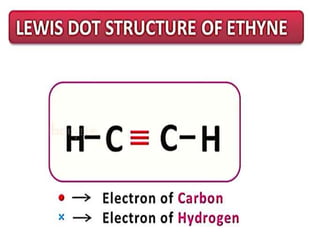
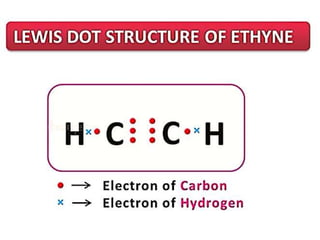
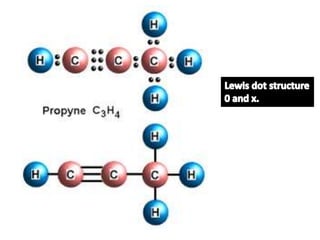
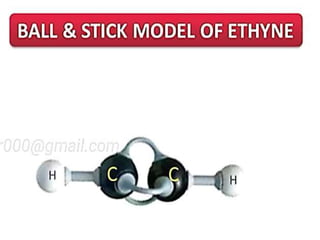
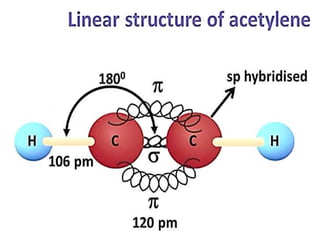
Electronic structure of ethyne
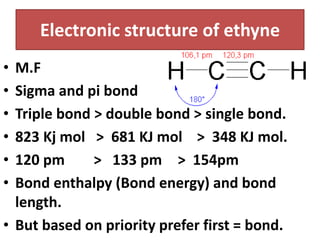
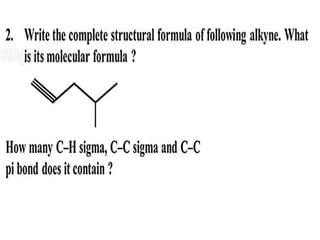
• M.F
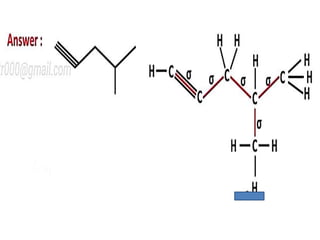
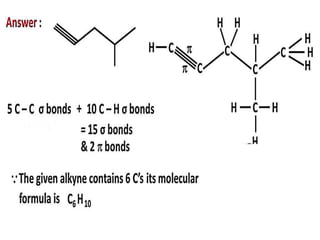
• Sigma and pi bond
• Triple bond > double bond > single bond.
• 823 Kj mol > 681 KJ mol > 348 KJ mol.
• 120 pm > 133 pm > 154pm
• Bond enthalpy (Bond energy) and bond
length.
• But based on priority prefer first = bond.
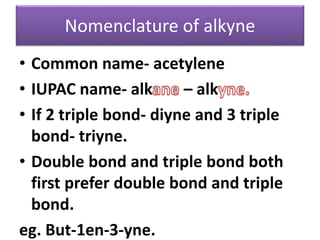
Nomenclature of alkyne
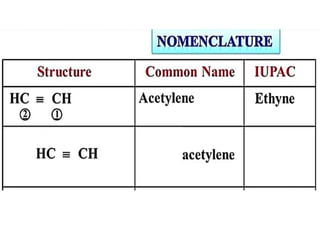
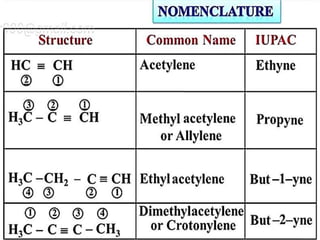
• Common name- acetylene
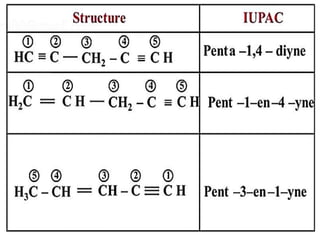
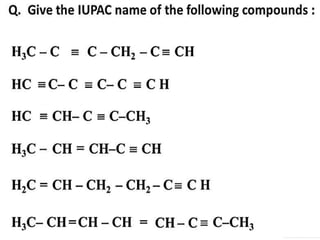
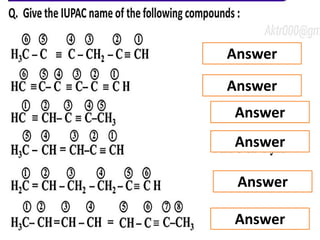
• IUPAC name- alk – alk
• If 2 triple bond- diyne and 3 triple
bond- triyne.
• Double bond and triple bond both
first prefer double bond and triple
bond.
eg. But-1en-3-yne.
Answer
Answer
Answer
Answer
Answer
Answer
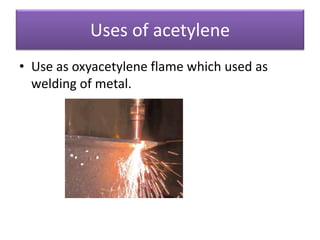
Uses of acetylene
• Use as oxyacetylene flame which used as
welding of metal.
Illuminated lamp
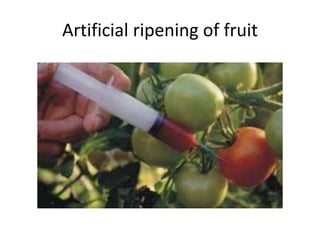
Artificial ripening of fruit
Manufacture of wastron and wastrosol
• Poison gas.
• Manufacture of acetaldehyde, acetic acid,
oxalic.
Method of preparation
Method of preparation of alkyne
• From CaC2
• From vicinal dihalide
and Geminal dihalide
• From tetrahalide
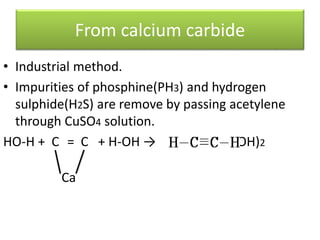
From calcium carbide
• Industrial method.
• Impurities of phosphine(PH3) and hydrogen
sulphide(H2S) are remove by passing acetylene
through CuSO4 solution.
HO-H + C = C + H-OH → +Ca(OH)2
Ca
From vicinal and Geminal dihalide
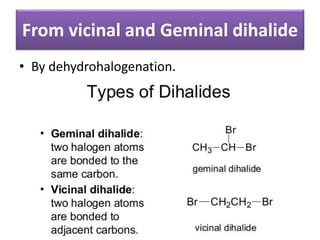
• By dehydrohalogenation.
From vicinal and Geminal dihalide
• From vicinal dihalide:-
Ethylene dibromide + KOH to give vinyl
bromide further react with NaNH2(Sodamide)
to give ethylene.
• From Geminal dihalide:-
1,1 dibromoethane + alc KOH to give vinyl
bromide further react with NaNH2 to give
ethylene.
From vicinal and Geminal dihalide
• Weak base give poor yield.
• Strong base give strong yield.eg.
NaNH2.
• 1,2-Dibromo ethane + 2NaNH2 to
give ethylene + 2NaBr + 2NH3.
• 1,1-Dibromo ethane + 2NaNH2 to
give same.
From tetrahalide
• Dehalogenation.
• Ethylene tetrabromide(1,1,2,2-
tetrabromoethane) + 2Zn in
presence of alcohol to give
ethyne + 2ZnBr2.
Physical properties of alkynes
• C2-C3 – gas
• C4-C8- liquid
• C9- more- solid
• Odour- except C2 all odourless.
• High B.P & M.P & mass & polar.
• Insoluble in water but soluble in
solvent.
Reaction of acetylene
• Formation of alkanes
(Hydrogenation)
• Ozonolysis
• Formation of benzene
Formation of alkanes
HC ≡ CH + H2 → [CH2 = CH2] → CH3-CH3
Acetylen heated with hydrogen gase in
presence of catalyst Renay Ni, ethane is
formed. Hydrogenation further carried
give alkane.
polymerisation
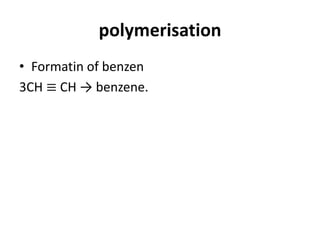
• Formatin of benzen
3CH ≡ CH → benzene.

Alkyne

  • 9.
    Electronic structure ofethyne • M.F • Sigma and pi bond • Triple bond > double bond > single bond. • 823 Kj mol > 681 KJ mol > 348 KJ mol. • 120 pm > 133 pm > 154pm • Bond enthalpy (Bond energy) and bond length. • But based on priority prefer first = bond.
  • 12.
    Nomenclature of alkyne •Common name- acetylene • IUPAC name- alk – alk • If 2 triple bond- diyne and 3 triple bond- triyne. • Double bond and triple bond both first prefer double bond and triple bond. eg. But-1en-3-yne.
  • 17.
  • 21.
    Uses of acetylene •Use as oxyacetylene flame which used as welding of metal.
  • 22.
  • 23.
  • 24.
    Manufacture of wastronand wastrosol • Poison gas. • Manufacture of acetaldehyde, acetic acid, oxalic.
  • 25.
  • 26.
    Method of preparationof alkyne • From CaC2 • From vicinal dihalide and Geminal dihalide • From tetrahalide
  • 27.
    From calcium carbide •Industrial method. • Impurities of phosphine(PH3) and hydrogen sulphide(H2S) are remove by passing acetylene through CuSO4 solution. HO-H + C = C + H-OH → +Ca(OH)2 Ca
  • 28.
    From vicinal andGeminal dihalide • By dehydrohalogenation.
  • 29.
    From vicinal andGeminal dihalide • From vicinal dihalide:- Ethylene dibromide + KOH to give vinyl bromide further react with NaNH2(Sodamide) to give ethylene. • From Geminal dihalide:- 1,1 dibromoethane + alc KOH to give vinyl bromide further react with NaNH2 to give ethylene.
  • 30.
    From vicinal andGeminal dihalide • Weak base give poor yield. • Strong base give strong yield.eg. NaNH2. • 1,2-Dibromo ethane + 2NaNH2 to give ethylene + 2NaBr + 2NH3. • 1,1-Dibromo ethane + 2NaNH2 to give same.
  • 31.
    From tetrahalide • Dehalogenation. •Ethylene tetrabromide(1,1,2,2- tetrabromoethane) + 2Zn in presence of alcohol to give ethyne + 2ZnBr2.
  • 32.
    Physical properties ofalkynes • C2-C3 – gas • C4-C8- liquid • C9- more- solid • Odour- except C2 all odourless. • High B.P & M.P & mass & polar. • Insoluble in water but soluble in solvent.
  • 33.
    Reaction of acetylene •Formation of alkanes (Hydrogenation) • Ozonolysis • Formation of benzene
  • 34.
    Formation of alkanes HC≡ CH + H2 → [CH2 = CH2] → CH3-CH3 Acetylen heated with hydrogen gase in presence of catalyst Renay Ni, ethane is formed. Hydrogenation further carried give alkane.
  • 35.
    polymerisation • Formatin ofbenzen 3CH ≡ CH → benzene.