Laceratio
ns
And Other Wound
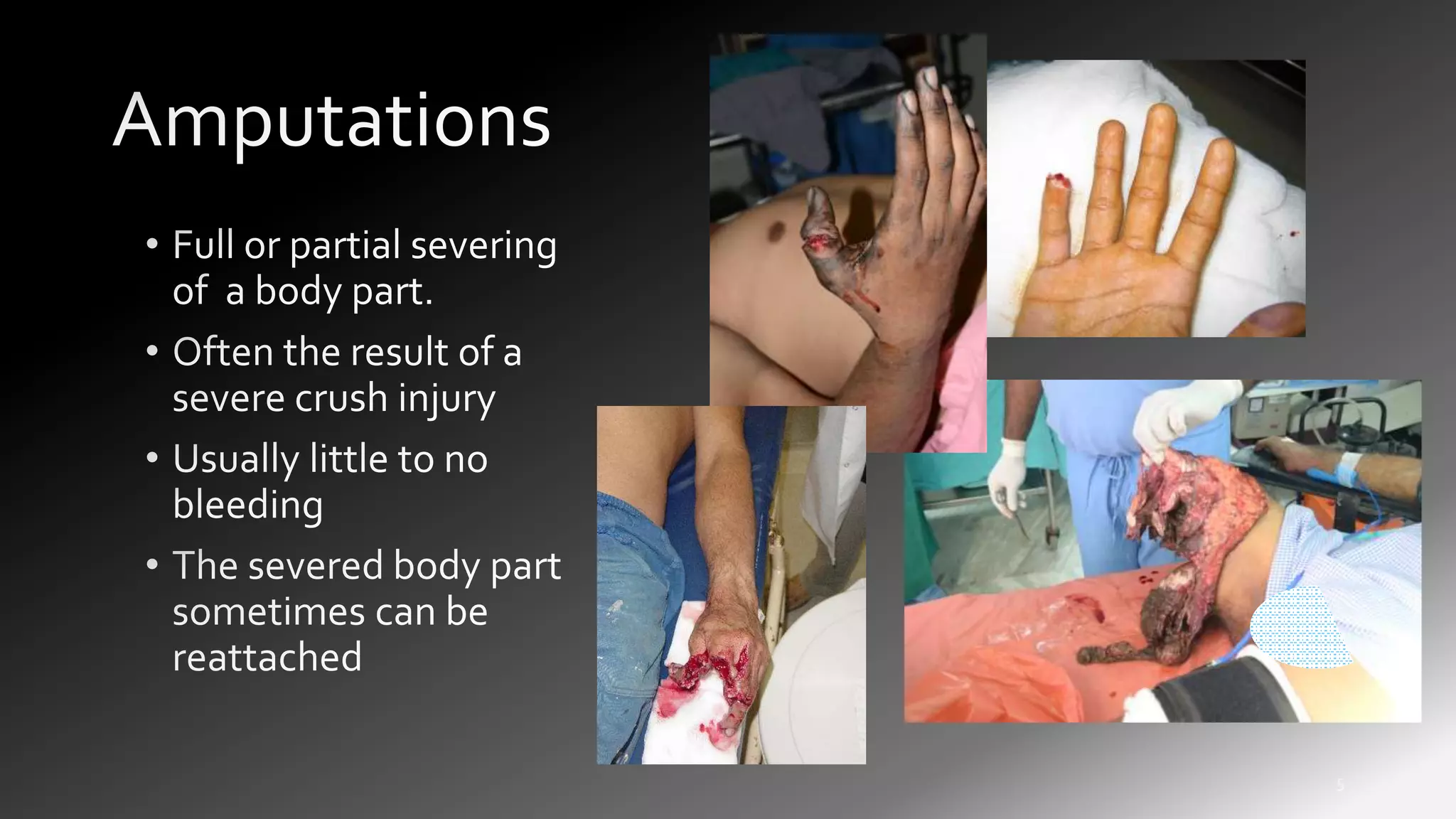
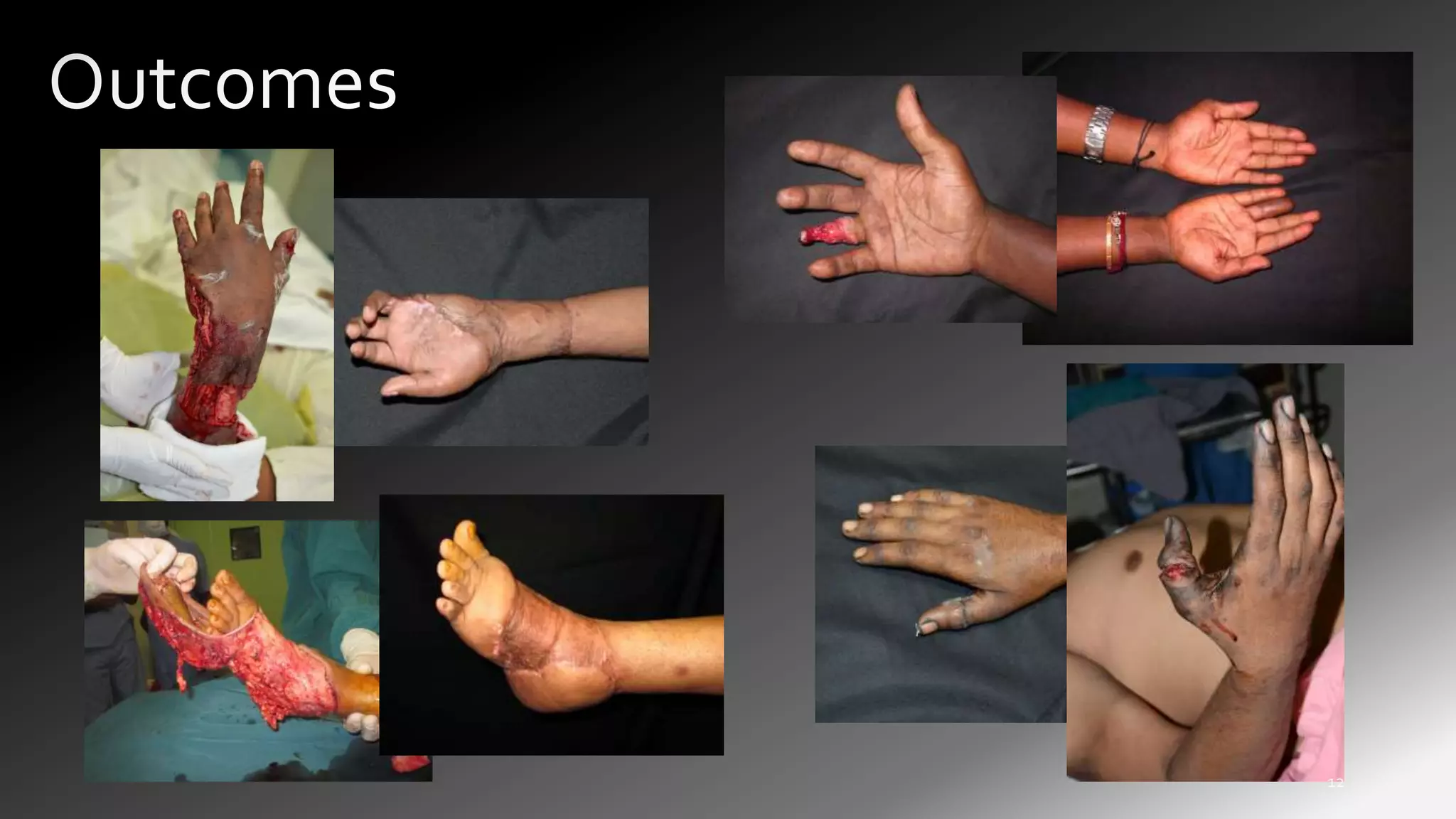
• Amputations
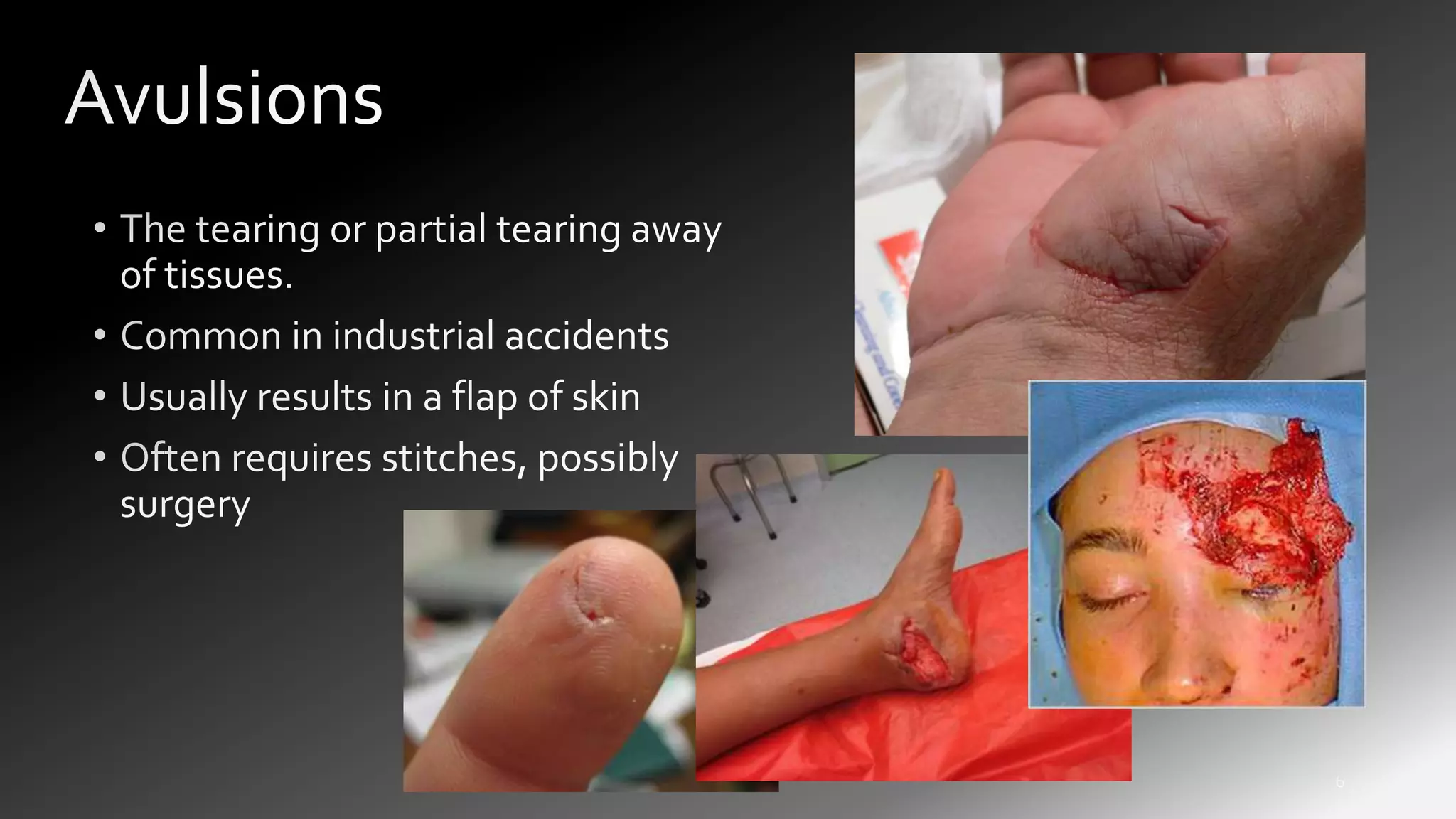
• Avulsion
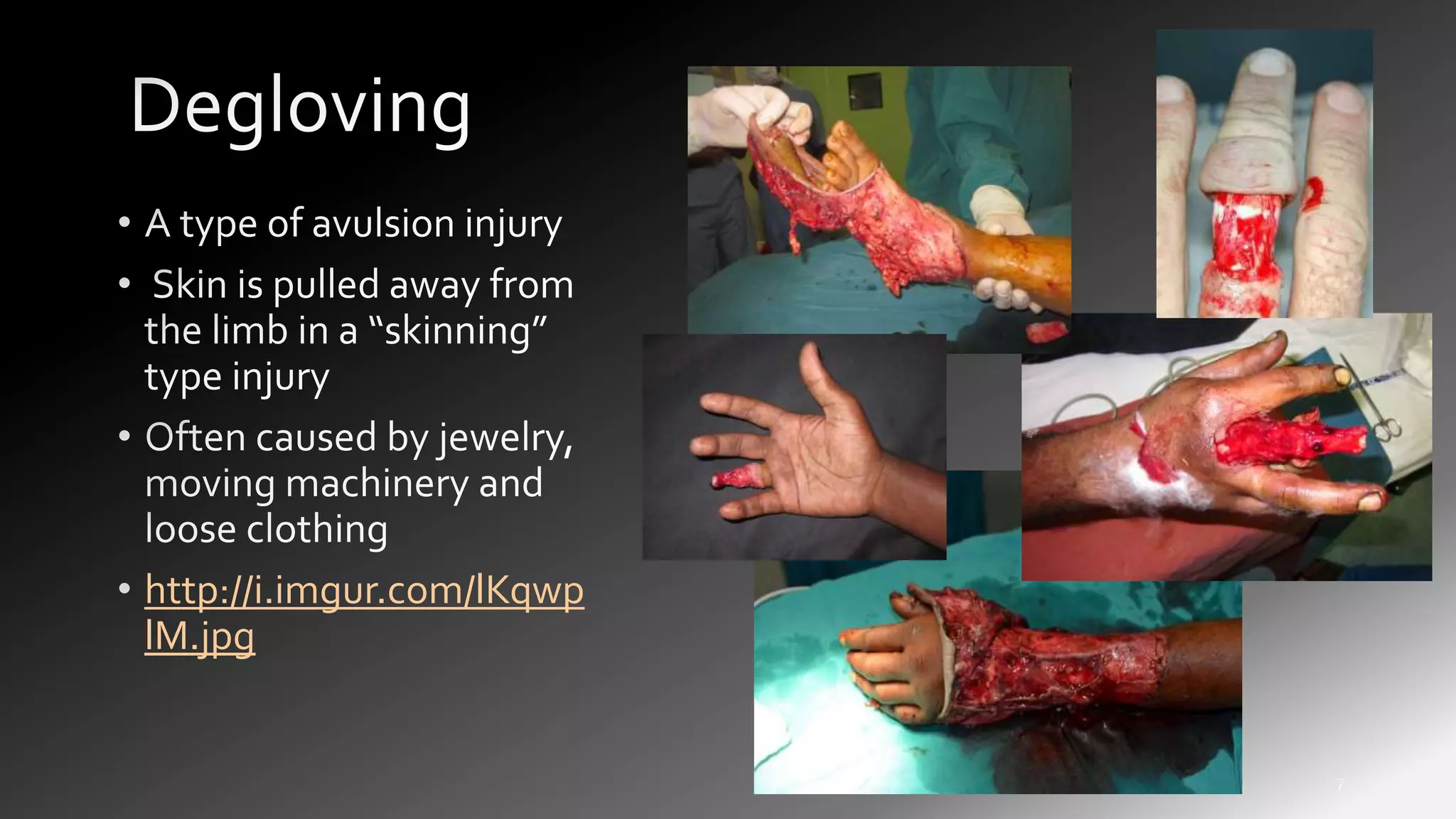
• Degloving
• Crush Injuries
• Punctures
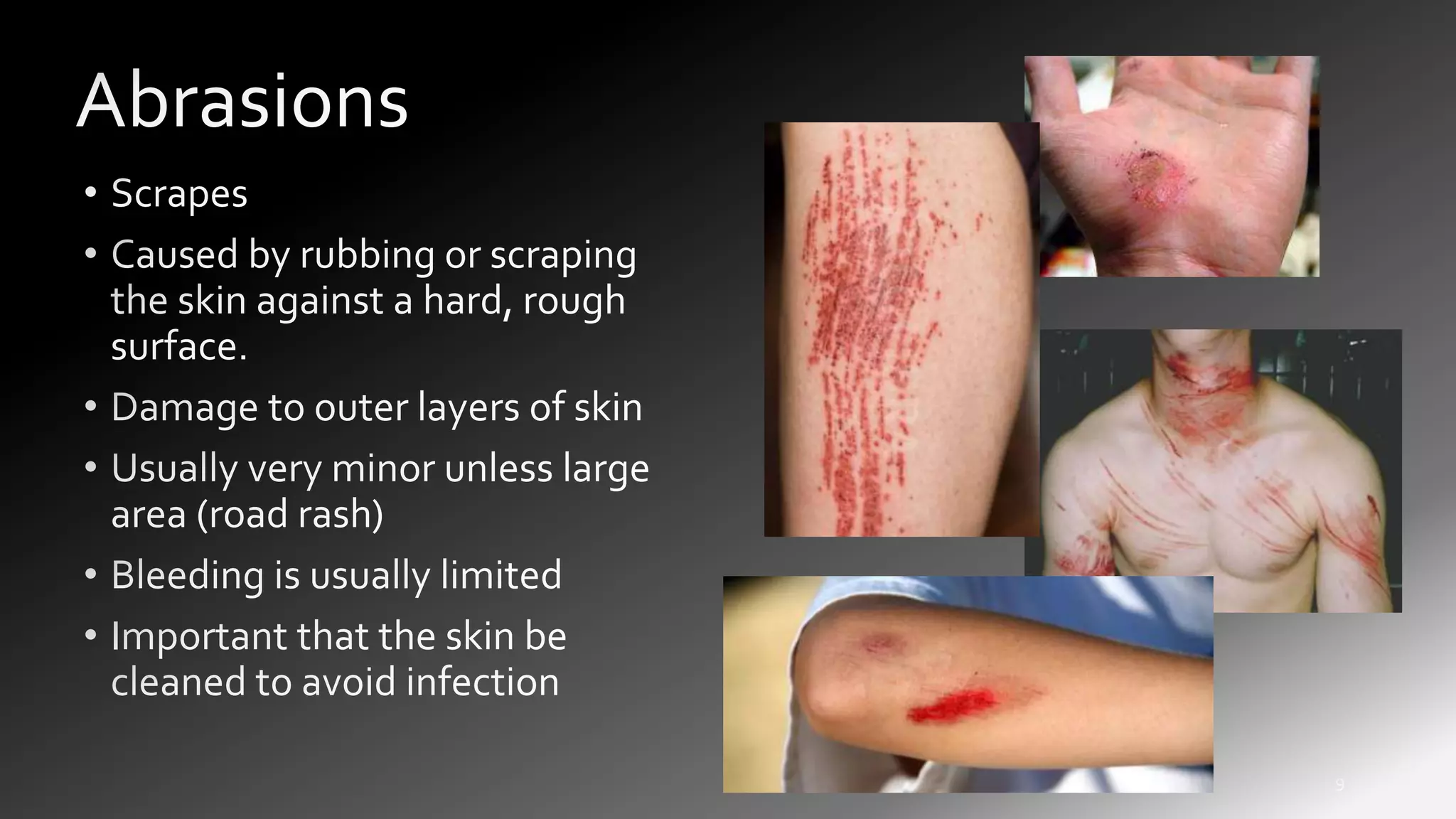
• Abrasions
• Lacerations
• Common wound
• Most likely to result in
time away from work,
lost wages etc…
http://i.imgur.com/lKqwp
lM.jpg
•
Lacerations
Lacerations
Lacerations
Lacerations
Lacerations
Lacerations
Lacerations
Lacerations
Lacerations
Lacerations
Lacerations

Lacerations

Editor's Notes

  • #2 Not a pretty subject Photos not pretty
  • #4 Many types of wounds; Minor to major in nature >>list bullet points<< Focus here is on open wound- Also contusions (bruises) and hematomas: less serious-self resolving Laceration are of great concern Most common injury that can result in need for sutures which results in potential time away from work, lost wages and possible scarring We’re going to take a look at some different types of wounds, how they happen and the potential outcome ……keeping a focus on lacerations, causes and treatment
  • #5 …..To better understand soft tissue injuries, the damage they cause, the risk of infection and the healing process, it helps to have a basic understanding of the skin structure …..Different wounds types affect the skin and underlying tissue in different ways >>Review layers of skin >>Identify internal structures
  • #6 Worst case scenario Uncommon Partial or complete Involves severe forces, vehicles, machinery etc…. Upper left photo: A young male mechanic was working repairing a Shock absorber of a bus in a Bus Depot. When accidently the gas Jack slipped his right thumb got crushed in the spring with the weight of Chassis of the bus
  • #12 Upper Right Photo: A young male presented with a crush injury to his hand and forearm. he was working in a printing press when his left hand accidently got crushed in the press
  • #14  Tension Lines: also called cleavage lines or Langer’s lines, are topological lines drawn on a map of the human body. They were historically defined by the direction in which the skin of a human cadaver will split when struck with a spike. They correspond to the natural orientation of collagen fibers in the dermis, and are generally parallel to the orientation of the underlying muscle fibers. Langer's lines have relevance to forensic science and the development of surgical techniques. Lacerations across the tension lines have a tendency to be pulled apart. Lacerations parallel to the tension lines tend to gape very little
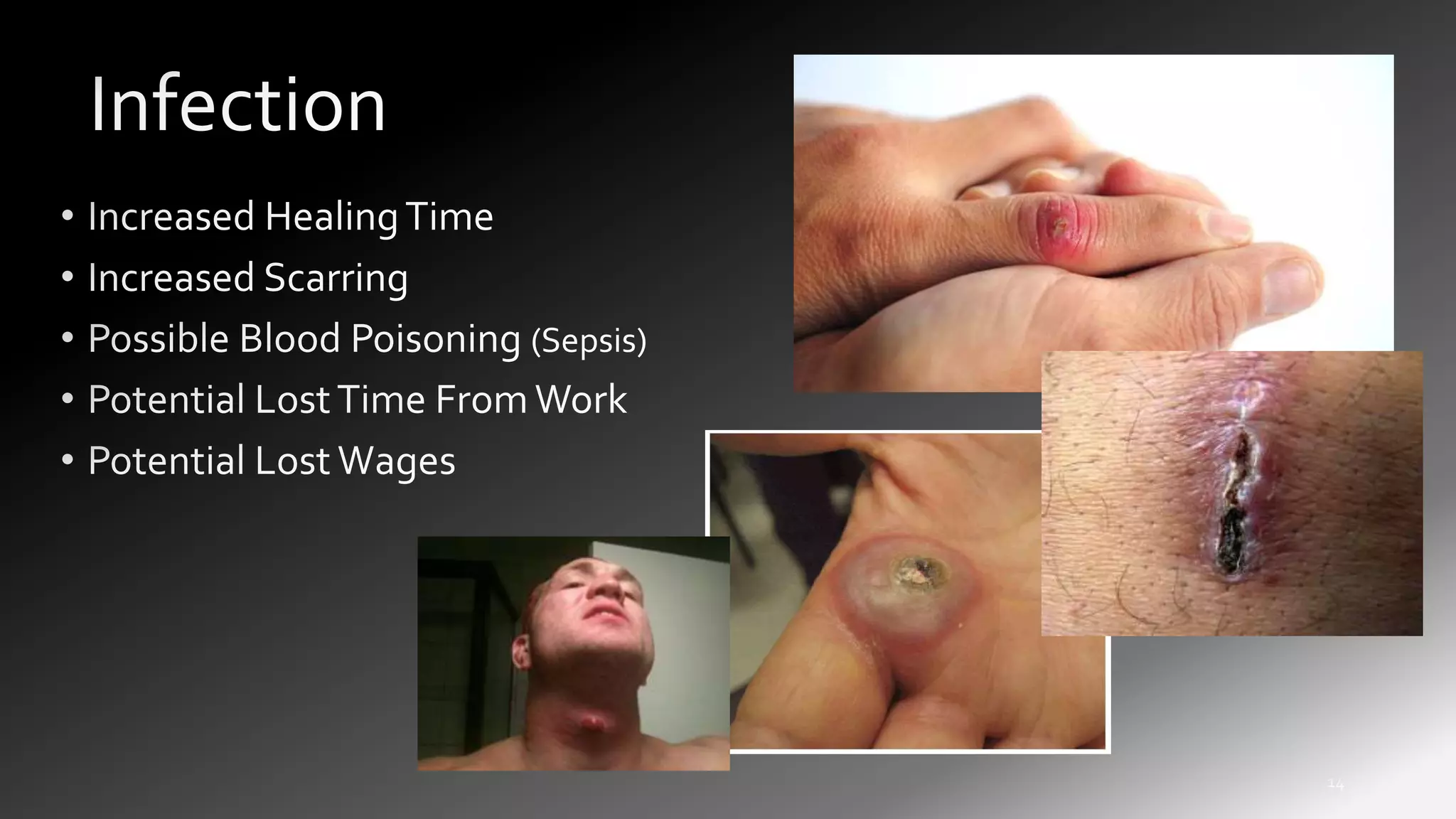
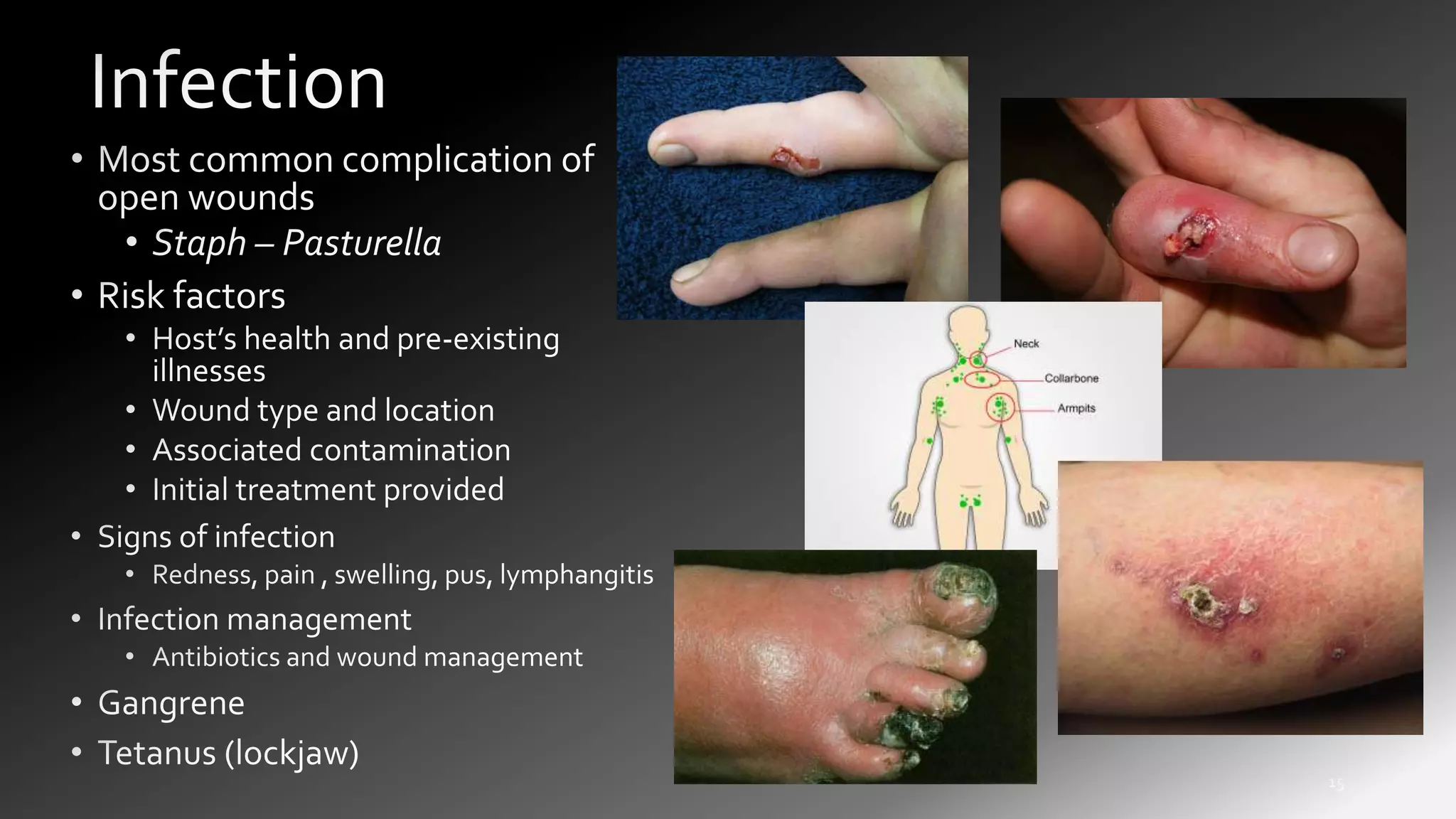
  • #16 Most common complication of open wounds Staph –exist on skin surface Pasturella- exist in mouths of cats, dogs, wild animals Risk factors Host’s health and pre-existing illnesses Diabetics, the infirm, the elderly, and individuals with serious chronic diseases Wound type and location Well-vascularized areas such as the face and scalp are very resistant to infection Distal areas such as extremities heal more slowly Associated contamination Treatment provided Signs of infection Redness, pain , swelling, pus, lymphangitis Infection management Antibiotics and keep wound clean Abscesses Collection of pus in a wound May require incision/draining Gangrene (gas gangrene) Death of tissue resulting from loss of blood supply May lead to sepsis and death Tetanus (lockjaw) Bacteria produce potent toxins which are neurotoxic (Clostridium tetani) Uncommon with the exception of third-world country immigrants
  • #19 House construction after a disaster analogy Hemostasis:  Once the source of damage to a house has been removed and before work can start, utility workers must come in and cap damaged gas or water lines. So too in wound healing damaged blood vessels must be sealed. In wound healing the platelet is the cell which acts as the utility worker sealing off the damaged blood vessels. The blood vessels themselves constrict in response to injury but this spasm ultimately relaxes. The platelets secrete vasoconstrictive substances to aid in this process but their prime role is to form a stable clot sealing the damaged vessel. Under the influence of ADP (adenosine diphosphate) leaking from damaged tissues the platelets aggregate and adhere to the exposed collagen. They also secrete factors which interact with and stimulate the intrinsic clotting cascade through the production of thrombin, which in turn initiates the formation of fibrin from fibrinogen. The fibrin mesh strengthens the platelet aggregate into a stable hemostatic plug. Finally platelets also secrete cytokines such as platelet-derived growth factor (PDGF), which is recognized as one of the first factors secreted in initiating subsequent steps. Hemostasis occurs within minutes of the initial injury unless there are underlying clotting disorders. Inflammation Phase: Leukocytes and Macrophages Clinically inflammation, the second stage of wound healing presents as erythema, swelling and warmth often associated with pain, the classic “rubor et tumor cum calore et dolore”. This stage usually lasts up to 4 days post injury. In the wound healing analogy the first job to be done once the utilities are capped is to clean up the debris. This is a job for non-skilled laborers. These non-skilled laborers in a wound are the neutrophils or PMN’s (polymorphonucleocytes). The inflammatory response causes the blood vessels to become leaky releasing plasma and PMN’s into the surrounding tissue. The neutrophils phagocytize debris and microorganisms and provide the first line of defense against infection. They are aided by local mast cells. As fibrin is broken down as part of this clean-up the degradation products attract the next cell involved. The task of rebuilding a house is complex and requires someone to direct this activity or a contractor. The cell which acts as “contractor” in wound healing is the macrophage. Macrophages are able to phagocytize bacteria and provide a second line of defense. They also secrete a variety of chemotactic and growth factors such as fibroblast growth factor (FGF), epidermal growth factor (EGF), transforming growth factor beta (TGF-__ and interleukin-1 (IL-1) which appears to direct the next stage. Proliferative Phase ( Proliferation, Granulation and Contraction):  The granulation stage starts approximately four days after wounding and usually lasts until day 21 in acute wounds depending on the size of the wound. It is characterized clinically by the presence of pebbled red tissue in the wound base and involves replacement of dermal tissues and sometimes subdermal tissues in deeper wounds as well as contraction of the wound. In the wound healing analogy once the site has been cleared of debris, under the direction of the contractor, the framers move in to build the framework of the new house. Sub-contractors can now install new plumbing and wiring on the framework and siders and roofers can finish the exterior of the house. The “framer” cells are the fibroblasts which secrete the collagen framework on which further dermal regeneration occurs. Specialized fibroblasts are responsible for wound contraction. The “plumber” cells are the pericytes which regenerate the outer layers of capillaries and the endothelial cells which produce the lining. This process is called angiogenesis. The “roofer” and “sider” cells are the keratinocytes which are responsible for epithelialization. In the final stage of epithelializtion, contracture occurs as the keratinocytes differentiate to form the protective outer layer or stratum corneum. Remodeling or Maturation Phase:  Once the basic structure of the house is completed interior finishing may begin. So too in wound repair the healing process involves remodeling the dermal tissues to produce greater tensile strength. The principle cell involved in this process is the fibroblast. Remodeling can take up to 2 years after wounding and explains why apparently healed wounds can break down so dramatically and quickly if attention is not paid to the initial causative factors.  The association between cigarette smoking and delayed wound healing is well recognized in clinical practice, although extensive controlled studies have yet to be performed. The documented effects of the toxic constituents of cigarette smoke--particularly nicotine, carbon monoxide, and hydrogen cyanide--suggest potential mechanisms by which smoking may undermine expeditious wound repair. Nicotine is a vasoconstrictor that reduces nutritional blood flow to the skin, resulting in tissue ischemia and impaired healing of injured tissue. Nicotine also increases platelet adhesiveness, raising the risk of thrombotic microvascular occlusion and tissue ischemia. In addition, proliferation of red blood cells, fibroblasts, and macrophages is reduced by nicotine. Carbon monoxide diminishes oxygen transport and metabolism, whereas hydrogen cyanide inhibits the enzyme systems necessary for oxidative metabolism and oxygen transport at the cellular level. Slower healing has been observed clinically in smokers with wounds resulting from trauma, disease, or surgical procedures How does smoking affect my skin and wound healing?   Smoking causes blood vessels to become smaller.  The smaller vessels have a harder time carrying oxygen, nutrients, and healing factors to the wound.  This can cause the wound healing process to take longer.   Carbon monoxide is a poison from smoking that enters your blood cells.  This poison lowers the level of oxygen in your blood.  Oxygen is vital to your healing. It only takes 3 full days of no smoking to get rid of all the carbon monoxide in your blood.  It is vital to quit smoking for at least 3 days before your surgery so that the oxygen can build back up in your blood stream.    What if I only smoke every once in a while or only smoke cigars?   Studies have shown that ANY amount of smoking can delay the wound healing process, even if you only smoke once in a while.  Cigars also prevent wound healing in the same way.   Won’t my wound(s) heal anyway?   Yes, your wound(s) may still heal, but there are many other reasons why you should stop smoking.  Smoking can cause many of the problems listed below. Infection of your wound. Longer and more expensive hospital stay. If you have received a skin graft, it has a greater chance of not attaching as it should or failing. Blood clots may form near the wound. Stitches may come apart, causing scarring. You are more likely to catch a cold or pneumonia due to more mucus in your lungs. Decreased Vitamin C levels.  Vitamin C is needed to help your skin heal. http://www.youtube.com/watch?v=rmwry5p9ftk
  • #20 **First aid is not reportable Disinfection vs cleaning
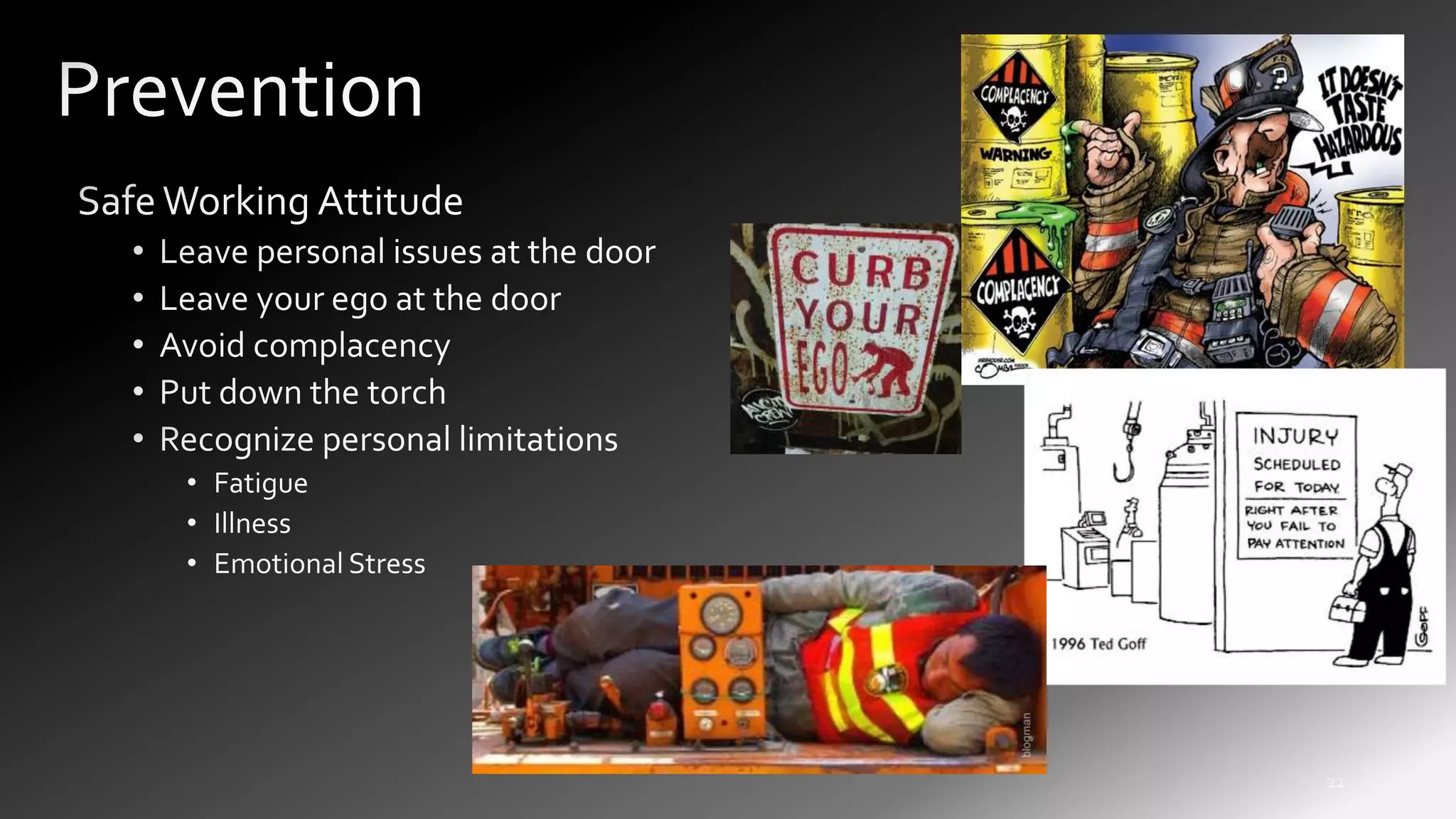
  • #23 If you go into work tired and low on energy then you will of course be more likely to get distracted, to miss things, and to end up injuring yourself as result. The solution is to make sure that when you’re at work, you’re 100% present and your mind isn’t elsewhere. As such then, you should make sure to always get enough sleep each night, you should eat a big breakfast before going to work (filled with slow-release complex carbs), you should stay hydrated and you should take breaks whenever you need them. Meanwhile, if you wake up with a splitting headache or serious cold one morning – then call in sick. Even if you can potentially make it into to work, if you’re not able to concentrate then you’ll be a danger to yourself and others.