Atrial
Fibrillation
BY H. ARTY
16TH FEBRUARY 2017
Contents
▪ About Atrial Fibrillation
▪ What is Atrial Fibrillation?
▪ Causes of the condition
▪ Signs and symptoms of the condition
▪ Treatment of the condition
▪ Overview
▪ Conclusion
▪ Sources
▪ Q and A session
About Atrial Fibrillation
• AF is the most common sustained heart rhythm disorder
• Having AF doubles the risk of death, regardless of age
• In symptomatic patients, AF is frequently associated with a highly significant
reduction in quality of life
• In all AF patients, the risk of suffering a stroke is increased nearly 500%
• AF can be detected with a simple pulse check but approximately half of all patients
remain undiagnosed
• Nearly 1.2 million people in the UK have been diagnosed with AF
What is Atrial
Fibrillation?
https://youtu.be/QbMjLle
ZUQUt
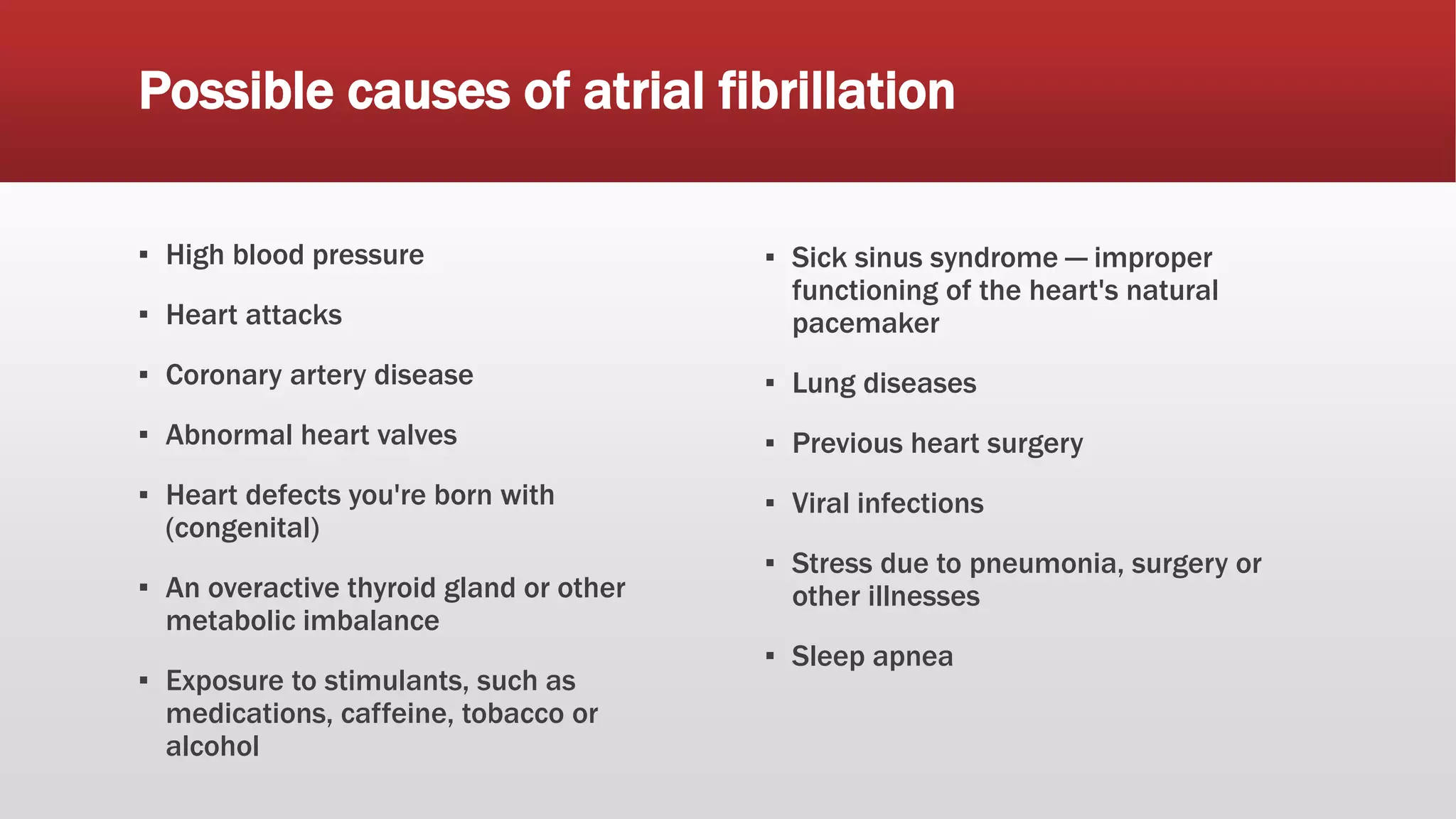
Possible causes of atrial fibrillation
▪ High blood pressure
▪ Heart attacks
▪ Coronary artery disease
▪ Abnormal heart valves
▪ Heart defects you're born with
(congenital)
▪ An overactive thyroid gland or other
metabolic imbalance
▪ Exposure to stimulants, such as
medications, caffeine, tobacco or
alcohol
▪ Sick sinus syndrome — improper
functioning of the heart's natural
pacemaker
▪ Lung diseases
▪ Previous heart surgery
▪ Viral infections
▪ Stress due to pneumonia, surgery or
other illnesses
▪ Sleep apnea
Signs and
symptoms
Some people with atrial fibrillation,
particularly older people, don't have any
symptoms.
The abnormality in heart rhythm is often
only discovered during routine tests or
investigations for another condition.
People often attribute tiredness and
feeling lethargic to ageing, but once
normal rhythm is restored, they realise that
these symptoms were caused by atrial
fibrillation.
Treatment of the condition
Implantable Cardioverter-
defibrillator (ICD)
Medication
Conclusion
▪ Atrial Fibrillation is the most common heart rhythmic
condition
▪ The main causes of the condition are abnormalities or
damage to the hearts structure
▪ Treatment for AF includes medication and/or having
surgically fitted implants
▪ Most people who suffer from AF experience shortness of
breath, dizziness, heart palpitations, chest discomfort to
name a few. Some people experience no symptoms at
all.
Bibliography
▪ http://www.preventaf-strokecrisis.org/report/chapter1/
▪
▪ https://www.bhf.org.uk/heart-health/conditions/atrial-fibrillation
▪
▪ http://www.mayoclinic.org/diseases-conditions/atrial-fibrillation/symptoms-causes/dxc-
20164936
▪
▪ http://admin.heartfoundation.org.nz/atrial-fibrillation/about-atrial-fibrillation
▪
▪ http://www.nhs.uk/Conditions/Atrial-fibrillation/Pages/Symptoms.aspx
▪
▪ http://www.buzzle.com/articles/defibrillator-implant.html
Thank you for
listening.
Any questions?

Atrial fibrillation

  • 1.
  • 2.
    Contents ▪ About AtrialFibrillation ▪ What is Atrial Fibrillation? ▪ Causes of the condition ▪ Signs and symptoms of the condition ▪ Treatment of the condition ▪ Overview ▪ Conclusion ▪ Sources ▪ Q and A session
  • 3.
    About Atrial Fibrillation •AF is the most common sustained heart rhythm disorder • Having AF doubles the risk of death, regardless of age • In symptomatic patients, AF is frequently associated with a highly significant reduction in quality of life • In all AF patients, the risk of suffering a stroke is increased nearly 500% • AF can be detected with a simple pulse check but approximately half of all patients remain undiagnosed • Nearly 1.2 million people in the UK have been diagnosed with AF
  • 4.
  • 5.
    Possible causes ofatrial fibrillation ▪ High blood pressure ▪ Heart attacks ▪ Coronary artery disease ▪ Abnormal heart valves ▪ Heart defects you're born with (congenital) ▪ An overactive thyroid gland or other metabolic imbalance ▪ Exposure to stimulants, such as medications, caffeine, tobacco or alcohol ▪ Sick sinus syndrome — improper functioning of the heart's natural pacemaker ▪ Lung diseases ▪ Previous heart surgery ▪ Viral infections ▪ Stress due to pneumonia, surgery or other illnesses ▪ Sleep apnea
  • 6.
    Signs and symptoms Some peoplewith atrial fibrillation, particularly older people, don't have any symptoms. The abnormality in heart rhythm is often only discovered during routine tests or investigations for another condition. People often attribute tiredness and feeling lethargic to ageing, but once normal rhythm is restored, they realise that these symptoms were caused by atrial fibrillation.
  • 7.
    Treatment of thecondition Implantable Cardioverter- defibrillator (ICD) Medication
  • 8.
    Conclusion ▪ Atrial Fibrillationis the most common heart rhythmic condition ▪ The main causes of the condition are abnormalities or damage to the hearts structure ▪ Treatment for AF includes medication and/or having surgically fitted implants ▪ Most people who suffer from AF experience shortness of breath, dizziness, heart palpitations, chest discomfort to name a few. Some people experience no symptoms at all.
  • 9.
    Bibliography ▪ http://www.preventaf-strokecrisis.org/report/chapter1/ ▪ ▪ https://www.bhf.org.uk/heart-health/conditions/atrial-fibrillation ▪ ▪http://www.mayoclinic.org/diseases-conditions/atrial-fibrillation/symptoms-causes/dxc- 20164936 ▪ ▪ http://admin.heartfoundation.org.nz/atrial-fibrillation/about-atrial-fibrillation ▪ ▪ http://www.nhs.uk/Conditions/Atrial-fibrillation/Pages/Symptoms.aspx ▪ ▪ http://www.buzzle.com/articles/defibrillator-implant.html
  • 10.