LIFE CYCLE COSTING 
TOPIC: STRATEGIC MANAGEMENT ACCOUNTING TECHNIQUES 
Contemporary Strategic Management Accounting Techniques
Introduction 
At the start of any project, it is important to understand the costs involved 
Traditional methods simply look at start up costs, cash flow and profit or loss 
Focused primarily on the manufacturing stage of product life cycle 
Pre & post – manufacturing are treated as expenses costs 
LIFE CYCLE COSTING
Definition 
Life cycle costing is defined as the total cost throughout its life including planning, design, acquisition & support costs & any other costs directly attributable to owning / using the asset. 
Category of LCC Capital assets : 
•Initial costs 
•Operating costs 
•Disposal costs 
LIFE CYCLE COSTING
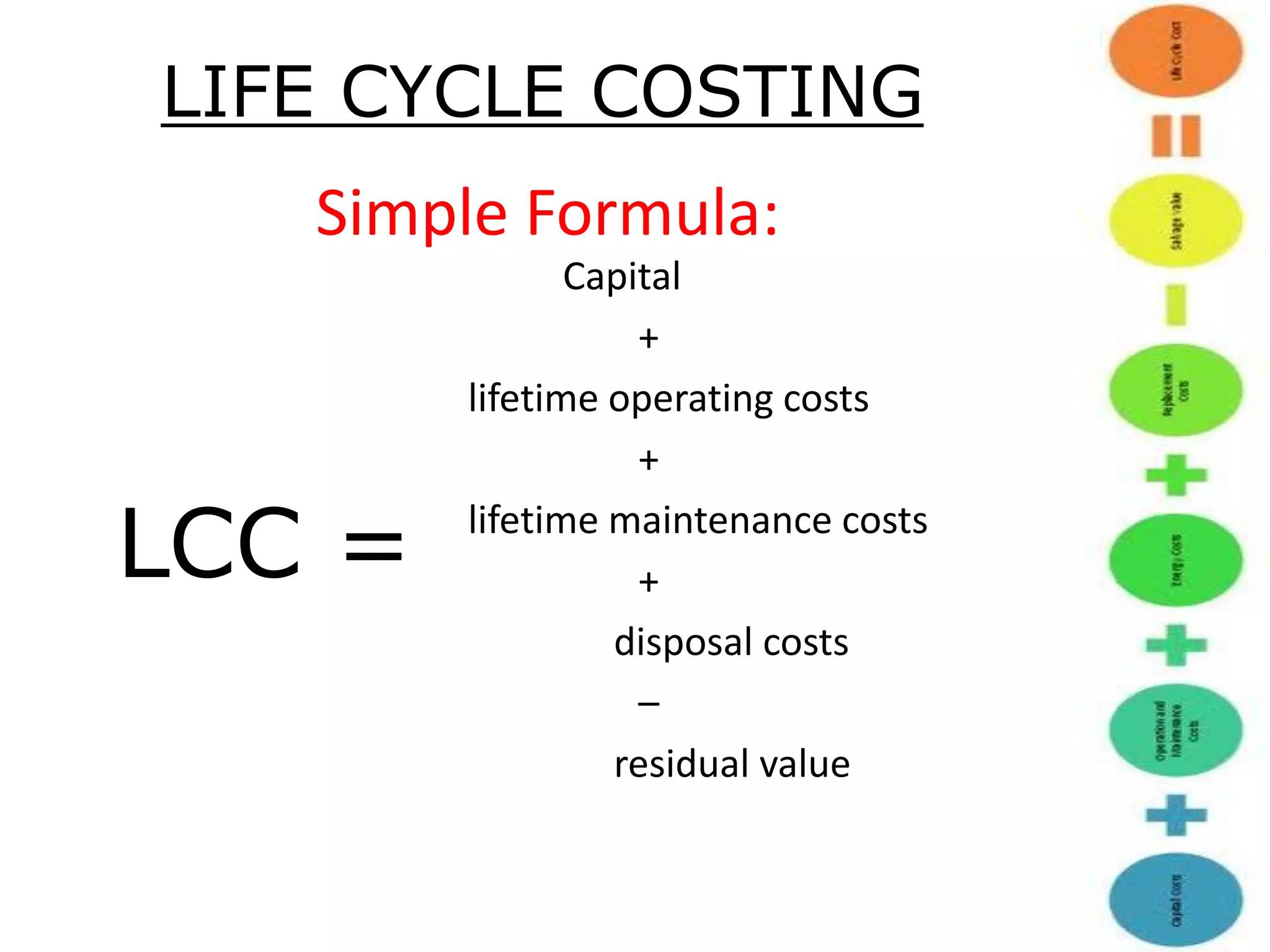
Simple Formula: 
Capital 
+ 
lifetime operating costs 
+ 
lifetime maintenance costs 
+ 
disposal costs 
– 
residual value 
LIFE CYCLE COSTING 
LCC =
A company is planning a new product. Market research information suggests that the product should sell 10,000 units at RM21/unit. The company seeks to make a mark- up of 40% product costs. It is estimated that the lifetime costs of the product will be as follows : 
1. Design and development costs RM50,000 
2. Manufacturing costs RM10/unit 
3. End of life costs RM20,000 
Required : What is the original lifecycle costs per unit? 
LCC/unit = 
RM50,000 + ( 10,000 units x RM10 ) + RM20,000 / 10,000 units 
= RM 17
•Assists management to smartly manage total cost throughout product’s life cycle. 
•To identify areas in which cost reduction efforts are likely to more effective. 
•To estimate the cost impact of various designs and support options. 
LIFE CYCLE COSTING
Life-cycle costing concept 
Help management to understand the cost consequence of developing and making a product and to identify areas which cost reduction efforts are likely to be most effective. 
The process of LLC fundamentally involves : 
Assessing cost arising from an assets over its life cycle 
Evaluating alternatives that have impact on this cost ownership
Life-cycle costing concept 
Useful apply to low-technology issues, such as repair versus replace decisions 
Eg-the New York State Throughway Authority uses life cycle concept to determine the point at which it is more expensive to repair than to replace bridges (Morse, Davis & Hartgraves third edition)
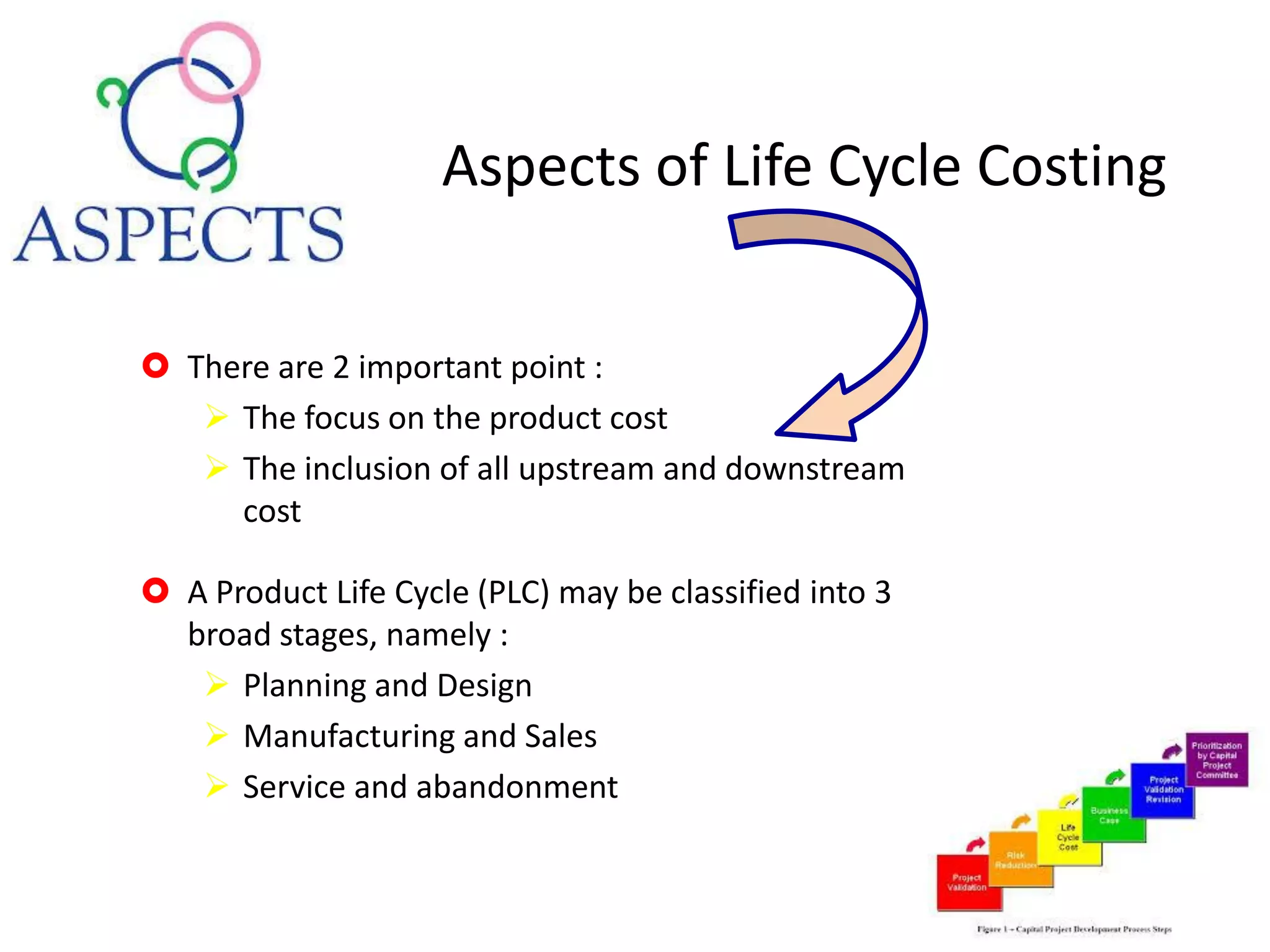
Aspects of Life Cycle Costing 
There are 2 important point : 
The focus on the product cost 
The inclusion of all upstream and downstream cost 
A Product Life Cycle (PLC) may be classified into 3 broad stages, namely : 
Planning and Design 
Manufacturing and Sales 
Service and abandonment
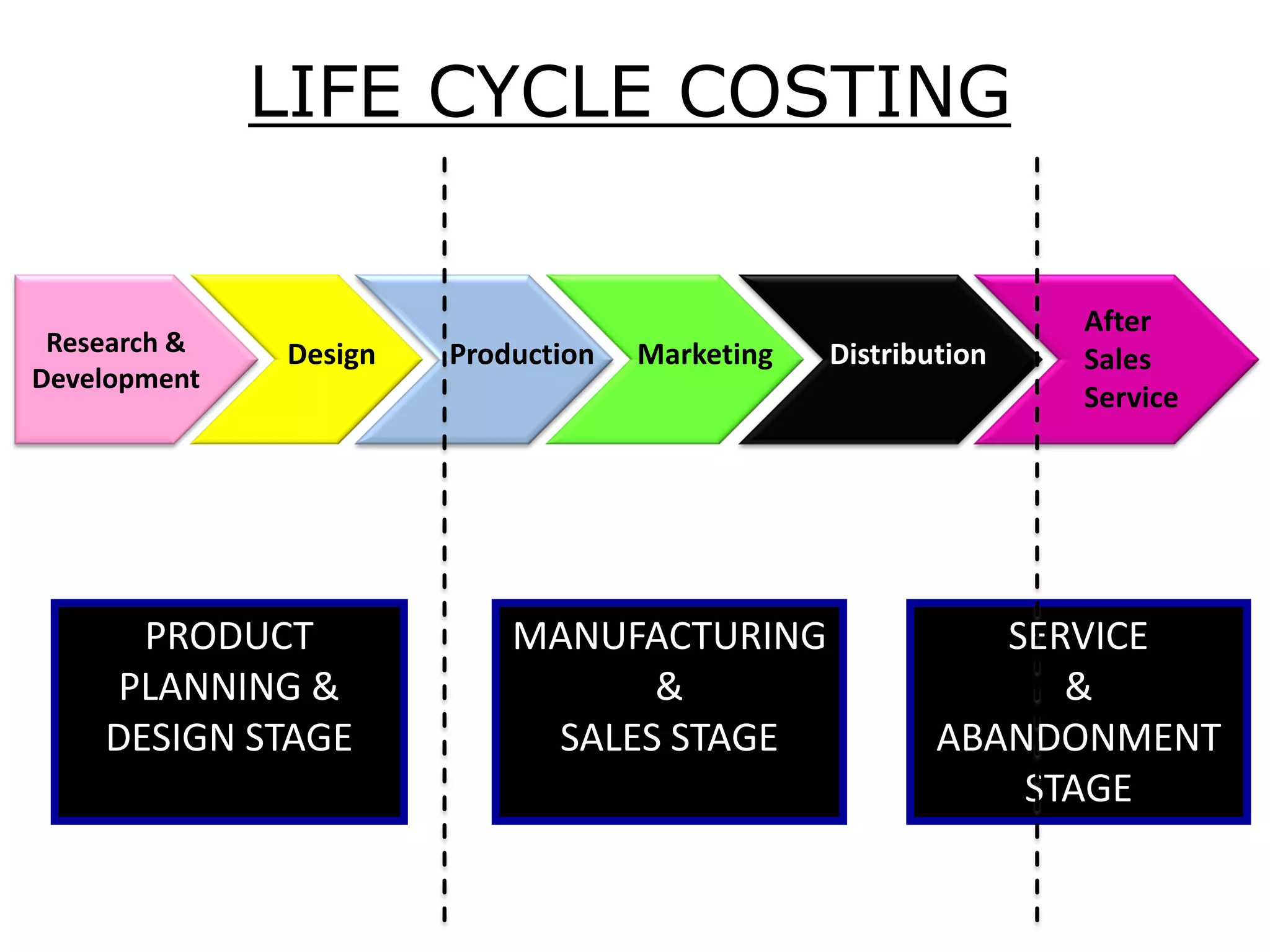
Research & Development 
Design 
Production 
Marketing 
Distribution 
After Sales Service 
PRODUCT PLANNING & DESIGN STAGE 
MANUFACTURING & SALES STAGE 
SERVICE & ABANDONMENT STAGE 
LIFE CYCLE COSTING
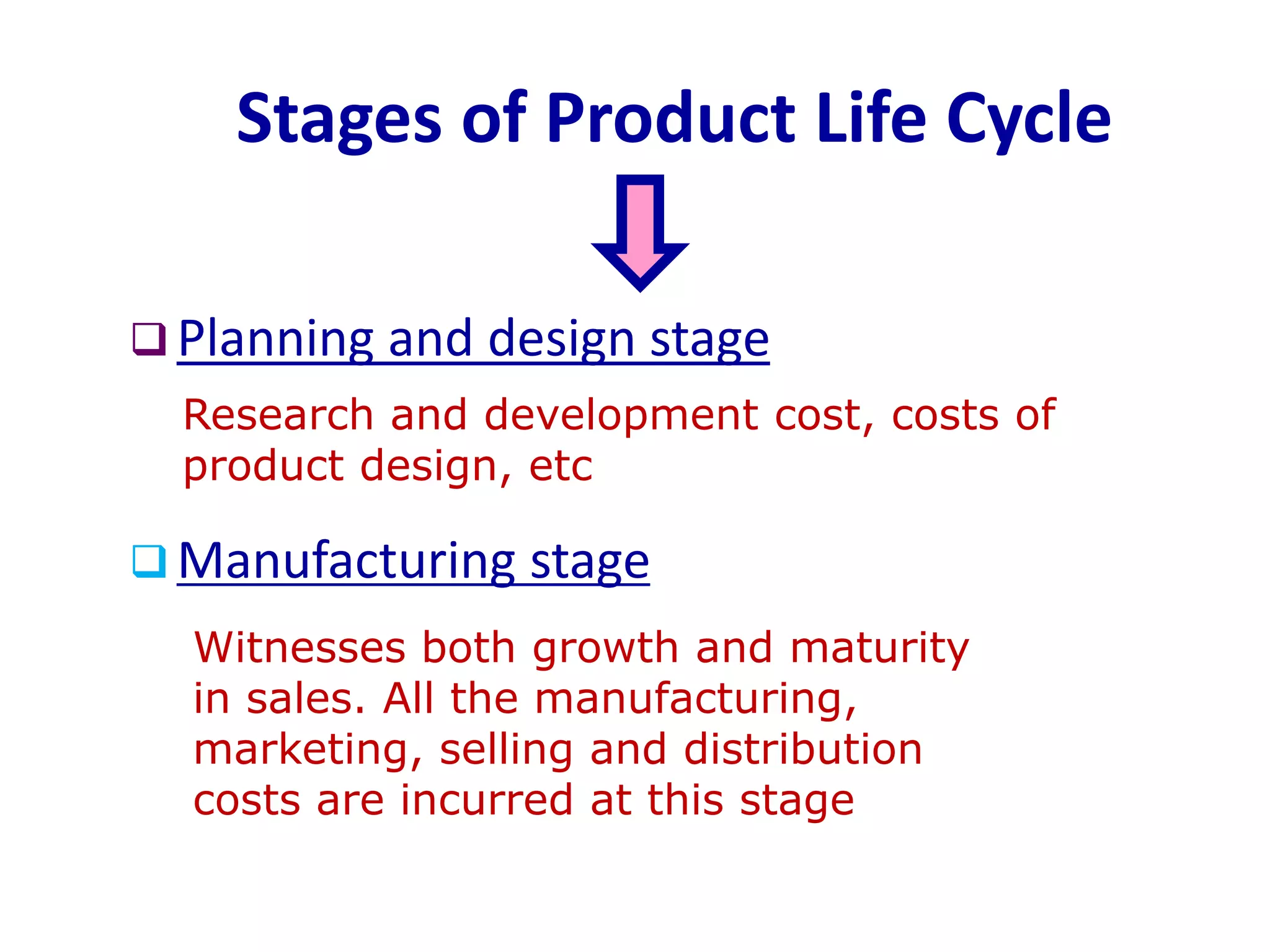
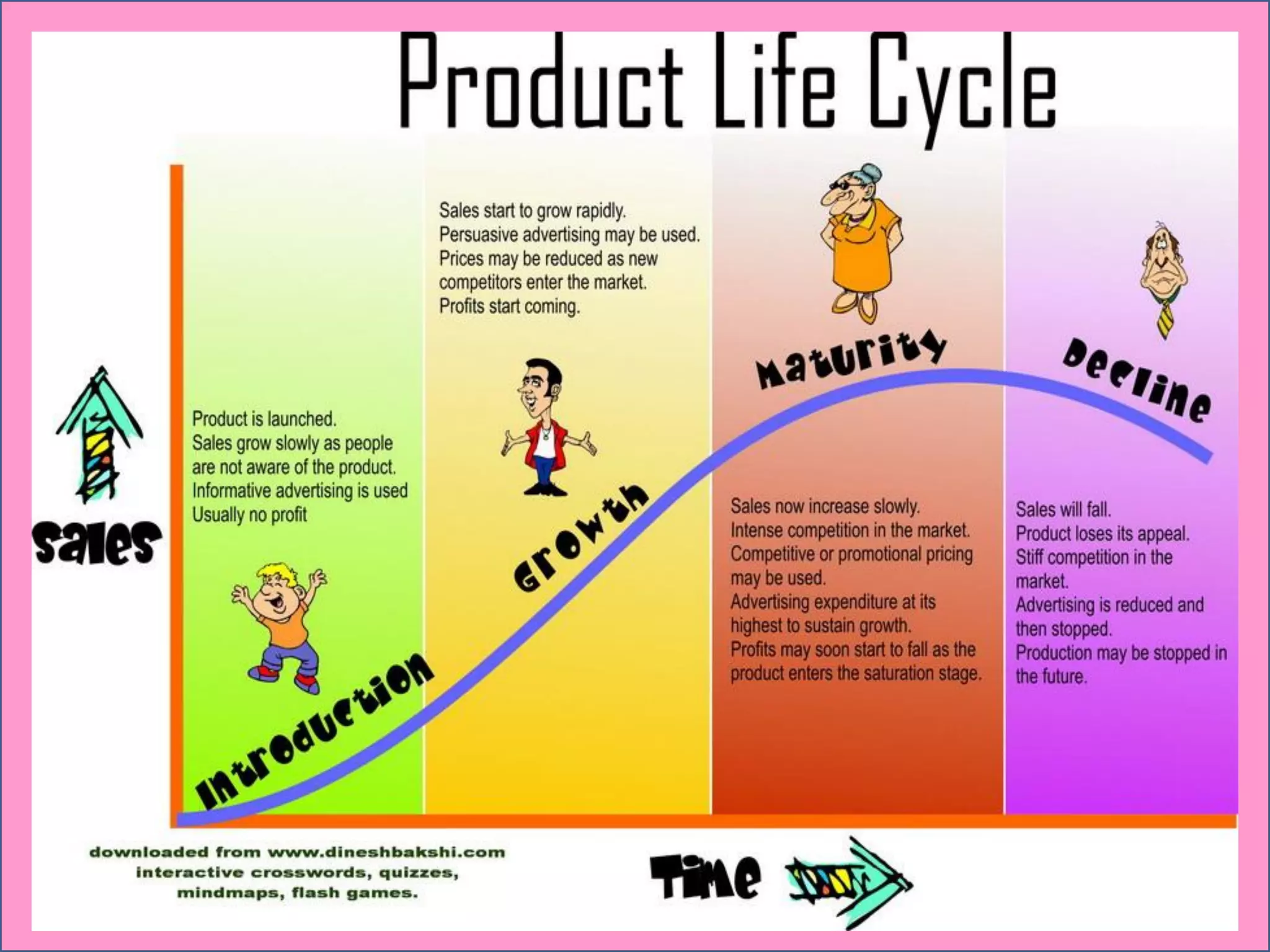
Stages of Product Life Cycle 
Planning and design stage 
Manufacturing stage 
Research and development cost, costs of product design, etc 
Witnesses both growth and maturity in sales. All the manufacturing, marketing, selling and distribution costs are incurred at this stage
Service and abandonment stage 
•This stage signified by a decline in a sales volume 
•The demand for the product declines at this stage. The producers may be required to provide after sales service for the already sold products 
•Costs that are incurred in this stage include all costs relating to after sales service including provision of spares and expert services and costs of abandonment and disposal of the product 
Stages of Product Life Cycle
Costs Committed and Cost Incurred 
Cost that have not yet been incurred but will be incurred in the future on the basis of decision already been taken are termed committed costs 
Cost incurred when a resource is used or sacrificed. The actual cost of product is built up mostly in the growth stage and matured stage. 
Costs incurred vis-à-vis the costs committed at different stages of the product life-cycle are compared in the following diagram.
Comparison of costs committed and cost incurred in product life-cycle stage
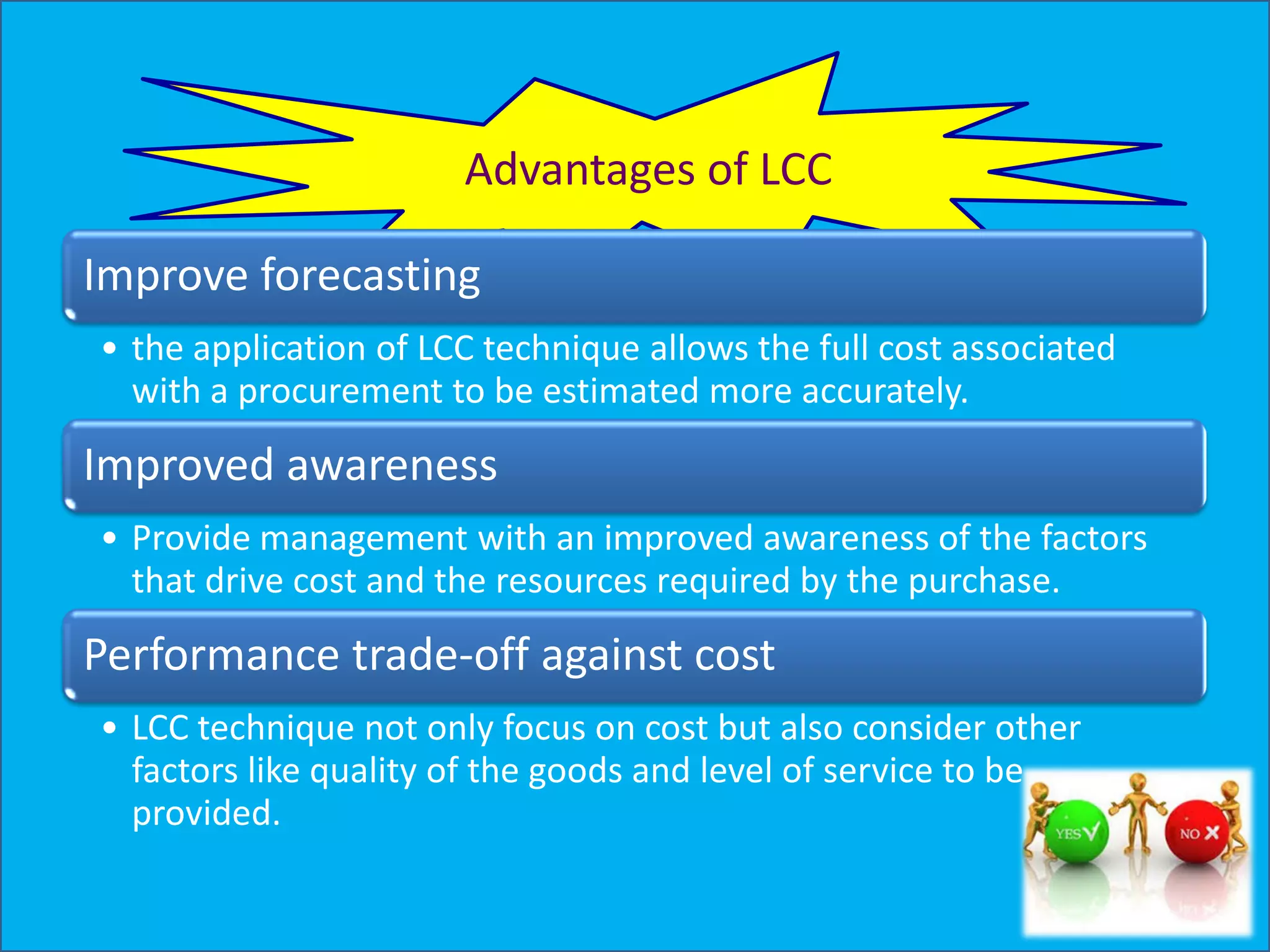
Advantages of LCC 
Improve forecasting 
•the application of LCC technique allows the full cost associated with a procurement to be estimated more accurately. 
Improved awareness 
•Provide management with an improved awareness of the factors that drive cost and the resources required by the purchase. 
Performance trade-off against cost 
•LCC technique not only focus on cost but also consider other factors like quality of the goods and level of service to be provided.
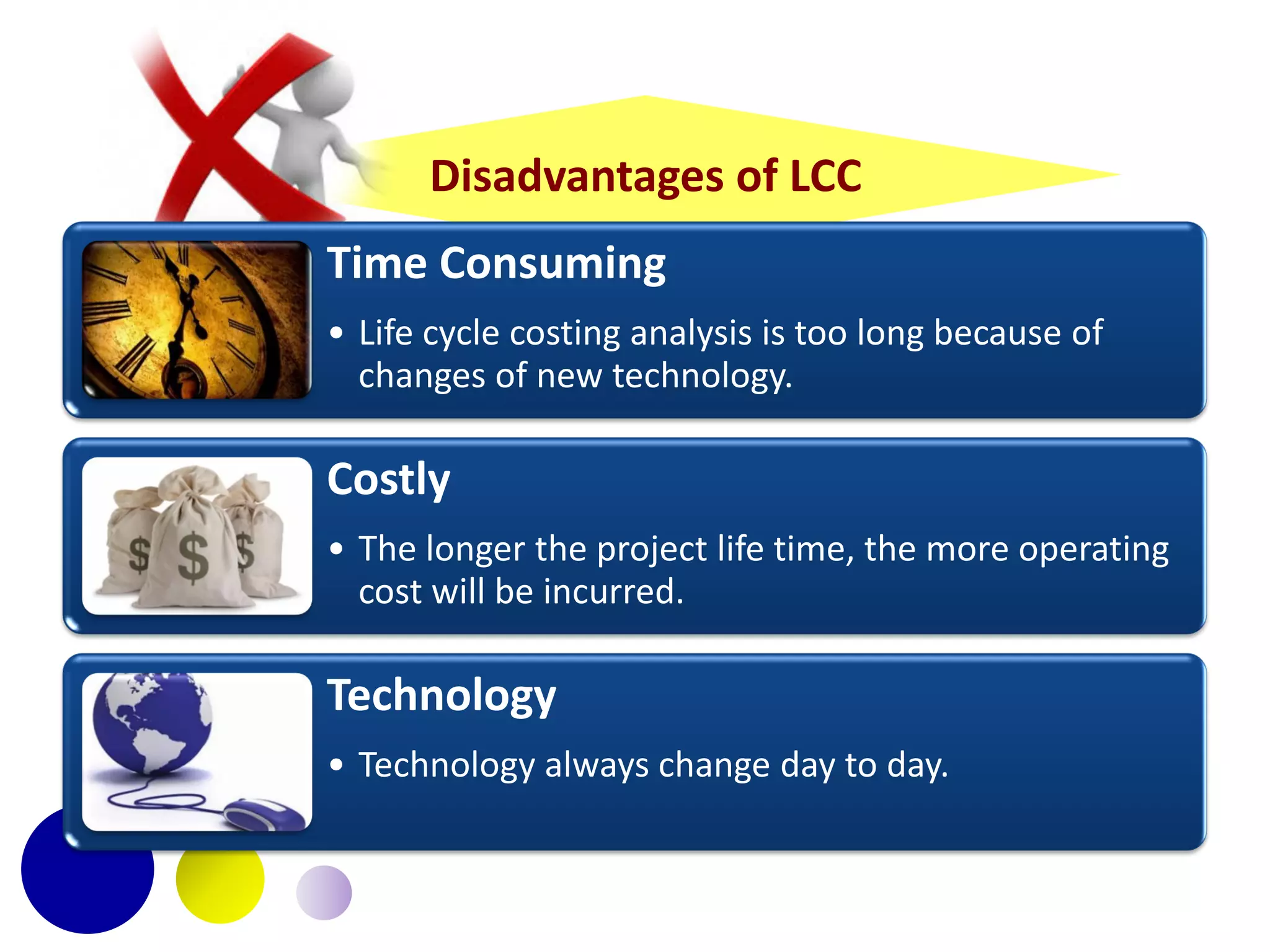
Disadvantages of LCC 
Time Consuming 
•Life cycle costing analysis is too long because of changes of new technology. 
Costly 
•The longer the project life time, the more operating cost will be incurred. 
Technology 
•Technology always change day to day.
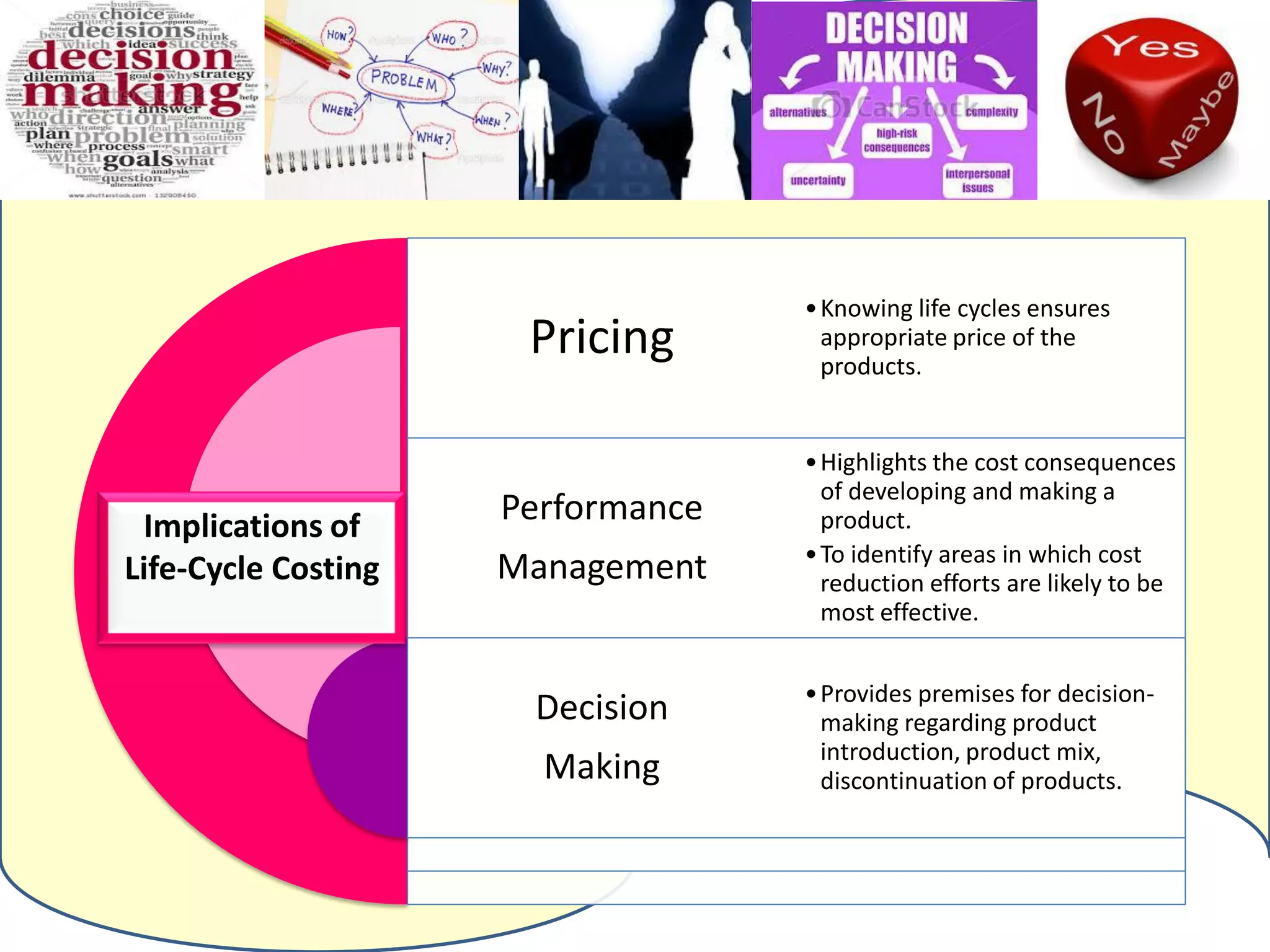
Pricing 
Performance 
Management 
Decision 
Making 
•Knowing life cycles ensures appropriate price of the products. 
•Highlights the cost consequences of developing and making a product. 
•To identify areas in which cost reduction efforts are likely to be most effective. 
•Provides premises for decision- making regarding product introduction, product mix, discontinuation of products. 
Implications of Life-Cycle Costing
Life-cycle estimates and accumulates costs over a product entire life-cycle. To determine whether the profits earned during the introduction and growth phase will cover the costs incurred during the pre and post matured stage. To estimate the life-cycle costs it is essential to identify the cost incurred through different stage of life-cycle product.
Only on knowing the life cycle costs of a product can one appropriately decide on its price. If viewed from the angel of customer life-cycle costs, the life cycle costs provide input for pricing across the lifecycle.
Help management to understand the cost consequences of developing and making a product and to identify areas in which cost reduction efforts are likely to be most effective LCC forms an input to evaluation processes such as value management, economic appraisal and financial appraisal The management of time is immensely important if the profit of a product is to be maximized.
LCC provides a long-term picture of product profitability, feedback on the effectiveness of initial planning and cost data to clarify the economic impact of alternatives like design. 
It also considered a way to enhance the control of manufacturing costs.
When viewed as a whole, cost reduction and minimization opportunities as well as revenue extension opportunities It provide premises for decision-making regarding product introduction, product mix and regarding discontinuation of the products.
The management can know whether the revenue earned by the product is sufficient to cover the costs incurred during its life-cycle 
There are opportunities for cost reduction and minimization (and thereby scope for profit maximization) 
We will find out about the costs involved at different stages of the life-cycle and the implications of life-cycle costing on pricing, performance management and decision making.

life cycle costing

  • 1.
    LIFE CYCLE COSTING TOPIC: STRATEGIC MANAGEMENT ACCOUNTING TECHNIQUES Contemporary Strategic Management Accounting Techniques
  • 2.
    Introduction At thestart of any project, it is important to understand the costs involved Traditional methods simply look at start up costs, cash flow and profit or loss Focused primarily on the manufacturing stage of product life cycle Pre & post – manufacturing are treated as expenses costs LIFE CYCLE COSTING
  • 3.
    Definition Life cyclecosting is defined as the total cost throughout its life including planning, design, acquisition & support costs & any other costs directly attributable to owning / using the asset. Category of LCC Capital assets : •Initial costs •Operating costs •Disposal costs LIFE CYCLE COSTING
  • 4.
    Simple Formula: Capital + lifetime operating costs + lifetime maintenance costs + disposal costs – residual value LIFE CYCLE COSTING LCC =
  • 5.
    A company isplanning a new product. Market research information suggests that the product should sell 10,000 units at RM21/unit. The company seeks to make a mark- up of 40% product costs. It is estimated that the lifetime costs of the product will be as follows : 1. Design and development costs RM50,000 2. Manufacturing costs RM10/unit 3. End of life costs RM20,000 Required : What is the original lifecycle costs per unit? LCC/unit = RM50,000 + ( 10,000 units x RM10 ) + RM20,000 / 10,000 units = RM 17
  • 6.
    •Assists management tosmartly manage total cost throughout product’s life cycle. •To identify areas in which cost reduction efforts are likely to more effective. •To estimate the cost impact of various designs and support options. LIFE CYCLE COSTING
  • 7.
    Life-cycle costing concept Help management to understand the cost consequence of developing and making a product and to identify areas which cost reduction efforts are likely to be most effective. The process of LLC fundamentally involves : Assessing cost arising from an assets over its life cycle Evaluating alternatives that have impact on this cost ownership
  • 8.
    Life-cycle costing concept Useful apply to low-technology issues, such as repair versus replace decisions Eg-the New York State Throughway Authority uses life cycle concept to determine the point at which it is more expensive to repair than to replace bridges (Morse, Davis & Hartgraves third edition)
  • 9.
    Aspects of LifeCycle Costing There are 2 important point : The focus on the product cost The inclusion of all upstream and downstream cost A Product Life Cycle (PLC) may be classified into 3 broad stages, namely : Planning and Design Manufacturing and Sales Service and abandonment
  • 10.
    Research & Development Design Production Marketing Distribution After Sales Service PRODUCT PLANNING & DESIGN STAGE MANUFACTURING & SALES STAGE SERVICE & ABANDONMENT STAGE LIFE CYCLE COSTING
  • 11.
    Stages of ProductLife Cycle Planning and design stage Manufacturing stage Research and development cost, costs of product design, etc Witnesses both growth and maturity in sales. All the manufacturing, marketing, selling and distribution costs are incurred at this stage
  • 12.
    Service and abandonmentstage •This stage signified by a decline in a sales volume •The demand for the product declines at this stage. The producers may be required to provide after sales service for the already sold products •Costs that are incurred in this stage include all costs relating to after sales service including provision of spares and expert services and costs of abandonment and disposal of the product Stages of Product Life Cycle
  • 14.
    Costs Committed andCost Incurred Cost that have not yet been incurred but will be incurred in the future on the basis of decision already been taken are termed committed costs Cost incurred when a resource is used or sacrificed. The actual cost of product is built up mostly in the growth stage and matured stage. Costs incurred vis-à-vis the costs committed at different stages of the product life-cycle are compared in the following diagram.
  • 15.
    Comparison of costscommitted and cost incurred in product life-cycle stage
  • 16.
    Advantages of LCC Improve forecasting •the application of LCC technique allows the full cost associated with a procurement to be estimated more accurately. Improved awareness •Provide management with an improved awareness of the factors that drive cost and the resources required by the purchase. Performance trade-off against cost •LCC technique not only focus on cost but also consider other factors like quality of the goods and level of service to be provided.
  • 17.
    Disadvantages of LCC Time Consuming •Life cycle costing analysis is too long because of changes of new technology. Costly •The longer the project life time, the more operating cost will be incurred. Technology •Technology always change day to day.
  • 18.
    Pricing Performance Management Decision Making •Knowing life cycles ensures appropriate price of the products. •Highlights the cost consequences of developing and making a product. •To identify areas in which cost reduction efforts are likely to be most effective. •Provides premises for decision- making regarding product introduction, product mix, discontinuation of products. Implications of Life-Cycle Costing
  • 19.
    Life-cycle estimates andaccumulates costs over a product entire life-cycle. To determine whether the profits earned during the introduction and growth phase will cover the costs incurred during the pre and post matured stage. To estimate the life-cycle costs it is essential to identify the cost incurred through different stage of life-cycle product.
  • 20.
    Only on knowingthe life cycle costs of a product can one appropriately decide on its price. If viewed from the angel of customer life-cycle costs, the life cycle costs provide input for pricing across the lifecycle.
  • 21.
    Help management tounderstand the cost consequences of developing and making a product and to identify areas in which cost reduction efforts are likely to be most effective LCC forms an input to evaluation processes such as value management, economic appraisal and financial appraisal The management of time is immensely important if the profit of a product is to be maximized.
  • 22.
    LCC provides along-term picture of product profitability, feedback on the effectiveness of initial planning and cost data to clarify the economic impact of alternatives like design. It also considered a way to enhance the control of manufacturing costs.
  • 23.
    When viewed asa whole, cost reduction and minimization opportunities as well as revenue extension opportunities It provide premises for decision-making regarding product introduction, product mix and regarding discontinuation of the products.
  • 24.
    The management canknow whether the revenue earned by the product is sufficient to cover the costs incurred during its life-cycle There are opportunities for cost reduction and minimization (and thereby scope for profit maximization) We will find out about the costs involved at different stages of the life-cycle and the implications of life-cycle costing on pricing, performance management and decision making.