TheZONESof Regulation
a.k.a.
The Twilight Zone
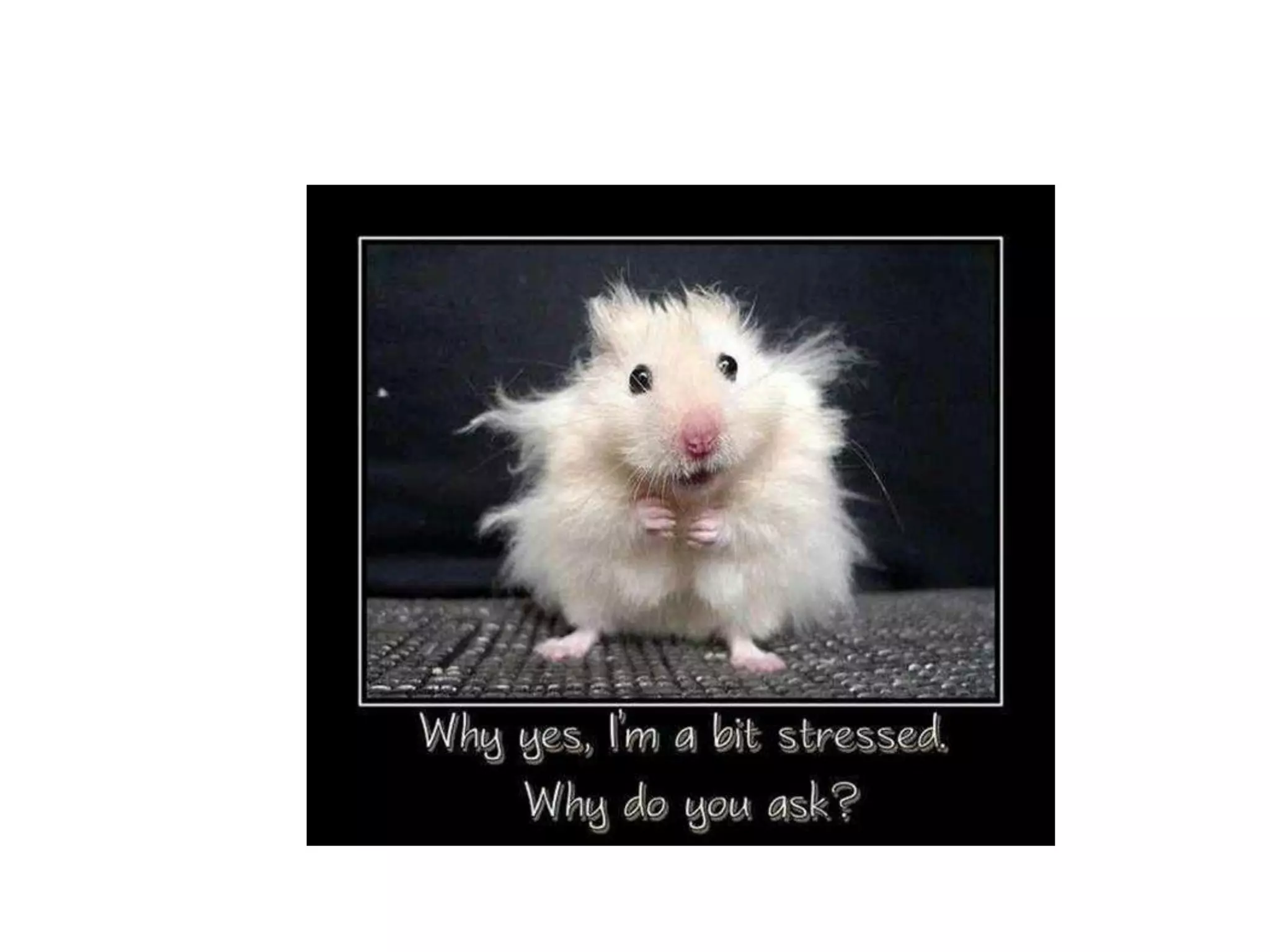
We know when our students are stressed,
they are not ready to learn.
But what about us? the teaching staff?
We’ve all been there …
STRESSED to the MAX!
OCCUPATIONAL
As teachers,
we recognize most of the
that come with our job.
But what about our students?
Often they are unable to recognize or articulate
their needs. They ‘zone out’ and this places
them in emotional and learning jeopardy.
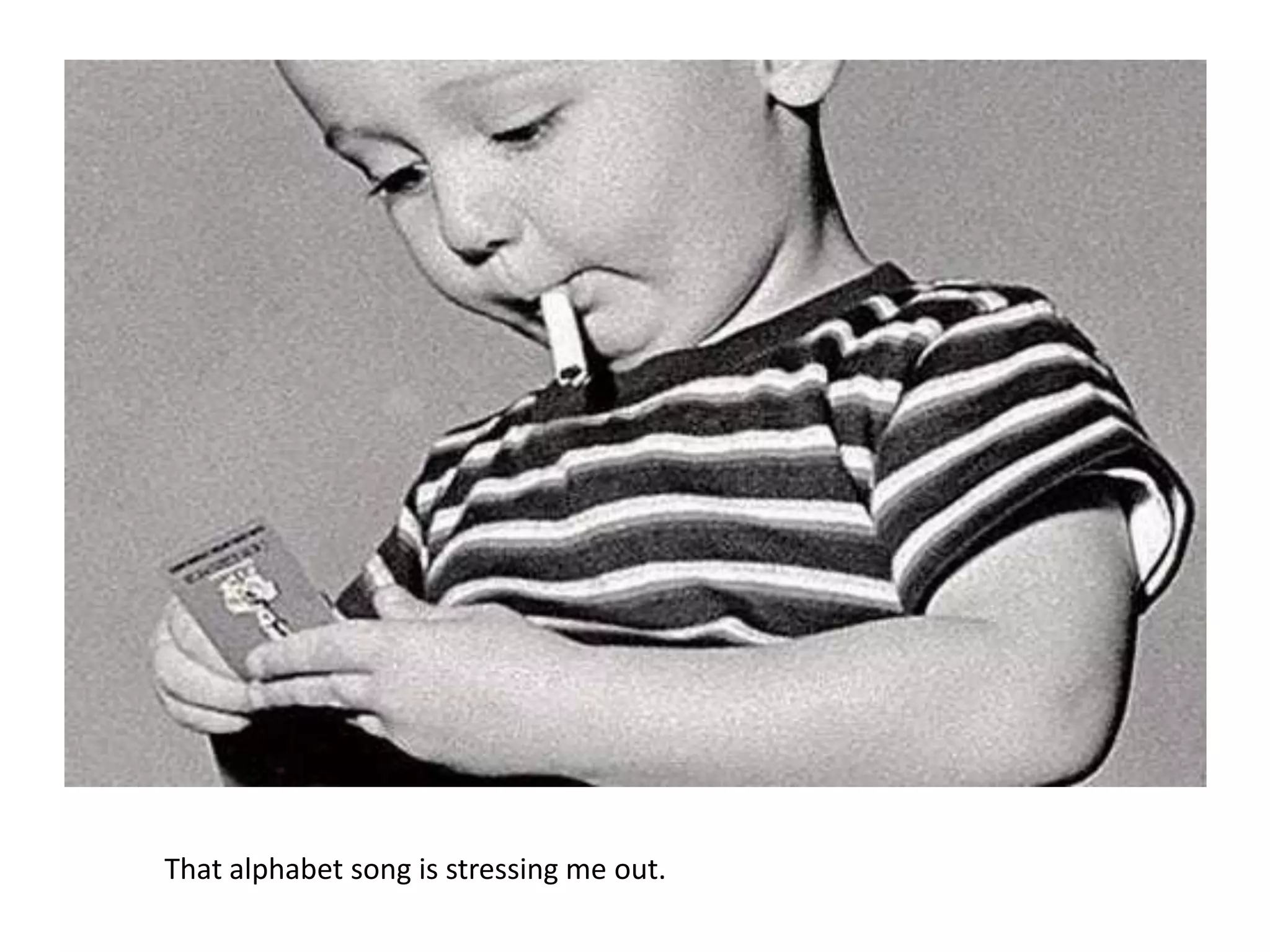
That alphabet song is stressing me out.
ZONES of Regulation
A Curriculum Designed To Foster
Self-Regulation & Emotional Control
What are the Zones?
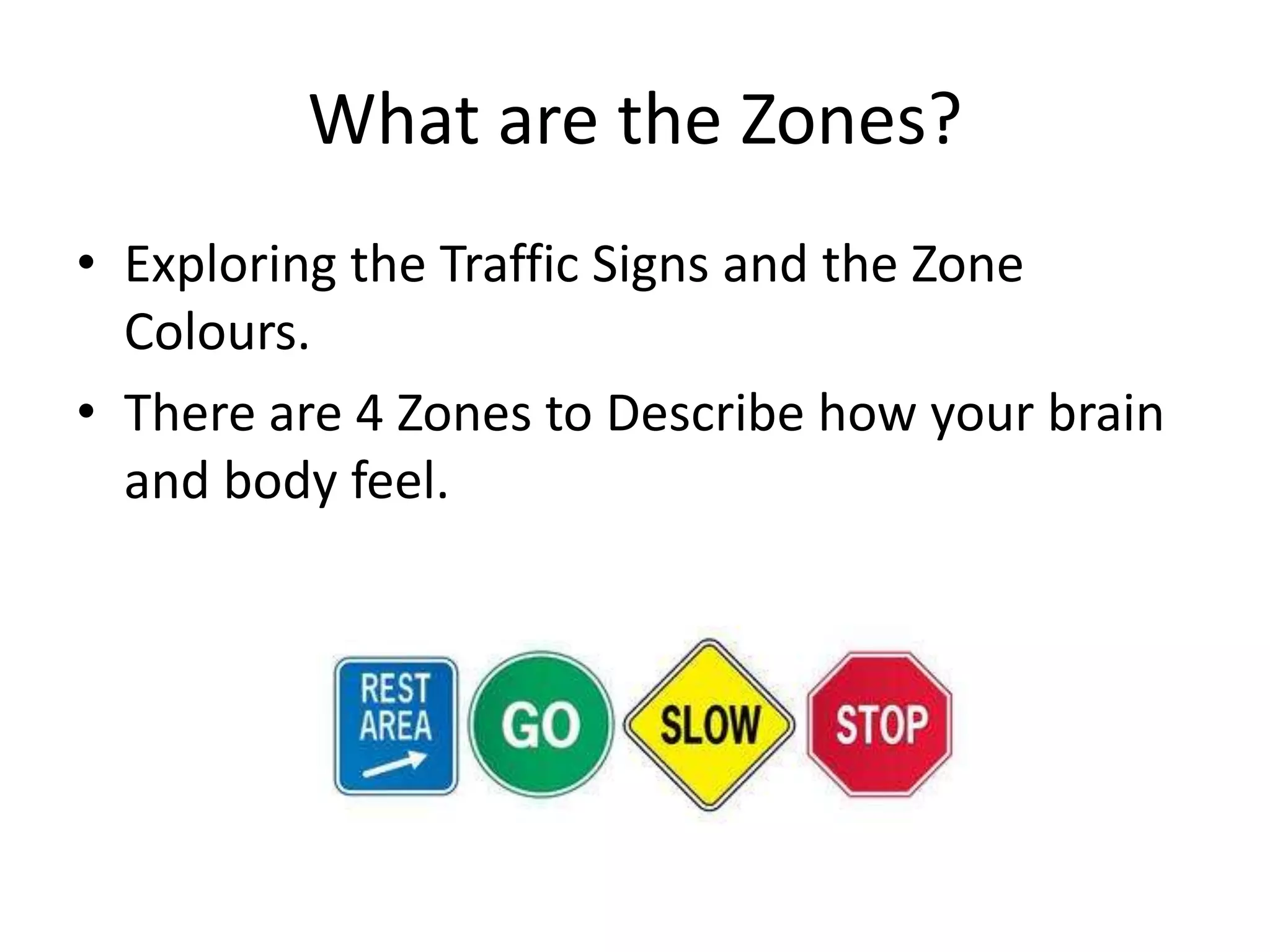
• Exploring the Traffic Signs and the Zone
Colours.
• There are 4 Zones to Describe how your brain
and body feel.
BLUE Zone
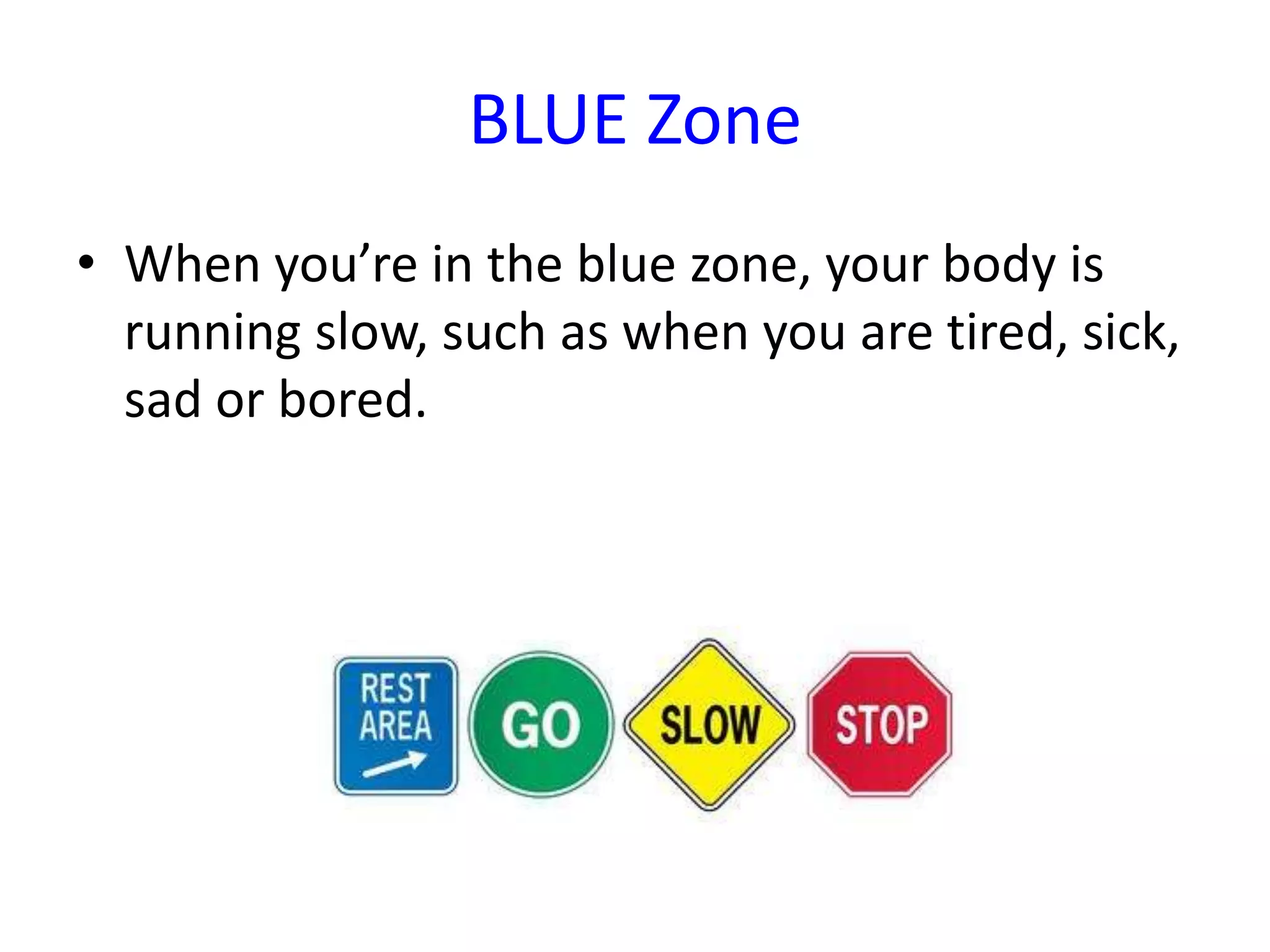
• When you’re in the blue zone, your body is
running slow, such as when you are tired, sick,
sad or bored.
Green Zone
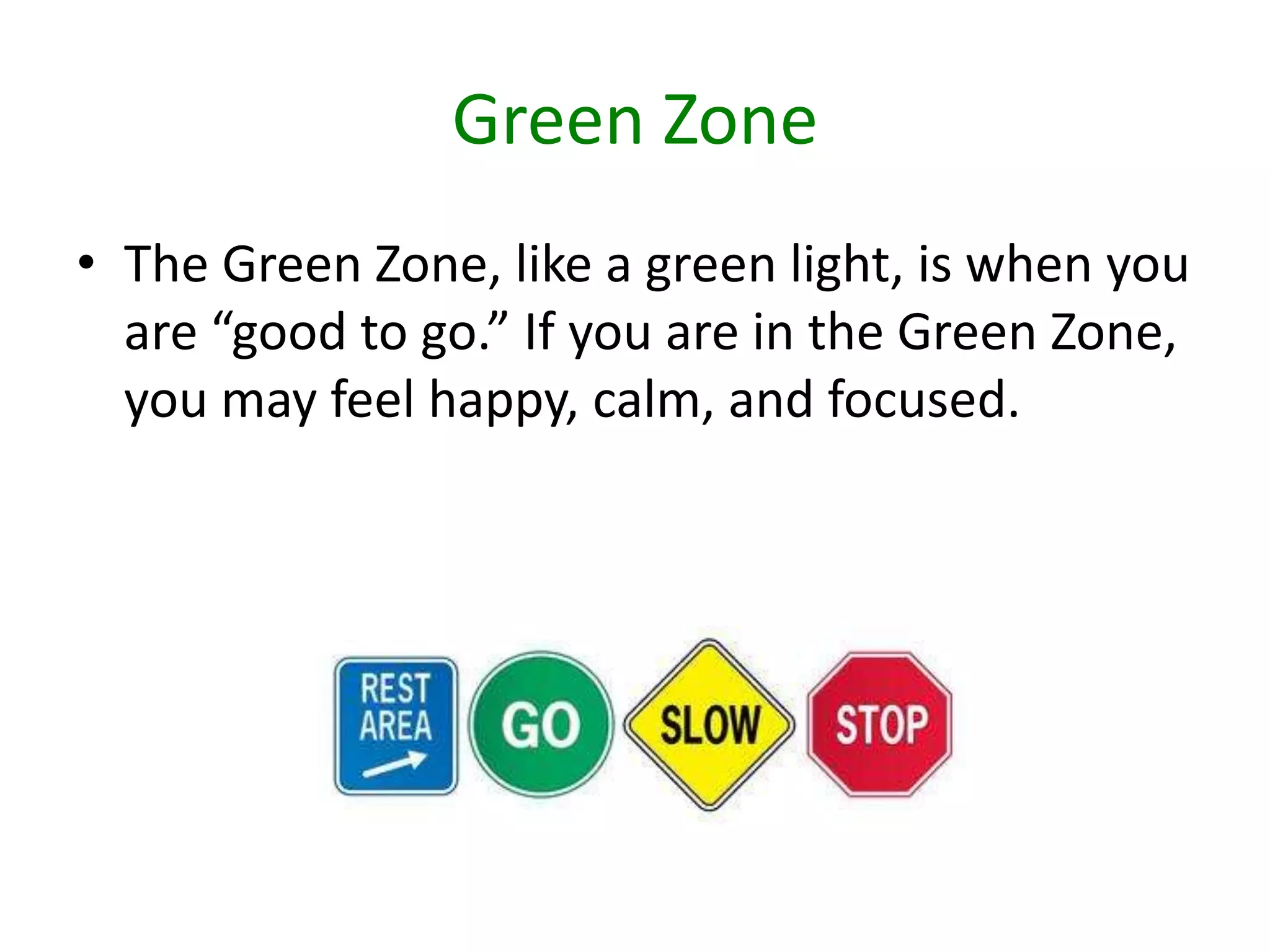
• The Green Zone, like a green light, is when you
are “good to go.” If you are in the Green Zone,
you may feel happy, calm, and focused.
Yellow Zone
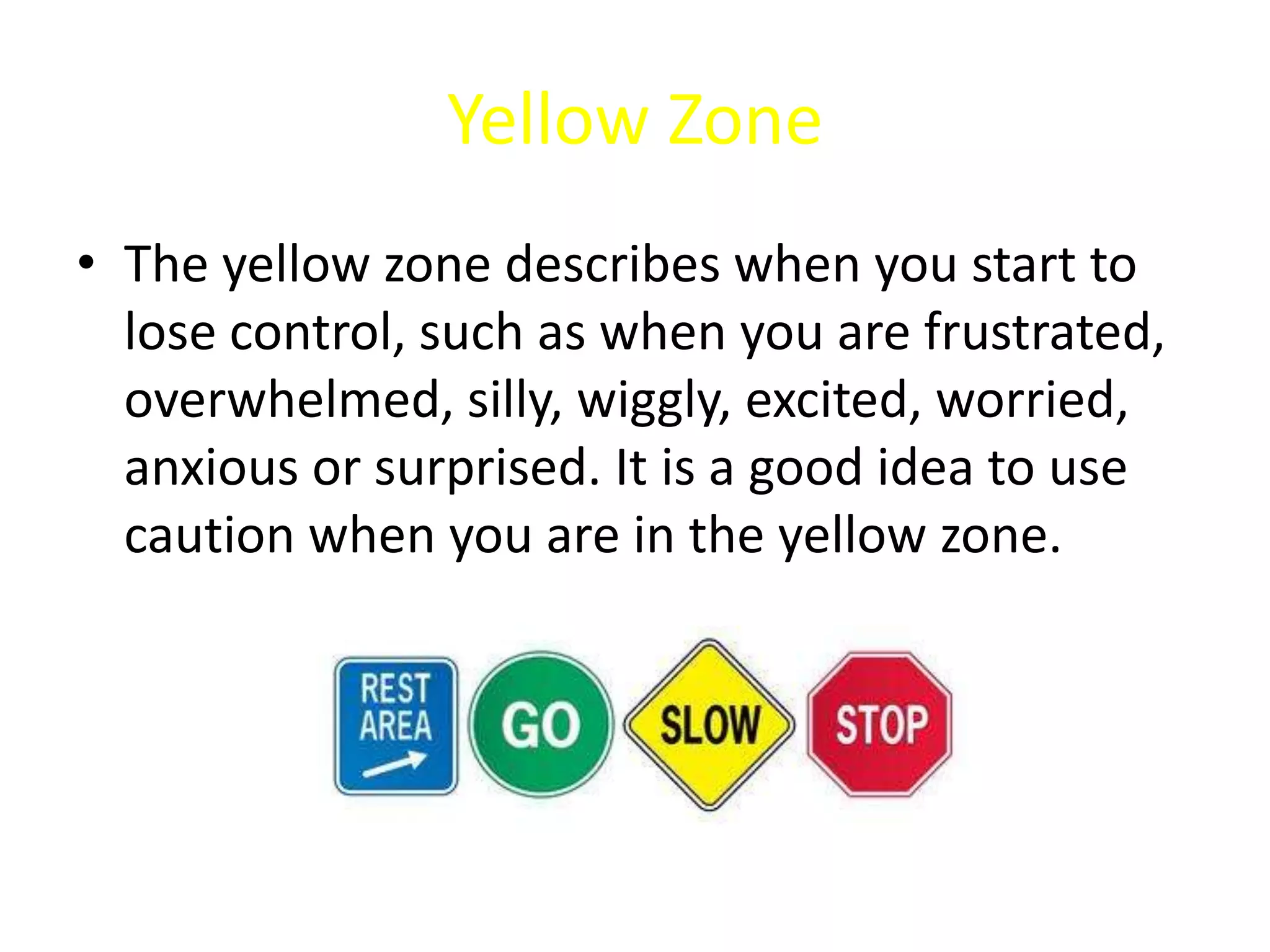
• The yellow zone describes when you start to
lose control, such as when you are frustrated,
overwhelmed, silly, wiggly, excited, worried,
anxious or surprised. It is a good idea to use
caution when you are in the yellow zone.
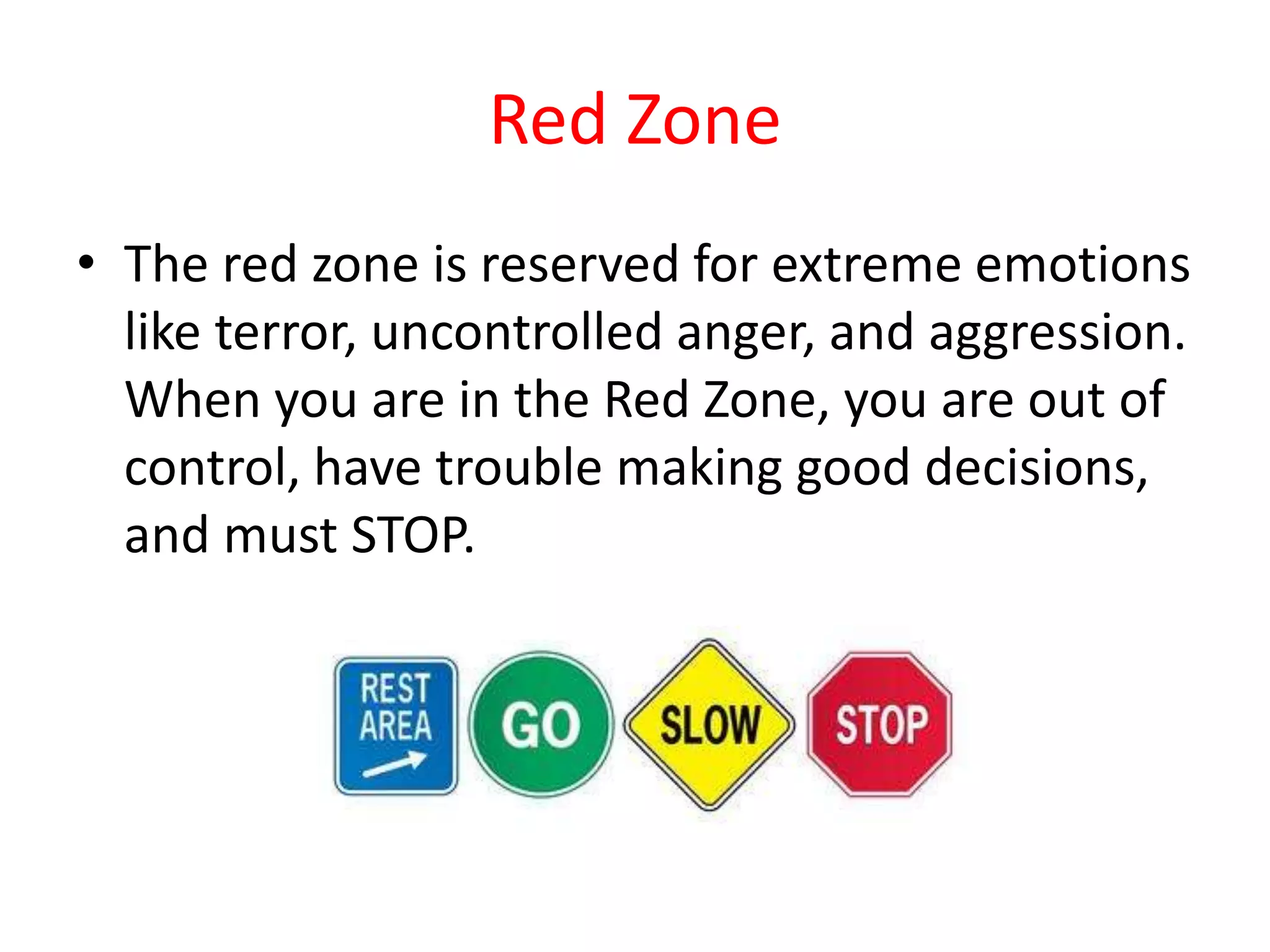
Red Zone
• The red zone is reserved for extreme emotions
like terror, uncontrolled anger, and aggression.
When you are in the Red Zone, you are out of
control, have trouble making good decisions,
and must STOP.
How does this apply to my class?
• Using a class list, highlight the typical zone
that each of your students is in.
Which ZONE is my class in?
Table talk – discuss which zone your
students are most often in and how
this impacts your teaching.
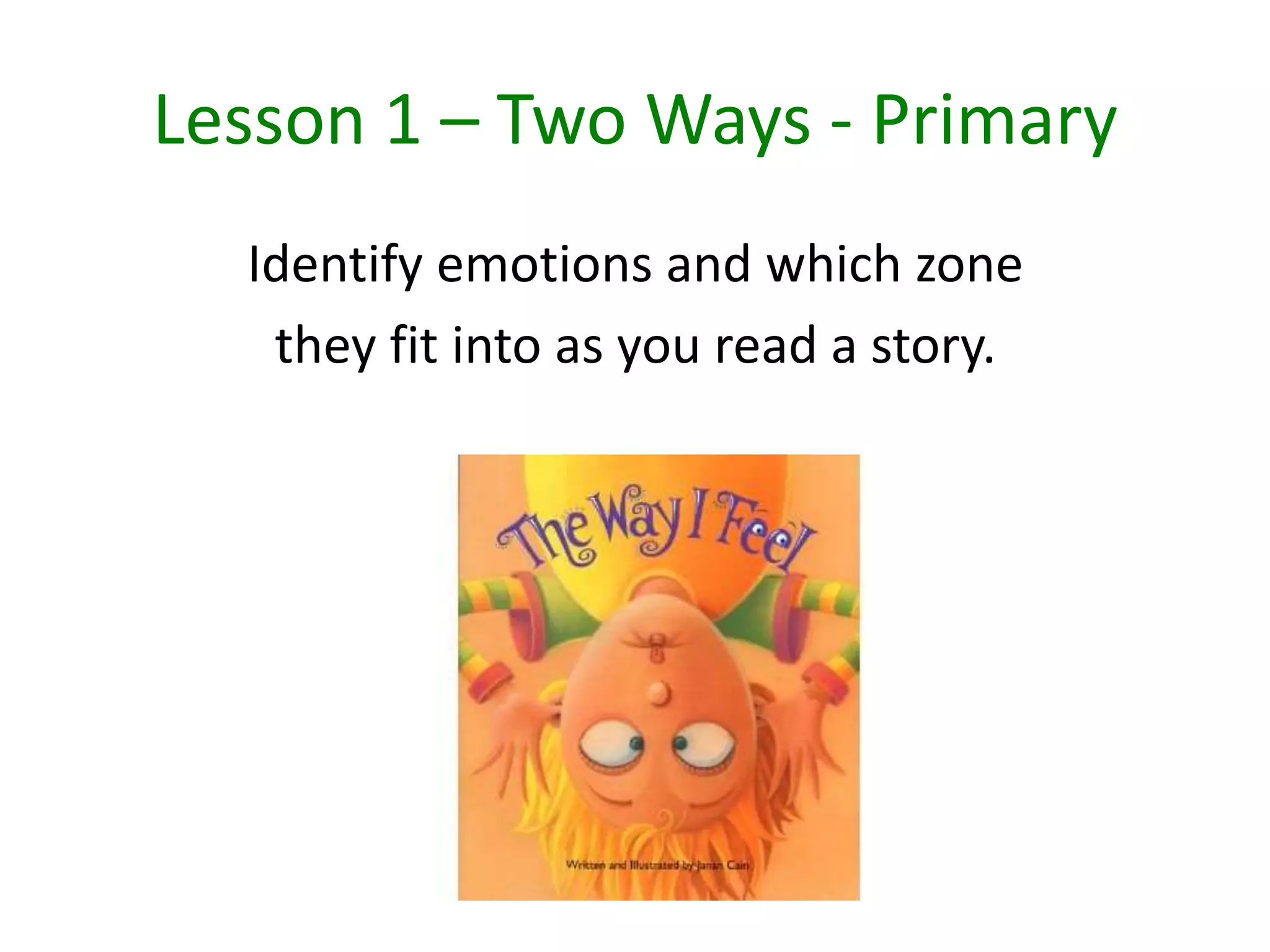
Lesson 1 – Two Ways - Primary
Identify emotions and which zone
they fit into as you read a story.
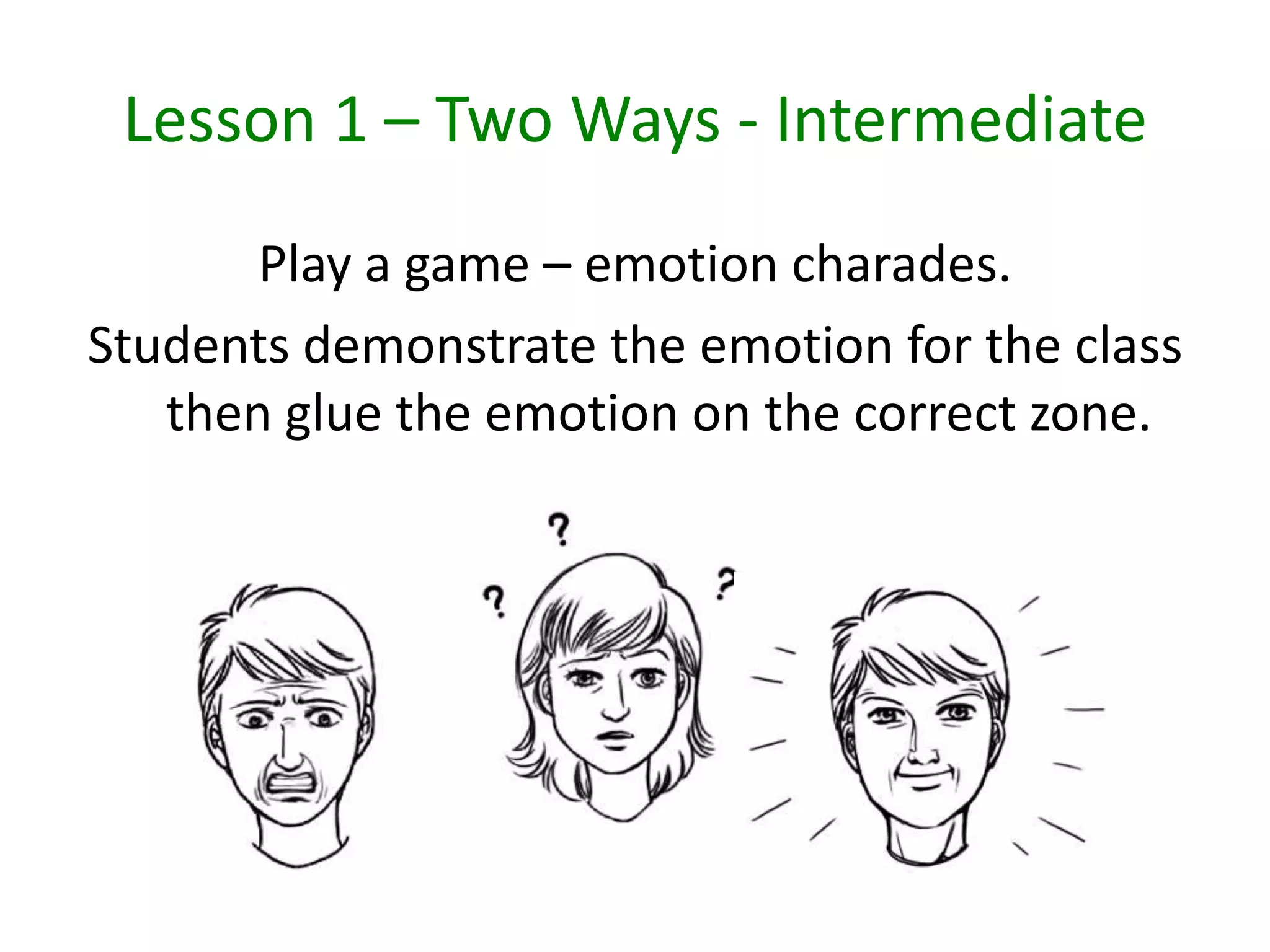
Lesson 1 – Two Ways - Intermediate
Play a game – emotion charades.
Students demonstrate the emotion for the class
then glue the emotion on the correct zone.
NEXT…
• Lessons 2-9 provide different ways for students to
practice identifying their emotions and which
zone they are in.
• Emphasize that all zones are appropriate in
specific circumstances, but that the GREEN ZONE
is the optimal learning zone and the best place to
be for most school activities.
• Moving from identifying zones, to identifying
when exhibiting emotions can be expected or
unexpected, to choosing to do things to move
from one zone to another.
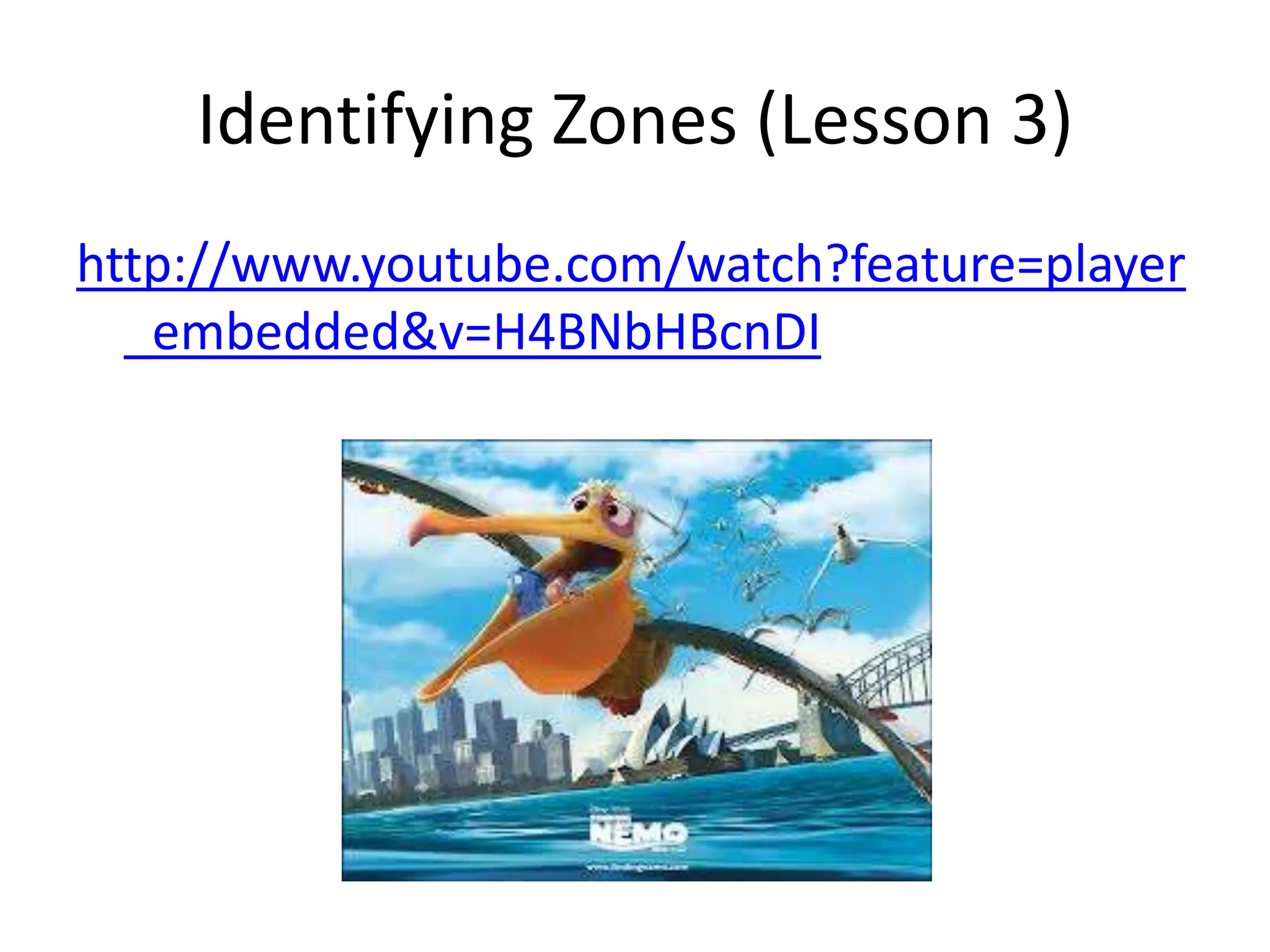
Identifying Zones (Lesson 3)
• Helping students identify emotions in others
can help them be more aware of their own
emotions and that everyone experiences the
different zones. Before students can correctly
identify the zones in themselves, they must be
able to recognize the zones in others. (p. 54)
Identifying Zones (Lesson 3)
http://www.youtube.com/watch?feature=player
_embedded&v=H4BNbHBcnDI
Questions
• What kind of thoughts do others have when
the character is in the Red Zone (good
thoughts or uncomfortable thoughts)?
• How do others react to the characters?
• Is the character able to interact with others as
successfully when he or she is in the Red or
Yellow Zone as when the character is in the
Green Zone?
In the Classroom - Inquiry
• If we implement the Zones of Regulation program
in a Grade 2/3 classroom, teaching students to
self-regulate to be in an optimal learning zone,
will students spend more time on task and
actively engaged in learning? We will know there
has been a positive change because target
students will spend less time in transitions
between activities and spend more time actively
learning. Target students will demonstrate
increased completion of quality work and more
engagement in learning activities.
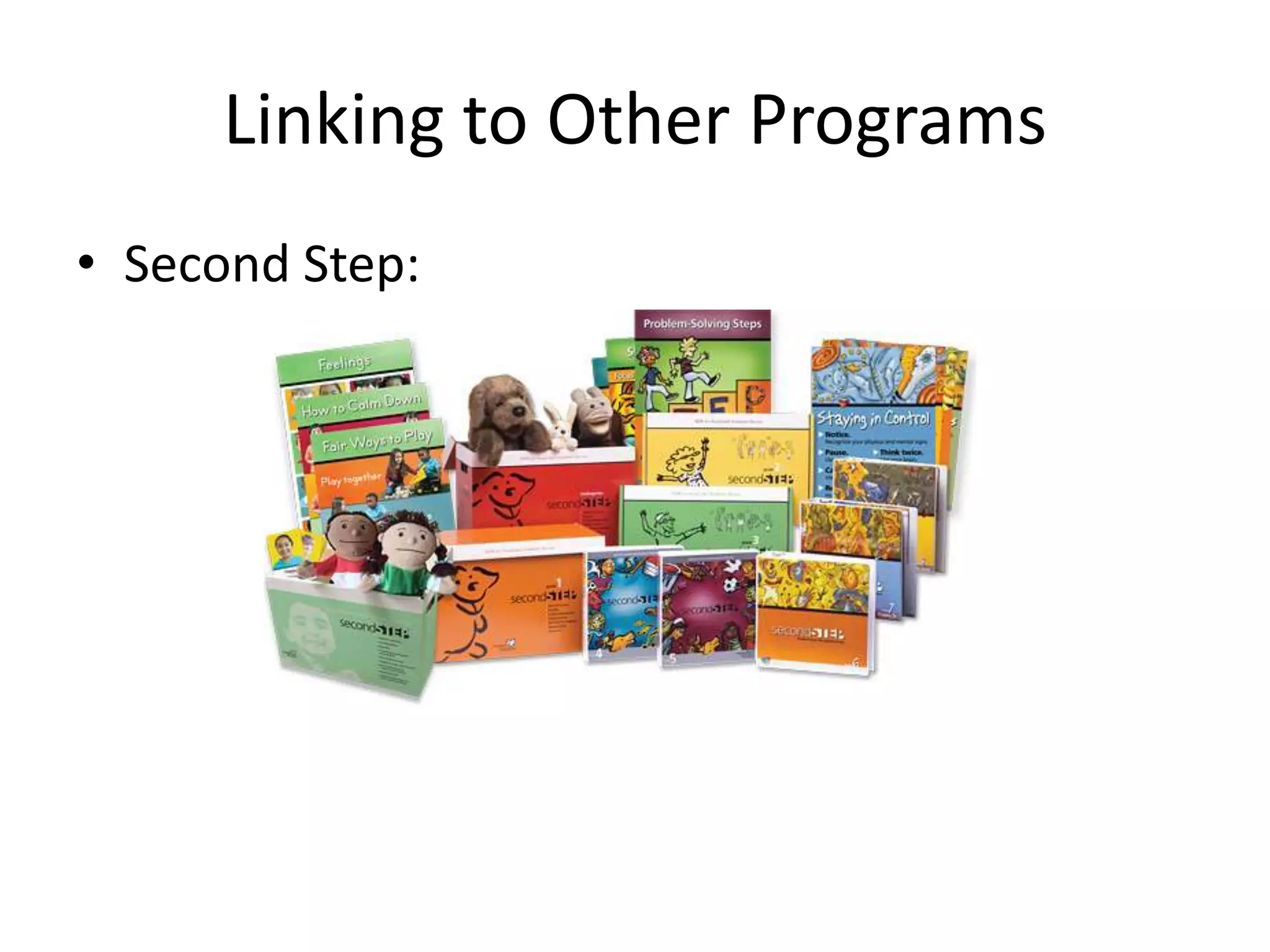
Linking to Other Programs
• Second Step:
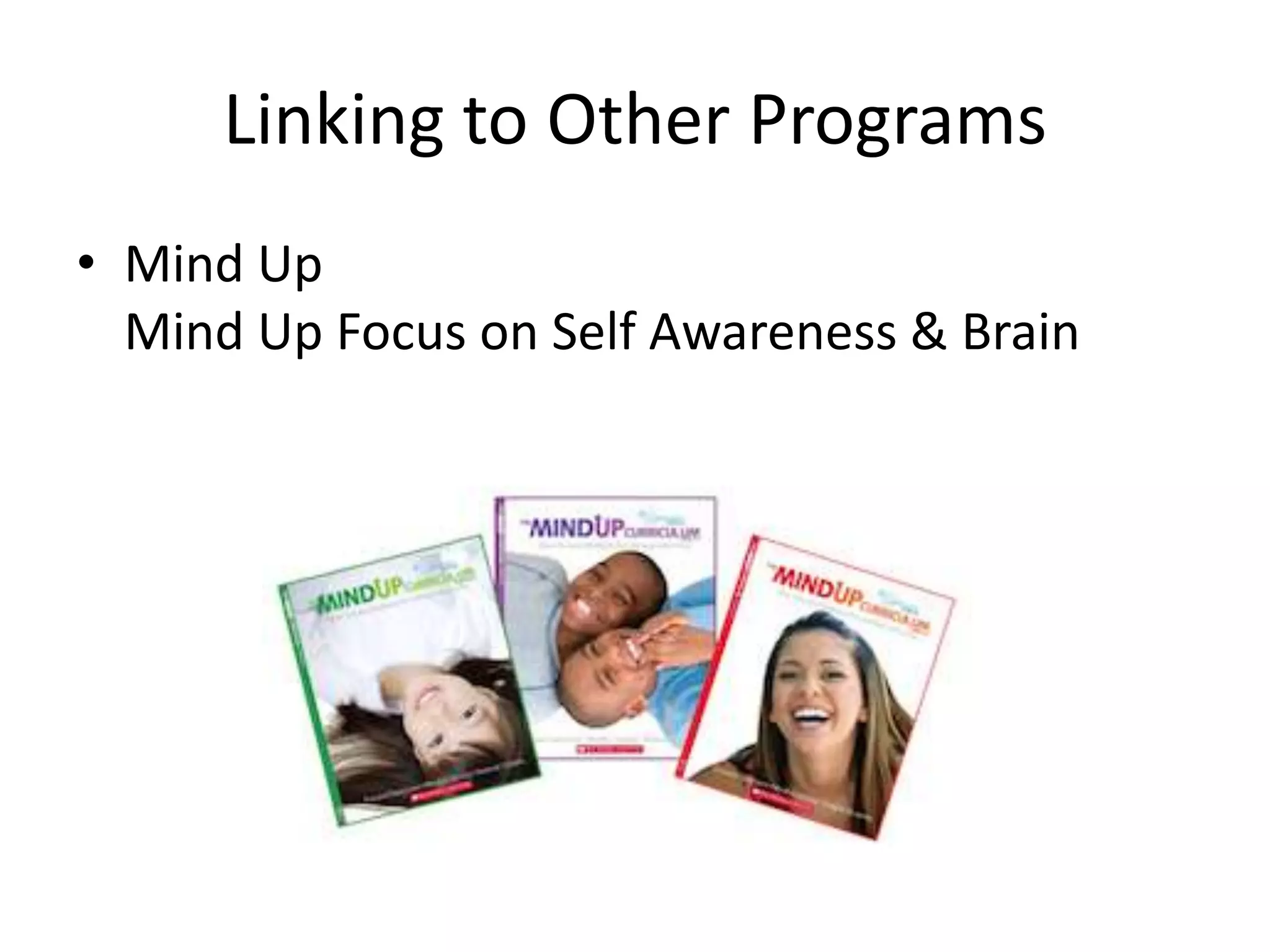
Linking to Other Programs
• Mind Up
Mind Up Focus on Self Awareness & Brain
Zones & Mind UP
• Zones Lesson 5 – Understanding Different
Perspectives
• Mind UP Lesson 10 – Perspective Taking
• Second Step – Empathy Lesson
• Reinforce lessons with books: Perspective
Taking:
Book List For Perspective Taking
• *Mr. Peabody’s Apples, by Madonna
• *A Weekend With Wendell, Kevin Henkes
• *Herb, The Vegetarian Dragon, Jules Bass & Debbie Harter
• *The OK Book, by Amy Krouse Rosenthal and Tom Lichtenheld
• *ish – Peter Reynolds
• *The Dot Peter Reynolds (and art!)
• *It’s OK To Be Different, Todd Parr
• *I Am I, Marie, Louise Fitzpatrick
• *Whoever You Are, Mem Fox
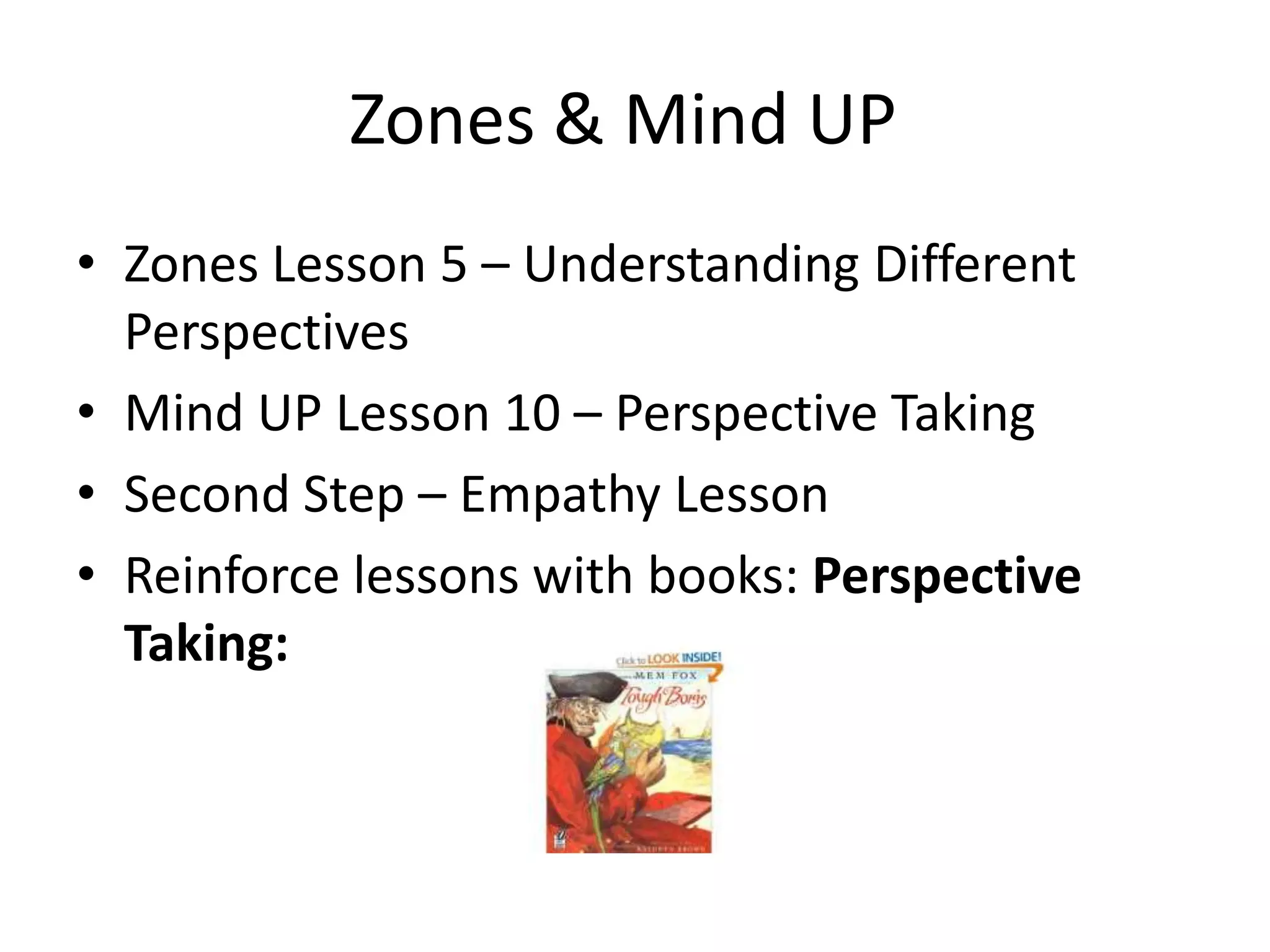
• *Tough Boris, Mem Fox
• *Tiger, Tiger is it True, 4 Questions to Make You Smile Again, Byron Katie
• *All Dogs Have ADHD – Kathy Hoopmann
• *All Cats Have Aspergers – Kathy Hoopmann
• Hewitt Anderson’s Great Big Life, by Jerdine Nolen
• A Dogs Life, by AnnMartin
• Just Juice, Karen Hesse
• The True Story of the Three Little Pigs, Jon Scieszka
• A Walk in the Rain with A Brain – Edward M. Hallowell, MD
*Are available in the school library.
Moving ZONES – Getting to GREEN
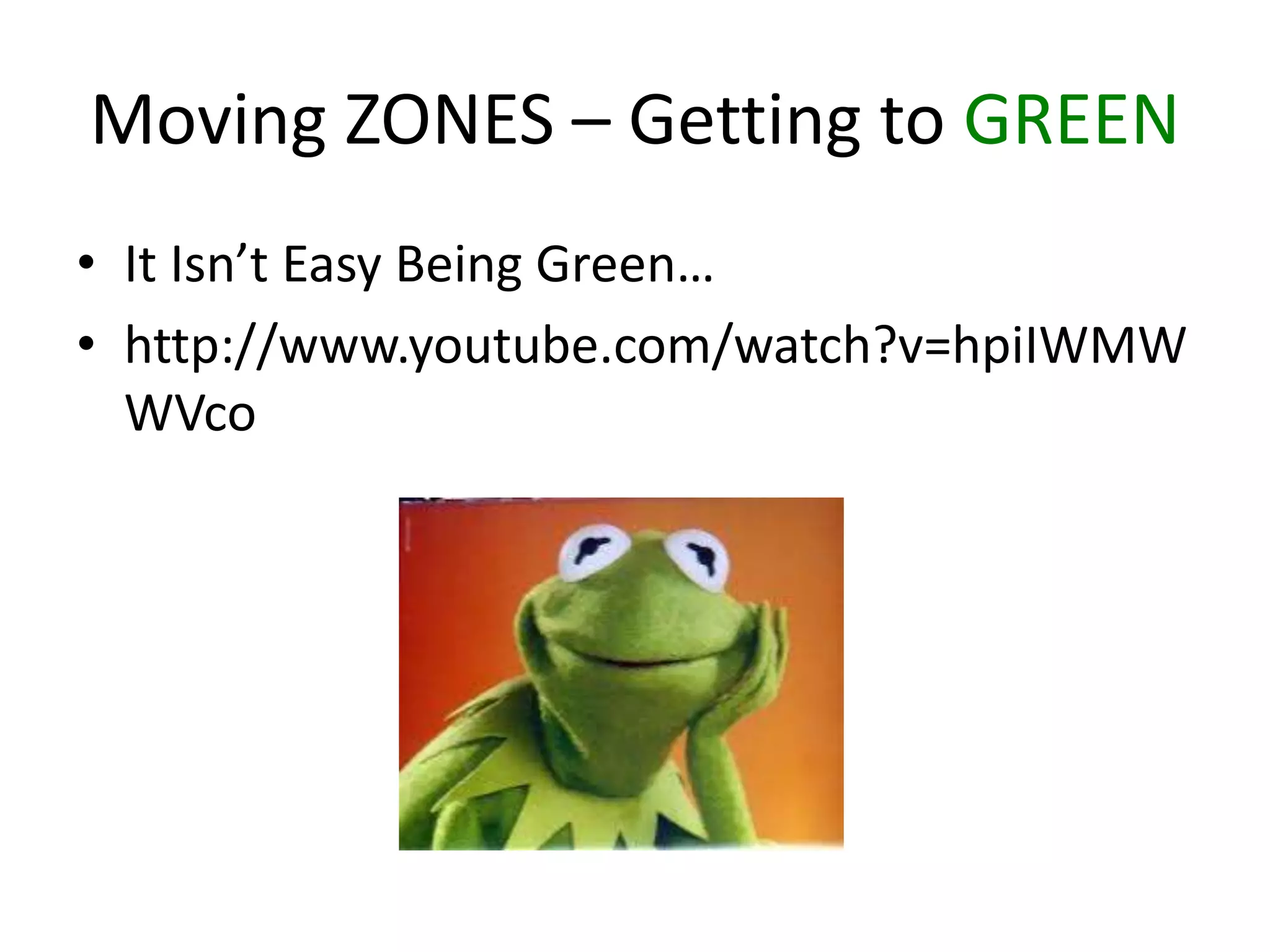
• It Isn’t Easy Being Green…
• http://www.youtube.com/watch?v=hpiIWMW
WVco
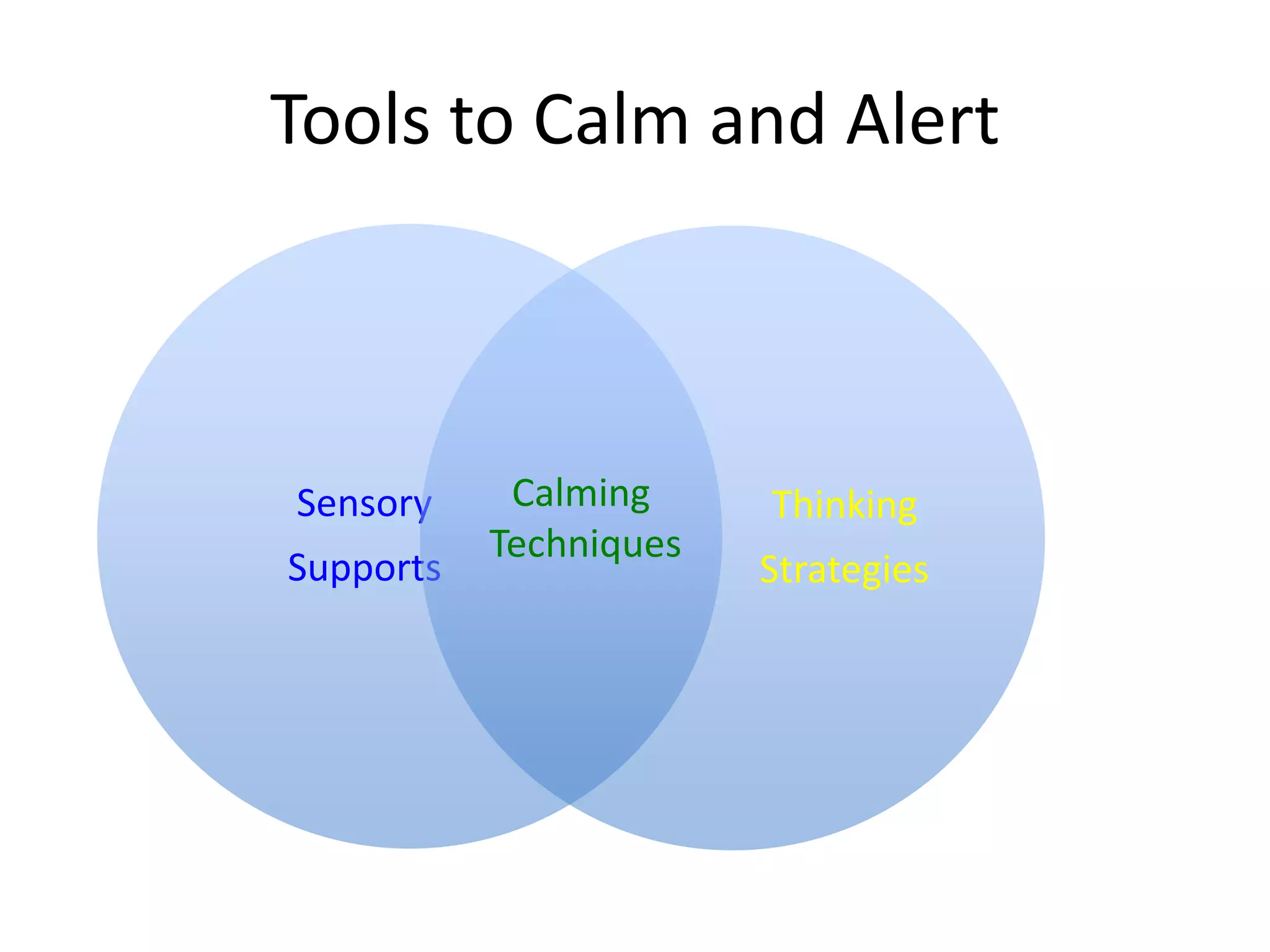
Tools to Calm and Alert
Sensory
Supports
Thinking
Strategies
Calming
Techniques
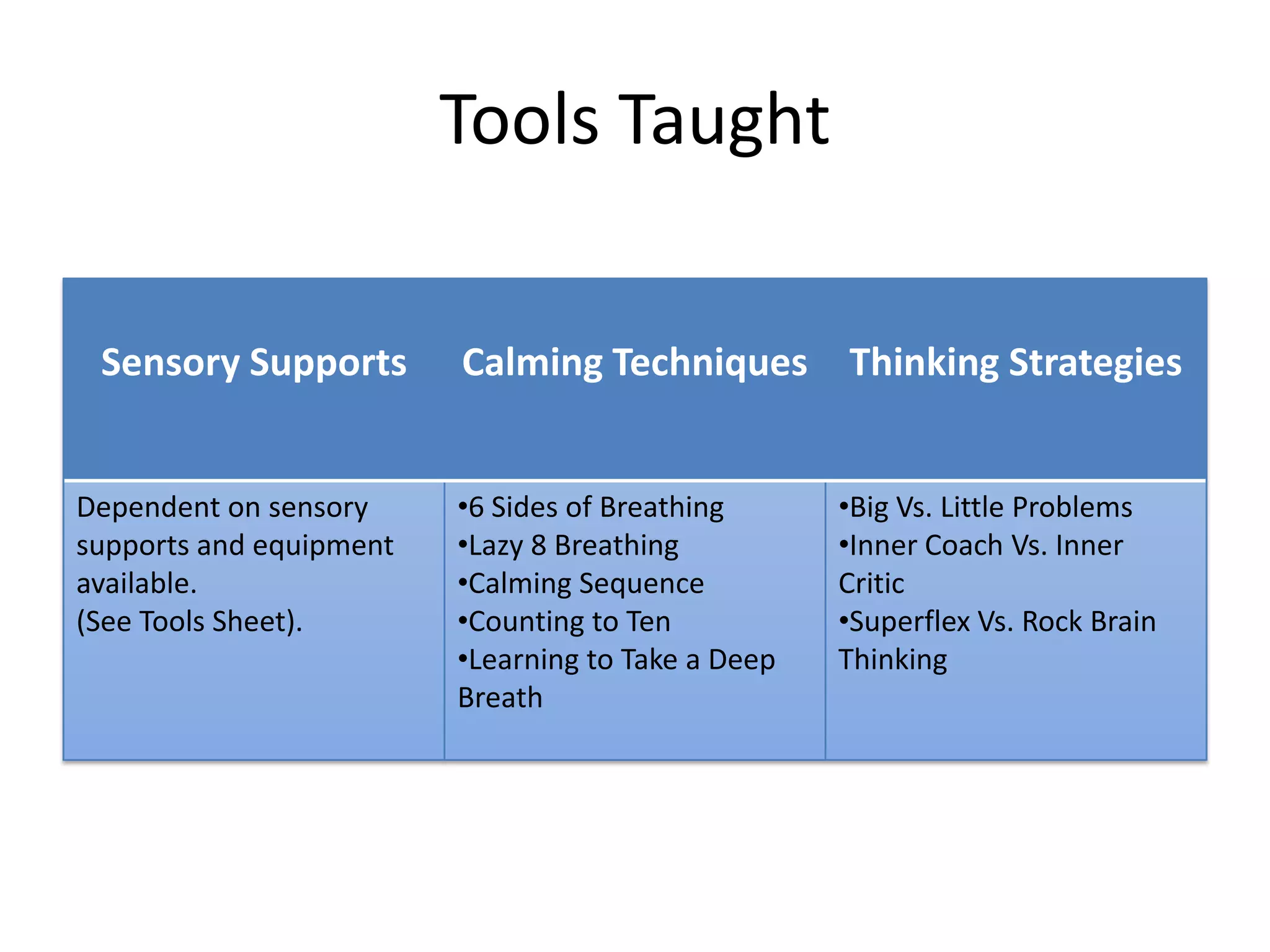
Tools Taught
Sensory Supports Calming Techniques Thinking Strategies
Dependent on sensory
supports and equipment
available.
(See Tools Sheet).
•6 Sides of Breathing
•Lazy 8 Breathing
•Calming Sequence
•Counting to Ten
•Learning to Take a Deep
Breath
•Big Vs. Little Problems
•Inner Coach Vs. Inner
Critic
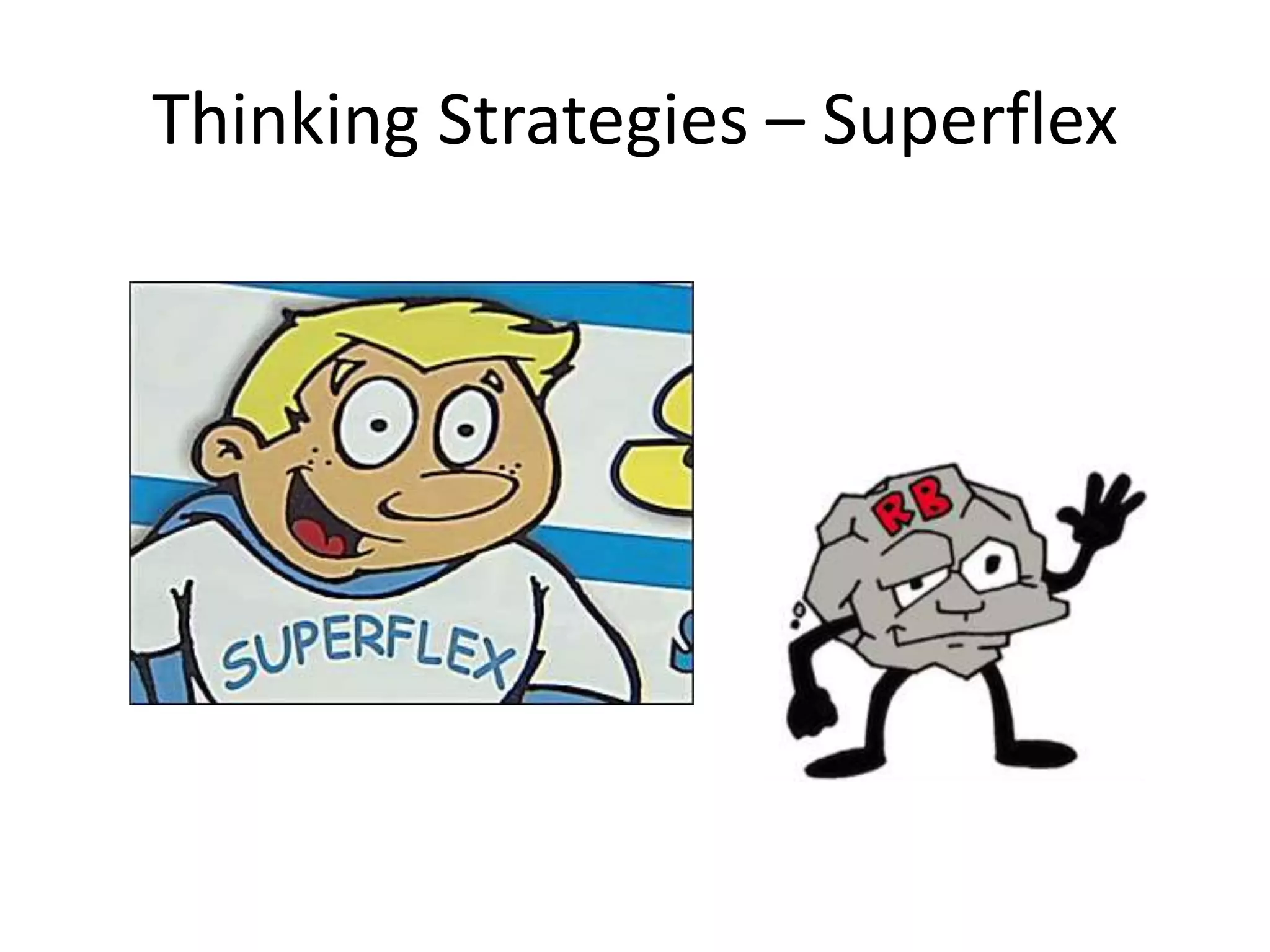
•Superflex Vs. Rock Brain
Thinking
ZONES Tools Worksheet
• On worksheet list the Sensory tools that you
have access to – or would LIKE to use.
• Circle the zone that you think this tool would
help with.
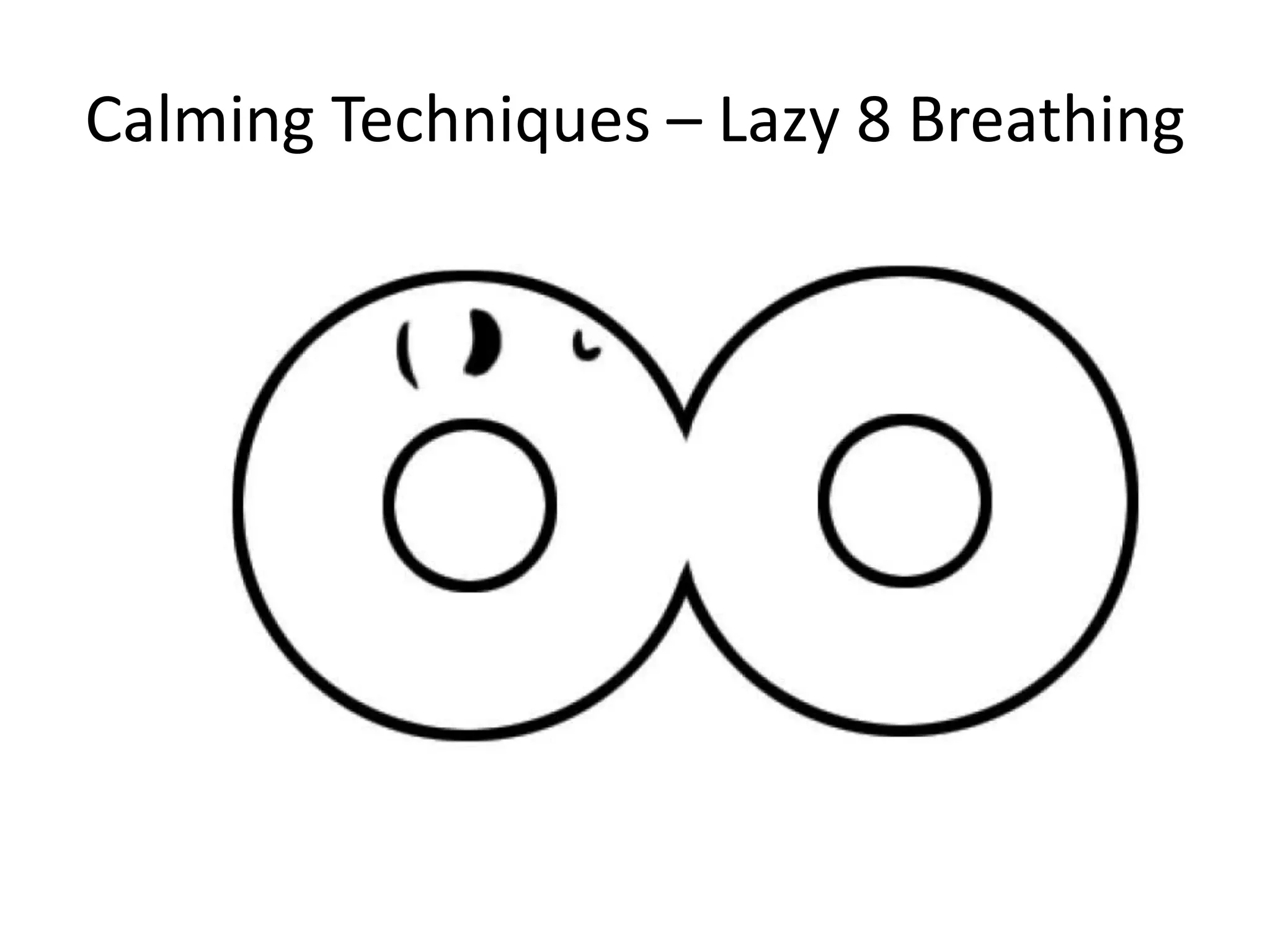
Calming Techniques – Lazy 8 Breathing
Thinking Strategies – Superflex
Thinking Strategies
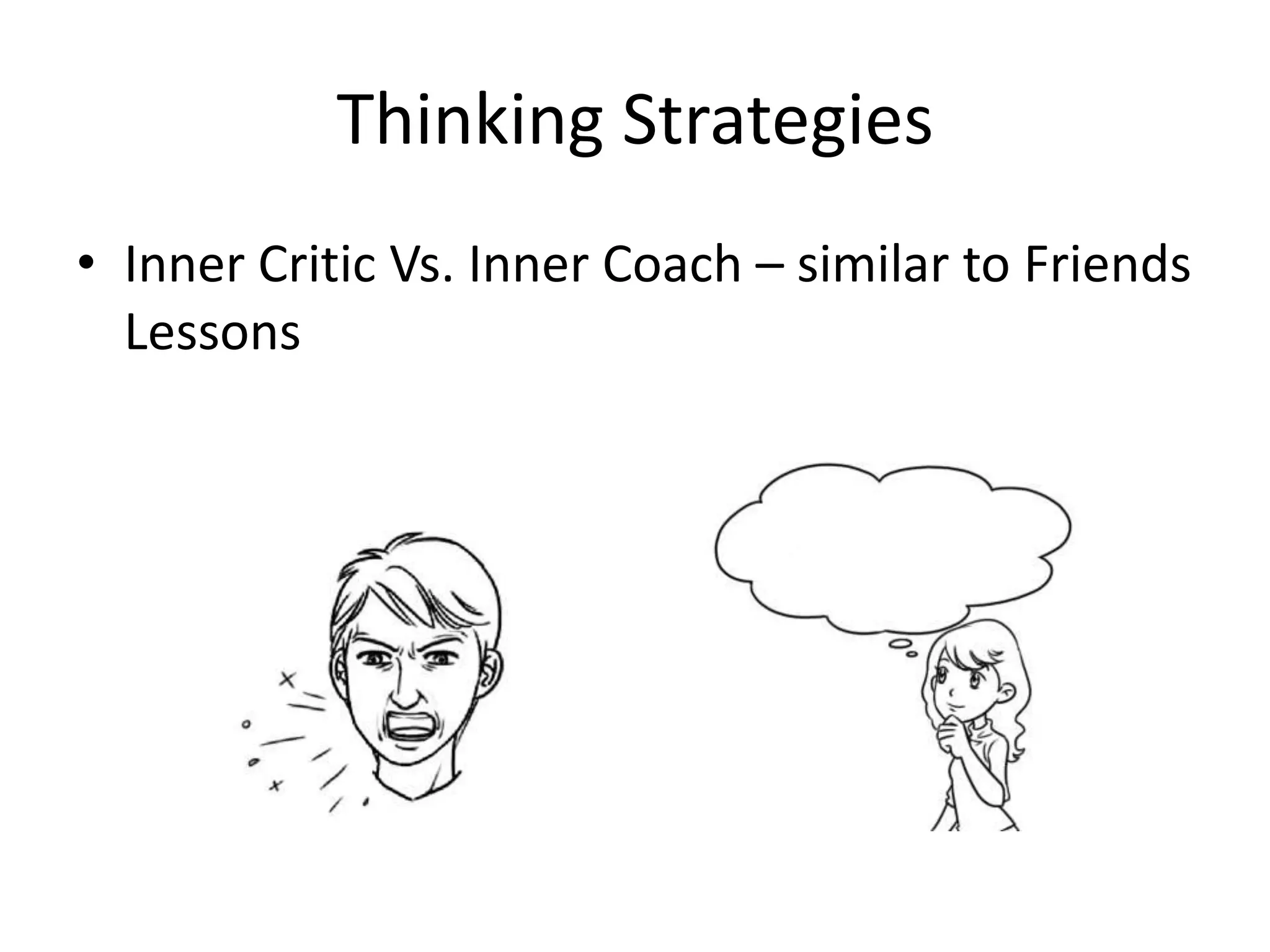
• Inner Critic Vs. Inner Coach – similar to Friends
Lessons
Tool Box
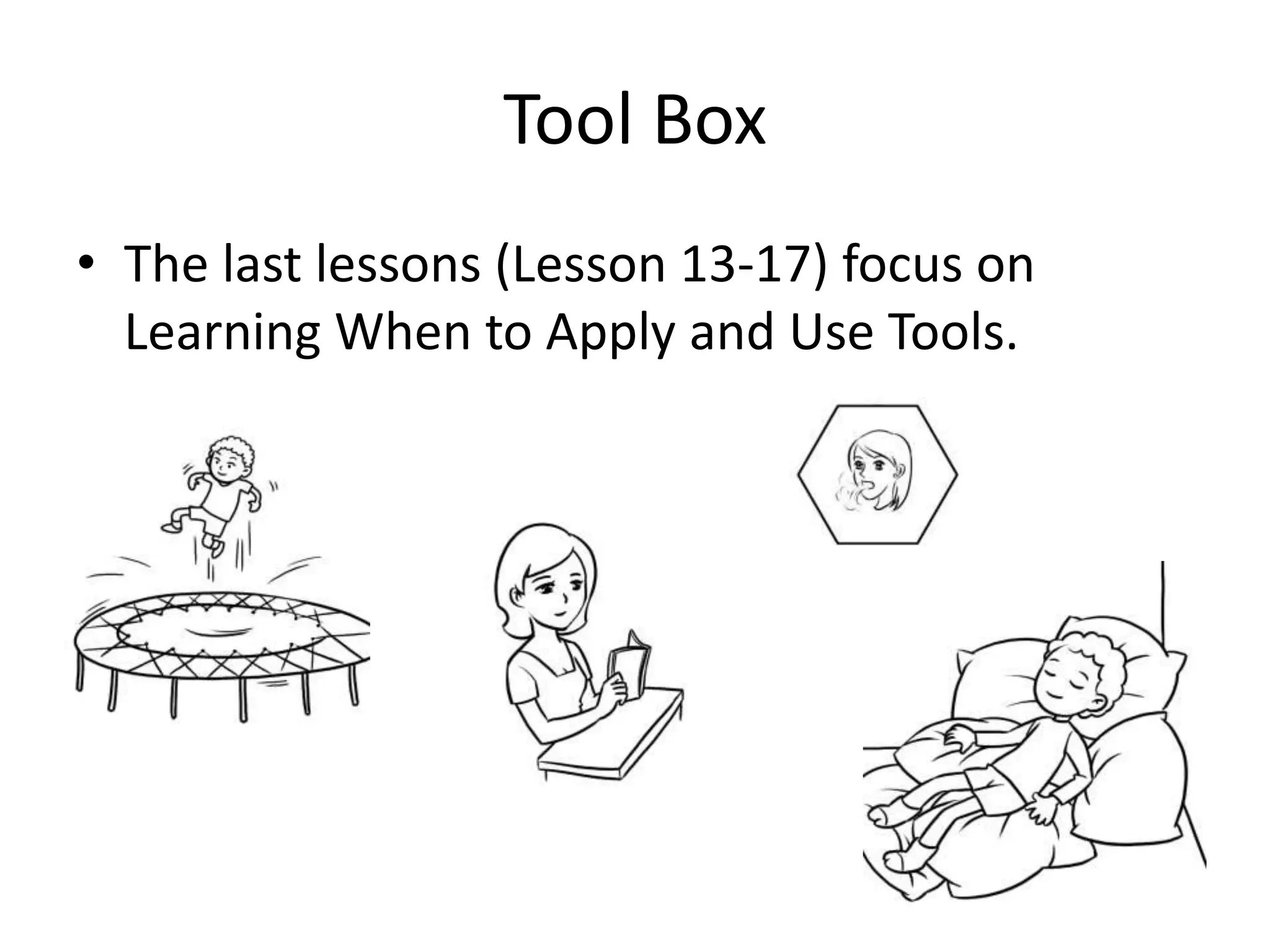
• The last lessons (Lesson 13-17) focus on
Learning When to Apply and Use Tools.
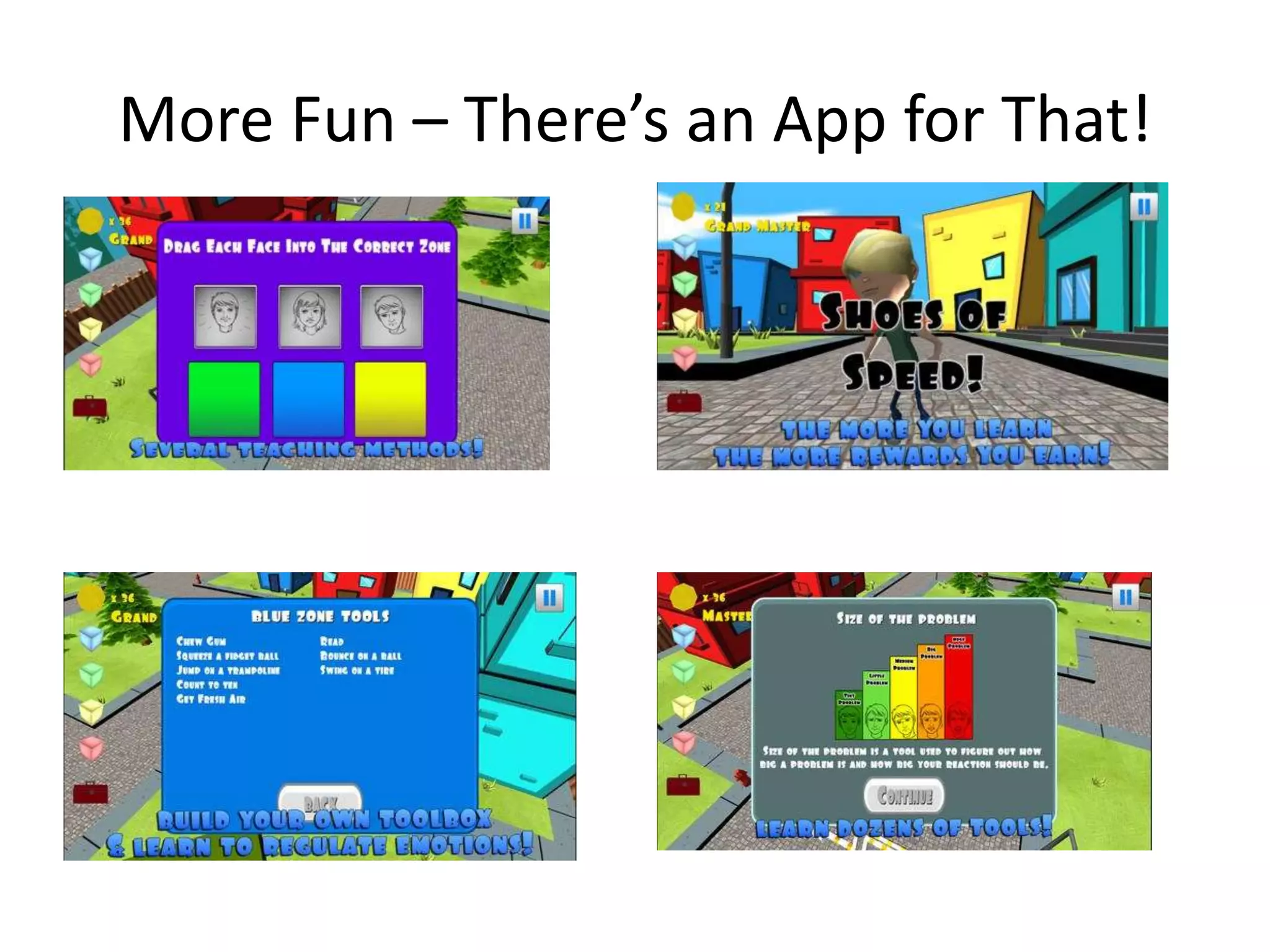
More Fun – There’s an App for That!
Making it Manageable
• Extra Preps – lessons started by
Mark, Anita & Claire
• Follow up in class – one lesson per
week.
• Link to existing programs whenever
possible. (Second Step, Friends, Care)
• Identify emotions and zones during
read alouds/picture books and
movies.
• Add content to class meetings.
• CD of Blackline Masters – available in
Binder Format – THANKS, KAREN!!!
• 3 copies of Zones of Regulation
available in Library (see Susan, Claire
or Karen for early access!)
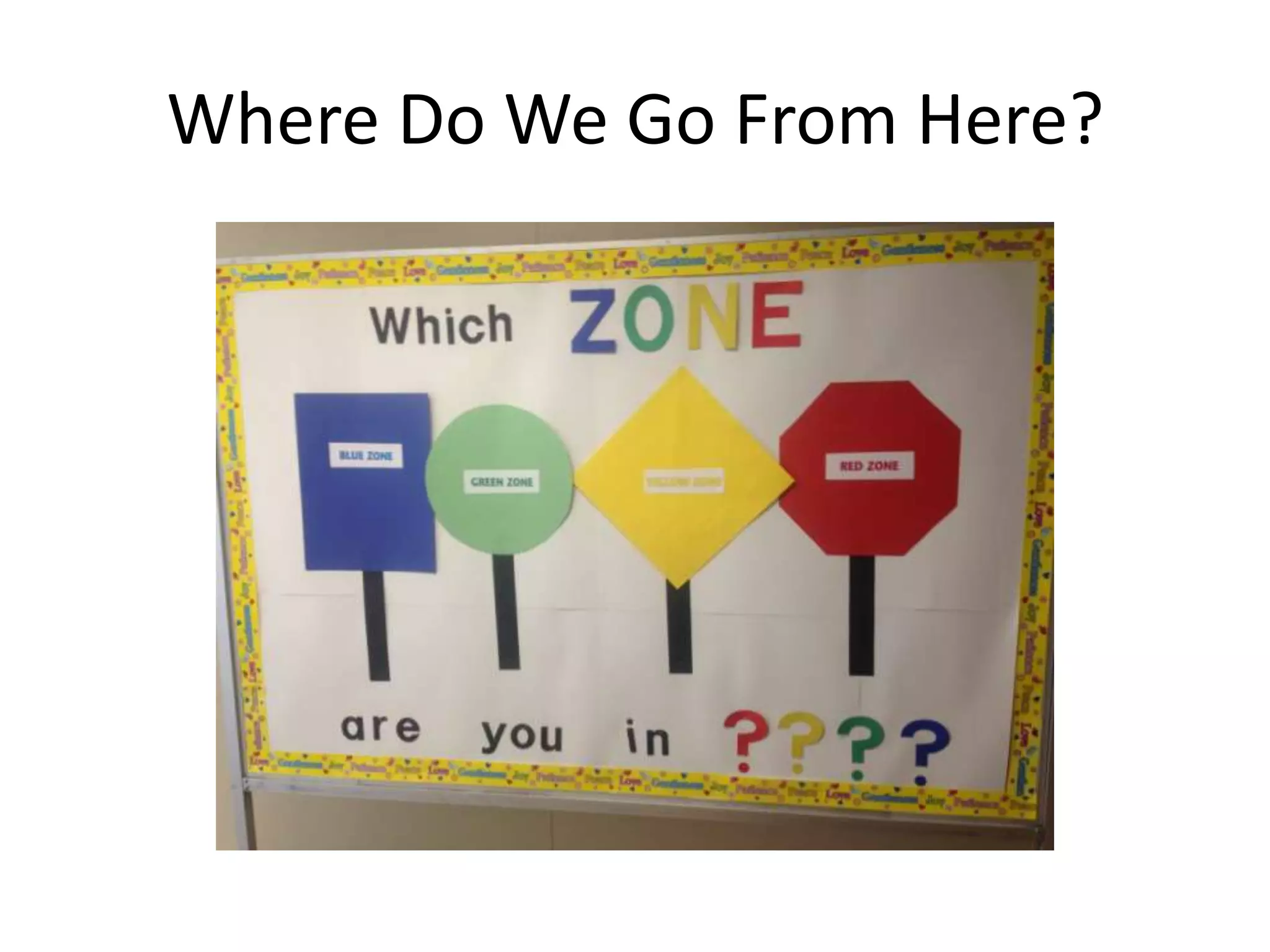
Where Do We Go From Here?
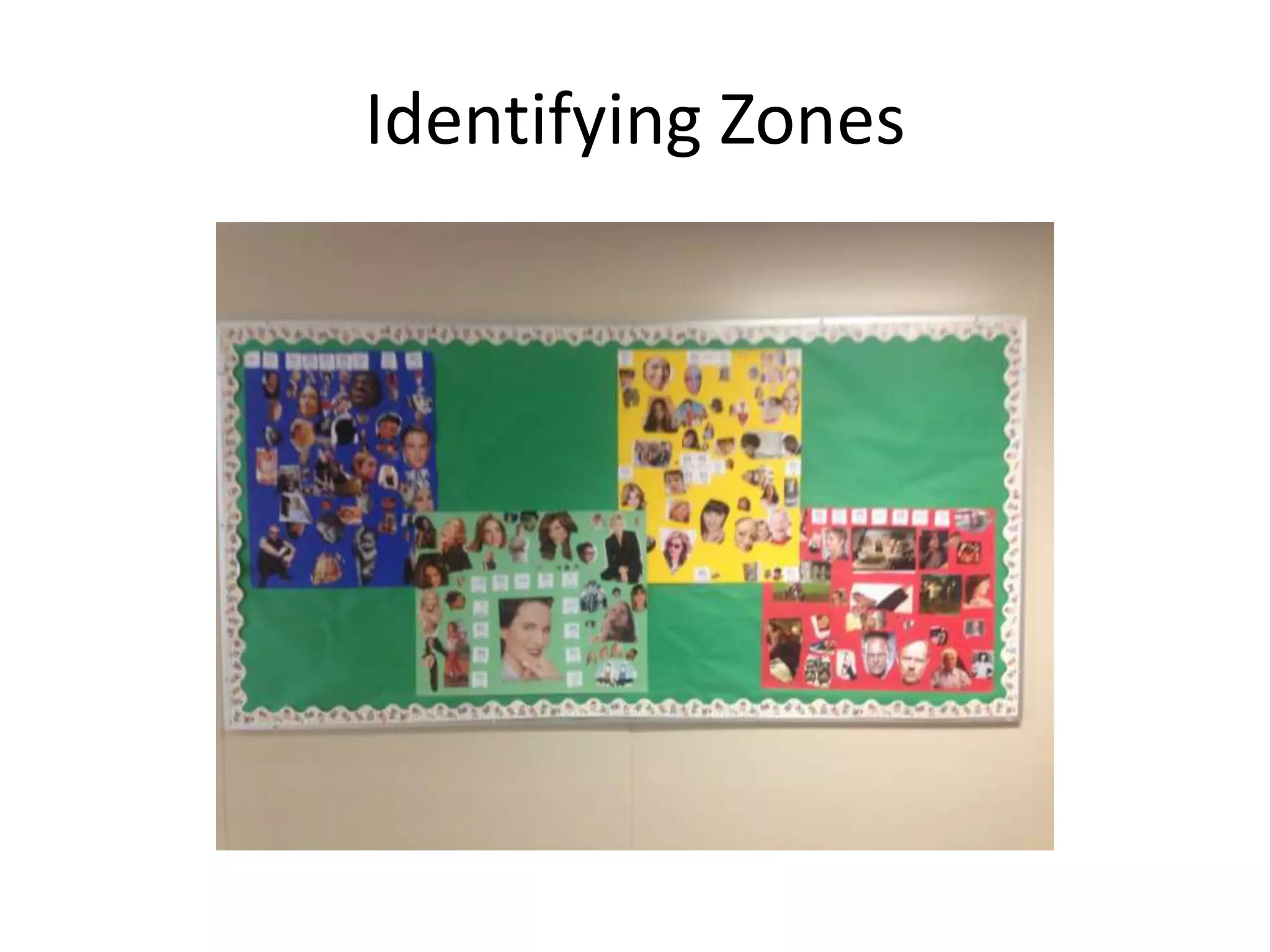
Identifying Zones
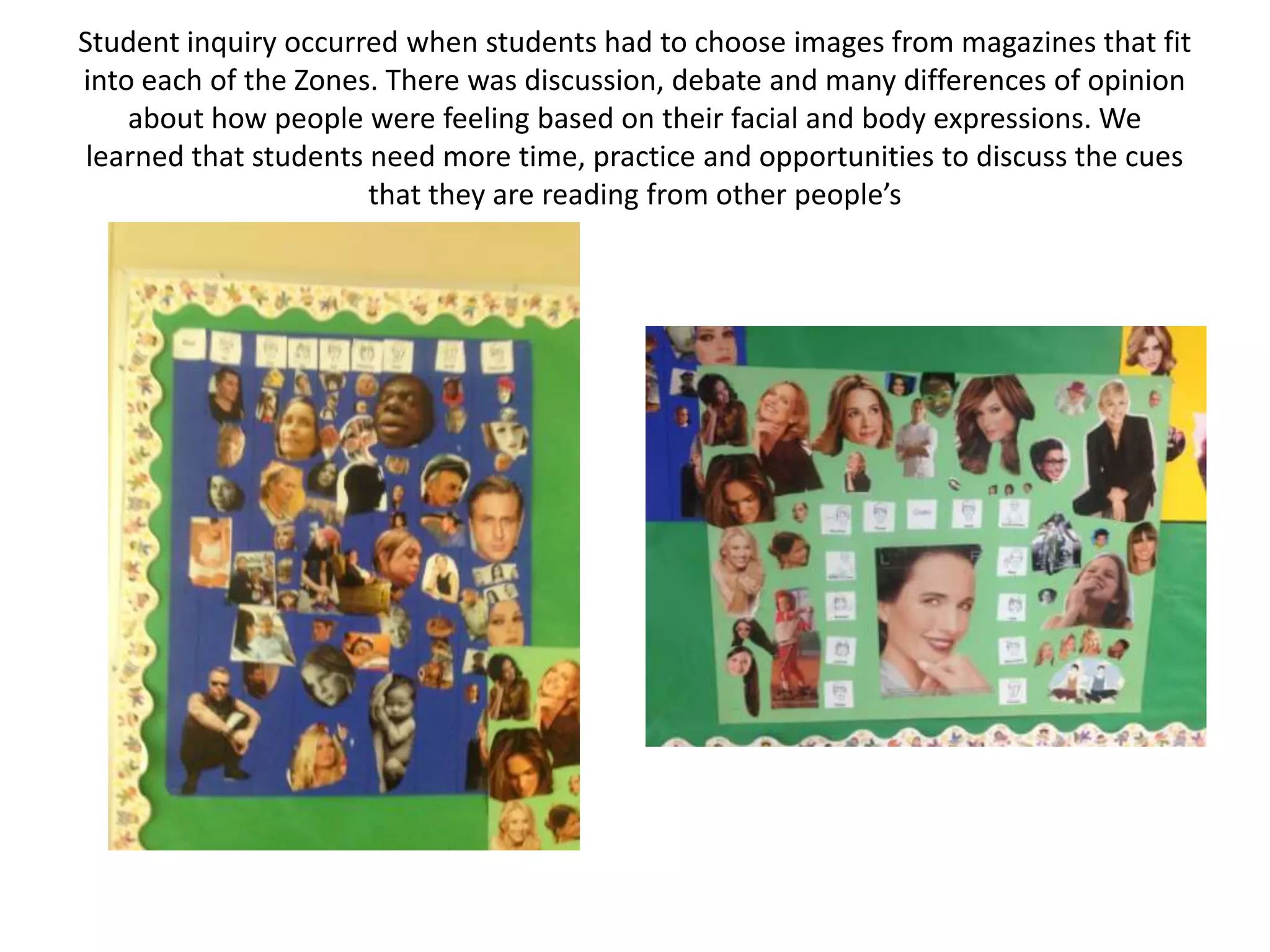
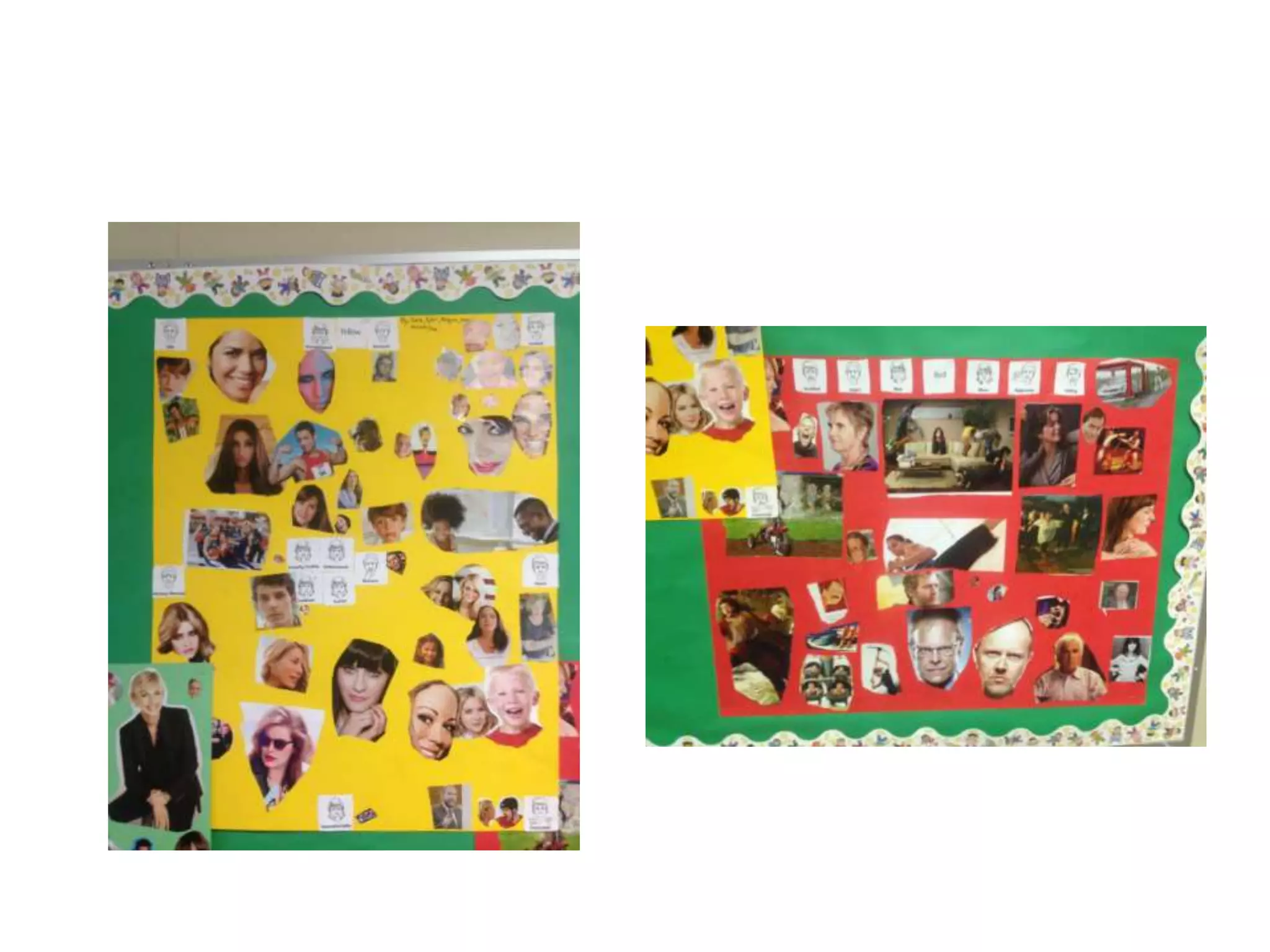
Student inquiry occurred when students had to choose images from magazines that fit
into each of the Zones. There was discussion, debate and many differences of opinion
about how people were feeling based on their facial and body expressions. We
learned that students need more time, practice and opportunities to discuss the cues
that they are reading from other people’s
Zones power point

Zones power point

  • 1.
  • 2.
  • 3.
    We know whenour students are stressed, they are not ready to learn. But what about us? the teaching staff? We’ve all been there … STRESSED to the MAX!
  • 6.
    OCCUPATIONAL As teachers, we recognizemost of the that come with our job.
  • 8.
    But what aboutour students? Often they are unable to recognize or articulate their needs. They ‘zone out’ and this places them in emotional and learning jeopardy.
  • 9.
    That alphabet songis stressing me out.
  • 10.
    ZONES of Regulation ACurriculum Designed To Foster Self-Regulation & Emotional Control
  • 11.
    What are theZones? • Exploring the Traffic Signs and the Zone Colours. • There are 4 Zones to Describe how your brain and body feel.
  • 12.
    BLUE Zone • Whenyou’re in the blue zone, your body is running slow, such as when you are tired, sick, sad or bored.
  • 13.
    Green Zone • TheGreen Zone, like a green light, is when you are “good to go.” If you are in the Green Zone, you may feel happy, calm, and focused.
  • 14.
    Yellow Zone • Theyellow zone describes when you start to lose control, such as when you are frustrated, overwhelmed, silly, wiggly, excited, worried, anxious or surprised. It is a good idea to use caution when you are in the yellow zone.
  • 15.
    Red Zone • Thered zone is reserved for extreme emotions like terror, uncontrolled anger, and aggression. When you are in the Red Zone, you are out of control, have trouble making good decisions, and must STOP.
  • 16.
    How does thisapply to my class? • Using a class list, highlight the typical zone that each of your students is in.
  • 17.
    Which ZONE ismy class in? Table talk – discuss which zone your students are most often in and how this impacts your teaching.
  • 18.
    Lesson 1 –Two Ways - Primary Identify emotions and which zone they fit into as you read a story.
  • 19.
    Lesson 1 –Two Ways - Intermediate Play a game – emotion charades. Students demonstrate the emotion for the class then glue the emotion on the correct zone.
  • 20.
    NEXT… • Lessons 2-9provide different ways for students to practice identifying their emotions and which zone they are in. • Emphasize that all zones are appropriate in specific circumstances, but that the GREEN ZONE is the optimal learning zone and the best place to be for most school activities. • Moving from identifying zones, to identifying when exhibiting emotions can be expected or unexpected, to choosing to do things to move from one zone to another.
  • 21.
    Identifying Zones (Lesson3) • Helping students identify emotions in others can help them be more aware of their own emotions and that everyone experiences the different zones. Before students can correctly identify the zones in themselves, they must be able to recognize the zones in others. (p. 54)
  • 22.
    Identifying Zones (Lesson3) http://www.youtube.com/watch?feature=player _embedded&v=H4BNbHBcnDI
  • 23.
    Questions • What kindof thoughts do others have when the character is in the Red Zone (good thoughts or uncomfortable thoughts)? • How do others react to the characters? • Is the character able to interact with others as successfully when he or she is in the Red or Yellow Zone as when the character is in the Green Zone?
  • 24.
    In the Classroom- Inquiry • If we implement the Zones of Regulation program in a Grade 2/3 classroom, teaching students to self-regulate to be in an optimal learning zone, will students spend more time on task and actively engaged in learning? We will know there has been a positive change because target students will spend less time in transitions between activities and spend more time actively learning. Target students will demonstrate increased completion of quality work and more engagement in learning activities.
  • 25.
    Linking to OtherPrograms • Second Step:
  • 26.
    Linking to OtherPrograms • Mind Up Mind Up Focus on Self Awareness & Brain
  • 27.
    Zones & MindUP • Zones Lesson 5 – Understanding Different Perspectives • Mind UP Lesson 10 – Perspective Taking • Second Step – Empathy Lesson • Reinforce lessons with books: Perspective Taking:
  • 28.
    Book List ForPerspective Taking • *Mr. Peabody’s Apples, by Madonna • *A Weekend With Wendell, Kevin Henkes • *Herb, The Vegetarian Dragon, Jules Bass & Debbie Harter • *The OK Book, by Amy Krouse Rosenthal and Tom Lichtenheld • *ish – Peter Reynolds • *The Dot Peter Reynolds (and art!) • *It’s OK To Be Different, Todd Parr • *I Am I, Marie, Louise Fitzpatrick • *Whoever You Are, Mem Fox • *Tough Boris, Mem Fox • *Tiger, Tiger is it True, 4 Questions to Make You Smile Again, Byron Katie • *All Dogs Have ADHD – Kathy Hoopmann • *All Cats Have Aspergers – Kathy Hoopmann • Hewitt Anderson’s Great Big Life, by Jerdine Nolen • A Dogs Life, by AnnMartin • Just Juice, Karen Hesse • The True Story of the Three Little Pigs, Jon Scieszka • A Walk in the Rain with A Brain – Edward M. Hallowell, MD *Are available in the school library.
  • 29.
    Moving ZONES –Getting to GREEN • It Isn’t Easy Being Green… • http://www.youtube.com/watch?v=hpiIWMW WVco
  • 30.
    Tools to Calmand Alert Sensory Supports Thinking Strategies Calming Techniques
  • 31.
    Tools Taught Sensory SupportsCalming Techniques Thinking Strategies Dependent on sensory supports and equipment available. (See Tools Sheet). •6 Sides of Breathing •Lazy 8 Breathing •Calming Sequence •Counting to Ten •Learning to Take a Deep Breath •Big Vs. Little Problems •Inner Coach Vs. Inner Critic •Superflex Vs. Rock Brain Thinking
  • 32.
    ZONES Tools Worksheet •On worksheet list the Sensory tools that you have access to – or would LIKE to use. • Circle the zone that you think this tool would help with.
  • 33.
    Calming Techniques –Lazy 8 Breathing
  • 34.
  • 35.
    Thinking Strategies • InnerCritic Vs. Inner Coach – similar to Friends Lessons
  • 36.
    Tool Box • Thelast lessons (Lesson 13-17) focus on Learning When to Apply and Use Tools.
  • 37.
    More Fun –There’s an App for That!
  • 38.
    Making it Manageable •Extra Preps – lessons started by Mark, Anita & Claire • Follow up in class – one lesson per week. • Link to existing programs whenever possible. (Second Step, Friends, Care) • Identify emotions and zones during read alouds/picture books and movies. • Add content to class meetings. • CD of Blackline Masters – available in Binder Format – THANKS, KAREN!!! • 3 copies of Zones of Regulation available in Library (see Susan, Claire or Karen for early access!)
  • 39.
    Where Do WeGo From Here?
  • 40.
  • 41.
    Student inquiry occurredwhen students had to choose images from magazines that fit into each of the Zones. There was discussion, debate and many differences of opinion about how people were feeling based on their facial and body expressions. We learned that students need more time, practice and opportunities to discuss the cues that they are reading from other people’s

Editor's Notes

  • #20 Terrified, Confused, Proud
  • #25 Susan to show samples of chart, class zones poster, individualized samples and student specific needs.
  • #31 3 Categories of Tools to Get to Green.
  • #33 See handout for tools worksheet
  • #34 Teach breathing technique
  • #35 Link to Superflex Program (Jean is using – comments from Jean?)
  • #36 See photocopy (in binder) + Link to Friends Thinking Strategies
  • #37 See in photocopypkg for samples of the tool box.