Zones of Regulation
Jennifer Penzenik
Special Education District of Lake County
An Overview
Regulation
“Is the ability to adjust level of alertness AND direct how emotions
are revealed behaviorally in socially adaptive ways in order
to achieve goals.”
Self-Regulation entails:
!
• Self-Control/Emotional Regulation
• Resiliency
• Executive Functioning
• Self-Management
• Anger Management
• Impulse Control
• Sensory Regulation/Modulation
Adapted from the work of Clair Kopp
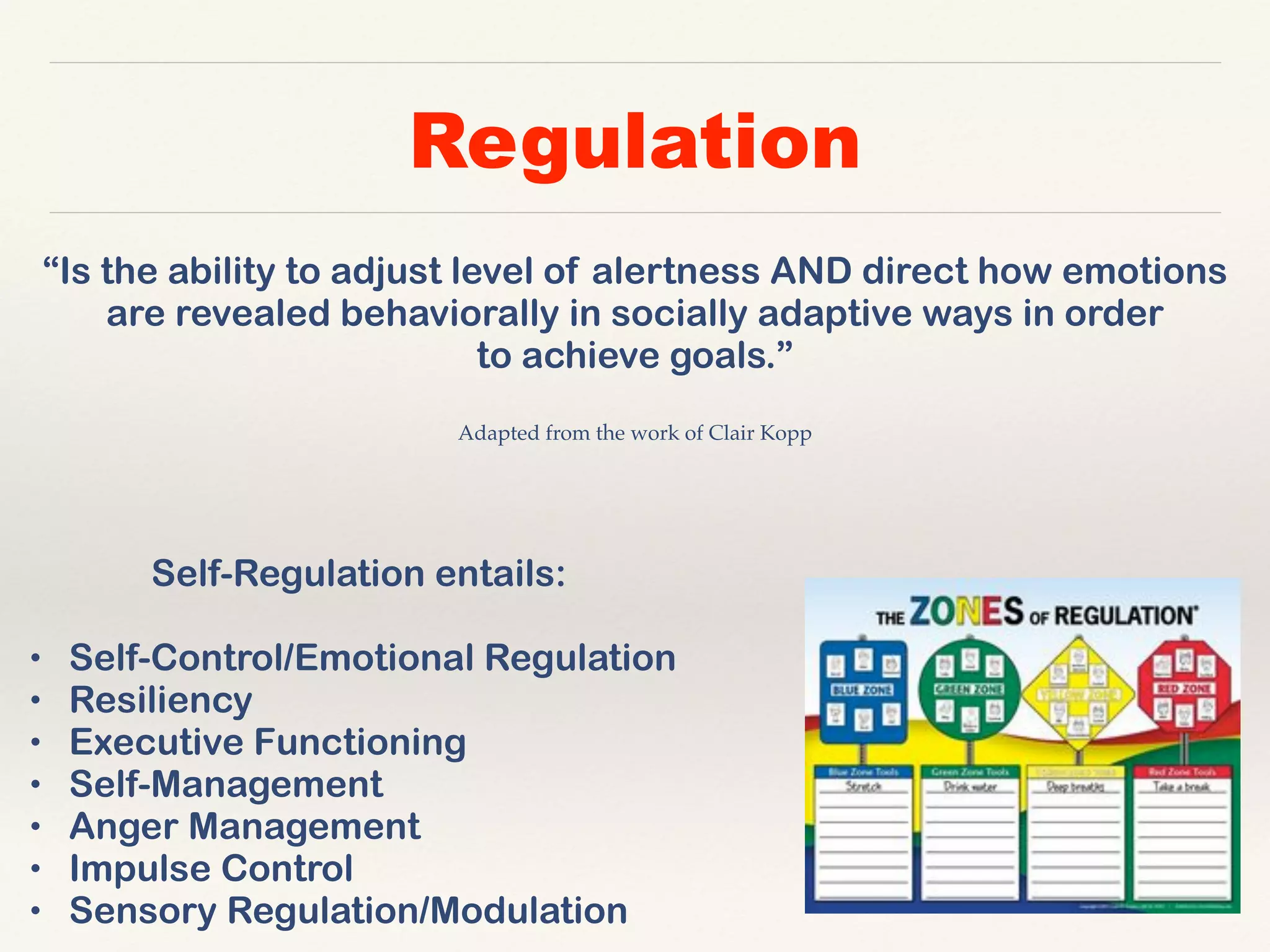
Zones of Regulation
“Zones are a systematic, cognitive behavior approach used to teach
self-regulation by categorizing all the different ways we feel and
states of alertness with experience in four concrete zones.”
“The zones curriculum provides strategies to teach students to
become more aware of and independent in controlling this emotion
and impulses, managing their sensory needs, and improving their
ability to problem solve conflict.”
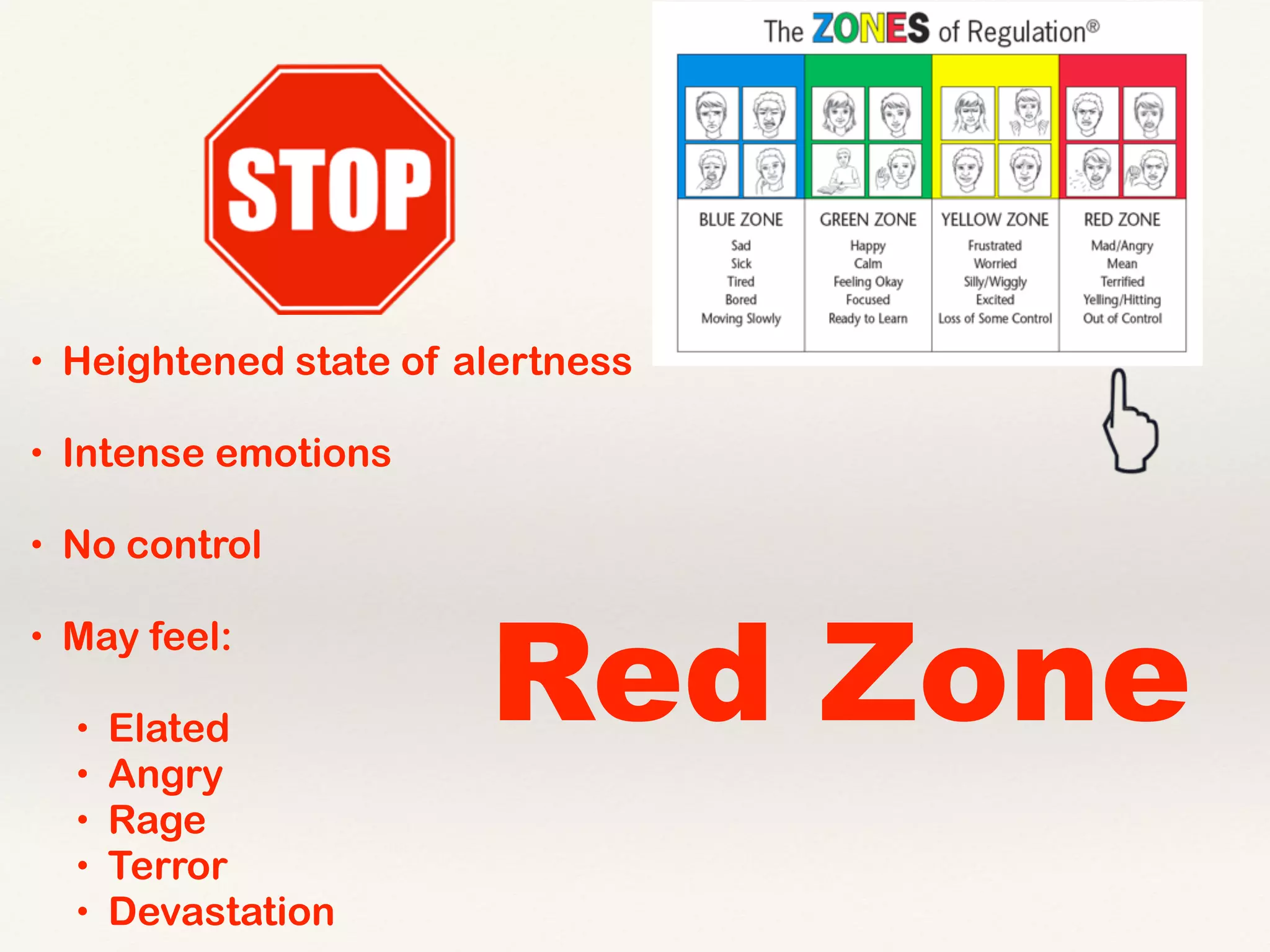
• Heightened state of alertness
!
• Intense emotions
!
• No control
!
• May feel:
!
• Elated
• Angry
• Rage
• Terror
• Devastation
Red Zone
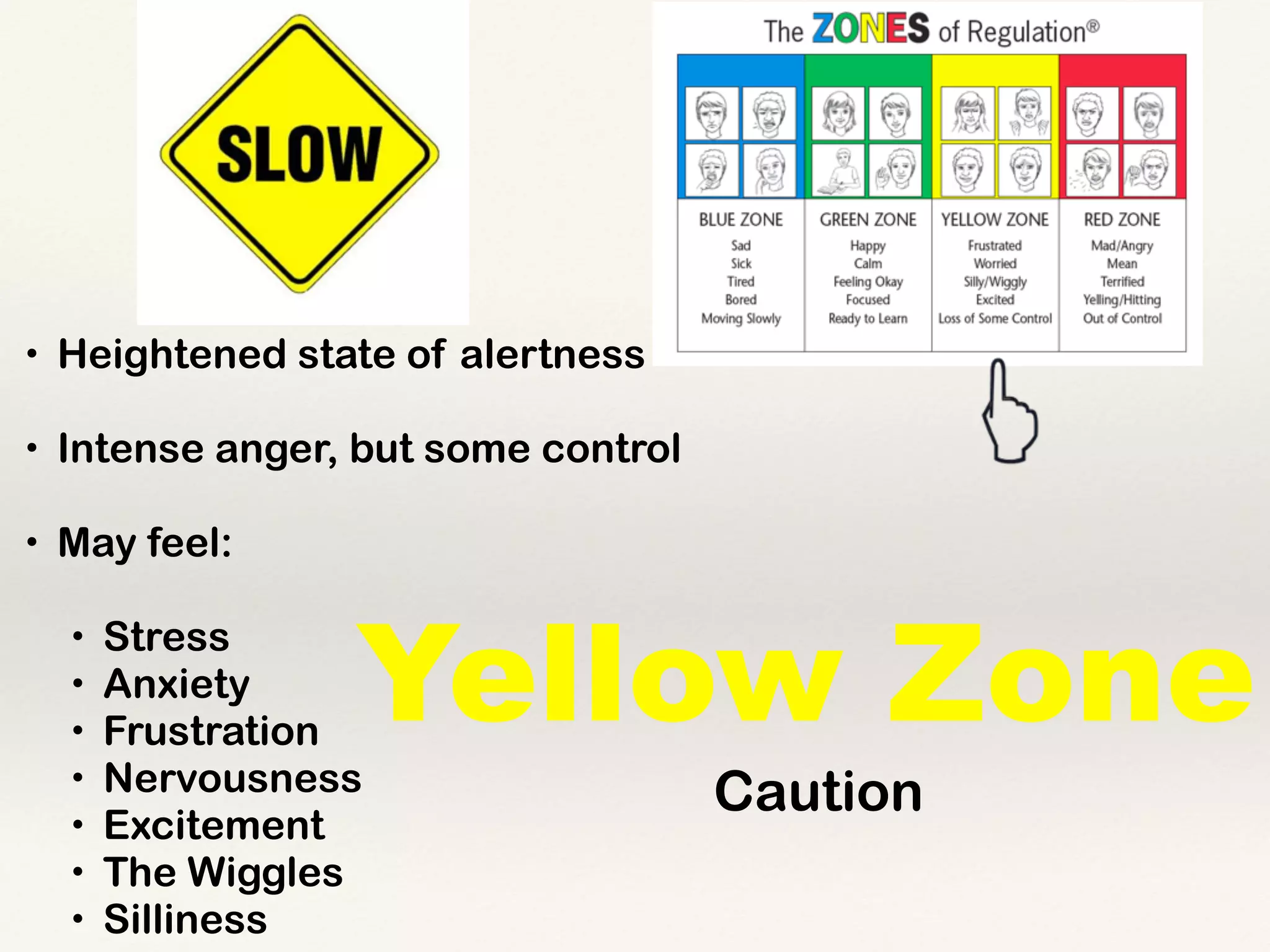
• Heightened state of alertness
!
• Intense anger, but some control
!
• May feel:
!
• Stress
• Anxiety
• Frustration
• Nervousness
• Excitement
• The Wiggles
• Silliness
Yellow Zone
Caution
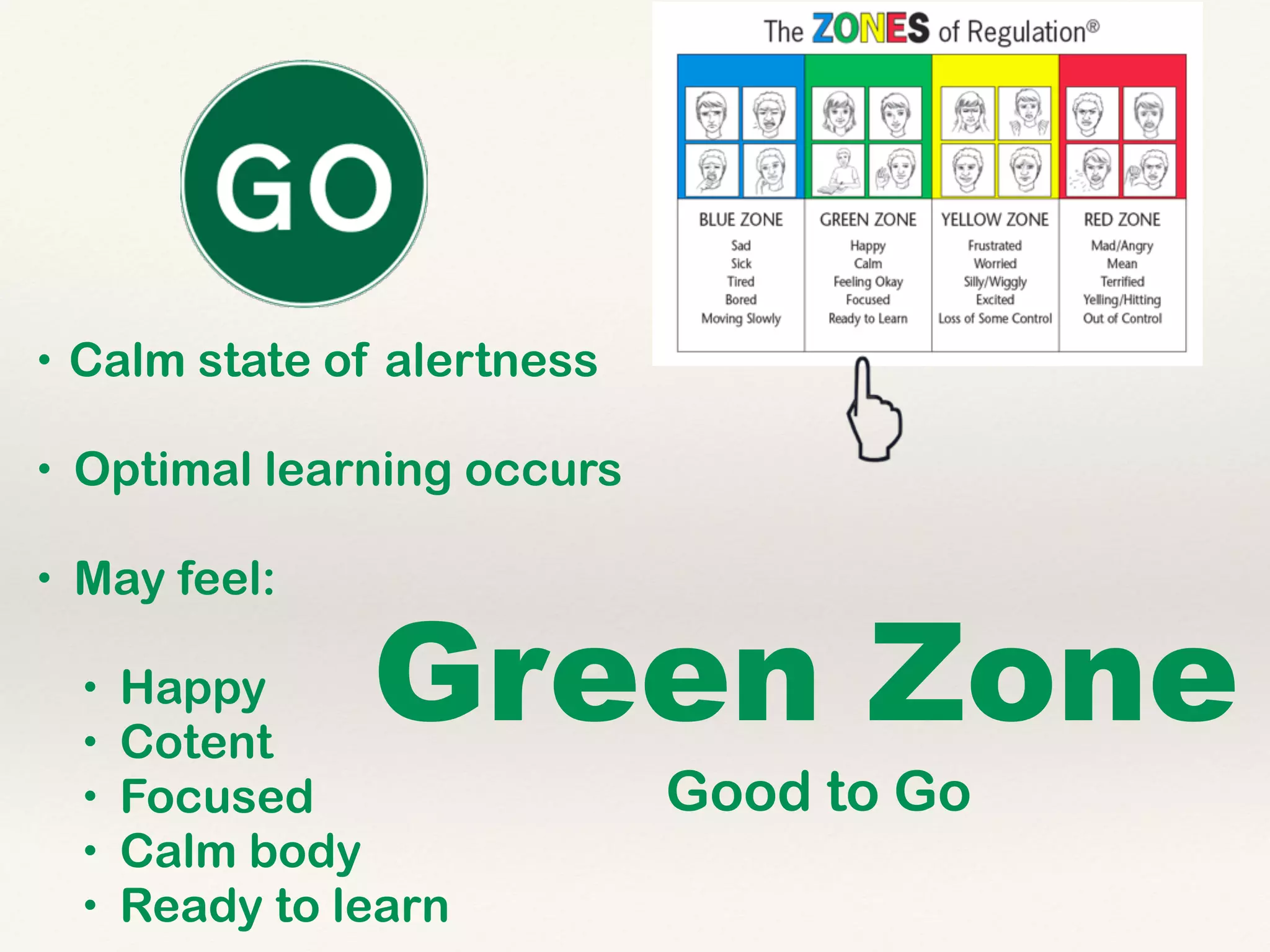
• Calm state of alertness
!
• Optimal learning occurs
!
• May feel:
!
• Happy
• Cotent
• Focused
• Calm body
• Ready to learn
Green Zone
Good to Go
• Low state of alertness
!
• Low arousal
!
• May feel:
!
• Sad
• Sick
• Tired
• Bored
Blue Zone
Rest/Re-Energize
Framework
❖ It is a teaching tool
❖ It is not a behavior model
!
❖ It is a thinking framework
❖ It is not a behavior approach
!
❖ It is a way to nurture skill development
❖ It is not a way to shame behavior
!
❖ It is supportive in nature
❖ It is not punitive in nature
Adapted from Leah Kuypers
Take Aways
• We don’t label a zone as good or bad
!
• A child can be in more then one zone
!
• Manage the zone, don’t try to force into another zone
!
• Individualize the tools for each child
!
• All the zones are expected at one time or another
!
• It is a teaching tool, not a behavioral approach
!
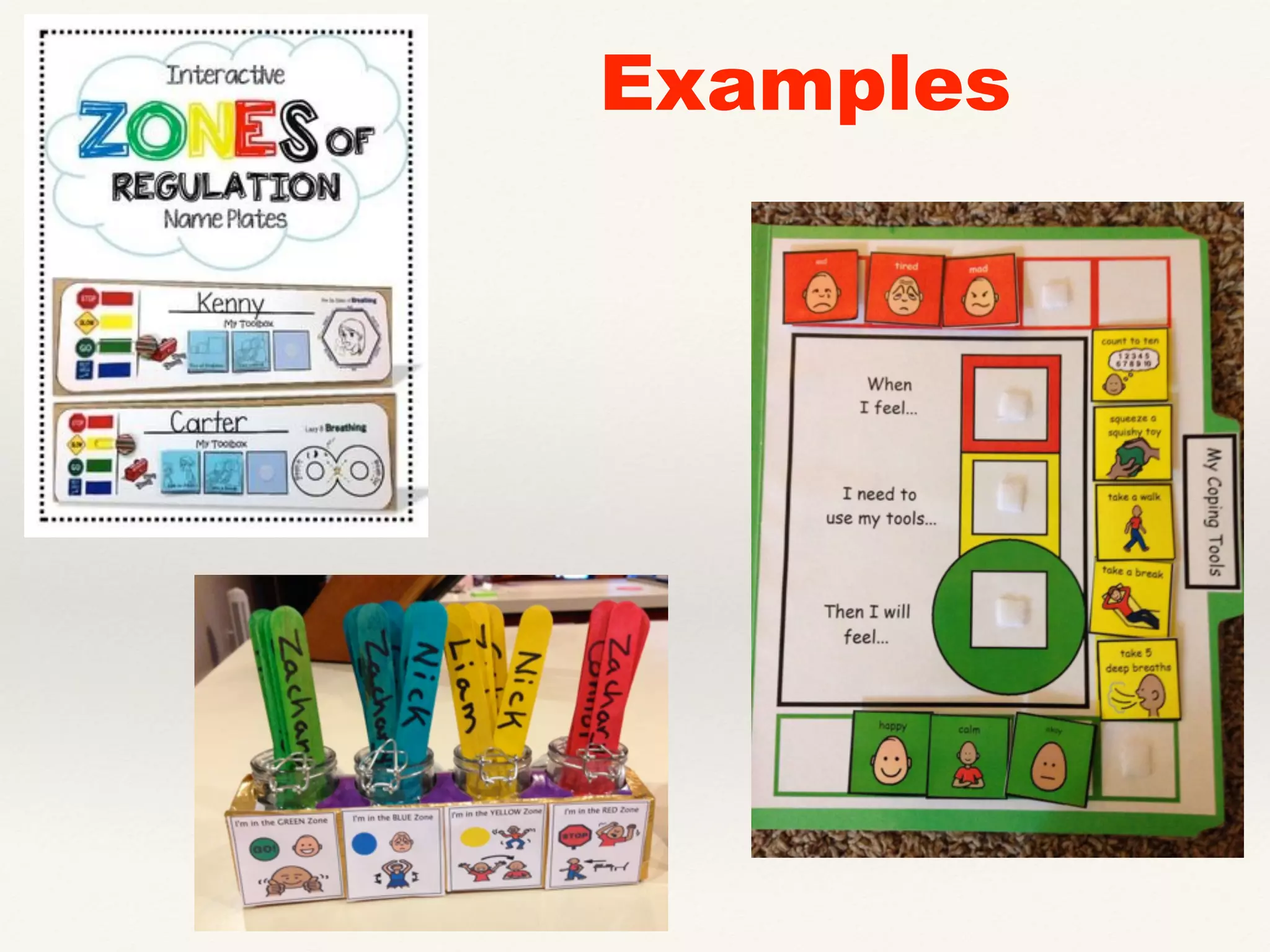
Examples
Examples
References
Kuypers, L.M., (2011). The Zones of Regulation. A curriculum designed to foster !
! self-regulation and emotional control.

Zones of Regulation

  • 1.
    Zones of Regulation JenniferPenzenik Special Education District of Lake County An Overview
  • 2.
    Regulation “Is the abilityto adjust level of alertness AND direct how emotions are revealed behaviorally in socially adaptive ways in order to achieve goals.” Self-Regulation entails: ! • Self-Control/Emotional Regulation • Resiliency • Executive Functioning • Self-Management • Anger Management • Impulse Control • Sensory Regulation/Modulation Adapted from the work of Clair Kopp
  • 3.
    Zones of Regulation “Zonesare a systematic, cognitive behavior approach used to teach self-regulation by categorizing all the different ways we feel and states of alertness with experience in four concrete zones.” “The zones curriculum provides strategies to teach students to become more aware of and independent in controlling this emotion and impulses, managing their sensory needs, and improving their ability to problem solve conflict.”
  • 4.
    • Heightened stateof alertness ! • Intense emotions ! • No control ! • May feel: ! • Elated • Angry • Rage • Terror • Devastation Red Zone
  • 5.
    • Heightened stateof alertness ! • Intense anger, but some control ! • May feel: ! • Stress • Anxiety • Frustration • Nervousness • Excitement • The Wiggles • Silliness Yellow Zone Caution
  • 6.
    • Calm stateof alertness ! • Optimal learning occurs ! • May feel: ! • Happy • Cotent • Focused • Calm body • Ready to learn Green Zone Good to Go
  • 7.
    • Low stateof alertness ! • Low arousal ! • May feel: ! • Sad • Sick • Tired • Bored Blue Zone Rest/Re-Energize
  • 8.
    Framework ❖ It isa teaching tool ❖ It is not a behavior model ! ❖ It is a thinking framework ❖ It is not a behavior approach ! ❖ It is a way to nurture skill development ❖ It is not a way to shame behavior ! ❖ It is supportive in nature ❖ It is not punitive in nature Adapted from Leah Kuypers
  • 9.
    Take Aways • Wedon’t label a zone as good or bad ! • A child can be in more then one zone ! • Manage the zone, don’t try to force into another zone ! • Individualize the tools for each child ! • All the zones are expected at one time or another ! • It is a teaching tool, not a behavioral approach !
  • 10.
  • 11.
  • 12.
    References Kuypers, L.M., (2011).The Zones of Regulation. A curriculum designed to foster ! ! self-regulation and emotional control.