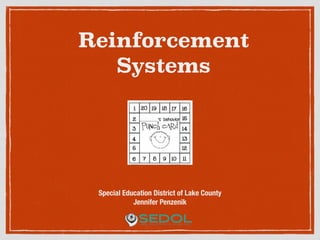
Reinforcement
Systems
Special Education District of Lake County
Jennifer Penzenik
re·in·force·ment
ˌrēinˈfôrsmənt/
!
noun
the process of encouraging or establishing
a belief or pattern of behavior, especially by
encouragement or reward.
Reinforcement
Reinforcement is naturally occurring
!
!
!
!
!
!
“When naturally occurring reinforcers are not sufficiently
powerful, the wise teacher looks for more powerful ones”
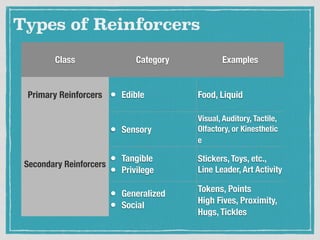
Types of Reinforcers
Class Category Examples
Primary Reinforcers • Edible Food, Liquid
• Sensory
Visual, Auditory, Tactile,
Olfactory, or Kinesthetic
e
Secondary Reinforcers
• Tangible
• Privilege
Stickers, Toys, etc.,
Line Leader, Art Activity
• Generalized
• Social
Tokens, Points
High Fives, Proximity,
Hugs, Tickles
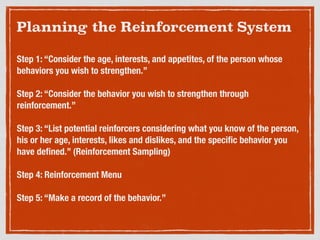
Planning the Reinforcement System
Step 1: “Consider the age, interests, and appetites, of the person whose
behaviors you wish to strengthen.”
!
Step 2: “Consider the behavior you wish to strengthen through
reinforcement.”
!
Step 3: “List potential reinforcers considering what you know of the person,
his or her age, interests, likes and dislikes, and the specific behavior you
have defined.” (Reinforcement Sampling)
!
Step 4: Reinforcement Menu
!
Step 5: “Make a record of the behavior.”
Types of Reinforcer Visuals
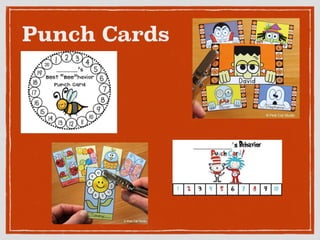
Punch Cards
!
!
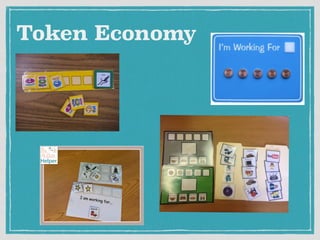
Token Economy
!
!
Puzzles
!
Punch Cards
Token Economy
Puzzles
Reinforcement Rules
• Put the majority of your energy into the Reinforcer Sampler
!
• Do not take away a token, puzzle piece, or punch
!
• Only use identified reinforces for behavior management
(hide when not being used for reinforcement)
!
• Use the reinforcer system for the identified target behavior
!
• Be timely in praising and reinforcing
!
• Remain consistent with all members of the team
References
Alberto, P. & Troutman, A. (1999) Applied Behavior Analysis for
Teachers. Upper Saddle River, New Jersey: Prentice-Hall, Inc.

Reinforcement systems

  • 1.
    Reinforcement Systems Special Education Districtof Lake County Jennifer Penzenik
  • 2.
    re·in·force·ment ˌrēinˈfôrsmənt/ ! noun the process ofencouraging or establishing a belief or pattern of behavior, especially by encouragement or reward.
  • 3.
    Reinforcement Reinforcement is naturallyoccurring ! ! ! ! ! ! “When naturally occurring reinforcers are not sufficiently powerful, the wise teacher looks for more powerful ones”
  • 4.
    Types of Reinforcers ClassCategory Examples Primary Reinforcers • Edible Food, Liquid • Sensory Visual, Auditory, Tactile, Olfactory, or Kinesthetic e Secondary Reinforcers • Tangible • Privilege Stickers, Toys, etc., Line Leader, Art Activity • Generalized • Social Tokens, Points High Fives, Proximity, Hugs, Tickles
  • 5.
    Planning the ReinforcementSystem Step 1: “Consider the age, interests, and appetites, of the person whose behaviors you wish to strengthen.” ! Step 2: “Consider the behavior you wish to strengthen through reinforcement.” ! Step 3: “List potential reinforcers considering what you know of the person, his or her age, interests, likes and dislikes, and the specific behavior you have defined.” (Reinforcement Sampling) ! Step 4: Reinforcement Menu ! Step 5: “Make a record of the behavior.”
  • 6.
    Types of ReinforcerVisuals Punch Cards ! ! Token Economy ! ! Puzzles !
  • 7.
  • 8.
  • 9.
  • 10.
    Reinforcement Rules • Putthe majority of your energy into the Reinforcer Sampler ! • Do not take away a token, puzzle piece, or punch ! • Only use identified reinforces for behavior management (hide when not being used for reinforcement) ! • Use the reinforcer system for the identified target behavior ! • Be timely in praising and reinforcing ! • Remain consistent with all members of the team
  • 12.
    References Alberto, P. &Troutman, A. (1999) Applied Behavior Analysis for Teachers. Upper Saddle River, New Jersey: Prentice-Hall, Inc.