
Presented By :-
Sidhant Raj
Electronics & Communication Engineering
Yuvaraj
Computer Science Engineering
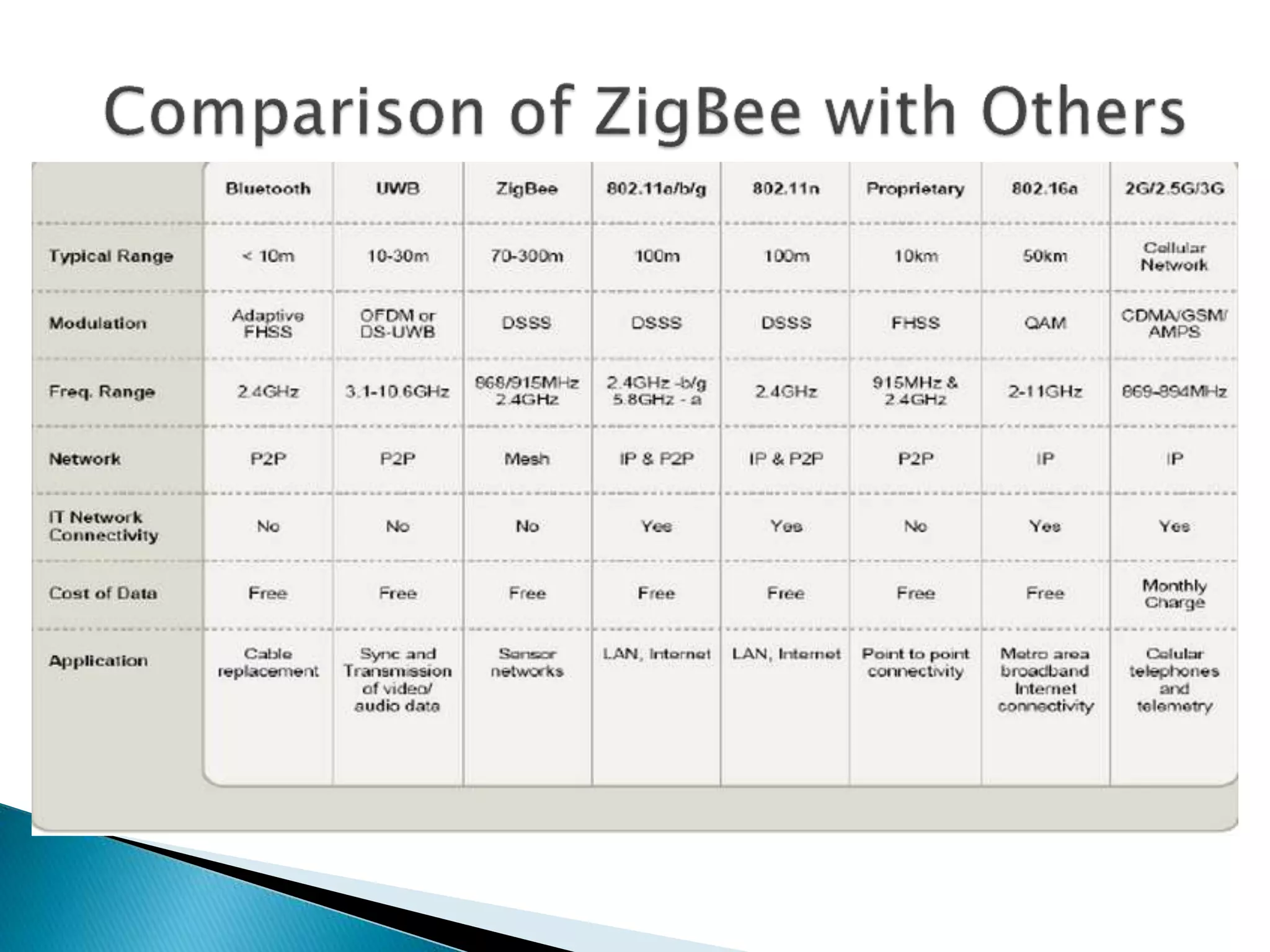
 Zigbee is a Ad-hoc networking technology for
LR-WPAN.
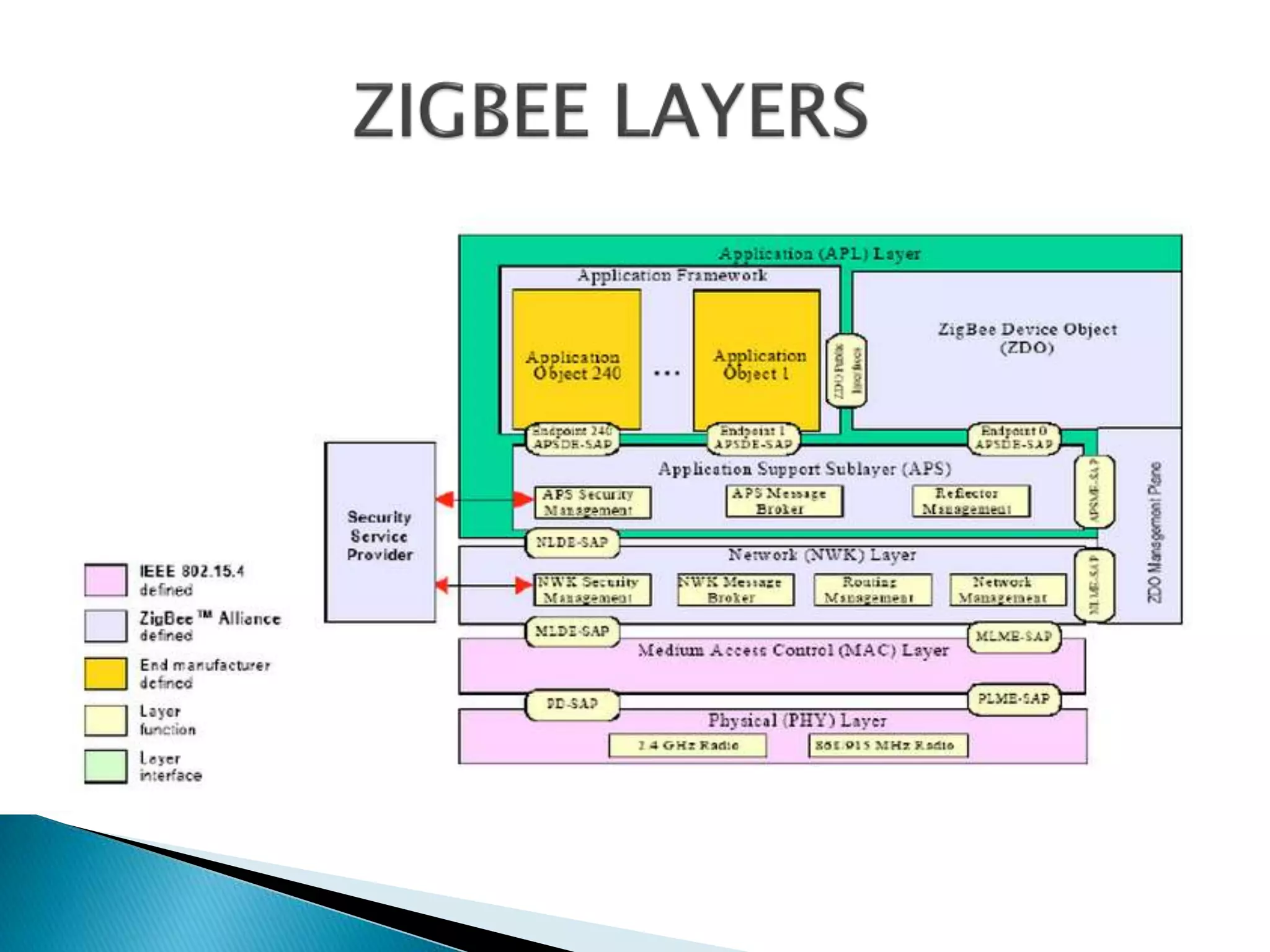
 Based on IEEE 802.15.4 standard that defines the PHY and
MAC layers for ZigBee.
 Low in cost, complexity & power consumption
as compared to competing technologies.
 Data rate touch 250 kbps for 2.45 Ghz, 40 kbps for 915
Mhz and 20 kbps for 868 Mhz band.
 No wireless network standard that meets the
unique needs of sensors and control devices.
 Wireless system don’t require high data rates
but require low cost and very low current
drain.
 Proprietary system are creating significant
interoperability problems with each other and
with newer technologies.
 Low power consumption.
 High density nodes per network.
 Simple protocol, global implementation.
 Network flexibility.
 Small size-less than 9mm*.
 Hundreds of device per network.
 Data rates of 20 kbps and upto 250 kbps.
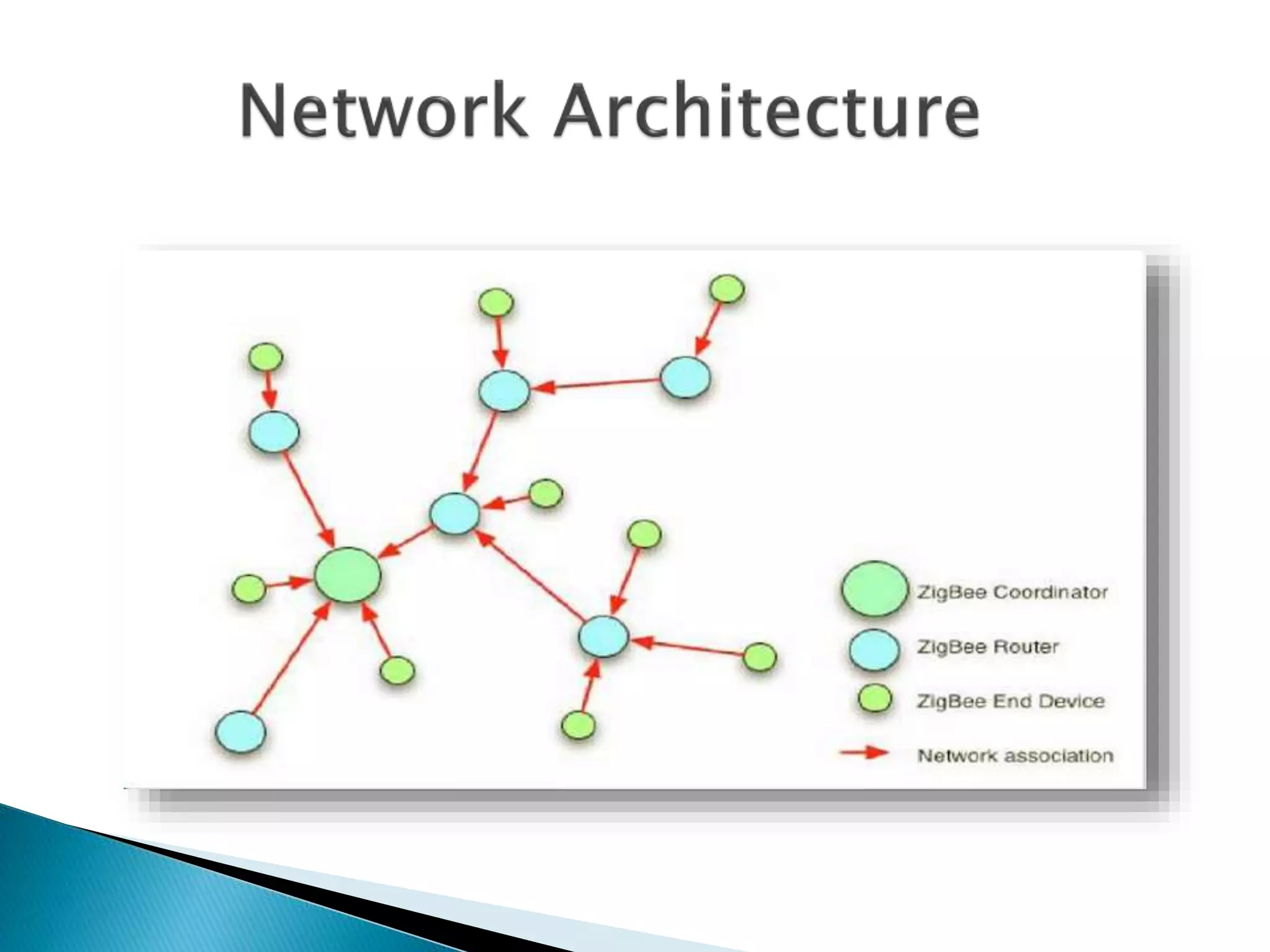
 Star or peer-to-peer network topologies.
 Support for Low Latency Devices.
 Handshaking.
 Low power usage consumption.
 3 frequencies bands with 27 channels.
 Extremely low duty-cycle (<0.1%).
 All device have IEEE addresses.
 Short addresses can be allocated.
 Addressing modes:
 Network + Device identifier (star)
 Source/destination identifier (peer-peer)
 Source/ destination cluster tree + device
identifier (cluster tree)
 ZigBee will play a vital role in the mass
adoption of cost effective, low power, mesh
networking technology for monitoring and
control applications, based on an open global
standard.
 Near future more flexibility and cost savings
for consumers and greater control over
household appliances.
 Used for campus-wide electrical and security
systems for a single computer.
ZIGBEE TECHNOLOGY

ZIGBEE TECHNOLOGY

  • 1.
    Presented By :- SidhantRaj Electronics & Communication Engineering Yuvaraj Computer Science Engineering
  • 2.
     Zigbee isa Ad-hoc networking technology for LR-WPAN.  Based on IEEE 802.15.4 standard that defines the PHY and MAC layers for ZigBee.  Low in cost, complexity & power consumption as compared to competing technologies.  Data rate touch 250 kbps for 2.45 Ghz, 40 kbps for 915 Mhz and 20 kbps for 868 Mhz band.
  • 4.
     No wirelessnetwork standard that meets the unique needs of sensors and control devices.  Wireless system don’t require high data rates but require low cost and very low current drain.  Proprietary system are creating significant interoperability problems with each other and with newer technologies.
  • 5.
     Low powerconsumption.  High density nodes per network.  Simple protocol, global implementation.  Network flexibility.  Small size-less than 9mm*.  Hundreds of device per network.
  • 6.
     Data ratesof 20 kbps and upto 250 kbps.  Star or peer-to-peer network topologies.  Support for Low Latency Devices.  Handshaking.  Low power usage consumption.  3 frequencies bands with 27 channels.  Extremely low duty-cycle (<0.1%).
  • 9.
     All devicehave IEEE addresses.  Short addresses can be allocated.  Addressing modes:  Network + Device identifier (star)  Source/destination identifier (peer-peer)  Source/ destination cluster tree + device identifier (cluster tree)
  • 12.
     ZigBee willplay a vital role in the mass adoption of cost effective, low power, mesh networking technology for monitoring and control applications, based on an open global standard.  Near future more flexibility and cost savings for consumers and greater control over household appliances.  Used for campus-wide electrical and security systems for a single computer.