



ISSN 1020-4555
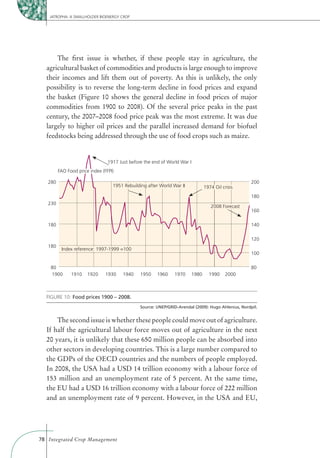
Integrated Crop Management   Vol. 8–2010


Jatropha: A Smallholder
Bioenergy Crop
The Potential for Pro-Poor Development
Integrated Crop Management Vol. 8–2010


Jatropha: A Smallholder
Bioenergy Crop
The Potential for Pro-Poor Development


Richard Brittaine
Agricultural Consultant
Reading, Berkshire, UK

NeBambi Lutaladio
Plant Production and Protection Division
FAO, Rome, Italy


FOOD AND AGRICULTURE ORGANIZATION OF THE UNITED NATIONS
Rome, 2010
The designations employed and the presentation of material in this information
product do not imply the expression of any opinion whatsoever on the part of the
Food and Agriculture Organization of the United Nations concerning the legal or
development status of any country, territory, city or area or of its authorities, or
concerning the delimitation of its frontiers or boundaries.

ISBN 978-92-5-106438-2

All rights reserved. Reproduction and dissemination of material in this information
product for educational or other non-commercial purposes are authorized without
any prior written permission from the copyright holders provided the source is
fully acknowledged. Reproduction of material in this information product for
resale or other commercial purposes is prohibited without written permission of
the copyright holders.

Applications for such permission should be addressed to:
Chief
Electronic Publishing Policy and Support Branch
Communication Division
FAO
Viale delle Terme di Caracalla, 00153 Rome, Italy
or by e-mail to:
copyright@fao.org

Ā© FAO 2010


Cover photos: Brittaine, Faidutti, Henning, ICRISAT, Messemaker
FOREWORD


FOREWORD
As developing countries face increasing local demand for energy in
rural areas, they also must deal with both economic and environmental
pressure on agricultural lands in general. The possibility of growing
energy crops such as Jatropha curcas L. has the potential to enable
some smallholder farmers, producers and processors to cope with
these pressures.
    Jatropha is an underutilized, oil-bearing crop. It produces a seed
that can be processed into non-polluting biodiesel that, if well exploited,
can provide opportunities for good returns and rural development. In
addition to growing on degraded and marginal lands, this crop has
special appeal, in that it grows under drought conditions and animals
do not graze on it.
    However, many of the actual investments and policy decisions on
developing jatropha as an oil crop have been made without the backing
of sufficient science-based knowledge. Realizing the true potential of
jatropha requires separating facts from the claims and half-truths.
    This review is based on the records of the International Consultation
on Pro-Poor Jatropha Development held in April 2008, in Rome, Italy, and
hosted by the International Fund for Agricultural Development (IFAD),
the Food and Agriculture Organization of the United Nations (FAO), the
United Nations Foundation (UNF) and the Prince Albert II of Monaco
Foundation. The consultation was designed to support activities aimed
at developing appropriate technologies for sustainable intensification of
biofuel feedstock production, studying the economics of bioenergy for
rural needs and assessing its impact on rural poverty.
    The review provides a brief overview of biofuels, their growth drivers
and their potential impacts on poor societies. It looks at how jatropha,
which originated in Central America and then spread across Africa and
Asia, has become widespread throughout the tropics and subtropics.
It also builds upon technical and scientific information on key issues
affecting jatropha for pro-poor development that was presented during
the Consultation by specialists from around the world.
    The review also summarizes the most recent data on the cultivation,
seed harvesting and processing, uses and genetic improvement of


                                                                Vol. 8–2010 iii
JATROPHA: A SMALLHOLDER BIOENERGY CROP


  jatropha, and it offers an overview and case studies of experiences with
  jatropha production in sub-Saharan Africa and South Asia. It concludes
  with viewpoints gathered from the Consultation’s group discussions
  and roundtables that recognized the importance of biofuels and the
  potential of jatropha biofuel development for poverty reduction, but
  also emphasized the need to consider potential risks to food security,
  the environment and livelihoods of the rural poor.
      This publication seeks to contribute to strengthening jatropha
  policies and strategies in developing countries – policies that recognize
  the potential of jatropha to contribute towards pro-poor development,
  sustain rural income and improve livelihoods. We trust that it will
  provide valuable guidance to government and institutional policy- and
  decision-makers, and that it will be a valuable source of information
  for programme managers, international and multilateral development
  organizations, donors, NGOs, the private sector and foundations as
  well as researchers, advisors, teachers and professionals in agriculture.


  Shivaji Pandey                            Rodney Cooke
  Director, Plant Production                Director, Technical Advisory
  and Protection Division                   Division
  Food and Agriculture                      International Fund for
  Organization of the                       Agriculture Development
  United Nations


iv Integrated Crop Management
ACKNOWLEDGEMENTS


ACKNOWLEDGEMENTS
The papers and presentations given at the International Consultation on
Pro-Poor Jatropha Development held on 10-11 April 2008 in Rome, Italy,
form the essential core of this manuscript. The valuable contributions
made at this forum by many individual participants are very much
acknowledged.
     Information and clarification on a number of issues were sought
from Reinhard K. Henning, jatropha consultant, and Amir Kassam, FAO
consultant. Their reviews of the draft undoubtedly contributed to the
quality of the final manuscript.
     While the photographs in the text are separately attributed, we would
like to thank those who freely gave permission for their reproduction,
namely: Godofredo U. Stuart Jr, Reinhard K. Henning, Tom Burrell
(Mali-Folkecentre), Lode Messemaker, Subhas Wani (ICRISAT), Hong
Yan (Temasek).
     The graphic in Figure 3 is reproduced by kind permission of Elsevier©
2008. UNEP/GRID-Arendal are thanked for their permission to use the
excellent Figure 10 graphic showing long-term changes in food prices, and
the UK Renewable Fuels Agency is thanked for permission to reproduce
its graphic in Figure 12.
     Particular thanks are due to NeBambi Lutaladio, FAO Plant Production
and Protection Division, for initiating this publication and Richard
Brittaine, FAO consultant, for writing the manuscript. Thanks also to
Nancy Hart, who edited the final manuscript, and Joanne Morgante, who
designed the publication. All of their efforts and dedication made possible
the release of this publication.


Eric A. Kueneman                         Vineet Raswant
Deputy Director                          Senior Technical Adviser
FAO Plant Production and                 International Fund for
Protection Division                      Agriculture Development


                                                                 Vol. 8–2010 v
Photo: FAIDUTTI
CONTENTS


CONTENTS
iii      Foreword
 v       Acknowledgements
 x       Acronyms and Abbreviations
xii      Executive Summary

      CHAPTER 1
 1    Introduction
 2       Biofuels – an Overview
 2          Bioenergy and biofuels
 2          First, second and third generation biofuels
 3          Bioethanol and biodiesel
 4          Straight vegetable oil
 4       Growth drivers of biofuels
 5          Climate change
 5          Energy security
 5          Rural development
 6       The importance of the transport sector
 7       Production and consumption
 8       The impacts of biofuels and their sustainability
10       Energy poverty and bioenergy in poor societies
12       Jatropha – global and regional production and trends

      CHAPTER 2
13    Jatropha curcas L.
13       Origin and spread
14       Nomenclature and taxonomy
15       Description
17       Uses of Jatropha
17          The jatropha tree
17          Erosion control and improved water infiltration
18          Livestock barrier and land demarcation
18          Fuelwood
19          Support for vanilla
19          Green manure
19          Plant extracts
19          Stem


                                                             Vol. 8–2010 vii
JATROPHA: A SMALLHOLDER BIOENERGY CROP


    19             Bark and roots
    20             Leaves
    20             Seeds
    20             Fruits and seeds
    20         Toxicity and invasiveness
    20           Toxicity
    22           Invasiveness


          CHAPTER 3
    27    Jatropha cultivation
    27       Climate
    28       Soils
    29       Propagation and crop establishment
    30          Vegetative propagation using cuttings
    30          Propagation from seed
    33          Planting
    33          Intercropping
    34          Crop maintenance
    35       Plant nutrition
    36       Water requirements
    37       Pests and diseases
    39       Seed yields

          CHAPTER 4
    41    Seed harvest, processing and uses of Jatropha
    42      Harvesting
    43      Oil extraction
    45      Properties of Jatropha oil
    46      Uses of Jatropha oil
    46         Jatropha oil as a biodiesel feedstock
    48         Pure jatropha oil
    49         Cooking fuel
    50         Lighting fuel
    50         Soap making
    50         Other uses for the oil
    51      Properties and uses of the seed cake
    51         Livestock feed


viii Integrated Crop Management
CONTENTS


51       Organic fertilizer
52       Fuel
52     Using the fruit shells and seed husks

     CHAPTER 5
55   Genetic improvement
55     Present status
56     The importance of yield
56     Production oriented breeding objectives
57     Pro-poor breeding objectives
57     Producing improved varieties of Jatropha curcas
59     Breeding goals

     CHAPTER 6
60   Experience of Jatropha in sub-Saharan Africa and South Asia
61     West Africa – Mali
61        Jatropha system project
64        Multifunctional platform project
65     East Africa – Tanzania
65        Jatropha seed production
66        Production of jatropha oil
67        Soap production
69        Use of jatropha oil
72     Asia – India
72        Community scheme wasteland development

     CHAPTER 7
77   Jatropha for pro-poor development
77      Biofuels – an opportunity for the rural poor
79      Characterization of Jatropha production systems
82      Jatropha – an opportunity for the rural poor in semi-arid regions
82      Opportunities for poverty reduction
84      Economic risks
85      Environmental risks
86      Risks to society
87      Policy conclusions

90   REFERENCES


                                                          Vol. 8–2010 ix
JATROPHA: A SMALLHOLDER BIOENERGY CROP


 ACRONYMS AND ABBREVIATIONS
      B5           Blend of 5 percent biodiesel with mineral diesel
      Ca           Calcium
    CDM            Clean development mechanism
   CGIAR           Consultative Group on International Agricultural
                   Research
      CO2          Carbon dioxide
     CPR           Common property resource
       Cu          Copper
     DAP           Diammonium phosphate
      DM           Dry matter
   DWMA            District Water Management Agency
       E5          Blend of 5 percent bioethanol with petrol
   EMPPO           European and Mediterranean Plant Protection Organization
       ET          Evapotranspiration
    ETBE           Ethyl Tertiary Butyl Ether
    FACT           Fuels from Agriculture in Communal Technology
     FAO           Food and Agriculture Organization of the United
                   Nations
        Fe         Iron
     GDP           Gross Domestic Product
     GHG           Greenhouse gas
     GTZ           Deutsche Gesellschaft für Technische Zusammenarbeit
      HH           Household
  ICRISAT          International Crops Research Institute for the Semi-
                   Arid Tropics
     IFAD          International Fund for Agricultural Development
      JME          Jatropha methyl ester
         K         Potassium
      K 2O         Potassium oxide
      Kcals        Kilocalories
        Kg         Kilogram
       kW          Kilowatt
      LCA          Life cycle analysis
    LIFDC          Low-income food-deficit country


x Integrated Crop Management
ACRONYMS AND ABBREVIATIONS


   MFP     Multifunctional platform
    Mg     Magnesium
    mg     Milligram
     MJ    Megajoule
    Mn     Manganese
      N    Nitrogen
   N 2O    Nitrous oxide
    n.d.   No date
  NGO      Non-governmental organization
NOVOD      National Oilseeds and Vegetable Oils Development
           Board
  OECD     Organisation for Economic Co-operation and Development
       P   Phosphate
    RME    Rape methyl ester
       R   Indian rupee
       S   Sulphur
     SSP   Single super phosphate
    SVO    Straight vegetable oil
     TZS   Tanzanian shillings
   ULSD    Ultra low sulphur diesel
  UNDP     United Nations Development Programme
 UNIDO     United Nations Industrial Development Organization
  VOME     Vegetable oil methyl ester
      Zn   Zinc


                                                         Vol. 8–2010 xi
JATROPHA: A SMALLHOLDER BIOENERGY CROP


  EXECUTIVE SUMMARY
  Declining reserves of fossil fuels plus recognition that growing carbon
  dioxide emissions are driving climate change have focused world attention
  on the need to reduce fossil fuel dependence. In turn, this has increased
  interest in promoting bioenergy, including biofuels, as a renewable energy
  source.
      Liquid biofuels have the potential to help power the transportation
  sector. Considering that transportation is responsible for some 30 percent
  of current energy usage and that biofuels can be used in transportation with
  only few changes to the existing distribution infrastructure, biofuels become
  an extremely important form of bioenergy. Producing liquid biofuels from
  food crops using conventional technology is also being pursued as a means
  of farm income support and for driving rural development. However, the
  debate around biofuels is creating a lot of uncertainty and will continue to
  do so until it can be shown that biofuels can be low-cost, low-carbon and
  sustainable, and do not endanger food security.
      Given the sheer size of the energy market compared to the market
  for agricultural commodities, the potential for biofuels alone to address
  climate change and energy security is quite limited. However, the increased
  demand for biofuels does create a huge new market for agricultural
  products. Liquid biofuels generally require large-scale production and
  processing to be viable, although this is less true where the end product is
  straight vegetable oil rather than either bioethanol or biodiesel.
      Interest in Jatropha curcas as a source of oil for producing biodiesel
  has arisen as a consequence of its perceived ability to grow in semi-arid
  regions with low nutrient requirements and little care. The seed typically
  contains 35 percent oil which has properties highly suited to making
  biodiesel. Unlike other major biofuel crops, jatropha is not a food crop
  since the oil is non-edible and is, in fact, poisonous. It is a low growing
  oil-seed-bearing tree that is common in tropical and subtropical regions
  where the plant is often used in traditional medicine and the seed oil is
  sometimes used for lighting. The tree is occasionally grown as a live fence
  for excluding livestock and for property demarcation. The rooting nature
  of jatropha allows it to reach water from deep in the soil and to extract


xii Integrated Crop Management
EXECUTIVE SUMMARY


leached mineral nutrients that are unavailable to many other plants. The
surface roots assist in binding the soil and can reduce soil erosion.
     In 2008, jatropha was planted on an estimated 900 000 ha globally –
760 000 ha (85 percent) in Asia, followed by Africa with 120 000 ha and
Latin America with 20 000 ha. By 2015, forecasts suggest that jatropha
will be planted on 12.8 million ha. The largest producing country in Asia
will be Indonesia. In Africa, Ghana and Madagascar will be the largest
producers. Brazil will be the largest producer in Latin America.
     Jatropha has a number of strengths: the oil is highly suitable for
producing biodiesel but can also be used directly to power suitably
adapted diesel engines and to provide light and heat for cooking, it is fast
growing and quick to start bearing fruit, and the seed is storable making
it suited to cultivation in remote areas. Jatropha could eventually evolve
into a high yielding oil crop and may well be productive on degraded and
saline soils in low rainfall areas. Its by-products may possibly be valuable
as fertilizer, livestock feed, or as a biogas feedstock, its oil can have other
markets such as for soap, pesticides and medicines, and jatropha can help
reverse land degradation.
     Jatropha’s chief weaknesses relate to the fact that it is an essentially
wild plant that has undergone little crop improvement. Its seed yields,
oil quality and oil content are all highly variable. Most of the jatropha
currently grown is toxic which renders the seedcake unsuitable for use as
livestock feed and may present a human safety hazard. Fruiting is fairly
continuous which increases the cost of harvesting. Knowledge of the
agronomy of jatropha and how agronomic practices contribute to yield
is generally lacking. Furthermore, there is an unknown level of risk of
Jatropha curcas becoming a weed in some environments.
     Optimum growing conditions are found in areas of 1 000 to 1 500 mm
annual rainfall, with temperatures of 20°C to 28°C with no frost, and
where the soils are free-draining sands and loams with no risk of water-
logging. Propagation is typically from seed. Cuttings offer the benefit of
uniform productivity with the disadvantage that they do not generally
develop a tap root. The production of clonal and disease-free plants using
tissue culture is not yet a commercial reality. Attention to crop husbandry
and adequate nutrition and water are essential to achieving high yields.
Pruning is important to increase the number of flowering branches.


                                                                    Vol. 8–2010 xiii
JATROPHA: A SMALLHOLDER BIOENERGY CROP


        Crop improvement is at an early stage. Increasing oil yield must be a
   priority – an objective that has only recently been addressed by private
   enterprise. Genetic variation among known Jatropha curcas accessions
   may be less than previously thought, and breeding inter-specific
   hybrids may offer a promising route to crop improvement. Jatropha
   displays considerable genetic–environment interaction, meaning that
   different clones may appear and perform very differently under different
   environmental conditions. Short-term goals should aim at producing
   superior clonal plants using cuttings and/or cell culture techniques, with
   longer term goals aimed at developing improved varieties with reliable
   trait expression and with a seed production system that ensures farmer
   access to productive and reliable planting materials.
        In terms of its viability as a cash crop, experience with jatropha
   production in sub-Saharan Africa and South Asia has found that yields
   are marginal, at best. Reported yields have been between 1 and 1.6 tonnes
   per ha. Holistic schemes that embrace jatropha production, oil extraction
   and utilization in remote rural communities appear the most viable,
   particularly where its other benefits are recognized, such as reversing land
   degradation. Jatropha production systems can be characterized in terms
   of their direct or indirect potential contribution to pro-poor development.
   It is expected that large plantations developed by the private sector will
   predominate in the future and that smallholders may be contract farmers
   for such commercial enterprises.
        Jatropha biofuel production could be especially beneficial to
   poor producers, particularly in semi-arid, remote areas that have little
   opportunity for alternative farming strategies, few alternative livelihood
   options and increasing environmental degradation. While there are various
   possibilities for utilizing the by-products of jatropha – which would add
   value for the producers and reduce the carbon cost of the oil as a biofuel –
   there is an important trade-off between adding value and utilizing the by-
   products as soil ameliorants to reverse land degradation. Local utilization
   of jatropha oil is one of a number of strategies that may be used to address
   energy poverty in remote areas and could be part of production systems
   or part of a ā€œliving fenceā€ to control livestock grazing.
        The expectation that jatropha can substitute significantly for oil
   imports will remain unrealistic unless there is an improvement in the genetic


xiv Integrated Crop Management
EXECUTIVE SUMMARY


potential of oil yields and in the production practices that can harness
the improved potential. For the present, the main pro-poor potential of
jatropha is within a strategy for the reclamation of degraded farmland
along with local processing and utilization of the oil and by-products. In
addition, by providing physical barriers, jatropha can control grazing and
demarcate property boundaries while at the same time improving water
retention and soil conditions. These attributes, added to the benefits of
using a renewable fuel source, can contribute in an even larger way to
protecting the environment.


                                                                Vol. 8–2010 xv
Photo: FAIDUTTI
CHAPTER 1
 Introduction


Since the surge of interest in renewable-energy alternatives to liquid
fossil fuels hit in 2004/5, the possibility of growing Jatropha curcas
L. for the purpose of producing biofuel has attracted the attention of
investors and policy-makers worldwide. The seeds of jatropha contain
non-edible oil with properties that are well suited for the production
of biodiesel.
     Although optimum ecological conditions for jatropha production are
in the warm subhumid tropics and subtropics, jatropha’s ability to grow
in dry areas on degraded soils that are marginally suited for agriculture
makes it especially attractive. In addition, jatropha can be used as a living
fence to keep out livestock, control soil erosion and improve water
infiltration. The waste products from jatropha biodiesel production can
be used as fertilizer and for producing biogas, and the jatropha seedcake
can potentially be used for livestock feed.
     Although there have been increasing investments and policy decisions
concerning the use of jatropha as an oil crop, they have been based on
little evidence-based information. There are many knowledge gaps
concerning the best production practices and the potential benefits and
risks to the environment. Equally troubling is that the plant is in an early
stage of domestication with very few improved varieties. Identifying the
true potential of jatropha requires separating the evidence from the hyped
claims and half-truths.


                                                                  Vol. 8–2010 1
JATROPHA: A SMALLHOLDER BIOENERGY CROP


     This publication reviews the information currently available on
 jatropha as a bioenergy crop, starting with the papers presented to the
 April 2008 IFAD/FAO International Consultation on Pro-Poor Jatropha
 Development held in Rome, Italy (IFAD 2008). This information has been
 supplemented by consulting various reports, conference papers, and both
 published and unpublished scientific papers.
     Based on the output of the International Consultation, the aim of
 this report is to identify the jatropha production systems that are most
 sustainable and viable and that can contribute to rural development and
 alleviate poverty. It also points out the critical areas of needed research,
 trusting that this information will be useful for decision-makers as well as
 for those actively involved in jatropha production.
     This introductory chapter offers general background on liquid
 biofuels, energy poverty and global jatropha production trends.


 BIOFUELS – AN OVERVIEW
 Bioenergy and biofuels
 Bioenergy is a renewable, non-fossil energy obtained from the combustion
 of biomass, most often in the form of fuelwood, biogas or liquid biofuel.
 Liquid biofuels can be bioethanol, biodiesel or straight vegetable oil.
 While bioethanol (ethyl alcohol) is a chemical compound, biodiesel is
 a mixture of compounds that varies in physical properties according to
 the feedstock used to produce it. Liquid biofuels can replace petrol and
 diesel for transport use and can be used in stationary engines to generate
 electricity, pump water and mill food grains as well as for cooking and
 lighting.1

 First, second and third generation biofuels
 Levels of technological development for biofuels are defined as first,
 second and third generation (CGIAR 2008). First generation biofuels,
 which are the fuels now in common use, derive mainly from food crops
 by utilizing conventional technology. The important biofuel crops are
 maize, sugar cane and sugar beet for the extraction of sugars to produce
 1
       The prospective risks and opportunities of these fuels and their impacts on agriculture and
       food security are described in the 2008 FAO State of Food and Agriculture (SOFA).


2 Integrated Crop Management
INTRODUCTION


bioethanol, and soybean, rapeseed and oil palm for the extraction of oil to
produce biodiesel.
    Technologies for second and third generation biofuels remain under
development. They offer the prospect of producing biofuels from
non-food sources such as fast-growing trees, grasses and carbon-rich
waste materials. These future technologies will also have the capability
of converting algae and bacteria into oils that can replace petroleum
fuels.
    The need to optimize resources and minimize waste also has prompted
research into the production of higher value chemicals and commodities as
by-products of biofuel feedstock processing. Brazil’s sugarcane industry
has adopted this bio-refinery concept, using the waste bagasse left after
sucrose extraction as a fuel to produce electricity.

Bioethanol and biodiesel
Bioethanol: Sucrose is extracted from the plant stem or tuber of sugar-
rich crops, fermented and then distilled to produce bioethanol (alcohol).
Crops rich in starch, such as maize and cassava, need a pre-treatment
to convert the starch into fermentable sugars. Bioethanol is commonly
blended with petrol in proportions of up to 5 percent (E5) for which no
engine modification is required.

Biodiesel: Trees, shrubs and herbaceous oilseed plants may be used for
the production of biodiesel through trans-esterification – a process by
which alcohol is added to vegetable oil in the presence of a catalyst. The
seeds of oil-rich plants are hulled and pressed to extract the oil which is
then filtered. Methanol is added to the raw vegetable oil, using sodium
(or potassium) hydroxide as the catalyst. The product is a vegetable oil
methyl ester (VOME) or, in the case of jatropha, jatropha methyl ester
(JME). Biodiesel has very similar properties to petroleum diesel. The
main by-product of this process is glycerine, which also has diverse
commercial uses. Biodiesel may be directly substituted for petroleum
diesel (gas oil) in blends of up to 5 percent (B5) without engine
modification.
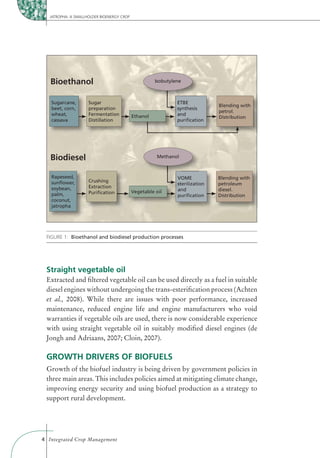
    Figure 1 illustrates the basic processes of converting plants to transport
fuels.


                                                                   Vol. 8–2010 3
JATROPHA: A SMALLHOLDER BIOENERGY CROP


   Bioethanol                                         Isobutylene


   Sugarcane,        Sugar                                     ETBE
                                                                               Blending with
   beet, corn,       preparation                               synthesis
                                                                               petrol.
   wheat,            Fermentation           Ethanol            and
                                                                               Distribution
   cassava           Distillation                              purification


   Biodiesel                                          Methanol


   Rapeseed,                                                   VOME            Blending with
   sunflower,         Crushing
                                                               sterilization   petroleum
   soybean,          Extraction
                                            Vegetable oil      and             diesel.
   palm,             Purification
                                                               purification     Distribution
   coconut,
   jatropha


 FIGURE 1: Bioethanol and biodiesel production processes


 Straight vegetable oil
 Extracted and filtered vegetable oil can be used directly as a fuel in suitable
 diesel engines without undergoing the trans-esterification process (Achten
 et al., 2008). While there are issues with poor performance, increased
 maintenance, reduced engine life and engine manufacturers who void
 warranties if vegetable oils are used, there is now considerable experience
 with using straight vegetable oil in suitably modified diesel engines (de
 Jongh and Adriaans, 2007; Cloin, 2007).

 GROWTH DRIVERS OF BIOFUELS
 Growth of the biofuel industry is being driven by government policies in
 three main areas. This includes policies aimed at mitigating climate change,
 improving energy security and using biofuel production as a strategy to
 support rural development.


4 Integrated Crop Management
INTRODUCTION


     Mandates and targets for inclusion of biofuels in petrol and diesel,
together with subsidies and border protection in the form of import
tariffs and quotas, are the means by which governments provide the
impetus to drive biofuel growth. The United States of America (USA)
leads in production-related subsidies while other countries, including the
European Union (EU) and Brazil, largely use tax exemptions as the policy
instrument for the promotion of biofuels.

Climate change
The need to slow or reverse global warming is now widely accepted. This
requires reduction of greenhouse gas (GHG) emissions, especially reduction
of carbon dioxide emissions. Using cultivated and non-domesticated plants
for energy needs instead of fossilized plant remains such as mineral oil
and coal reduces the net addition of CO2 to the atmosphere. In addition,
biodiesel produces fewer particulates, hydrocarbons, nitrogen oxides and
sulphur dioxides than mineral diesel and therefore reduces combustion
and vehicle exhaust pollutants that are harmful to human health.

Energy security
The search for renewable energy is being driven by volatile crude oil
prices and the perceived threat to national security of over-dependence on
foreign supplies. Crude oil prices are likely to increase over the long term
as fossil reserves diminish and global demand increases, particularly in the
newly emerging economies of Asia and Latin America.
    However, the potential of biofuels to enhance energy security is
limited. Globally, the huge volume of biofuels required to substitute
for fossil fuels is beyond the capacity of agriculture with present day
technology. For example in 2006/7, the USA used 20 percent of its maize
harvest for ethanol production, which replaced only three percent of its
petrol consumption (World Bank, 2008). More significant displacement
of fossil fuels will be likely with second and third generation biofuels
(SOFA, 2008).

Rural development
Government policy in support of rural development, the third main
driver of biofuel growth, has been enabled by the large demand for


                                                                 Vol. 8–2010 5
JATROPHA: A SMALLHOLDER BIOENERGY CROP


 biofuel feedstocks and the import substitution potential of biofuels. In
 OECD countries, biofuels are seen as a new market opportunity due to
 their ability to absorb surplus agricultural production while maintaining
 productive capacity in the rural sector. In developing countries, biofuels
 can contribute to rural development in three main areas: employment
 creation, income generation and by replacing traditional biomass, which
 is an inefficient and unsustainable energy resource, with modern and
 sustainable forms of bioenergy.
      Economies of scale and the vertical integration required for biofuel
 production allow little scope for small farmers to benefit. This is particularly
 true in bioethanol production and will be even more so with second- and
 third-generation biofuels, unless specific efforts are made to include small
 farmers in biofuel production schemes. There is more potential for biodiesel
 to be produced on a smaller scale, although maintaining consistent quality
 standards will be a problem. Small-scale production of straight vegetable
 oil requires the least economies of scale and has the greatest potential to
 benefit small farmers and rural development.


 THE IMPORTANCE OF THE TRANSPORT SECTOR
 Transportation is responsible for some 30 percent of current global
 energy usage, practically all in the form of diesel or petrol. Using current
 technology, biofuels offer the most convenient renewable alternative
 to fossil transport fuels since they require the fewest changes to the
 distribution infrastructure. Biofuels produced in sufficient volume
 could make a significant impact on global warming since it is estimated
 that transport accounts for 21 percent of total greenhouse gas emissions
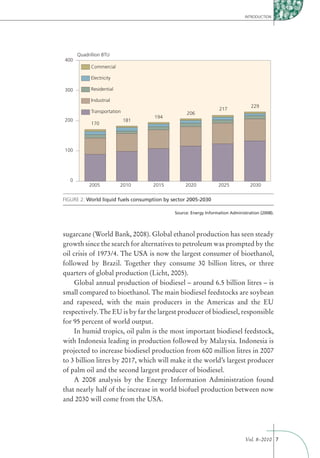
 (Watson et al., 1996). Consumption of total liquid fuels will grow by more
 than a third during the period 2005 to 2030 and, as Figure 2 illustrates,
 nearly three quarters of this increased demand is expected to come from
 the transport sector.

 PRODUCTION AND CONSUMPTION
 Bioethanol is the biofuel most widely used for transportation worldwide.
 The global annual production of fuel ethanol is around 40 billion litres, of
 which 90 percent is produced by the USA from maize and by Brazil from


6 Integrated Crop Management
INTRODUCTION


      Quadrillion BTU
400
            Commercial

            Electricity

300         Residential

            Industrial
                                                                                  229
                                                                  217
            Transportation                        206
                                     194
200                          181
            170


100


  0
           2005           2010      2015          2020            2025            2030


FIGURE 2: World liquid fuels consumption by sector 2005-2030

                                             Source: Energy Information Administration (2008).


sugarcane (World Bank, 2008). Global ethanol production has seen steady
growth since the search for alternatives to petroleum was prompted by the
oil crisis of 1973/4. The USA is now the largest consumer of bioethanol,
followed by Brazil. Together they consume 30 billion litres, or three
quarters of global production (Licht, 2005).
    Global annual production of biodiesel – around 6.5 billion litres – is
small compared to bioethanol. The main biodiesel feedstocks are soybean
and rapeseed, with the main producers in the Americas and the EU
respectively. The EU is by far the largest producer of biodiesel, responsible
for 95 percent of world output.
    In humid tropics, oil palm is the most important biodiesel feedstock,
with Indonesia leading in production followed by Malaysia. Indonesia is
projected to increase biodiesel production from 600 million litres in 2007
to 3 billion litres by 2017, which will make it the world’s largest producer
of palm oil and the second largest producer of biodiesel.
    A 2008 analysis by the Energy Information Administration found
that nearly half of the increase in world biofuel production between now
and 2030 will come from the USA.


                                                                               Vol. 8–2010 7
JATROPHA: A SMALLHOLDER BIOENERGY CROP


 THE IMPACTS OF BIOFUELS AND THEIR
 SUSTAINABILITY
 Quantifying how biofuels reduce GHG emissions and how energy
 efficient they are requires life-cycle analyses (LCAs). LCAs call for a great
 deal of data and, ideally, take full account of all stages of the production
 and use of a biofuel, including the GHG emissions and energy efficiencies
 associated with the resources required for its production. While a fully
 comprehensive LCA is not yet available, Figure 3 presents a limited LCA
 of jatropha.
     Work in this area shows that the life-cycle energy balance improves
 and global warming potential decreases when cultivation is less intensive,
 particularly with less fertilizer and less irrigation, and if the end product
 is straight vegetable oil rather than biodiesel. The energy-efficient use
 of the by-products also significantly improves the sustainability and
 environmental impact of biofuels. However, without plant nutrient
 management, vegetable oil yields and production will decline – indicating
 a trade-off between low cultivation intensity and productivity.
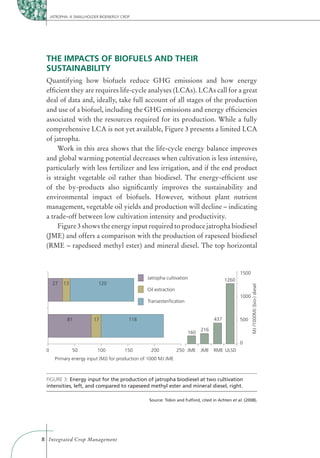
     Figure 3 shows the energy input required to produce jatropha biodiesel
 (JME) and offers a comparison with the production of rapeseed biodiesel
 (RME – rapedseed methyl ester) and mineral diesel. The top horizontal


                                                                                                 1500
                                                 Jatropha cultivation                     1260
      27   13               120
                                                                                                        MJ /1000MJ (bio-) diesel


                                                 Oil extraction
                                                                                                 1000
                                                 Transesterification


             81          17               118                                       437          500

                                                                             216
                                                                      160

                                                                                                 0
 0              50         100          150        200            250 JME    JME RME ULSD
       Primary energy input (MJ) for production of 1000 MJ JME


 FIGURE 3: Energy input for the production of jatropha biodiesel at two cultivation
 intensities, left, and compared to rapeseed methyl ester and mineral diesel, right.

                                                  Source: Tobin and Fulford, cited in Achten et al. (2008).


8 Integrated Crop Management
INTRODUCTION


bar, which shows the energy required to produce JME at low cultivation
intensity, illustrates that the energy used in cultivation is 17 percent of the
total energy input. The lower bar illustrates a higher cultivation intensity,
in which cultivation requires 38 percent of the total energy input. The
vertical bars to the right show these energy efficiencies for jatropha
against the poorer efficiencies of producing biodiesel from rapeseed and
for producing mineral ultra low sulphur diesel (ULSD).
     However, these analyses do not account for nitrous oxide (N2O)
emissions that result from nitrogen (N) fertilization. N2O is a gas with
a very high global warming potential. Furthermore, it should be noted
that clearing natural vegetation to plant jatropha has a negative effect on
the GHG balance. Fargione et al. (2008) found that converting rainforest,
peatlands, savannahs or grasslands to the growing of biofuel crops
releases 17 to 420 times more CO2 than the reductions that occur when
these biofuels replace fossil fuels. This underscores the fact that growing
jatropha on degraded wastelands with minimal fertilizers and irrigation
will have the most positive environmental impact.
     Biofuel production also impacts the environment through its effect
on water resources and biodiversity. Declining availability of water
for irrigation, most notably in India and China, necessitates using the
most water-efficient biofuel crops and cropping systems for long-
term sustainability. The use of degraded land, conservation agriculture
techniques with minimal soil disturbance and permanent soil cover,
intercropping and agroforestry systems will lessen negative environmental
impact. Biodiversity will be threatened by large-scale monocropping of
exotic species.
     The main social impacts of biofuels are in the areas of food security,
poverty, employment and access to land. Large-scale biofuel schemes –
those that require employed labour – have the potential to reduce access to
land where land tenure systems are weak, and people may become worse
off if there are few checks and controls on employment conditions.
     Using food crops for biofuels drives up prices. This means that biofuels
are likely to increase the incidence and depth of poverty by making food
more costly for net food buyers who account for more than half of the rural
poor in developing countries (World Bank, 2008). Certainly in the short term,
the majority of poor people will be made poorer by higher food prices.


                                                                    Vol. 8–2010 9
JATROPHA: A SMALLHOLDER BIOENERGY CROP


      However, biofuels may also present a significant economic opportunity
  for the rural poor who mostly rely on agriculture for their livelihoods.
  Biofuel demand can reverse the long-term decline in real agricultural
  prices. It is an opportunity for greater investment in agriculture that
  can lead to higher productivity in industrial crops and food crops, and
  increased rural employment.

  ENERGY POVERTY AND BIOENERGY IN POOR
  SOCIETIES
  The link between poverty alleviation and energy provision makes it critical
  to consider both when looking toward rural development. Availability
  of local energy and farm power is fundamental to intensifying agriculture,
  and agricultural development is essential to poverty alleviation. There is a
  growing consensus among policy-makers that energy is central to reducing
  poverty and hunger, improving health, increasing literacy and education, and
  improving the lives of women and children. Energy pervades all aspects of
  development – it creates healthier cooking environments, extends work and
  study hours through the provision of electric light, provides power in remote
  regions to drive cellular communication equipment, and increases labour
  productivity and agricultural output by making mechanization possible.
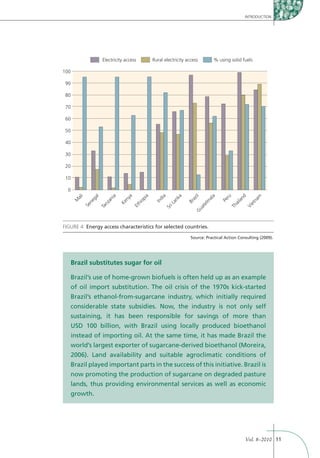
       Energy poverty is widespread in the developing world but, as shown
  in Figure 4, large differences exist among countries. More emphasis could
  be put on bioenergy as a solution to the needs of the 1.6 billion people
  who lack access to electricity and on its potential to improve the lives of
  the 2.4 billion who use traditional biomass (wood fuels, agricultural by-
  products and dung) for their energy needs. Traditional biomass accounts
  for 90 percent of energy consumption in poor countries but is often
  unhealthy, inefficient and environmentally unsustainable.
       Two-thirds of the low-income food-deficit countries (LIFDCs) for
  which data exist are also energy deficient, with 25 of the 47 poorest countries
  totally dependent on imported fuels. These countries use much of their
  available funds to import oil with little left to support economic growth.
       Oil-importing poor countries have been hit hardest by higher oil prices
  that have worsened their balance of payments. Biofuels development
  could improve their foreign exchange reserves, either by substituting for
  oil imports or by generating revenues through biofuel exports.


10 Integrated Crop Management
INTRODUCTION


                         Electricity access            Rural electricity access         % using solid fuels

100

 90

 80

 70

 60

 50

 40

 30

 20

 10

  0
          i


                    l


                               a


                                         a


                                                  ia


                                                           a

                                                                    ka


                                                                            il


                                                                                       a


                                                                                             ru

                                                                                                      nd


                                                                                                                m
      al


                   ga


                                                                           az
                               ni


                                     ny


                                                         di


                                                                                       al
                                              op


                                                                                                            na
                                                                                            Pe
      M


                                                                an


                                                                                                   la
                                                                                  lm
               ne


                          za


                                                        In


                                                                         Br
                                    Ke


                                             hi


                                                                                                  ai


                                                                                                           et
                                                               iL
                           n


                                                                                  te
              Se


                                                                                                 Th
                                             Et


                                                                                                           Vi
                        Ta


                                                              Sr


                                                                                ua
                                                                              G


FIGURE 4: Energy access characteristics for selected countries.

                                                                           Source: Practical Action Consulting (2009).


   Brazil substitutes sugar for oil

   Brazil’s use of home-grown biofuels is often held up as an example
   of oil import substitution. The oil crisis of the 1970s kick-started
   Brazil’s ethanol-from-sugarcane industry, which initially required
   considerable state subsidies. Now, the industry is not only self
   sustaining, it has been responsible for savings of more than
   USD 100 billion, with Brazil using locally produced bioethanol
   instead of importing oil. At the same time, it has made Brazil the
   world’s largest exporter of sugarcane-derived bioethanol (Moreira,
   2006). Land availability and suitable agroclimatic conditions of
   Brazil played important parts in the success of this initiative. Brazil is
   now promoting the production of sugarcane on degraded pasture
   lands, thus providing environmental services as well as economic
   growth.


                                                                                                        Vol. 8–2010 11
JATROPHA: A SMALLHOLDER BIOENERGY CROP


      However, addressing energy poverty in remote rural areas requires
  more than relying on biofuel crop production to raise incomes. There is
  a need to have sustainable systems of biofuel production, processing and
  simple utilization technology in place.


  JATROPHA – GLOBAL AND REGIONAL PRODUCTION
  AND TRENDS
  The jatropha industry is in its very early stages, covering a global area
  estimated at some 900 000 ha. More than 85 percent of jatropha plantings
  are in Asia, chiefly Myanmar, India, China and Indonesia. Africa accounts
  for around 12 percent or approximately 120 000 ha, mostly in Madagascar
  and Zambia, but also in Tanzania and Mozambique. Latin America has
  approximately 20 000 ha of jatropha, mostly in Brazil.
      The area planted to jatropha is projected to grow to 4.72 million ha
  by 2010 and 12.8 million ha by 2015. By then, Indonesia is expected to be
  the largest producer in Asia with 5.2 million ha, Ghana and Madagascar
  together will have the largest area in Africa with 1.1 million ha, and Brazil
  is projected to be the largest producer in Latin America with 1.3 million
  ha (Gexsi, 2008).


12 Integrated Crop Management
CHAPTER 2
 Jatropha curcas L.


ORIGIN AND SPREAD
Jatropha is believed to have been spread by Portuguese seafarers from
its centre of origin in Central America and Mexico via Cape Verde and
Guinea Bissau to other countries in Africa and Asia. It is now widespread
throughout the tropics and sub-tropics.
     Until recently, jatropha had economic importance in Cape Verde. Since
the first half of the nineteenth century, with its ability to grow on poor
soils with low rainfall, it could be exploited for oilseed production. Cape
Verde exported about 35 000 tonnes of jatropha seeds per year to Lisbon.
Along with Madagascar, Benin and Guinea, it also exported jatropha seeds
to Marseille where oil was extracted for soap production. However, this
trade declined in the 1950s with the development of cheaper synthetic
detergents and, by the 1970s, the trade in jatropha oil had disappeared
(Wiesenhütter, 2003; Henning, 2004a).
     In the past, jatropha oil was used for lighting lamps (Gübitz et al., 1998).
Today, rural communities continue to use it for its medicinal value and for
local soap production. India and many countries in Africa use the jatropha
plant as a living hedge to keep out grazing livestock. Jatropha is planted in
Madagascar and Uganda to provide physical support for vanilla plants.
     Jatropha’s potential as a petroleum fuel substitute has long been
recognized. It was used during the Second World War as a diesel substitute
in Madagascar, Benin and Cape Verde, while its glycerine by-product was
valuable for the manufacture of nitro-glycerine.


                                                                      Vol. 8–2010 13
JATROPHA: A SMALLHOLDER BIOENERGY CROP


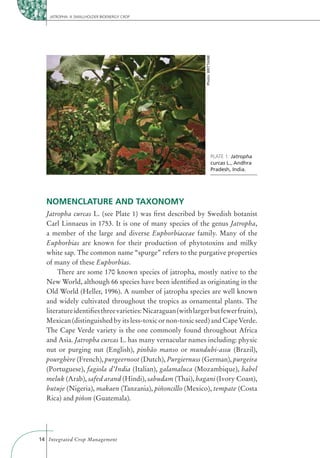
                                                              Photo: BRITTAINE
                                                                                 PLATE 1: Jatropha
                                                                                 curcas L., Andhra
                                                                                 Pradesh, India.


  NOMENCLATURE AND TAXONOMY
  Jatropha curcas L. (see Plate 1) was first described by Swedish botanist
  Carl Linnaeus in 1753. It is one of many species of the genus Jatropha,
  a member of the large and diverse Euphorbiaceae family. Many of the
  Euphorbias are known for their production of phytotoxins and milky
  white sap. The common name ā€œspurgeā€ refers to the purgative properties
  of many of these Euphorbias.
       There are some 170 known species of jatropha, mostly native to the
  New World, although 66 species have been identified as originating in the
  Old World (Heller, 1996). A number of jatropha species are well known
  and widely cultivated throughout the tropics as ornamental plants. The
  literature identifies three varieties: Nicaraguan (with larger but fewer fruits),
  Mexican (distinguished by its less-toxic or non-toxic seed) and Cape Verde.
  The Cape Verde variety is the one commonly found throughout Africa
  and Asia. Jatropha curcas L. has many vernacular names including: physic
  nut or purging nut (English), pinhão manso or mundubi-assu (Brazil),
  pourghĆØre (French), purgeernoot (Dutch), Purgiernuss (German), purgeira
  (Portuguese), fagiola d’India (Italian), galamaluca (Mozambique), habel
  meluk (Arab), safed arand (Hindi), sabudam (Thai), bagani (Ivory Coast),
  butuje (Nigeria), makaen (Tanzania), piƱoncillo (Mexico), tempate (Costa
  Rica) and piƱon (Guatemala).


14 Integrated Crop Management
JATROPHA CURCAS L.


DESCRIPTION
Jatropha, a succulent perennial shrub or small tree, can attain heights of
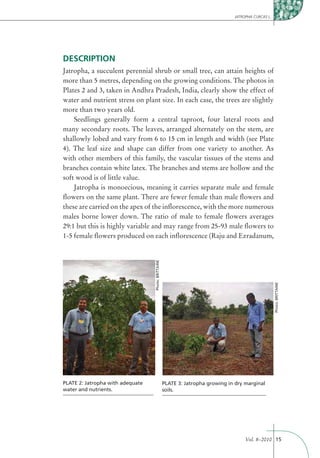
more than 5 metres, depending on the growing conditions. The photos in
Plates 2 and 3, taken in Andhra Pradesh, India, clearly show the effect of
water and nutrient stress on plant size. In each case, the trees are slightly
more than two years old.
    Seedlings generally form a central taproot, four lateral roots and
many secondary roots. The leaves, arranged alternately on the stem, are
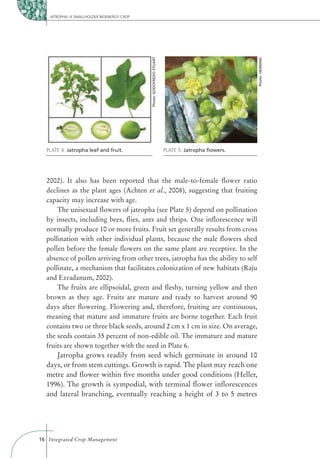
shallowly lobed and vary from 6 to 15 cm in length and width (see Plate
4). The leaf size and shape can differ from one variety to another. As
with other members of this family, the vascular tissues of the stems and
branches contain white latex. The branches and stems are hollow and the
soft wood is of little value.
    Jatropha is monoecious, meaning it carries separate male and female
flowers on the same plant. There are fewer female than male flowers and
these are carried on the apex of the inflorescence, with the more numerous
males borne lower down. The ratio of male to female flowers averages
29:1 but this is highly variable and may range from 25-93 male flowers to
1-5 female flowers produced on each inflorescence (Raju and Ezradanum,
                                  Photo: BRITTAINE


                                                                                                      Photo: BRITTAINE


PLATE 2: Jatropha with adequate                      PLATE 3: Jatropha growing in dry marginal
water and nutrients.                                 soils.


                                                                                      Vol. 8–2010 15
JATROPHA: A SMALLHOLDER BIOENERGY CROP


                                             Photo: GODOFREDO STUART


                                                                                                   Photo: HENNING
  PLATE 4: Jatropha leaf and fruit.                                    PLATE 5: Jatropha flowers.


  2002). It also has been reported that the male-to-female flower ratio
  declines as the plant ages (Achten et al., 2008), suggesting that fruiting
  capacity may increase with age.
      The unisexual flowers of jatropha (see Plate 5) depend on pollination
  by insects, including bees, flies, ants and thrips. One inflorescence will
  normally produce 10 or more fruits. Fruit set generally results from cross
  pollination with other individual plants, because the male flowers shed
  pollen before the female flowers on the same plant are receptive. In the
  absence of pollen arriving from other trees, jatropha has the ability to self
  pollinate, a mechanism that facilitates colonization of new habitats (Raju
  and Ezradanum, 2002).
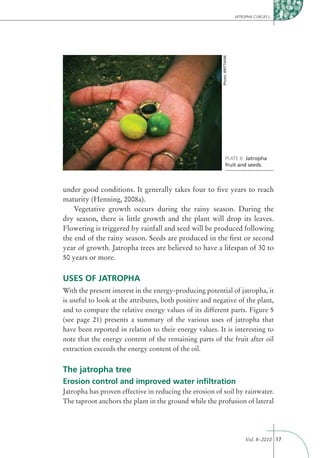
      The fruits are ellipsoidal, green and fleshy, turning yellow and then
  brown as they age. Fruits are mature and ready to harvest around 90
  days after flowering. Flowering and, therefore, fruiting are continuous,
  meaning that mature and immature fruits are borne together. Each fruit
  contains two or three black seeds, around 2 cm x 1 cm in size. On average,
  the seeds contain 35 percent of non-edible oil. The immature and mature
  fruits are shown together with the seed in Plate 6.
      Jatropha grows readily from seed which germinate in around 10
  days, or from stem cuttings. Growth is rapid. The plant may reach one
  metre and flower within five months under good conditions (Heller,
  1996). The growth is sympodial, with terminal flower inflorescences
  and lateral branching, eventually reaching a height of 3 to 5 metres


16 Integrated Crop Management
JATROPHA CURCAS L.


                                                          Photo: BRITTAINE
                                                                   PLATE 6: Jatropha
                                                                   fruit and seeds.


under good conditions. It generally takes four to five years to reach
maturity (Henning, 2008a).
    Vegetative growth occurs during the rainy season. During the
dry season, there is little growth and the plant will drop its leaves.
Flowering is triggered by rainfall and seed will be produced following
the end of the rainy season. Seeds are produced in the first or second
year of growth. Jatropha trees are believed to have a lifespan of 30 to
50 years or more.

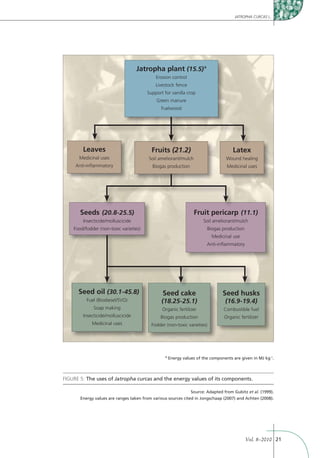
USES OF JATROPHA
With the present interest in the energy-producing potential of jatropha, it
is useful to look at the attributes, both positive and negative of the plant,
and to compare the relative energy values of its different parts. Figure 5
(see page 21) presents a summary of the various uses of jatropha that
have been reported in relation to their energy values. It is interesting to
note that the energy content of the remaining parts of the fruit after oil
extraction exceeds the energy content of the oil.


The jatropha tree
Erosion control and improved water infiltration
Jatropha has proven effective in reducing the erosion of soil by rainwater.
The taproot anchors the plant in the ground while the profusion of lateral


                                                                                  Vol. 8–2010 17
JATROPHA: A SMALLHOLDER BIOENERGY CROP


  and adventitious roots near the surface binds the soil and keeps it from
  being washed out by heavy rains. Jatropha also improves rainwater
  infiltration when planted in lines to form contour bunds. Furthermore,
  jatropha hedges reduce wind erosion by lessening wind velocity and
  binding the soil with their surface roots (Henning, 2004a).


                                                                                                              Photo: GOERGEN
                                             Photo: MALI-FOLKECENTRE


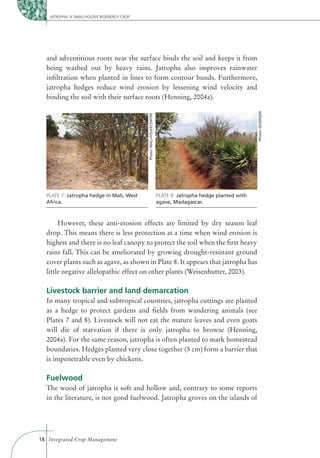
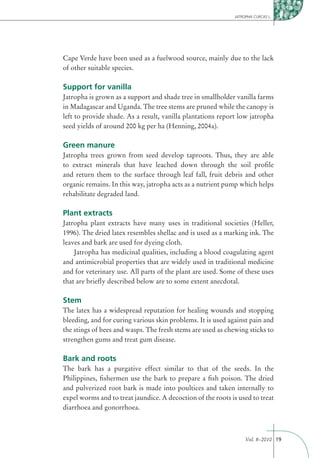
  PLATE 7: Jatropha hedge in Mali, West                                PLATE 8: Jatropha hedge planted with
  Africa.                                                              agave, Madagascar.


       However, these anti-erosion effects are limited by dry season leaf
  drop. This means there is less protection at a time when wind erosion is
  highest and there is no leaf canopy to protect the soil when the first heavy
  rains fall. This can be ameliorated by growing drought-resistant ground
  cover plants such as agave, as shown in Plate 8. It appears that jatropha has
  little negative allelopathic effect on other plants (Weisenhutter, 2003).

  Livestock barrier and land demarcation
  In many tropical and subtropical countries, jatropha cuttings are planted
  as a hedge to protect gardens and fields from wandering animals (see
  Plates 7 and 8). Livestock will not eat the mature leaves and even goats
  will die of starvation if there is only jatropha to browse (Henning,
  2004a). For the same reason, jatropha is often planted to mark homestead
  boundaries. Hedges planted very close together (5 cm) form a barrier that
  is impenetrable even by chickens.

  Fuelwood
  The wood of jatropha is soft and hollow and, contrary to some reports
  in the literature, is not good fuelwood. Jatropha groves on the islands of


18 Integrated Crop Management
JATROPHA CURCAS L.


Cape Verde have been used as a fuelwood source, mainly due to the lack
of other suitable species.

Support for vanilla
Jatropha is grown as a support and shade tree in smallholder vanilla farms
in Madagascar and Uganda. The tree stems are pruned while the canopy is
left to provide shade. As a result, vanilla plantations report low jatropha
seed yields of around 200 kg per ha (Henning, 2004a).

Green manure
Jatropha trees grown from seed develop taproots. Thus, they are able
to extract minerals that have leached down through the soil profile
and return them to the surface through leaf fall, fruit debris and other
organic remains. In this way, jatropha acts as a nutrient pump which helps
rehabilitate degraded land.

Plant extracts
Jatropha plant extracts have many uses in traditional societies (Heller,
1996). The dried latex resembles shellac and is used as a marking ink. The
leaves and bark are used for dyeing cloth.
    Jatropha has medicinal qualities, including a blood coagulating agent
and antimicrobial properties that are widely used in traditional medicine
and for veterinary use. All parts of the plant are used. Some of these uses
that are briefly described below are to some extent anecdotal.

Stem
The latex has a widespread reputation for healing wounds and stopping
bleeding, and for curing various skin problems. It is used against pain and
the stings of bees and wasps. The fresh stems are used as chewing sticks to
strengthen gums and treat gum disease.

Bark and roots
The bark has a purgative effect similar to that of the seeds. In the
Philippines, fishermen use the bark to prepare a fish poison. The dried
and pulverized root bark is made into poultices and taken internally to
expel worms and to treat jaundice. A decoction of the roots is used to treat
diarrhoea and gonorrhoea.


                                                                  Vol. 8–2010 19
JATROPHA: A SMALLHOLDER BIOENERGY CROP


  Leaves
  The leaves also have a purgative effect. Applied to wounds and in decoction,
  they are used against malaria and to treat hypertension. The leaf sap is
  used externally to treat haemorrhoids. A hot water extract of the leaves is
  taken orally to accelerate secretion of milk in women after childbirth. A
  decoction is used against cough and as an antiseptic following childbirth.

  Seeds
  The oil-rich seeds and seed oil are used as a purgative and to expel internal
  parasites. The oil is applied internally and externally to induce abortion,
  and externally to treat rheumatic conditions and a variety of skin infections.
  The oil is also an ingredient in hair conditioners.

  Fruits and seeds
  A full account of the uses of the harvested fruit is given in Chapter 4.
  Besides the current interest in the use of the seed oil for biofuel, it is also
  used for making soap on a small scale and for illumination. In China,
  the oil is boiled with iron oxide and used to produce furniture varnish.
  Extracts of the seed oil have been found effective against a number of crop
  pests and snail vectors of schistosomiasis.


  TOXICITY AND INVASIVENESS
  Toxicity
  Although the seeds are considered the most toxic part of the plant, all
  parts of the jatropha plant contain toxins such as phorbol esters, curcins
  and trypsin inhibitors (Jongschaap, 2007). Varieties commonly found
  growing in Africa and Asia have seeds that are toxic to humans and
  animals, whereas some varieties found in Mexico and Central America are
  known to be non-toxic.
       The poisonous and anti-nutrient properties of the seeds are exploited
  in traditional medicine for de-worming and as a purgative. Just one to three
  seeds can produce toxic symptoms in humans, mainly those associated with
  gastro-intestinal irritation. There is acute abdominal pain and a burning
  sensation in the throat shortly after ingestion of the seeds, followed by
  nausea, vomiting and diarrhoea. Children are more susceptible. There is


20 Integrated Crop Management
JATROPHA CURCAS L.


                                   Jatropha plant (15.5) a
                                            Erosion control
                                            Livestock fence
                                        Support for vanilla crop
                                             Green manure
                                               Fuelwood


        Leaves                            Fruits (21.2)                              Latex
      Medicinal uses                     Soil ameliorant/mulch                    Wound healing
     Anti-inflammatory                      Biogas production                      Medicinal uses


       Seeds (20.8-25.5)                                         Fruit pericarp (11.1)
        Insecticide/molluscicide                                      Soil ameliorant/mulch
    Food/fodder (non-toxic varieties)                                   Biogas production
                                                                          Medicinal use
                                                                        Anti-inflammatory


      Seed oil (30.1-45.8)                      Seed cake                       Seed husks
          Fuel (Biodiesel/SVO)                 (18.25-25.1)                      (16.9-19.4)
             Soap making                        Organic fertilizer              Combustible fuel
        Insecticide/molluscicide               Biogas production                 Organic fertilizer
             Medicinal uses               Fodder (non-toxic varieties)


                                                 a
                                                     Energy values of the components are given in MJ kg-1.


FIGURE 5: The uses of Jatropha curcas and the energy values of its components.

                                                                Source: Adapted from Gubitz et al. (1999).
       Energy values are ranges taken from various sources cited in Jongschaap (2007) and Achten (2008).


                                                                                            Vol. 8–2010 21
JATROPHA: A SMALLHOLDER BIOENERGY CROP


  no known antidote, but case studies indicate that following accidental
  ingestion, often by children, full recovery is usual (IPCS, n.d.).
       Toxicity is chiefly due to the presence of phorbol esters, as inferred
  from the fact that non-toxic Mexican jatropha varieties are deficient in these
  compounds. Phorbol esters are known to be co-carcinogenic, meaning that
  they are tumour promoting in the presence of other carcinogenic substances.
  It has been reported that phorbol esters decompose rapidly – within six days
  – as they are sensitive to light, elevated temperatures and atmospheric oxygen
  (Rug and Ruppel, 2000, cited Jongschaap, 2007), but there is no supporting
  data for this. The decomposition of these and other toxic compounds in the
  field needs further evaluation before insecticide or molluscicide oil extracts
  can be widely used, or before the widespread application of seed cake as
  fertilizer, particularly on edible crops, given that there is no information as to
  whether such compounds are taken up by plants.
       Curcin has been described as a major toxic component of jatropha,
  similar to ricin which is a well known poison. Yet, experiments on mice
  suggest that curcin is, in fact, innocuous and has a median lethal dose
  (LD50) some 1000 times that of ricin. Curcin is commonly found in edible
  plants (King et al., 2009).
       For toxic varieties of jatropha, all the products, including the oil, biodiesel
  and the seed cake, are toxic. Laboratory-scale detoxification of the seed cake
  to render it usable as a livestock feed is possible, but it is not straightforward
  and is unlikely to be economically feasible on a small scale.
       Mexico has varieties of Jatropha curcas that are not poisonous
  and, in fact, Gubitz (1999) reported that wildlife and livestock feed
  on the seeds, and that traditional Mexican dishes use the boiled and
  roasted seeds. Using these varieties in future breeding programmes is
  the most likely route to non-toxic jatropha products.

  Invasiveness
  The fact that jatropha can grow and colonize areas that are inhospitable
  to other plants makes it a potentially invasive species. While some field
  observers have stated that the plant is not invasive (Henning, 2004a),
  Australia’s Northern Territory and Western Australia have declared it a
  noxious weed and have biological control programmes in place for its close
  relative Jatropha gossypiifolia. South Africa bans commercial production


22 Integrated Crop Management
JATROPHA CURCAS L.


of Jatropha curcas due to these environmental concerns. Brazil, Fiji,
Honduras, India, Jamaica, Panama, Puerto Rico and El Salvador classify
it as a weed.
     The Global Invasive Species Programme (GISP) has developed a list of
species being considered as biofuel feedstocks that are potentially invasive.
It also has compiled the following recommendations for governments
considering development of biofuels (GISP, 2008).
     Information gathering: check national noxious weed lists, databases
     and Web sites for references relevant to the countries where biofuel
     developments are proposed.
     Risk assessment: use formal risk assessment protocols to evaluate
     the risk of invasion by species in biofuel proposals, with particular
     attention and support to countries with less experience in addressing
     biological invasions or screening for impacts on biodiversity.
     Benefit/cost analysis: conduct market studies and present business
     plans that show real benefits for the proposed activities before funds
     are made available, as there are many known cases of introduced
     species that have never achieved commercial value and, instead, have
     become actual or potential problems.
     Selection of native or low-risk species: create incentives for the
     development and use of native and/or non-native species that pose the
     lowest risks to biodiversity.
     Risk management: develop monitoring and contingency plans, such
     as control in case of escape, in proposals for biofuels, particularly
     biodiesel. Invasive species that are normally dispersed by animals and
     other active means must not be used without viable and well-tested
     control procedures and contingency plan for escapes.
     Certification/accreditation processes: evaluate project proposals
     according to criteria and/or certification schemes for sustainable
     biofuels development. A number of such processes are underway at
     the national and international levels.

    Pest Risk Analysis (PRA) and Pest Risk Management (PRM) are
tools developed by the European and Mediterranean Plant Protection
Organization (EMPPO) to ā€œevaluate biological or other scientific and
economic evidence to determine whether a pest should be regulated and


                                                                   Vol. 8–2010 23
JATROPHA: A SMALLHOLDER BIOENERGY CROP


  the strength of any phytosanitary measures to be taken against it.ā€2 The
  EMPPO’s PRA is part of the International Standard for Phytosanitary
  Measures (ISPM) on PRA that has been developed in the International
  Plant Protection Convention (IPPC) framework.
      The strengths and weaknesses of jatropha are summarized in Boxes 1
  and 2 respectively.


      BOX 1. Jatropha – Strengths

            farming practices, for a high level of oil production per unit area in
            the subhumid tropical and subtropical environments.


            degraded and saline soils.


            oilseeds.


            recycling and dry season irrigated intercropping with short-term
            crops.


            good barrier hedge to protect crops.


            suitable for processing into biodiesel.


            and cooking stoves.


            as fertilizer, animal feed (non-toxic varieties) or biogas, and using
            fruit shells and seed husks for biogas and combustion.


            of soap, medicines and pesticides.


            makes production suited to remote areas.


            into plant breeding, which increases the likelihood of developing
            jatropha varieties with improved and stable oil yields.


  2
        See http://www.eppo.org/QUARANTINE/Pest_Risk_Analysis/PRA_intro.htm.


24 Integrated Crop Management
JATROPHA CURCAS L.


BOX 2. Jatropha - Weaknesses

   high yielding.


   sufficient water and nutrients, it has poor yields.


   most importantly for the reliable prediction of yield.


   which have not been identified sufficiently.


   than annual oilseed crops.


   optimistic, with high probability that some farmers may well lose
   interest before improved genotypes and agronomic practices are in
   place.


   which otherwise would add significant value.


   children and livestock.


   due to the poor synchronicity of fruiting.
                                                                        -
   tation monocrop, although not more so than other crops.


   in cool climates due to its viscosity, which is higher than rapeseed
   oil.


                                                                 Vol. 8–2010 25
Photo: FAIDUTTI
CHAPTER 3
 Jatropha cultivation


This chapter brings together available information on the factors required
for successful cultivation of jatropha for oil production. It describes climate
and soil requirements to guide site selection, followed by information on
best crop establishment and management practices. There is a lack of data
on oil yield under different conditions, but the section on seed yields
summarizes the information that is available.


CLIMATE
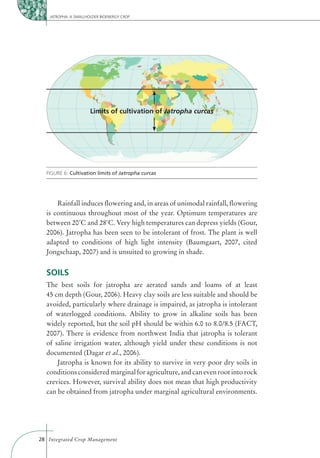
Jatropha grows in tropical and sub tropical regions, with cultivation limits at
30ĀŗN and 35ĀŗS. It also grows in lower altitudes of 0-500 metres above sea level
(see Figure 6). Jatropha is not sensitive to day length (flowering is independent
of latitude) and may flower at any time of the year (Heller, 1996).
     It is a succulent shrub that sheds its leaves during the dry season,
with deep roots that make it well suited to semi-arid conditions. While
jatropha can survive with as little as 250 to 300 mm of annual rainfall, at
least 600 mm are needed to flower and set fruit. The optimum rainfall
for seed production is considered between 1 000 and 1 500 mm (FACT,
2007), which corresponds to subhumid ecologies. While jatropha has been
observed growing with 3 000 mm of rainfall (Foidl, 1996, cited Achten,
2008), higher precipitation is likely to cause fungal attack and restrict
root growth in all but the most free-draining soils. Jatropha curcas is not
found in the more humid parts of its area of origin, Central America and
Mexico.


                                                                     Vol. 8–2010 27
JATROPHA: A SMALLHOLDER BIOENERGY CROP


                       Limits of cultivation of Jatropha curcas


  FIGURE 6: Cultivation limits of Jatropha curcas


      Rainfall induces flowering and, in areas of unimodal rainfall, flowering
  is continuous throughout most of the year. Optimum temperatures are
  between 20˚C and 28˚C. Very high temperatures can depress yields (Gour,
  2006). Jatropha has been seen to be intolerant of frost. The plant is well
  adapted to conditions of high light intensity (Baumgaart, 2007, cited
  Jongschaap, 2007) and is unsuited to growing in shade.


  SOILS
  The best soils for jatropha are aerated sands and loams of at least
  45 cm depth (Gour, 2006). Heavy clay soils are less suitable and should be
  avoided, particularly where drainage is impaired, as jatropha is intolerant
  of waterlogged conditions. Ability to grow in alkaline soils has been
  widely reported, but the soil pH should be within 6.0 to 8.0/8.5 (FACT,
  2007). There is evidence from northwest India that jatropha is tolerant
  of saline irrigation water, although yield under these conditions is not
  documented (Dagar et al., 2006).
      Jatropha is known for its ability to survive in very poor dry soils in
  conditions considered marginal for agriculture, and can even root into rock
  crevices. However, survival ability does not mean that high productivity
  can be obtained from jatropha under marginal agricultural environments.


28 Integrated Crop Management
JATROPHA CULTIVATION


    Being a perennial plant in seasonally dry climates, soil health
management under jatropha production would benefit from conservation
agriculture practices. This would result in minimum soil disturbance,
an organic mulch cover on the soil surface and legume cover crops as
intercrops.


PROPAGATION AND CROP ESTABLISHMENT
The selection of planting material should be from cuttings or seed that
have proven, over several seasons, to have high yield and seed oil content
under the same irrigation and fertilization conditions that are proposed
for the new plantation. Seed from high-yielding jatropha plants is not
generally available, due to the fact that the out-crossing seed selected from
productive plants may or may not result in high-yielding and high-quality
plants. Trees capable of producing more than 2 tonnes of dry seed per
ha with 30 percent seed oil content should be selected as source material
(Achten, 2008). Opinion is divided on the choice of seed or cuttings.
Heller (1996) considers the ability of seedlings to develop taproots to be
important, while R.K Henning (personal communication, 18 February
2009) sees cuttings as a better option because it enables production of
the best-yielding clones. The difficulty of obtaining sufficient cuttings is
a consideration. Nursery-raised seedlings using essentially wild varieties
probably account for the majority of jatropha planting to date.
    Heller (1996) found that cuttings of at least 30 mm diameter gave
earlier and higher initial yields than plants raised from seed, although little
or no yield difference was seen for later harvests. However, cuttings taken
from carefully chosen plants with higher yield potential would probably
continue to out yield seed raised plants. Raising plantlets from tissue
culture is being researched and protocols have been developed but, as it is
a latex-producing plant, the procedure is not straightforward. There are
no reports of tissue culture of jatropha being applied on a large scale.
    Heller (1996) found that nursery-raised plants from seed and cuttings
and direct planting of cuttings have a higher survival rate (more than
80 percent) than seeding directly in the field (less than 50 percent). A
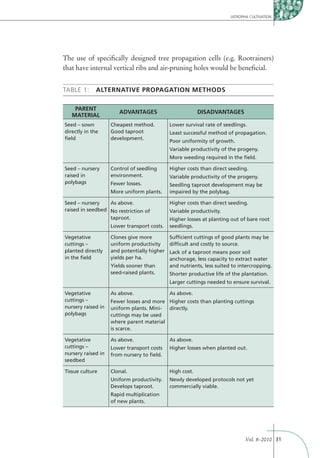
summary of the merits and demerits of different propagation methods is
given in Table 1 (see page 31).


                                                                     Vol. 8–2010 29
JATROPHA: A SMALLHOLDER BIOENERGY CROP


  Vegetative propagation using cuttings
  The advantage of using cuttings is their genetic uniformity, rapid
  establishment and early yield. The disadvantage is the scarcity of material,
  and the cost of harvesting, preparation, transport and planting of the
  woody stems, compared to seeds. A further disadvantage is that cuttings
  do not produce a taproot, meaning there is less capacity for the plant to
  reach soil water and nutrient reserves with correspondingly lower potential
  yields, although the effect of this, for different environments, has not yet
  been determined. The absence of a taproot makes for less stability on
  exposed windy sites, and cuttings compete more for water and nutrients
  with intercrops. Seedling-raised plants would be a better choice in this
  situation and for agroforestry systems. Poorer longevity may be expected
  for plantations established using cuttings (Heller, 1996).
      The survival rate improves with the length and thickness of the cutting.
  Recommendations for cutting length vary from 25 to 120 cm. Cuttings
  taken from the middle or lower parts of year-old branches show greater
  survival rates (Kaushik and Kumar, 2006, cited Achten, 2008). These can
  be inserted 10–20 cm into the soil in shaded nursery beds for bare root
  transplanting, planted into polyethylene bags or planted directly into their
  final planting positions. Rooting takes two to three months, meaning that
  cuttings should be planted ahead of the rainy season, so that rooting will
  coincide with the start of the rains. Experiments by Narin-Sombunsan
  and Stienswat (1983, cited Heller, 1996) showed that application of the
  rooting hormone IBA did not promote root formation, whereas rooting
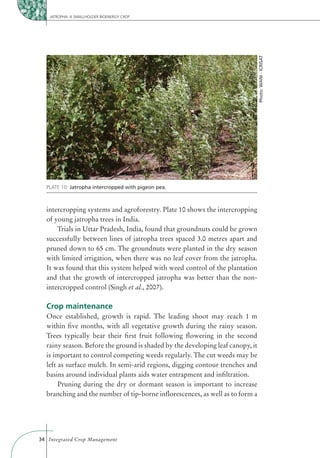
  was increased with aerated, well-drained rooting media. Mini-cuttings
  may be prepared by laying cuttings horizontally in rooting media and,
  when the nodes have sprouted and produced adventitious roots, cutting
  the stems at the internodes and planting them into polyethylene bags for
  further growth in the nursery before being planted out (Gour, 2006).

  Propagation from seed
  Pre-cultivation in nurseries, sown in either nursery beds or containers (see
  Plate 9), enables better germination and survival of seedlings through control
  over moisture, shade, soil, weeds, pests and diseases. Seeds should be sown
  three months before the start of the rains in polyethylene bags or tubes. The
  bags should be long enough to avoid unduly restricting taproot growth.


30 Integrated Crop Management
JATROPHA CULTIVATION


The use of specifically designed tree propagation cells (e.g. Rootrainers)
that have internal vertical ribs and air-pruning holes would be beneficial.


TABLE 1:      ALTERNATIVE PROPAGATION METHODS

    PARENT
                       ADVANTAGES                         DISADVANTAGES
   MATERIAL
                    Cheapest method.         Lower survival rate of seedlings.
directly in the     Good taproot             Least successful method of propagation.
field                development.
                                             Poor uniformity of growth.
                                             Variable productivity of the progeny.
                                             More weeding required in the field.

                    Control of seedling      Higher costs than direct seeding.
raised in           environment.             Variable productivity of the progeny.
polybags            Fewer losses.            Seedling taproot development may be
                    More uniform plants.     impaired by the polybag.

                  As above.                  Higher costs than direct seeding.
raised in seedbed No restriction of          Variable productivity.
                  taproot.                   Higher losses at planting out of bare root
                    Lower transport costs.   seedlings.

Vegetative          Clones give more         Sufficient cuttings of good plants may be
                    uniform productivity     difficult and costly to source.
planted directly    and potentially higher   Lack of a taproot means poor soil
in the field         yields per ha.           anchorage, less capacity to extract water
                    Yields sooner than       and nutrients, less suited to intercropping.
                    seed-raised plants.      Shorter productive life of the plantation.
                                             Larger cuttings needed to ensure survival.

Vegetative          As above.                As above.
                    Fewer losses and more Higher costs than planting cuttings
nursery raised in   uniform plants. Mini- directly.
polybags            cuttings may be used
                    where parent material
                    is scarce.

Vegetative          As above.                As above.
                    Lower transport costs    Higher losses when planted out.
nursery raised in   from nursery to field.
seedbed

Tissue culture      Clonal.                  High cost.
                    Uniform productivity.    Newly developed protocols not yet
                    Develops taproot.        commercially viable.
                    Rapid multiplication
                    of new plants.


                                                                              Vol. 8–2010 31
JATROPHA: A SMALLHOLDER BIOENERGY CROP


                                                                                Photo: MESSEMAKER
  PLATE 9: Jatropha seed nursery, Tanzania.


      The bags or cells should be filled with free-draining growing media
  containing organic matter (such as 1:1:1 sand-soil-manure or 1:1:2 sand-
  soil-compost) and well watered prior to sowing (Achten, 2008). Seeds
  should be taken from mature yellow or brown fruits and graded. Only
  the largest should be selected for sowing and any that do not sink in water
  should be discarded. Pre-treatment to soften or break the seed coat will
  enhance germination. In tests, pre-soaking in cow dung slurry for 12
  hours gave 96 percent germination compared to soaking in cold water or
  nicking the seed coat which gave around 72 percent (Achten et al., 2008).
  One seed per bag should be placed at 2–4 cm depth with the caruncle
  oriented downwards (Srimathi and Paramathma, 2006). The seeds should
  be kept well watered and will then germinate within 6–15 days. Seedlings
  may be planted out after two to three months, after reaching a height
  of 30–40 cm and before taproot development becomes overly restricted.
  Nursery shade should be gradually removed for hardening off the plants
  before they are transplanted to the field.


32 Integrated Crop Management
JATROPHA CULTIVATION


    Sowing into nursery beds with suitably prepared free-draining and
fertilized soil is a cheaper option that avoids expenditure on bags and
reduces transport and labour cost at transplanting. The downside is the
greater care needed to avoid damaging the roots and preventing the plants
from drying out during the lifting and transplanting operation.
    Direct seeding in the field should take place at the beginning of the
rainy season when the rain is assured. Timing is crucial for success. Seed
stored and dried for at least one month should be used to overcome seed
dormancy. The seeds should be planted 4–6 cm deep, with two per station,
and later thinned to one. Since 1 300 seeds weigh approximately 1 kg, the
seed rate for planting one ha (at 2 500 plants per ha) is about 4 kg (R.K.
Henning, personal communication, 10 May 2009).

Planting
Jatropha is planted at densities ranging from 1 100 to 2 500 plants per ha. Yield
per tree is likely to increase with wider spacing but with a decline in yield
per ha (Achten, 2008). Spacing decisions should be based on the environment,
i.e. how it affects competition among trees for water, light and nutrients.
Semi-arid, low-input systems should use wider spacing such as 3.0 x 2.0, 3.0
x 2.5 or 3.0 x 3.0 metres. Alternate planting in succeeding rows will minimize
mutual shading. In addition, consideration should be given to access. At least
2.5 m between trees allows easier passage for fruit pickers, while a 5-metre
alley at every fourth row facilitates access by carts.
     Planting holes of 30–45 cm wide and deep should be prepared and
organic matter incorporated before planting. An insecticide may be
included as a precaution against termites. The seedlings may require
irrigation for the first two to three months after planting.
     Where jatropha is being planted as a living hedge, cuttings of
60–120 cm length should be inserted between 5 and 25 cm apart and 20
cm into the ground. This should be done two to three months before the
onset of the rainy season.

Intercropping
While intercropping during the first five years of a jatropha plantation is
common practice, there have been few studies on intercrop yields, plant
spacing or optimal management practices. The same applies to permanent


                                                                       Vol. 8–2010 33
JATROPHA: A SMALLHOLDER BIOENERGY CROP


                                                                                Photo: WANI - ICRISAT
  PLATE 10: Jatropha intercropped with pigeon pea.


  intercropping systems and agroforestry. Plate 10 shows the intercropping
  of young jatropha trees in India.
      Trials in Uttar Pradesh, India, found that groundnuts could be grown
  successfully between lines of jatropha trees spaced 3.0 metres apart and
  pruned down to 65 cm. The groundnuts were planted in the dry season
  with limited irrigation, when there was no leaf cover from the jatropha.
  It was found that this system helped with weed control of the plantation
  and that the growth of intercropped jatropha was better than the non-
  intercropped control (Singh et al., 2007).

  Crop maintenance
  Once established, growth is rapid. The leading shoot may reach 1 m
  within five months, with all vegetative growth during the rainy season.
  Trees typically bear their first fruit following flowering in the second
  rainy season. Before the ground is shaded by the developing leaf canopy, it
  is important to control competing weeds regularly. The cut weeds may be
  left as surface mulch. In semi-arid regions, digging contour trenches and
  basins around individual plants aids water entrapment and infiltration.
       Pruning during the dry or dormant season is important to increase
  branching and the number of tip-borne inflorescences, as well as to form a


34 Integrated Crop Management
JATROPHA CULTIVATION


wide low-growing tree that is easier to harvest. The stem and branches may
be pinched out at six months to encourage the development of laterals and
the main stem cut back to 30–45 cm. The branch tips are pruned again at
the end of the first year. In the second and subsequent years, branches are
pruned by removing around two-thirds of their length. After ten years,
it is recommended to cut trees down to 45 cm stumps to improve yields.
Re-growth is rapid and trees will start bearing again within a year (Gour,
2006).
     Flowers require the presence of pollinating insects. Thus, it may be
beneficial to place hives for honey bees in the proximity.


PLANT NUTRITION
Jatropha is often described as having a low nutrient requirement because
it is adapted to growing in poor soils. However, growing a productive
crop requires correct fertilization and adequate rainfall or irrigation.
Equally, high levels of fertilizer and excessive irrigation can induce high
total biomass production at the expense of seed yield. Unfortunately,
there is insufficient data on response to fertilizer under different growing
conditions for it to be possible to make specific recommendations for
optimal crop nutrition.
     On wasteland in India, Ghosh et al. (2007) found that 3.0 tonnes per ha
of jatropha seed cake (also known as ā€œpressā€ cake), containing 3.2 percent
N, 1.2 percent P2O5 and 1.4 percent K2O, increased yields significantly
when applied to young plants – by +120 percent and +93 percent at two
different planting densities. A trial at the International Crops Research
Institute for the Semi-Arid Tropics (ICRISAT) in India showed increasing
yield with fertilization to an optimum level (T3), but that over-application
depressed yields (see Table 2).
     The optimum levels of inorganic fertilizers have been seen to vary
with the age of the tree (Achten, 2008). Site-specific fertilizer trials need
to be established for trees of different ages and over a number of seasons.
     An analysis of the nutrient value of harvested fruit indicates the
application rate of nutrients required to maintain soil fertility levels,
assuming all other biomass is retained in the field. From the nutrient
composition calculated by Jongschaap et al. (2007), the fruit equivalent of


                                                                   Vol. 8–2010 35
JATROPHA: A SMALLHOLDER BIOENERGY CROP


  TABLE 2:        EFFECT OF FERTILIZER LEVELS ON YIELD PARAMETERS
                  OF JATROPHA CURCAS AT ICRISAT, THREE YEARS
                  AFTER PLANTING (INDIA)


                                             TREATMENTS (GRAMS PER PLANT)
                                      T1           T2            T3           T4             T5
    Pods/plant                       97.1         90.1        131.4          45.9           53.6

    Pod weight (g)                  350.9        248.7        390.8         130.7          148.9

    Seeds/plant                     247          210          341           131            133

    Seed weight/plant (g)           168          143          233            83             87

    Threshing%                       48           57.4          59.5         63.4           58.3

    100 seed weight (g)              68           67.8          68           63.1           65.2

  T1=50 g Urea + 38 g SSP; T2= 50 g Urea + 76 g SSP; T3= 100 g Urea +38 g SSP; T4= 100 g Urea + 76 g
  SSP and T5 = Control
                                                                            Source: Wani et al. (2008).


  1.0 tonne of dry seed per ha removes 14.3–34.3 kg of N, 0.7–7.0 kg of P,
  and 14.3–31.6 kg of K per ha.
      Mycorrhyzal soil fungi are generally known to improve a plant’s
  ability to absorb mineral nutrients and water from the soil, and to increase
  drought and disease resistance. The Energy and Resources Institute
  (TERI) in India has developed mycorrhyzal inoculations for jatropha that
  improve germination and give earlier fruiting and higher yields. Sharma
  (2007, cited Jongschaap, 2007) found increased uptake of P and micro-
  nutrients. In Brazil, studies on mycorrhyzal inoculation of jatropha are
  also showing promise in improving uptake of P and K (Carvalho, 2007,
  cited Parsons, 2008).

  WATER REQUIREMENTS
  There is little quantitative data available on the water needs, water
  productivity and water-use efficiency of jatropha. It is believed that
  optimal rainfall is between 1 000 and 1 500 mm (FACT, 2007). On-station
  trials by ICRISAT confirm this range. Table 3 shows the data for water
  use over two years.


36 Integrated Crop Management
JATROPHA CULTIVATION


TABLE 3:     WATER USE OF JATROPHA AT ICRISAT (INDIA)


                         ITEM                        2006             2007

 Rainfall (mm)                                        895              712

                                                     1354             1352

                                                      777              573

 Rainfall contribution to Jatropha ET (%)              87                80

 ET actual relative to non-stressed (%)                57                42

                                                         Source: Wani et al. (2008).


    Jatropha shows a flowering response to rainfall. After short (one
month) periods of drought, rain will induce flowering. Thus, the cycle
of flowering can be manipulated with irrigation (FACT, 2007). However
vegetative growth can be excessive at the expense of seed production if too
much water is applied, for example with continuous drip irrigation.


PESTS AND DISEASES
It is popularly reported that pests and diseases do not pose a significant
threat to jatropha, due to the insecticidal and toxic characteristics of all
parts of the plant. Observations of free-standing older trees would appear
to confirm this, but incidence of pests and diseases is widely reported
under plantation monoculture, and may be of economic significance.
Observed diseases, such as collar rot, leaf spots, root rot and damping-off,
may be controlled with a combination of cultural techniques (for example,
avoiding waterlogged conditions) and fungicides.
     The shield-backed or scutellera bug (Plate 11), regarded as a key
pest of plantation stands of jatropha in Nicaragua (Pachycoris klugii)
and India (Scutellera nobilis), causes flower fall, fruit abortion and
seed malformation. Other serious pests include the larvae of the moth
Pempelia morosalis which damages the flowers and young fruits, the
bark-eating borer Indarbela quadrinotata, the blister miner Stomphastis
thraustica, the semi-looper Achaea janata, and the flower beetle


                                                                    Vol. 8–2010 37
JATROPHA: A SMALLHOLDER BIOENERGY CROP


                                                                                 Photo: ICRISAT
  PLATE 11: Scutellera nobilis.


  Oxycetonia versicolor. Termites may damage young plants (see Plate 12).
  Carefully and judiciously adding an insecticide to the planting pit may
  be advisable if problems are endemic.
      Some biological pest control measures are known. For example, in
  Nicaragua, Pseudotelenomus pachycoris have been found to be effective
  egg parasitoids of Pachycoris klugii and, in India, the dipteran parasitoid
  of Pempelia also offers promise. Attention to increasing resistance to pests
  and diseases will be needed in jatropha
  varietal improvement programmes.
                                                                                    Photo: HENNING


       Jatropha multifida is a known host
  of African cassava mosaic virus as well
  as a possible source of transmission of
  the cassava super-elongation disease
  (Sphaceloma manihoticola) (Achten,
  2008). This indicates that, as a related
  species, Jatropha curcas probably
  should not be grown in association PLATE 12: Termite damage on young
                                            tree, Tanzania.
  with this crop.


38 Integrated Crop Management
JATROPHA CULTIVATION


SEED YIELDS
Since systematic recording of yields started only relatively recently, it is
important to note that there is little data available for seed yields from
mature stands of jatropha. Earlier reported yields used largely inconsistent
data, and claims of high yields were probably due to extrapolation of
measurements taken from single, high-yielding elderly trees (Jongschaap
et al., 2007). Individual tree yields are reported to range from 0.2 to 2.0 kg
of seed annually (Francis, 2005).
    On an area basis, Openshaw (2000) reports seed yields between
0.4 to 12 tonnes per ha, and Heller (1996) reports yields between 0.1 and
8.0 tonnes per ha. Mostly, these yield figures are accompanied by little or
no information on genetic provenance, age, propagation method, pruning,
rainfall, tree spacing, soil type or soil fertility.
    Heller (1996) and Tewari (2007) suggest that production in semi-arid
areas may be around 2.0–3.0 tonnes per ha, though it appears likely that
lower average yields are being realized in these sub-optimal conditions.


                                                                                     Photo: MESSEMAKER


PLATE 13: Jatropha fruits at different stages of maturity.


                                                                     Vol. 8–2010 39
JATROPHA: A SMALLHOLDER BIOENERGY CROP


  Potential yields for jatropha in semi-arid conditions in Andhra Pradesh,
  India, are forecast at 1.0 tonne per ha (Wani et al., 2008). Furthermore,
  during a 17-year period, jatropha growers at Nashik, India, averaged
  yields of less than 1.25 tonnes per ha (Ghokale, 2008). On the other hand,
  with good soil, higher rainfall and optimal management practices, there are
  reported yields of 5.0 (Achten, 2008), and 6.0–7.0 tonnes per ha (FACT,
  2007). Jongschaap (2007) calculated a theoretical potential seed yield of
  7.8 tonnes per ha under optimal conditions.
      Jatropha shows a high variability in yield among individual trees, which
  is a characteristic of the trees in cultivation being essentially composed
  of wild varieties. The annual yield variation of 19 trees, shown in Figure
  7, range from 0 to 850 grams of dry seed per tree. Clearly, the greatest
  prospect for yield improvement lies with improving the germplasm.


  1000


   800


   600


   400


   200


     0
           1    2    3    4   5    6    7    8   9   10   11 12   13 14   15   16 17    18   19
  FIGURE 7: Jatropha seed yield for 19 individuals (grams per year) averaged over four
  years, on poor soil and with no inputs.
                                                                           Source: Henning (2008).


      The economic life of a jatropha plantation reportedly ranges from
  30 to 50 years, but there is no evidence to substantiate this. However,
  individual trees are known to live well in excess of 50 years.


40 Integrated Crop Management
CHAPTER 4
  Seed harvest, processing
  and uses of jatropha


The oil content of jatropha seed can range from 18.4–42.3 percent
(Heller, 1996) but generally lies in the range of 30–35 percent. The
oil is almost all stored in the seed kernel, which has an oil content
of around 50–55 percent (Jongschaap, 2007). This compares well to
groundnut kernel (42 percent), rape seed (37 percent), soybean seed
(14 percent) and sunflower seed (32 percent).


                                                                        Photo: MESSEMAKER


PLATE 14: Sun-drying jatropha seed, Tanzania.


                                                           Vol. 8–2010 41
JATROPHA: A SMALLHOLDER BIOENERGY CROP


      The seed kernel contains predominantly crude fat (oil) and protein,
  while the seed coat contains mainly fibre. The products of the harvested
  jatropha fruits and their fractions by weight are shown in Figure 8.
  The fruit shell describes the fruit pericarp, while the seed consists of
  the inner kernel and the outer husk or seed coat.


                                                                             JATROPHA OIL
                        JATROPHA FRUIT
                                                                                25-30%


      JATROPHA SHELL                         JATROPHA SEED
          37.5%                                  62.5%

                                                                             JATROPHA SEED
                                                                                 CAKE


                          JATROPHA HUSK              JATROPHA SEED KERNELS
                               42%                           58%


  FIGURE 8: Composition of jatropha fruit.
                                                                               Source: Abreu (2008).


  HARVESTING
  Seeds are ready for harvesting around 90 days after flowering when the
  fruits have changed from green to yellow-brown. In wetter climates,
  fruiting is continuous throughout the year, while the harvest may be
  confined to two months in semi-arid regions. Even then, the fruits do not
  ripen together, requiring weekly picking and making the harvest labour
  intensive and difficult to mechanize.
      The yellow and brown fruits are harvested by beating the branches
  with sticks to knock them to the ground, or by hand picking. The
  fruits are dried and the seeds removed from the fruit shells by


42 Integrated Crop Management
SEED HARVEST, PROCESSING AND USES OF JATROPHA


hand, by crushing with a wooden board or by using a mechanical
decorticator. Work rates for harvesting are given by Henning (2008a)
as 24 kg per workday while India’s National Oilseeds and Vegetable
Oils Development Board (NOVOD) gives a rate of 50 kg of seed
per workday (NOVOD, 2007). The seeds are shade dried for sowing
but dried in the sun for oil production to reduce moisture content
to around 6–10 percent. If kept dry and ventilated, the seeds may be
stored for up to 12 months without loss of germination or oil content,
although there may be losses to pests in storage.

OIL EXTRACTION
Traditional oil extraction methods are highly labour intensive, requiring
some 12 hours to produce one litre of oil. The process requires roasting
the seed kernels, pounding them to a paste, adding water and boiling,
and then separating the oil by skimming and filtering.
    The Bielenberg ram press (shown in Plate 15) is a hand-operated
expeller designed for construction and repair by small and simply
equipped workshops. It has a low work rate – one litre of oil produced
per hour – and therefore is only suited to small-scale or demonstration
use (Henning, 2004a).
                                      Photo: HENNING


                                                                                                       Photo: HENNING


                                                       PLATE 15 (LEFT): Bielenberg ram press,
                                                       Tanzania.

                                                       PLATE 16 (ABOVE): Sayari oil expeller
                                                       driven by Lister-type diesel engine,
                                                       Tanzania.


                                                                                       Vol. 8–2010 43
JATROPHA: A SMALLHOLDER BIOENERGY CROP


       A hand-operated screw press is more efficient, but maintenance
  and repairs become more problematic. Engine-driven expellers can
  have work rates of 55 litres per hour (Henning, 2008b), with about
  10 percent of the oil produced required to fuel the diesel engine that
  powers the press (see Plate 16). The Sayari expeller, manufactured in
  Tanzania, has a work rate of 15–33 litres per hour with a 4–5 kW engine
  and is capable of extracting 15 litres of oil from 75 kg of seed.
       To improve the oil extraction efficiency of the hand expellers, the
  seeds should be heated by leaving them in the sun or by roasting them
  gently for ten minutes. For small-scale production, it is common practice
  to feed the expeller with whole seeds. In large processing plants, the husk,
  which constitutes 40 percent of the seed weight, can be removed first and
  used as a fuel, for burning or as a biogas feedstock.
       Small-scale, hand-operated expellers can extract 1 litre of oil for every
  5.0 to 5.5 kg of seed. Jongschaap (2007) gives a range of 19–22 percent of
  oil from the dry whole seed and 30 percent of the seed kernel, by weight.
  Hand presses are relatively inefficient, extracting only about 60 percent of
  the available seed oil. Engine-driven screw presses can extract 75–80 percent
  of the available oil, producing 1 litre of jatropha oil from every 4 kg of
  dried seed (Henning, 2000, cited Achten et al., 2008). Pre-heating, repeat
  pressings and solvent extraction further increase the extraction rate, but
  are more suited to large-scale processing.
       To improve storability, solids remaining in the oil must be removed,
  either by sedimentation, centrifuge or filtration. A plate filter is
  commonly         used      in
                                                                                     Photo: BRITTAINE


  biodiesel       processing
  plants (see Plate 17).
  Sedimentation is the
  normal method for small-
  scale oil production. It is
  particularly     important
  to clean the filter press
  thoroughly and remove
  all traces of the toxic
  jatropha oil before using        PLATE 17: Plate filter in a biodiesel production
                                   plant, India.
  it to extract edible oils.


44 Integrated Crop Management
SEED HARVEST, PROCESSING AND USES OF JATROPHA


PROPERTIES OF JATROPHA OIL
Oil quality and consistency are important for producing biodiesel. The
physical and chemical content of jatropha oil can be extremely variable.
Oil characteristics appear to be influenced by environment and genetic
interaction, as are seed size, weight and oil content. The maturity of the
fruits also can affect the fatty acid composition of the oil, and processing
and storage further affect oil quality (Raina and Gaikwad, 1987, cited
Achten et al., 2008).
    Oil quality is also important when producing jatropha oil for direct
use as a fuel. More investigation is necessary to determine what oil
quality can be attained reasonably in representative rural conditions. In
general, it is necessary to ensure low contamination of the oil, low acid
value, high oxidation stability and low contents of phosphorus, ash and
water.
    Crude jatropha oil is relatively viscous, more so than rapeseed. It is
characteristically low in free fatty acids, which improves its storability,
though its high unsaturated oleic and linoleic acids make it prone to
oxidation in storage. The presence of unsaturated fatty acids (high iodine
value) allows it to remain fluid at lower temperatures. Jatropha oil also has
a high cetane (ignition quality) rating. The low sulphur content indicates
less harmful sulphur dioxide (S02) exhaust emissions when the oil is used
as a fuel. These characteristics make the oil highly suitable for producing
biodiesel. Table 4 compares the physical properties of jatropha oil and
diesel oil.


TABLE 4:       COMPARISON OF THE CHARACTERISTICS OF FOSSIL
               DIESEL OIL COMPARED TO PURE JATROPHA OIL

                                                            OIL OF JATROPHA
                                 DIESEL OIL
                                                             CURCAS SEEDS
 Density kg/l (15/40 °C)

 Cold solidifying point (°C)        -14.0                             2.0

 Flash point (°C)                    80

 Cetane number                      47.8                             51.0

 Sulphur (%)                                                         0.13

                                                                        Source: GTZ (2006)


                                                                            Vol. 8–2010 45
JATROPHA: A SMALLHOLDER BIOENERGY CROP


  USES OF JATROPHA OIL
  Jatropha oil as a biodiesel feedstock
  The production of jatropha biodiesel is a chemical process whereby the
  oil molecules (triglycerides) are cut to pieces and connected to methanol
  molecules to form the jatropha methyl ester. An alkali – normally sodium
  hydroxide (caustic soda) – is needed to catalyze the reaction. Glycerine
  (glycerol) is formed as a side product. Methanol is normally used as
  the alcohol for reasons of cost and technical efficiencies. This process is
  summarized in Figure 9.
      Sodium hydroxide is dissolved in methanol to form sodium methoxide,
  which is then mixed with jatropha oil. The glycerine separates out and
  is drained off. The raw biodiesel is then washed with water to remove
  any remaining methanol and impurities. Typical proportions used in the
  reaction are:

  Inputs:


  Outputs:


  FIGURE 9: Chemical reaction for converting jatropha oil to biodiesel.


    Triglyceride + Methanol                                     Methyl ester + Glycerine
    (jatropha oil)                           Sodium hydroxide   (biodiesel)


      Biodiesel may be used as partial blends (e.g. 5 percent biodiesel or
  B5) with mineral diesel or as complete replacements (B100) for mineral
  diesel. In general, B100 fuels require engine modification due to the
  different characteristics of biodiesel and mineral diesel. Van Gerpen et al.
  (2007) note specifically that solvent action may block the fuel system with
  dislodged residues, damage the hoses and seals in the fuel system, or cause


46 Integrated Crop Management
SEED HARVEST, PROCESSING AND USES OF JATROPHA


cold filter plugging, poorer performance due to the lower heating value of
biodiesel, some dilution of the engine lubricating oil, and deposit build-up
on injectors and in combustion chambers.
    It is generally accepted by engine manufacturers that blends of up
to 5 percent biodiesel should cause no engine compatibility problems.
Higher blends than this may void manufacturers’ warranties. Jatropha
biodiesel has proven to conform to the required European and USA
quality standards. Table 5 shows that jatropha biodiesel generally exceeds
the European standard.
    For every 1 litre of biodiesel, 79 millilitres of glycerine are produced,
which is equivalent to around 10 percent by weight. The raw glycerine
contains methanol, the sodium hydroxide catalyst and other contaminants,
and must be purified to create a saleable product. Traditional low-
volume/high-value uses for glycerine are in the cosmetic, pharmaceutical
and confectionary industries, but new applications are being sought as
production shifts to high volume/low value. Glycerine is used in the
production of fuel, plastics and antifreeze.
    The production of biodiesel requires expertise, equipment and the
handling of large quantities of dangerous chemicals (methanol is toxic and
sodium hydroxide is highly corrosive). It is not a technology suited to
resource-poor communities in developing countries.

TABLE 5:      CHARACTERISTICS OF JATROPHA BIODIESEL
              COMPARED TO EUROPEAN SPECIFICATIONS

                                      JATROPHA                 EUROPEAN
     CHARACTERISTIC
                                      BIODIESEL                STANDARD               REMARKSa
 Density (g cmāˆ’3 at 20°C)       0.87                                              +

 Flash point (°C)               191                        >101                   +

 Cetane no. (ISO 5165)                                     >51                    +++

 Viscosity mm²/s at 40ºC        4.20                                              +

 Net cal. val. (MJ/L)           34.4                       -                      -

 Iodine No.                                                <120                   +

 Sulphated ash                  0.014                      <0.02                  +

 Carbon residue                 0.025                      <0.3                   ++
                            a + indicates that jatropha performs better than the European standard.

                                                                       Source: Francis et al. (2005).


                                                                                      Vol. 8–2010 47
JATROPHA: A SMALLHOLDER BIOENERGY CROP


  Pure jatropha oil
  Jatropha oil may be used directly in some diesel engines, without converting
  it into biodiesel. The main problem is that jatropha oil has higher viscosity
  than mineral diesel, although this is less of a problem when used in the
  higher temperature environment of tropical countries. The following are
  the available options for using jatropha oil in diesel engines.
       Indirect-injection engines: Some indirect-injection (IDI) diesel
       engines of older design, such as the Lister single cylinder engines,
       can use jatropha oil without any problems. These engines, made in
       India, require no modification other than an appropriate fuel filter. In
       fact the higher oxygen content of the jatropha oil can deliver greater
       power under maximum load than diesel. These engines can be run on
       jatropha oil, biodiesel, mineral diesel or a blend.
       Two-tank system: The power unit may be modified to a two-
       tank system. This is effectively a flex-fuel power unit which may
       run on mineral diesel, any blend of biodiesel or on vegetable oil.
       The problem of cold starting with the more viscous vegetable oil is
       avoided by starting and stopping the engine using diesel or biodiesel
       and then switching tanks to run on the oil when it reaches the critical
       temperature. Detergents in the mineral diesel prevent the build-up
       of carbon deposits and gums in the pump and on the fuel injectors.
       Switching between fuels may be manual or automatic.
       Single-tank vegetable oil system: A single-tank vegetable oil system
       uses fuel injectors capable of delivering higher pressures to overcome
       the high oil viscosity, stronger glow plugs, a fuel pre-heater and a
       modified fuel filter.

      A number of manufacturers produce engines that use these single and
  two-tank technologies. The addition of proprietary organic solvents to the
  vegetable oil is sometimes recommended to improve engine performance.
  The long-term viability of these systems in terms of engine performance
  and reliability remains to be fully assessed.
      The oil must be of a quality satisfactory for long-term performance
  of engines run on jatropha oil. Although fresh jatropha oil is low in free
  fatty acids, it must be stored in closed, dry, cool conditions. The presence
  of particles and phosphorous in the oil can block filters and cause engine


48 Integrated Crop Management
SEED HARVEST, PROCESSING AND USES OF JATROPHA


wear. Phosphorous content is lower when the oil is pressed at temperatures
less than 60˚C.
    The oil should be well filtered (five microns) to remove contaminants
and its water content kept as low as possible to reduce corrosion and
wear in the engine, and avoid build up of microbial growth in the fuel
delivery system (de Jongh and Adriaans, 2007). Jatropha oil has been
found adequate for use as a crankcase engine lubricant in Lister-type
diesel engines.

Cooking fuel
There are clear advantages to using plant oil instead of traditional biomass
for cooking. These include the health benefits from reduced smoke
inhalation, and environmental benefits from avoiding the loss of forest
cover and lower harmful GHG emissions, particularly carbon monoxide
and nitrogen oxides.
    The high viscosity of jatropha oil compared to kerosene presents a
problem that necessitates a specially designed stove. There are two basic
designs – one uses pressure to atomize the oil and one uses a wick.
    Pressure stove is difficult to use. Designed by the University of
    Hohenheim, it requires pre-heating with alcohol or kerosene and
    frequent cleaning to remove carbon deposits.
                                    Photo: HENNING


                                                                                                     Photo: HENNING


PLATE 18 (ABOVE): Kakute stove.

PLATE 19 (RIGHT): Binga oil lamp.


                                                                                     Vol. 8–2010 49
JATROPHA: A SMALLHOLDER BIOENERGY CROP


       Wick stove requires further improvement because the viscous oil does
       not rise up the wick as easily as kerosene and the oil does not vaporize,
       which means that it leaves carbon deposits on the wick as it burns. An
       example of this type is the Kakute stove shown on page 49.

  Lighting fuel
  The problem of jatropha oil’s high viscosity also applies to lamp design.
  A lamp with a floating wick offers one solution to the oil’s poor capillary
  action. This allows the wick to be kept as short as possible, with the flame
  just above the oil. The Binga oil lamp, shown in Plate 19, uses this system.
  It requires periodic cleaning of the wick to remove carbon deposits.
  Ordinary kerosene lamps may be modified to lower the wick, but the
  oil level has to be maintained at a constant level and the wick again needs
  frequent cleaning. There is anecdotal evidence that using a jatropha oil
  lamp deters mosquitoes.

  Soap making
  Jatropha soap is made by adding a solution of sodium hydroxide (caustic
  soda) to jatropha oil. This simple technology has turned soap making
  into a viable small-scale rural enterprise appropriate to many rural areas
  of developing countries. Jatropha soap is valued as a medicinal soap for
  treating skin ailments. On the one hand, making jatropha soap can be
  highly profitable, with 4.7 kg of soap produced from 13 litres of jatropha
  oil in only five hours (Henning, 2004b). On the other hand, Wiesenhütter
  (2003) finds that locally produced jatropha soap has limited commercial
  potential, as the quality is poor in comparison to imported soaps.

  Other uses for the oil
  Jatropha oil has molluscicidal properties against the vector snails of the
  Schistosoma parasite that causes bilharzia. The emulsified oil has been
  found to be an effective insecticide against weevil pests and houseflies,
  and an oil extract has been found to control cotton bollworm and
  sorghum stem borers (Gubitz, 1999). Shanker and Dhyani (2006, cited
  Achten et al., 2008) describe the use of oil extracts as an insecticide,
  molluscicide, fungicide and nematicide. These potential uses have yet to
  be commercialized.


50 Integrated Crop Management
SEED HARVEST, PROCESSING AND USES OF JATROPHA


    As previously mentioned, the oil is widely used as a purgative in
traditional medicine. It also is used to treat various skin diseases and
rheumatism (Heller, 1996).


PROPERTIES AND USES OF THE SEED CAKE
Once the oil is extracted, about 50 percent of the original seed weight
remains as seed cake residue, mainly in the form of protein and
carbohydrates. The amount of oil left in the seed cake depends on the
extraction process. There are trade-offs for the seed cake. It may be used
as fertilizer, fuel or, if it is detoxified or if non-toxic varieties are used, it
can be used as animal fodder. However, it is significant that not returning
the seed cake to the plantation as fertilizer reduces the utility of jatropha
in improving degraded land.

Livestock feed
Jatropha seed cake is high in protein – 58.1 percent by weight compared to soy
meal’s 48 percent – and would be a valuable livestock protein feed supplement
if it were not for its toxicity. Currently, removal of toxins is not commercially
viable. Using non-toxic varieties from Mexico could make greater use of this
potentially valuable by-product, but even these varieties may need treatment
to avoid sub-clinical problems that could arise with long-term feeding of
jatropha seed cake to livestock (Makkar and Becker, 1997).

Organic fertilizer
Jatropha seed cake makes an excellent organic fertilizer with a high nitrogen
content similar to, or better than, chicken manure. Its macronutrient
composition is shown in Table 6.


TABLE 6:    MACRONUTRIENT CONTENT OF JATROPHA SEED CAKE


    N%          P%         K%         Ca%         Mg%                 SOURCE

                                                               Achten et al. (2008)

                         0.8 - 1.4                             Patolia et al. (2007)

   4.91        0.9         1.75       0.31       0.68          Wani et al. (2006)


                                                                             Vol. 8–2010 51
JATROPHA: A SMALLHOLDER BIOENERGY CROP


     As organic manure, the seed cake can make a valuable contribution
  to micronutrient requirements. Table 7 presents an analysis of the
  micronutrient content by Patolia et al. (2007).


  TABLE 7:        MICRONUTRIENT CONTENT OF JATROPHA SEED CAKE


        S%           Fe mg kg-1              Mn mg kg-1   Zn mg kg-1       Cu mg kg-1


                                                                  Source: Patolia et al. (2007).


  Fuel
  The seed cake has a high energy content of 25 MJ kg-1. Experiments have
  shown that some 60 percent more biogas was produced from jatropha seed
  cake in anaerobic digesters than from cattle dung, and that it had a higher
  calorific value (Abreu, 2008). The residue from the biogas digester can be
  used further as a fertilizer. Where cow dung is used for household fuel, as
  in India, the seed cake can be combined with cow dung and cellulosic crop
  residues, such as seed husks, to make fuel briquettes.


  USING THE FRUIT SHELLS AND SEED HUSKS
  Biogas has been produced from fruit shells. In addition, trials showed that
  seed husks can be used as a feedstock for a gasification plant (Staubmann
  et al., cited Achten et al., 2008).
      Jatropha fruit shells and seed husks can be used for direct combustion.
  Since the shells make up around 35–40 percent of the whole fruit by weight
  and have a calorific value approaching that of fuelwood, they could be a
  useful by-product of jatropha oil production. As shown in Table 8, the
  calorific values of Prosopis juliflora (a fuelwood species of semi-arid areas)
  and jatropha fruit shells are similar. However, four times the volume of
  fruit shells is required to equal the heating value of fuelwood, due to their
  lower bulk density.
      Seed husks have a higher heating value and greater bulk density which
  makes them more valuable than the fruit shells as a combustible fuel.
  However, the technology required to separate the seed husk from the
  kernel is more suited to large processing plants than small rural industry.


52 Integrated Crop Management
SEED HARVEST, PROCESSING AND USES OF JATROPHA


TABLE 8:     THE VALUE OF JATROPHA FRUIT SHELL AND SEED
             HUSK FOR ENERGY PRODUCTION


                             WOOD                          JATROPHA           JATROPHA
                                          BIOMASS
                            (PROSOPIS                        FRUIT              SEED
                                         BRIQUETTES
                            JULIFLORA)                       SHELL              HUSK

 Bulk density kg m-3          407           545               106.18              223.09


 Ash content % dm               1.07           8.77             14.88                3.97


 Calorific value kcal kg-1    4018          4130              3762               4044

                                          Adapted from: Singh et al., 2007, cited Abreu (2008).


    The fruit shells can be dried and ground to a powder and formed
into fuel briquettes. A trial found that 1 kg of briquettes took around
35 minutes for complete combustion, giving temperatures in the range of
525ĀŗC–780ĀŗC (Singh et al., 2008).
    The ash left after combustion of jatropha shell briquettes is high in
potassium, which may be applied to crops or kitchen gardens. The fruit
shells and seed husks also can be left around jatropha trees as mulch and
for crop nutrition. For jatropha grown on degraded land, this has clear
advantages because nutrient re-cycling – through returning the seed cake
to the plantation – is unlikely to happen, due to the effort required and
the higher utility to be gained from applying the seed cake to high-value
crops.


                                                                                Vol. 8–2010 53
JATROPHA: A SMALLHOLDER BIOENERGY CROP


                                         Photo: FAIDUTTI
CHAPTER 5
 Genetic improvement


The traditional uses of jatropha as a hedge plant and the harvesting of
various parts of the tree for medicinal uses have not encouraged selection
for high seed or oil yields over time. As a result, jatropha currently has the
status of a wild plant with low and variable oil yields. However, it also has
a high potential for improvement by breeding high-yielding varieties and
hybrids. The possible scale of this improvement can be seen by comparing
some domesticated crops with their wild ancestors.

PRESENT STATUS
Breeding to raise oil yields became a focussed area of research with the
2004/5 surge in interest in jatropha – an effort led mainly by the private
sector. Given the time required for promising accessions to mature and be
evaluated, it is clear that work to improve yields through breeding is at a
very early stage and that present jatropha plantations comprise, at best,
marginally improved wild plants. As jatropha is mainly open pollinated,
any genetic improvement to date has resulted from the effect of superior
plants having been grouped and grown together.
    A comparison of yields of wild varieties over four years under
semi-arid conditions (shown in Figure 7 in Chapter 3) found that only
5 percent (one individual out of 19) gave a good yield approaching 1 kg.
A little more than 50 percent gave poor yields of 200 grams or less. The
study also found that individual yields of unimproved plants can vary
up to 18-fold, although high-yielding plants were seen to be consistent
over time, suggesting genetic rather than environmental causes. There


                                                                   Vol. 8–2010 55
JATROPHA: A SMALLHOLDER BIOENERGY CROP


  are large variations in the oil content of jatropha seed, ranging from
  25 to 40 percent. This needs testing over time and in different locations to
  determine the relative influence of genetic and environmental factors.


  THE IMPORTANCE OF YIELD
  Maximizing oil yield per ha requires breeding for seed size, oil content and
  for parameters that affect the number of seeds produced. The economic
  importance of yield can be seen in the sensitivity analysis in Table 9. Yield
  and price have a far bigger impact on profit than direct costs and, since
  price is market dependant, the aim must be to improve yield.


  TABLE 9:        JATROPHA GROSS MARGIN SENSITIVITY ANALYSIS


                ITEM                   GROSS MARGIN USD/HA   VARIATION %

    Expected yield, cost and
                                              208                      0
    price

    Yield increase of 50%                     436                   110

    Price increase of 50%                     558                    80

    Cost decrease of 50%                      384                    32

                                                              Source: Parsons (2008).


  PRODUCTION-ORIENTED BREEDING OBJECTIVES
  The following would be appropriate objectives to maximize oil yield:

       to vegetative parts,

       staminate (male) flowers, in order to improve the potential for fruit
       formation,

       lessen the labour intensity and enable mechanization of harvesting,


56 Integrated Crop Management
GENETIC IMPROVEMENT


Other breeding goals would be:


   by enabling the seed cake to be used as fodder, and

   and lower plant height for easier harvesting.


PRO-POOR BREEDING OBJECTIVES
While maximizing oil yield is a priority breeding objective, there will
be other objectives for small jatropha growers, especially poor farmers.
These will be for those traits that minimize risk, such as having acceptable
yields under low rainfall, and resistance to pests and diseases.
    The following would be appropriate pro-poor breeding objectives:

   conditions,

   agrochemicals,

   to allow for intercropping,

   technologies,

   and


PRODUCING IMPROVED VARIETIES OF JATROPHA
CURCAS
The success of any programme of genetic improvement is enhanced
by the existence of a large and diverse gene pool. Unfortunately, the
genetic resource base of Jatropha curcas in India, Asia and Africa is small
(Jongschaap, 2008). It was thought that accessions from jatropha’s centre
of origin in Meso and South America would offer larger genetic variation
and, indeed, studies found more genetic variation in accessions from this
region. However, a recent study by Popluechai et al. (2009) found that
accessions from Mexico and Costa Rica had a 70 percent similarity to


                                                                  Vol. 8–2010 57
JATROPHA: A SMALLHOLDER BIOENERGY CROP


  accessions from other parts of the world. This may limit the potential
  of intra-specific breeding programmes for Jatropha curcas. The same
  study also raised the prospect of increasing heterozygosity by breeding
  inter-specific hybrids, such as Jatropha curcas x Jatropha integerrima.
  The hybrid was backcrossed to Jatropha curcas and the resulting progeny
  exhibited stable inheritance of general desirable characters.
      Jatropha displays a phenomenon, perhaps associated with epigenetic
  mechanisms, whereby there can be large phenotypic variation among
  genetically identical plants – characteristics such as seed size and oil
  content can vary considerably despite their similar or identical genetic
  composition. For example, Aker (1997), studying flowering of a single
  accession from Cape Verde on a field in Nicaragua, discovered that
  flowering time, number of flowers and male-female flower ratio all varied
  substantially depending on soil fertility, soil moisture, precipitation,
  evaporation and temperature.
      True-breeding improved progeny are still some years from
  commercialization. Field evaluations of promising accessions and
  new varieties grown from seed take at least two years. Plant breeders
  working on jatropha are now using modern genetic marker techniques
  that speed up the screening process, but these selections still need to be
  grown to maturity for validation.
      Use of tissue culture can speed up the multiplication of high-yielding
  varieties. Producing large numbers of genetically identical plants from one
  individual under closely controlled laboratory conditions is an established
  technique for many plant species. In addition to mass production of new
  plants from scarce parent material, a further advantage is that the new
  plants are disease free. Researchers have had a 100 percent survival rate
  in producing jatropha from tissue culture, but the technique has not yet
  reached commercial scale.
      It is also possible to graft the stems of superior clones onto strong
  seedling rootstocks in order to grow clones of genetically improved plants
  on strong taproots. However, there is little, if any, experience of grafting
  jatropha. While this is feasible, it is laborious and time consuming. The
  hollow stem may result in a weak graft union prone to break in windy
  conditions. Still, this merits consideration in view of the need to improve
  existing plantations established with poor planting stocks.


58 Integrated Crop Management
GENETIC IMPROVEMENT


BREEDING GOALS


                                                                                     Photo: HENNING
In the short term, the goal for
crop improvement should be to
produce superior cloned material
by scaling up tissue culture
techniques or, at least, using
micro-cuttings. But it should
be stressed that, due to the
genetic-environment interaction,
superior performance may not
transpose to other growing sites
and management regimes. In the
longer term, improved varieties
need to be developed based on
provenance trials, the selection
of superior accessions and by
breeding inter-specific hybrids
for a range of production
practices and agro-ecological and PLATE 20: A high-yielding, early fruiting tree
                                        (7 months old) in Cambodia.
socio-economic conditions.
    Information on the results of
breeding work by the private sector is limited but it may be assumed,
given the global interest and investment so far, that advances have been
made and that this investment in crop improvement will be ongoing. The
private sector will focus its efforts on optimizing yield to maximize return
on investment. It will remain for the public sector institutions to develop
jatropha varieties with the pro-poor breeding objectives described above.


                                                                     Vol. 8–2010 59
Photo: FAIDUTTI
CHAPTER 6
 Experience of Jatropha
 in sub-Saharan Africa
 and South Asia


This chapter reviews selective experience from West Africa, East Africa and
India. Lessons learned from successes and failures can help define the types
of interventions most likely to contribute to poverty reduction through
adopting sustainable systems of jatropha production and utilization.


West Africa – Mali
Much of Mali is semi-arid with rainfall ranging from less than 200 mm in the
north to 1 200 mm in the south. Rural Malians have grown Jatropha curcas
for centuries as a hedge plant to protect crops from wandering livestock
and to reduce wind and water erosion of the soil. A study found that 1 m
of hedge produced about 1 kg of seeds which yielded 0.2 litres of oil. Each
village had an average of 15 km of hedge with capability of yielding 12
tonnes of seed – potentially making 2 400 litres of oil available for local
utilization (Henning, 2007). Traditionally, women collected jatropha fruits
to extract oil which they used for medicine and soap making.

Jatropha system project
In 1987, GTZ launched a development project to improve the utilization of
jatropha hedges within the framework of a renewable energy programme.


                                                                 Vol. 8–2010 61
JATROPHA: A SMALLHOLDER BIOENERGY CROP


  The project developed a ā€œjatropha systemā€ to support renewable energy
  at the village level together with components that covered erosion control
  and soil improvement, promotion of women and poverty reduction.
       Renewable energy: used jatropha oil in Lister-type diesel engines
       as both fuel and lubricant to drive grain mills and water pumps.
       Continuity of supply of diesel or a diesel substitute in the form of
       jatropha oil is important in areas with poor road access and therefore
       irregular supplies. Producing jatropha oil more cheaply than bought-in
       diesel would help to assure continuity of supplies to remote villages.
       Erosion control and soil improvement: used jatropha hedges to reduce
       wind erosion and planted the hedges across slopes where their roots
       formed earthen bunds that reduced erosion by decreasing rainwater
       run-off and increasing infiltration. The seed cake was found to be a
       useful fertilizer in a country where organic matter is rapidly depleted
       and imported inorganic fertilizers are costly.
       Promotion of women: installed engine-driven grain mills to reduce the
       tedium of women’s work. Engine-driven expellers allowed women to
       improve their traditional soap production methods and increase their
       cash incomes.
       Poverty reduction: improved community potential for accruing
       financial benefits by using locally produced oil in place of diesel which
       reduced the mill running costs and reduced cash outflow from the
       villages. Financial benefits also accrued from substituting seed cake
       for bought fertilizers, reduced crop losses from wandering livestock
       and decreased erosion (Henning, 2007).

  The project concluded that similar projects would have the greatest chance
  of success in areas with:


       with a cheaper domestic alternative.

  GTZ (2002), based on its experience in Mali and Zambia, noted that certain
  local conditions must be met for the jatropha system to be successful:


62 Integrated Crop Management
EXPERIENCE OF JATROPHA IN SUB-SAHARAN AFRICA AND SOUTH ASIA


    planting: plants selected must be adapted to the site and available in
    sufficient numbers,
    soap production: caustic soda must be available,
    oil production: simple mechanical oil mills must be available, and
    powering: diesel engines must be capable of running on pure plant
    oil.

     Early in the project, a problem arose when men claimed ownership of
the jatropha trees. They had allowed women to harvest seeds for making
soap for their own use, but when the women attempted to turn this into a
cash-generating activity, the men wanted a share of the proceeds. This led
to some loss of interest in the project (Henning, 2004b).
     A study of the system’s economic viability found a 49 percent internal
rate of return on investment in cases that fully accounted for internal
transport costs and which used the Sundhara oil expeller3 powered by
the Lister-type diesel engine. Using the hand-operated Bielenberg ram
press gave negative returns. The study concluded that the production
of jatropha oil was competitive with imported diesel (Henning, 2004b).
However, local diesel prices change according to variables such as oil
prices and exchange rates, so it cannot be assumed that jatropha oil will
always remain competitive with diesel.
     In fact, only one year later, Brew-Hammond and Crole-Rees (2004)
found and reported that jatropha oil was not competitively priced and, as
a result, the GTZ project was terminated. However, they also reported
that the Mali Folkecentre, a Bamako-based NGO, felt the audit did not
account for the added value of soap making and other products, that the
price of jatropha seeds had since fallen, and that a cheaper supplier of the
Sundhara oil press had been identified. The Mali Folkecentre continues
to initiate projects in jatropha technology transfer and development of
sustainable management models.
     The GTZ project found soap production to be quite profitable. Three
litres of oil could be extracted from 12 kg of jatropha seed, producing
4.7 kg of soap worth USD 4.20 and 9 kg of seed cake worth USD 0.27.
Factoring in the cost of seeds, caustic soda and labour which totalled
3
    The Sundhara oil expeller was developed by FAKT, a non-profit consulting engi-
    neering firm, for use by rural communities in Nepal.


                                                                                Vol. 8–2010 63
JATROPHA: A SMALLHOLDER BIOENERGY CROP


  USD 3.04, it still resulted in a profit of USD 1.43 that could be made from
  five hours work (Henning, 2004b).

  Multifunctional platform project
  In the mid-1990s, the Government of Mali, with support from UNDP and
  UNIDO, introduced a multifunctional platform (MFP) project. The MFP
  has a simple diesel engine that can power a variety of tools such as a cereal
  mill, a seed husker, alternator and battery charger. The engine also can
  generate electricity for lighting, refrigeration and to pump water. By June
  2001, 149 platforms were operational and the project planned to install


    BOX 3. Mali – Lessons learned

          success where there are extensive wastelands unfit for food and cash
          crop production. There also must be available labour for harvesting
          and processing that does not conflict with other demands.


          improves in regions with high transport costs.


          presses. However, in terms of viability, they are not more success-
          ful if they are not affordable and easily repaired by local artisans.
          In terms of soap production, the hand press is less expensive and
          more suitable for small-scale soap production, which makes it more
          pro-poor.


          engines that are designed to run on pure plant oil (such as the Hatz
          diesel engine). The technology is simple and can be repaired by local
          engineers with rudimentary facilities.


          and from the value of by-products such as seed cake.


          numbers is essential when planting jatropha.


          of jatropha oil processing and income-generating opportuni-
          ties. Extension workers and community facilitators need to work
          with men and women together to find ways to overcome social
          constraints.


64 Integrated Crop Management
EXPERIENCE OF JATROPHA IN SUB-SAHARAN AFRICA AND SOUTH ASIA


platforms in 450 villages serving about 10 percent of the rural population
by the end of 2004. It was proposed that 15 percent of the MFPs should
run on jatropha oil (Henning, 2004b), but a 2004 review in Mali found only
one doing so. The review found that the MFP project had significantly
reduced poverty in rural areas, particularly for women, and the model was
expanded to other West African countries (Brew-Hammond and Crole-
Rees, 2004). Lessons learned from Mali are summarized in Box 3.

East Africa – Tanzania
Tanzania has a tropical equatorial climate. Its annual rainfall ranges from
less than 600 mm in the central region to more than 1 150 mm in the coastal
and western regions.4

Jatropha seed production
In Northern Tanzania, Messemaker (2008) found that the jatropha seed
price tripled between 2005 and 2008. By 2008, the price was highly
variable, ranging from TZS 1805 to TZS 300 and even TZS 500 in the most
remote areas. The main demand in 2008 was for seed for planting and
producing seedlings. An analysis of the economics of producing jatropha
seedlings for sale indicated high returns with gross margins of 55 percent
regardless of the seed cost.
    However, for small-scale jatropha farmers producing seed, the gross
margin showed a poor return (see Table 10). From the lowest to the highest
seed price received, the gross margin was estimated between –130 percent
and +23 percent, without accounting for any plantation establishment
costs.
    No farmers were observed applying fertilizers or other inputs, and
weeding was minimal. Seed cake had limited use – for biogas generation
and making fuel briquettes – and its value as a fertilizer was not well
known.
    Based on limited data, the yield was estimated at 1.65 tonnes per ha. The
yield required to break even was 1.9 tonnes at the mid-range seed price of
TZS 200 per kg and 3.8 tonnes at the lower price of TZS 100 per kg.
4
    Information for this section is taken from in-country studies by Henning and
    Messemaker (2008).
5
    For this report, exchange rate of TZS 1 150.00: USD 1.00.


                                                                                 Vol. 8–2010 65
JATROPHA: A SMALLHOLDER BIOENERGY CROP


      Whether these yields could be achieved with minimal expenditure on
  fertilizers, irrigation and pesticides is doubtful. In all, this suggests that
  profitability is low and that jatropha farming in this situation is a risky
  enterprise.


  TABLE 10: GROSS MARGINS FROM SMALL-SCALE JATROPHA
            FARMING, OVER ONE YEAR (TZS/HA)

                                  LOW SEED     MEDIUM SEED             HIGH SEED
                                    PRICE         PRICE                  PRICE
    Costs

    Irrigation                       12 250       12 250                  12 250

    Weeding                          24 500       24 500                  24 500

    Harvesting                     343 000       343 000                343 000

    Total costs                    379 750       379 750                379 750

    Revenue

    Harvest (kg/ha)                   1 653        1 653                   1 653

    Price (kg)                          100         200                      300

    Total revenue                  165 300       330 600                495 900

    Net benefit                     -214 450      -49 150                116 150

    Gross Margin                       -130%         -15%                     23%

                                                           Adapted from Messemaker (2008).


      One large farmer confirmed low yields of about 1 tonne per ha, despite
  using seed sourced from various countries. Another said that seed sales
  could not cover the cost of harvesting. Gross margin calculations showed
  that large-scale farming was highly unprofitable if fertilizers, pesticides
  and irrigation were used, although this was based on very limited data
  (Messemaker, 2008).

  Production of jatropha oil
  The Vyaumu Trust, established by the Evangelical Lutheran Church of
  Tanzania, provided farmers with a locally manufactured Sayari oil expeller,
  originally developed for processing sunflower seeds. This was based on


66 Integrated Crop Management
EXPERIENCE OF JATROPHA IN SUB-SAHARAN AFRICA AND SOUTH ASIA


the diesel-powered Sundhara expeller (referred to earlier) that was used
by GTZ in Mali.
    Messemaker found that oil extraction was more profitable than
growing jatropha. The figures are shown in Table 11.


TABLE 11: GROSS MARGINS OF MANUAL OIL EXTRACTION OF
          8 LITRES IN ONE DAY FROM 40 KG SEED (TZS)

                                                   MEDIUM SEED                 HIGH SEED
                       LOW SEED PRICEa
                                                      PRICEb                     PRICEc
 Cost

 Seeds                       4 000                       8 000                    12 000

 Labour                      2 500                       2 500                      2 500

 Depreciation                  153                          153                       153

 Total cost                  6 653                      10 653                    14 653

 Revenue

 Extracted oil              16 000                      16 000                    16 000

 Net benefit                  9 347                       5 347                      1 347

 Gross margin                   58%                          33%                         8%

                                             a
                                                 TZS 100 per kg, b TZS 200 per kg, c TZS 300 per kg
                                                                       Source: Messemaker (2008).


    An extraction efficiency of 1 litre of oil from 5 kg of seed was used in the
analysis, although the efficiency was observed on occasions to fall to 1 litre
from 8 kg of seed. The jatropha oil price was always around TZS 2 000
per litre, whereas the seed price varied by area and supplier. The break-
even seed price was TZS 334 per kg, above which oil production would be
unprofitable. High seed prices in 2008 threatened the short-term viability
of this business, but long-term oil extraction would appear profitable.
Respondents confirmed the viability of mechanical oil extraction using
powered Sayari expellers.

Soap production
Kakute Ltd, one of the Tanzanian organizations promoting jatropha for
oil production, erosion control and soap making, conducted an evaluation


                                                                                   Vol. 8–2010 67
JATROPHA: A SMALLHOLDER BIOENERGY CROP


  in 2003 of the profitability of jatropha-related activities. It found soap
  making to be more profitable than oil extraction which, in turn, was more
  profitable than seed collection or production (see Table 12).


  TABLE 12: PROFITABILITY OF JATROPHA-RELATED ACTIVITIES

                                                RETURN ON LABOUR
                       ACTIVITY
                                                  USD PER HOUR
    Collection and sale of jatropha seeds               0.29

    Oil extraction                                      1.09

    Soap making                                         2.82

                                                         Source: Henning (2004b).


      Soap produced from jatropha is sold as a medical soap, effective in
  treating skin ailments. Henning (2004b) noted that jatropha soap is sold
  in dispensaries at a higher price than other soaps on the market.


                                                                                    Photo: MESSEMAKER


  PLATE 21: Jatropha soap, Tanzania.


68 Integrated Crop Management
EXPERIENCE OF JATROPHA IN SUB-SAHARAN AFRICA AND SOUTH ASIA


    However, Messemaker (2008) found soap production to be less
profitable. The gross margins of the Kakute Ltd and Messemaker studies
were not directly comparable, as the Messemaker study factored in fixed
costs of rent and equipment depreciation, and higher costs for packaging
materials. The Messemaker study respondents indicated that many people
had stopped making soap due to the high price of jatropha oil.
    Limited demand for the product, at three times the price of other
soaps, was probably a contributing factor. On a small scale, with low
overheads, soap making may be considered marginally profitable at an oil
price of TZS 2 000 per litre.

Use of jatropha oil
Two northern Tanzanian firms, Diligent Energy Systems and InfEnergy,
both with experience in producing biodiesel from jatropha oil, reached
similar conclusions:


     By 2008, both firms had ceased production of biodiesel from jatropha
oil, due to the high price of jatropha seeds. Economic viability could
only be achieved at prices of TZS 30–40 per kg, indicating that producing
biodiesel from jatropha was not profitable (Messemaker, 2008).
     The Kakute stove, a cooking stove using jatropha oil developed
by Kakute Ltd, proved unpopular due, in part, to the price of jatropha
oil which, at USD 2.00 per litre, was three times the price of diesel and
kerosene (Henning, 2004b). In addition, Messemaker (2008) found that
jatropha oil was not used for cooking or lighting because the jatropha oil
stoves and lamps did not work satisfactorily.
     A number of organizations installed multifunctional platforms
(MFPs)6 in rural areas with plans to scale up the programme. For example,
the towns of Engaruka and Leguruki both had MFPs in 2008.
6
    A multifunctional platform consists of an energy source (usually a diesel engine) mounted
    on a chassis, that powers a variety of end-use equipment such as grinding mills, de-huskers,
    oil presses, battery chargers and generates electricity for lighting, welding, refrigeration and
    water pumping.


                                                                                        Vol. 8–2010 69
JATROPHA: A SMALLHOLDER BIOENERGY CROP


      However, in Engaruka, there were ownership and management issues
  with the MFP and it was not in operation. The Engaruka MFP charged
  TZS 3 000 (USD 2.61) per month for electricity with permission to connect
  two light bulbs. The maximum number of consumers possible for its
  generating capacity was 100, although there had only been 24 subscribers.
  The actual running costs per household when fully subscribed, excluding
  installation costs, was TZS 5 595 (USD 4.87) per month (see Table 13).
      The Leguruki MFP had no oil expeller and so was running on mineral
  diesel. During daylight hours, it provided services such as grain milling,
  and at night, it generated electricity for six hours.

  TABLE 13: ENGARUKA MULTI-FUNCTIONAL PLATFORM
            COSTS PER MONTH (TZS)

    INVESTMENT COSTS (INSTALLATION)                                   TZS            USDa
    MFP                                                             135 000          117.39
    Mini-grid                                                       133 333          115.94
    Pre-paid meter for 100 HHs                                      100 000           86.96
    Connection for 100 HHs                                           66 667           57.97
    Total installation cost                                         435 000          378.26
    VARIABLE COSTS
    Maintenance (at 10% of installation)                             43 500           37.83


                                                                    366 000          318.26
    Operation and management (2 workdays)                           150 000          130.43
    Total running cost excluding installation                       559 500          486.52
    COST PER HH USING DIESEL                                          5 595            4.87
    Total cost with installation                                    994 500          864.78
    Cost per HH                                                        9 945            8.65
    Electricity 6 hours per day – jatropha oil
    Jatropha seed required including for oil for expeller             903.9 kg
    Seed cost per TZS / Kg                                               300            0.26
    Total seed cost                                                 271 159          235.80
    Operation and management (2 workdays)                           152 093          132.25
    Total electricity running cost on Jatropha oil excluding
                                                                    466 752          405.87
    installation
    COST PER HH USING JATROPHA OIL                                    4 675            4.06
    Total cost with installation                                    901 752          784.13
    Cost per HH                                                        9 017            7.84
  aExchange rate of TZS 1 150: USD 1.00.                 Source: Adapted from Messemaker (2008).


70 Integrated Crop Management
EXPERIENCE OF JATROPHA IN SUB-SAHARAN AFRICA AND SOUTH ASIA


    Comparing the cost of kerosene lamps and off-grid electricity
strengthens the case for MFPs as a pro-poor technology. An average
household using 6 to 9 litres of kerosene per month will spend
approximately TZS 12 000, while the full cost per household for power
from a jatropha-fuelled MFP is TZS 9 017 per month.
    Using jatropha oil with a seed cost of TZS 300 per kg would reduce the
subscriber cost to TZS 4 675 (USD 4.07) per month. The seed cost would
need to rise above TZS 400 before diesel would be the cheaper option.
The calculations assumed no consumer tax would be imposed on the oil.
There was no metering of consumption and no use of low energy light
bulbs which would make utilization more efficient. Box 4 summarizes the
Tanzanian lessons learned.


 BOX 4. Tanzania – Lessons learned

     present varieties and agronomic practices. Short-term profitability
     may be high where the price is inflated by demand for seed for
     planting. Lack of knowledge and low productivity are the main
     obstacles to profitable farming of jatropha.


     than growing jatropha. The scalability of soap making is limited by
     local market demand. Regional and overseas markets need to be
     explored.


     price was TZS 2 000 per litre compared to the diesel retail price of
     TZS 1 600 per litre.


     according to the UNDP project. While provision of off-grid electric-
     ity using MFPs appears to be less costly than kerosene lamps, break-
     downs, fuel shortages and operational issues probably constrain
     greater acceptability. It is important that the MFPs use sustainable
     technology in remote environments to avoid extended periods of
     non-operation.


     when the costs of jatropha seed and oil extraction are included in
     the business model. This assumes no increased repair costs or depre-
     ciation resulting from using oil in the place of diesel.


     before widespread acceptance can be expected.


                                                                             Vol. 8–2010 71
JATROPHA: A SMALLHOLDER BIOENERGY CROP


  Asia – India
  Between 1986 and 2003, farmers in Nashik, Maharashtra State, began
  growing Jatropha curcas, reaching a peak in excess of 8 000 ha involving
  more than 2 500 farmers. The planting material was sourced globally but
  yield expectations were not met and, after seven years, yields stabilized at
  less than 1.25 tonnes per ha. The optimum spacing was found to be not
  less than 3.0 x 3.0 metres and, while irrigation increased vegetative growth,
  there was a less-than-proportionate increase in yield. The plantations were
  abandoned by 2003, mainly because of low seed yield, poor oil content
  and poor or variable oil quality. The trees’ non-uniformity was easily
  observed in the field (Ghokale, 2008).
       In 2003, India set up a ā€œnational missionā€ to plant jatropha in wasteland
  areas. With a goal of using jatropha to meet renewable energy needs, in
  spite of the failed Nashik project, strong government support for jatropha
  has included setting guaranteed prices at the state level and making various
  grant schemes available. Research into the agronomy and utilization of
  jatropha in India has led to gaining meaningful field experience.

  Community scheme wasteland development
  In 2004/5, as part of the national mission, India’s National Oilseeds and
  Vegetable Oils Development Board (NOVOD) launched a jatropha
  research and improvement programme, coordinating input from 35
  institutions across 23 states. They collected 726 jatropha accessions,
  followed by yield trials and agronomic research.
      Through a cooperative effort by NOVOD, ICRISAT and the District
  Water Management Authority (DWMA), projects were initiated in Ranga
  Reddy and Kurnool Districts of Andhra Pradesh for the rehabilitation
  of degraded lands to improve the livelihoods of the rural poor, through
  growing Jatropha curcas and Pongamia pinnata for oil production. The
  strategy involved the use of degraded common property resource (CPR)
  lands held by the panchyat (local village council). Self-help groups of
  landless people and small farmers were formed with the assistance of
  a local NGO, and thrift and credit activities were initiated. Labour for
  establishment and care of the plantation was paid for at the rate of Rs 60
  per workday as an employment creation scheme.


72 Integrated Crop Management
EXPERIENCE OF JATROPHA IN SUB-SAHARAN AFRICA AND SOUTH ASIA


                                                                  Photo: BRITTAINE
                                                                      PLATE 22: Jatropha
                                                                      plantation on
                                                                      wasteland, Velchel,
                                                                      Andhra Pradesh.


    In Ranga Reddy District, this benefited 80 members of the local Velchel
community. While the scheme members were given usufruct rights to the
land for harvesting the produce, the land and trees remained in public
ownership.
    The Velchel plantation was established in 2005 with 150 ha of
jatropha planted at 2.0 x 2.0 metre spacing with lines of pongamia
every 100 metres. The annual rainfall in the area is 780 mm. The soil, a
stony laterite, is deficient in nutrient and organic matter.

Plantation operations reportedly carried out included:

   seedlings,


   diammonium phosphate (DAP) and urea, with plans to continue to
   apply every other year,

   slopes, to trap water and encourage infiltration,


   castor bean (although crops were subsequently destroyed by grazing
   animals).

    No insecticides were used, although insect pests were present, in
particular the scutella bug and termites.


                                                                                     Vol. 8–2010 73
JATROPHA: A SMALLHOLDER BIOENERGY CROP


      The 2008 harvest yield – 40 grams per tree – was equivalent to 100 kg
  per ha (Wani, S. P., personal communication, 23 April 2009). The yield is
  projected to be 1 000 kg per ha by 2011 (Wani et al., 2008). The trees on
  the plantation were seen to be highly variable with male/female flower
  ratios of 5:1 to 30:1. Velchel was expected to benefit from the installation
  of a jatropha oil-fuelled diesel power unit and power-driven oil expeller in
  the village. Farmer respondents thought it likely that seed cake would be
  used for fertilizer on higher value food crops.
      A gross margin analysis for 2008 and a projection for 2011 are shown in
  Table 14. This does not include fixed costs of establishment, infrastructure,
  rent and scheme administration.

  TABLE 14: GROSS MARGIN FOR JATROPHA SEED PRODUCTION
            ON MARGINAL LAND AT VELCHEL


                                                                                  YEAR 2011
                                     YEAR 2008
                                                                                  (with fertilizer subsidy
                                     (no fertilizer)
                                                                                   at 2008 prices)
                                     Units                           USD/          Units/              USD/
                                                     Rs/ha                                   Rs/ha
                                      /ha                             had           ha                  had
      DAP fertilizer (kg/ha)             0               0                           50         1 350 a            32.40

      Urea fertilizer (kg/ha)            0               0                           50           850 a            20.40

      Labour for                       44                                            44
      fertilizing, weeding,           work          2 640             63.36         work        2 640              63.36
      pruning b                       days                                          days

      Labour for                       25                                            25
                                      work          1 500             36.00         work        1 500              36.00
      harvesting, husking b           days                                          days

      Total variable costs                          4 140             99.36                     6 340            152.16

      Seed production (kg)              100         1 000c                          1 000       10 000c

      Net benefit (loss)                            (3 140)           (75.36)                    3 660              87.84

      Gross margin                                   -314%                                         37%

      Yield (kg/ha) to
                                        414                                         634
      achieve B/E
  a
      2008 subsidized farm-gate price for DAP of Rs 27 000 per tonne and for urea of Rs 17 000 per tonne.,
  b
      Rate paid of Rs 60 per workday., c Jatropha dry seed sale price of Rs 10 per kg., d USD 1.00 = R 41.67 (June 2008).

                                                                                                Source: Brittaine (2008).


74 Integrated Crop Management
EXPERIENCE OF JATROPHA IN SUB-SAHARAN AFRICA AND SOUTH ASIA


    The gross margin, with a 50 percent fertilizer subsidy, is projected
to be positive at plantation maturity and for yields in excess of 634 kg
per ha. DAP and urea will be applied in alternate years at the rate of
50 kg per ha each. No fertilizer was applied in 2008, which would go some
way towards explaining the low yield. However, other important benefits
will accrue from implementing this type of scheme and which should be
accounted for, including employment generation in remote rural areas,
reclamation of degraded land and the sustainable local production of a
renewable energy source. Lessons from India are summarized in Box 5.


 BOX 5. India – Lessons learned

     growing jatropha has included variable phenotypes with low yields,
     and poor oil content and quality. Yet low seed yields can be part of
                                                                        -
     ative. The initiative included broader objectives such as embracing
     wasteland reclamation, employment generation and local produc-
     tion of renewable bioenergy to improve living standards and catalyse
     the development of the rural non-farm sector. The question is
     whether continued government support is sustainable and whether
     the approach is scalable.


     programmes due to uncertain ownership and the potential for
     future competing land claims as the land becomes productive.
     Retaining public ownership but allowing usufruct rights appears to
     be a workable solution.


     is a pro-poor strategy, such as Velchel’s inter-planting of jatropha
     with slow-maturing Pongamia pinnata and the fast-maturing castor
     bean. Intercrops may be damaged by grazing livestock, meaning
     planting boundaries of jatropha may be worthwhile.


                                                                             Vol. 8–2010 75
Photo: FAIDUTTI
CHAPTER 7
 Jatropha for pro-poor
 development


While the aim of pro-poor development is to increase economic benefits
to the poorer members of society, such development should not unduly
threaten food or water security, reduce access to land or create poor
working conditions. Pro-poor development should be specifically pro-
women in order to address the gender imbalance of access to economic
opportunities, health and education in developing countries. Pro-poor
development has to be sustainable, including the need for environmental
sustainability.
    This chapter examines the importance of biofuels and the potential of
jatropha for poverty reduction, together with the risks jatropha biofuel
development presents to the livelihoods of the rural poor and to the
environment. It further characterizes jatropha production systems and
concludes with the conditions required for jatropha to make a meaningful
impact on pro-poor development.

BIOFUELS – AN OPPORTUNITY FOR THE RURAL POOR
Almost 2.5 billion people in developing countries earn their livelihoods
from agriculture. Of these, 900 million live below the poverty line of
USD 1.00 a day. In addition, agriculture directly employs 1.3 billion people,
or 40 percent of the global labour force, yet agriculture only contributes
around 4 percent of global GDP (some USD 1.6 trillion).


                                                                  Vol. 8–2010 77
JATROPHA: A SMALLHOLDER BIOENERGY CROP


      The first issue is whether, if these people stay in agriculture, the
  agricultural basket of commodities and products is large enough to improve
  their incomes and lift them out of poverty. As this is unlikely, the only
  possibility is to reverse the long-term decline in food prices and expand
  the basket (Figure 10 shows the general decline in food prices of major
  commodities from 1900 to 2008). Of the several price peaks in the past
  century, the 2007–2008 food price peak was the most extreme. It was due
  largely to higher oil prices and the parallel increased demand for biofuel
  feedstocks being addressed through the use of food crops such as maize.


                                 1917 Just before the end of World War I
         FAO Food price index (FFPI)

   280                                                                                                200
                                   1951 Rebuilding after World War II             1974 Oil crisis
                                                                                                      180
   230
                                                                                     2008 Forecast
                                                                                                      160

   180                                                                                                140

                                                                                                      120
   180
          Index reference: 1997-1999 =100
                                                                                                      100

    80                                                                                                80
    1900       1910    1920     1930    1940    1950    1960    1970       1980     1990     2000


  FIGURE 10:
                                                Source: UNEP/GRID-Arendal (2009): Hugo Ahlenius, Nordpil.


      The second issue is whether these people could move out of agriculture.
  If half the agricultural labour force moves out of agriculture in the next
  20 years, it is unlikely that these 650 million people can be absorbed into
  other sectors in developing countries. This is a large number compared to
  the GDPs of the OECD countries and the numbers of people employed.
  In 2008, the USA had a USD 14 trillion economy with a labour force of
  153 million and an unemployment rate of 5 percent. At the same time,
  the EU had a USD 16 trillion economy with a labour force of 222 million
  and an unemployment rate of 9 percent. However, in the USA and EU,


78 Integrated Crop Management
JATROPHA FOR PRO-POOR DEVELOPMENT


15 to 20 percent of the labour force is employed in activities related to
agroindustry and agricultural services.
    The agricultural basket is small and, unless it is expanded through new
commodities and related agro-industries and agricultural services, the
prospects for reducing poverty through development of the agriculture
and associated sectors remain bleak. However, prospects improve when
the agricultural basket is expanded to include biofuels, because the energy
market is so much larger. This underscores the importance of biofuels
in alleviating poverty. However, any effort to do so must be undertaken
responsibly, addressing both food security and environmental concerns.

CHARACTERIZATION OF JATROPHA PRODUCTION
SYSTEMS
Jatropha production systems are beginning to emerge that can be
differentiated by scale, ownership and objective. Some differentiation is
attempted here, by describing the main characteristics and their relative
contribution to potential poverty reduction. These production systems
are (see Figure 11 on page 81):


Plantation: These schemes are in excess of 5 ha, under either public or
private ownership. In 2008, plantations represented around 20 percent of
the area planted to jatropha, with governments being the main drivers.
This sector is expected to see the greatest growth in the next five years.
By 2013, it is anticipated that nearly 50 percent of jatropha planting will
be large scale, of which more than 20 percent will be plantations in excess
of 1 000 ha.
    Growth of plantation schemes will be driven by investments from
the major oil companies and international energy conglomerates (Gexsi,
2008) with the objective of jatropha oil production. There is little
expectation of further investment for the local production of biodiesel.


                                                                    Vol. 8–2010 79
JATROPHA: A SMALLHOLDER BIOENERGY CROP


  Plantation schemes have the least potential to enhance rural development
  but they increase rural employment opportunities, and their development
  investment and risk are borne by private financial and state institutions
  rather than by farmers.

  Plantation + outgrower schemes: This model places the investment risk
  of growing jatropha onto the farmer. The upside is support in the form of
  improved planting material, inputs and agronomic advice. The potential
  of this type of scheme for pro-poor development will depend on the
  level of support from the central organization and the terms of contract.
  Smallholder outgrowers play a significant part in growing jatropha, more
  so in Africa and Asia than Latin America. There have been reports of
  failures of outgrower schemes, which may shift the concentration of
  future growth to plantations (Gexsi, 2008).

  Outgrower schemes: As above but there is no association with a
  commercial plantation. Outgrowers are smallholder producers who are
  contractually linked to a central organization for seed purchase and oil
  extraction.

  Smallholder production: With smallholder production, small farmers
  do not have contractual purchase agreements but, instead, sell seed to
  local middlemen. NGOs support small farmers’ groups by providing
  technology and advice for the local production and use of jatropha
  oil, allowing more added value to be retained in the local community.
  This leaves small farmers able to pursue their own objectives, such as
  more sustainable production systems with less risk through permanent
  intercropping with food and other crops.

  Livestock barrier hedges: This system of jatropha production and
  utilization is most evident in dry regions, especially in Mali. Jatropha
  hedges provide soil erosion control, increase water entrapment and
  infiltration, and protect crops from wandering livestock as well as oil
  production for local use.
       The extent to which these production models can contribute to pro-
  poor development is summarized in Figure 11.


80 Integrated Crop Management
JATROPHA FOR PRO-POOR DEVELOPMENT


                                CONTRIBUTION TO PRO-POOR DEVELOPMENT

Jatropha      Improves     Promotes      Generates       Contributes      Includes    Enhances             Prioritizes
production    household    and           the largest     and              and         environmental        local use
systems       and          increases     value added     enhances the     benefits     resources            vs. urban
              regional     energy        in the local    sustainability   farm                             or export
              food         services in   community       of               workers                          use
              security     the local                     smallholder      and
                           community                     farmers          landless
                                                                          farmers


Plantation


Outgrower


Plantation
+
Outgrower


Smallholder
production


Community
plantation
wasteland
areas


Livestock

dry areas


     Low direct contribution to pro-poor development; potentially high indirect contribution to pro-poor
     development nationally
     Medium direct contribution to pro-poor development; potentially medium indirect contribution to pro-poor
     development nationally
     High direct contribution to pro-poor development; potentially low indirect contribution to pro-poor
     development nationally


FIGURE 11: The relative extent to which jatropha production systems are likely to directly
contribute to pro-poor development.


                                                                                                 Vol. 8–2010 81
JATROPHA: A SMALLHOLDER BIOENERGY CROP


  JATROPHA – AN OPPORTUNITY FOR THE RURAL
  POOR IN SEMI-ARID REGIONS
  The opportunities for agricultural activities are limited in the dry areas of
  the world where intensive agriculture is difficult and there is increasing
  environmental degradation. Biofuel production can be especially beneficial
  to poor producers, particularly in remote areas far from consumption
  centres, where inputs are more expensive and prices lower, thus making
  food production, by and large, non-competitive. In areas that are both dry
  and remote, there is little opportunity for alternative farming strategies.
  Niche products can be developed, but relatively few people will benefit
  due to limited demand. Jatropha offers a potential opportunity in such
  regions to strengthen rural livelihoods.

  OPPORTUNITIES FOR POVERTY REDUCTION
  Poverty springs from a lack of income and assets, and particularly a lack of
  empowerment that limits livelihood options. The cultivation of jatropha
  for seed production expands livelihood options with the opportunity to
  earn income for smallholder growers, oil mill outgrowers and members
  of community plantation schemes or through employment on private-
  enterprise jatropha plantations.
      Women especially can benefit, because milling machines powered
  by diesel engines fuelled with jatropha oil reduce the amount of tedious
  work they must do. Using jatropha oil as a replacement for traditional
  biomass cooking fuels is also healthier, as cooking is done in a smoke-
  free environment, and women do not have to spend time gathering
  fuelwood. The decreased need for fuelwood also relieves pressure on
  forest resources.
      Small businesses in the rural non-farm sector can become more
  efficient with availability of a cheaper and more dependable fuel source,
  for example to power cutting and grinding machinery. Using jatropha oil
  to fuel irrigation pumps and two-wheeled tractors can increase agricultural
  efficiency.
      Addressing energy poverty by growing jatropha and using its oil
  within rural communities for diesel-powered electricity generation offers
  benefits for health, education and information, because:


82 Integrated Crop Management
JATROPHA FOR PRO-POOR DEVELOPMENT


    vaccines,


    computers, televisions and radios, and

    in remote rural areas if living conditions are made more comfortable
    through the provision of electricity.

There is an opportunity to increase the value of the natural resource asset
base of the rural poor by utilizing jatropha’s ability to grow on poor and
saline soils in dry regions.
    The use of seed cake as fertilizer and jatropha’s potential to reduce
erosion can halt or reverse land degradation. The use of seed cake for
livestock feed is a potential opportunity to improve the efficiency of
rearing livestock, if non-toxic varieties are developed. However, if seed
cake is used for feed or energy production instead of fertilizer, the capacity
of jatropha growing for land reclamation will be lessened. An assessment
will be needed of the values of alternative products that minimize the
opportunity cost.
    As elaborated earlier, there are larger scale jatropha production systems
that also offer pro-poor development opportunities through, for example,
wage employment, contract farming leading to increased productivity and
incomes, and reduction in local consumer price of biodiesel.
    Further opportunity for poverty reduction in the form of carbon
payments for liquid biofuel production – which will be possible through
Clean Development Mechanism (CDM) procedures – are designed
to enable applications by small producer groups. The CDM enables
industrialized countries to finance low carbon emission technologies in
developing countries as an alternative to more costly technologies for
reducing GHG emissions in their own countries. Box 6 (see page 84)
highlights appropriate strategies for pro-poor development of jatropha.
    Apart from the opportunities, there are risks to the sustainability of
jatropha bioenergy production in terms of economic viability. There are
also risks to the environment and to society.


                                                                      Vol. 8–2010 83
JATROPHA: A SMALLHOLDER BIOENERGY CROP


    BOX 6. Pro-poor strategies for jatropha development


                                  vs. urban or export use.


  ECONOMIC RISKS
  Feedstock production, particularly the harvesting costs of jatropha, may
  prove excessive. Jatropha growing could prove uneconomical if higher
  oil-yielding and non-toxic varieties are not forthcoming. The level of
  economic returns that would attract and retain investment by the private
  sector may not be attainable on degraded lands. Figure 12, which compares
  the returns to labour for jatropha to other biofuel feedstocks, shows that
  jatropha compares poorly to sugarcane and oil palm, but much depends
  on the level of yield. There is an urgent need to improve jatropha yields
  through breeding and by addressing the knowledge gaps in jatropha
  feedstock production.
      Low mineral oil prices will depress the biofuel market without price
  support. With a trend of long-term increases in the price of fossil oil
  prices, there will be fluctuations in the ability of biofuel feedstocks to
  compete with mineral oil. However, long-term price supports may not be
  a sustainable option for many countries.
      Bioenergy from jatropha could become obsolete as second and
  third generation technologies reach commercial scale. Measures should
  be considered to ensure that value chains have the means and resources
  to adapt to emerging opportunities as these new technologies come on-
  stream.
      Potential earnings from carbon emission reductions (CERs) may be
  jeopardized by intensive production systems that seek to maximize yields
  but which also may reduce savings in GHG emissions.


84 Integrated Crop Management
JATROPHA FOR PRO-POOR DEVELOPMENT


                               17.40
         16.17
                                                                      15
                               2,496
                                                                                          13
                                                                     2,143


         1,625
                                                   7.42                                                                       8


                                                                                                                                     US$/day
US$/ha


                                                   963

                                                                                          600                4.25


                                                                                                             66             251
                    sh


                                    ra


                                                       h


                                                                          ca


                                                                                              ra


                                                                                                               a


                                                                                                                           yie ia
                                                                                                              di
                                                   es


                                                                                                                          h Ind
                                   ht


                                                                                          at
               de


                                                                      Ri


                                                                                                                                 )
                                                                                                             In


                                                                                                                              ld
                                                  ad


                                                                                          m
                               as
               ra


                                                                     ta


                                                                                                         a,


                                                                                                                    (h ha,
                                                                                     Su
                                                  gl
                               ar
          rP


                                                                 os


                                                                                                        ph
                                              an
                              ah


                                                                                                                         p
                                                                ,C


                                                                                     l,
         tta


                                                                                                                       ig
                                                                                                   tro


                                                                                                                     tro
                                                                                    oi
                                             ,B
                          ,M


                                                            ne
     ,U


                                                                                lm


                                                                                                   Ja


                                                                                                                    Ja
                                         ne
                         ne


                                                           Ca
 ne


                                                                               Pa
                                        Ca
                    Ca
Ca


          Gross margin per ha                               Implicit return to labour in US$ per day


FIGURE 12: Gross margins, returns to labour in biofuel feedstock production.
                                                                                                             Source: Gallagher (2008).


ENVIRONMENTAL RISKS
Negative impacts on biodiversity are to be expected where jatropha
cultivation replaces natural ecosystems. To some extent, this may be
mitigated by mixed species cropping with other biofuel crops, food or
fodder crops, or timber species. Where jatropha is planted on degraded
land, the risk to biodiversity is likely to be small.
    Detailed life-cycle analyses of GHG emissions from jatropha biofuels
are not available, but there is strong evidence that net GHG emissions
will be lower if there are less intensive production systems, if feedstock
production is on lands marginal for agriculture and if use of nitrogen
fertilizer is avoided or kept to a minimum. In addition, the use of by-
products for energy will increase the GHG savings. On the other hand,
there will be less GHG emission savings if the oil is processed to biodiesel
and if it is shipped to overseas markets.


                                                                                                                         Vol. 8–2010 85
JATROPHA: A SMALLHOLDER BIOENERGY CROP


       Research is required to establish good farming practices for jatropha
  production by small producers as well as by large producers. Conservation
  agriculture practices under both extensive and intensive systems can help
  to optimize input use and offer higher productivities and returns with
  minimal environmental risks. It is likely that large-scale commercial
  production may have to be located in subhumid ecologies on soils with
  good production potential.
       The effect on the environment of applying large quantities of seed
  cake fertilizer is unknown and research is required to ascertain whether
  this presents a risk. Mexican varieties are considered non-toxic, but they
  still contain curcin and residual levels of phorbol esters. There is also the
  risk of jatropha becoming a nuisance weed and threatening more fragile
  ecosystems by competing with and predominating native species.

  RISKS TO SOCIETY
  The economies of scale favoured by biofuels encourage the acquisition
  of large areas of land by private concerns. This threatens access to land
  by the poor in rural areas where land tenure systems are weak. Improved
  land administration systems that harmonize formal and customary land
  tenure will be required.
      While large-scale production will create jobs in rural areas, these will
  be mainly low-skilled and seasonal. The labourers face the possibility of
  poor employment conditions and unsafe working practices for which
  government and pro-poor civil society institutions will need to establish
  checks.
      Outgrowers under contract to supply large processors may face
  unfair business practice with lack of legal redress in the event of reneged
  contracts. Small farmers will have little negotiating power for settling
  sales terms and conditions with large private concerns unless they form
  effective cooperatives and producer organizations.
      Jatropha cultivation is unlikely to reduce access to water supplies, as
  jatropha uses little water compared to other biofuel crops. However, large-
  scale biodiesel production will create a local water demand that may create
  conflict with other water users. Accidental pollution of potable water may
  also be a concern, given the large quantities of methanol required in the
  biodiesel production process.


86 Integrated Crop Management
JATROPHA FOR PRO-POOR DEVELOPMENT


    Pre-existing gender inequalities may be sustained by biofuel
development policies. Policies will be needed that promote gender equality
and women’s empowerment.
    Using land to grow jatropha in place of food crops may threaten local
food security if there is an absolute shortage of land. This risk will be
reduced by using land unsuited to food crops for jatropha cultivation.
However, there will be a tendency for private concerns to utilize better
land to increase the return to capital invested and to situate plantations
in areas with better transport links, neither of which are pro-poor in a
production sense. Yet, they can contribute to poverty alleviation and rural
development through on-farm and off-farm employment generation and
by lowering the price of biodiesel, thereby making it more accessible to
both rural and urban poor.
    The toxicity of the seeds, oil and seed cake is a potential risk to human
health, although clearly manageable if given proper attention.
    The outlook is for more large-scale plantations to grow jatropha with
increasing ownership by the private sector, which may contribute little
directly to pro-poor development – but may do so indirectly through
employment generation and reduction in the price of biodiesel. Therefore
policies are needed that take into account the risks and benefits that can
result from jatropha production and can guide jatropha development
towards more equitable mix of production models.

POLICY CONCLUSIONS
At the global level, there is a need for coordination of biofuel development
and an international food reserve system to protect the vulnerable poor. To
meet pro-poor objectives, international support for research into jatropha
agronomy and genetic improvement is needed. The development of non-
toxic varieties should be a priority. CDM methodologies and certification
to support sustainable jatropha production systems need to be accessible
by the rural poor.
    Taking advantage of the opportunity jatropha presents for rural
development will require developing countries to address the policy,
regulatory and public investment constraints that generally affect their
agricultural development. Biofuels need to be integrated within a broader
framework of investment in rural infrastructure and human capital.


                                                                      Vol. 8–2010 87
JATROPHA: A SMALLHOLDER BIOENERGY CROP


      Large-scale plantation type schemes should be promoted as part of
  the pro-poor development strategy to generate employment and incomes,
  and make biodiesel affordable to the poor.
      Too much regulation of the biodiesel industry in the early stages could
  exclude small producers. Small feedstock producers can be assisted by
  legislation that sets quotas, requiring the large oil processors to source
  minimum quantities from small farmers.
      The expectation that jatropha can substitute significantly for oil
  imports will remain unrealistic unless there is an improvement in the genetic
  potential of oil yields and in the production practices that can harness
  the improved potential. For the present, the main pro-poor potential of
  jatropha is within a strategy for the reclamation of degraded farmland along
  with local processing and utilization of oil in a way that can improve and
  diversify rural livelihoods, particularly for the disadvantaged rural poor
  in semi-arid regions. In addition, by providing physical barriers, jatropha
  can control grazing and demarcate property boundaries while at the same
  time improving water retention and soil conditions. These attributes,
  added to the benefits of using a renewable fuel source, can contribute in
  an even larger way to protecting the environment.


88 Integrated Crop Management
JATROPHA FOR PRO-POOR DEVELOPMENT


BOX 7. Pro-poor jatropha policies and practices

    models will only succeed if guided in that direction.


    for imported fuel.


    marginal areas that can enhance food security and incomes.
                                                                  -
    functional platforms with jatropha production and processing in
    remote areas.


    jatropha production, using the seed cake as fertilizer and employing
    conservation agriculture practices.


    compete for land with food crops, in order to promote food produc-
    tion while increasing rural employment and access to biodiesel.


    agronomic practices, including conservation agriculture and inte-
    grated pest and nutrient management.


    its by-products.


    development and address issues along the value chain.
                                                                            -
    ties from small producers where large plantations predominate.


    of the rural poor.


    access to economic opportunities, health and education.


                                                                     Vol. 8–2010 89
JATROPHA: A SMALLHOLDER BIOENERGY CROP


  REFERENCES
  Abreu, F. 2008. Alternative By-products from Jatropha. In: International
      Consultation on Pro-poor Jatropha Development. 10–11 April 2008,
      Rome. IFAD. Available at: http://www.ifad.org/events/jatropha/

  Achten, W.M.J., Verchot, L., Franken, Y.J., Mathijs, E., Singh, V.P.,
      Aerts, R. & Muys, B. 2008. Jatropha bio-diesel production and use.
      Biomass and Bioenergy, 32: 1063–1084.

  Aker, C. L. 1997. Growth and reproduction of Jatropha curcas. In:
      Biofuels and Industrial Products from Jatropha curcas. Edited by:
      G. M. Gübitz, M. Mittelbach and M. Trabi. Developed from the
      Symposium ā€œJatropha 97ā€, Managua, Nicaragua. (February 23–27,
      1997).

  Brew-Hammond, A. & Crole-Rees, A. 2004. Reducing Rural Poverty
      through Increased Access to Energy Services. A Review of the
      Multifunctional Platform Project in Mali. Bamako, Mali, UNDP.

  Brittaine, R. A. 2008. Sustainable biofuel production by small farmers
       with reference to jatropha and sweet sorghum. The University of
       Reading. (MSc dissertation)

  CGIAR. 2008. Biofuels Research in the CGIAR: A Perspective from the
     Science Council. A CGIAR Science Council Policy Statement on
     Biofuels Production. April 2008. Rome, SC Secretariat.

  Cloin, J. 2007. Liquid Biofuels in Pacific Island Countries. SOPAC
      Miscellaneous Report 628. Suva, Fiji Islands, SOPAC Secretariat.

  Dagar, J., Tomar, O., Kumar, Y., Bhagwan, H., Yadav, R. & Tyagi,
     N. 2006. Performance of some under-explored crops under
     saline irrigation in a semi-arid climate in North-West India. Land
     Degradation and Development, 17(3): 285–299.

  De Jongh, J. & Adriaans, T. 2007. Jatropha oil quality related to use in
      diesel engines and refining methods. Technical Note. Eindhoven, The
      Netherlands, Fuels From Agriculture in Communal Technology
      (FACT).


90 Integrated Crop Management
REFERENCES


Energy Information Administration. 2008. International Energy
    Outlook 2008. Washington, EIA, US Dept. of Energy.

F.O. Licht. 2005. World Ethanol and Biofuels Report, Vol 3. Tunbridge
     Wells: F.O Licht.

Fargione, J., Hill, J., Tilman, D., Polasky, S. & Hawthorne, P. 2008. Land
    Clearing and the Biofuel Carbon Debt. Science, 319: 1235–1238.

FACT. 2007. Position Paper on Jatropha curcas L. State of the art, small
   and large scale project development. Fuels from Agriculture in
   Communal Technology (available at http://www.fact-fuels.org).

Francis, G., Edinger, R. & Becker, K. 2005. A concept for simultaneous
    wasteland reclamation, fuel production, and socio-economic
    development in degraded areas in India: need, potential and
    perspectives of Jatropha plantations. Natural Resources Forum. 29:
    12–24.

Gallagher, E. 2008. The Gallagher Review of the indirect effects of
    biofuels production. St. Leonards-on-Sea, UK, The Renewable Fuels
    Agency.

Gexsi. 2008. Global Market Study on Jatropha. Final Report. Prepared for
    the World Wide Fund for Nature (WWF). London/Berlin: Global
    Exchange for Social Investment.

Ghokale, D. 2008. Jatropha: Experience of Agro-Forestry and Wasteland
   Development Foundation, Nashik, India. In: International
   Consultation on Pro-poor Jatropha Development. 10–11 April 2008,
   Rome, IFAD (available at http://www.ifad.org/events/jatropha/).
Ghosh, A., Patolia, J.S., Chaudhary, D.R., Chikara, J., Rao, S.N.,
   Kumar, D., Boricha, G.N. & Zala, A. 2007. Response of Jatropha
   curcas under different spacing to Jatropha de-oiled cake. The
   Netherlands: FACT Foundation (available at http://www.fact-fuels.
   org). [Accessed online 21 April 2009]

GISP. 2008. Biofuels run the risk of becoming invasive species. The
   Global Invasive Species Programme, May 2008 (available at http://
   www.gisp.org/publications/reports/BiofuelsReport.pdf.pdf).


                                                               Vol. 8–2010 91
JATROPHA: A SMALLHOLDER BIOENERGY CROP


  Gour, V. K. 2006. Production practices including post-harvest management
     of Jatropha curcas. In: Singh, B., Swaminathan, R., Ponraj, V. (eds).
     Proceedings of the biodiesel conference toward energy independence
     – focus of Jatropha, Hyderabad, India, June 9–10. New Delhi,
     Rashtrapati Bhawan, 2006: 223–251.

  GTZ. 2002. Protection by Utilization. Economic Potential of Neglected
     Breeds and Crops in Rural Development (available at http://www.
     jatropha.net/gtz-brochure-12.htm).

  GTZ. 2006. Liquid Biofuels for Transportation: Chinese Potential and
     Implications for Sustainable Agriculture and Energy in the 21st Century.
     Assessment Study. Beijing, German Technical Cooperation GTZ.

  Gubitz, G.M., Mittelbach, M. & Trabi, M. 1999. Exploitation of the tropical
     oil seed plant Jatropha curcas L. Bioresource Technology, 67; 73–82.

  Heller, J. 1996. Physic nut. Jatropha curcas L. Promoting the conservation
      and use of underutilised and neglected crops. 1. Gatersleben, Institute
      of Plant Genetics and Crop Plant Research and Rome, International
      Plant Genetic Resources Institute.

  Henning, R.K. 2004a. The Jatropha System – an integrated approach
     of rural development (available at www.jatropha.de). [Accessed 21
     April 2008]

  Henning, R. K. 2004b. Jatropha curcas L. in Africa. Case Study.
     Weissenberg, Germany, Bagani.

  Henning, R. K. 2007. Fuel Production Improves Food Production: The
     Jatropha Project in Mali. In: Biofuels and Industrial Products from
     Jatropha curcas. Edited by: G. M. Gübitz, M. Mittelbach & M. Trabi.
     Developed from the February 23–27 1997 Symposium ā€œJatropha
     97ā€, Managua, Nicaragua.

  Henning, R. K. 2008a. Identification, selection and multiplication of high
     yielding Jatropha curcas L plants and economic key points for viable
     Jatropha oil production costs. Paper presented to: International
     Consultation on Pro-poor Jatropha Development. 10–11 April 2008,
     Rome, IFAD (available at http://www.ifad.org/events/jatropha/).


92 Integrated Crop Management
REFERENCES


Henning, R. K. 2008b. Understanding the Jatropha System. In:
   International Consultation on Pro-poor Jatropha Development.
   10–11 April 2008, Rome, IFAD (available at http://www.ifad.org/
   events/jatropha/).

IFAD. 2008. International consultation on pro-poor Jatropha development.
   Organized by IFAD and FAO, 10–11 April 2008. Rome (available
   at http://www.ifad.org/events/jatropha/index.htm). [Accessed 21
   April 2009]

IPCS. International Programme on Chemical Safety (available at http://
    www.inchem.org/documents/pims/plant/jcurc.htm).

Jongschaap, R. E. E. 2008. A systems approach to identify desired crop
    traits for breeding of Jatropha curcas. In: International Consultation
    on Pro-poor Jatropha Development. 10–11 April 2008, Rome
    (available at http://www.ifad.org/events/jatropha/).

Jongschaap, R.E.E., CorrƩ, W.J., Bindraban, P.S. & Brandenburg, W.A.
    2007. Claims and Facts on Jatropha curcas L. Wageningen, Plant
    Research International.

King, A.J., He, W., Cuevas, J. A., Freudenberger, M., Ramiaramanana,
    D. & Graham, I. A. 2009. Potential of Jatropha curcas as a source
    of renewable oil and animal feed. Journal of Experimental Botany.
    Advance access published 22 January 2009. doi. 10.1093/jxb/erp025.
    [Accessed 24 March 2009]

Makkar, H. P. S. & Becker, K. 1997. Potential of Jatropha curcas seed meal
   as a protein supplement to livestock feed, constraints to its utilisation
   and possible strategies to overcome constraints. In: Biofuels and
   Industrial Products from Jatropha curcas. Edited by: G. M. Gübitz,
   M. Mittelbach & M. Trabi. Developed from the February 23–27,
   1997 Symposium ā€œJatropha 97ā€, Managua, Nicaragua.

Messemaker, L. 2008. The Green Myth? Assessment of the Jatropha value
    chain and its potential for pro-poor biofuel development in Northern
    Tanzania. Utrecht University. (M.Sc. dissertation)


                                                                 Vol. 8–2010 93
JATROPHA: A SMALLHOLDER BIOENERGY CROP


  Moreira, J.R. 2006. Bioenergy and Agriculture: Promises and Challenges.
     2020 Vision Focus Brief 14(8) Washington, D.C.: International Food
     Policy Research Institute (IFPRI).

  NOVOD. 2007. Jatropha – An Alternate source for Biodiesel. New Delhi:
    National Oil Seeds and Vegetable Oils Development Board (available
    at http://www.novodboard.com). [Accessed 22 April 2009]

  Openshaw, K. 2000. A review of Jatropha curcas: an oil plant of unfulfilled
     promise. Biomass and Bioenergy. 19:1–15.

  Parsons, A.T. 2008. Financing Jatropha Development. In: International
      Consultation on Pro-poor Jatropha Development. 10–11 April 2008,
      Rome, IFAD (available at http://www.ifad.org/events/jatropha/).

  Popluechai, S., Breviario, D., Mulpuri, S., Makkar, H. P. S., Raorane,
      M., Reddy, A. R., Palchetti, E., Gatehouse, A. M. R., Syers, J. K.,
      O’Donnell, A. G. & Kohli, A. 2009. Narrow genetic and apparent
      phonetic diversity in Jatropha curcas: initial success with generating
      low phorbol ester interspecific hybrids (available at Nature Precedings
      at http://hdl.handle.net/10101/npre.2009.2782.1).

  Practical Action Consulting. 2009. Small-Scale Bioenergy Initiatives:
      Brief description and preliminary lessons on livelihood impacts from
      case studies in Asia, Latin America and Africa. Prepared for PISCES
      and FAO by Practical Action Consulting, January 2009.

  Raju, A.J.S. & Ezradanum, V. 2002. Current Science, 83; 11.

  Singh, R. A., Kumar, M. & Haider, E. 2007. Synergistic cropping of
      summer groundnut with Jatropha curcas – A new two-tier cropping
      system for Uttar Pradesh. Journal of SAT Agricultural Research 5 (1).

  Singh, R. N., Vyas, D. K., Srivastava, N. S. L. & Narra, M. 2008. SPRERI
      experience on holistic approach to utilize all parts of Jatropha curcas
      fruit for energy. Renewable Energy 33(8):1868-1873.

  SOFA. 2008. The State of Food and Agriculture. Biofuels: prospects, risks
     and opportunities. Rome, FAO.


94 Integrated Crop Management
REFERENCES


Srimathi, P & Paramathma, M. 2006. Influence of seed management
    techniques for production of quality seedlings in Jatropha. In:
    Singh, B., Swaminathan, R. & Ponraj, V., (eds). Proceedings of the
    biodiesel conference toward energy independence – focus of Jatropha,
    Hyderabad, India, June 9–10. New Delhi: Rashtrapati Bhawan; 2006,
    p. 158–178.

Tewari, D. N. 2007. Jatropha and biodiesel. 1st ed. New Delhi: Ocean
    Books Ltd.

UNEP/GRID-Arendal. 2009. FAO Food Price Index (FFPI), UNEP/
   GRID-Arendal Maps and Graphics Library, 2009, Edited by Joel
   Benoit (available at http://maps.grida.no/go/graphic/fao-food-price-
   index-ffpi). [Accessed 18 April 2009]

Van Gerpen, J. H., Peterson, C. L. & Goering, C. E. 2007. Biodiesel:
    An Alternative Fuel for Compression Ignition Engines. In: 2007
    Agricultural Equipment Technology Conference, 11-14 February
    2007, Kentucky. Michigan: The American Society of Agricultural
    and Biological Engineers.

Wani, S. P., Osman, M., D’Siva, E. & Sreedevi, T. K. 2006. Improved
   Livelihoods and Environmental Protection through Biodiesel
   Plantations in Asia. Asian Biotechnology and Development Review.
   8 (2); 11–29.

Wani, S., Sreedevi, T. K. & Marimuthu, S. 2008. Pro-poor biodiesel
   initiative for rehabilitating degraded drylands. In: International
   Consultation on Pro-poor Jatropha Development. 10–11 April 2008,
   Rome, IFAD (available at http://www.ifad.org/events/jatropha/).

Watson, R., Zinyowera, M., Moss, R. & Dokken, D. (eds.). 1996. Climate
    Change 1995: Impacts, Adaptations and Mitigation of Climate Change
    – Scientific – Technical – Analysis, Second Assessment Report of the
    Intergovernmental Panel on Climate Change (IPCC). Cambridge
    University Press.


                                                              Vol. 8–2010 95
JATROPHA: A SMALLHOLDER BIOENERGY CROP


  Wiesenhütter, J. 2003. Use of the Physic Nut (Jatropha curcas L.) to
      combat desertification and reduce poverty. CCD Project Document.
      Bonn, GTZ.

  World Bank. 2008. Agriculture for Development. World Development
      Report 2008. Washington, DC.


96 Integrated Crop Management
Jatropha: A Smallholder Bioenergy Crop
The Potential for Pro-Poor Development


This publication presents a compilation of information on key practical issues
affecting jatropha for pro-poor development. The information, presented by
specialists from around the world at the International Consultation on Pro-
Poor Jatropha Development held in Rome, Italy in April 2008, is based on the
knowledge available from research reports and ongoing unpublished research
material.

This document provides a brief overview of biofuels, their growth drivers
and their potential impacts on poor societies. It also summarizes the most
recent data on the cultivation, seed harvesting, processing, uses and genetic
improvement of jatropha, and gives an overview of experiences with jatropha
production from case studies in sub-Saharan Africa and South Asia.

The information is provided to increase knowledge of jatropha throughout
subtropical and tropical areas. It will also contribute to strengthening policies
and strategies that recognize the potential of jatropha with regard to pro-poor
development, sustainable rural income and improved livelihoods in developing
countries.

This publication will interest a wide range of readers including government
and institutional policy- and decision-makers, international and multilateral
development organizations, donors, NGOs, the private sector and foundations
as well as researchers, advisors, teachers and professionals in agriculture.


 ISBN 978-92-5-106438-2       ISSN 1020-4555


     9   789251 064382
                          I1219E/1/10.09/1200

Jatropha: A Smallholder Bioenergy Crop

  • 1.
    ISSN 1020-4555 Integrated CropManagement Vol. 8–2010 Jatropha: A Smallholder Bioenergy Crop The Potential for Pro-Poor Development
  • 2.
    Integrated Crop ManagementVol. 8–2010 Jatropha: A Smallholder Bioenergy Crop The Potential for Pro-Poor Development Richard Brittaine Agricultural Consultant Reading, Berkshire, UK NeBambi Lutaladio Plant Production and Protection Division FAO, Rome, Italy FOOD AND AGRICULTURE ORGANIZATION OF THE UNITED NATIONS Rome, 2010
  • 3.
    The designations employedand the presentation of material in this information product do not imply the expression of any opinion whatsoever on the part of the Food and Agriculture Organization of the United Nations concerning the legal or development status of any country, territory, city or area or of its authorities, or concerning the delimitation of its frontiers or boundaries. ISBN 978-92-5-106438-2 All rights reserved. Reproduction and dissemination of material in this information product for educational or other non-commercial purposes are authorized without any prior written permission from the copyright holders provided the source is fully acknowledged. Reproduction of material in this information product for resale or other commercial purposes is prohibited without written permission of the copyright holders. Applications for such permission should be addressed to: Chief Electronic Publishing Policy and Support Branch Communication Division FAO Viale delle Terme di Caracalla, 00153 Rome, Italy or by e-mail to: copyright@fao.org Ā© FAO 2010 Cover photos: Brittaine, Faidutti, Henning, ICRISAT, Messemaker
  • 4.
    FOREWORD FOREWORD As developing countriesface increasing local demand for energy in rural areas, they also must deal with both economic and environmental pressure on agricultural lands in general. The possibility of growing energy crops such as Jatropha curcas L. has the potential to enable some smallholder farmers, producers and processors to cope with these pressures. Jatropha is an underutilized, oil-bearing crop. It produces a seed that can be processed into non-polluting biodiesel that, if well exploited, can provide opportunities for good returns and rural development. In addition to growing on degraded and marginal lands, this crop has special appeal, in that it grows under drought conditions and animals do not graze on it. However, many of the actual investments and policy decisions on developing jatropha as an oil crop have been made without the backing of sufficient science-based knowledge. Realizing the true potential of jatropha requires separating facts from the claims and half-truths. This review is based on the records of the International Consultation on Pro-Poor Jatropha Development held in April 2008, in Rome, Italy, and hosted by the International Fund for Agricultural Development (IFAD), the Food and Agriculture Organization of the United Nations (FAO), the United Nations Foundation (UNF) and the Prince Albert II of Monaco Foundation. The consultation was designed to support activities aimed at developing appropriate technologies for sustainable intensification of biofuel feedstock production, studying the economics of bioenergy for rural needs and assessing its impact on rural poverty. The review provides a brief overview of biofuels, their growth drivers and their potential impacts on poor societies. It looks at how jatropha, which originated in Central America and then spread across Africa and Asia, has become widespread throughout the tropics and subtropics. It also builds upon technical and scientific information on key issues affecting jatropha for pro-poor development that was presented during the Consultation by specialists from around the world. The review also summarizes the most recent data on the cultivation, seed harvesting and processing, uses and genetic improvement of Vol. 8–2010 iii
  • 5.
    JATROPHA: A SMALLHOLDERBIOENERGY CROP jatropha, and it offers an overview and case studies of experiences with jatropha production in sub-Saharan Africa and South Asia. It concludes with viewpoints gathered from the Consultation’s group discussions and roundtables that recognized the importance of biofuels and the potential of jatropha biofuel development for poverty reduction, but also emphasized the need to consider potential risks to food security, the environment and livelihoods of the rural poor. This publication seeks to contribute to strengthening jatropha policies and strategies in developing countries – policies that recognize the potential of jatropha to contribute towards pro-poor development, sustain rural income and improve livelihoods. We trust that it will provide valuable guidance to government and institutional policy- and decision-makers, and that it will be a valuable source of information for programme managers, international and multilateral development organizations, donors, NGOs, the private sector and foundations as well as researchers, advisors, teachers and professionals in agriculture. Shivaji Pandey Rodney Cooke Director, Plant Production Director, Technical Advisory and Protection Division Division Food and Agriculture International Fund for Organization of the Agriculture Development United Nations iv Integrated Crop Management
  • 6.
    ACKNOWLEDGEMENTS ACKNOWLEDGEMENTS The papers andpresentations given at the International Consultation on Pro-Poor Jatropha Development held on 10-11 April 2008 in Rome, Italy, form the essential core of this manuscript. The valuable contributions made at this forum by many individual participants are very much acknowledged. Information and clarification on a number of issues were sought from Reinhard K. Henning, jatropha consultant, and Amir Kassam, FAO consultant. Their reviews of the draft undoubtedly contributed to the quality of the final manuscript. While the photographs in the text are separately attributed, we would like to thank those who freely gave permission for their reproduction, namely: Godofredo U. Stuart Jr, Reinhard K. Henning, Tom Burrell (Mali-Folkecentre), Lode Messemaker, Subhas Wani (ICRISAT), Hong Yan (Temasek). The graphic in Figure 3 is reproduced by kind permission of ElsevierĀ© 2008. UNEP/GRID-Arendal are thanked for their permission to use the excellent Figure 10 graphic showing long-term changes in food prices, and the UK Renewable Fuels Agency is thanked for permission to reproduce its graphic in Figure 12. Particular thanks are due to NeBambi Lutaladio, FAO Plant Production and Protection Division, for initiating this publication and Richard Brittaine, FAO consultant, for writing the manuscript. Thanks also to Nancy Hart, who edited the final manuscript, and Joanne Morgante, who designed the publication. All of their efforts and dedication made possible the release of this publication. Eric A. Kueneman Vineet Raswant Deputy Director Senior Technical Adviser FAO Plant Production and International Fund for Protection Division Agriculture Development Vol. 8–2010 v
  • 7.
  • 8.
    CONTENTS CONTENTS iii Foreword v Acknowledgements x Acronyms and Abbreviations xii Executive Summary CHAPTER 1 1 Introduction 2 Biofuels – an Overview 2 Bioenergy and biofuels 2 First, second and third generation biofuels 3 Bioethanol and biodiesel 4 Straight vegetable oil 4 Growth drivers of biofuels 5 Climate change 5 Energy security 5 Rural development 6 The importance of the transport sector 7 Production and consumption 8 The impacts of biofuels and their sustainability 10 Energy poverty and bioenergy in poor societies 12 Jatropha – global and regional production and trends CHAPTER 2 13 Jatropha curcas L. 13 Origin and spread 14 Nomenclature and taxonomy 15 Description 17 Uses of Jatropha 17 The jatropha tree 17 Erosion control and improved water infiltration 18 Livestock barrier and land demarcation 18 Fuelwood 19 Support for vanilla 19 Green manure 19 Plant extracts 19 Stem Vol. 8–2010 vii
  • 9.
    JATROPHA: A SMALLHOLDERBIOENERGY CROP 19 Bark and roots 20 Leaves 20 Seeds 20 Fruits and seeds 20 Toxicity and invasiveness 20 Toxicity 22 Invasiveness CHAPTER 3 27 Jatropha cultivation 27 Climate 28 Soils 29 Propagation and crop establishment 30 Vegetative propagation using cuttings 30 Propagation from seed 33 Planting 33 Intercropping 34 Crop maintenance 35 Plant nutrition 36 Water requirements 37 Pests and diseases 39 Seed yields CHAPTER 4 41 Seed harvest, processing and uses of Jatropha 42 Harvesting 43 Oil extraction 45 Properties of Jatropha oil 46 Uses of Jatropha oil 46 Jatropha oil as a biodiesel feedstock 48 Pure jatropha oil 49 Cooking fuel 50 Lighting fuel 50 Soap making 50 Other uses for the oil 51 Properties and uses of the seed cake 51 Livestock feed viii Integrated Crop Management
  • 10.
    CONTENTS 51 Organic fertilizer 52 Fuel 52 Using the fruit shells and seed husks CHAPTER 5 55 Genetic improvement 55 Present status 56 The importance of yield 56 Production oriented breeding objectives 57 Pro-poor breeding objectives 57 Producing improved varieties of Jatropha curcas 59 Breeding goals CHAPTER 6 60 Experience of Jatropha in sub-Saharan Africa and South Asia 61 West Africa – Mali 61 Jatropha system project 64 Multifunctional platform project 65 East Africa – Tanzania 65 Jatropha seed production 66 Production of jatropha oil 67 Soap production 69 Use of jatropha oil 72 Asia – India 72 Community scheme wasteland development CHAPTER 7 77 Jatropha for pro-poor development 77 Biofuels – an opportunity for the rural poor 79 Characterization of Jatropha production systems 82 Jatropha – an opportunity for the rural poor in semi-arid regions 82 Opportunities for poverty reduction 84 Economic risks 85 Environmental risks 86 Risks to society 87 Policy conclusions 90 REFERENCES Vol. 8–2010 ix
  • 11.
    JATROPHA: A SMALLHOLDERBIOENERGY CROP ACRONYMS AND ABBREVIATIONS B5 Blend of 5 percent biodiesel with mineral diesel Ca Calcium CDM Clean development mechanism CGIAR Consultative Group on International Agricultural Research CO2 Carbon dioxide CPR Common property resource Cu Copper DAP Diammonium phosphate DM Dry matter DWMA District Water Management Agency E5 Blend of 5 percent bioethanol with petrol EMPPO European and Mediterranean Plant Protection Organization ET Evapotranspiration ETBE Ethyl Tertiary Butyl Ether FACT Fuels from Agriculture in Communal Technology FAO Food and Agriculture Organization of the United Nations Fe Iron GDP Gross Domestic Product GHG Greenhouse gas GTZ Deutsche Gesellschaft für Technische Zusammenarbeit HH Household ICRISAT International Crops Research Institute for the Semi- Arid Tropics IFAD International Fund for Agricultural Development JME Jatropha methyl ester K Potassium K 2O Potassium oxide Kcals Kilocalories Kg Kilogram kW Kilowatt LCA Life cycle analysis LIFDC Low-income food-deficit country x Integrated Crop Management
  • 12.
    ACRONYMS AND ABBREVIATIONS MFP Multifunctional platform Mg Magnesium mg Milligram MJ Megajoule Mn Manganese N Nitrogen N 2O Nitrous oxide n.d. No date NGO Non-governmental organization NOVOD National Oilseeds and Vegetable Oils Development Board OECD Organisation for Economic Co-operation and Development P Phosphate RME Rape methyl ester R Indian rupee S Sulphur SSP Single super phosphate SVO Straight vegetable oil TZS Tanzanian shillings ULSD Ultra low sulphur diesel UNDP United Nations Development Programme UNIDO United Nations Industrial Development Organization VOME Vegetable oil methyl ester Zn Zinc Vol. 8–2010 xi
  • 13.
    JATROPHA: A SMALLHOLDERBIOENERGY CROP EXECUTIVE SUMMARY Declining reserves of fossil fuels plus recognition that growing carbon dioxide emissions are driving climate change have focused world attention on the need to reduce fossil fuel dependence. In turn, this has increased interest in promoting bioenergy, including biofuels, as a renewable energy source. Liquid biofuels have the potential to help power the transportation sector. Considering that transportation is responsible for some 30 percent of current energy usage and that biofuels can be used in transportation with only few changes to the existing distribution infrastructure, biofuels become an extremely important form of bioenergy. Producing liquid biofuels from food crops using conventional technology is also being pursued as a means of farm income support and for driving rural development. However, the debate around biofuels is creating a lot of uncertainty and will continue to do so until it can be shown that biofuels can be low-cost, low-carbon and sustainable, and do not endanger food security. Given the sheer size of the energy market compared to the market for agricultural commodities, the potential for biofuels alone to address climate change and energy security is quite limited. However, the increased demand for biofuels does create a huge new market for agricultural products. Liquid biofuels generally require large-scale production and processing to be viable, although this is less true where the end product is straight vegetable oil rather than either bioethanol or biodiesel. Interest in Jatropha curcas as a source of oil for producing biodiesel has arisen as a consequence of its perceived ability to grow in semi-arid regions with low nutrient requirements and little care. The seed typically contains 35 percent oil which has properties highly suited to making biodiesel. Unlike other major biofuel crops, jatropha is not a food crop since the oil is non-edible and is, in fact, poisonous. It is a low growing oil-seed-bearing tree that is common in tropical and subtropical regions where the plant is often used in traditional medicine and the seed oil is sometimes used for lighting. The tree is occasionally grown as a live fence for excluding livestock and for property demarcation. The rooting nature of jatropha allows it to reach water from deep in the soil and to extract xii Integrated Crop Management
  • 14.
    EXECUTIVE SUMMARY leached mineralnutrients that are unavailable to many other plants. The surface roots assist in binding the soil and can reduce soil erosion. In 2008, jatropha was planted on an estimated 900 000 ha globally – 760 000 ha (85 percent) in Asia, followed by Africa with 120 000 ha and Latin America with 20 000 ha. By 2015, forecasts suggest that jatropha will be planted on 12.8 million ha. The largest producing country in Asia will be Indonesia. In Africa, Ghana and Madagascar will be the largest producers. Brazil will be the largest producer in Latin America. Jatropha has a number of strengths: the oil is highly suitable for producing biodiesel but can also be used directly to power suitably adapted diesel engines and to provide light and heat for cooking, it is fast growing and quick to start bearing fruit, and the seed is storable making it suited to cultivation in remote areas. Jatropha could eventually evolve into a high yielding oil crop and may well be productive on degraded and saline soils in low rainfall areas. Its by-products may possibly be valuable as fertilizer, livestock feed, or as a biogas feedstock, its oil can have other markets such as for soap, pesticides and medicines, and jatropha can help reverse land degradation. Jatropha’s chief weaknesses relate to the fact that it is an essentially wild plant that has undergone little crop improvement. Its seed yields, oil quality and oil content are all highly variable. Most of the jatropha currently grown is toxic which renders the seedcake unsuitable for use as livestock feed and may present a human safety hazard. Fruiting is fairly continuous which increases the cost of harvesting. Knowledge of the agronomy of jatropha and how agronomic practices contribute to yield is generally lacking. Furthermore, there is an unknown level of risk of Jatropha curcas becoming a weed in some environments. Optimum growing conditions are found in areas of 1 000 to 1 500 mm annual rainfall, with temperatures of 20°C to 28°C with no frost, and where the soils are free-draining sands and loams with no risk of water- logging. Propagation is typically from seed. Cuttings offer the benefit of uniform productivity with the disadvantage that they do not generally develop a tap root. The production of clonal and disease-free plants using tissue culture is not yet a commercial reality. Attention to crop husbandry and adequate nutrition and water are essential to achieving high yields. Pruning is important to increase the number of flowering branches. Vol. 8–2010 xiii
  • 15.
    JATROPHA: A SMALLHOLDERBIOENERGY CROP Crop improvement is at an early stage. Increasing oil yield must be a priority – an objective that has only recently been addressed by private enterprise. Genetic variation among known Jatropha curcas accessions may be less than previously thought, and breeding inter-specific hybrids may offer a promising route to crop improvement. Jatropha displays considerable genetic–environment interaction, meaning that different clones may appear and perform very differently under different environmental conditions. Short-term goals should aim at producing superior clonal plants using cuttings and/or cell culture techniques, with longer term goals aimed at developing improved varieties with reliable trait expression and with a seed production system that ensures farmer access to productive and reliable planting materials. In terms of its viability as a cash crop, experience with jatropha production in sub-Saharan Africa and South Asia has found that yields are marginal, at best. Reported yields have been between 1 and 1.6 tonnes per ha. Holistic schemes that embrace jatropha production, oil extraction and utilization in remote rural communities appear the most viable, particularly where its other benefits are recognized, such as reversing land degradation. Jatropha production systems can be characterized in terms of their direct or indirect potential contribution to pro-poor development. It is expected that large plantations developed by the private sector will predominate in the future and that smallholders may be contract farmers for such commercial enterprises. Jatropha biofuel production could be especially beneficial to poor producers, particularly in semi-arid, remote areas that have little opportunity for alternative farming strategies, few alternative livelihood options and increasing environmental degradation. While there are various possibilities for utilizing the by-products of jatropha – which would add value for the producers and reduce the carbon cost of the oil as a biofuel – there is an important trade-off between adding value and utilizing the by- products as soil ameliorants to reverse land degradation. Local utilization of jatropha oil is one of a number of strategies that may be used to address energy poverty in remote areas and could be part of production systems or part of a ā€œliving fenceā€ to control livestock grazing. The expectation that jatropha can substitute significantly for oil imports will remain unrealistic unless there is an improvement in the genetic xiv Integrated Crop Management
  • 16.
    EXECUTIVE SUMMARY potential ofoil yields and in the production practices that can harness the improved potential. For the present, the main pro-poor potential of jatropha is within a strategy for the reclamation of degraded farmland along with local processing and utilization of the oil and by-products. In addition, by providing physical barriers, jatropha can control grazing and demarcate property boundaries while at the same time improving water retention and soil conditions. These attributes, added to the benefits of using a renewable fuel source, can contribute in an even larger way to protecting the environment. Vol. 8–2010 xv
  • 17.
  • 18.
    CHAPTER 1 Introduction Sincethe surge of interest in renewable-energy alternatives to liquid fossil fuels hit in 2004/5, the possibility of growing Jatropha curcas L. for the purpose of producing biofuel has attracted the attention of investors and policy-makers worldwide. The seeds of jatropha contain non-edible oil with properties that are well suited for the production of biodiesel. Although optimum ecological conditions for jatropha production are in the warm subhumid tropics and subtropics, jatropha’s ability to grow in dry areas on degraded soils that are marginally suited for agriculture makes it especially attractive. In addition, jatropha can be used as a living fence to keep out livestock, control soil erosion and improve water infiltration. The waste products from jatropha biodiesel production can be used as fertilizer and for producing biogas, and the jatropha seedcake can potentially be used for livestock feed. Although there have been increasing investments and policy decisions concerning the use of jatropha as an oil crop, they have been based on little evidence-based information. There are many knowledge gaps concerning the best production practices and the potential benefits and risks to the environment. Equally troubling is that the plant is in an early stage of domestication with very few improved varieties. Identifying the true potential of jatropha requires separating the evidence from the hyped claims and half-truths. Vol. 8–2010 1
  • 19.
    JATROPHA: A SMALLHOLDERBIOENERGY CROP This publication reviews the information currently available on jatropha as a bioenergy crop, starting with the papers presented to the April 2008 IFAD/FAO International Consultation on Pro-Poor Jatropha Development held in Rome, Italy (IFAD 2008). This information has been supplemented by consulting various reports, conference papers, and both published and unpublished scientific papers. Based on the output of the International Consultation, the aim of this report is to identify the jatropha production systems that are most sustainable and viable and that can contribute to rural development and alleviate poverty. It also points out the critical areas of needed research, trusting that this information will be useful for decision-makers as well as for those actively involved in jatropha production. This introductory chapter offers general background on liquid biofuels, energy poverty and global jatropha production trends. BIOFUELS – AN OVERVIEW Bioenergy and biofuels Bioenergy is a renewable, non-fossil energy obtained from the combustion of biomass, most often in the form of fuelwood, biogas or liquid biofuel. Liquid biofuels can be bioethanol, biodiesel or straight vegetable oil. While bioethanol (ethyl alcohol) is a chemical compound, biodiesel is a mixture of compounds that varies in physical properties according to the feedstock used to produce it. Liquid biofuels can replace petrol and diesel for transport use and can be used in stationary engines to generate electricity, pump water and mill food grains as well as for cooking and lighting.1 First, second and third generation biofuels Levels of technological development for biofuels are defined as first, second and third generation (CGIAR 2008). First generation biofuels, which are the fuels now in common use, derive mainly from food crops by utilizing conventional technology. The important biofuel crops are maize, sugar cane and sugar beet for the extraction of sugars to produce 1 The prospective risks and opportunities of these fuels and their impacts on agriculture and food security are described in the 2008 FAO State of Food and Agriculture (SOFA). 2 Integrated Crop Management
  • 20.
    INTRODUCTION bioethanol, and soybean,rapeseed and oil palm for the extraction of oil to produce biodiesel. Technologies for second and third generation biofuels remain under development. They offer the prospect of producing biofuels from non-food sources such as fast-growing trees, grasses and carbon-rich waste materials. These future technologies will also have the capability of converting algae and bacteria into oils that can replace petroleum fuels. The need to optimize resources and minimize waste also has prompted research into the production of higher value chemicals and commodities as by-products of biofuel feedstock processing. Brazil’s sugarcane industry has adopted this bio-refinery concept, using the waste bagasse left after sucrose extraction as a fuel to produce electricity. Bioethanol and biodiesel Bioethanol: Sucrose is extracted from the plant stem or tuber of sugar- rich crops, fermented and then distilled to produce bioethanol (alcohol). Crops rich in starch, such as maize and cassava, need a pre-treatment to convert the starch into fermentable sugars. Bioethanol is commonly blended with petrol in proportions of up to 5 percent (E5) for which no engine modification is required. Biodiesel: Trees, shrubs and herbaceous oilseed plants may be used for the production of biodiesel through trans-esterification – a process by which alcohol is added to vegetable oil in the presence of a catalyst. The seeds of oil-rich plants are hulled and pressed to extract the oil which is then filtered. Methanol is added to the raw vegetable oil, using sodium (or potassium) hydroxide as the catalyst. The product is a vegetable oil methyl ester (VOME) or, in the case of jatropha, jatropha methyl ester (JME). Biodiesel has very similar properties to petroleum diesel. The main by-product of this process is glycerine, which also has diverse commercial uses. Biodiesel may be directly substituted for petroleum diesel (gas oil) in blends of up to 5 percent (B5) without engine modification. Figure 1 illustrates the basic processes of converting plants to transport fuels. Vol. 8–2010 3
  • 21.
    JATROPHA: A SMALLHOLDERBIOENERGY CROP Bioethanol Isobutylene Sugarcane, Sugar ETBE Blending with beet, corn, preparation synthesis petrol. wheat, Fermentation Ethanol and Distribution cassava Distillation purification Biodiesel Methanol Rapeseed, VOME Blending with sunflower, Crushing sterilization petroleum soybean, Extraction Vegetable oil and diesel. palm, Purification purification Distribution coconut, jatropha FIGURE 1: Bioethanol and biodiesel production processes Straight vegetable oil Extracted and filtered vegetable oil can be used directly as a fuel in suitable diesel engines without undergoing the trans-esterification process (Achten et al., 2008). While there are issues with poor performance, increased maintenance, reduced engine life and engine manufacturers who void warranties if vegetable oils are used, there is now considerable experience with using straight vegetable oil in suitably modified diesel engines (de Jongh and Adriaans, 2007; Cloin, 2007). GROWTH DRIVERS OF BIOFUELS Growth of the biofuel industry is being driven by government policies in three main areas. This includes policies aimed at mitigating climate change, improving energy security and using biofuel production as a strategy to support rural development. 4 Integrated Crop Management
  • 22.
    INTRODUCTION Mandates and targets for inclusion of biofuels in petrol and diesel, together with subsidies and border protection in the form of import tariffs and quotas, are the means by which governments provide the impetus to drive biofuel growth. The United States of America (USA) leads in production-related subsidies while other countries, including the European Union (EU) and Brazil, largely use tax exemptions as the policy instrument for the promotion of biofuels. Climate change The need to slow or reverse global warming is now widely accepted. This requires reduction of greenhouse gas (GHG) emissions, especially reduction of carbon dioxide emissions. Using cultivated and non-domesticated plants for energy needs instead of fossilized plant remains such as mineral oil and coal reduces the net addition of CO2 to the atmosphere. In addition, biodiesel produces fewer particulates, hydrocarbons, nitrogen oxides and sulphur dioxides than mineral diesel and therefore reduces combustion and vehicle exhaust pollutants that are harmful to human health. Energy security The search for renewable energy is being driven by volatile crude oil prices and the perceived threat to national security of over-dependence on foreign supplies. Crude oil prices are likely to increase over the long term as fossil reserves diminish and global demand increases, particularly in the newly emerging economies of Asia and Latin America. However, the potential of biofuels to enhance energy security is limited. Globally, the huge volume of biofuels required to substitute for fossil fuels is beyond the capacity of agriculture with present day technology. For example in 2006/7, the USA used 20 percent of its maize harvest for ethanol production, which replaced only three percent of its petrol consumption (World Bank, 2008). More significant displacement of fossil fuels will be likely with second and third generation biofuels (SOFA, 2008). Rural development Government policy in support of rural development, the third main driver of biofuel growth, has been enabled by the large demand for Vol. 8–2010 5
  • 23.
    JATROPHA: A SMALLHOLDERBIOENERGY CROP biofuel feedstocks and the import substitution potential of biofuels. In OECD countries, biofuels are seen as a new market opportunity due to their ability to absorb surplus agricultural production while maintaining productive capacity in the rural sector. In developing countries, biofuels can contribute to rural development in three main areas: employment creation, income generation and by replacing traditional biomass, which is an inefficient and unsustainable energy resource, with modern and sustainable forms of bioenergy. Economies of scale and the vertical integration required for biofuel production allow little scope for small farmers to benefit. This is particularly true in bioethanol production and will be even more so with second- and third-generation biofuels, unless specific efforts are made to include small farmers in biofuel production schemes. There is more potential for biodiesel to be produced on a smaller scale, although maintaining consistent quality standards will be a problem. Small-scale production of straight vegetable oil requires the least economies of scale and has the greatest potential to benefit small farmers and rural development. THE IMPORTANCE OF THE TRANSPORT SECTOR Transportation is responsible for some 30 percent of current global energy usage, practically all in the form of diesel or petrol. Using current technology, biofuels offer the most convenient renewable alternative to fossil transport fuels since they require the fewest changes to the distribution infrastructure. Biofuels produced in sufficient volume could make a significant impact on global warming since it is estimated that transport accounts for 21 percent of total greenhouse gas emissions (Watson et al., 1996). Consumption of total liquid fuels will grow by more than a third during the period 2005 to 2030 and, as Figure 2 illustrates, nearly three quarters of this increased demand is expected to come from the transport sector. PRODUCTION AND CONSUMPTION Bioethanol is the biofuel most widely used for transportation worldwide. The global annual production of fuel ethanol is around 40 billion litres, of which 90 percent is produced by the USA from maize and by Brazil from 6 Integrated Crop Management
  • 24.
    INTRODUCTION Quadrillion BTU 400 Commercial Electricity 300 Residential Industrial 229 217 Transportation 206 194 200 181 170 100 0 2005 2010 2015 2020 2025 2030 FIGURE 2: World liquid fuels consumption by sector 2005-2030 Source: Energy Information Administration (2008). sugarcane (World Bank, 2008). Global ethanol production has seen steady growth since the search for alternatives to petroleum was prompted by the oil crisis of 1973/4. The USA is now the largest consumer of bioethanol, followed by Brazil. Together they consume 30 billion litres, or three quarters of global production (Licht, 2005). Global annual production of biodiesel – around 6.5 billion litres – is small compared to bioethanol. The main biodiesel feedstocks are soybean and rapeseed, with the main producers in the Americas and the EU respectively. The EU is by far the largest producer of biodiesel, responsible for 95 percent of world output. In humid tropics, oil palm is the most important biodiesel feedstock, with Indonesia leading in production followed by Malaysia. Indonesia is projected to increase biodiesel production from 600 million litres in 2007 to 3 billion litres by 2017, which will make it the world’s largest producer of palm oil and the second largest producer of biodiesel. A 2008 analysis by the Energy Information Administration found that nearly half of the increase in world biofuel production between now and 2030 will come from the USA. Vol. 8–2010 7
  • 25.
    JATROPHA: A SMALLHOLDERBIOENERGY CROP THE IMPACTS OF BIOFUELS AND THEIR SUSTAINABILITY Quantifying how biofuels reduce GHG emissions and how energy efficient they are requires life-cycle analyses (LCAs). LCAs call for a great deal of data and, ideally, take full account of all stages of the production and use of a biofuel, including the GHG emissions and energy efficiencies associated with the resources required for its production. While a fully comprehensive LCA is not yet available, Figure 3 presents a limited LCA of jatropha. Work in this area shows that the life-cycle energy balance improves and global warming potential decreases when cultivation is less intensive, particularly with less fertilizer and less irrigation, and if the end product is straight vegetable oil rather than biodiesel. The energy-efficient use of the by-products also significantly improves the sustainability and environmental impact of biofuels. However, without plant nutrient management, vegetable oil yields and production will decline – indicating a trade-off between low cultivation intensity and productivity. Figure 3 shows the energy input required to produce jatropha biodiesel (JME) and offers a comparison with the production of rapeseed biodiesel (RME – rapedseed methyl ester) and mineral diesel. The top horizontal 1500 Jatropha cultivation 1260 27 13 120 MJ /1000MJ (bio-) diesel Oil extraction 1000 Transesterification 81 17 118 437 500 216 160 0 0 50 100 150 200 250 JME JME RME ULSD Primary energy input (MJ) for production of 1000 MJ JME FIGURE 3: Energy input for the production of jatropha biodiesel at two cultivation intensities, left, and compared to rapeseed methyl ester and mineral diesel, right. Source: Tobin and Fulford, cited in Achten et al. (2008). 8 Integrated Crop Management
  • 26.
    INTRODUCTION bar, which showsthe energy required to produce JME at low cultivation intensity, illustrates that the energy used in cultivation is 17 percent of the total energy input. The lower bar illustrates a higher cultivation intensity, in which cultivation requires 38 percent of the total energy input. The vertical bars to the right show these energy efficiencies for jatropha against the poorer efficiencies of producing biodiesel from rapeseed and for producing mineral ultra low sulphur diesel (ULSD). However, these analyses do not account for nitrous oxide (N2O) emissions that result from nitrogen (N) fertilization. N2O is a gas with a very high global warming potential. Furthermore, it should be noted that clearing natural vegetation to plant jatropha has a negative effect on the GHG balance. Fargione et al. (2008) found that converting rainforest, peatlands, savannahs or grasslands to the growing of biofuel crops releases 17 to 420 times more CO2 than the reductions that occur when these biofuels replace fossil fuels. This underscores the fact that growing jatropha on degraded wastelands with minimal fertilizers and irrigation will have the most positive environmental impact. Biofuel production also impacts the environment through its effect on water resources and biodiversity. Declining availability of water for irrigation, most notably in India and China, necessitates using the most water-efficient biofuel crops and cropping systems for long- term sustainability. The use of degraded land, conservation agriculture techniques with minimal soil disturbance and permanent soil cover, intercropping and agroforestry systems will lessen negative environmental impact. Biodiversity will be threatened by large-scale monocropping of exotic species. The main social impacts of biofuels are in the areas of food security, poverty, employment and access to land. Large-scale biofuel schemes – those that require employed labour – have the potential to reduce access to land where land tenure systems are weak, and people may become worse off if there are few checks and controls on employment conditions. Using food crops for biofuels drives up prices. This means that biofuels are likely to increase the incidence and depth of poverty by making food more costly for net food buyers who account for more than half of the rural poor in developing countries (World Bank, 2008). Certainly in the short term, the majority of poor people will be made poorer by higher food prices. Vol. 8–2010 9
  • 27.
    JATROPHA: A SMALLHOLDERBIOENERGY CROP However, biofuels may also present a significant economic opportunity for the rural poor who mostly rely on agriculture for their livelihoods. Biofuel demand can reverse the long-term decline in real agricultural prices. It is an opportunity for greater investment in agriculture that can lead to higher productivity in industrial crops and food crops, and increased rural employment. ENERGY POVERTY AND BIOENERGY IN POOR SOCIETIES The link between poverty alleviation and energy provision makes it critical to consider both when looking toward rural development. Availability of local energy and farm power is fundamental to intensifying agriculture, and agricultural development is essential to poverty alleviation. There is a growing consensus among policy-makers that energy is central to reducing poverty and hunger, improving health, increasing literacy and education, and improving the lives of women and children. Energy pervades all aspects of development – it creates healthier cooking environments, extends work and study hours through the provision of electric light, provides power in remote regions to drive cellular communication equipment, and increases labour productivity and agricultural output by making mechanization possible. Energy poverty is widespread in the developing world but, as shown in Figure 4, large differences exist among countries. More emphasis could be put on bioenergy as a solution to the needs of the 1.6 billion people who lack access to electricity and on its potential to improve the lives of the 2.4 billion who use traditional biomass (wood fuels, agricultural by- products and dung) for their energy needs. Traditional biomass accounts for 90 percent of energy consumption in poor countries but is often unhealthy, inefficient and environmentally unsustainable. Two-thirds of the low-income food-deficit countries (LIFDCs) for which data exist are also energy deficient, with 25 of the 47 poorest countries totally dependent on imported fuels. These countries use much of their available funds to import oil with little left to support economic growth. Oil-importing poor countries have been hit hardest by higher oil prices that have worsened their balance of payments. Biofuels development could improve their foreign exchange reserves, either by substituting for oil imports or by generating revenues through biofuel exports. 10 Integrated Crop Management
  • 28.
    INTRODUCTION Electricity access Rural electricity access % using solid fuels 100 90 80 70 60 50 40 30 20 10 0 i l a a ia a ka il a ru nd m al ga az ni ny di al op na Pe M an la lm ne za In Br Ke hi ai et iL n te Se Th Et Vi Ta Sr ua G FIGURE 4: Energy access characteristics for selected countries. Source: Practical Action Consulting (2009). Brazil substitutes sugar for oil Brazil’s use of home-grown biofuels is often held up as an example of oil import substitution. The oil crisis of the 1970s kick-started Brazil’s ethanol-from-sugarcane industry, which initially required considerable state subsidies. Now, the industry is not only self sustaining, it has been responsible for savings of more than USD 100 billion, with Brazil using locally produced bioethanol instead of importing oil. At the same time, it has made Brazil the world’s largest exporter of sugarcane-derived bioethanol (Moreira, 2006). Land availability and suitable agroclimatic conditions of Brazil played important parts in the success of this initiative. Brazil is now promoting the production of sugarcane on degraded pasture lands, thus providing environmental services as well as economic growth. Vol. 8–2010 11
  • 29.
    JATROPHA: A SMALLHOLDERBIOENERGY CROP However, addressing energy poverty in remote rural areas requires more than relying on biofuel crop production to raise incomes. There is a need to have sustainable systems of biofuel production, processing and simple utilization technology in place. JATROPHA – GLOBAL AND REGIONAL PRODUCTION AND TRENDS The jatropha industry is in its very early stages, covering a global area estimated at some 900 000 ha. More than 85 percent of jatropha plantings are in Asia, chiefly Myanmar, India, China and Indonesia. Africa accounts for around 12 percent or approximately 120 000 ha, mostly in Madagascar and Zambia, but also in Tanzania and Mozambique. Latin America has approximately 20 000 ha of jatropha, mostly in Brazil. The area planted to jatropha is projected to grow to 4.72 million ha by 2010 and 12.8 million ha by 2015. By then, Indonesia is expected to be the largest producer in Asia with 5.2 million ha, Ghana and Madagascar together will have the largest area in Africa with 1.1 million ha, and Brazil is projected to be the largest producer in Latin America with 1.3 million ha (Gexsi, 2008). 12 Integrated Crop Management
  • 30.
    CHAPTER 2 Jatrophacurcas L. ORIGIN AND SPREAD Jatropha is believed to have been spread by Portuguese seafarers from its centre of origin in Central America and Mexico via Cape Verde and Guinea Bissau to other countries in Africa and Asia. It is now widespread throughout the tropics and sub-tropics. Until recently, jatropha had economic importance in Cape Verde. Since the first half of the nineteenth century, with its ability to grow on poor soils with low rainfall, it could be exploited for oilseed production. Cape Verde exported about 35 000 tonnes of jatropha seeds per year to Lisbon. Along with Madagascar, Benin and Guinea, it also exported jatropha seeds to Marseille where oil was extracted for soap production. However, this trade declined in the 1950s with the development of cheaper synthetic detergents and, by the 1970s, the trade in jatropha oil had disappeared (Wiesenhütter, 2003; Henning, 2004a). In the past, jatropha oil was used for lighting lamps (Gübitz et al., 1998). Today, rural communities continue to use it for its medicinal value and for local soap production. India and many countries in Africa use the jatropha plant as a living hedge to keep out grazing livestock. Jatropha is planted in Madagascar and Uganda to provide physical support for vanilla plants. Jatropha’s potential as a petroleum fuel substitute has long been recognized. It was used during the Second World War as a diesel substitute in Madagascar, Benin and Cape Verde, while its glycerine by-product was valuable for the manufacture of nitro-glycerine. Vol. 8–2010 13
  • 31.
    JATROPHA: A SMALLHOLDERBIOENERGY CROP Photo: BRITTAINE PLATE 1: Jatropha curcas L., Andhra Pradesh, India. NOMENCLATURE AND TAXONOMY Jatropha curcas L. (see Plate 1) was first described by Swedish botanist Carl Linnaeus in 1753. It is one of many species of the genus Jatropha, a member of the large and diverse Euphorbiaceae family. Many of the Euphorbias are known for their production of phytotoxins and milky white sap. The common name ā€œspurgeā€ refers to the purgative properties of many of these Euphorbias. There are some 170 known species of jatropha, mostly native to the New World, although 66 species have been identified as originating in the Old World (Heller, 1996). A number of jatropha species are well known and widely cultivated throughout the tropics as ornamental plants. The literature identifies three varieties: Nicaraguan (with larger but fewer fruits), Mexican (distinguished by its less-toxic or non-toxic seed) and Cape Verde. The Cape Verde variety is the one commonly found throughout Africa and Asia. Jatropha curcas L. has many vernacular names including: physic nut or purging nut (English), pinhĆ£o manso or mundubi-assu (Brazil), pourghĆØre (French), purgeernoot (Dutch), Purgiernuss (German), purgeira (Portuguese), fagiola d’India (Italian), galamaluca (Mozambique), habel meluk (Arab), safed arand (Hindi), sabudam (Thai), bagani (Ivory Coast), butuje (Nigeria), makaen (Tanzania), piƱoncillo (Mexico), tempate (Costa Rica) and piƱon (Guatemala). 14 Integrated Crop Management
  • 32.
    JATROPHA CURCAS L. DESCRIPTION Jatropha,a succulent perennial shrub or small tree, can attain heights of more than 5 metres, depending on the growing conditions. The photos in Plates 2 and 3, taken in Andhra Pradesh, India, clearly show the effect of water and nutrient stress on plant size. In each case, the trees are slightly more than two years old. Seedlings generally form a central taproot, four lateral roots and many secondary roots. The leaves, arranged alternately on the stem, are shallowly lobed and vary from 6 to 15 cm in length and width (see Plate 4). The leaf size and shape can differ from one variety to another. As with other members of this family, the vascular tissues of the stems and branches contain white latex. The branches and stems are hollow and the soft wood is of little value. Jatropha is monoecious, meaning it carries separate male and female flowers on the same plant. There are fewer female than male flowers and these are carried on the apex of the inflorescence, with the more numerous males borne lower down. The ratio of male to female flowers averages 29:1 but this is highly variable and may range from 25-93 male flowers to 1-5 female flowers produced on each inflorescence (Raju and Ezradanum, Photo: BRITTAINE Photo: BRITTAINE PLATE 2: Jatropha with adequate PLATE 3: Jatropha growing in dry marginal water and nutrients. soils. Vol. 8–2010 15
  • 33.
    JATROPHA: A SMALLHOLDERBIOENERGY CROP Photo: GODOFREDO STUART Photo: HENNING PLATE 4: Jatropha leaf and fruit. PLATE 5: Jatropha flowers. 2002). It also has been reported that the male-to-female flower ratio declines as the plant ages (Achten et al., 2008), suggesting that fruiting capacity may increase with age. The unisexual flowers of jatropha (see Plate 5) depend on pollination by insects, including bees, flies, ants and thrips. One inflorescence will normally produce 10 or more fruits. Fruit set generally results from cross pollination with other individual plants, because the male flowers shed pollen before the female flowers on the same plant are receptive. In the absence of pollen arriving from other trees, jatropha has the ability to self pollinate, a mechanism that facilitates colonization of new habitats (Raju and Ezradanum, 2002). The fruits are ellipsoidal, green and fleshy, turning yellow and then brown as they age. Fruits are mature and ready to harvest around 90 days after flowering. Flowering and, therefore, fruiting are continuous, meaning that mature and immature fruits are borne together. Each fruit contains two or three black seeds, around 2 cm x 1 cm in size. On average, the seeds contain 35 percent of non-edible oil. The immature and mature fruits are shown together with the seed in Plate 6. Jatropha grows readily from seed which germinate in around 10 days, or from stem cuttings. Growth is rapid. The plant may reach one metre and flower within five months under good conditions (Heller, 1996). The growth is sympodial, with terminal flower inflorescences and lateral branching, eventually reaching a height of 3 to 5 metres 16 Integrated Crop Management
  • 34.
    JATROPHA CURCAS L. Photo: BRITTAINE PLATE 6: Jatropha fruit and seeds. under good conditions. It generally takes four to five years to reach maturity (Henning, 2008a). Vegetative growth occurs during the rainy season. During the dry season, there is little growth and the plant will drop its leaves. Flowering is triggered by rainfall and seed will be produced following the end of the rainy season. Seeds are produced in the first or second year of growth. Jatropha trees are believed to have a lifespan of 30 to 50 years or more. USES OF JATROPHA With the present interest in the energy-producing potential of jatropha, it is useful to look at the attributes, both positive and negative of the plant, and to compare the relative energy values of its different parts. Figure 5 (see page 21) presents a summary of the various uses of jatropha that have been reported in relation to their energy values. It is interesting to note that the energy content of the remaining parts of the fruit after oil extraction exceeds the energy content of the oil. The jatropha tree Erosion control and improved water infiltration Jatropha has proven effective in reducing the erosion of soil by rainwater. The taproot anchors the plant in the ground while the profusion of lateral Vol. 8–2010 17
  • 35.
    JATROPHA: A SMALLHOLDERBIOENERGY CROP and adventitious roots near the surface binds the soil and keeps it from being washed out by heavy rains. Jatropha also improves rainwater infiltration when planted in lines to form contour bunds. Furthermore, jatropha hedges reduce wind erosion by lessening wind velocity and binding the soil with their surface roots (Henning, 2004a). Photo: GOERGEN Photo: MALI-FOLKECENTRE PLATE 7: Jatropha hedge in Mali, West PLATE 8: Jatropha hedge planted with Africa. agave, Madagascar. However, these anti-erosion effects are limited by dry season leaf drop. This means there is less protection at a time when wind erosion is highest and there is no leaf canopy to protect the soil when the first heavy rains fall. This can be ameliorated by growing drought-resistant ground cover plants such as agave, as shown in Plate 8. It appears that jatropha has little negative allelopathic effect on other plants (Weisenhutter, 2003). Livestock barrier and land demarcation In many tropical and subtropical countries, jatropha cuttings are planted as a hedge to protect gardens and fields from wandering animals (see Plates 7 and 8). Livestock will not eat the mature leaves and even goats will die of starvation if there is only jatropha to browse (Henning, 2004a). For the same reason, jatropha is often planted to mark homestead boundaries. Hedges planted very close together (5 cm) form a barrier that is impenetrable even by chickens. Fuelwood The wood of jatropha is soft and hollow and, contrary to some reports in the literature, is not good fuelwood. Jatropha groves on the islands of 18 Integrated Crop Management
  • 36.
    JATROPHA CURCAS L. CapeVerde have been used as a fuelwood source, mainly due to the lack of other suitable species. Support for vanilla Jatropha is grown as a support and shade tree in smallholder vanilla farms in Madagascar and Uganda. The tree stems are pruned while the canopy is left to provide shade. As a result, vanilla plantations report low jatropha seed yields of around 200 kg per ha (Henning, 2004a). Green manure Jatropha trees grown from seed develop taproots. Thus, they are able to extract minerals that have leached down through the soil profile and return them to the surface through leaf fall, fruit debris and other organic remains. In this way, jatropha acts as a nutrient pump which helps rehabilitate degraded land. Plant extracts Jatropha plant extracts have many uses in traditional societies (Heller, 1996). The dried latex resembles shellac and is used as a marking ink. The leaves and bark are used for dyeing cloth. Jatropha has medicinal qualities, including a blood coagulating agent and antimicrobial properties that are widely used in traditional medicine and for veterinary use. All parts of the plant are used. Some of these uses that are briefly described below are to some extent anecdotal. Stem The latex has a widespread reputation for healing wounds and stopping bleeding, and for curing various skin problems. It is used against pain and the stings of bees and wasps. The fresh stems are used as chewing sticks to strengthen gums and treat gum disease. Bark and roots The bark has a purgative effect similar to that of the seeds. In the Philippines, fishermen use the bark to prepare a fish poison. The dried and pulverized root bark is made into poultices and taken internally to expel worms and to treat jaundice. A decoction of the roots is used to treat diarrhoea and gonorrhoea. Vol. 8–2010 19
  • 37.
    JATROPHA: A SMALLHOLDERBIOENERGY CROP Leaves The leaves also have a purgative effect. Applied to wounds and in decoction, they are used against malaria and to treat hypertension. The leaf sap is used externally to treat haemorrhoids. A hot water extract of the leaves is taken orally to accelerate secretion of milk in women after childbirth. A decoction is used against cough and as an antiseptic following childbirth. Seeds The oil-rich seeds and seed oil are used as a purgative and to expel internal parasites. The oil is applied internally and externally to induce abortion, and externally to treat rheumatic conditions and a variety of skin infections. The oil is also an ingredient in hair conditioners. Fruits and seeds A full account of the uses of the harvested fruit is given in Chapter 4. Besides the current interest in the use of the seed oil for biofuel, it is also used for making soap on a small scale and for illumination. In China, the oil is boiled with iron oxide and used to produce furniture varnish. Extracts of the seed oil have been found effective against a number of crop pests and snail vectors of schistosomiasis. TOXICITY AND INVASIVENESS Toxicity Although the seeds are considered the most toxic part of the plant, all parts of the jatropha plant contain toxins such as phorbol esters, curcins and trypsin inhibitors (Jongschaap, 2007). Varieties commonly found growing in Africa and Asia have seeds that are toxic to humans and animals, whereas some varieties found in Mexico and Central America are known to be non-toxic. The poisonous and anti-nutrient properties of the seeds are exploited in traditional medicine for de-worming and as a purgative. Just one to three seeds can produce toxic symptoms in humans, mainly those associated with gastro-intestinal irritation. There is acute abdominal pain and a burning sensation in the throat shortly after ingestion of the seeds, followed by nausea, vomiting and diarrhoea. Children are more susceptible. There is 20 Integrated Crop Management
  • 38.
    JATROPHA CURCAS L. Jatropha plant (15.5) a Erosion control Livestock fence Support for vanilla crop Green manure Fuelwood Leaves Fruits (21.2) Latex Medicinal uses Soil ameliorant/mulch Wound healing Anti-inflammatory Biogas production Medicinal uses Seeds (20.8-25.5) Fruit pericarp (11.1) Insecticide/molluscicide Soil ameliorant/mulch Food/fodder (non-toxic varieties) Biogas production Medicinal use Anti-inflammatory Seed oil (30.1-45.8) Seed cake Seed husks Fuel (Biodiesel/SVO) (18.25-25.1) (16.9-19.4) Soap making Organic fertilizer Combustible fuel Insecticide/molluscicide Biogas production Organic fertilizer Medicinal uses Fodder (non-toxic varieties) a Energy values of the components are given in MJ kg-1. FIGURE 5: The uses of Jatropha curcas and the energy values of its components. Source: Adapted from Gubitz et al. (1999). Energy values are ranges taken from various sources cited in Jongschaap (2007) and Achten (2008). Vol. 8–2010 21
  • 39.
    JATROPHA: A SMALLHOLDERBIOENERGY CROP no known antidote, but case studies indicate that following accidental ingestion, often by children, full recovery is usual (IPCS, n.d.). Toxicity is chiefly due to the presence of phorbol esters, as inferred from the fact that non-toxic Mexican jatropha varieties are deficient in these compounds. Phorbol esters are known to be co-carcinogenic, meaning that they are tumour promoting in the presence of other carcinogenic substances. It has been reported that phorbol esters decompose rapidly – within six days – as they are sensitive to light, elevated temperatures and atmospheric oxygen (Rug and Ruppel, 2000, cited Jongschaap, 2007), but there is no supporting data for this. The decomposition of these and other toxic compounds in the field needs further evaluation before insecticide or molluscicide oil extracts can be widely used, or before the widespread application of seed cake as fertilizer, particularly on edible crops, given that there is no information as to whether such compounds are taken up by plants. Curcin has been described as a major toxic component of jatropha, similar to ricin which is a well known poison. Yet, experiments on mice suggest that curcin is, in fact, innocuous and has a median lethal dose (LD50) some 1000 times that of ricin. Curcin is commonly found in edible plants (King et al., 2009). For toxic varieties of jatropha, all the products, including the oil, biodiesel and the seed cake, are toxic. Laboratory-scale detoxification of the seed cake to render it usable as a livestock feed is possible, but it is not straightforward and is unlikely to be economically feasible on a small scale. Mexico has varieties of Jatropha curcas that are not poisonous and, in fact, Gubitz (1999) reported that wildlife and livestock feed on the seeds, and that traditional Mexican dishes use the boiled and roasted seeds. Using these varieties in future breeding programmes is the most likely route to non-toxic jatropha products. Invasiveness The fact that jatropha can grow and colonize areas that are inhospitable to other plants makes it a potentially invasive species. While some field observers have stated that the plant is not invasive (Henning, 2004a), Australia’s Northern Territory and Western Australia have declared it a noxious weed and have biological control programmes in place for its close relative Jatropha gossypiifolia. South Africa bans commercial production 22 Integrated Crop Management
  • 40.
    JATROPHA CURCAS L. ofJatropha curcas due to these environmental concerns. Brazil, Fiji, Honduras, India, Jamaica, Panama, Puerto Rico and El Salvador classify it as a weed. The Global Invasive Species Programme (GISP) has developed a list of species being considered as biofuel feedstocks that are potentially invasive. It also has compiled the following recommendations for governments considering development of biofuels (GISP, 2008). Information gathering: check national noxious weed lists, databases and Web sites for references relevant to the countries where biofuel developments are proposed. Risk assessment: use formal risk assessment protocols to evaluate the risk of invasion by species in biofuel proposals, with particular attention and support to countries with less experience in addressing biological invasions or screening for impacts on biodiversity. Benefit/cost analysis: conduct market studies and present business plans that show real benefits for the proposed activities before funds are made available, as there are many known cases of introduced species that have never achieved commercial value and, instead, have become actual or potential problems. Selection of native or low-risk species: create incentives for the development and use of native and/or non-native species that pose the lowest risks to biodiversity. Risk management: develop monitoring and contingency plans, such as control in case of escape, in proposals for biofuels, particularly biodiesel. Invasive species that are normally dispersed by animals and other active means must not be used without viable and well-tested control procedures and contingency plan for escapes. Certification/accreditation processes: evaluate project proposals according to criteria and/or certification schemes for sustainable biofuels development. A number of such processes are underway at the national and international levels. Pest Risk Analysis (PRA) and Pest Risk Management (PRM) are tools developed by the European and Mediterranean Plant Protection Organization (EMPPO) to ā€œevaluate biological or other scientific and economic evidence to determine whether a pest should be regulated and Vol. 8–2010 23
  • 41.
    JATROPHA: A SMALLHOLDERBIOENERGY CROP the strength of any phytosanitary measures to be taken against it.ā€2 The EMPPO’s PRA is part of the International Standard for Phytosanitary Measures (ISPM) on PRA that has been developed in the International Plant Protection Convention (IPPC) framework. The strengths and weaknesses of jatropha are summarized in Boxes 1 and 2 respectively. BOX 1. Jatropha – Strengths farming practices, for a high level of oil production per unit area in the subhumid tropical and subtropical environments. degraded and saline soils. oilseeds. recycling and dry season irrigated intercropping with short-term crops. good barrier hedge to protect crops. suitable for processing into biodiesel. and cooking stoves. as fertilizer, animal feed (non-toxic varieties) or biogas, and using fruit shells and seed husks for biogas and combustion. of soap, medicines and pesticides. makes production suited to remote areas. into plant breeding, which increases the likelihood of developing jatropha varieties with improved and stable oil yields. 2 See http://www.eppo.org/QUARANTINE/Pest_Risk_Analysis/PRA_intro.htm. 24 Integrated Crop Management
  • 42.
    JATROPHA CURCAS L. BOX2. Jatropha - Weaknesses high yielding. sufficient water and nutrients, it has poor yields. most importantly for the reliable prediction of yield. which have not been identified sufficiently. than annual oilseed crops. optimistic, with high probability that some farmers may well lose interest before improved genotypes and agronomic practices are in place. which otherwise would add significant value. children and livestock. due to the poor synchronicity of fruiting. - tation monocrop, although not more so than other crops. in cool climates due to its viscosity, which is higher than rapeseed oil. Vol. 8–2010 25
  • 43.
  • 44.
    CHAPTER 3 Jatrophacultivation This chapter brings together available information on the factors required for successful cultivation of jatropha for oil production. It describes climate and soil requirements to guide site selection, followed by information on best crop establishment and management practices. There is a lack of data on oil yield under different conditions, but the section on seed yields summarizes the information that is available. CLIMATE Jatropha grows in tropical and sub tropical regions, with cultivation limits at 30ĀŗN and 35ĀŗS. It also grows in lower altitudes of 0-500 metres above sea level (see Figure 6). Jatropha is not sensitive to day length (flowering is independent of latitude) and may flower at any time of the year (Heller, 1996). It is a succulent shrub that sheds its leaves during the dry season, with deep roots that make it well suited to semi-arid conditions. While jatropha can survive with as little as 250 to 300 mm of annual rainfall, at least 600 mm are needed to flower and set fruit. The optimum rainfall for seed production is considered between 1 000 and 1 500 mm (FACT, 2007), which corresponds to subhumid ecologies. While jatropha has been observed growing with 3 000 mm of rainfall (Foidl, 1996, cited Achten, 2008), higher precipitation is likely to cause fungal attack and restrict root growth in all but the most free-draining soils. Jatropha curcas is not found in the more humid parts of its area of origin, Central America and Mexico. Vol. 8–2010 27
  • 45.
    JATROPHA: A SMALLHOLDERBIOENERGY CROP Limits of cultivation of Jatropha curcas FIGURE 6: Cultivation limits of Jatropha curcas Rainfall induces flowering and, in areas of unimodal rainfall, flowering is continuous throughout most of the year. Optimum temperatures are between 20˚C and 28˚C. Very high temperatures can depress yields (Gour, 2006). Jatropha has been seen to be intolerant of frost. The plant is well adapted to conditions of high light intensity (Baumgaart, 2007, cited Jongschaap, 2007) and is unsuited to growing in shade. SOILS The best soils for jatropha are aerated sands and loams of at least 45 cm depth (Gour, 2006). Heavy clay soils are less suitable and should be avoided, particularly where drainage is impaired, as jatropha is intolerant of waterlogged conditions. Ability to grow in alkaline soils has been widely reported, but the soil pH should be within 6.0 to 8.0/8.5 (FACT, 2007). There is evidence from northwest India that jatropha is tolerant of saline irrigation water, although yield under these conditions is not documented (Dagar et al., 2006). Jatropha is known for its ability to survive in very poor dry soils in conditions considered marginal for agriculture, and can even root into rock crevices. However, survival ability does not mean that high productivity can be obtained from jatropha under marginal agricultural environments. 28 Integrated Crop Management
  • 46.
    JATROPHA CULTIVATION Being a perennial plant in seasonally dry climates, soil health management under jatropha production would benefit from conservation agriculture practices. This would result in minimum soil disturbance, an organic mulch cover on the soil surface and legume cover crops as intercrops. PROPAGATION AND CROP ESTABLISHMENT The selection of planting material should be from cuttings or seed that have proven, over several seasons, to have high yield and seed oil content under the same irrigation and fertilization conditions that are proposed for the new plantation. Seed from high-yielding jatropha plants is not generally available, due to the fact that the out-crossing seed selected from productive plants may or may not result in high-yielding and high-quality plants. Trees capable of producing more than 2 tonnes of dry seed per ha with 30 percent seed oil content should be selected as source material (Achten, 2008). Opinion is divided on the choice of seed or cuttings. Heller (1996) considers the ability of seedlings to develop taproots to be important, while R.K Henning (personal communication, 18 February 2009) sees cuttings as a better option because it enables production of the best-yielding clones. The difficulty of obtaining sufficient cuttings is a consideration. Nursery-raised seedlings using essentially wild varieties probably account for the majority of jatropha planting to date. Heller (1996) found that cuttings of at least 30 mm diameter gave earlier and higher initial yields than plants raised from seed, although little or no yield difference was seen for later harvests. However, cuttings taken from carefully chosen plants with higher yield potential would probably continue to out yield seed raised plants. Raising plantlets from tissue culture is being researched and protocols have been developed but, as it is a latex-producing plant, the procedure is not straightforward. There are no reports of tissue culture of jatropha being applied on a large scale. Heller (1996) found that nursery-raised plants from seed and cuttings and direct planting of cuttings have a higher survival rate (more than 80 percent) than seeding directly in the field (less than 50 percent). A summary of the merits and demerits of different propagation methods is given in Table 1 (see page 31). Vol. 8–2010 29
  • 47.
    JATROPHA: A SMALLHOLDERBIOENERGY CROP Vegetative propagation using cuttings The advantage of using cuttings is their genetic uniformity, rapid establishment and early yield. The disadvantage is the scarcity of material, and the cost of harvesting, preparation, transport and planting of the woody stems, compared to seeds. A further disadvantage is that cuttings do not produce a taproot, meaning there is less capacity for the plant to reach soil water and nutrient reserves with correspondingly lower potential yields, although the effect of this, for different environments, has not yet been determined. The absence of a taproot makes for less stability on exposed windy sites, and cuttings compete more for water and nutrients with intercrops. Seedling-raised plants would be a better choice in this situation and for agroforestry systems. Poorer longevity may be expected for plantations established using cuttings (Heller, 1996). The survival rate improves with the length and thickness of the cutting. Recommendations for cutting length vary from 25 to 120 cm. Cuttings taken from the middle or lower parts of year-old branches show greater survival rates (Kaushik and Kumar, 2006, cited Achten, 2008). These can be inserted 10–20 cm into the soil in shaded nursery beds for bare root transplanting, planted into polyethylene bags or planted directly into their final planting positions. Rooting takes two to three months, meaning that cuttings should be planted ahead of the rainy season, so that rooting will coincide with the start of the rains. Experiments by Narin-Sombunsan and Stienswat (1983, cited Heller, 1996) showed that application of the rooting hormone IBA did not promote root formation, whereas rooting was increased with aerated, well-drained rooting media. Mini-cuttings may be prepared by laying cuttings horizontally in rooting media and, when the nodes have sprouted and produced adventitious roots, cutting the stems at the internodes and planting them into polyethylene bags for further growth in the nursery before being planted out (Gour, 2006). Propagation from seed Pre-cultivation in nurseries, sown in either nursery beds or containers (see Plate 9), enables better germination and survival of seedlings through control over moisture, shade, soil, weeds, pests and diseases. Seeds should be sown three months before the start of the rains in polyethylene bags or tubes. The bags should be long enough to avoid unduly restricting taproot growth. 30 Integrated Crop Management
  • 48.
    JATROPHA CULTIVATION The useof specifically designed tree propagation cells (e.g. Rootrainers) that have internal vertical ribs and air-pruning holes would be beneficial. TABLE 1: ALTERNATIVE PROPAGATION METHODS PARENT ADVANTAGES DISADVANTAGES MATERIAL Cheapest method. Lower survival rate of seedlings. directly in the Good taproot Least successful method of propagation. field development. Poor uniformity of growth. Variable productivity of the progeny. More weeding required in the field. Control of seedling Higher costs than direct seeding. raised in environment. Variable productivity of the progeny. polybags Fewer losses. Seedling taproot development may be More uniform plants. impaired by the polybag. As above. Higher costs than direct seeding. raised in seedbed No restriction of Variable productivity. taproot. Higher losses at planting out of bare root Lower transport costs. seedlings. Vegetative Clones give more Sufficient cuttings of good plants may be uniform productivity difficult and costly to source. planted directly and potentially higher Lack of a taproot means poor soil in the field yields per ha. anchorage, less capacity to extract water Yields sooner than and nutrients, less suited to intercropping. seed-raised plants. Shorter productive life of the plantation. Larger cuttings needed to ensure survival. Vegetative As above. As above. Fewer losses and more Higher costs than planting cuttings nursery raised in uniform plants. Mini- directly. polybags cuttings may be used where parent material is scarce. Vegetative As above. As above. Lower transport costs Higher losses when planted out. nursery raised in from nursery to field. seedbed Tissue culture Clonal. High cost. Uniform productivity. Newly developed protocols not yet Develops taproot. commercially viable. Rapid multiplication of new plants. Vol. 8–2010 31
  • 49.
    JATROPHA: A SMALLHOLDERBIOENERGY CROP Photo: MESSEMAKER PLATE 9: Jatropha seed nursery, Tanzania. The bags or cells should be filled with free-draining growing media containing organic matter (such as 1:1:1 sand-soil-manure or 1:1:2 sand- soil-compost) and well watered prior to sowing (Achten, 2008). Seeds should be taken from mature yellow or brown fruits and graded. Only the largest should be selected for sowing and any that do not sink in water should be discarded. Pre-treatment to soften or break the seed coat will enhance germination. In tests, pre-soaking in cow dung slurry for 12 hours gave 96 percent germination compared to soaking in cold water or nicking the seed coat which gave around 72 percent (Achten et al., 2008). One seed per bag should be placed at 2–4 cm depth with the caruncle oriented downwards (Srimathi and Paramathma, 2006). The seeds should be kept well watered and will then germinate within 6–15 days. Seedlings may be planted out after two to three months, after reaching a height of 30–40 cm and before taproot development becomes overly restricted. Nursery shade should be gradually removed for hardening off the plants before they are transplanted to the field. 32 Integrated Crop Management
  • 50.
    JATROPHA CULTIVATION Sowing into nursery beds with suitably prepared free-draining and fertilized soil is a cheaper option that avoids expenditure on bags and reduces transport and labour cost at transplanting. The downside is the greater care needed to avoid damaging the roots and preventing the plants from drying out during the lifting and transplanting operation. Direct seeding in the field should take place at the beginning of the rainy season when the rain is assured. Timing is crucial for success. Seed stored and dried for at least one month should be used to overcome seed dormancy. The seeds should be planted 4–6 cm deep, with two per station, and later thinned to one. Since 1 300 seeds weigh approximately 1 kg, the seed rate for planting one ha (at 2 500 plants per ha) is about 4 kg (R.K. Henning, personal communication, 10 May 2009). Planting Jatropha is planted at densities ranging from 1 100 to 2 500 plants per ha. Yield per tree is likely to increase with wider spacing but with a decline in yield per ha (Achten, 2008). Spacing decisions should be based on the environment, i.e. how it affects competition among trees for water, light and nutrients. Semi-arid, low-input systems should use wider spacing such as 3.0 x 2.0, 3.0 x 2.5 or 3.0 x 3.0 metres. Alternate planting in succeeding rows will minimize mutual shading. In addition, consideration should be given to access. At least 2.5 m between trees allows easier passage for fruit pickers, while a 5-metre alley at every fourth row facilitates access by carts. Planting holes of 30–45 cm wide and deep should be prepared and organic matter incorporated before planting. An insecticide may be included as a precaution against termites. The seedlings may require irrigation for the first two to three months after planting. Where jatropha is being planted as a living hedge, cuttings of 60–120 cm length should be inserted between 5 and 25 cm apart and 20 cm into the ground. This should be done two to three months before the onset of the rainy season. Intercropping While intercropping during the first five years of a jatropha plantation is common practice, there have been few studies on intercrop yields, plant spacing or optimal management practices. The same applies to permanent Vol. 8–2010 33
  • 51.
    JATROPHA: A SMALLHOLDERBIOENERGY CROP Photo: WANI - ICRISAT PLATE 10: Jatropha intercropped with pigeon pea. intercropping systems and agroforestry. Plate 10 shows the intercropping of young jatropha trees in India. Trials in Uttar Pradesh, India, found that groundnuts could be grown successfully between lines of jatropha trees spaced 3.0 metres apart and pruned down to 65 cm. The groundnuts were planted in the dry season with limited irrigation, when there was no leaf cover from the jatropha. It was found that this system helped with weed control of the plantation and that the growth of intercropped jatropha was better than the non- intercropped control (Singh et al., 2007). Crop maintenance Once established, growth is rapid. The leading shoot may reach 1 m within five months, with all vegetative growth during the rainy season. Trees typically bear their first fruit following flowering in the second rainy season. Before the ground is shaded by the developing leaf canopy, it is important to control competing weeds regularly. The cut weeds may be left as surface mulch. In semi-arid regions, digging contour trenches and basins around individual plants aids water entrapment and infiltration. Pruning during the dry or dormant season is important to increase branching and the number of tip-borne inflorescences, as well as to form a 34 Integrated Crop Management
  • 52.
    JATROPHA CULTIVATION wide low-growingtree that is easier to harvest. The stem and branches may be pinched out at six months to encourage the development of laterals and the main stem cut back to 30–45 cm. The branch tips are pruned again at the end of the first year. In the second and subsequent years, branches are pruned by removing around two-thirds of their length. After ten years, it is recommended to cut trees down to 45 cm stumps to improve yields. Re-growth is rapid and trees will start bearing again within a year (Gour, 2006). Flowers require the presence of pollinating insects. Thus, it may be beneficial to place hives for honey bees in the proximity. PLANT NUTRITION Jatropha is often described as having a low nutrient requirement because it is adapted to growing in poor soils. However, growing a productive crop requires correct fertilization and adequate rainfall or irrigation. Equally, high levels of fertilizer and excessive irrigation can induce high total biomass production at the expense of seed yield. Unfortunately, there is insufficient data on response to fertilizer under different growing conditions for it to be possible to make specific recommendations for optimal crop nutrition. On wasteland in India, Ghosh et al. (2007) found that 3.0 tonnes per ha of jatropha seed cake (also known as ā€œpressā€ cake), containing 3.2 percent N, 1.2 percent P2O5 and 1.4 percent K2O, increased yields significantly when applied to young plants – by +120 percent and +93 percent at two different planting densities. A trial at the International Crops Research Institute for the Semi-Arid Tropics (ICRISAT) in India showed increasing yield with fertilization to an optimum level (T3), but that over-application depressed yields (see Table 2). The optimum levels of inorganic fertilizers have been seen to vary with the age of the tree (Achten, 2008). Site-specific fertilizer trials need to be established for trees of different ages and over a number of seasons. An analysis of the nutrient value of harvested fruit indicates the application rate of nutrients required to maintain soil fertility levels, assuming all other biomass is retained in the field. From the nutrient composition calculated by Jongschaap et al. (2007), the fruit equivalent of Vol. 8–2010 35
  • 53.
    JATROPHA: A SMALLHOLDERBIOENERGY CROP TABLE 2: EFFECT OF FERTILIZER LEVELS ON YIELD PARAMETERS OF JATROPHA CURCAS AT ICRISAT, THREE YEARS AFTER PLANTING (INDIA) TREATMENTS (GRAMS PER PLANT) T1 T2 T3 T4 T5 Pods/plant 97.1 90.1 131.4 45.9 53.6 Pod weight (g) 350.9 248.7 390.8 130.7 148.9 Seeds/plant 247 210 341 131 133 Seed weight/plant (g) 168 143 233 83 87 Threshing% 48 57.4 59.5 63.4 58.3 100 seed weight (g) 68 67.8 68 63.1 65.2 T1=50 g Urea + 38 g SSP; T2= 50 g Urea + 76 g SSP; T3= 100 g Urea +38 g SSP; T4= 100 g Urea + 76 g SSP and T5 = Control Source: Wani et al. (2008). 1.0 tonne of dry seed per ha removes 14.3–34.3 kg of N, 0.7–7.0 kg of P, and 14.3–31.6 kg of K per ha. Mycorrhyzal soil fungi are generally known to improve a plant’s ability to absorb mineral nutrients and water from the soil, and to increase drought and disease resistance. The Energy and Resources Institute (TERI) in India has developed mycorrhyzal inoculations for jatropha that improve germination and give earlier fruiting and higher yields. Sharma (2007, cited Jongschaap, 2007) found increased uptake of P and micro- nutrients. In Brazil, studies on mycorrhyzal inoculation of jatropha are also showing promise in improving uptake of P and K (Carvalho, 2007, cited Parsons, 2008). WATER REQUIREMENTS There is little quantitative data available on the water needs, water productivity and water-use efficiency of jatropha. It is believed that optimal rainfall is between 1 000 and 1 500 mm (FACT, 2007). On-station trials by ICRISAT confirm this range. Table 3 shows the data for water use over two years. 36 Integrated Crop Management
  • 54.
    JATROPHA CULTIVATION TABLE 3: WATER USE OF JATROPHA AT ICRISAT (INDIA) ITEM 2006 2007 Rainfall (mm) 895 712 1354 1352 777 573 Rainfall contribution to Jatropha ET (%) 87 80 ET actual relative to non-stressed (%) 57 42 Source: Wani et al. (2008). Jatropha shows a flowering response to rainfall. After short (one month) periods of drought, rain will induce flowering. Thus, the cycle of flowering can be manipulated with irrigation (FACT, 2007). However vegetative growth can be excessive at the expense of seed production if too much water is applied, for example with continuous drip irrigation. PESTS AND DISEASES It is popularly reported that pests and diseases do not pose a significant threat to jatropha, due to the insecticidal and toxic characteristics of all parts of the plant. Observations of free-standing older trees would appear to confirm this, but incidence of pests and diseases is widely reported under plantation monoculture, and may be of economic significance. Observed diseases, such as collar rot, leaf spots, root rot and damping-off, may be controlled with a combination of cultural techniques (for example, avoiding waterlogged conditions) and fungicides. The shield-backed or scutellera bug (Plate 11), regarded as a key pest of plantation stands of jatropha in Nicaragua (Pachycoris klugii) and India (Scutellera nobilis), causes flower fall, fruit abortion and seed malformation. Other serious pests include the larvae of the moth Pempelia morosalis which damages the flowers and young fruits, the bark-eating borer Indarbela quadrinotata, the blister miner Stomphastis thraustica, the semi-looper Achaea janata, and the flower beetle Vol. 8–2010 37
  • 55.
    JATROPHA: A SMALLHOLDERBIOENERGY CROP Photo: ICRISAT PLATE 11: Scutellera nobilis. Oxycetonia versicolor. Termites may damage young plants (see Plate 12). Carefully and judiciously adding an insecticide to the planting pit may be advisable if problems are endemic. Some biological pest control measures are known. For example, in Nicaragua, Pseudotelenomus pachycoris have been found to be effective egg parasitoids of Pachycoris klugii and, in India, the dipteran parasitoid of Pempelia also offers promise. Attention to increasing resistance to pests and diseases will be needed in jatropha varietal improvement programmes. Photo: HENNING Jatropha multifida is a known host of African cassava mosaic virus as well as a possible source of transmission of the cassava super-elongation disease (Sphaceloma manihoticola) (Achten, 2008). This indicates that, as a related species, Jatropha curcas probably should not be grown in association PLATE 12: Termite damage on young tree, Tanzania. with this crop. 38 Integrated Crop Management
  • 56.
    JATROPHA CULTIVATION SEED YIELDS Sincesystematic recording of yields started only relatively recently, it is important to note that there is little data available for seed yields from mature stands of jatropha. Earlier reported yields used largely inconsistent data, and claims of high yields were probably due to extrapolation of measurements taken from single, high-yielding elderly trees (Jongschaap et al., 2007). Individual tree yields are reported to range from 0.2 to 2.0 kg of seed annually (Francis, 2005). On an area basis, Openshaw (2000) reports seed yields between 0.4 to 12 tonnes per ha, and Heller (1996) reports yields between 0.1 and 8.0 tonnes per ha. Mostly, these yield figures are accompanied by little or no information on genetic provenance, age, propagation method, pruning, rainfall, tree spacing, soil type or soil fertility. Heller (1996) and Tewari (2007) suggest that production in semi-arid areas may be around 2.0–3.0 tonnes per ha, though it appears likely that lower average yields are being realized in these sub-optimal conditions. Photo: MESSEMAKER PLATE 13: Jatropha fruits at different stages of maturity. Vol. 8–2010 39
  • 57.
    JATROPHA: A SMALLHOLDERBIOENERGY CROP Potential yields for jatropha in semi-arid conditions in Andhra Pradesh, India, are forecast at 1.0 tonne per ha (Wani et al., 2008). Furthermore, during a 17-year period, jatropha growers at Nashik, India, averaged yields of less than 1.25 tonnes per ha (Ghokale, 2008). On the other hand, with good soil, higher rainfall and optimal management practices, there are reported yields of 5.0 (Achten, 2008), and 6.0–7.0 tonnes per ha (FACT, 2007). Jongschaap (2007) calculated a theoretical potential seed yield of 7.8 tonnes per ha under optimal conditions. Jatropha shows a high variability in yield among individual trees, which is a characteristic of the trees in cultivation being essentially composed of wild varieties. The annual yield variation of 19 trees, shown in Figure 7, range from 0 to 850 grams of dry seed per tree. Clearly, the greatest prospect for yield improvement lies with improving the germplasm. 1000 800 600 400 200 0 1 2 3 4 5 6 7 8 9 10 11 12 13 14 15 16 17 18 19 FIGURE 7: Jatropha seed yield for 19 individuals (grams per year) averaged over four years, on poor soil and with no inputs. Source: Henning (2008). The economic life of a jatropha plantation reportedly ranges from 30 to 50 years, but there is no evidence to substantiate this. However, individual trees are known to live well in excess of 50 years. 40 Integrated Crop Management
  • 58.
    CHAPTER 4 Seed harvest, processing and uses of jatropha The oil content of jatropha seed can range from 18.4–42.3 percent (Heller, 1996) but generally lies in the range of 30–35 percent. The oil is almost all stored in the seed kernel, which has an oil content of around 50–55 percent (Jongschaap, 2007). This compares well to groundnut kernel (42 percent), rape seed (37 percent), soybean seed (14 percent) and sunflower seed (32 percent). Photo: MESSEMAKER PLATE 14: Sun-drying jatropha seed, Tanzania. Vol. 8–2010 41
  • 59.
    JATROPHA: A SMALLHOLDERBIOENERGY CROP The seed kernel contains predominantly crude fat (oil) and protein, while the seed coat contains mainly fibre. The products of the harvested jatropha fruits and their fractions by weight are shown in Figure 8. The fruit shell describes the fruit pericarp, while the seed consists of the inner kernel and the outer husk or seed coat. JATROPHA OIL JATROPHA FRUIT 25-30% JATROPHA SHELL JATROPHA SEED 37.5% 62.5% JATROPHA SEED CAKE JATROPHA HUSK JATROPHA SEED KERNELS 42% 58% FIGURE 8: Composition of jatropha fruit. Source: Abreu (2008). HARVESTING Seeds are ready for harvesting around 90 days after flowering when the fruits have changed from green to yellow-brown. In wetter climates, fruiting is continuous throughout the year, while the harvest may be confined to two months in semi-arid regions. Even then, the fruits do not ripen together, requiring weekly picking and making the harvest labour intensive and difficult to mechanize. The yellow and brown fruits are harvested by beating the branches with sticks to knock them to the ground, or by hand picking. The fruits are dried and the seeds removed from the fruit shells by 42 Integrated Crop Management
  • 60.
    SEED HARVEST, PROCESSINGAND USES OF JATROPHA hand, by crushing with a wooden board or by using a mechanical decorticator. Work rates for harvesting are given by Henning (2008a) as 24 kg per workday while India’s National Oilseeds and Vegetable Oils Development Board (NOVOD) gives a rate of 50 kg of seed per workday (NOVOD, 2007). The seeds are shade dried for sowing but dried in the sun for oil production to reduce moisture content to around 6–10 percent. If kept dry and ventilated, the seeds may be stored for up to 12 months without loss of germination or oil content, although there may be losses to pests in storage. OIL EXTRACTION Traditional oil extraction methods are highly labour intensive, requiring some 12 hours to produce one litre of oil. The process requires roasting the seed kernels, pounding them to a paste, adding water and boiling, and then separating the oil by skimming and filtering. The Bielenberg ram press (shown in Plate 15) is a hand-operated expeller designed for construction and repair by small and simply equipped workshops. It has a low work rate – one litre of oil produced per hour – and therefore is only suited to small-scale or demonstration use (Henning, 2004a). Photo: HENNING Photo: HENNING PLATE 15 (LEFT): Bielenberg ram press, Tanzania. PLATE 16 (ABOVE): Sayari oil expeller driven by Lister-type diesel engine, Tanzania. Vol. 8–2010 43
  • 61.
    JATROPHA: A SMALLHOLDERBIOENERGY CROP A hand-operated screw press is more efficient, but maintenance and repairs become more problematic. Engine-driven expellers can have work rates of 55 litres per hour (Henning, 2008b), with about 10 percent of the oil produced required to fuel the diesel engine that powers the press (see Plate 16). The Sayari expeller, manufactured in Tanzania, has a work rate of 15–33 litres per hour with a 4–5 kW engine and is capable of extracting 15 litres of oil from 75 kg of seed. To improve the oil extraction efficiency of the hand expellers, the seeds should be heated by leaving them in the sun or by roasting them gently for ten minutes. For small-scale production, it is common practice to feed the expeller with whole seeds. In large processing plants, the husk, which constitutes 40 percent of the seed weight, can be removed first and used as a fuel, for burning or as a biogas feedstock. Small-scale, hand-operated expellers can extract 1 litre of oil for every 5.0 to 5.5 kg of seed. Jongschaap (2007) gives a range of 19–22 percent of oil from the dry whole seed and 30 percent of the seed kernel, by weight. Hand presses are relatively inefficient, extracting only about 60 percent of the available seed oil. Engine-driven screw presses can extract 75–80 percent of the available oil, producing 1 litre of jatropha oil from every 4 kg of dried seed (Henning, 2000, cited Achten et al., 2008). Pre-heating, repeat pressings and solvent extraction further increase the extraction rate, but are more suited to large-scale processing. To improve storability, solids remaining in the oil must be removed, either by sedimentation, centrifuge or filtration. A plate filter is commonly used in Photo: BRITTAINE biodiesel processing plants (see Plate 17). Sedimentation is the normal method for small- scale oil production. It is particularly important to clean the filter press thoroughly and remove all traces of the toxic jatropha oil before using PLATE 17: Plate filter in a biodiesel production plant, India. it to extract edible oils. 44 Integrated Crop Management
  • 62.
    SEED HARVEST, PROCESSINGAND USES OF JATROPHA PROPERTIES OF JATROPHA OIL Oil quality and consistency are important for producing biodiesel. The physical and chemical content of jatropha oil can be extremely variable. Oil characteristics appear to be influenced by environment and genetic interaction, as are seed size, weight and oil content. The maturity of the fruits also can affect the fatty acid composition of the oil, and processing and storage further affect oil quality (Raina and Gaikwad, 1987, cited Achten et al., 2008). Oil quality is also important when producing jatropha oil for direct use as a fuel. More investigation is necessary to determine what oil quality can be attained reasonably in representative rural conditions. In general, it is necessary to ensure low contamination of the oil, low acid value, high oxidation stability and low contents of phosphorus, ash and water. Crude jatropha oil is relatively viscous, more so than rapeseed. It is characteristically low in free fatty acids, which improves its storability, though its high unsaturated oleic and linoleic acids make it prone to oxidation in storage. The presence of unsaturated fatty acids (high iodine value) allows it to remain fluid at lower temperatures. Jatropha oil also has a high cetane (ignition quality) rating. The low sulphur content indicates less harmful sulphur dioxide (S02) exhaust emissions when the oil is used as a fuel. These characteristics make the oil highly suitable for producing biodiesel. Table 4 compares the physical properties of jatropha oil and diesel oil. TABLE 4: COMPARISON OF THE CHARACTERISTICS OF FOSSIL DIESEL OIL COMPARED TO PURE JATROPHA OIL OIL OF JATROPHA DIESEL OIL CURCAS SEEDS Density kg/l (15/40 °C) Cold solidifying point (°C) -14.0 2.0 Flash point (°C) 80 Cetane number 47.8 51.0 Sulphur (%) 0.13 Source: GTZ (2006) Vol. 8–2010 45
  • 63.
    JATROPHA: A SMALLHOLDERBIOENERGY CROP USES OF JATROPHA OIL Jatropha oil as a biodiesel feedstock The production of jatropha biodiesel is a chemical process whereby the oil molecules (triglycerides) are cut to pieces and connected to methanol molecules to form the jatropha methyl ester. An alkali – normally sodium hydroxide (caustic soda) – is needed to catalyze the reaction. Glycerine (glycerol) is formed as a side product. Methanol is normally used as the alcohol for reasons of cost and technical efficiencies. This process is summarized in Figure 9. Sodium hydroxide is dissolved in methanol to form sodium methoxide, which is then mixed with jatropha oil. The glycerine separates out and is drained off. The raw biodiesel is then washed with water to remove any remaining methanol and impurities. Typical proportions used in the reaction are: Inputs: Outputs: FIGURE 9: Chemical reaction for converting jatropha oil to biodiesel. Triglyceride + Methanol Methyl ester + Glycerine (jatropha oil) Sodium hydroxide (biodiesel) Biodiesel may be used as partial blends (e.g. 5 percent biodiesel or B5) with mineral diesel or as complete replacements (B100) for mineral diesel. In general, B100 fuels require engine modification due to the different characteristics of biodiesel and mineral diesel. Van Gerpen et al. (2007) note specifically that solvent action may block the fuel system with dislodged residues, damage the hoses and seals in the fuel system, or cause 46 Integrated Crop Management
  • 64.
    SEED HARVEST, PROCESSINGAND USES OF JATROPHA cold filter plugging, poorer performance due to the lower heating value of biodiesel, some dilution of the engine lubricating oil, and deposit build-up on injectors and in combustion chambers. It is generally accepted by engine manufacturers that blends of up to 5 percent biodiesel should cause no engine compatibility problems. Higher blends than this may void manufacturers’ warranties. Jatropha biodiesel has proven to conform to the required European and USA quality standards. Table 5 shows that jatropha biodiesel generally exceeds the European standard. For every 1 litre of biodiesel, 79 millilitres of glycerine are produced, which is equivalent to around 10 percent by weight. The raw glycerine contains methanol, the sodium hydroxide catalyst and other contaminants, and must be purified to create a saleable product. Traditional low- volume/high-value uses for glycerine are in the cosmetic, pharmaceutical and confectionary industries, but new applications are being sought as production shifts to high volume/low value. Glycerine is used in the production of fuel, plastics and antifreeze. The production of biodiesel requires expertise, equipment and the handling of large quantities of dangerous chemicals (methanol is toxic and sodium hydroxide is highly corrosive). It is not a technology suited to resource-poor communities in developing countries. TABLE 5: CHARACTERISTICS OF JATROPHA BIODIESEL COMPARED TO EUROPEAN SPECIFICATIONS JATROPHA EUROPEAN CHARACTERISTIC BIODIESEL STANDARD REMARKSa Density (g cmāˆ’3 at 20°C) 0.87 + Flash point (°C) 191 >101 + Cetane no. (ISO 5165) >51 +++ Viscosity mm²/s at 40ĀŗC 4.20 + Net cal. val. (MJ/L) 34.4 - - Iodine No. <120 + Sulphated ash 0.014 <0.02 + Carbon residue 0.025 <0.3 ++ a + indicates that jatropha performs better than the European standard. Source: Francis et al. (2005). Vol. 8–2010 47
  • 65.
    JATROPHA: A SMALLHOLDERBIOENERGY CROP Pure jatropha oil Jatropha oil may be used directly in some diesel engines, without converting it into biodiesel. The main problem is that jatropha oil has higher viscosity than mineral diesel, although this is less of a problem when used in the higher temperature environment of tropical countries. The following are the available options for using jatropha oil in diesel engines. Indirect-injection engines: Some indirect-injection (IDI) diesel engines of older design, such as the Lister single cylinder engines, can use jatropha oil without any problems. These engines, made in India, require no modification other than an appropriate fuel filter. In fact the higher oxygen content of the jatropha oil can deliver greater power under maximum load than diesel. These engines can be run on jatropha oil, biodiesel, mineral diesel or a blend. Two-tank system: The power unit may be modified to a two- tank system. This is effectively a flex-fuel power unit which may run on mineral diesel, any blend of biodiesel or on vegetable oil. The problem of cold starting with the more viscous vegetable oil is avoided by starting and stopping the engine using diesel or biodiesel and then switching tanks to run on the oil when it reaches the critical temperature. Detergents in the mineral diesel prevent the build-up of carbon deposits and gums in the pump and on the fuel injectors. Switching between fuels may be manual or automatic. Single-tank vegetable oil system: A single-tank vegetable oil system uses fuel injectors capable of delivering higher pressures to overcome the high oil viscosity, stronger glow plugs, a fuel pre-heater and a modified fuel filter. A number of manufacturers produce engines that use these single and two-tank technologies. The addition of proprietary organic solvents to the vegetable oil is sometimes recommended to improve engine performance. The long-term viability of these systems in terms of engine performance and reliability remains to be fully assessed. The oil must be of a quality satisfactory for long-term performance of engines run on jatropha oil. Although fresh jatropha oil is low in free fatty acids, it must be stored in closed, dry, cool conditions. The presence of particles and phosphorous in the oil can block filters and cause engine 48 Integrated Crop Management
  • 66.
    SEED HARVEST, PROCESSINGAND USES OF JATROPHA wear. Phosphorous content is lower when the oil is pressed at temperatures less than 60˚C. The oil should be well filtered (five microns) to remove contaminants and its water content kept as low as possible to reduce corrosion and wear in the engine, and avoid build up of microbial growth in the fuel delivery system (de Jongh and Adriaans, 2007). Jatropha oil has been found adequate for use as a crankcase engine lubricant in Lister-type diesel engines. Cooking fuel There are clear advantages to using plant oil instead of traditional biomass for cooking. These include the health benefits from reduced smoke inhalation, and environmental benefits from avoiding the loss of forest cover and lower harmful GHG emissions, particularly carbon monoxide and nitrogen oxides. The high viscosity of jatropha oil compared to kerosene presents a problem that necessitates a specially designed stove. There are two basic designs – one uses pressure to atomize the oil and one uses a wick. Pressure stove is difficult to use. Designed by the University of Hohenheim, it requires pre-heating with alcohol or kerosene and frequent cleaning to remove carbon deposits. Photo: HENNING Photo: HENNING PLATE 18 (ABOVE): Kakute stove. PLATE 19 (RIGHT): Binga oil lamp. Vol. 8–2010 49
  • 67.
    JATROPHA: A SMALLHOLDERBIOENERGY CROP Wick stove requires further improvement because the viscous oil does not rise up the wick as easily as kerosene and the oil does not vaporize, which means that it leaves carbon deposits on the wick as it burns. An example of this type is the Kakute stove shown on page 49. Lighting fuel The problem of jatropha oil’s high viscosity also applies to lamp design. A lamp with a floating wick offers one solution to the oil’s poor capillary action. This allows the wick to be kept as short as possible, with the flame just above the oil. The Binga oil lamp, shown in Plate 19, uses this system. It requires periodic cleaning of the wick to remove carbon deposits. Ordinary kerosene lamps may be modified to lower the wick, but the oil level has to be maintained at a constant level and the wick again needs frequent cleaning. There is anecdotal evidence that using a jatropha oil lamp deters mosquitoes. Soap making Jatropha soap is made by adding a solution of sodium hydroxide (caustic soda) to jatropha oil. This simple technology has turned soap making into a viable small-scale rural enterprise appropriate to many rural areas of developing countries. Jatropha soap is valued as a medicinal soap for treating skin ailments. On the one hand, making jatropha soap can be highly profitable, with 4.7 kg of soap produced from 13 litres of jatropha oil in only five hours (Henning, 2004b). On the other hand, Wiesenhütter (2003) finds that locally produced jatropha soap has limited commercial potential, as the quality is poor in comparison to imported soaps. Other uses for the oil Jatropha oil has molluscicidal properties against the vector snails of the Schistosoma parasite that causes bilharzia. The emulsified oil has been found to be an effective insecticide against weevil pests and houseflies, and an oil extract has been found to control cotton bollworm and sorghum stem borers (Gubitz, 1999). Shanker and Dhyani (2006, cited Achten et al., 2008) describe the use of oil extracts as an insecticide, molluscicide, fungicide and nematicide. These potential uses have yet to be commercialized. 50 Integrated Crop Management
  • 68.
    SEED HARVEST, PROCESSINGAND USES OF JATROPHA As previously mentioned, the oil is widely used as a purgative in traditional medicine. It also is used to treat various skin diseases and rheumatism (Heller, 1996). PROPERTIES AND USES OF THE SEED CAKE Once the oil is extracted, about 50 percent of the original seed weight remains as seed cake residue, mainly in the form of protein and carbohydrates. The amount of oil left in the seed cake depends on the extraction process. There are trade-offs for the seed cake. It may be used as fertilizer, fuel or, if it is detoxified or if non-toxic varieties are used, it can be used as animal fodder. However, it is significant that not returning the seed cake to the plantation as fertilizer reduces the utility of jatropha in improving degraded land. Livestock feed Jatropha seed cake is high in protein – 58.1 percent by weight compared to soy meal’s 48 percent – and would be a valuable livestock protein feed supplement if it were not for its toxicity. Currently, removal of toxins is not commercially viable. Using non-toxic varieties from Mexico could make greater use of this potentially valuable by-product, but even these varieties may need treatment to avoid sub-clinical problems that could arise with long-term feeding of jatropha seed cake to livestock (Makkar and Becker, 1997). Organic fertilizer Jatropha seed cake makes an excellent organic fertilizer with a high nitrogen content similar to, or better than, chicken manure. Its macronutrient composition is shown in Table 6. TABLE 6: MACRONUTRIENT CONTENT OF JATROPHA SEED CAKE N% P% K% Ca% Mg% SOURCE Achten et al. (2008) 0.8 - 1.4 Patolia et al. (2007) 4.91 0.9 1.75 0.31 0.68 Wani et al. (2006) Vol. 8–2010 51
  • 69.
    JATROPHA: A SMALLHOLDERBIOENERGY CROP As organic manure, the seed cake can make a valuable contribution to micronutrient requirements. Table 7 presents an analysis of the micronutrient content by Patolia et al. (2007). TABLE 7: MICRONUTRIENT CONTENT OF JATROPHA SEED CAKE S% Fe mg kg-1 Mn mg kg-1 Zn mg kg-1 Cu mg kg-1 Source: Patolia et al. (2007). Fuel The seed cake has a high energy content of 25 MJ kg-1. Experiments have shown that some 60 percent more biogas was produced from jatropha seed cake in anaerobic digesters than from cattle dung, and that it had a higher calorific value (Abreu, 2008). The residue from the biogas digester can be used further as a fertilizer. Where cow dung is used for household fuel, as in India, the seed cake can be combined with cow dung and cellulosic crop residues, such as seed husks, to make fuel briquettes. USING THE FRUIT SHELLS AND SEED HUSKS Biogas has been produced from fruit shells. In addition, trials showed that seed husks can be used as a feedstock for a gasification plant (Staubmann et al., cited Achten et al., 2008). Jatropha fruit shells and seed husks can be used for direct combustion. Since the shells make up around 35–40 percent of the whole fruit by weight and have a calorific value approaching that of fuelwood, they could be a useful by-product of jatropha oil production. As shown in Table 8, the calorific values of Prosopis juliflora (a fuelwood species of semi-arid areas) and jatropha fruit shells are similar. However, four times the volume of fruit shells is required to equal the heating value of fuelwood, due to their lower bulk density. Seed husks have a higher heating value and greater bulk density which makes them more valuable than the fruit shells as a combustible fuel. However, the technology required to separate the seed husk from the kernel is more suited to large processing plants than small rural industry. 52 Integrated Crop Management
  • 70.
    SEED HARVEST, PROCESSINGAND USES OF JATROPHA TABLE 8: THE VALUE OF JATROPHA FRUIT SHELL AND SEED HUSK FOR ENERGY PRODUCTION WOOD JATROPHA JATROPHA BIOMASS (PROSOPIS FRUIT SEED BRIQUETTES JULIFLORA) SHELL HUSK Bulk density kg m-3 407 545 106.18 223.09 Ash content % dm 1.07 8.77 14.88 3.97 Calorific value kcal kg-1 4018 4130 3762 4044 Adapted from: Singh et al., 2007, cited Abreu (2008). The fruit shells can be dried and ground to a powder and formed into fuel briquettes. A trial found that 1 kg of briquettes took around 35 minutes for complete combustion, giving temperatures in the range of 525ĀŗC–780ĀŗC (Singh et al., 2008). The ash left after combustion of jatropha shell briquettes is high in potassium, which may be applied to crops or kitchen gardens. The fruit shells and seed husks also can be left around jatropha trees as mulch and for crop nutrition. For jatropha grown on degraded land, this has clear advantages because nutrient re-cycling – through returning the seed cake to the plantation – is unlikely to happen, due to the effort required and the higher utility to be gained from applying the seed cake to high-value crops. Vol. 8–2010 53
  • 71.
    JATROPHA: A SMALLHOLDERBIOENERGY CROP Photo: FAIDUTTI
  • 72.
    CHAPTER 5 Geneticimprovement The traditional uses of jatropha as a hedge plant and the harvesting of various parts of the tree for medicinal uses have not encouraged selection for high seed or oil yields over time. As a result, jatropha currently has the status of a wild plant with low and variable oil yields. However, it also has a high potential for improvement by breeding high-yielding varieties and hybrids. The possible scale of this improvement can be seen by comparing some domesticated crops with their wild ancestors. PRESENT STATUS Breeding to raise oil yields became a focussed area of research with the 2004/5 surge in interest in jatropha – an effort led mainly by the private sector. Given the time required for promising accessions to mature and be evaluated, it is clear that work to improve yields through breeding is at a very early stage and that present jatropha plantations comprise, at best, marginally improved wild plants. As jatropha is mainly open pollinated, any genetic improvement to date has resulted from the effect of superior plants having been grouped and grown together. A comparison of yields of wild varieties over four years under semi-arid conditions (shown in Figure 7 in Chapter 3) found that only 5 percent (one individual out of 19) gave a good yield approaching 1 kg. A little more than 50 percent gave poor yields of 200 grams or less. The study also found that individual yields of unimproved plants can vary up to 18-fold, although high-yielding plants were seen to be consistent over time, suggesting genetic rather than environmental causes. There Vol. 8–2010 55
  • 73.
    JATROPHA: A SMALLHOLDERBIOENERGY CROP are large variations in the oil content of jatropha seed, ranging from 25 to 40 percent. This needs testing over time and in different locations to determine the relative influence of genetic and environmental factors. THE IMPORTANCE OF YIELD Maximizing oil yield per ha requires breeding for seed size, oil content and for parameters that affect the number of seeds produced. The economic importance of yield can be seen in the sensitivity analysis in Table 9. Yield and price have a far bigger impact on profit than direct costs and, since price is market dependant, the aim must be to improve yield. TABLE 9: JATROPHA GROSS MARGIN SENSITIVITY ANALYSIS ITEM GROSS MARGIN USD/HA VARIATION % Expected yield, cost and 208 0 price Yield increase of 50% 436 110 Price increase of 50% 558 80 Cost decrease of 50% 384 32 Source: Parsons (2008). PRODUCTION-ORIENTED BREEDING OBJECTIVES The following would be appropriate objectives to maximize oil yield: to vegetative parts, staminate (male) flowers, in order to improve the potential for fruit formation, lessen the labour intensity and enable mechanization of harvesting, 56 Integrated Crop Management
  • 74.
    GENETIC IMPROVEMENT Other breedinggoals would be: by enabling the seed cake to be used as fodder, and and lower plant height for easier harvesting. PRO-POOR BREEDING OBJECTIVES While maximizing oil yield is a priority breeding objective, there will be other objectives for small jatropha growers, especially poor farmers. These will be for those traits that minimize risk, such as having acceptable yields under low rainfall, and resistance to pests and diseases. The following would be appropriate pro-poor breeding objectives: conditions, agrochemicals, to allow for intercropping, technologies, and PRODUCING IMPROVED VARIETIES OF JATROPHA CURCAS The success of any programme of genetic improvement is enhanced by the existence of a large and diverse gene pool. Unfortunately, the genetic resource base of Jatropha curcas in India, Asia and Africa is small (Jongschaap, 2008). It was thought that accessions from jatropha’s centre of origin in Meso and South America would offer larger genetic variation and, indeed, studies found more genetic variation in accessions from this region. However, a recent study by Popluechai et al. (2009) found that accessions from Mexico and Costa Rica had a 70 percent similarity to Vol. 8–2010 57
  • 75.
    JATROPHA: A SMALLHOLDERBIOENERGY CROP accessions from other parts of the world. This may limit the potential of intra-specific breeding programmes for Jatropha curcas. The same study also raised the prospect of increasing heterozygosity by breeding inter-specific hybrids, such as Jatropha curcas x Jatropha integerrima. The hybrid was backcrossed to Jatropha curcas and the resulting progeny exhibited stable inheritance of general desirable characters. Jatropha displays a phenomenon, perhaps associated with epigenetic mechanisms, whereby there can be large phenotypic variation among genetically identical plants – characteristics such as seed size and oil content can vary considerably despite their similar or identical genetic composition. For example, Aker (1997), studying flowering of a single accession from Cape Verde on a field in Nicaragua, discovered that flowering time, number of flowers and male-female flower ratio all varied substantially depending on soil fertility, soil moisture, precipitation, evaporation and temperature. True-breeding improved progeny are still some years from commercialization. Field evaluations of promising accessions and new varieties grown from seed take at least two years. Plant breeders working on jatropha are now using modern genetic marker techniques that speed up the screening process, but these selections still need to be grown to maturity for validation. Use of tissue culture can speed up the multiplication of high-yielding varieties. Producing large numbers of genetically identical plants from one individual under closely controlled laboratory conditions is an established technique for many plant species. In addition to mass production of new plants from scarce parent material, a further advantage is that the new plants are disease free. Researchers have had a 100 percent survival rate in producing jatropha from tissue culture, but the technique has not yet reached commercial scale. It is also possible to graft the stems of superior clones onto strong seedling rootstocks in order to grow clones of genetically improved plants on strong taproots. However, there is little, if any, experience of grafting jatropha. While this is feasible, it is laborious and time consuming. The hollow stem may result in a weak graft union prone to break in windy conditions. Still, this merits consideration in view of the need to improve existing plantations established with poor planting stocks. 58 Integrated Crop Management
  • 76.
    GENETIC IMPROVEMENT BREEDING GOALS Photo: HENNING In the short term, the goal for crop improvement should be to produce superior cloned material by scaling up tissue culture techniques or, at least, using micro-cuttings. But it should be stressed that, due to the genetic-environment interaction, superior performance may not transpose to other growing sites and management regimes. In the longer term, improved varieties need to be developed based on provenance trials, the selection of superior accessions and by breeding inter-specific hybrids for a range of production practices and agro-ecological and PLATE 20: A high-yielding, early fruiting tree (7 months old) in Cambodia. socio-economic conditions. Information on the results of breeding work by the private sector is limited but it may be assumed, given the global interest and investment so far, that advances have been made and that this investment in crop improvement will be ongoing. The private sector will focus its efforts on optimizing yield to maximize return on investment. It will remain for the public sector institutions to develop jatropha varieties with the pro-poor breeding objectives described above. Vol. 8–2010 59
  • 77.
  • 78.
    CHAPTER 6 Experienceof Jatropha in sub-Saharan Africa and South Asia This chapter reviews selective experience from West Africa, East Africa and India. Lessons learned from successes and failures can help define the types of interventions most likely to contribute to poverty reduction through adopting sustainable systems of jatropha production and utilization. West Africa – Mali Much of Mali is semi-arid with rainfall ranging from less than 200 mm in the north to 1 200 mm in the south. Rural Malians have grown Jatropha curcas for centuries as a hedge plant to protect crops from wandering livestock and to reduce wind and water erosion of the soil. A study found that 1 m of hedge produced about 1 kg of seeds which yielded 0.2 litres of oil. Each village had an average of 15 km of hedge with capability of yielding 12 tonnes of seed – potentially making 2 400 litres of oil available for local utilization (Henning, 2007). Traditionally, women collected jatropha fruits to extract oil which they used for medicine and soap making. Jatropha system project In 1987, GTZ launched a development project to improve the utilization of jatropha hedges within the framework of a renewable energy programme. Vol. 8–2010 61
  • 79.
    JATROPHA: A SMALLHOLDERBIOENERGY CROP The project developed a ā€œjatropha systemā€ to support renewable energy at the village level together with components that covered erosion control and soil improvement, promotion of women and poverty reduction. Renewable energy: used jatropha oil in Lister-type diesel engines as both fuel and lubricant to drive grain mills and water pumps. Continuity of supply of diesel or a diesel substitute in the form of jatropha oil is important in areas with poor road access and therefore irregular supplies. Producing jatropha oil more cheaply than bought-in diesel would help to assure continuity of supplies to remote villages. Erosion control and soil improvement: used jatropha hedges to reduce wind erosion and planted the hedges across slopes where their roots formed earthen bunds that reduced erosion by decreasing rainwater run-off and increasing infiltration. The seed cake was found to be a useful fertilizer in a country where organic matter is rapidly depleted and imported inorganic fertilizers are costly. Promotion of women: installed engine-driven grain mills to reduce the tedium of women’s work. Engine-driven expellers allowed women to improve their traditional soap production methods and increase their cash incomes. Poverty reduction: improved community potential for accruing financial benefits by using locally produced oil in place of diesel which reduced the mill running costs and reduced cash outflow from the villages. Financial benefits also accrued from substituting seed cake for bought fertilizers, reduced crop losses from wandering livestock and decreased erosion (Henning, 2007). The project concluded that similar projects would have the greatest chance of success in areas with: with a cheaper domestic alternative. GTZ (2002), based on its experience in Mali and Zambia, noted that certain local conditions must be met for the jatropha system to be successful: 62 Integrated Crop Management
  • 80.
    EXPERIENCE OF JATROPHAIN SUB-SAHARAN AFRICA AND SOUTH ASIA planting: plants selected must be adapted to the site and available in sufficient numbers, soap production: caustic soda must be available, oil production: simple mechanical oil mills must be available, and powering: diesel engines must be capable of running on pure plant oil. Early in the project, a problem arose when men claimed ownership of the jatropha trees. They had allowed women to harvest seeds for making soap for their own use, but when the women attempted to turn this into a cash-generating activity, the men wanted a share of the proceeds. This led to some loss of interest in the project (Henning, 2004b). A study of the system’s economic viability found a 49 percent internal rate of return on investment in cases that fully accounted for internal transport costs and which used the Sundhara oil expeller3 powered by the Lister-type diesel engine. Using the hand-operated Bielenberg ram press gave negative returns. The study concluded that the production of jatropha oil was competitive with imported diesel (Henning, 2004b). However, local diesel prices change according to variables such as oil prices and exchange rates, so it cannot be assumed that jatropha oil will always remain competitive with diesel. In fact, only one year later, Brew-Hammond and Crole-Rees (2004) found and reported that jatropha oil was not competitively priced and, as a result, the GTZ project was terminated. However, they also reported that the Mali Folkecentre, a Bamako-based NGO, felt the audit did not account for the added value of soap making and other products, that the price of jatropha seeds had since fallen, and that a cheaper supplier of the Sundhara oil press had been identified. The Mali Folkecentre continues to initiate projects in jatropha technology transfer and development of sustainable management models. The GTZ project found soap production to be quite profitable. Three litres of oil could be extracted from 12 kg of jatropha seed, producing 4.7 kg of soap worth USD 4.20 and 9 kg of seed cake worth USD 0.27. Factoring in the cost of seeds, caustic soda and labour which totalled 3 The Sundhara oil expeller was developed by FAKT, a non-profit consulting engi- neering firm, for use by rural communities in Nepal. Vol. 8–2010 63
  • 81.
    JATROPHA: A SMALLHOLDERBIOENERGY CROP USD 3.04, it still resulted in a profit of USD 1.43 that could be made from five hours work (Henning, 2004b). Multifunctional platform project In the mid-1990s, the Government of Mali, with support from UNDP and UNIDO, introduced a multifunctional platform (MFP) project. The MFP has a simple diesel engine that can power a variety of tools such as a cereal mill, a seed husker, alternator and battery charger. The engine also can generate electricity for lighting, refrigeration and to pump water. By June 2001, 149 platforms were operational and the project planned to install BOX 3. Mali – Lessons learned success where there are extensive wastelands unfit for food and cash crop production. There also must be available labour for harvesting and processing that does not conflict with other demands. improves in regions with high transport costs. presses. However, in terms of viability, they are not more success- ful if they are not affordable and easily repaired by local artisans. In terms of soap production, the hand press is less expensive and more suitable for small-scale soap production, which makes it more pro-poor. engines that are designed to run on pure plant oil (such as the Hatz diesel engine). The technology is simple and can be repaired by local engineers with rudimentary facilities. and from the value of by-products such as seed cake. numbers is essential when planting jatropha. of jatropha oil processing and income-generating opportuni- ties. Extension workers and community facilitators need to work with men and women together to find ways to overcome social constraints. 64 Integrated Crop Management
  • 82.
    EXPERIENCE OF JATROPHAIN SUB-SAHARAN AFRICA AND SOUTH ASIA platforms in 450 villages serving about 10 percent of the rural population by the end of 2004. It was proposed that 15 percent of the MFPs should run on jatropha oil (Henning, 2004b), but a 2004 review in Mali found only one doing so. The review found that the MFP project had significantly reduced poverty in rural areas, particularly for women, and the model was expanded to other West African countries (Brew-Hammond and Crole- Rees, 2004). Lessons learned from Mali are summarized in Box 3. East Africa – Tanzania Tanzania has a tropical equatorial climate. Its annual rainfall ranges from less than 600 mm in the central region to more than 1 150 mm in the coastal and western regions.4 Jatropha seed production In Northern Tanzania, Messemaker (2008) found that the jatropha seed price tripled between 2005 and 2008. By 2008, the price was highly variable, ranging from TZS 1805 to TZS 300 and even TZS 500 in the most remote areas. The main demand in 2008 was for seed for planting and producing seedlings. An analysis of the economics of producing jatropha seedlings for sale indicated high returns with gross margins of 55 percent regardless of the seed cost. However, for small-scale jatropha farmers producing seed, the gross margin showed a poor return (see Table 10). From the lowest to the highest seed price received, the gross margin was estimated between –130 percent and +23 percent, without accounting for any plantation establishment costs. No farmers were observed applying fertilizers or other inputs, and weeding was minimal. Seed cake had limited use – for biogas generation and making fuel briquettes – and its value as a fertilizer was not well known. Based on limited data, the yield was estimated at 1.65 tonnes per ha. The yield required to break even was 1.9 tonnes at the mid-range seed price of TZS 200 per kg and 3.8 tonnes at the lower price of TZS 100 per kg. 4 Information for this section is taken from in-country studies by Henning and Messemaker (2008). 5 For this report, exchange rate of TZS 1 150.00: USD 1.00. Vol. 8–2010 65
  • 83.
    JATROPHA: A SMALLHOLDERBIOENERGY CROP Whether these yields could be achieved with minimal expenditure on fertilizers, irrigation and pesticides is doubtful. In all, this suggests that profitability is low and that jatropha farming in this situation is a risky enterprise. TABLE 10: GROSS MARGINS FROM SMALL-SCALE JATROPHA FARMING, OVER ONE YEAR (TZS/HA) LOW SEED MEDIUM SEED HIGH SEED PRICE PRICE PRICE Costs Irrigation 12 250 12 250 12 250 Weeding 24 500 24 500 24 500 Harvesting 343 000 343 000 343 000 Total costs 379 750 379 750 379 750 Revenue Harvest (kg/ha) 1 653 1 653 1 653 Price (kg) 100 200 300 Total revenue 165 300 330 600 495 900 Net benefit -214 450 -49 150 116 150 Gross Margin -130% -15% 23% Adapted from Messemaker (2008). One large farmer confirmed low yields of about 1 tonne per ha, despite using seed sourced from various countries. Another said that seed sales could not cover the cost of harvesting. Gross margin calculations showed that large-scale farming was highly unprofitable if fertilizers, pesticides and irrigation were used, although this was based on very limited data (Messemaker, 2008). Production of jatropha oil The Vyaumu Trust, established by the Evangelical Lutheran Church of Tanzania, provided farmers with a locally manufactured Sayari oil expeller, originally developed for processing sunflower seeds. This was based on 66 Integrated Crop Management
  • 84.
    EXPERIENCE OF JATROPHAIN SUB-SAHARAN AFRICA AND SOUTH ASIA the diesel-powered Sundhara expeller (referred to earlier) that was used by GTZ in Mali. Messemaker found that oil extraction was more profitable than growing jatropha. The figures are shown in Table 11. TABLE 11: GROSS MARGINS OF MANUAL OIL EXTRACTION OF 8 LITRES IN ONE DAY FROM 40 KG SEED (TZS) MEDIUM SEED HIGH SEED LOW SEED PRICEa PRICEb PRICEc Cost Seeds 4 000 8 000 12 000 Labour 2 500 2 500 2 500 Depreciation 153 153 153 Total cost 6 653 10 653 14 653 Revenue Extracted oil 16 000 16 000 16 000 Net benefit 9 347 5 347 1 347 Gross margin 58% 33% 8% a TZS 100 per kg, b TZS 200 per kg, c TZS 300 per kg Source: Messemaker (2008). An extraction efficiency of 1 litre of oil from 5 kg of seed was used in the analysis, although the efficiency was observed on occasions to fall to 1 litre from 8 kg of seed. The jatropha oil price was always around TZS 2 000 per litre, whereas the seed price varied by area and supplier. The break- even seed price was TZS 334 per kg, above which oil production would be unprofitable. High seed prices in 2008 threatened the short-term viability of this business, but long-term oil extraction would appear profitable. Respondents confirmed the viability of mechanical oil extraction using powered Sayari expellers. Soap production Kakute Ltd, one of the Tanzanian organizations promoting jatropha for oil production, erosion control and soap making, conducted an evaluation Vol. 8–2010 67
  • 85.
    JATROPHA: A SMALLHOLDERBIOENERGY CROP in 2003 of the profitability of jatropha-related activities. It found soap making to be more profitable than oil extraction which, in turn, was more profitable than seed collection or production (see Table 12). TABLE 12: PROFITABILITY OF JATROPHA-RELATED ACTIVITIES RETURN ON LABOUR ACTIVITY USD PER HOUR Collection and sale of jatropha seeds 0.29 Oil extraction 1.09 Soap making 2.82 Source: Henning (2004b). Soap produced from jatropha is sold as a medical soap, effective in treating skin ailments. Henning (2004b) noted that jatropha soap is sold in dispensaries at a higher price than other soaps on the market. Photo: MESSEMAKER PLATE 21: Jatropha soap, Tanzania. 68 Integrated Crop Management
  • 86.
    EXPERIENCE OF JATROPHAIN SUB-SAHARAN AFRICA AND SOUTH ASIA However, Messemaker (2008) found soap production to be less profitable. The gross margins of the Kakute Ltd and Messemaker studies were not directly comparable, as the Messemaker study factored in fixed costs of rent and equipment depreciation, and higher costs for packaging materials. The Messemaker study respondents indicated that many people had stopped making soap due to the high price of jatropha oil. Limited demand for the product, at three times the price of other soaps, was probably a contributing factor. On a small scale, with low overheads, soap making may be considered marginally profitable at an oil price of TZS 2 000 per litre. Use of jatropha oil Two northern Tanzanian firms, Diligent Energy Systems and InfEnergy, both with experience in producing biodiesel from jatropha oil, reached similar conclusions: By 2008, both firms had ceased production of biodiesel from jatropha oil, due to the high price of jatropha seeds. Economic viability could only be achieved at prices of TZS 30–40 per kg, indicating that producing biodiesel from jatropha was not profitable (Messemaker, 2008). The Kakute stove, a cooking stove using jatropha oil developed by Kakute Ltd, proved unpopular due, in part, to the price of jatropha oil which, at USD 2.00 per litre, was three times the price of diesel and kerosene (Henning, 2004b). In addition, Messemaker (2008) found that jatropha oil was not used for cooking or lighting because the jatropha oil stoves and lamps did not work satisfactorily. A number of organizations installed multifunctional platforms (MFPs)6 in rural areas with plans to scale up the programme. For example, the towns of Engaruka and Leguruki both had MFPs in 2008. 6 A multifunctional platform consists of an energy source (usually a diesel engine) mounted on a chassis, that powers a variety of end-use equipment such as grinding mills, de-huskers, oil presses, battery chargers and generates electricity for lighting, welding, refrigeration and water pumping. Vol. 8–2010 69
  • 87.
    JATROPHA: A SMALLHOLDERBIOENERGY CROP However, in Engaruka, there were ownership and management issues with the MFP and it was not in operation. The Engaruka MFP charged TZS 3 000 (USD 2.61) per month for electricity with permission to connect two light bulbs. The maximum number of consumers possible for its generating capacity was 100, although there had only been 24 subscribers. The actual running costs per household when fully subscribed, excluding installation costs, was TZS 5 595 (USD 4.87) per month (see Table 13). The Leguruki MFP had no oil expeller and so was running on mineral diesel. During daylight hours, it provided services such as grain milling, and at night, it generated electricity for six hours. TABLE 13: ENGARUKA MULTI-FUNCTIONAL PLATFORM COSTS PER MONTH (TZS) INVESTMENT COSTS (INSTALLATION) TZS USDa MFP 135 000 117.39 Mini-grid 133 333 115.94 Pre-paid meter for 100 HHs 100 000 86.96 Connection for 100 HHs 66 667 57.97 Total installation cost 435 000 378.26 VARIABLE COSTS Maintenance (at 10% of installation) 43 500 37.83 366 000 318.26 Operation and management (2 workdays) 150 000 130.43 Total running cost excluding installation 559 500 486.52 COST PER HH USING DIESEL 5 595 4.87 Total cost with installation 994 500 864.78 Cost per HH 9 945 8.65 Electricity 6 hours per day – jatropha oil Jatropha seed required including for oil for expeller 903.9 kg Seed cost per TZS / Kg 300 0.26 Total seed cost 271 159 235.80 Operation and management (2 workdays) 152 093 132.25 Total electricity running cost on Jatropha oil excluding 466 752 405.87 installation COST PER HH USING JATROPHA OIL 4 675 4.06 Total cost with installation 901 752 784.13 Cost per HH 9 017 7.84 aExchange rate of TZS 1 150: USD 1.00. Source: Adapted from Messemaker (2008). 70 Integrated Crop Management
  • 88.
    EXPERIENCE OF JATROPHAIN SUB-SAHARAN AFRICA AND SOUTH ASIA Comparing the cost of kerosene lamps and off-grid electricity strengthens the case for MFPs as a pro-poor technology. An average household using 6 to 9 litres of kerosene per month will spend approximately TZS 12 000, while the full cost per household for power from a jatropha-fuelled MFP is TZS 9 017 per month. Using jatropha oil with a seed cost of TZS 300 per kg would reduce the subscriber cost to TZS 4 675 (USD 4.07) per month. The seed cost would need to rise above TZS 400 before diesel would be the cheaper option. The calculations assumed no consumer tax would be imposed on the oil. There was no metering of consumption and no use of low energy light bulbs which would make utilization more efficient. Box 4 summarizes the Tanzanian lessons learned. BOX 4. Tanzania – Lessons learned present varieties and agronomic practices. Short-term profitability may be high where the price is inflated by demand for seed for planting. Lack of knowledge and low productivity are the main obstacles to profitable farming of jatropha. than growing jatropha. The scalability of soap making is limited by local market demand. Regional and overseas markets need to be explored. price was TZS 2 000 per litre compared to the diesel retail price of TZS 1 600 per litre. according to the UNDP project. While provision of off-grid electric- ity using MFPs appears to be less costly than kerosene lamps, break- downs, fuel shortages and operational issues probably constrain greater acceptability. It is important that the MFPs use sustainable technology in remote environments to avoid extended periods of non-operation. when the costs of jatropha seed and oil extraction are included in the business model. This assumes no increased repair costs or depre- ciation resulting from using oil in the place of diesel. before widespread acceptance can be expected. Vol. 8–2010 71
  • 89.
    JATROPHA: A SMALLHOLDERBIOENERGY CROP Asia – India Between 1986 and 2003, farmers in Nashik, Maharashtra State, began growing Jatropha curcas, reaching a peak in excess of 8 000 ha involving more than 2 500 farmers. The planting material was sourced globally but yield expectations were not met and, after seven years, yields stabilized at less than 1.25 tonnes per ha. The optimum spacing was found to be not less than 3.0 x 3.0 metres and, while irrigation increased vegetative growth, there was a less-than-proportionate increase in yield. The plantations were abandoned by 2003, mainly because of low seed yield, poor oil content and poor or variable oil quality. The trees’ non-uniformity was easily observed in the field (Ghokale, 2008). In 2003, India set up a ā€œnational missionā€ to plant jatropha in wasteland areas. With a goal of using jatropha to meet renewable energy needs, in spite of the failed Nashik project, strong government support for jatropha has included setting guaranteed prices at the state level and making various grant schemes available. Research into the agronomy and utilization of jatropha in India has led to gaining meaningful field experience. Community scheme wasteland development In 2004/5, as part of the national mission, India’s National Oilseeds and Vegetable Oils Development Board (NOVOD) launched a jatropha research and improvement programme, coordinating input from 35 institutions across 23 states. They collected 726 jatropha accessions, followed by yield trials and agronomic research. Through a cooperative effort by NOVOD, ICRISAT and the District Water Management Authority (DWMA), projects were initiated in Ranga Reddy and Kurnool Districts of Andhra Pradesh for the rehabilitation of degraded lands to improve the livelihoods of the rural poor, through growing Jatropha curcas and Pongamia pinnata for oil production. The strategy involved the use of degraded common property resource (CPR) lands held by the panchyat (local village council). Self-help groups of landless people and small farmers were formed with the assistance of a local NGO, and thrift and credit activities were initiated. Labour for establishment and care of the plantation was paid for at the rate of Rs 60 per workday as an employment creation scheme. 72 Integrated Crop Management
  • 90.
    EXPERIENCE OF JATROPHAIN SUB-SAHARAN AFRICA AND SOUTH ASIA Photo: BRITTAINE PLATE 22: Jatropha plantation on wasteland, Velchel, Andhra Pradesh. In Ranga Reddy District, this benefited 80 members of the local Velchel community. While the scheme members were given usufruct rights to the land for harvesting the produce, the land and trees remained in public ownership. The Velchel plantation was established in 2005 with 150 ha of jatropha planted at 2.0 x 2.0 metre spacing with lines of pongamia every 100 metres. The annual rainfall in the area is 780 mm. The soil, a stony laterite, is deficient in nutrient and organic matter. Plantation operations reportedly carried out included: seedlings, diammonium phosphate (DAP) and urea, with plans to continue to apply every other year, slopes, to trap water and encourage infiltration, castor bean (although crops were subsequently destroyed by grazing animals). No insecticides were used, although insect pests were present, in particular the scutella bug and termites. Vol. 8–2010 73
  • 91.
    JATROPHA: A SMALLHOLDERBIOENERGY CROP The 2008 harvest yield – 40 grams per tree – was equivalent to 100 kg per ha (Wani, S. P., personal communication, 23 April 2009). The yield is projected to be 1 000 kg per ha by 2011 (Wani et al., 2008). The trees on the plantation were seen to be highly variable with male/female flower ratios of 5:1 to 30:1. Velchel was expected to benefit from the installation of a jatropha oil-fuelled diesel power unit and power-driven oil expeller in the village. Farmer respondents thought it likely that seed cake would be used for fertilizer on higher value food crops. A gross margin analysis for 2008 and a projection for 2011 are shown in Table 14. This does not include fixed costs of establishment, infrastructure, rent and scheme administration. TABLE 14: GROSS MARGIN FOR JATROPHA SEED PRODUCTION ON MARGINAL LAND AT VELCHEL YEAR 2011 YEAR 2008 (with fertilizer subsidy (no fertilizer) at 2008 prices) Units USD/ Units/ USD/ Rs/ha Rs/ha /ha had ha had DAP fertilizer (kg/ha) 0 0 50 1 350 a 32.40 Urea fertilizer (kg/ha) 0 0 50 850 a 20.40 Labour for 44 44 fertilizing, weeding, work 2 640 63.36 work 2 640 63.36 pruning b days days Labour for 25 25 work 1 500 36.00 work 1 500 36.00 harvesting, husking b days days Total variable costs 4 140 99.36 6 340 152.16 Seed production (kg) 100 1 000c 1 000 10 000c Net benefit (loss) (3 140) (75.36) 3 660 87.84 Gross margin -314% 37% Yield (kg/ha) to 414 634 achieve B/E a 2008 subsidized farm-gate price for DAP of Rs 27 000 per tonne and for urea of Rs 17 000 per tonne., b Rate paid of Rs 60 per workday., c Jatropha dry seed sale price of Rs 10 per kg., d USD 1.00 = R 41.67 (June 2008). Source: Brittaine (2008). 74 Integrated Crop Management
  • 92.
    EXPERIENCE OF JATROPHAIN SUB-SAHARAN AFRICA AND SOUTH ASIA The gross margin, with a 50 percent fertilizer subsidy, is projected to be positive at plantation maturity and for yields in excess of 634 kg per ha. DAP and urea will be applied in alternate years at the rate of 50 kg per ha each. No fertilizer was applied in 2008, which would go some way towards explaining the low yield. However, other important benefits will accrue from implementing this type of scheme and which should be accounted for, including employment generation in remote rural areas, reclamation of degraded land and the sustainable local production of a renewable energy source. Lessons from India are summarized in Box 5. BOX 5. India – Lessons learned growing jatropha has included variable phenotypes with low yields, and poor oil content and quality. Yet low seed yields can be part of - ative. The initiative included broader objectives such as embracing wasteland reclamation, employment generation and local produc- tion of renewable bioenergy to improve living standards and catalyse the development of the rural non-farm sector. The question is whether continued government support is sustainable and whether the approach is scalable. programmes due to uncertain ownership and the potential for future competing land claims as the land becomes productive. Retaining public ownership but allowing usufruct rights appears to be a workable solution. is a pro-poor strategy, such as Velchel’s inter-planting of jatropha with slow-maturing Pongamia pinnata and the fast-maturing castor bean. Intercrops may be damaged by grazing livestock, meaning planting boundaries of jatropha may be worthwhile. Vol. 8–2010 75
  • 93.
  • 94.
    CHAPTER 7 Jatrophafor pro-poor development While the aim of pro-poor development is to increase economic benefits to the poorer members of society, such development should not unduly threaten food or water security, reduce access to land or create poor working conditions. Pro-poor development should be specifically pro- women in order to address the gender imbalance of access to economic opportunities, health and education in developing countries. Pro-poor development has to be sustainable, including the need for environmental sustainability. This chapter examines the importance of biofuels and the potential of jatropha for poverty reduction, together with the risks jatropha biofuel development presents to the livelihoods of the rural poor and to the environment. It further characterizes jatropha production systems and concludes with the conditions required for jatropha to make a meaningful impact on pro-poor development. BIOFUELS – AN OPPORTUNITY FOR THE RURAL POOR Almost 2.5 billion people in developing countries earn their livelihoods from agriculture. Of these, 900 million live below the poverty line of USD 1.00 a day. In addition, agriculture directly employs 1.3 billion people, or 40 percent of the global labour force, yet agriculture only contributes around 4 percent of global GDP (some USD 1.6 trillion). Vol. 8–2010 77
  • 95.
    JATROPHA: A SMALLHOLDERBIOENERGY CROP The first issue is whether, if these people stay in agriculture, the agricultural basket of commodities and products is large enough to improve their incomes and lift them out of poverty. As this is unlikely, the only possibility is to reverse the long-term decline in food prices and expand the basket (Figure 10 shows the general decline in food prices of major commodities from 1900 to 2008). Of the several price peaks in the past century, the 2007–2008 food price peak was the most extreme. It was due largely to higher oil prices and the parallel increased demand for biofuel feedstocks being addressed through the use of food crops such as maize. 1917 Just before the end of World War I FAO Food price index (FFPI) 280 200 1951 Rebuilding after World War II 1974 Oil crisis 180 230 2008 Forecast 160 180 140 120 180 Index reference: 1997-1999 =100 100 80 80 1900 1910 1920 1930 1940 1950 1960 1970 1980 1990 2000 FIGURE 10: Source: UNEP/GRID-Arendal (2009): Hugo Ahlenius, Nordpil. The second issue is whether these people could move out of agriculture. If half the agricultural labour force moves out of agriculture in the next 20 years, it is unlikely that these 650 million people can be absorbed into other sectors in developing countries. This is a large number compared to the GDPs of the OECD countries and the numbers of people employed. In 2008, the USA had a USD 14 trillion economy with a labour force of 153 million and an unemployment rate of 5 percent. At the same time, the EU had a USD 16 trillion economy with a labour force of 222 million and an unemployment rate of 9 percent. However, in the USA and EU, 78 Integrated Crop Management
  • 96.
    JATROPHA FOR PRO-POORDEVELOPMENT 15 to 20 percent of the labour force is employed in activities related to agroindustry and agricultural services. The agricultural basket is small and, unless it is expanded through new commodities and related agro-industries and agricultural services, the prospects for reducing poverty through development of the agriculture and associated sectors remain bleak. However, prospects improve when the agricultural basket is expanded to include biofuels, because the energy market is so much larger. This underscores the importance of biofuels in alleviating poverty. However, any effort to do so must be undertaken responsibly, addressing both food security and environmental concerns. CHARACTERIZATION OF JATROPHA PRODUCTION SYSTEMS Jatropha production systems are beginning to emerge that can be differentiated by scale, ownership and objective. Some differentiation is attempted here, by describing the main characteristics and their relative contribution to potential poverty reduction. These production systems are (see Figure 11 on page 81): Plantation: These schemes are in excess of 5 ha, under either public or private ownership. In 2008, plantations represented around 20 percent of the area planted to jatropha, with governments being the main drivers. This sector is expected to see the greatest growth in the next five years. By 2013, it is anticipated that nearly 50 percent of jatropha planting will be large scale, of which more than 20 percent will be plantations in excess of 1 000 ha. Growth of plantation schemes will be driven by investments from the major oil companies and international energy conglomerates (Gexsi, 2008) with the objective of jatropha oil production. There is little expectation of further investment for the local production of biodiesel. Vol. 8–2010 79
  • 97.
    JATROPHA: A SMALLHOLDERBIOENERGY CROP Plantation schemes have the least potential to enhance rural development but they increase rural employment opportunities, and their development investment and risk are borne by private financial and state institutions rather than by farmers. Plantation + outgrower schemes: This model places the investment risk of growing jatropha onto the farmer. The upside is support in the form of improved planting material, inputs and agronomic advice. The potential of this type of scheme for pro-poor development will depend on the level of support from the central organization and the terms of contract. Smallholder outgrowers play a significant part in growing jatropha, more so in Africa and Asia than Latin America. There have been reports of failures of outgrower schemes, which may shift the concentration of future growth to plantations (Gexsi, 2008). Outgrower schemes: As above but there is no association with a commercial plantation. Outgrowers are smallholder producers who are contractually linked to a central organization for seed purchase and oil extraction. Smallholder production: With smallholder production, small farmers do not have contractual purchase agreements but, instead, sell seed to local middlemen. NGOs support small farmers’ groups by providing technology and advice for the local production and use of jatropha oil, allowing more added value to be retained in the local community. This leaves small farmers able to pursue their own objectives, such as more sustainable production systems with less risk through permanent intercropping with food and other crops. Livestock barrier hedges: This system of jatropha production and utilization is most evident in dry regions, especially in Mali. Jatropha hedges provide soil erosion control, increase water entrapment and infiltration, and protect crops from wandering livestock as well as oil production for local use. The extent to which these production models can contribute to pro- poor development is summarized in Figure 11. 80 Integrated Crop Management
  • 98.
    JATROPHA FOR PRO-POORDEVELOPMENT CONTRIBUTION TO PRO-POOR DEVELOPMENT Jatropha Improves Promotes Generates Contributes Includes Enhances Prioritizes production household and the largest and and environmental local use systems and increases value added enhances the benefits resources vs. urban regional energy in the local sustainability farm or export food services in community of workers use security the local smallholder and community farmers landless farmers Plantation Outgrower Plantation + Outgrower Smallholder production Community plantation wasteland areas Livestock dry areas Low direct contribution to pro-poor development; potentially high indirect contribution to pro-poor development nationally Medium direct contribution to pro-poor development; potentially medium indirect contribution to pro-poor development nationally High direct contribution to pro-poor development; potentially low indirect contribution to pro-poor development nationally FIGURE 11: The relative extent to which jatropha production systems are likely to directly contribute to pro-poor development. Vol. 8–2010 81
  • 99.
    JATROPHA: A SMALLHOLDERBIOENERGY CROP JATROPHA – AN OPPORTUNITY FOR THE RURAL POOR IN SEMI-ARID REGIONS The opportunities for agricultural activities are limited in the dry areas of the world where intensive agriculture is difficult and there is increasing environmental degradation. Biofuel production can be especially beneficial to poor producers, particularly in remote areas far from consumption centres, where inputs are more expensive and prices lower, thus making food production, by and large, non-competitive. In areas that are both dry and remote, there is little opportunity for alternative farming strategies. Niche products can be developed, but relatively few people will benefit due to limited demand. Jatropha offers a potential opportunity in such regions to strengthen rural livelihoods. OPPORTUNITIES FOR POVERTY REDUCTION Poverty springs from a lack of income and assets, and particularly a lack of empowerment that limits livelihood options. The cultivation of jatropha for seed production expands livelihood options with the opportunity to earn income for smallholder growers, oil mill outgrowers and members of community plantation schemes or through employment on private- enterprise jatropha plantations. Women especially can benefit, because milling machines powered by diesel engines fuelled with jatropha oil reduce the amount of tedious work they must do. Using jatropha oil as a replacement for traditional biomass cooking fuels is also healthier, as cooking is done in a smoke- free environment, and women do not have to spend time gathering fuelwood. The decreased need for fuelwood also relieves pressure on forest resources. Small businesses in the rural non-farm sector can become more efficient with availability of a cheaper and more dependable fuel source, for example to power cutting and grinding machinery. Using jatropha oil to fuel irrigation pumps and two-wheeled tractors can increase agricultural efficiency. Addressing energy poverty by growing jatropha and using its oil within rural communities for diesel-powered electricity generation offers benefits for health, education and information, because: 82 Integrated Crop Management
  • 100.
    JATROPHA FOR PRO-POORDEVELOPMENT vaccines, computers, televisions and radios, and in remote rural areas if living conditions are made more comfortable through the provision of electricity. There is an opportunity to increase the value of the natural resource asset base of the rural poor by utilizing jatropha’s ability to grow on poor and saline soils in dry regions. The use of seed cake as fertilizer and jatropha’s potential to reduce erosion can halt or reverse land degradation. The use of seed cake for livestock feed is a potential opportunity to improve the efficiency of rearing livestock, if non-toxic varieties are developed. However, if seed cake is used for feed or energy production instead of fertilizer, the capacity of jatropha growing for land reclamation will be lessened. An assessment will be needed of the values of alternative products that minimize the opportunity cost. As elaborated earlier, there are larger scale jatropha production systems that also offer pro-poor development opportunities through, for example, wage employment, contract farming leading to increased productivity and incomes, and reduction in local consumer price of biodiesel. Further opportunity for poverty reduction in the form of carbon payments for liquid biofuel production – which will be possible through Clean Development Mechanism (CDM) procedures – are designed to enable applications by small producer groups. The CDM enables industrialized countries to finance low carbon emission technologies in developing countries as an alternative to more costly technologies for reducing GHG emissions in their own countries. Box 6 (see page 84) highlights appropriate strategies for pro-poor development of jatropha. Apart from the opportunities, there are risks to the sustainability of jatropha bioenergy production in terms of economic viability. There are also risks to the environment and to society. Vol. 8–2010 83
  • 101.
    JATROPHA: A SMALLHOLDERBIOENERGY CROP BOX 6. Pro-poor strategies for jatropha development vs. urban or export use. ECONOMIC RISKS Feedstock production, particularly the harvesting costs of jatropha, may prove excessive. Jatropha growing could prove uneconomical if higher oil-yielding and non-toxic varieties are not forthcoming. The level of economic returns that would attract and retain investment by the private sector may not be attainable on degraded lands. Figure 12, which compares the returns to labour for jatropha to other biofuel feedstocks, shows that jatropha compares poorly to sugarcane and oil palm, but much depends on the level of yield. There is an urgent need to improve jatropha yields through breeding and by addressing the knowledge gaps in jatropha feedstock production. Low mineral oil prices will depress the biofuel market without price support. With a trend of long-term increases in the price of fossil oil prices, there will be fluctuations in the ability of biofuel feedstocks to compete with mineral oil. However, long-term price supports may not be a sustainable option for many countries. Bioenergy from jatropha could become obsolete as second and third generation technologies reach commercial scale. Measures should be considered to ensure that value chains have the means and resources to adapt to emerging opportunities as these new technologies come on- stream. Potential earnings from carbon emission reductions (CERs) may be jeopardized by intensive production systems that seek to maximize yields but which also may reduce savings in GHG emissions. 84 Integrated Crop Management
  • 102.
    JATROPHA FOR PRO-POORDEVELOPMENT 17.40 16.17 15 2,496 13 2,143 1,625 7.42 8 US$/day US$/ha 963 600 4.25 66 251 sh ra h ca ra a yie ia di es h Ind ht at de Ri ) In ld ad m as ra ta a, (h ha, Su gl ar rP os ph an ah p ,C l, tta ig tro tro oi ,B ,M ne ,U lm Ja Ja ne ne Ca ne Pa Ca Ca Ca Gross margin per ha Implicit return to labour in US$ per day FIGURE 12: Gross margins, returns to labour in biofuel feedstock production. Source: Gallagher (2008). ENVIRONMENTAL RISKS Negative impacts on biodiversity are to be expected where jatropha cultivation replaces natural ecosystems. To some extent, this may be mitigated by mixed species cropping with other biofuel crops, food or fodder crops, or timber species. Where jatropha is planted on degraded land, the risk to biodiversity is likely to be small. Detailed life-cycle analyses of GHG emissions from jatropha biofuels are not available, but there is strong evidence that net GHG emissions will be lower if there are less intensive production systems, if feedstock production is on lands marginal for agriculture and if use of nitrogen fertilizer is avoided or kept to a minimum. In addition, the use of by- products for energy will increase the GHG savings. On the other hand, there will be less GHG emission savings if the oil is processed to biodiesel and if it is shipped to overseas markets. Vol. 8–2010 85
  • 103.
    JATROPHA: A SMALLHOLDERBIOENERGY CROP Research is required to establish good farming practices for jatropha production by small producers as well as by large producers. Conservation agriculture practices under both extensive and intensive systems can help to optimize input use and offer higher productivities and returns with minimal environmental risks. It is likely that large-scale commercial production may have to be located in subhumid ecologies on soils with good production potential. The effect on the environment of applying large quantities of seed cake fertilizer is unknown and research is required to ascertain whether this presents a risk. Mexican varieties are considered non-toxic, but they still contain curcin and residual levels of phorbol esters. There is also the risk of jatropha becoming a nuisance weed and threatening more fragile ecosystems by competing with and predominating native species. RISKS TO SOCIETY The economies of scale favoured by biofuels encourage the acquisition of large areas of land by private concerns. This threatens access to land by the poor in rural areas where land tenure systems are weak. Improved land administration systems that harmonize formal and customary land tenure will be required. While large-scale production will create jobs in rural areas, these will be mainly low-skilled and seasonal. The labourers face the possibility of poor employment conditions and unsafe working practices for which government and pro-poor civil society institutions will need to establish checks. Outgrowers under contract to supply large processors may face unfair business practice with lack of legal redress in the event of reneged contracts. Small farmers will have little negotiating power for settling sales terms and conditions with large private concerns unless they form effective cooperatives and producer organizations. Jatropha cultivation is unlikely to reduce access to water supplies, as jatropha uses little water compared to other biofuel crops. However, large- scale biodiesel production will create a local water demand that may create conflict with other water users. Accidental pollution of potable water may also be a concern, given the large quantities of methanol required in the biodiesel production process. 86 Integrated Crop Management
  • 104.
    JATROPHA FOR PRO-POORDEVELOPMENT Pre-existing gender inequalities may be sustained by biofuel development policies. Policies will be needed that promote gender equality and women’s empowerment. Using land to grow jatropha in place of food crops may threaten local food security if there is an absolute shortage of land. This risk will be reduced by using land unsuited to food crops for jatropha cultivation. However, there will be a tendency for private concerns to utilize better land to increase the return to capital invested and to situate plantations in areas with better transport links, neither of which are pro-poor in a production sense. Yet, they can contribute to poverty alleviation and rural development through on-farm and off-farm employment generation and by lowering the price of biodiesel, thereby making it more accessible to both rural and urban poor. The toxicity of the seeds, oil and seed cake is a potential risk to human health, although clearly manageable if given proper attention. The outlook is for more large-scale plantations to grow jatropha with increasing ownership by the private sector, which may contribute little directly to pro-poor development – but may do so indirectly through employment generation and reduction in the price of biodiesel. Therefore policies are needed that take into account the risks and benefits that can result from jatropha production and can guide jatropha development towards more equitable mix of production models. POLICY CONCLUSIONS At the global level, there is a need for coordination of biofuel development and an international food reserve system to protect the vulnerable poor. To meet pro-poor objectives, international support for research into jatropha agronomy and genetic improvement is needed. The development of non- toxic varieties should be a priority. CDM methodologies and certification to support sustainable jatropha production systems need to be accessible by the rural poor. Taking advantage of the opportunity jatropha presents for rural development will require developing countries to address the policy, regulatory and public investment constraints that generally affect their agricultural development. Biofuels need to be integrated within a broader framework of investment in rural infrastructure and human capital. Vol. 8–2010 87
  • 105.
    JATROPHA: A SMALLHOLDERBIOENERGY CROP Large-scale plantation type schemes should be promoted as part of the pro-poor development strategy to generate employment and incomes, and make biodiesel affordable to the poor. Too much regulation of the biodiesel industry in the early stages could exclude small producers. Small feedstock producers can be assisted by legislation that sets quotas, requiring the large oil processors to source minimum quantities from small farmers. The expectation that jatropha can substitute significantly for oil imports will remain unrealistic unless there is an improvement in the genetic potential of oil yields and in the production practices that can harness the improved potential. For the present, the main pro-poor potential of jatropha is within a strategy for the reclamation of degraded farmland along with local processing and utilization of oil in a way that can improve and diversify rural livelihoods, particularly for the disadvantaged rural poor in semi-arid regions. In addition, by providing physical barriers, jatropha can control grazing and demarcate property boundaries while at the same time improving water retention and soil conditions. These attributes, added to the benefits of using a renewable fuel source, can contribute in an even larger way to protecting the environment. 88 Integrated Crop Management
  • 106.
    JATROPHA FOR PRO-POORDEVELOPMENT BOX 7. Pro-poor jatropha policies and practices models will only succeed if guided in that direction. for imported fuel. marginal areas that can enhance food security and incomes. - functional platforms with jatropha production and processing in remote areas. jatropha production, using the seed cake as fertilizer and employing conservation agriculture practices. compete for land with food crops, in order to promote food produc- tion while increasing rural employment and access to biodiesel. agronomic practices, including conservation agriculture and inte- grated pest and nutrient management. its by-products. development and address issues along the value chain. - ties from small producers where large plantations predominate. of the rural poor. access to economic opportunities, health and education. Vol. 8–2010 89
  • 107.
    JATROPHA: A SMALLHOLDERBIOENERGY CROP REFERENCES Abreu, F. 2008. Alternative By-products from Jatropha. In: International Consultation on Pro-poor Jatropha Development. 10–11 April 2008, Rome. IFAD. Available at: http://www.ifad.org/events/jatropha/ Achten, W.M.J., Verchot, L., Franken, Y.J., Mathijs, E., Singh, V.P., Aerts, R. & Muys, B. 2008. Jatropha bio-diesel production and use. Biomass and Bioenergy, 32: 1063–1084. Aker, C. L. 1997. Growth and reproduction of Jatropha curcas. In: Biofuels and Industrial Products from Jatropha curcas. Edited by: G. M. Gübitz, M. Mittelbach and M. Trabi. Developed from the Symposium ā€œJatropha 97ā€, Managua, Nicaragua. (February 23–27, 1997). Brew-Hammond, A. & Crole-Rees, A. 2004. Reducing Rural Poverty through Increased Access to Energy Services. A Review of the Multifunctional Platform Project in Mali. Bamako, Mali, UNDP. Brittaine, R. A. 2008. Sustainable biofuel production by small farmers with reference to jatropha and sweet sorghum. The University of Reading. (MSc dissertation) CGIAR. 2008. Biofuels Research in the CGIAR: A Perspective from the Science Council. A CGIAR Science Council Policy Statement on Biofuels Production. April 2008. Rome, SC Secretariat. Cloin, J. 2007. Liquid Biofuels in Pacific Island Countries. SOPAC Miscellaneous Report 628. Suva, Fiji Islands, SOPAC Secretariat. Dagar, J., Tomar, O., Kumar, Y., Bhagwan, H., Yadav, R. & Tyagi, N. 2006. Performance of some under-explored crops under saline irrigation in a semi-arid climate in North-West India. Land Degradation and Development, 17(3): 285–299. De Jongh, J. & Adriaans, T. 2007. Jatropha oil quality related to use in diesel engines and refining methods. Technical Note. Eindhoven, The Netherlands, Fuels From Agriculture in Communal Technology (FACT). 90 Integrated Crop Management
  • 108.
    REFERENCES Energy Information Administration.2008. International Energy Outlook 2008. Washington, EIA, US Dept. of Energy. F.O. Licht. 2005. World Ethanol and Biofuels Report, Vol 3. Tunbridge Wells: F.O Licht. Fargione, J., Hill, J., Tilman, D., Polasky, S. & Hawthorne, P. 2008. Land Clearing and the Biofuel Carbon Debt. Science, 319: 1235–1238. FACT. 2007. Position Paper on Jatropha curcas L. State of the art, small and large scale project development. Fuels from Agriculture in Communal Technology (available at http://www.fact-fuels.org). Francis, G., Edinger, R. & Becker, K. 2005. A concept for simultaneous wasteland reclamation, fuel production, and socio-economic development in degraded areas in India: need, potential and perspectives of Jatropha plantations. Natural Resources Forum. 29: 12–24. Gallagher, E. 2008. The Gallagher Review of the indirect effects of biofuels production. St. Leonards-on-Sea, UK, The Renewable Fuels Agency. Gexsi. 2008. Global Market Study on Jatropha. Final Report. Prepared for the World Wide Fund for Nature (WWF). London/Berlin: Global Exchange for Social Investment. Ghokale, D. 2008. Jatropha: Experience of Agro-Forestry and Wasteland Development Foundation, Nashik, India. In: International Consultation on Pro-poor Jatropha Development. 10–11 April 2008, Rome, IFAD (available at http://www.ifad.org/events/jatropha/). Ghosh, A., Patolia, J.S., Chaudhary, D.R., Chikara, J., Rao, S.N., Kumar, D., Boricha, G.N. & Zala, A. 2007. Response of Jatropha curcas under different spacing to Jatropha de-oiled cake. The Netherlands: FACT Foundation (available at http://www.fact-fuels. org). [Accessed online 21 April 2009] GISP. 2008. Biofuels run the risk of becoming invasive species. The Global Invasive Species Programme, May 2008 (available at http:// www.gisp.org/publications/reports/BiofuelsReport.pdf.pdf). Vol. 8–2010 91
  • 109.
    JATROPHA: A SMALLHOLDERBIOENERGY CROP Gour, V. K. 2006. Production practices including post-harvest management of Jatropha curcas. In: Singh, B., Swaminathan, R., Ponraj, V. (eds). Proceedings of the biodiesel conference toward energy independence – focus of Jatropha, Hyderabad, India, June 9–10. New Delhi, Rashtrapati Bhawan, 2006: 223–251. GTZ. 2002. Protection by Utilization. Economic Potential of Neglected Breeds and Crops in Rural Development (available at http://www. jatropha.net/gtz-brochure-12.htm). GTZ. 2006. Liquid Biofuels for Transportation: Chinese Potential and Implications for Sustainable Agriculture and Energy in the 21st Century. Assessment Study. Beijing, German Technical Cooperation GTZ. Gubitz, G.M., Mittelbach, M. & Trabi, M. 1999. Exploitation of the tropical oil seed plant Jatropha curcas L. Bioresource Technology, 67; 73–82. Heller, J. 1996. Physic nut. Jatropha curcas L. Promoting the conservation and use of underutilised and neglected crops. 1. Gatersleben, Institute of Plant Genetics and Crop Plant Research and Rome, International Plant Genetic Resources Institute. Henning, R.K. 2004a. The Jatropha System – an integrated approach of rural development (available at www.jatropha.de). [Accessed 21 April 2008] Henning, R. K. 2004b. Jatropha curcas L. in Africa. Case Study. Weissenberg, Germany, Bagani. Henning, R. K. 2007. Fuel Production Improves Food Production: The Jatropha Project in Mali. In: Biofuels and Industrial Products from Jatropha curcas. Edited by: G. M. Gübitz, M. Mittelbach & M. Trabi. Developed from the February 23–27 1997 Symposium ā€œJatropha 97ā€, Managua, Nicaragua. Henning, R. K. 2008a. Identification, selection and multiplication of high yielding Jatropha curcas L plants and economic key points for viable Jatropha oil production costs. Paper presented to: International Consultation on Pro-poor Jatropha Development. 10–11 April 2008, Rome, IFAD (available at http://www.ifad.org/events/jatropha/). 92 Integrated Crop Management
  • 110.
    REFERENCES Henning, R. K.2008b. Understanding the Jatropha System. In: International Consultation on Pro-poor Jatropha Development. 10–11 April 2008, Rome, IFAD (available at http://www.ifad.org/ events/jatropha/). IFAD. 2008. International consultation on pro-poor Jatropha development. Organized by IFAD and FAO, 10–11 April 2008. Rome (available at http://www.ifad.org/events/jatropha/index.htm). [Accessed 21 April 2009] IPCS. International Programme on Chemical Safety (available at http:// www.inchem.org/documents/pims/plant/jcurc.htm). Jongschaap, R. E. E. 2008. A systems approach to identify desired crop traits for breeding of Jatropha curcas. In: International Consultation on Pro-poor Jatropha Development. 10–11 April 2008, Rome (available at http://www.ifad.org/events/jatropha/). Jongschaap, R.E.E., CorrĆ©, W.J., Bindraban, P.S. & Brandenburg, W.A. 2007. Claims and Facts on Jatropha curcas L. Wageningen, Plant Research International. King, A.J., He, W., Cuevas, J. A., Freudenberger, M., Ramiaramanana, D. & Graham, I. A. 2009. Potential of Jatropha curcas as a source of renewable oil and animal feed. Journal of Experimental Botany. Advance access published 22 January 2009. doi. 10.1093/jxb/erp025. [Accessed 24 March 2009] Makkar, H. P. S. & Becker, K. 1997. Potential of Jatropha curcas seed meal as a protein supplement to livestock feed, constraints to its utilisation and possible strategies to overcome constraints. In: Biofuels and Industrial Products from Jatropha curcas. Edited by: G. M. Gübitz, M. Mittelbach & M. Trabi. Developed from the February 23–27, 1997 Symposium ā€œJatropha 97ā€, Managua, Nicaragua. Messemaker, L. 2008. The Green Myth? Assessment of the Jatropha value chain and its potential for pro-poor biofuel development in Northern Tanzania. Utrecht University. (M.Sc. dissertation) Vol. 8–2010 93
  • 111.
    JATROPHA: A SMALLHOLDERBIOENERGY CROP Moreira, J.R. 2006. Bioenergy and Agriculture: Promises and Challenges. 2020 Vision Focus Brief 14(8) Washington, D.C.: International Food Policy Research Institute (IFPRI). NOVOD. 2007. Jatropha – An Alternate source for Biodiesel. New Delhi: National Oil Seeds and Vegetable Oils Development Board (available at http://www.novodboard.com). [Accessed 22 April 2009] Openshaw, K. 2000. A review of Jatropha curcas: an oil plant of unfulfilled promise. Biomass and Bioenergy. 19:1–15. Parsons, A.T. 2008. Financing Jatropha Development. In: International Consultation on Pro-poor Jatropha Development. 10–11 April 2008, Rome, IFAD (available at http://www.ifad.org/events/jatropha/). Popluechai, S., Breviario, D., Mulpuri, S., Makkar, H. P. S., Raorane, M., Reddy, A. R., Palchetti, E., Gatehouse, A. M. R., Syers, J. K., O’Donnell, A. G. & Kohli, A. 2009. Narrow genetic and apparent phonetic diversity in Jatropha curcas: initial success with generating low phorbol ester interspecific hybrids (available at Nature Precedings at http://hdl.handle.net/10101/npre.2009.2782.1). Practical Action Consulting. 2009. Small-Scale Bioenergy Initiatives: Brief description and preliminary lessons on livelihood impacts from case studies in Asia, Latin America and Africa. Prepared for PISCES and FAO by Practical Action Consulting, January 2009. Raju, A.J.S. & Ezradanum, V. 2002. Current Science, 83; 11. Singh, R. A., Kumar, M. & Haider, E. 2007. Synergistic cropping of summer groundnut with Jatropha curcas – A new two-tier cropping system for Uttar Pradesh. Journal of SAT Agricultural Research 5 (1). Singh, R. N., Vyas, D. K., Srivastava, N. S. L. & Narra, M. 2008. SPRERI experience on holistic approach to utilize all parts of Jatropha curcas fruit for energy. Renewable Energy 33(8):1868-1873. SOFA. 2008. The State of Food and Agriculture. Biofuels: prospects, risks and opportunities. Rome, FAO. 94 Integrated Crop Management
  • 112.
    REFERENCES Srimathi, P &Paramathma, M. 2006. Influence of seed management techniques for production of quality seedlings in Jatropha. In: Singh, B., Swaminathan, R. & Ponraj, V., (eds). Proceedings of the biodiesel conference toward energy independence – focus of Jatropha, Hyderabad, India, June 9–10. New Delhi: Rashtrapati Bhawan; 2006, p. 158–178. Tewari, D. N. 2007. Jatropha and biodiesel. 1st ed. New Delhi: Ocean Books Ltd. UNEP/GRID-Arendal. 2009. FAO Food Price Index (FFPI), UNEP/ GRID-Arendal Maps and Graphics Library, 2009, Edited by Joel Benoit (available at http://maps.grida.no/go/graphic/fao-food-price- index-ffpi). [Accessed 18 April 2009] Van Gerpen, J. H., Peterson, C. L. & Goering, C. E. 2007. Biodiesel: An Alternative Fuel for Compression Ignition Engines. In: 2007 Agricultural Equipment Technology Conference, 11-14 February 2007, Kentucky. Michigan: The American Society of Agricultural and Biological Engineers. Wani, S. P., Osman, M., D’Siva, E. & Sreedevi, T. K. 2006. Improved Livelihoods and Environmental Protection through Biodiesel Plantations in Asia. Asian Biotechnology and Development Review. 8 (2); 11–29. Wani, S., Sreedevi, T. K. & Marimuthu, S. 2008. Pro-poor biodiesel initiative for rehabilitating degraded drylands. In: International Consultation on Pro-poor Jatropha Development. 10–11 April 2008, Rome, IFAD (available at http://www.ifad.org/events/jatropha/). Watson, R., Zinyowera, M., Moss, R. & Dokken, D. (eds.). 1996. Climate Change 1995: Impacts, Adaptations and Mitigation of Climate Change – Scientific – Technical – Analysis, Second Assessment Report of the Intergovernmental Panel on Climate Change (IPCC). Cambridge University Press. Vol. 8–2010 95
  • 113.
    JATROPHA: A SMALLHOLDERBIOENERGY CROP Wiesenhütter, J. 2003. Use of the Physic Nut (Jatropha curcas L.) to combat desertification and reduce poverty. CCD Project Document. Bonn, GTZ. World Bank. 2008. Agriculture for Development. World Development Report 2008. Washington, DC. 96 Integrated Crop Management
  • 114.
    Jatropha: A SmallholderBioenergy Crop The Potential for Pro-Poor Development This publication presents a compilation of information on key practical issues affecting jatropha for pro-poor development. The information, presented by specialists from around the world at the International Consultation on Pro- Poor Jatropha Development held in Rome, Italy in April 2008, is based on the knowledge available from research reports and ongoing unpublished research material. This document provides a brief overview of biofuels, their growth drivers and their potential impacts on poor societies. It also summarizes the most recent data on the cultivation, seed harvesting, processing, uses and genetic improvement of jatropha, and gives an overview of experiences with jatropha production from case studies in sub-Saharan Africa and South Asia. The information is provided to increase knowledge of jatropha throughout subtropical and tropical areas. It will also contribute to strengthening policies and strategies that recognize the potential of jatropha with regard to pro-poor development, sustainable rural income and improved livelihoods in developing countries. This publication will interest a wide range of readers including government and institutional policy- and decision-makers, international and multilateral development organizations, donors, NGOs, the private sector and foundations as well as researchers, advisors, teachers and professionals in agriculture. ISBN 978-92-5-106438-2 ISSN 1020-4555 9 789251 064382 I1219E/1/10.09/1200