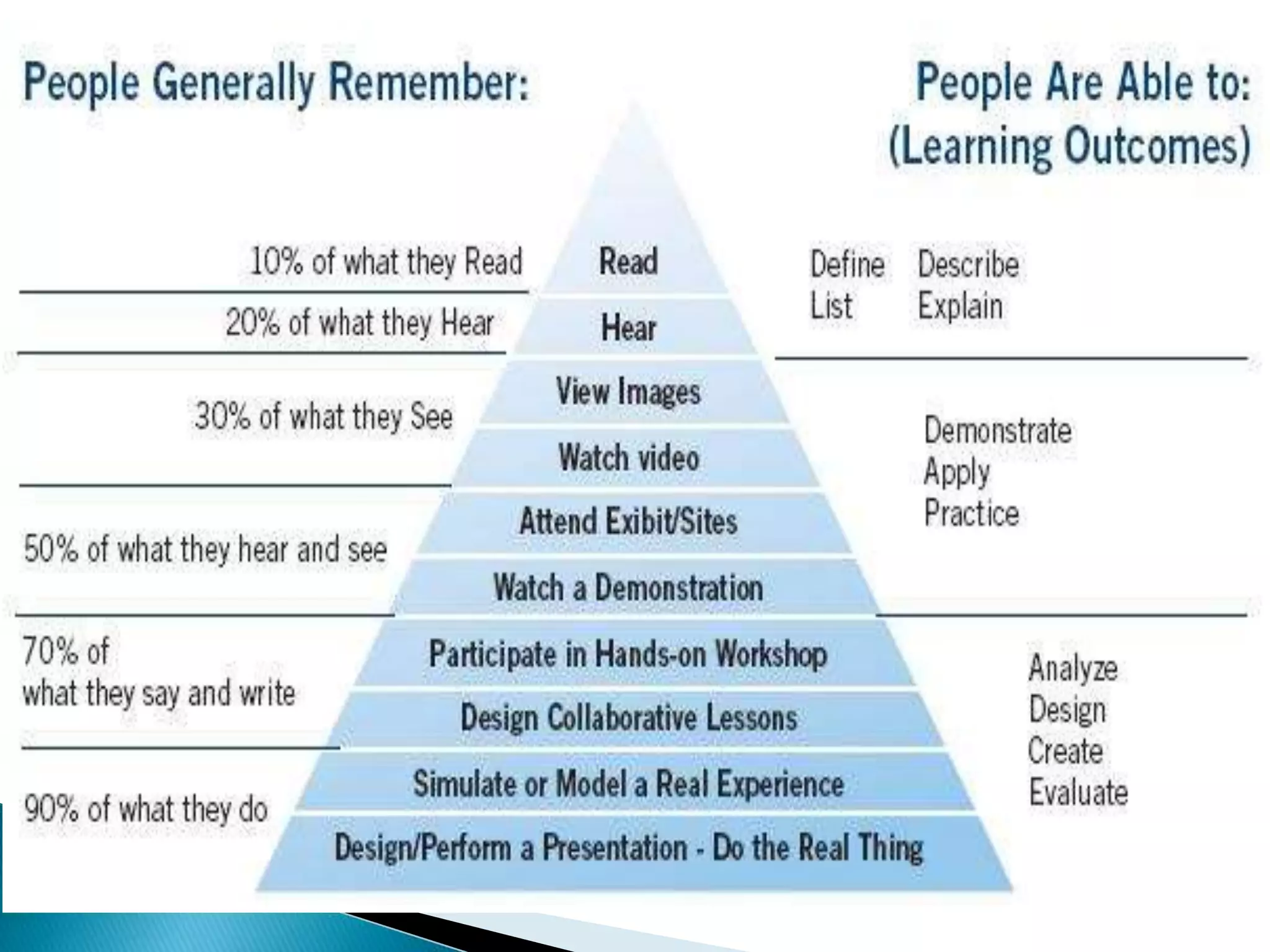
IN THIS METHOD CHILDREN
INVESTIGATE THE SELECTED
THEME /ISSUE FROM MULTIPLE
PERSPECTIVES AND DEVELOP AN
IN-DEPTH UNDERSTANDING OF THE
ISSUE
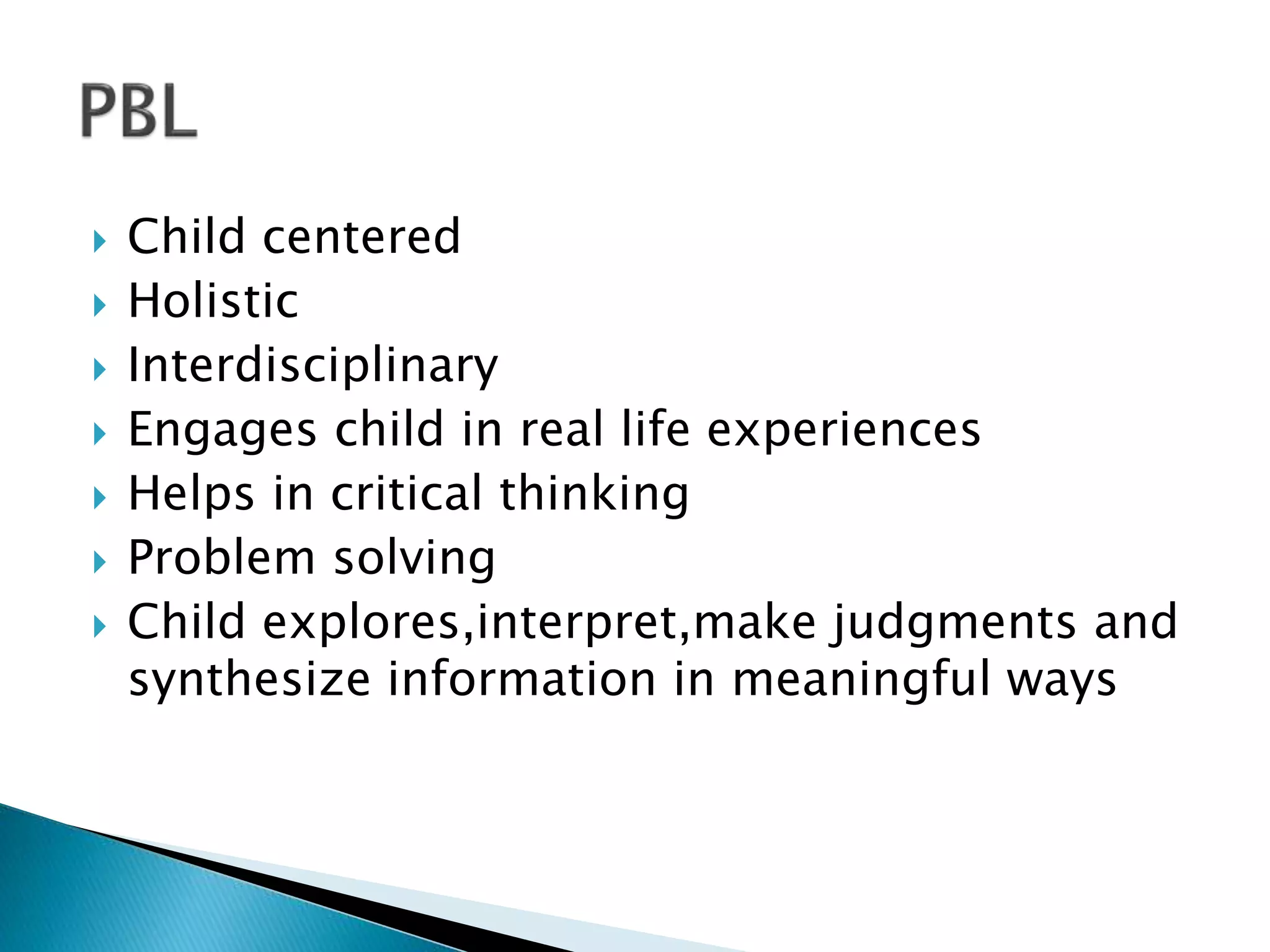
 Child centered
 Holistic
 Interdisciplinary
 Engages child in real life experiences
 Helps in critical thinking
 Problem solving
 Child explores,interpret,make judgments and
synthesize information in meaningful ways
 What are experimental projects?
 Experimental science projects are projects
that study the effect of one specific factor (or
variable) on another. Following are samples
of experimental science projects:
 How does temperature affect plant growth?
 What are display projects?
 Display projects involve the construction of
models or drawing diagrams that can improve
your understanding about specific science
related subjects
 What are engineering projects?
 Engineering science fair projects involve the
construction of machines, structures, circuits,
robots and any device that requires technical
knowledge and skill. In engineering projects
you don't have one specific question, instead
you have hundreds of questions and
challenges that you must overcome in order
to make something work or make it work
better.

 Many students benefit from learning science
through an activities- oriented approach that
reduces the reliance on textbooks, lectures,
knowledge of vocabulary, and pencil-and-paper
tests This kind of approach seeks to promote
learning by providing students with experiences
that allow them to discover and experiment with
science. Through discovery and inquiry, teachers
involve students in creating and expanding their
knowledge and understanding about the content
area being studied.

WHAT
•TEACHER TO DO
•CHILD TO DO IN THE CLASS / SCHOOL
•CHILD TO DO AT HOME / LONG TERM OBSERVATION
WHY
• EXPLORATION
• FIND THE SCIENTIFIC TRUTH
• ENRICH THE SCIENTIFIC ATTITUDE, SKILLS, VALUES,…
• NEW WAYS TO UNDERSTAND THE FACTS
• BETTER RECAP OF THE CONCEPTS
HOW
• PROCESS / PROCEDURE
• OBSERVATIONS AND RECORDING
• CONCLUSION / INFERENCE / RESULTS
 Choose lessons from class 10 science text
book and divide them into
 1. teacher demo
 2.Student activity in school
 Student activity at home
yoyo

yoyo

  • 4.
    IN THIS METHODCHILDREN INVESTIGATE THE SELECTED THEME /ISSUE FROM MULTIPLE PERSPECTIVES AND DEVELOP AN IN-DEPTH UNDERSTANDING OF THE ISSUE
  • 5.
     Child centered Holistic  Interdisciplinary  Engages child in real life experiences  Helps in critical thinking  Problem solving  Child explores,interpret,make judgments and synthesize information in meaningful ways
  • 6.
     What areexperimental projects?  Experimental science projects are projects that study the effect of one specific factor (or variable) on another. Following are samples of experimental science projects:  How does temperature affect plant growth?
  • 7.
     What aredisplay projects?  Display projects involve the construction of models or drawing diagrams that can improve your understanding about specific science related subjects
  • 8.
     What areengineering projects?  Engineering science fair projects involve the construction of machines, structures, circuits, robots and any device that requires technical knowledge and skill. In engineering projects you don't have one specific question, instead you have hundreds of questions and challenges that you must overcome in order to make something work or make it work better.
  • 9.
      Many studentsbenefit from learning science through an activities- oriented approach that reduces the reliance on textbooks, lectures, knowledge of vocabulary, and pencil-and-paper tests This kind of approach seeks to promote learning by providing students with experiences that allow them to discover and experiment with science. Through discovery and inquiry, teachers involve students in creating and expanding their knowledge and understanding about the content area being studied. 
  • 11.
    WHAT •TEACHER TO DO •CHILDTO DO IN THE CLASS / SCHOOL •CHILD TO DO AT HOME / LONG TERM OBSERVATION WHY • EXPLORATION • FIND THE SCIENTIFIC TRUTH • ENRICH THE SCIENTIFIC ATTITUDE, SKILLS, VALUES,… • NEW WAYS TO UNDERSTAND THE FACTS • BETTER RECAP OF THE CONCEPTS HOW • PROCESS / PROCEDURE • OBSERVATIONS AND RECORDING • CONCLUSION / INFERENCE / RESULTS
  • 12.
     Choose lessonsfrom class 10 science text book and divide them into  1. teacher demo  2.Student activity in school  Student activity at home