
PERSONAL
BRANDING
AJ Thomas
Employee Engagement & Communications
Nimble Storage HR
TAKEAWAYS
 How do you build a lasting relationship with your cross-functional
teams?
 How do you stay well networked? How do you know how your
messages are being perceived?
 Know your audience well enough to tailor your communications
and output of work without diluting their purpose.
 Learn the principles of minimalist communications and how to
use them to represent your personal and professional brand to
your organization.
 Without compromising who you are, you can easily build lasting
cross-functional relationships, and be better networked and more
productive.
YOUR SENTENCE
WHO’S SPEAKING?
 NOT a dude or a 6’4 line backer
 Nearly 30+ years of experience - living
 Various roles, HR Operations, Support, Career Development,
Recruitment, Staffing,
 Spent last 2 years as a New Product Introduction Manager at
optical telecom company
 Currently Head of Employee Engagement and Communications
at Nimble Storage
 Former Spartan, Recovering Cardinal
 Passion for inner-city youth (infuseprogram.org)
 Engagement architect with entrepreneurial tendencies
WHAT ARE WE TALKING ABOUT?
What is branding?
Branding yourself
Why branding today?
Getting started: 7 steps for building a brand
The importance of branding
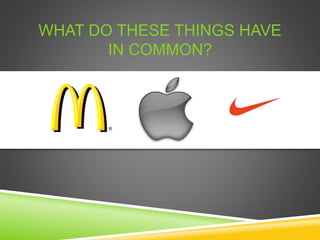
WHAT DO THESE THINGS HAVE
IN COMMON?
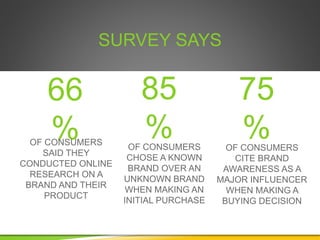
SURVEY SAYS
66
%
85
%
75
%OF CONSUMERS
SAID THEY
CONDUCTED ONLINE
RESEARCH ON A
BRAND AND THEIR
PRODUCT
OF CONSUMERS
CHOSE A KNOWN
BRAND OVER AN
UNKNOWN BRAND
WHEN MAKING AN
INITIAL PURCHASE
OF CONSUMERS
CITE BRAND
AWARENESS AS A
MAJOR INFLUENCER
WHEN MAKING A
BUYING DECISION
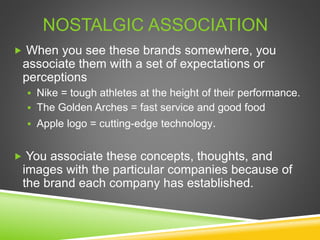
 When you see these brands somewhere, you
associate them with a set of expectations or
perceptions
 Nike = tough athletes at the height of their performance.
 The Golden Arches = fast service and good food
 Apple logo = cutting-edge technology.
 You associate these concepts, thoughts, and
images with the particular companies because of
the brand each company has established.
NOSTALGIC ASSOCIATION
WHAT DO I MEAN BY BRANDING?
 Branding is…
 An image created in someone’s mind
 It’s both tangible and intangible characteristics of a
product or service that make it unique
 Products that are branded are often chosen over
similar products because they somehow have a
perceived value of being ‘better’
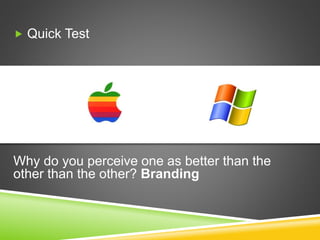
 Quick Test
Why do you perceive one as better than the
other than the other? Branding
 Branding is not just for products anymore…
 Use branding concepts for yourself.
 In this program you will learn how to establish a
professional brand for yourself AND how to
communicate it effectively.
@ItsAJThomas
 Think about the way the following people have
branded themselves:
 Michael Jordan “ He never gave up…”
 Steve Jobs “Made a dent in the universe…”
 Abe Lincoln “Freed the slaves…”
 Sheryl Sandberg “Lean in…”
 Bill Clinton “I did not have sexual relations…”
THE SENTENCE
WHY BRANDING IS IMPORTANT
Trust is essential in the corporate world (and everywhere)
 People want to do business with and hire or promote
people they know and feel good about
There has been change in what a traditional career path
looks like
 People today change careers an average of 8 times
during their lives
 Branding can be consistent throughout the changes
(ex. Hard work and creativity can flow through to
different occupations)
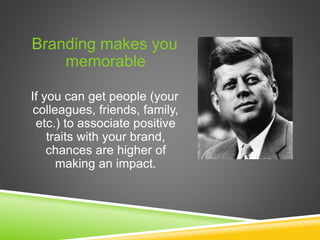
Branding makes you
memorable
If you can get people (your
colleagues, friends, family,
etc.) to associate positive
traits with your brand,
chances are higher of
making an impact.
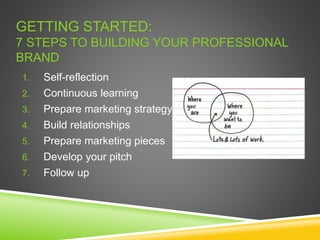
GETTING STARTED:
7 STEPS TO BUILDING YOUR PROFESSIONAL
BRAND
1. Self-reflection
2. Continuous learning
3. Prepare marketing strategy
4. Build relationships
5. Prepare marketing pieces
6. Develop your pitch
7. Follow up
STEP 1: SELF-REFLECTION
 Before you start, you need to know what you’re beginning with.
 Self-reflection will help you identify the tools you have and the areas
you need to improve.
What keeps you up at night?
What wakes you up in the morning?
What values do you believe in?
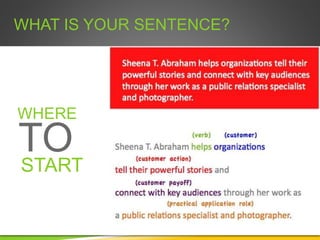
WHAT IS YOUR SENTENCE?
WHAT
WHERE
TO
START
STEP 2: CONTINUOUS LEARNING
MENTORS, COACHES, ADVOCATES
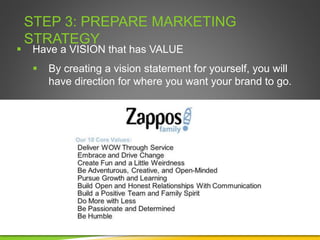
STEP 3: PREPARE MARKETING
STRATEGY
 Have a VISION that has VALUE
 By creating a vision statement for yourself, you will
have direction for where you want your brand to go.
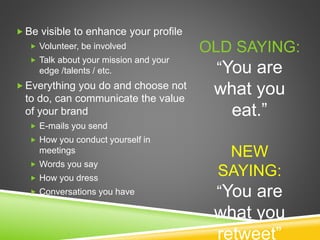
 Be visible to enhance your profile
 Volunteer, be involved
 Talk about your mission and your
edge /talents / etc.
 Everything you do and choose not
to do, can communicate the value
of your brand
 E-mails you send
 How you conduct yourself in
meetings
 Words you say
 How you dress
 Conversations you have
OLD SAYING:
“You are
what you
eat.”
NEW
SAYING:
“You are
what you
retweet”
STEP 4: BUILD RELATIONSHIPS
 Network /ˈnetˌwərk/ n.: a group of people who exchange
information, contacts, and experience for professional or
social purposes.
 Networking tips:
 Word of mouth is powerful; what are people saying about you?
 Keep in good contact with your network
 Always make sure your network knows of any recent successes
Networking
 Don’t forget about potential networking circles: friends,
clients, programs you are a part of, family,
organizations
 Search out new professional associations or online
communities to add to your network
 Find opportunities to weave your personal
mission/vision statements into conversation with your
network
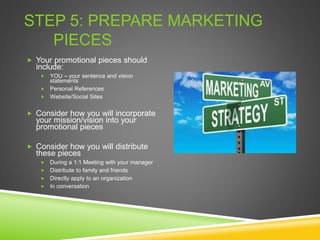
STEP 5: PREPARE MARKETING
PIECES
 Your promotional pieces should
include:
 YOU – your sentence and vision
statements
 Personal References
 Website/Social Sites
 Consider how you will incorporate
your mission/vision into your
promotional pieces
 Consider how you will distribute
these pieces
 During a 1:1 Meeting with your manager
 Distribute to family and friends
 Directly apply to an organization
 In conversation
STEP 6: DEVELOP YOUR PITCH
 Any conversation is your opportunity to pitch your brand:
 Tips:
 Practice makes perfect (take advantage of conversations with
family, friends, colleagues, get feedback)
 Dress appropriately and professionally
 Prepare (have a few stories on hand that help illustrate your
purpose)
 Don’t be too modest (you’re selling your product and you don’t
want to sell yourself short)
 Consider how you will incorporate your personal mission/vision
statements into the conversation
STEP 7: FOLLOW UP
Good follow-up communication will assist in
creating a positive association with your brand
 Return calls immediately (establishes trust)
 Respond to all requests – realistically (shows responsibility)
 Thank People (associates courtesy with your work)
 Write acceptance/decline letter upon accepting a job
 Keep in touch with your network
 Give back to your network
 Live your sentence
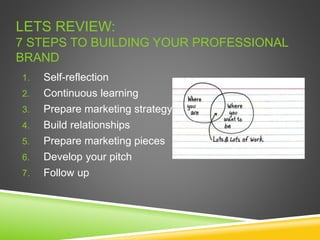
LETS REVIEW:
7 STEPS TO BUILDING YOUR PROFESSIONAL
BRAND
1. Self-reflection
2. Continuous learning
3. Prepare marketing strategy
4. Build relationships
5. Prepare marketing pieces
6. Develop your pitch
7. Follow up
MY SENTENCE

Professional vs. Personal Branding

  • 1.
    PERSONAL BRANDING AJ Thomas Employee Engagement& Communications Nimble Storage HR
  • 2.
    TAKEAWAYS  How doyou build a lasting relationship with your cross-functional teams?  How do you stay well networked? How do you know how your messages are being perceived?  Know your audience well enough to tailor your communications and output of work without diluting their purpose.  Learn the principles of minimalist communications and how to use them to represent your personal and professional brand to your organization.  Without compromising who you are, you can easily build lasting cross-functional relationships, and be better networked and more productive. YOUR SENTENCE
  • 3.
    WHO’S SPEAKING?  NOTa dude or a 6’4 line backer  Nearly 30+ years of experience - living  Various roles, HR Operations, Support, Career Development, Recruitment, Staffing,  Spent last 2 years as a New Product Introduction Manager at optical telecom company  Currently Head of Employee Engagement and Communications at Nimble Storage  Former Spartan, Recovering Cardinal  Passion for inner-city youth (infuseprogram.org)  Engagement architect with entrepreneurial tendencies
  • 4.
    WHAT ARE WETALKING ABOUT? What is branding? Branding yourself Why branding today? Getting started: 7 steps for building a brand The importance of branding
  • 5.
    WHAT DO THESETHINGS HAVE IN COMMON?
  • 6.
    SURVEY SAYS 66 % 85 % 75 %OF CONSUMERS SAIDTHEY CONDUCTED ONLINE RESEARCH ON A BRAND AND THEIR PRODUCT OF CONSUMERS CHOSE A KNOWN BRAND OVER AN UNKNOWN BRAND WHEN MAKING AN INITIAL PURCHASE OF CONSUMERS CITE BRAND AWARENESS AS A MAJOR INFLUENCER WHEN MAKING A BUYING DECISION
  • 7.
     When yousee these brands somewhere, you associate them with a set of expectations or perceptions  Nike = tough athletes at the height of their performance.  The Golden Arches = fast service and good food  Apple logo = cutting-edge technology.  You associate these concepts, thoughts, and images with the particular companies because of the brand each company has established. NOSTALGIC ASSOCIATION
  • 8.
    WHAT DO IMEAN BY BRANDING?  Branding is…  An image created in someone’s mind  It’s both tangible and intangible characteristics of a product or service that make it unique  Products that are branded are often chosen over similar products because they somehow have a perceived value of being ‘better’
  • 9.
     Quick Test Whydo you perceive one as better than the other than the other? Branding
  • 10.
     Branding isnot just for products anymore…  Use branding concepts for yourself.  In this program you will learn how to establish a professional brand for yourself AND how to communicate it effectively. @ItsAJThomas
  • 11.
     Think aboutthe way the following people have branded themselves:  Michael Jordan “ He never gave up…”  Steve Jobs “Made a dent in the universe…”  Abe Lincoln “Freed the slaves…”  Sheryl Sandberg “Lean in…”  Bill Clinton “I did not have sexual relations…” THE SENTENCE
  • 12.
    WHY BRANDING ISIMPORTANT Trust is essential in the corporate world (and everywhere)  People want to do business with and hire or promote people they know and feel good about There has been change in what a traditional career path looks like  People today change careers an average of 8 times during their lives  Branding can be consistent throughout the changes (ex. Hard work and creativity can flow through to different occupations)
  • 13.
    Branding makes you memorable Ifyou can get people (your colleagues, friends, family, etc.) to associate positive traits with your brand, chances are higher of making an impact.
  • 14.
    GETTING STARTED: 7 STEPSTO BUILDING YOUR PROFESSIONAL BRAND 1. Self-reflection 2. Continuous learning 3. Prepare marketing strategy 4. Build relationships 5. Prepare marketing pieces 6. Develop your pitch 7. Follow up
  • 15.
    STEP 1: SELF-REFLECTION Before you start, you need to know what you’re beginning with.  Self-reflection will help you identify the tools you have and the areas you need to improve. What keeps you up at night? What wakes you up in the morning? What values do you believe in?
  • 16.
    WHAT IS YOURSENTENCE? WHAT WHERE TO START
  • 17.
    STEP 2: CONTINUOUSLEARNING MENTORS, COACHES, ADVOCATES
  • 18.
    STEP 3: PREPAREMARKETING STRATEGY  Have a VISION that has VALUE  By creating a vision statement for yourself, you will have direction for where you want your brand to go.
  • 19.
     Be visibleto enhance your profile  Volunteer, be involved  Talk about your mission and your edge /talents / etc.  Everything you do and choose not to do, can communicate the value of your brand  E-mails you send  How you conduct yourself in meetings  Words you say  How you dress  Conversations you have OLD SAYING: “You are what you eat.” NEW SAYING: “You are what you retweet”
  • 20.
    STEP 4: BUILDRELATIONSHIPS  Network /ˈnetˌwərk/ n.: a group of people who exchange information, contacts, and experience for professional or social purposes.  Networking tips:  Word of mouth is powerful; what are people saying about you?  Keep in good contact with your network  Always make sure your network knows of any recent successes
  • 21.
    Networking  Don’t forgetabout potential networking circles: friends, clients, programs you are a part of, family, organizations  Search out new professional associations or online communities to add to your network  Find opportunities to weave your personal mission/vision statements into conversation with your network
  • 22.
    STEP 5: PREPAREMARKETING PIECES  Your promotional pieces should include:  YOU – your sentence and vision statements  Personal References  Website/Social Sites  Consider how you will incorporate your mission/vision into your promotional pieces  Consider how you will distribute these pieces  During a 1:1 Meeting with your manager  Distribute to family and friends  Directly apply to an organization  In conversation
  • 23.
    STEP 6: DEVELOPYOUR PITCH  Any conversation is your opportunity to pitch your brand:  Tips:  Practice makes perfect (take advantage of conversations with family, friends, colleagues, get feedback)  Dress appropriately and professionally  Prepare (have a few stories on hand that help illustrate your purpose)  Don’t be too modest (you’re selling your product and you don’t want to sell yourself short)  Consider how you will incorporate your personal mission/vision statements into the conversation
  • 24.
    STEP 7: FOLLOWUP Good follow-up communication will assist in creating a positive association with your brand  Return calls immediately (establishes trust)  Respond to all requests – realistically (shows responsibility)  Thank People (associates courtesy with your work)  Write acceptance/decline letter upon accepting a job  Keep in touch with your network  Give back to your network  Live your sentence
  • 25.
    LETS REVIEW: 7 STEPSTO BUILDING YOUR PROFESSIONAL BRAND 1. Self-reflection 2. Continuous learning 3. Prepare marketing strategy 4. Build relationships 5. Prepare marketing pieces 6. Develop your pitch 7. Follow up
  • 26.