YAWS
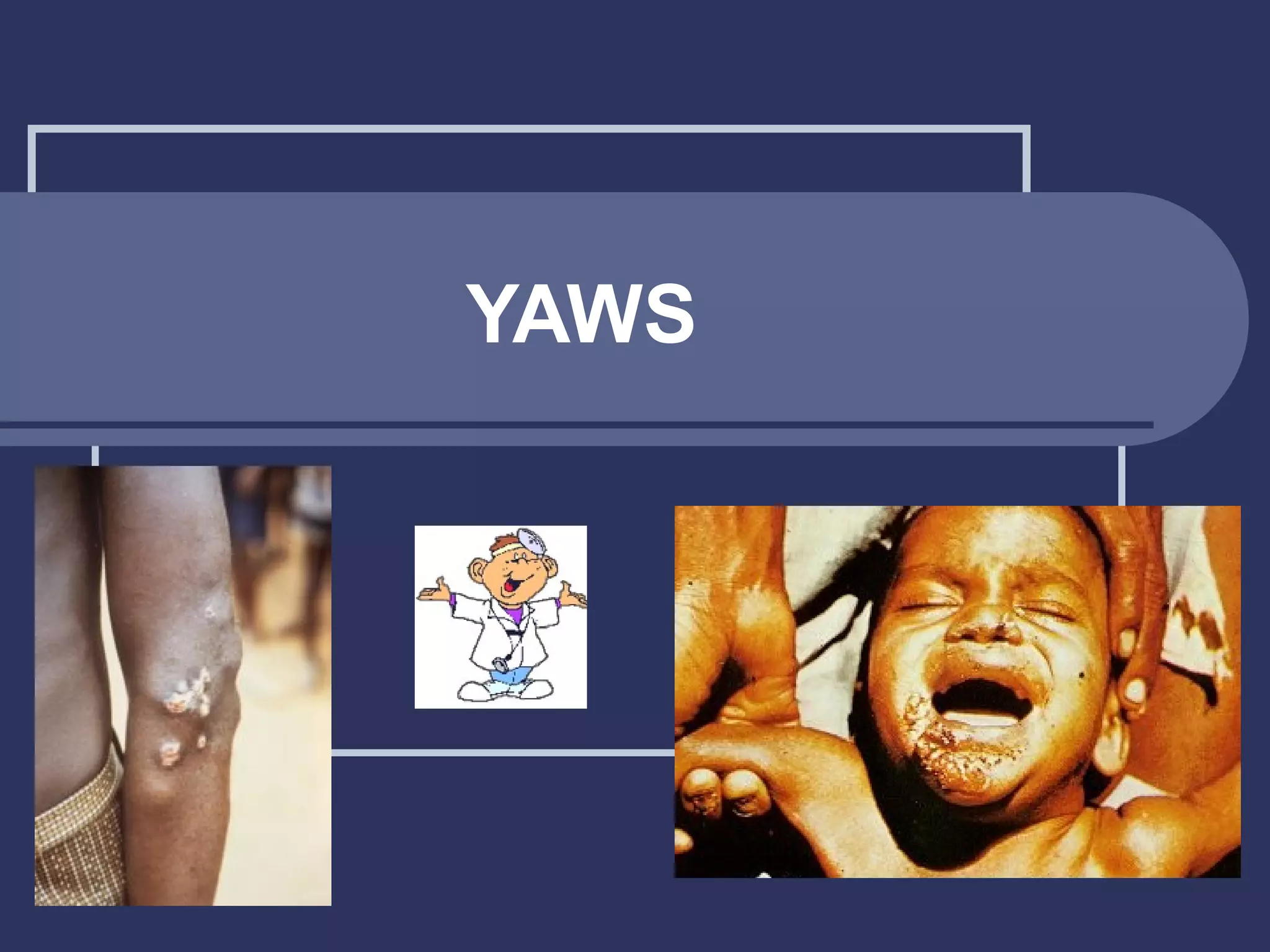
YAWS
 framboesia,

frambesia tropica, parangi,
paru, buba, pian, bouba, endemic
treponema, endemic treponematoses.

 Yaws

is a chronical contagious,
nonvenereal, treponemal infection in
humans
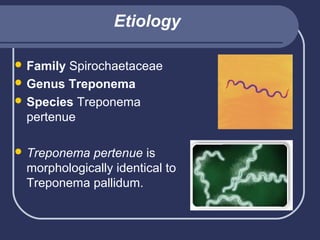
Etiology
 Family

Spirochaetaceae
 Genus Treponema
 Species Treponema
pertenue
 Treponema

pertenue is
morphologically identical to
Treponema pallidum.
Epidemiology







The major route of infection is through direct personto-person contact.
The treponemes associated with yaws are primarily
present in the epidermis. The ulcerative skin lesions
present early in the disease are teeming with
spirochetes, which can be transmitted via direct skinto-skin contact and via breaks in the skin from trauma,
bites, or excoriations.
No sex predilection exists.
Yaws predominantly affects children younger than 15
years.
Peak incidence occurs in children aged 6-10 years.
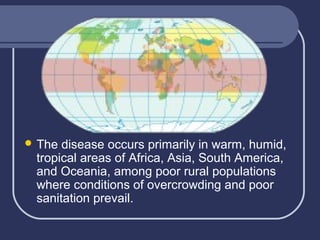
 The

disease occurs primarily in warm, humid,
tropical areas of Africa, Asia, South America,
and Oceania, among poor rural populations
where conditions of overcrowding and poor
sanitation prevail.
Clinical manifestations
 In

most patients, yaws remains limited to the
skin, but early bone and joint involvement can
occur. Although yaws lesions disappear
spontaneously, secondary bacterial infections
and scarring are common complications. In
contrast to venereal syphilis, cardiovascular
and neurological abnormalities almost never
occur in patients with yaws.
Clinical manifestations
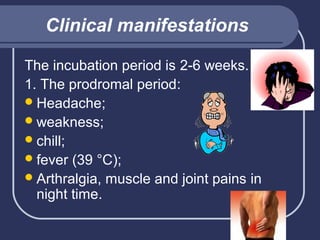
The incubation period is 2-6 weeks.
1. The prodromal period:
 Headache;
 weakness;
 chill;
 fever (39 °C);
 Arthralgia, muscle and joint pains in
night time.
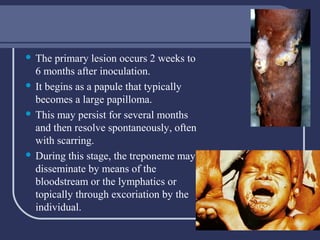
The primary lesion occurs 2 weeks to
6 months after inoculation.
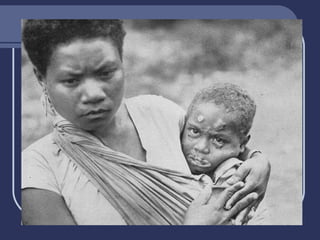
 It begins as a papule that typically
becomes a large papilloma.
 This may persist for several months
and then resolve spontaneously, often
with scarring.
 During this stage, the treponeme may
disseminate by means of the
bloodstream or the lymphatics or
topically through excoriation by the
individual.

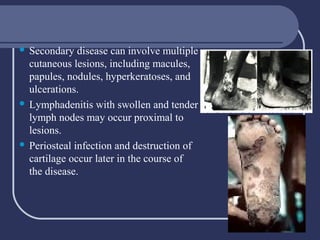
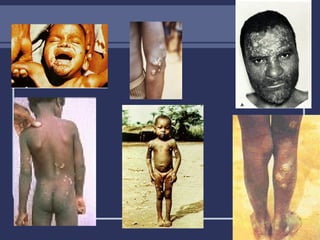
Secondary disease can involve multiple
cutaneous lesions, including macules,
papules, nodules, hyperkeratoses, and
ulcerations.
 Lymphadenitis with swollen and tender
lymph nodes may occur proximal to
lesions.
 Periosteal infection and destruction of
cartilage occur later in the course of
the disease.

Clinical manifestations
 The

initial lesions characteristically resolve
spontaneously by 6 months but then recur after a
latent period.
 Relapses often occur for up to 5 years, after which
they diminish in severity and frequency.
Clinical manifestations
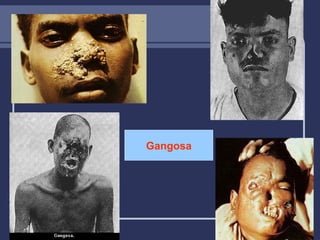
Approximately 10% of untreated patients develop late
disease, including periosteal lesions that damage bone.
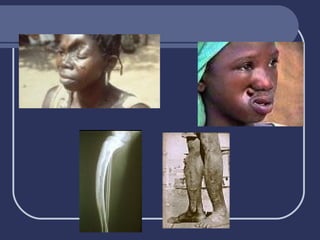
 Deformities are also observed, including saber shins
caused by chronic periosteal infection of the tibia and
gangosa as well as destruction of the cartilage in the
nose.
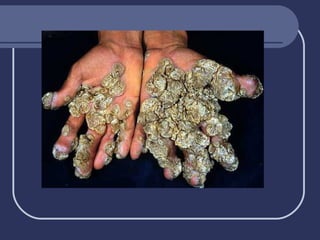
 Other late-stage manifestations include hyperkeratosis
of the palms and soles and gummas of the skull,
sternum tibia, and other bones.

Gangosa
Laboratory diagnostic
 Nontreponemal

test (eg, rapid plasma reagent
[RPR], VDRL) results are positive in all stages,
except very early lesions.
 Confirmatory treponemal tests (eg,
Treponema pallidum hemagglutination
[TPHA], microhemagglutination Treponema
pallidum [MHA-TP], fluorescent treponema
antibody absorption [FTA-ABS]) are not
practical in remote areas.
Laboratory diagnostic
 Results

of dark-field examination of early
lesions will be positive.
 Biopsy of late lesions may be needed to show
characteristic histopathology.
 Histologic Findings: Typical histopathology of
early yaws shows papillomatous epidermal
hyperplasia, focal spongiosis, and
intraepidermal microabscesses.
 Treponemes are found in the epidermidis.
Treatment
 Drug

Category: Antibiotics - Penicillin G
benzathine (Bicillin LA); Tetracycline
(Sumycin) and Erythromycin can be
used in patients allergic to penicillin.
Prevention:
 No

vaccines for the disease are
available.

Yaws

  • 1.
  • 2.
    YAWS  framboesia, frambesia tropica,parangi, paru, buba, pian, bouba, endemic treponema, endemic treponematoses.  Yaws is a chronical contagious, nonvenereal, treponemal infection in humans
  • 3.
    Etiology  Family Spirochaetaceae  GenusTreponema  Species Treponema pertenue  Treponema pertenue is morphologically identical to Treponema pallidum.
  • 4.
    Epidemiology      The major routeof infection is through direct personto-person contact. The treponemes associated with yaws are primarily present in the epidermis. The ulcerative skin lesions present early in the disease are teeming with spirochetes, which can be transmitted via direct skinto-skin contact and via breaks in the skin from trauma, bites, or excoriations. No sex predilection exists. Yaws predominantly affects children younger than 15 years. Peak incidence occurs in children aged 6-10 years.
  • 5.
     The disease occursprimarily in warm, humid, tropical areas of Africa, Asia, South America, and Oceania, among poor rural populations where conditions of overcrowding and poor sanitation prevail.
  • 6.
    Clinical manifestations  In mostpatients, yaws remains limited to the skin, but early bone and joint involvement can occur. Although yaws lesions disappear spontaneously, secondary bacterial infections and scarring are common complications. In contrast to venereal syphilis, cardiovascular and neurological abnormalities almost never occur in patients with yaws.
  • 7.
    Clinical manifestations The incubationperiod is 2-6 weeks. 1. The prodromal period:  Headache;  weakness;  chill;  fever (39 °C);  Arthralgia, muscle and joint pains in night time.
  • 8.
    The primary lesionoccurs 2 weeks to 6 months after inoculation.  It begins as a papule that typically becomes a large papilloma.  This may persist for several months and then resolve spontaneously, often with scarring.  During this stage, the treponeme may disseminate by means of the bloodstream or the lymphatics or topically through excoriation by the individual. 
  • 9.
    Secondary disease caninvolve multiple cutaneous lesions, including macules, papules, nodules, hyperkeratoses, and ulcerations.  Lymphadenitis with swollen and tender lymph nodes may occur proximal to lesions.  Periosteal infection and destruction of cartilage occur later in the course of the disease. 
  • 11.
    Clinical manifestations  The initiallesions characteristically resolve spontaneously by 6 months but then recur after a latent period.  Relapses often occur for up to 5 years, after which they diminish in severity and frequency.
  • 14.
    Clinical manifestations Approximately 10%of untreated patients develop late disease, including periosteal lesions that damage bone.  Deformities are also observed, including saber shins caused by chronic periosteal infection of the tibia and gangosa as well as destruction of the cartilage in the nose.  Other late-stage manifestations include hyperkeratosis of the palms and soles and gummas of the skull, sternum tibia, and other bones. 
  • 16.
  • 17.
    Laboratory diagnostic  Nontreponemal test(eg, rapid plasma reagent [RPR], VDRL) results are positive in all stages, except very early lesions.  Confirmatory treponemal tests (eg, Treponema pallidum hemagglutination [TPHA], microhemagglutination Treponema pallidum [MHA-TP], fluorescent treponema antibody absorption [FTA-ABS]) are not practical in remote areas.
  • 18.
    Laboratory diagnostic  Results ofdark-field examination of early lesions will be positive.  Biopsy of late lesions may be needed to show characteristic histopathology.  Histologic Findings: Typical histopathology of early yaws shows papillomatous epidermal hyperplasia, focal spongiosis, and intraepidermal microabscesses.  Treponemes are found in the epidermidis.
  • 19.
    Treatment  Drug Category: Antibiotics- Penicillin G benzathine (Bicillin LA); Tetracycline (Sumycin) and Erythromycin can be used in patients allergic to penicillin.
  • 20.
    Prevention:  No vaccines forthe disease are available.