Writing an Effective  Grant Proposal Nancy L. Withbroe, CFRE
We Will Cover Writing an Effective Grant Proposal Ideal flow and structure Other formats Putting it together Basic rules Where to Learn More Questions & Answers
Writing an Effective  Grant  Proposal
The Ideal Flow and Structure Telling your story
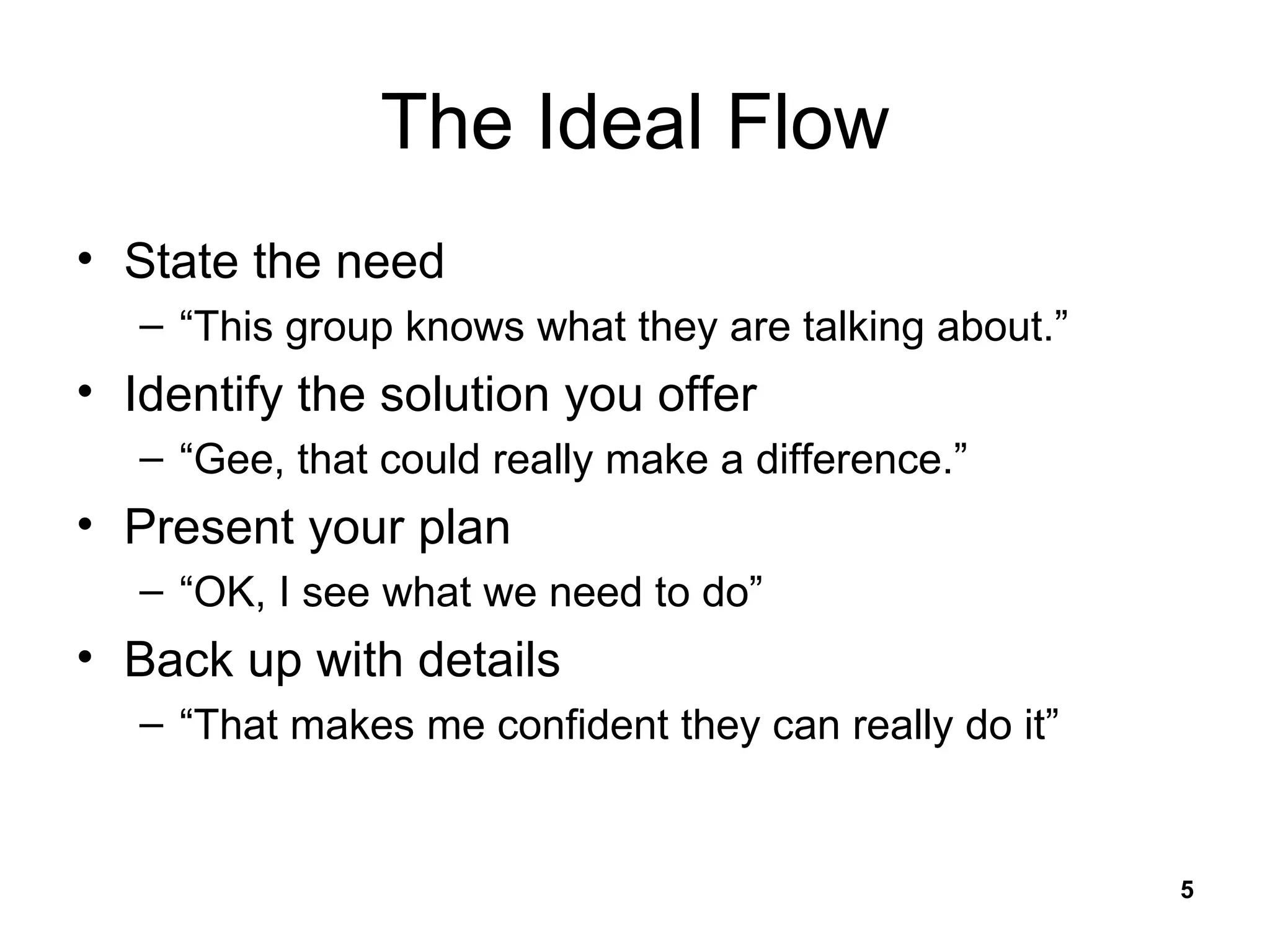
The Ideal Flow State the need “ This group knows what they are talking about.” Identify the solution you offer “ Gee, that could really make a difference.” Present your plan “ OK, I see what we need to do” Back up with details “ That makes me confident they can really do it”
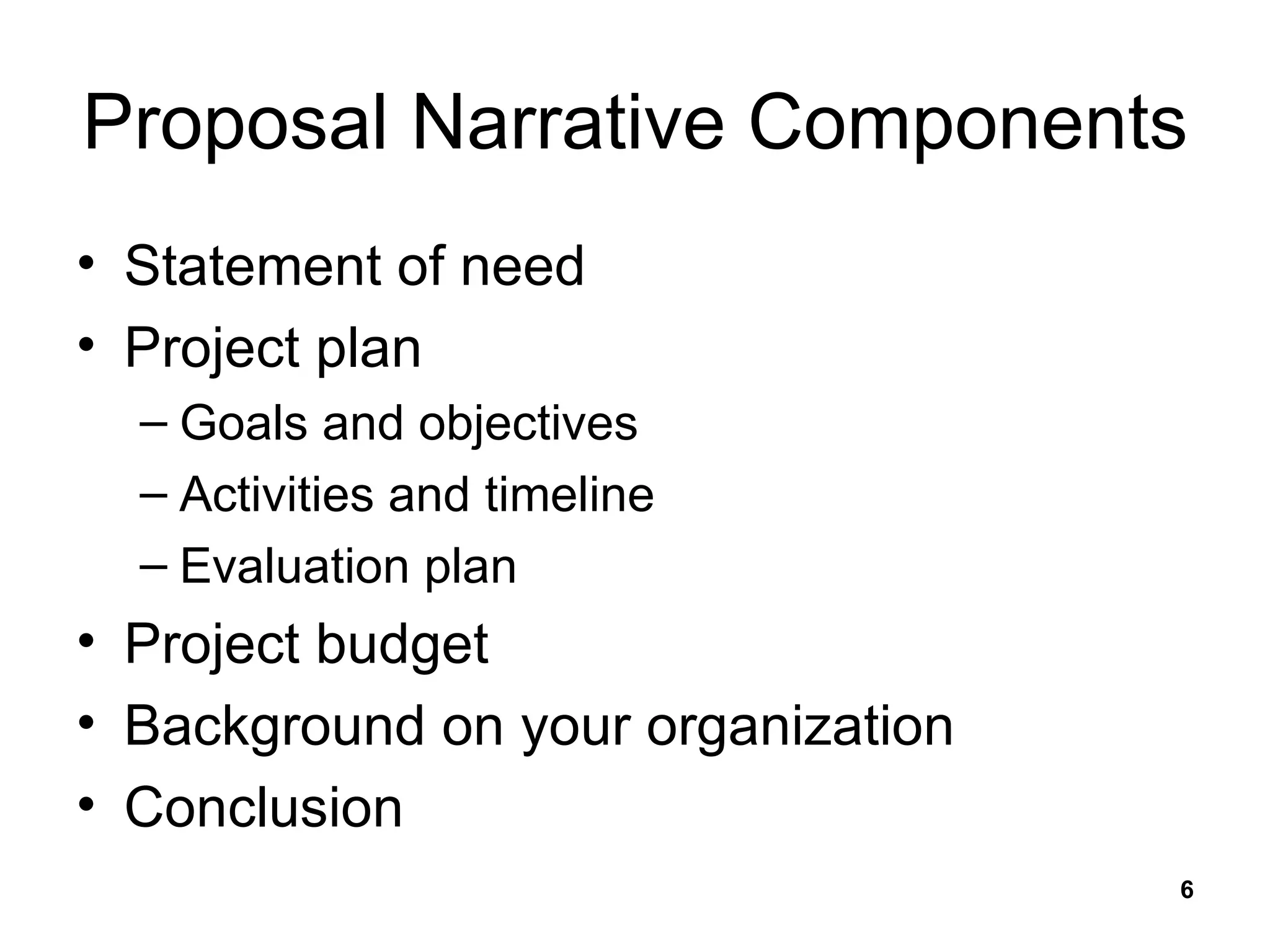
Proposal Narrative Components Statement of need Project plan Goals and objectives Activities and timeline Evaluation plan Project budget Background on your organization Conclusion
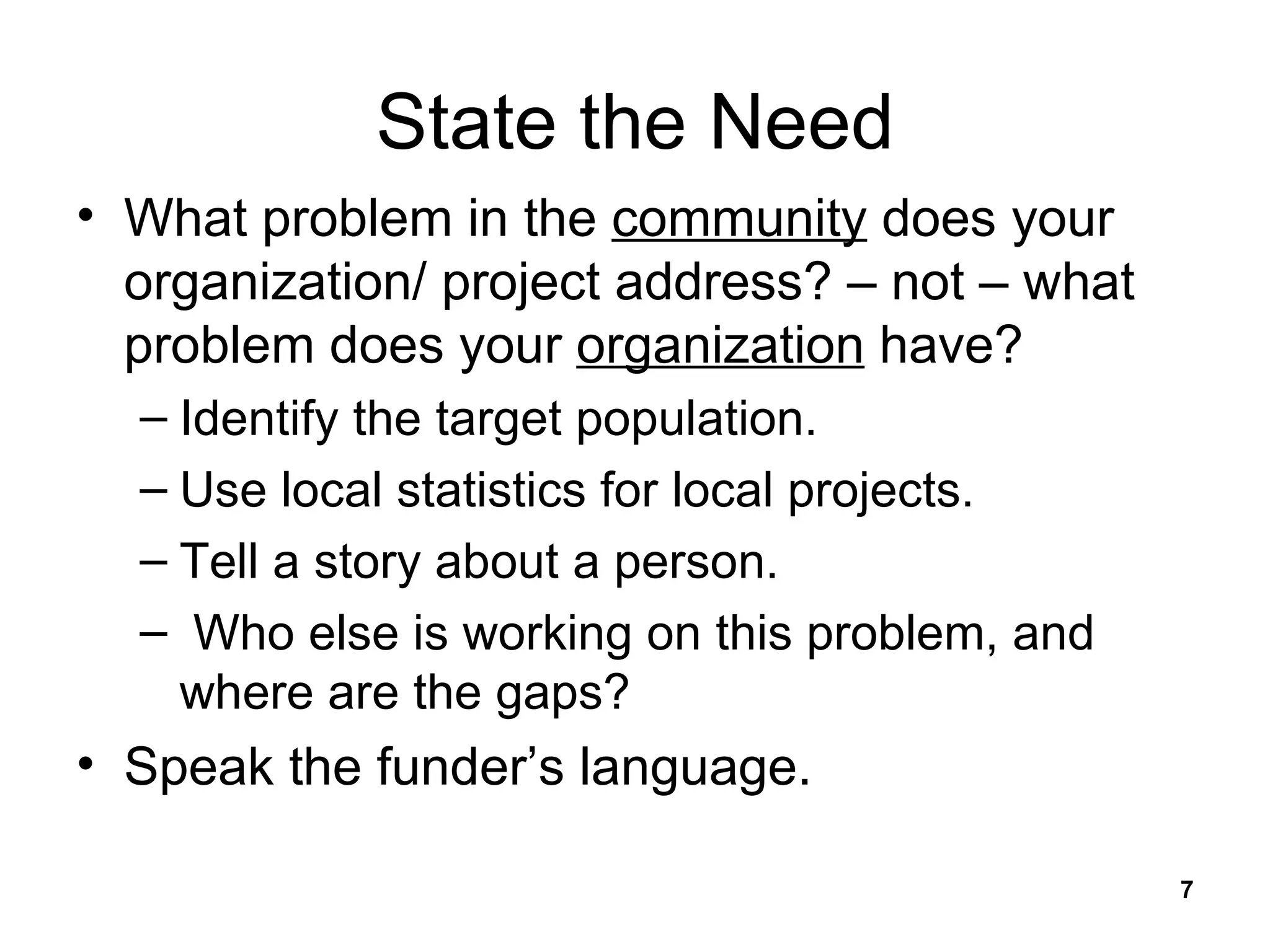
State the Need What problem in the  community  does your organization/ project address? – not – what problem does your  organization  have? Identify the target population. Use local statistics for local projects. Tell a story about a person. Who else is working on this problem, and where are the gaps? Speak the funder’s language.
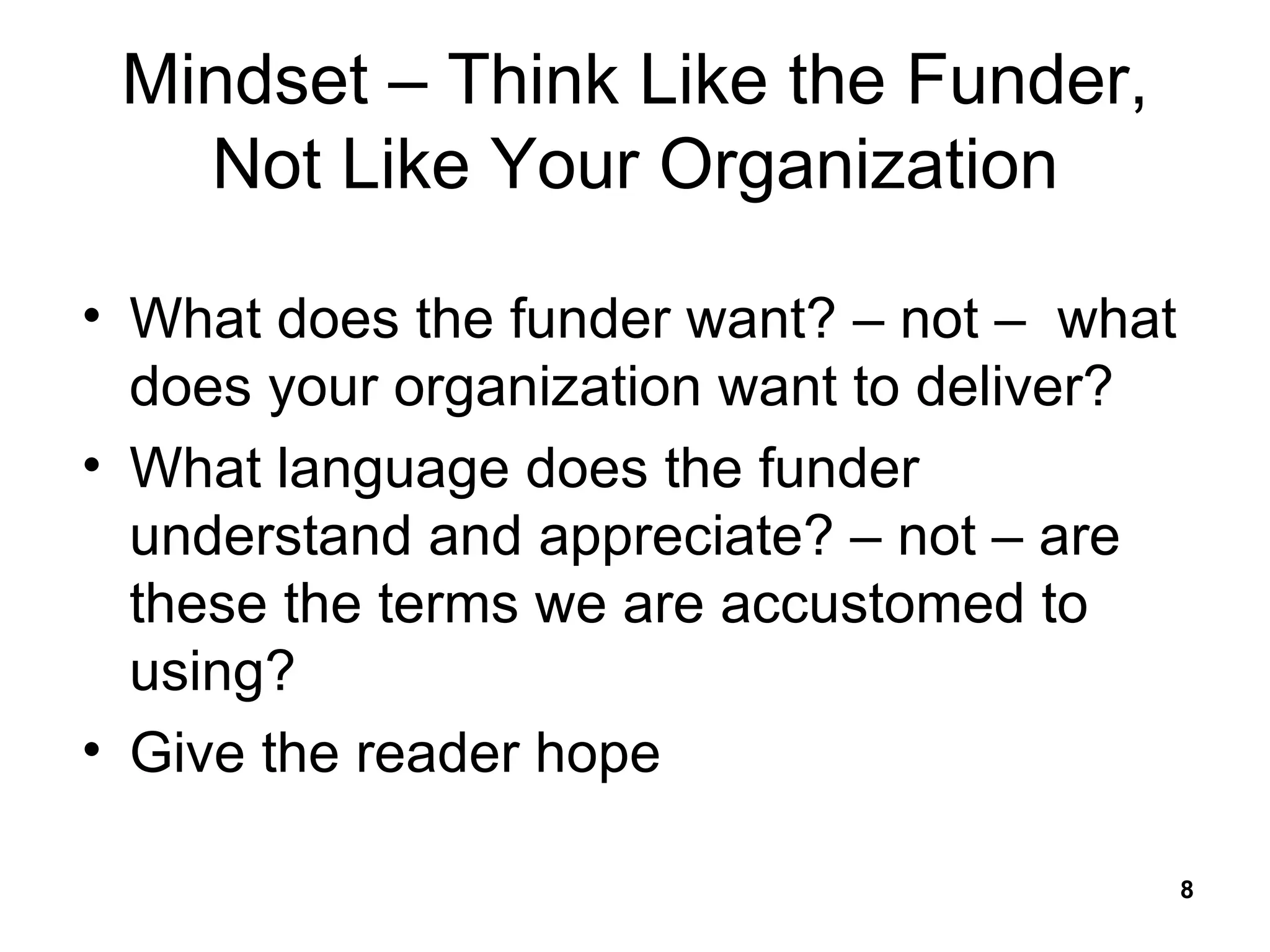
Mindset – Think Like the Funder, Not Like Your Organization What does the funder want? – not –  what does your organization want to deliver? What language does the funder understand and appreciate? – not – are these the terms we are accustomed to using? Give the reader hope
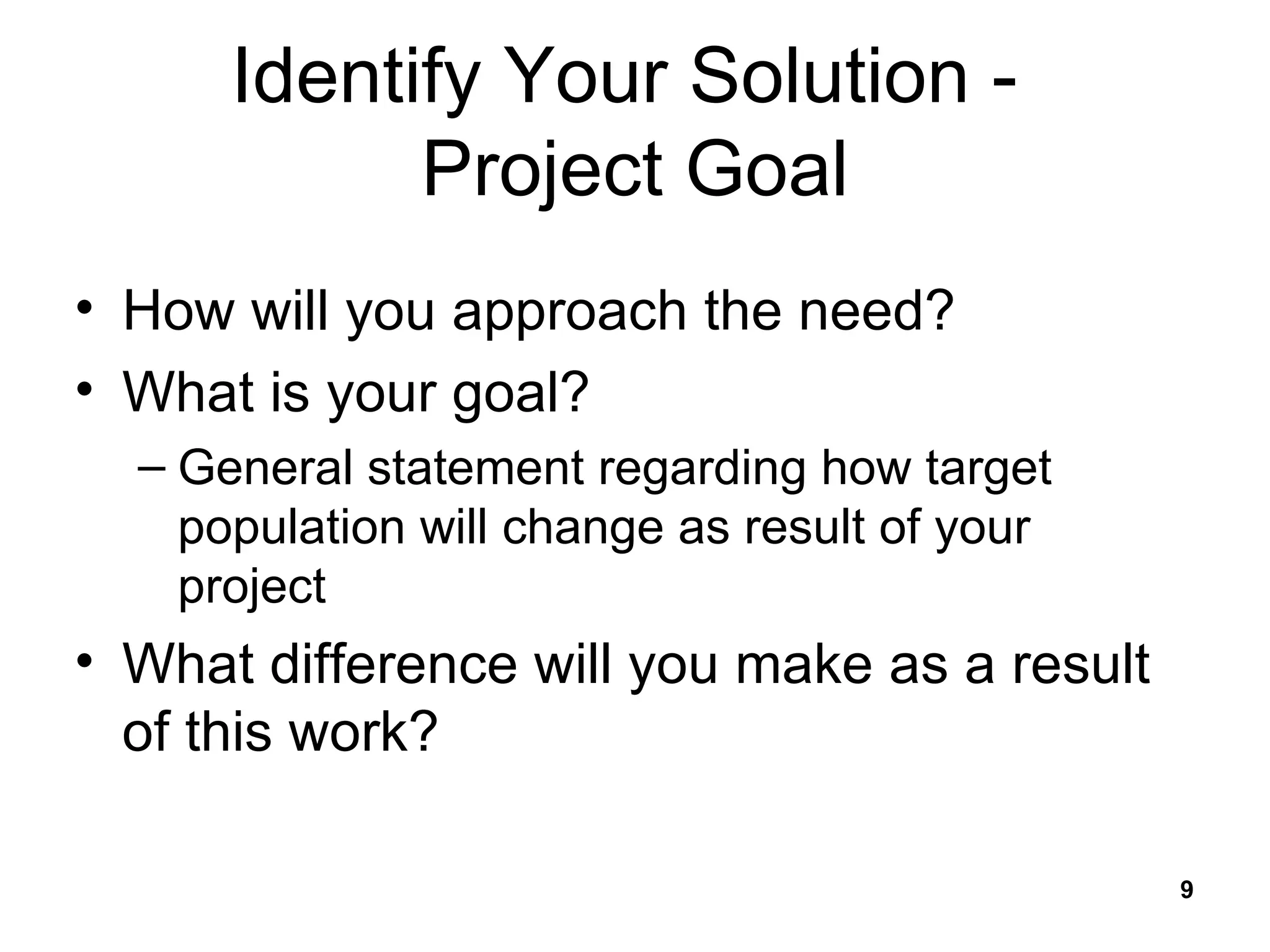
Identify Your Solution -  Project Goal How will you approach the need? What is your goal? General statement regarding how target population will change as result of your project What difference will you make as a result of this work?
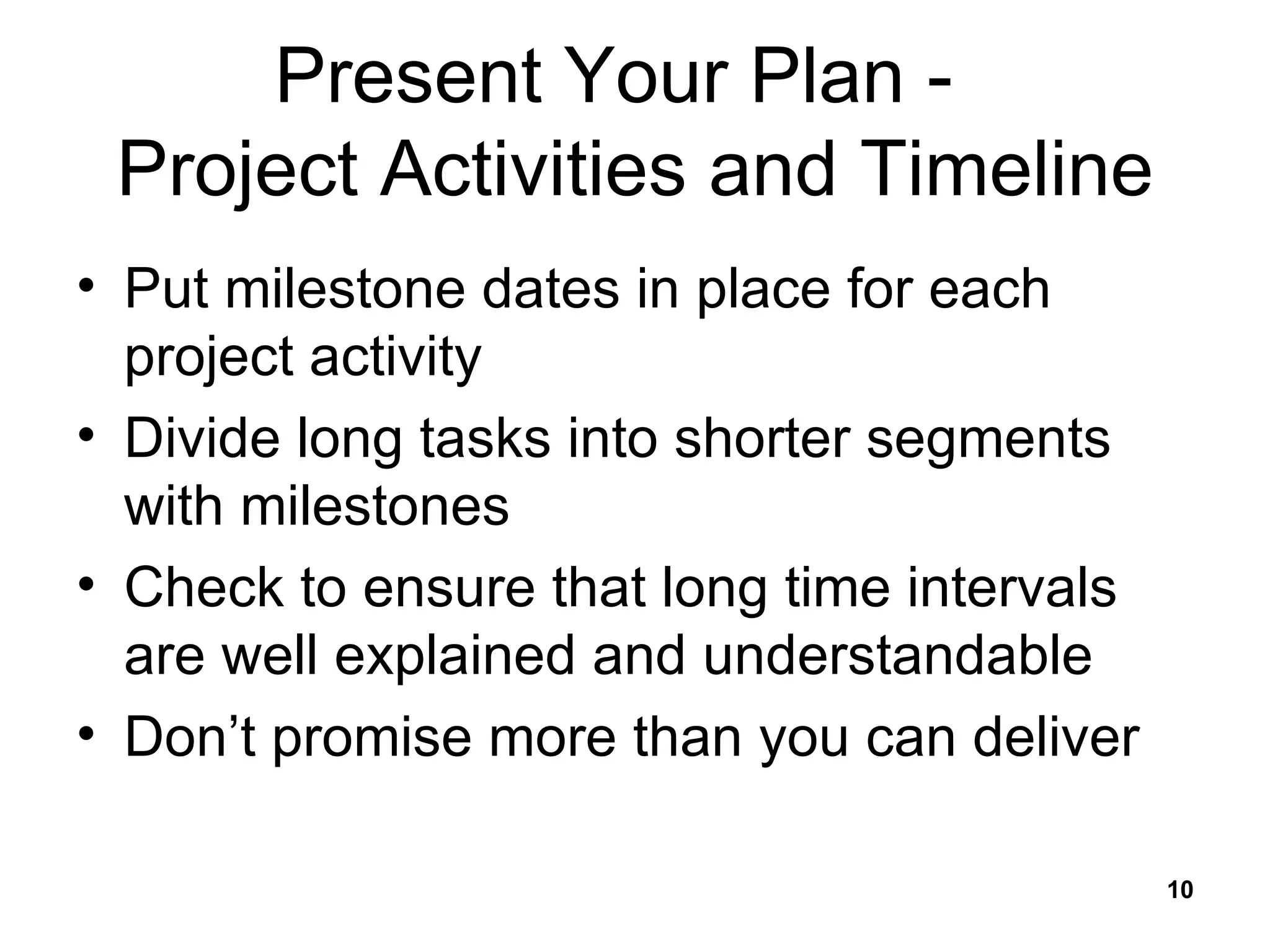
Present Your Plan -  Project Activities and Timeline Put milestone dates in place for each project activity Divide long tasks into shorter segments with milestones Check to ensure that long time intervals are well explained and understandable Don’t promise more than you can deliver
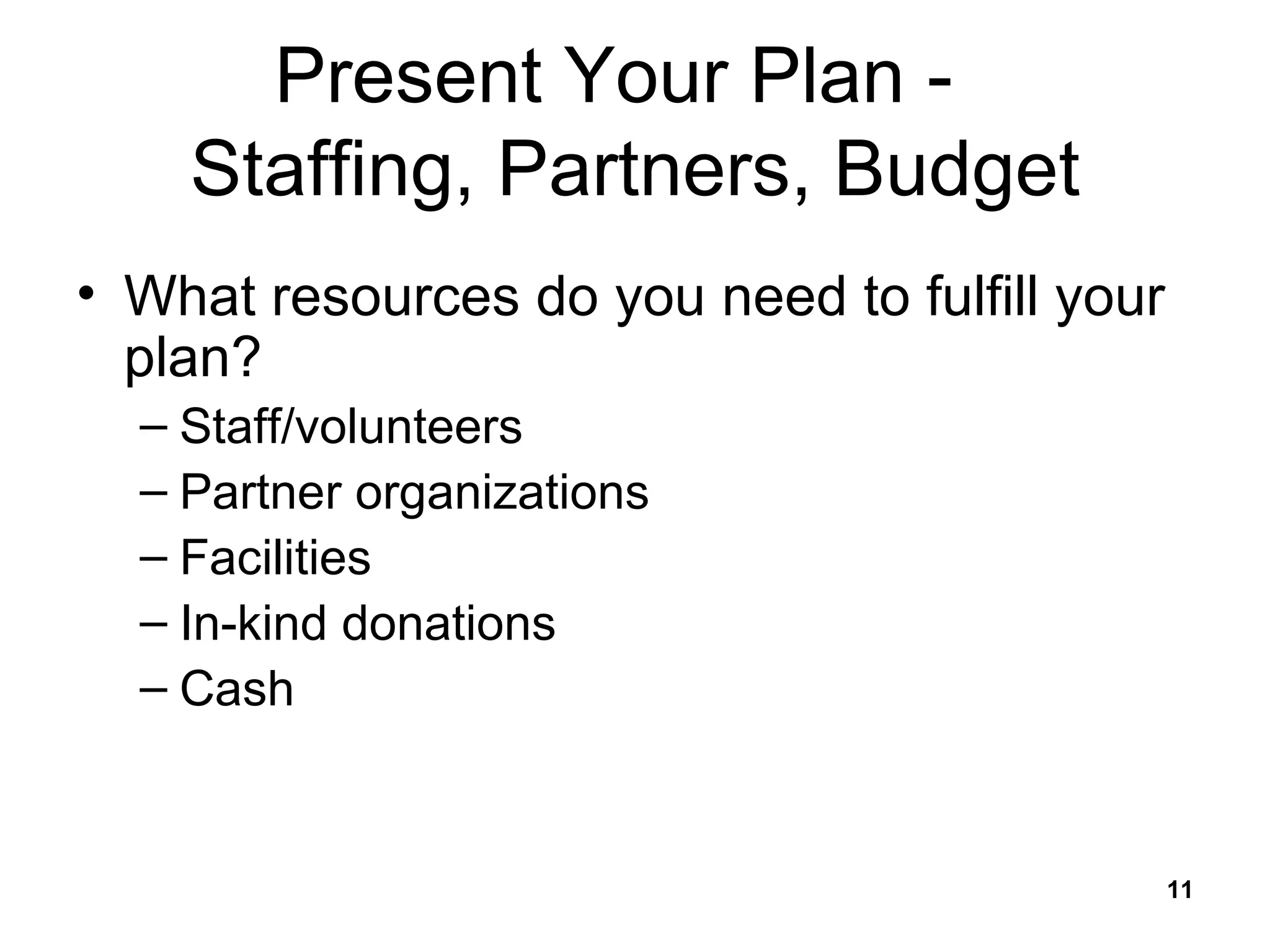
Present Your Plan -  Staffing, Partners, Budget What resources do you need to fulfill your plan? Staff/volunteers Partner organizations Facilities In-kind donations Cash
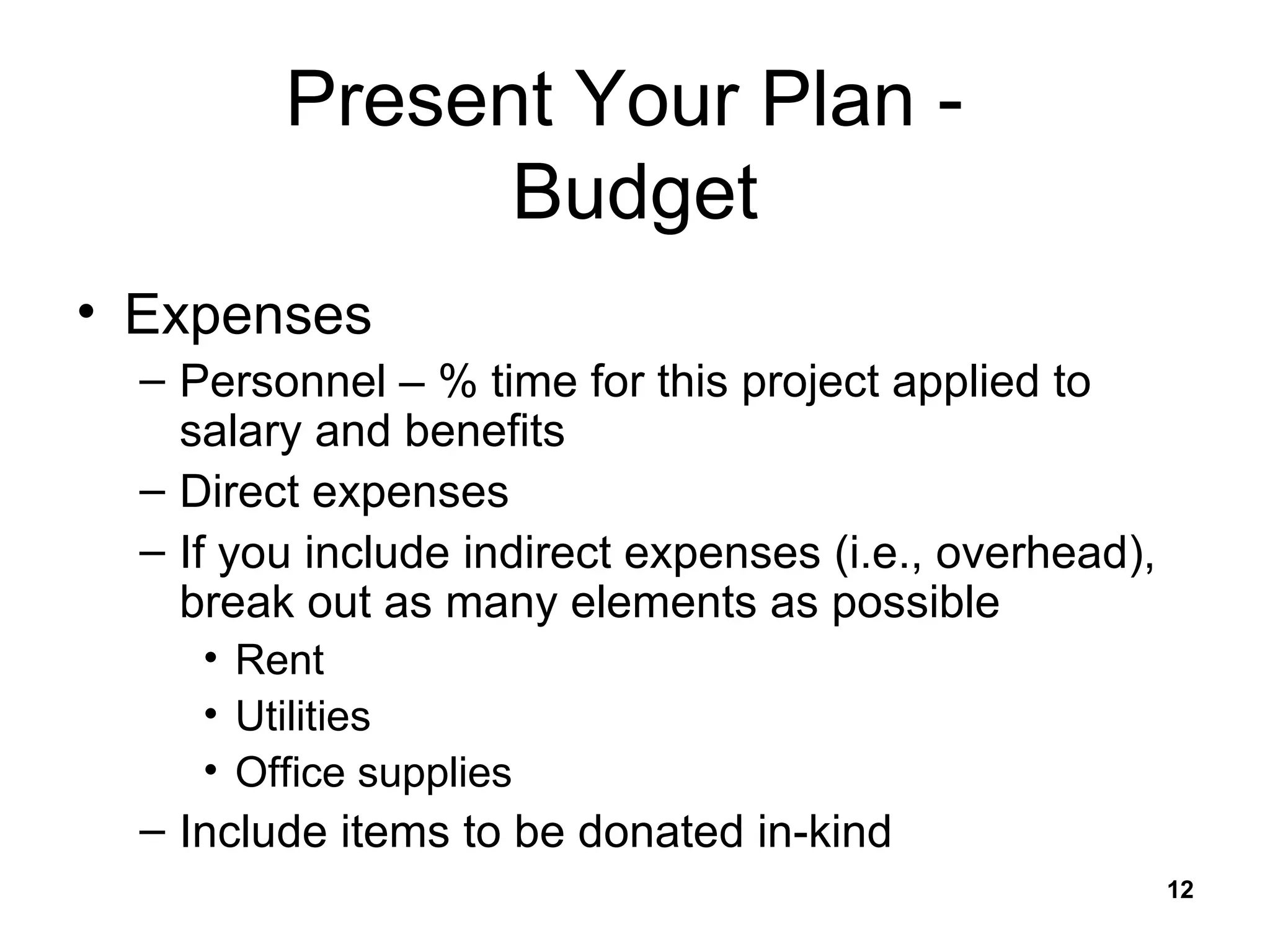
Present Your Plan -  Budget Expenses Personnel – % time for this project applied to salary and benefits Direct expenses If you include indirect expenses (i.e., overhead), break out as many elements as possible Rent Utilities Office supplies Include items to be donated in-kind
Present Your Plan –  Budget Income ALWAYS balance with expenses This proposal “under consideration” Other grants (under consideration, committed, to be submitted) Other sources (general operating funds, individual donations, fees for service) Include in-kind contributions
Present Your Plan –  Evaluation and Expected Outcomes What outcomes – changes in the target population – will result? How will you know if these outcomes were achieved - what measurement tools will you use?  This becomes your outline for reports if the grant is funded Donors give to the future, not the past
Introduce Your Organization Who are you? Why are you the best organization to address this need in this particular way? Track record Proven staff and volunteer leadership Independent testimonials Clients Subject matter experts Partner organizations
Conclusion Ask for a specific amount within a specific time frame Remind the reader of the need and your solution Mention recognition opportunities, if appropriate Inspire the reader
Putting it Together Pay attention to your package
First Impressions Are Important Appear professional, polished, but modest Pay attention to requirements for margins, binders, number of pages, font size, etc. Most funders prefer simply packaged, unbound proposals on white, 8 ½” x 11” paper.
Cover Letter NEVER “To whom it may concern” Summarize request Reference conversations you have had with staff or board members about the proposal Thank funder for past support, if relevant Offer to set up meeting or call to discuss Signed by Executive Director and sometimes by Board President
Executive Summary It’s the most important piece, because… It’s the only piece everyone reads It’s the first piece everyone reads For some, it’s the only piece they read Write it FIRST and LAST If the funder requires an application form, use that instead
Attachments 501(c)3 letter Board list Key staff resumes or brief bios 1 pg org. budget 1 pg. project budget Audited financials Annual report 1-2 current media reports about your organization 1-2 letters of support Put in same order as RFP/ guidelines Less is more
Other Formats Telling your story …  how the funder wants to hear it
Other Formats Request for Proposal Letter Proposal/ Letter of Inquiry Online Applications
Request for Proposal (“RFP”) RFP can be formal, semi-formal (guidelines) or totally informal (verbal) Use the RFP as your guide for what to say and in what order Use their numbering system, format, and naming conventions Put additional information in attachments
Answer Everything – No Exceptions Provide the answers exactly where the reviewer expects to find them Refer, as needed, to attachments, but it is risky to assume every reviewer has the attachments If you can’t or don’t want to answer an item, what should you do? Make your “no answer” the answer Never leave a blank or “TBD”
Check Your Answers Against Their Evaluation Criteria Evaluate their criteria What else might they REALLY want Plan your answers with the evaluation criteria in mind – Write for a good score Evaluate every answer against the evaluation criteria as you write
Letter Proposals Letter of Inquiry/Introduction (“LOI”) may be required first step, or your only chance Follow their directions, if provided If not, use short version of ideal flow (need, organization info, project plan, budget) Request permission to submit full proposal Focus on essentials Three pages MAX
Online Applications Increasingly common Prepare your answers in a Word document, then cut and paste Watch word limits Don’t wait until the last minute
Basic Rules for ANY Proposal Don’t Do Anything Stupid
Meet the Deadline You absolutely must deliver the proposal on time and as promised If necessary, send via multiple media Email Fax UPS or Fed Ex In Person
Don’t Skip Reviews –  Style and Content Assign someone to review for grammar, punctuation and stylistic consistency Ask subject matter experts to review for content In tight proposal schedules, you will be tempted to skip these reviews – DON’T Grammatical and spelling errors are a turn-off Subject matter errors are absolute killers
Track the Consistency  of all Proposal Components Do the details agree in all the parts of the proposal: Executive summary, narrative, timeline, budget, attachments, cover letter?
Explain Everything – But Don’t Insult Their Intelligence Avoid jargon, special language uses, acronyms and abbreviations Do not assume the reader knows or understands what’s most important Keep it short and simple Don’t be patronizing or long-winded Don’t take up proposal space with stuff that is not making your case distinctively
Don’t Reveal the Boilerplate The major risk of using boilerplate is that you forget to customize it Leave blanks Leave another funder’s name Provide information that is out of date Customize boilerplate for this funder Boilerplate is a shortcut to better work, not a means to avoid work
Avoid Ugly Typefaces, small print, formats, graphics, pictures Ugly words or metaphors (e.g., “abort,” “retarded,” “Jew-down the budget”) Hard-to-read tables or charts Badly copied pages
Develop a Relationship People  give money to  people  -- organizations do not give money to organizations Board to board, staff to staff Build trust over time It make take 2-3 years to get the grant you want
Where to Learn More Resources
Where to Learn More Foundation Center ( www.fdncenter.org ) Charity Channel ( www.charitychannel.com ) State and regional associations of nonprofits Association of Fundraising Professionals ( www.afpnet.org )
Contact Information Nancy Withbroe, CFRE Manager of Consulting Services CDR Fundraising Group (301) 858-1500, x2202 [email_address] www.cdrfg.com
Writing an Effective Grant Proposal

Writing an Effective Grant Proposal

  • 1.
    Writing an Effective Grant Proposal Nancy L. Withbroe, CFRE
  • 2.
    We Will CoverWriting an Effective Grant Proposal Ideal flow and structure Other formats Putting it together Basic rules Where to Learn More Questions & Answers
  • 3.
    Writing an Effective Grant Proposal
  • 4.
    The Ideal Flowand Structure Telling your story
  • 5.
    The Ideal FlowState the need “ This group knows what they are talking about.” Identify the solution you offer “ Gee, that could really make a difference.” Present your plan “ OK, I see what we need to do” Back up with details “ That makes me confident they can really do it”
  • 6.
    Proposal Narrative ComponentsStatement of need Project plan Goals and objectives Activities and timeline Evaluation plan Project budget Background on your organization Conclusion
  • 7.
    State the NeedWhat problem in the community does your organization/ project address? – not – what problem does your organization have? Identify the target population. Use local statistics for local projects. Tell a story about a person. Who else is working on this problem, and where are the gaps? Speak the funder’s language.
  • 8.
    Mindset – ThinkLike the Funder, Not Like Your Organization What does the funder want? – not – what does your organization want to deliver? What language does the funder understand and appreciate? – not – are these the terms we are accustomed to using? Give the reader hope
  • 9.
    Identify Your Solution- Project Goal How will you approach the need? What is your goal? General statement regarding how target population will change as result of your project What difference will you make as a result of this work?
  • 10.
    Present Your Plan- Project Activities and Timeline Put milestone dates in place for each project activity Divide long tasks into shorter segments with milestones Check to ensure that long time intervals are well explained and understandable Don’t promise more than you can deliver
  • 11.
    Present Your Plan- Staffing, Partners, Budget What resources do you need to fulfill your plan? Staff/volunteers Partner organizations Facilities In-kind donations Cash
  • 12.
    Present Your Plan- Budget Expenses Personnel – % time for this project applied to salary and benefits Direct expenses If you include indirect expenses (i.e., overhead), break out as many elements as possible Rent Utilities Office supplies Include items to be donated in-kind
  • 13.
    Present Your Plan– Budget Income ALWAYS balance with expenses This proposal “under consideration” Other grants (under consideration, committed, to be submitted) Other sources (general operating funds, individual donations, fees for service) Include in-kind contributions
  • 14.
    Present Your Plan– Evaluation and Expected Outcomes What outcomes – changes in the target population – will result? How will you know if these outcomes were achieved - what measurement tools will you use? This becomes your outline for reports if the grant is funded Donors give to the future, not the past
  • 15.
    Introduce Your OrganizationWho are you? Why are you the best organization to address this need in this particular way? Track record Proven staff and volunteer leadership Independent testimonials Clients Subject matter experts Partner organizations
  • 16.
    Conclusion Ask fora specific amount within a specific time frame Remind the reader of the need and your solution Mention recognition opportunities, if appropriate Inspire the reader
  • 17.
    Putting it TogetherPay attention to your package
  • 18.
    First Impressions AreImportant Appear professional, polished, but modest Pay attention to requirements for margins, binders, number of pages, font size, etc. Most funders prefer simply packaged, unbound proposals on white, 8 ½” x 11” paper.
  • 19.
    Cover Letter NEVER“To whom it may concern” Summarize request Reference conversations you have had with staff or board members about the proposal Thank funder for past support, if relevant Offer to set up meeting or call to discuss Signed by Executive Director and sometimes by Board President
  • 20.
    Executive Summary It’sthe most important piece, because… It’s the only piece everyone reads It’s the first piece everyone reads For some, it’s the only piece they read Write it FIRST and LAST If the funder requires an application form, use that instead
  • 21.
    Attachments 501(c)3 letterBoard list Key staff resumes or brief bios 1 pg org. budget 1 pg. project budget Audited financials Annual report 1-2 current media reports about your organization 1-2 letters of support Put in same order as RFP/ guidelines Less is more
  • 22.
    Other Formats Tellingyour story … how the funder wants to hear it
  • 23.
    Other Formats Requestfor Proposal Letter Proposal/ Letter of Inquiry Online Applications
  • 24.
    Request for Proposal(“RFP”) RFP can be formal, semi-formal (guidelines) or totally informal (verbal) Use the RFP as your guide for what to say and in what order Use their numbering system, format, and naming conventions Put additional information in attachments
  • 25.
    Answer Everything –No Exceptions Provide the answers exactly where the reviewer expects to find them Refer, as needed, to attachments, but it is risky to assume every reviewer has the attachments If you can’t or don’t want to answer an item, what should you do? Make your “no answer” the answer Never leave a blank or “TBD”
  • 26.
    Check Your AnswersAgainst Their Evaluation Criteria Evaluate their criteria What else might they REALLY want Plan your answers with the evaluation criteria in mind – Write for a good score Evaluate every answer against the evaluation criteria as you write
  • 27.
    Letter Proposals Letterof Inquiry/Introduction (“LOI”) may be required first step, or your only chance Follow their directions, if provided If not, use short version of ideal flow (need, organization info, project plan, budget) Request permission to submit full proposal Focus on essentials Three pages MAX
  • 28.
    Online Applications Increasinglycommon Prepare your answers in a Word document, then cut and paste Watch word limits Don’t wait until the last minute
  • 29.
    Basic Rules forANY Proposal Don’t Do Anything Stupid
  • 30.
    Meet the DeadlineYou absolutely must deliver the proposal on time and as promised If necessary, send via multiple media Email Fax UPS or Fed Ex In Person
  • 31.
    Don’t Skip Reviews– Style and Content Assign someone to review for grammar, punctuation and stylistic consistency Ask subject matter experts to review for content In tight proposal schedules, you will be tempted to skip these reviews – DON’T Grammatical and spelling errors are a turn-off Subject matter errors are absolute killers
  • 32.
    Track the Consistency of all Proposal Components Do the details agree in all the parts of the proposal: Executive summary, narrative, timeline, budget, attachments, cover letter?
  • 33.
    Explain Everything –But Don’t Insult Their Intelligence Avoid jargon, special language uses, acronyms and abbreviations Do not assume the reader knows or understands what’s most important Keep it short and simple Don’t be patronizing or long-winded Don’t take up proposal space with stuff that is not making your case distinctively
  • 34.
    Don’t Reveal theBoilerplate The major risk of using boilerplate is that you forget to customize it Leave blanks Leave another funder’s name Provide information that is out of date Customize boilerplate for this funder Boilerplate is a shortcut to better work, not a means to avoid work
  • 35.
    Avoid Ugly Typefaces,small print, formats, graphics, pictures Ugly words or metaphors (e.g., “abort,” “retarded,” “Jew-down the budget”) Hard-to-read tables or charts Badly copied pages
  • 36.
    Develop a RelationshipPeople give money to people -- organizations do not give money to organizations Board to board, staff to staff Build trust over time It make take 2-3 years to get the grant you want
  • 37.
    Where to LearnMore Resources
  • 38.
    Where to LearnMore Foundation Center ( www.fdncenter.org ) Charity Channel ( www.charitychannel.com ) State and regional associations of nonprofits Association of Fundraising Professionals ( www.afpnet.org )
  • 39.
    Contact Information NancyWithbroe, CFRE Manager of Consulting Services CDR Fundraising Group (301) 858-1500, x2202 [email_address] www.cdrfg.com