EFFECTIVE
GRANTWRITING
NJ Council on Developmental Disabilities
November 18, 2014
Dolores Roselli
FirstThings to Consider
A grant is issued because the grantor wants to
develop innovative ways to successfully address
a public issue.
A grant is an agreement to give money, with
conditions attached for the purpose of
achieving specific outcomes.
“There is no grantsmanship that will
turn a bad idea into a good one,
but there are many ways to
disguise a good idea.”
Norm Braverman, National Institute of Health
A grant application must present
much more than a good idea.
A successful grant application must
explain in detail a specific plan for
implementing a good idea.
Does your proposed project match
the purpose of the grant?
Read everything the Grantor
provides about the grant!
Review and understand the granting
organization’s:
mission
priorities
purpose for offering the grant
NJCDD Mission, Purpose and Priorities
• Mission
• Five -Year Plan
• Purpose of current grant cycle
• Desired project outcomes
Understanding theGrantor’s
Mission, Priorities & Purpose
• Target population / People to be served
•Type of activities previously awarded grants
• Desired Grant Outcomes
Types of grants
◦Demonstration / Pilot Project
◦Training
◦Research
Is your organization eligible for the grant?
Eligibility specified in grant guidelines & application
NJCDD does not give grants to individuals, only to
organizations
Conflicts of interest & appearance of impropriety
Must have partnership agreement for any collaborating
organizations
Avoiding Problems
Submitting theApplication
 What type of delivery is required or permitted?
 Establish online submission accounts in advance
 Fed-ex & others will not deliver to post office box
 Number of copies needed
 Form of copies- how bound, thumb drives, etc.
Avoiding Problems Submitting onTime
Is deadline when received or when postmarked?
Do not submit on last day or at last minute
Leave more time than you think you need!
PlanAhead forAttachments
Determine early what is required &
start preparing and collecting
Forms
Signatures
Organizational resolutions, votes, records
Letters of Support
Can your organization perform all
activities of the grant project?
 Ability & Capacity: personnel, facilities,
experience to perform, evaluate, &
continue the activities
Are there match requirements?
Review Selection criteria – example: if
criteria includes hosting website
Remember –
Rules and Requirements
Apply to All Applicants !
Beginning theGrantwriting Process
• Read and read again:
application guidelines &instructions
• Look at past recipients
• Call grant officer re:
questions on instructions, purpose
Make sure to start your draft with
required formatting:
o font
o margins
o line spacing
o page, word, character limits
Good writing =GoodCommunication
Clear organized writing reflects
clear, organized thinking
Clear organized writing helps the reader
understand you and see your plan clearly
Tips forClearWriting
Active tense – start with a noun
Diamonds are clear
Avoid first person – I,We, Our
Grammar!!!!
Thanks I needed “That” & “which” hunts
Communicating Effectively
•Consider your audience of reviewers
•NJCDD and other grantors include community
members-reviewers will not just be professionals
or others with experience reviewing or writing
grants
Communicating Effectively
• NJCDD reviewers and other granting
organizations include individuals who may have
intellectual disabilities or processing differences
• Good writing tips become especially important-
short sentences, active tense, understandable
language
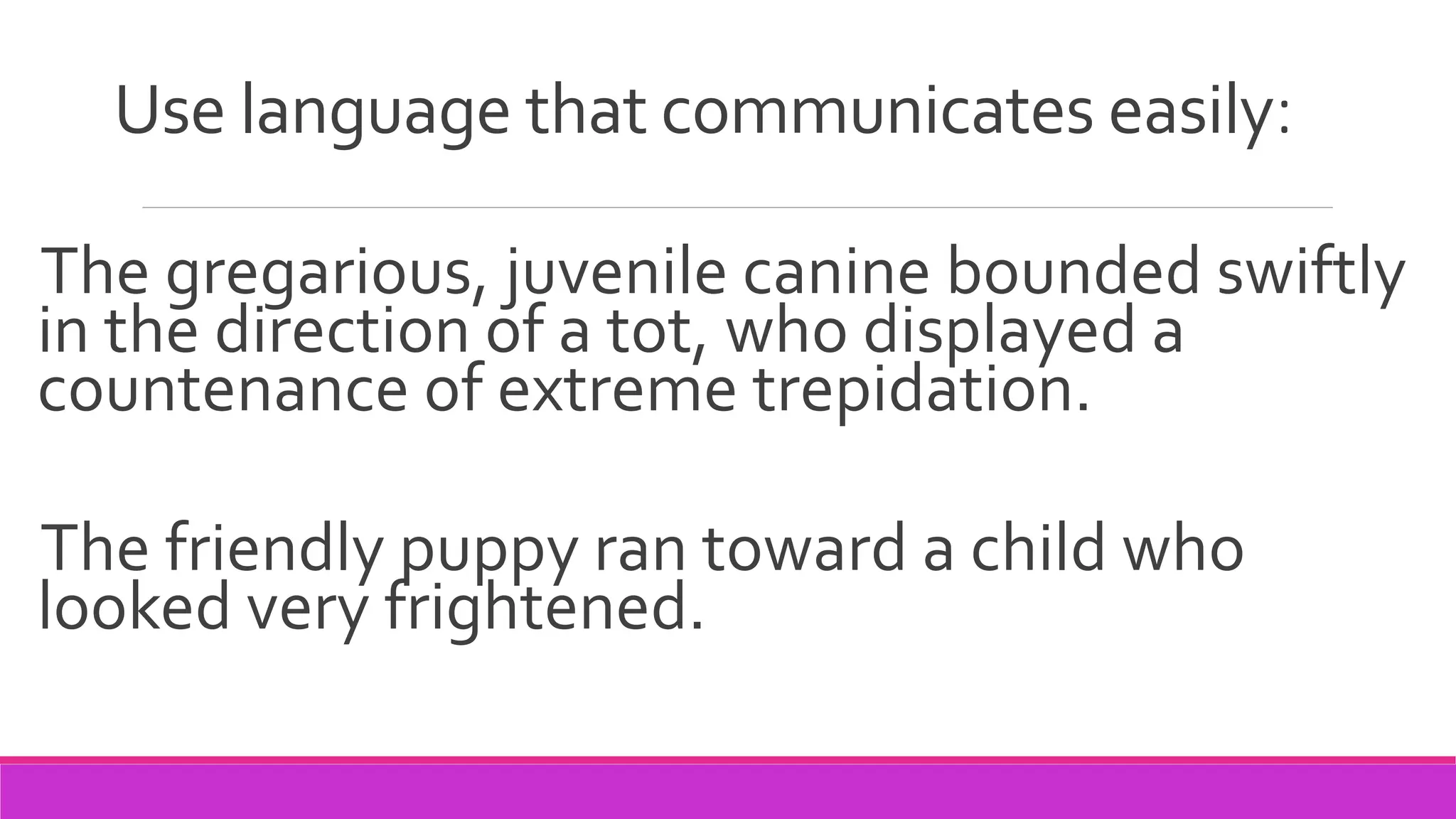
Use language that communicates easily:
The gregarious, juvenile canine bounded swiftly
in the direction of a tot, who displayed a
countenance of extreme trepidation.
The friendly puppy ran toward a child who
looked very frightened.
MoreTips forClearWriting &
Communication
Use headings and subheadings, especially
those specified in instructions
Use bullets, graphs, tables where helpful
No jargon
No alphabet soup
USE
PERSON FIRST,
STRENGTH-BASED,
RESPECTFUL LANGUAGE!
 Follow formatting requirements
 Follow instructions for headings and order of
sections
 Make sure every question asked is answered
– this is so important, check twice (at least)!!!
 Do not repeat yourself
(unless required by instructions)
Do not “pad” application with
repetitive or irrelevant extra
information or attachments
Do not send more material than
requested
CommonGrant Sections
The Abstract
•Often most important section
•What reviewers focus on &Council
members vote on
•Many prefer to write this last
TheAbstract
•Clear
•Concise
•Complete
•Communicates
OrganizationalQualifications
Your organization’s abilities & capacity
Why will you succeed:
past experience & current networks
Personnel & experience
OrganizationalQualifications
Do not over-do this, especially for NJCDD which
has strict limits on section length
Keep in proper application sections
oDo not confuse this with or put in project narrative
oKeep separate from planned activities, objectives,
goals
Targeted Population
Brief background about why your project will
produce outcomes the grantor wishes to
achieve through the grant for the people the
grantor wishes to reach
If possible, include example(s) of data,
research, or of a similar project to
demonstrate that successful outcomes are
likely to result from your proposed activities.
Can be project from another state,
university research, or anecdotal examples
Project Narrative-Goal
◦What is the long term change
that the project will make
more likely?
Project Narrative -Objectives
•What are the measurable short term
outcomes and benefits that will be produced
by your project?
• Be realistic
• Be specific -not too broad or general
Project Narrative -Activities
Each objective is the result of numerous
activities.
State the measurable specific tasks or actions
that will produce each objective.
Who will do what , when they will do it, how
you will measure outcomes
SMART
Specific
Measurable
Achievable
Relevant
Time Bound
Check forThe 5W’s
Does your project narrative cover: Who, what, where, when & why ?
Who will do What with the grantor’s money?
Where and When will the activities occur?
What specific outcomes will result from the activities?
Why/How will these outcomes lead to the objectives & goal(s)?
What will be delivered to the Council as a product of the grant
project?
Output/Outcome
the specific measurable result of the project
activities
e.g. 20 people with developmental disabilities
will learn how to use an email account.
How will you demonstrate success
What data will you gather & how will it be gathered
Recordkeeping- how will you save data
How will you analyze & report data (outcomes)
Evaluation methodology –
How you will measure and report progress and results
Budget
•Realistic
•Reasonable and necessary
•Answer questions, meet requirements-
comply with federal requirements
Budget
•Budget Explains “Input” – the resources you will use to
perform the activities you describe in the application
e.g. funding, staff time, equipment, volunteers, etc.
•Be consistent- expenses for activities in your budget
should match activities described in project narrative.
Budget Narrative
•Another chance to convince the reviewer that
the result you are promising is worth the
money you are asking them to spend on
project.
•Reassure that the grantor’s money will be
used wisely to produce desired outcomes.
Sustainability / Duplication
Remembering that the mission and purpose of
the granting organization is to impact a public
issue and make lasting, long term change
(goals):
Explain how your project will continue after
the grant period.
Explain how your project can be implemented
by others to have the same positive outcomes.
Dissemination
How will you report your activities and outcomes, and
other information and data about the project, to the
public or interested parties?
Publications
Online resources
Presentations
Technical Assistance to Others
FinalizingYourApplication
Take a day or 2 away from draft, then read & edit
Then have someone with fresh eyes read & edit
Have someone else read it, not take notes, & tell
you what the project is about
Revise many times:
“Great works are not written, they are rewritten.”
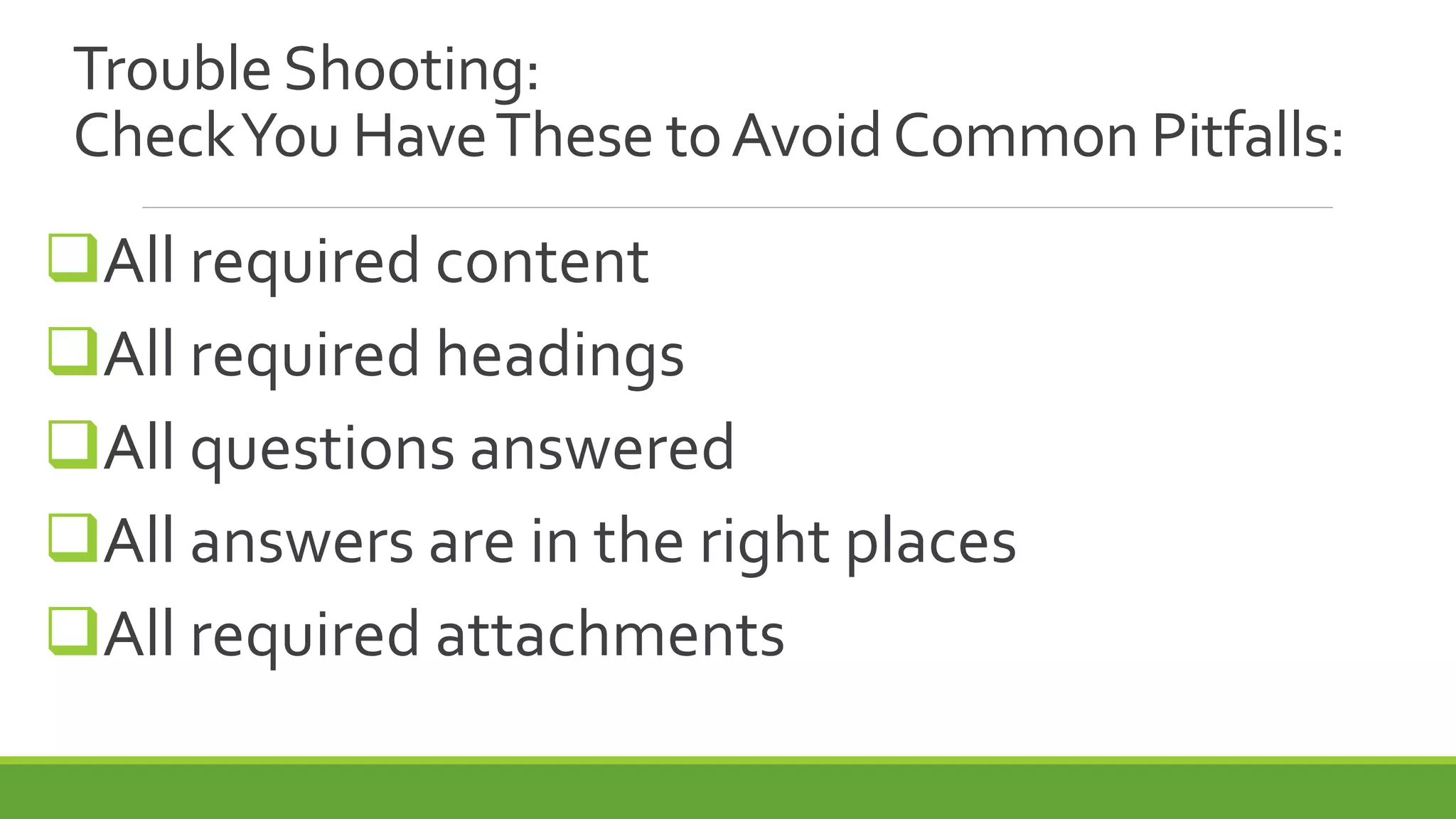
Trouble Shooting:
CheckYou HaveThese toAvoidCommon Pitfalls:
All required content
All required headings
All questions answered
All answers are in the right places
All required attachments
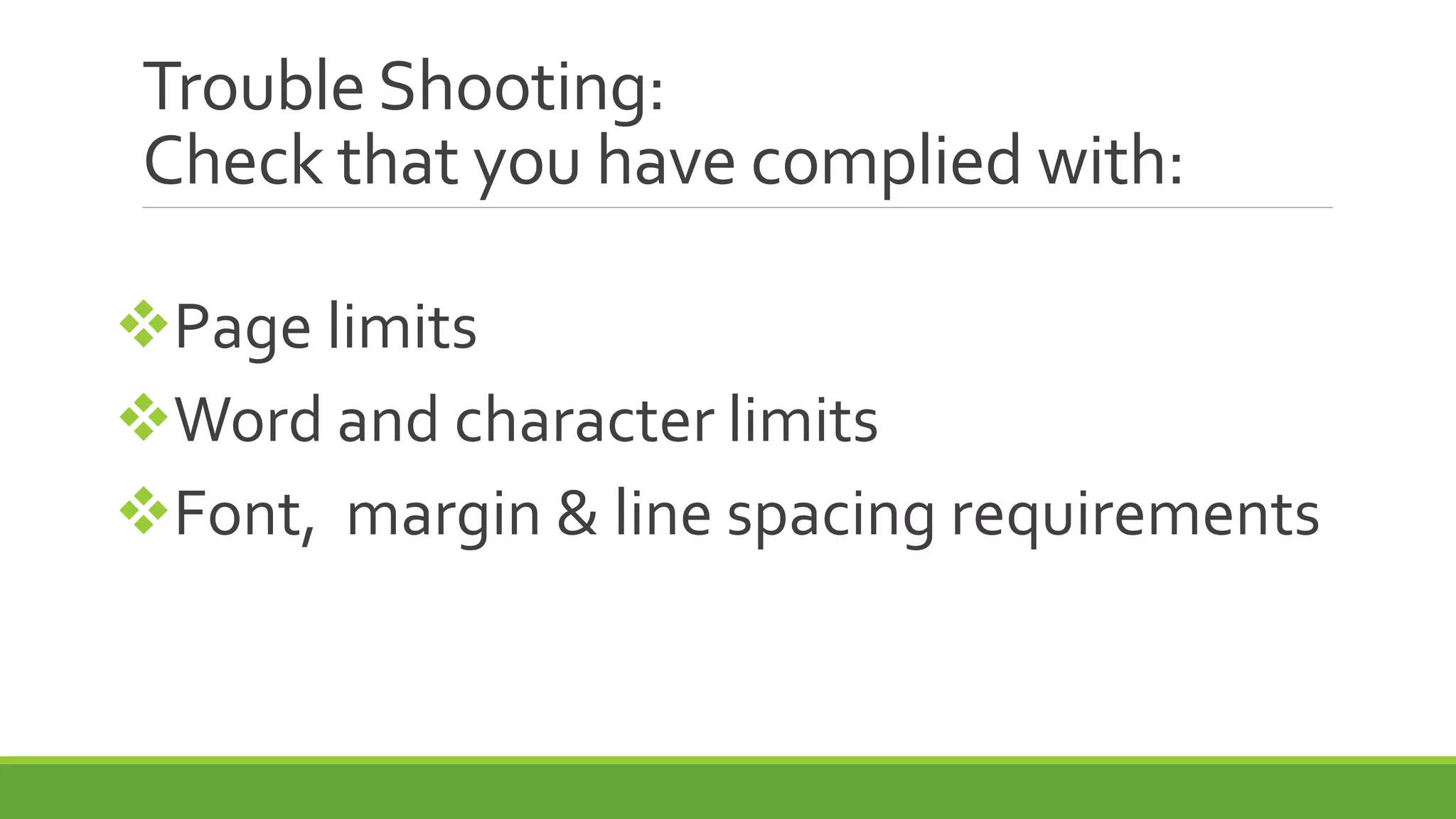
Trouble Shooting:
Check that you have complied with:
Page limits
Word and character limits
Font, margin & line spacing requirements
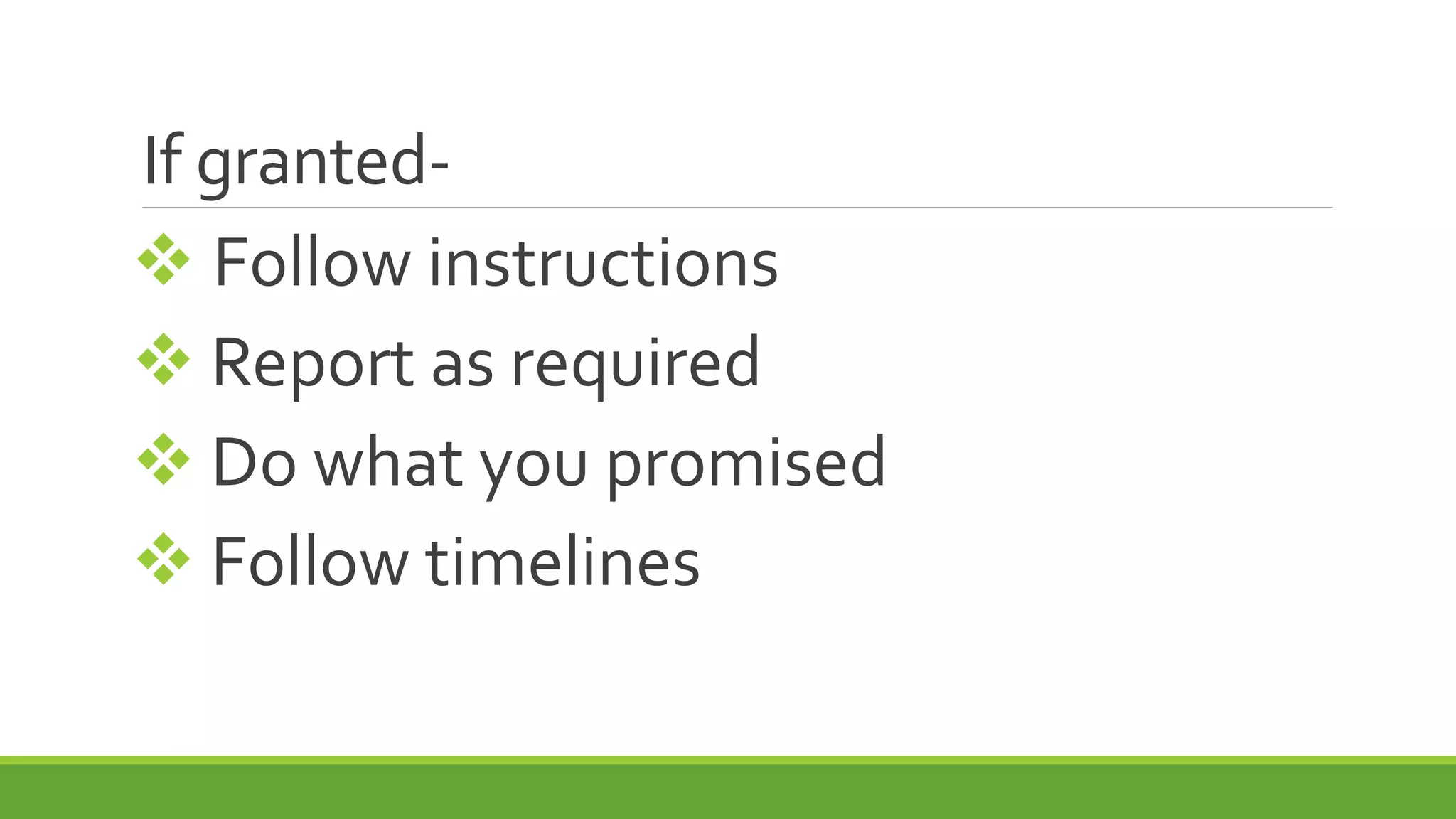
If granted-
 Follow instructions
 Report as required
 Do what you promised
 Follow timelines
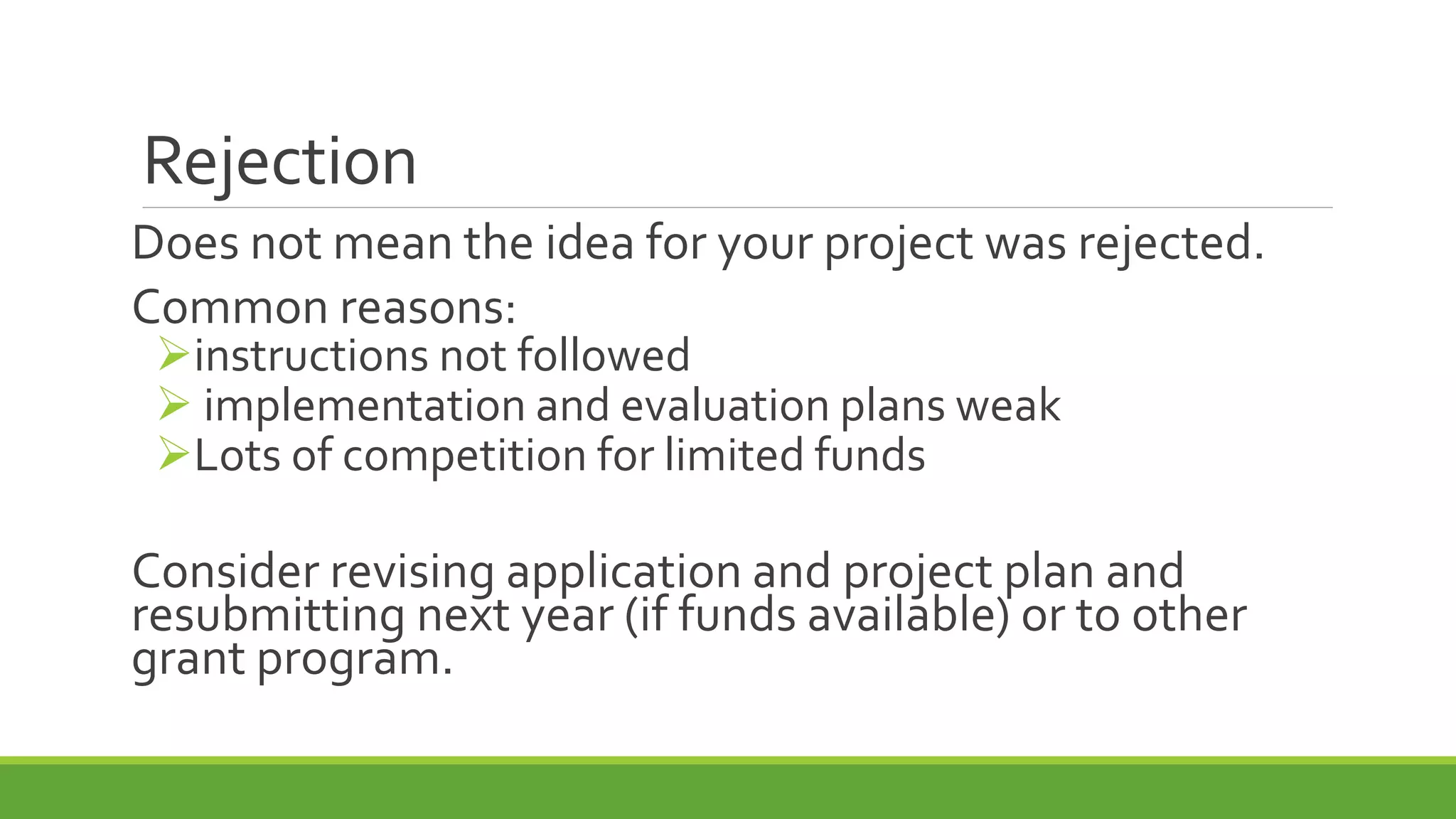
Rejection
Does not mean the idea for your project was rejected.
Common reasons:
instructions not followed
 implementation and evaluation plans weak
Lots of competition for limited funds
Consider revising application and project plan and
resubmitting next year (if funds available) or to other
grant program.
◦QUESTIONS?

Effective Grantwriting -

  • 1.
    EFFECTIVE GRANTWRITING NJ Council onDevelopmental Disabilities November 18, 2014 Dolores Roselli
  • 2.
    FirstThings to Consider Agrant is issued because the grantor wants to develop innovative ways to successfully address a public issue. A grant is an agreement to give money, with conditions attached for the purpose of achieving specific outcomes.
  • 3.
    “There is nograntsmanship that will turn a bad idea into a good one, but there are many ways to disguise a good idea.” Norm Braverman, National Institute of Health
  • 4.
    A grant applicationmust present much more than a good idea. A successful grant application must explain in detail a specific plan for implementing a good idea.
  • 5.
    Does your proposedproject match the purpose of the grant? Read everything the Grantor provides about the grant!
  • 6.
    Review and understandthe granting organization’s: mission priorities purpose for offering the grant
  • 7.
    NJCDD Mission, Purposeand Priorities • Mission • Five -Year Plan • Purpose of current grant cycle • Desired project outcomes
  • 8.
    Understanding theGrantor’s Mission, Priorities& Purpose • Target population / People to be served •Type of activities previously awarded grants • Desired Grant Outcomes
  • 9.
    Types of grants ◦Demonstration/ Pilot Project ◦Training ◦Research
  • 10.
    Is your organizationeligible for the grant? Eligibility specified in grant guidelines & application NJCDD does not give grants to individuals, only to organizations Conflicts of interest & appearance of impropriety Must have partnership agreement for any collaborating organizations
  • 11.
    Avoiding Problems Submitting theApplication What type of delivery is required or permitted?  Establish online submission accounts in advance  Fed-ex & others will not deliver to post office box  Number of copies needed  Form of copies- how bound, thumb drives, etc.
  • 12.
    Avoiding Problems SubmittingonTime Is deadline when received or when postmarked? Do not submit on last day or at last minute Leave more time than you think you need!
  • 13.
    PlanAhead forAttachments Determine earlywhat is required & start preparing and collecting Forms Signatures Organizational resolutions, votes, records Letters of Support
  • 14.
    Can your organizationperform all activities of the grant project?  Ability & Capacity: personnel, facilities, experience to perform, evaluate, & continue the activities Are there match requirements? Review Selection criteria – example: if criteria includes hosting website
  • 15.
    Remember – Rules andRequirements Apply to All Applicants !
  • 16.
    Beginning theGrantwriting Process •Read and read again: application guidelines &instructions • Look at past recipients • Call grant officer re: questions on instructions, purpose
  • 17.
    Make sure tostart your draft with required formatting: o font o margins o line spacing o page, word, character limits
  • 18.
    Good writing =GoodCommunication Clearorganized writing reflects clear, organized thinking Clear organized writing helps the reader understand you and see your plan clearly
  • 19.
    Tips forClearWriting Active tense– start with a noun Diamonds are clear Avoid first person – I,We, Our Grammar!!!! Thanks I needed “That” & “which” hunts
  • 20.
    Communicating Effectively •Consider youraudience of reviewers •NJCDD and other grantors include community members-reviewers will not just be professionals or others with experience reviewing or writing grants
  • 21.
    Communicating Effectively • NJCDDreviewers and other granting organizations include individuals who may have intellectual disabilities or processing differences • Good writing tips become especially important- short sentences, active tense, understandable language
  • 22.
    Use language thatcommunicates easily: The gregarious, juvenile canine bounded swiftly in the direction of a tot, who displayed a countenance of extreme trepidation. The friendly puppy ran toward a child who looked very frightened.
  • 23.
    MoreTips forClearWriting & Communication Useheadings and subheadings, especially those specified in instructions Use bullets, graphs, tables where helpful No jargon No alphabet soup
  • 24.
  • 25.
     Follow formattingrequirements  Follow instructions for headings and order of sections  Make sure every question asked is answered  Make sure every question asked is answered – this is so important, check twice (at least)!!!  Do not repeat yourself (unless required by instructions)
  • 26.
    Do not “pad”application with repetitive or irrelevant extra information or attachments Do not send more material than requested
  • 27.
    CommonGrant Sections The Abstract •Oftenmost important section •What reviewers focus on &Council members vote on •Many prefer to write this last
  • 28.
  • 29.
    OrganizationalQualifications Your organization’s abilities& capacity Why will you succeed: past experience & current networks Personnel & experience
  • 30.
    OrganizationalQualifications Do not over-dothis, especially for NJCDD which has strict limits on section length Keep in proper application sections oDo not confuse this with or put in project narrative oKeep separate from planned activities, objectives, goals
  • 31.
    Targeted Population Brief backgroundabout why your project will produce outcomes the grantor wishes to achieve through the grant for the people the grantor wishes to reach
  • 32.
    If possible, includeexample(s) of data, research, or of a similar project to demonstrate that successful outcomes are likely to result from your proposed activities. Can be project from another state, university research, or anecdotal examples
  • 33.
    Project Narrative-Goal ◦What isthe long term change that the project will make more likely?
  • 34.
    Project Narrative -Objectives •Whatare the measurable short term outcomes and benefits that will be produced by your project? • Be realistic • Be specific -not too broad or general
  • 35.
    Project Narrative -Activities Eachobjective is the result of numerous activities. State the measurable specific tasks or actions that will produce each objective. Who will do what , when they will do it, how you will measure outcomes
  • 36.
  • 37.
    Check forThe 5W’s Doesyour project narrative cover: Who, what, where, when & why ? Who will do What with the grantor’s money? Where and When will the activities occur? What specific outcomes will result from the activities? Why/How will these outcomes lead to the objectives & goal(s)? What will be delivered to the Council as a product of the grant project?
  • 38.
    Output/Outcome the specific measurableresult of the project activities e.g. 20 people with developmental disabilities will learn how to use an email account.
  • 39.
    How will youdemonstrate success What data will you gather & how will it be gathered Recordkeeping- how will you save data How will you analyze & report data (outcomes) Evaluation methodology – How you will measure and report progress and results
  • 40.
    Budget •Realistic •Reasonable and necessary •Answerquestions, meet requirements- comply with federal requirements
  • 41.
    Budget •Budget Explains “Input”– the resources you will use to perform the activities you describe in the application e.g. funding, staff time, equipment, volunteers, etc. •Be consistent- expenses for activities in your budget should match activities described in project narrative.
  • 42.
    Budget Narrative •Another chanceto convince the reviewer that the result you are promising is worth the money you are asking them to spend on project. •Reassure that the grantor’s money will be used wisely to produce desired outcomes.
  • 43.
    Sustainability / Duplication Rememberingthat the mission and purpose of the granting organization is to impact a public issue and make lasting, long term change (goals): Explain how your project will continue after the grant period. Explain how your project can be implemented by others to have the same positive outcomes.
  • 44.
    Dissemination How will youreport your activities and outcomes, and other information and data about the project, to the public or interested parties? Publications Online resources Presentations Technical Assistance to Others
  • 45.
    FinalizingYourApplication Take a dayor 2 away from draft, then read & edit Then have someone with fresh eyes read & edit Have someone else read it, not take notes, & tell you what the project is about Revise many times: “Great works are not written, they are rewritten.”
  • 46.
    Trouble Shooting: CheckYou HaveThesetoAvoidCommon Pitfalls: All required content All required headings All questions answered All answers are in the right places All required attachments
  • 47.
    Trouble Shooting: Check thatyou have complied with: Page limits Word and character limits Font, margin & line spacing requirements
  • 48.
    If granted-  Followinstructions  Report as required  Do what you promised  Follow timelines
  • 49.
    Rejection Does not meanthe idea for your project was rejected. Common reasons: instructions not followed  implementation and evaluation plans weak Lots of competition for limited funds Consider revising application and project plan and resubmitting next year (if funds available) or to other grant program.
  • 50.