D R . N A M E R A H N A S I R
P O S T G R A D U A T E T R A I N E E
S U R G E R Y
P A F H O S P I T A L , I B D .
WOUNDS, HEALING AND
TISSUE REPAIR
WOUND
DEFINITION:
 A wound by true definition is a breakdown in the
protective function of the skin; the loss of continuity
of epithelium, with or without loss of
underlying connective tissue (i.e. muscle, bone,
nerves) following injury to the skin or underlying
tissues/ organs caused by surgery, a blow, a cut,
chemicals, heat/ cold, friction/ shear force, pressure
or as a result of disease, such as leg ulcers or
carcinomas.
CLASSIFICATION OF WOUND
RANK AND WAKEFIELD CLASSIFICATION
• TIDY WOUNDS
Incised
Clean
Healthy tissue
Seldom tissue loss
• UNTIDY WOUNDS
Crushed
Contaminated
Devitalized tissue
Often tissue loss
TYPE OF WOUNDS
 CLASSIFICATION BASED ON TYPE OF WOUND
I. Clean incised wound
II. Lacerated wound
III. Bruising and contusion
IV. Haematoma
V. Puncture wound
VI. Abrasion
VII. Crush injury
VIII. Injuries to bone and joint (maybe open or closed)
IX. Injuries to nerve (either clean cut or crush)
X. Injuries to arteries and veins
XI. Penetrating wounds
CLASSIFICATION BASED ON THICKNESS OF
WOUND
 Superficial wound
 Partial thickness
 Full thickness
 Deep wounds
 Complicated wounds
 Penetrating wound
CLASSIFICATION OF SURGICAL WOUNDS
BASED ON RISK OF INFECTION AND DEGREE OF
CONTAMINATION
 Clean wound (Grade I)
 Clean contaminated wound (Grade II)
 Contaminated wound (Grade III)
 Dirty infected wound (Grade IV)
WOUND HEALING
 A mechanism whereby the body attempts to restore
the integrity of the injured part.
 The process of healing involves 2 distinct processes:
Regeneration: Is when healing takes place by
proliferation of parenchymal cells and usually results
in complete restoration of the original tissues.
Repair: It is a healing outcome in which tissues do
not return to their normal architecture and function.
It usually results in scar formation.
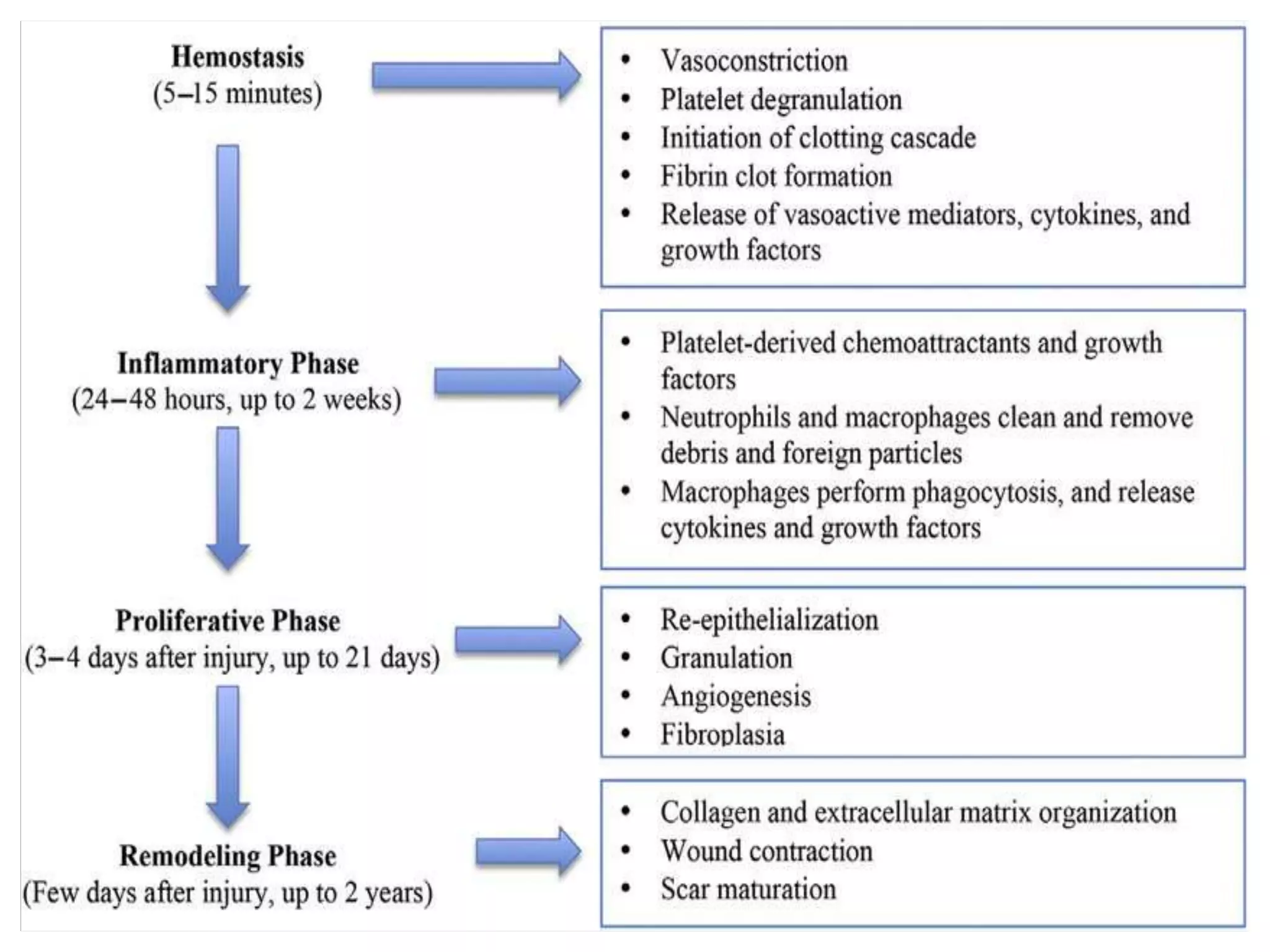
PHASES OF WOUND HEALING
Wound healing takes place in three phases;
I. The inflammatory phase
II. The proliferative phase
III. The remodelling (maturating phase)
A hemostatic phase is usually referred to as
occuring before the inflammatory phase.
Wounds, healing and tissue repair

Wounds, healing and tissue repair

  • 1.
    D R .N A M E R A H N A S I R P O S T G R A D U A T E T R A I N E E S U R G E R Y P A F H O S P I T A L , I B D . WOUNDS, HEALING AND TISSUE REPAIR
  • 2.
    WOUND DEFINITION:  A woundby true definition is a breakdown in the protective function of the skin; the loss of continuity of epithelium, with or without loss of underlying connective tissue (i.e. muscle, bone, nerves) following injury to the skin or underlying tissues/ organs caused by surgery, a blow, a cut, chemicals, heat/ cold, friction/ shear force, pressure or as a result of disease, such as leg ulcers or carcinomas.
  • 3.
    CLASSIFICATION OF WOUND RANKAND WAKEFIELD CLASSIFICATION • TIDY WOUNDS Incised Clean Healthy tissue Seldom tissue loss • UNTIDY WOUNDS Crushed Contaminated Devitalized tissue Often tissue loss
  • 4.
    TYPE OF WOUNDS CLASSIFICATION BASED ON TYPE OF WOUND I. Clean incised wound II. Lacerated wound III. Bruising and contusion IV. Haematoma V. Puncture wound VI. Abrasion VII. Crush injury VIII. Injuries to bone and joint (maybe open or closed) IX. Injuries to nerve (either clean cut or crush) X. Injuries to arteries and veins XI. Penetrating wounds
  • 5.
    CLASSIFICATION BASED ONTHICKNESS OF WOUND  Superficial wound  Partial thickness  Full thickness  Deep wounds  Complicated wounds  Penetrating wound
  • 6.
    CLASSIFICATION OF SURGICALWOUNDS BASED ON RISK OF INFECTION AND DEGREE OF CONTAMINATION  Clean wound (Grade I)  Clean contaminated wound (Grade II)  Contaminated wound (Grade III)  Dirty infected wound (Grade IV)
  • 8.
    WOUND HEALING  Amechanism whereby the body attempts to restore the integrity of the injured part.  The process of healing involves 2 distinct processes: Regeneration: Is when healing takes place by proliferation of parenchymal cells and usually results in complete restoration of the original tissues. Repair: It is a healing outcome in which tissues do not return to their normal architecture and function. It usually results in scar formation.
  • 9.
    PHASES OF WOUNDHEALING Wound healing takes place in three phases; I. The inflammatory phase II. The proliferative phase III. The remodelling (maturating phase) A hemostatic phase is usually referred to as occuring before the inflammatory phase.