Grammar
Presentation
• Would like
• Would prefer
• Would rather
Would like:
We use the modal expression ‘would
like’ in English to talk about our
desires and wants.
Would like is a more formal way to say
“want.”
Here are some
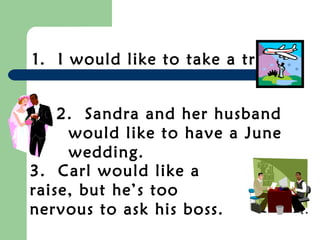
1. I would like to take a trip.
2. Sandra and her husband
would like to have a June
wedding.
3. Carl would like a
raise, but he’s too
nervous to ask his boss.
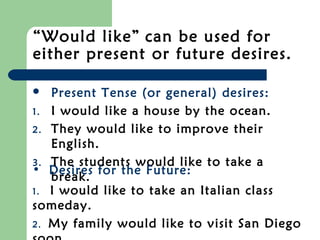
“Would like” can be used for
either present or future desires.
 Present Tense (or general) desires:
1. I would like a house by the ocean.
2. They would like to improve their
English.
3. The students would like to take a
break.
• Desires for the Future:
1. I would like to take an Italian class
someday.
2. My family would like to visit San Diego
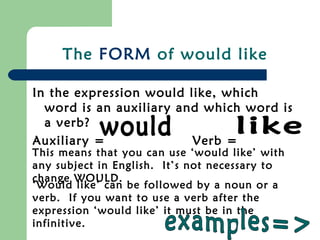
The FORM of would like
In the expression would like, which
word is an auxiliary and which word is
a verb?
Auxiliary = Verb =
This means that you can use ‘would like’ with
any subject in English. It’s not necessary to
change WOULD.
‘Would like’ can be followed by a noun or a
verb. If you want to use a verb after the
expression ‘would like’ it must be in the
infinitive.
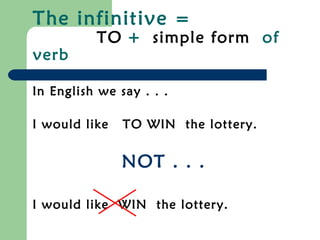
The infinitive =
TO + simple form of
verb
In English we say . . .
I would like TO WIN the lottery.
NOT . . .
I would like WIN the lottery.
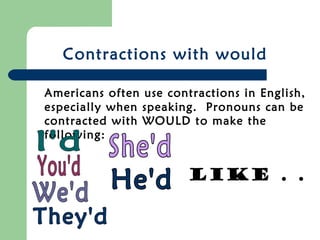
Contractions with would
Americans often use contractions in English,
especially when speaking. Pronouns can be
contracted with WOULD to make the
following:
like . .
.
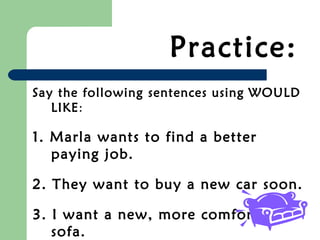
Practice:
Say the following sentences using WOULD
LIKE:
1. Marla wants to find a better
paying job.
2. They want to buy a new car soon.
3. I want a new, more comfortable
sofa.
Would prefer &
Would rather
 We use the modal expressions
“would prefer” and “would rather”
to talk about our preferences in
English.
 These two expression mean the
same thing and are synonyms for
the verb “prefer.”
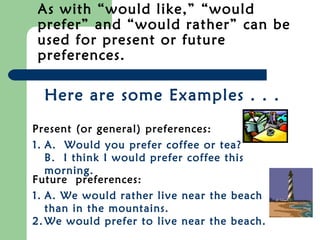
As with “would like,” “would
prefer” and “would rather” can be
used for present or future
preferences.
Here are some Examples . . .
Present (or general) preferences:
1. A. Would you prefer coffee or tea?
B. I think I would prefer coffee this
morning.
Future preferences:
1. A. We would rather live near the beach
than in the mountains.
2. We would prefer to live near the beach.
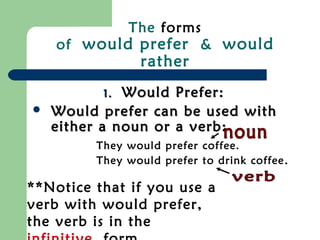
The forms
of would prefer & would
rather
1.1. Would Prefer:Would Prefer:
 Would prefer can be used withWould prefer can be used with
either a noun or a verb:either a noun or a verb:
They would prefer coffee.
They would prefer to drink coffee ..
**Notice that if you use a
verb with would prefer,
the verb is in the
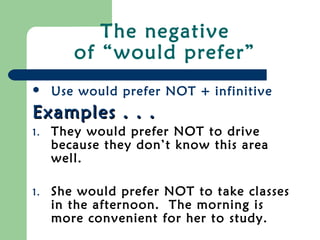
The negative
of “would prefer”
 Use would prefer NOT + infinitive
Examples . . .Examples . . .
1. They would prefer NOT to drive
because they don’t know this area
well.
1. She would prefer NOT to take classes
in the afternoon. The morning is
more convenient for her to study.
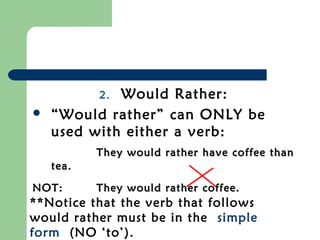
2. Would Rather:
 “Would rather” can ONLY be
used with either a verb:
They would rather have coffee thanThey would rather have coffee than
tea.tea.
NOT:NOT: They would rather coffee.They would rather coffee.
**Notice that the verb that follows
would rather must be in the simple
form (NO ‘to’).
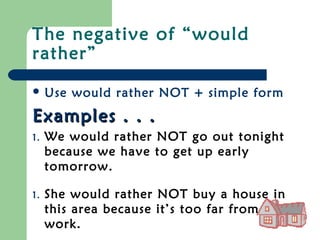
The negative of “would
rather”
 Use would rather NOT + simple form
Examples . . .Examples . . .
1. We would rather NOT go out tonight
because we have to get up early
tomorrow.
1. She would rather NOT buy a house in
this area because it’s too far from her
work.
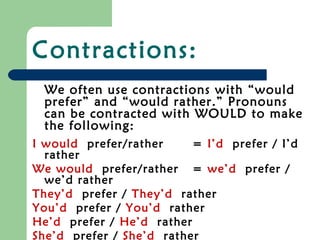
Contractions:
We often use contractions with “would
prefer” and “would rather.” Pronouns
can be contracted with WOULD to make
the following:
I would prefer/rather = I’d prefer / I’d
rather
We would prefer/rather = we’d prefer /
we’d rather
They’d prefer / They’d rather
You’d prefer / You’d rather
He’d prefer / He’d rather
She’d prefer / She’d rather
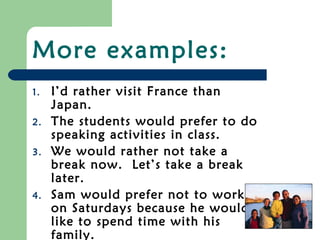
More examples:
1. I’d rather visit France than
Japan.
2. The students would prefer to do
speaking activities in class.
3. We would rather not take a
break now. Let’s take a break
later.
4. Sam would prefer not to work
on Saturdays because he would
like to spend time with his
family.
Practice . . .
1. Would you prefer to eat Italian food
or Chinese food?
2. Would you rather travel to India or
China?
3. Would you prefer to work 5 8-hour
days or 4 10-hour days?
4. Would you rather have a cat, a dog,
or a dog?
For more
practice . . .
Click on or go to the following
website. Do this activity with a
partner, if possible:
http://www.quia.com/quiz/737156.html

Would like would prefer - would rather

  • 1.
    Grammar Presentation • Would like •Would prefer • Would rather
  • 2.
    Would like: We usethe modal expression ‘would like’ in English to talk about our desires and wants. Would like is a more formal way to say “want.” Here are some
  • 3.
    1. I wouldlike to take a trip. 2. Sandra and her husband would like to have a June wedding. 3. Carl would like a raise, but he’s too nervous to ask his boss.
  • 4.
    “Would like” canbe used for either present or future desires.  Present Tense (or general) desires: 1. I would like a house by the ocean. 2. They would like to improve their English. 3. The students would like to take a break. • Desires for the Future: 1. I would like to take an Italian class someday. 2. My family would like to visit San Diego
  • 5.
    The FORM ofwould like In the expression would like, which word is an auxiliary and which word is a verb? Auxiliary = Verb = This means that you can use ‘would like’ with any subject in English. It’s not necessary to change WOULD. ‘Would like’ can be followed by a noun or a verb. If you want to use a verb after the expression ‘would like’ it must be in the infinitive.
  • 6.
    The infinitive = TO+ simple form of verb In English we say . . . I would like TO WIN the lottery. NOT . . . I would like WIN the lottery.
  • 7.
    Contractions with would Americansoften use contractions in English, especially when speaking. Pronouns can be contracted with WOULD to make the following: like . . .
  • 8.
    Practice: Say the followingsentences using WOULD LIKE: 1. Marla wants to find a better paying job. 2. They want to buy a new car soon. 3. I want a new, more comfortable sofa.
  • 9.
    Would prefer & Wouldrather  We use the modal expressions “would prefer” and “would rather” to talk about our preferences in English.  These two expression mean the same thing and are synonyms for the verb “prefer.”
  • 10.
    As with “wouldlike,” “would prefer” and “would rather” can be used for present or future preferences. Here are some Examples . . . Present (or general) preferences: 1. A. Would you prefer coffee or tea? B. I think I would prefer coffee this morning. Future preferences: 1. A. We would rather live near the beach than in the mountains. 2. We would prefer to live near the beach.
  • 11.
    The forms of wouldprefer & would rather 1.1. Would Prefer:Would Prefer:  Would prefer can be used withWould prefer can be used with either a noun or a verb:either a noun or a verb: They would prefer coffee. They would prefer to drink coffee .. **Notice that if you use a verb with would prefer, the verb is in the
  • 12.
    The negative of “wouldprefer”  Use would prefer NOT + infinitive Examples . . .Examples . . . 1. They would prefer NOT to drive because they don’t know this area well. 1. She would prefer NOT to take classes in the afternoon. The morning is more convenient for her to study.
  • 13.
    2. Would Rather: “Would rather” can ONLY be used with either a verb: They would rather have coffee thanThey would rather have coffee than tea.tea. NOT:NOT: They would rather coffee.They would rather coffee. **Notice that the verb that follows would rather must be in the simple form (NO ‘to’).
  • 14.
    The negative of“would rather”  Use would rather NOT + simple form Examples . . .Examples . . . 1. We would rather NOT go out tonight because we have to get up early tomorrow. 1. She would rather NOT buy a house in this area because it’s too far from her work.
  • 15.
    Contractions: We often usecontractions with “would prefer” and “would rather.” Pronouns can be contracted with WOULD to make the following: I would prefer/rather = I’d prefer / I’d rather We would prefer/rather = we’d prefer / we’d rather They’d prefer / They’d rather You’d prefer / You’d rather He’d prefer / He’d rather She’d prefer / She’d rather
  • 16.
    More examples: 1. I’drather visit France than Japan. 2. The students would prefer to do speaking activities in class. 3. We would rather not take a break now. Let’s take a break later. 4. Sam would prefer not to work on Saturdays because he would like to spend time with his family.
  • 17.
    Practice . .. 1. Would you prefer to eat Italian food or Chinese food? 2. Would you rather travel to India or China? 3. Would you prefer to work 5 8-hour days or 4 10-hour days? 4. Would you rather have a cat, a dog, or a dog?
  • 18.
    For more practice .. . Click on or go to the following website. Do this activity with a partner, if possible: http://www.quia.com/quiz/737156.html