World Health Organization
(WHO)
Presented By
Hari Prasad Kafle
I D # 07MPH003
FHMS; AAIDU
Introduction
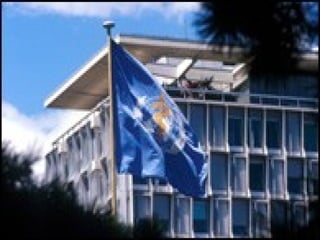
 World Health Organization is established in 7th

April 1948.

 It is a specialized, non-political, health agency of

United Nation with headquarter of Geneva,
Switzerland.

 It is responsible for providing leadership on global

health matters.

 Every year 7th April, is celebrated as “World

Health Day”
Vision
“The attainment by all people
the highest level of health”
Mission

“To lead strategic collaborative efforts
among Member States and other
partners to promote equity in health,
to combat disease, and to improve
the quality of, and lengthen, the lives
of the all peoples of the world.”
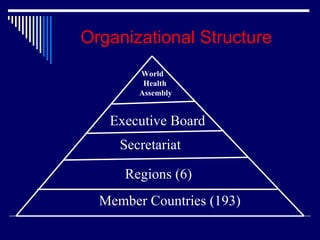
Organizational Structure
World
Health
Assembly

Executive Board
Secretariat
Regions (6)
Member Countries (193)
World Health Assembly
 It is the Supreme governing body of the

organization.

 It meets annually generally in the month of

May and in headquarter Geneva.

 Main functions of assembly are:





To determine international health policy and
program
To review the work of past year.
To approve the budget.
To elect member state to designate a person to serve
for 3 year on executive board.
Executive Board
 The board composed of at least 18 members.

Now there are 34 members.
 At least 3 members elected from each region.
 They are composed of Technically qualified persons

in the field of Health.

 The board meets at least twice a year.
 The main function of board is to give effect to the

decisions and policies of the assembly.

 It has also power to take action in an emergency such

as epidemics, earthquakes, floods etc.
Secretariat
 Secretariat is Headed by the Director

General who is the chief of technical and
administrative officer of the organization.
 There are 5 assistant Director General

and there responsibility is assigned by
DG in different Divisions.
 WHO Secretariat is composed of 14

different divisions:
Divisions of Secretariat
1. Epidemiological surveillance and

2.
3.
4.
5.
6.

health situation and trend
assessment
Communicable Disease
Vector biology and control
Environmental Health
Public information and education
for health
Diagnostic, therapeutic and
rehabilitative technology
Divisions of Secretariat
7.

8.
9.
10.
11.
12.
13.
14.

Mental health
Strengthening of health services
Family health
Non communicable disease
Health manpower development
Information system supports
Personal and general services
Budget and finance
WHO Regions


Regions
South East Asia

Headquarters
New Delhi (India)



Africa

Brazzaville (Congo)



American

Washington DC (U.S.A.)



Europe

Copenhagen (Denmark)



Eastern Mediterranean Alexandria (Egypt)



Western Pacific

Manila (Philippines)
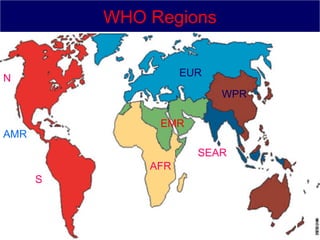
WHO Regions
WHO Regions
EUR

N

WPR
EMR

AMR

SEAR
AFR
S
Member States
 193 Member states among which 191

Members and 2 Associate members;
Niue and the Cook Islands.

 All UN Member states except 2 Non

UN members States; Liechtenstein
and Switzerland.
Main Working Areas
1.

2.
3.
4.
5.
6.
7.
8.

Prevention and control of specific
disease
Development of comprehensive
health services
Family health
Environmental health
Health statistics
Bio-medical researches
Health literatures and information
Cooperation with other organizations
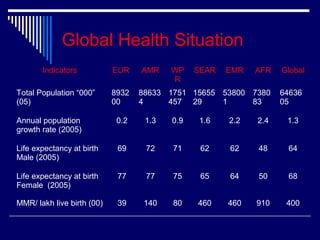
Global Health Situation
Indicators
Total Population “000”
(05)

EUR
8932
00

AMR

WP
R

SEAR

EMR

AFR

88633 1751 15655 53800 7380
4
457 29
1
83

Global
64636
05

Annual population
growth rate (2005)

0.2

1.3

0.9

1.6

2.2

2.4

1.3

Life expectancy at birth
Male (2005)

69

72

71

62

62

48

64

Life expectancy at birth
Female (2005)

77

77

75

65

64

50

68

MMR/ lakh live birth (00)

39

140

80

460

460

910

400
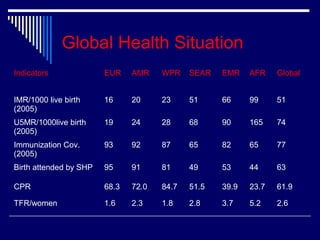
Global Health Situation
Indicators

EUR

AMR

WPR

SEAR

EMR

AFR

Global

IMR/1000 live birth
(2005)

16

20

23

51

66

99

51

U5MR/1000live birth
(2005)

19

24

28

68

90

165

74

Immunization Cov.
(2005)

93

92

87

65

82

65

77

Birth attended by SHP

95

91

81

49

53

44

63

CPR

68.3

72.0

84.7

51.5

39.9

23.7

61.9

TFR/women

1.6

2.3

1.8

2.8

3.7

5.2

2.6
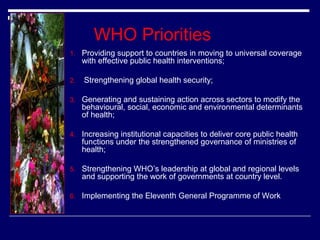
WHO Priorities
1. Providing support to countries in moving to universal coverage

with effective public health interventions;

2.

Strengthening global health security;

3. Generating and sustaining action across sectors to modify the

behavioural, social, economic and environmental determinants
of health;

4. Increasing institutional capacities to deliver core public health

functions under the strengthened governance of ministries of
health;

5. Strengthening WHO’s leadership at global and regional levels

and supporting the work of governments at country level.

6. Implementing the Eleventh General Programme of Work
Role in Public Health
 Providing leadership on matters critical to health

and engaging in partnerships where joint action
is needed;
 Shaping the research agenda and stimulating

the generation, translation and dissemination of
valuable knowledge;
 Setting norms and standards and promoting and

monitoring their implementation;
Role in Public Health
 Articulating ethical and evidence-based

policy options;

 Providing technical support, catalyzing

change, and building sustainable
institutional capacity; and

 Monitoring the health situation and

assessing health trends.
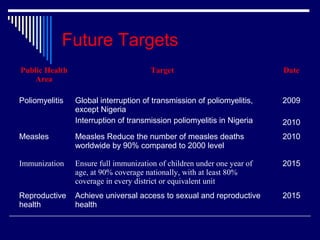
Future Targets
Public Health
Area

Target

Date

Global interruption of transmission of poliomyelitis,
except Nigeria
Interruption of transmission poliomyelitis in Nigeria

2009

Measles

Measles Reduce the number of measles deaths
worldwide by 90% compared to 2000 level

2010

Immunization

Ensure full immunization of children under one year of
age, at 90% coverage nationally, with at least 80%
coverage in every district or equivalent unit

2015

Reproductive
health

Achieve universal access to sexual and reproductive
health

2015

Poliomyelitis

2010
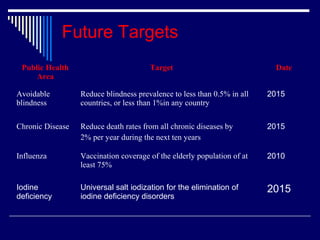
Future Targets
Public Health
Area

Target

Date

Avoidable
blindness

Reduce blindness prevalence to less than 0.5% in all
countries, or less than 1%in any country

2015

Chronic Disease

Reduce death rates from all chronic diseases by
2% per year during the next ten years

2015

Influenza

Vaccination coverage of the elderly population of at
least 75%

2010

Iodine
deficiency

Universal salt iodization for the elimination of
iodine deficiency disorders

2015
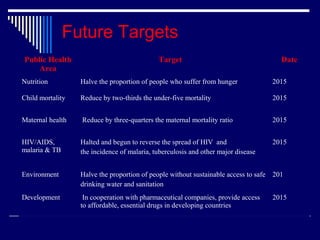
Future Targets
Public Health
Area

Target

Date

Nutrition

Halve the proportion of people who suffer from hunger

2015

Child mortality

Reduce by two-thirds the under-five mortality

2015

Maternal health

Reduce by three-quarters the maternal mortality ratio

2015

HIV/AIDS,
malaria & TB

Halted and begun to reverse the spread of HIV and
the incidence of malaria, tuberculosis and other major disease

2015

Environment

Halve the proportion of people without sustainable access to safe 201
drinking water and sanitation

Development

In cooperation with pharmaceutical companies, provide access
to affordable, essential drugs in developing countries

2015
Major Achievements
 Small Pox Eradication
 Alma Ata Conference: Concept of PHC
 Global strategy for Health for all by 2000
 Millennium Development Goals
Comparative Advantages
 Neutral Organization to all member state.


Nearly universal membership.

 Global presence and Networking.
 No parallel Organization in tackling diseases.
 Large no. of Expertise in all health issues.


Strong coordination and convincing ability.

 Strong fund collecting ability
 Global cooperation, collaboration and investment
Major Challenges
 Investing in health to reduce poverty.
 Building individual and global health security.
 Promoting universal coverage, gender equality and health-

related human rights.

 Tackling the determinants of health.
 Strengthening health systems and equitable access.
 Harnessing knowledge, science and technology.
 Strengthening governance, leadership and accountability.
 Emerging Health problems.
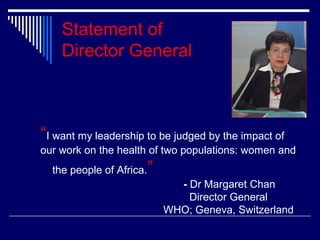
Statement of
Director General

“I want my leadership to be judged by the impact of
our work on the health of two populations: women and
the people of Africa.

”
- Dr Margaret Chan
Director General
WHO; Geneva, Switzerland
Conclusion
“Although WHO has both opportunities
and challenges; Its contribution is great to
increase the quality of live and living
standard globally.”
Any Question ???

Suggestion Please.
World health organization

World health organization

  • 1.
    World Health Organization (WHO) PresentedBy Hari Prasad Kafle I D # 07MPH003 FHMS; AAIDU
  • 3.
    Introduction  World HealthOrganization is established in 7th April 1948.  It is a specialized, non-political, health agency of United Nation with headquarter of Geneva, Switzerland.  It is responsible for providing leadership on global health matters.  Every year 7th April, is celebrated as “World Health Day”
  • 4.
    Vision “The attainment byall people the highest level of health”
  • 5.
    Mission “To lead strategiccollaborative efforts among Member States and other partners to promote equity in health, to combat disease, and to improve the quality of, and lengthen, the lives of the all peoples of the world.”
  • 6.
  • 7.
    World Health Assembly It is the Supreme governing body of the organization.  It meets annually generally in the month of May and in headquarter Geneva.  Main functions of assembly are:     To determine international health policy and program To review the work of past year. To approve the budget. To elect member state to designate a person to serve for 3 year on executive board.
  • 8.
    Executive Board  Theboard composed of at least 18 members. Now there are 34 members.  At least 3 members elected from each region.  They are composed of Technically qualified persons in the field of Health.  The board meets at least twice a year.  The main function of board is to give effect to the decisions and policies of the assembly.  It has also power to take action in an emergency such as epidemics, earthquakes, floods etc.
  • 9.
    Secretariat  Secretariat isHeaded by the Director General who is the chief of technical and administrative officer of the organization.  There are 5 assistant Director General and there responsibility is assigned by DG in different Divisions.  WHO Secretariat is composed of 14 different divisions:
  • 10.
    Divisions of Secretariat 1.Epidemiological surveillance and 2. 3. 4. 5. 6. health situation and trend assessment Communicable Disease Vector biology and control Environmental Health Public information and education for health Diagnostic, therapeutic and rehabilitative technology
  • 11.
    Divisions of Secretariat 7. 8. 9. 10. 11. 12. 13. 14. Mentalhealth Strengthening of health services Family health Non communicable disease Health manpower development Information system supports Personal and general services Budget and finance
  • 12.
    WHO Regions  Regions South EastAsia Headquarters New Delhi (India)  Africa Brazzaville (Congo)  American Washington DC (U.S.A.)  Europe Copenhagen (Denmark)  Eastern Mediterranean Alexandria (Egypt)  Western Pacific Manila (Philippines)
  • 13.
  • 14.
    Member States  193Member states among which 191 Members and 2 Associate members; Niue and the Cook Islands.  All UN Member states except 2 Non UN members States; Liechtenstein and Switzerland.
  • 15.
    Main Working Areas 1. 2. 3. 4. 5. 6. 7. 8. Preventionand control of specific disease Development of comprehensive health services Family health Environmental health Health statistics Bio-medical researches Health literatures and information Cooperation with other organizations
  • 16.
    Global Health Situation Indicators TotalPopulation “000” (05) EUR 8932 00 AMR WP R SEAR EMR AFR 88633 1751 15655 53800 7380 4 457 29 1 83 Global 64636 05 Annual population growth rate (2005) 0.2 1.3 0.9 1.6 2.2 2.4 1.3 Life expectancy at birth Male (2005) 69 72 71 62 62 48 64 Life expectancy at birth Female (2005) 77 77 75 65 64 50 68 MMR/ lakh live birth (00) 39 140 80 460 460 910 400
  • 17.
    Global Health Situation Indicators EUR AMR WPR SEAR EMR AFR Global IMR/1000live birth (2005) 16 20 23 51 66 99 51 U5MR/1000live birth (2005) 19 24 28 68 90 165 74 Immunization Cov. (2005) 93 92 87 65 82 65 77 Birth attended by SHP 95 91 81 49 53 44 63 CPR 68.3 72.0 84.7 51.5 39.9 23.7 61.9 TFR/women 1.6 2.3 1.8 2.8 3.7 5.2 2.6
  • 18.
    WHO Priorities 1. Providingsupport to countries in moving to universal coverage with effective public health interventions; 2. Strengthening global health security; 3. Generating and sustaining action across sectors to modify the behavioural, social, economic and environmental determinants of health; 4. Increasing institutional capacities to deliver core public health functions under the strengthened governance of ministries of health; 5. Strengthening WHO’s leadership at global and regional levels and supporting the work of governments at country level. 6. Implementing the Eleventh General Programme of Work
  • 19.
    Role in PublicHealth  Providing leadership on matters critical to health and engaging in partnerships where joint action is needed;  Shaping the research agenda and stimulating the generation, translation and dissemination of valuable knowledge;  Setting norms and standards and promoting and monitoring their implementation;
  • 20.
    Role in PublicHealth  Articulating ethical and evidence-based policy options;  Providing technical support, catalyzing change, and building sustainable institutional capacity; and  Monitoring the health situation and assessing health trends.
  • 21.
    Future Targets Public Health Area Target Date Globalinterruption of transmission of poliomyelitis, except Nigeria Interruption of transmission poliomyelitis in Nigeria 2009 Measles Measles Reduce the number of measles deaths worldwide by 90% compared to 2000 level 2010 Immunization Ensure full immunization of children under one year of age, at 90% coverage nationally, with at least 80% coverage in every district or equivalent unit 2015 Reproductive health Achieve universal access to sexual and reproductive health 2015 Poliomyelitis 2010
  • 22.
    Future Targets Public Health Area Target Date Avoidable blindness Reduceblindness prevalence to less than 0.5% in all countries, or less than 1%in any country 2015 Chronic Disease Reduce death rates from all chronic diseases by 2% per year during the next ten years 2015 Influenza Vaccination coverage of the elderly population of at least 75% 2010 Iodine deficiency Universal salt iodization for the elimination of iodine deficiency disorders 2015
  • 23.
    Future Targets Public Health Area Target Date Nutrition Halvethe proportion of people who suffer from hunger 2015 Child mortality Reduce by two-thirds the under-five mortality 2015 Maternal health Reduce by three-quarters the maternal mortality ratio 2015 HIV/AIDS, malaria & TB Halted and begun to reverse the spread of HIV and the incidence of malaria, tuberculosis and other major disease 2015 Environment Halve the proportion of people without sustainable access to safe 201 drinking water and sanitation Development In cooperation with pharmaceutical companies, provide access to affordable, essential drugs in developing countries 2015
  • 24.
    Major Achievements  SmallPox Eradication  Alma Ata Conference: Concept of PHC  Global strategy for Health for all by 2000  Millennium Development Goals
  • 25.
    Comparative Advantages  NeutralOrganization to all member state.  Nearly universal membership.  Global presence and Networking.  No parallel Organization in tackling diseases.  Large no. of Expertise in all health issues.  Strong coordination and convincing ability.  Strong fund collecting ability  Global cooperation, collaboration and investment
  • 26.
    Major Challenges  Investingin health to reduce poverty.  Building individual and global health security.  Promoting universal coverage, gender equality and health- related human rights.  Tackling the determinants of health.  Strengthening health systems and equitable access.  Harnessing knowledge, science and technology.  Strengthening governance, leadership and accountability.  Emerging Health problems.
  • 27.
    Statement of Director General “Iwant my leadership to be judged by the impact of our work on the health of two populations: women and the people of Africa. ” - Dr Margaret Chan Director General WHO; Geneva, Switzerland
  • 28.
    Conclusion “Although WHO hasboth opportunities and challenges; Its contribution is great to increase the quality of live and living standard globally.”
  • 29.