A Presentation
on
Work Place Ethics and Productivity
Content
 Workplace Ethics
 How to be Productive
 SMART Objectives
Workplace Ethics
A Standard of Conduct
and
A set of Values,
Inside the workplace which include the right
attitude, correct behavior, respect for others and
effective communication in the workplace.
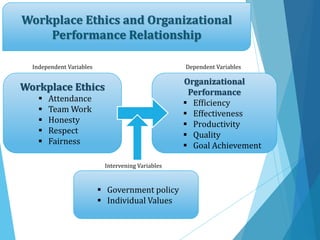
Workplace Ethics and Organizational
Performance Relationship
Workplace Ethics
 Attendance
 Team Work
 Honesty
 Respect
 Fairness
Organizational
Performance
 Efficiency
 Effectiveness
 Productivity
 Quality
 Goal Achievement
 Government policy
 Individual Values
Independent Variables Dependent Variables
Intervening Variables
List of Workplace Ethics
 Attendance.
 Team Work.
 Integrity
 Work Attitude
 Self-discipline.
 Employee Commitment.
 Respect
 Fairness
Attendance
 Being present in the workplace regularly.
 Being punctual.
 Being in the workplace on time every workday.
 Utilizing the full work time.
Attendance and Productivity
 More time for production.
 Being able to utilize full working time to
increase productivity.
 Regular production.
Team Work
 Teamwork is the cooperative and coordinated
efforts on the part of a group of persons who work
together as a team.
 The ability to get along with others – including
those whom employee don’t necessarily like.
 Carrying out own weight and helping others who
are struggling
Team Work and Productivity
 Even the best qualified individual cannot have all
of the skills to do everything.
 Individual strengths and skills are combined
with teamwork.
 More can be achieved as a collective than
individual.
 More ideas can be generated.
 More creative solutions brought on board.
Integrity
 The goal of any organization is to have employees
behave in a manner consistent with the
company's mission and goals.
 Being Honest and Reliable
 Aligning absolutely with the core values.
 Adhering to a code of ethics.
 Matching actions with beliefs across a variety of
situations.
Integrity and Productivity
 Absenteeism, unwarranted breaks, stealing of organization
property, converting office equipment for personal use,
gossiping are liable to affect organization productivity.
 organization level of productivity is directly proportional to
employee level of commitment and satisfaction.
 Integrating values of integrity into the day-to-day operation
promote employees ethical behavior.
Work Attitude
 A settled way of thinking, feeling and behaving
in the workplace.
 An acceptable and unacceptable evaluation of
particular person, people, objects, events
happenings or ideas.
 Each individual worker has a different level of
attitude to work.
Work Attitude and Productivity
 Attitude paves way for behavioral action which ultimately
influences productivity.
 work attitude tends to be favorable when organizations facilitate
industrial harmony, affection, recognition, friendliness, freedom
that are crucial for enhancing organizational productivity.
 Unfavorable work attitude can be the push factor behind an
individual's attitudes towards organizational productivity which
could come as a result of
• poor relationship with a leaders/manager
• lack of recognition and flextime
• Inequality
• inconsistent promotion and payment of salary
• lack of training
Self Discipline
 Having the ability to control own desires and
impulses to stay focused on what it needs to get
done to successfully achieve a goal.
 An art of self-control, self-reliance, self-
determination and self-sufficiency.
 Stimulates an individual to sustain his/her
decisions and drives the individual towards
achieving the set goals.
Self Discipline and Productivity
 Organizations must drive the need to concentrate on
stimulating self-discipline at work.
 The lack of self-discipline among workers may result to
distressing thoughts, negativity and lack of enthusiasm
at work, which adversely affect productivity of the
employee and the organization at large.
 Self-discipline at work promotes strong relationships to
succeed and raises an environment of commitment,
dedication and devotion amongst the employees .
Employee Commitment
 Commitment is the bond employees experience
with their organization.
 Employee commitment is an extent to which
employee feels
 Attached,
 Loyal,
 Dedicated,
 Connected,
to the organization goals and objectives.
Employee Commitment and
Productivity
 Employee commitment can benefit organization in a
number of ways like reducing absenteeism, promoting
employee active engagement, reducing intention to quite
and thereby resulting in sustained productivity.
 Commitment tends to aid higher productivity if the
employee morale is enhanced.
 A committed employee is perceived to be loyal and stays
with the organization even in turbulent times, attends to
work regularly, protects organization’s assets and as well
shares its goals.
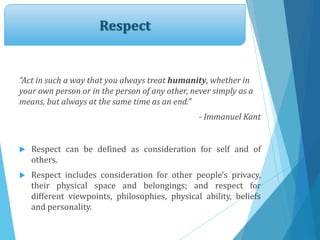
Respect
“Act in such a way that you always treat humanity, whether in
your own person or in the person of any other, never simply as a
means, but always at the same time as an end.”
- Immanuel Kant
 Respect can be defined as consideration for self and of
others.
 Respect includes consideration for other people's privacy,
their physical space and belongings; and respect for
different viewpoints, philosophies, physical ability, beliefs
and personality.
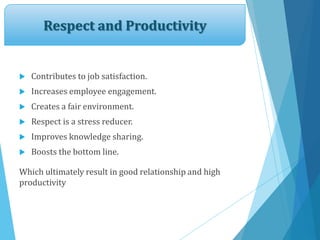
Respect and Productivity
 Contributes to job satisfaction.
 Increases employee engagement.
 Creates a fair environment.
 Respect is a stress reducer.
 Improves knowledge sharing.
 Boosts the bottom line.
Which ultimately result in good relationship and high
productivity
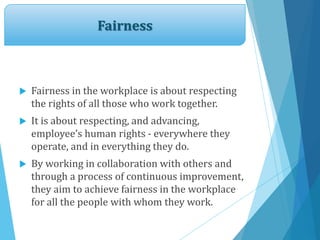
Fairness
 Fairness in the workplace is about respecting
the rights of all those who work together.
 It is about respecting, and advancing,
employee’s human rights - everywhere they
operate, and in everything they do.
 By working in collaboration with others and
through a process of continuous improvement,
they aim to achieve fairness in the workplace
for all the people with whom they work.
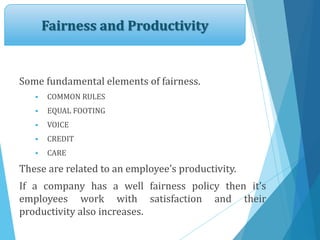
Fairness and Productivity
Some fundamental elements of fairness.
 COMMON RULES
 EQUAL FOOTING
 VOICE
 CREDIT
 CARE
These are related to an employee’s productivity.
If a company has a well fairness policy then it’s
employees work with satisfaction and their
productivity also increases.
How to be Productive
 Set SMART Objectives
 Plan a To-do-list the night before
 Prioritize your Assignments (Do the most important task first)
 Take a stimulating break
 Reduce your multi-tasking (Allocate time for specific task)
 Cut our digital Distractions (social media, video files)
 Deal with Distracting Co-workers
 Strive to Continually Improve
 Avoid Large Lunch
 Exercise and Workout
 Get Enough Sleep
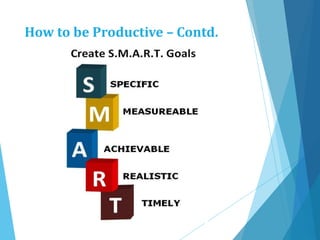
How to be Productive – Contd.
Thank You

Workplace_Ethics_and_Employee_Productivity.pptx

  • 1.
    A Presentation on Work PlaceEthics and Productivity
  • 2.
    Content  Workplace Ethics How to be Productive  SMART Objectives
  • 4.
    Workplace Ethics A Standardof Conduct and A set of Values, Inside the workplace which include the right attitude, correct behavior, respect for others and effective communication in the workplace.
  • 5.
    Workplace Ethics andOrganizational Performance Relationship Workplace Ethics  Attendance  Team Work  Honesty  Respect  Fairness Organizational Performance  Efficiency  Effectiveness  Productivity  Quality  Goal Achievement  Government policy  Individual Values Independent Variables Dependent Variables Intervening Variables
  • 6.
    List of WorkplaceEthics  Attendance.  Team Work.  Integrity  Work Attitude  Self-discipline.  Employee Commitment.  Respect  Fairness
  • 7.
    Attendance  Being presentin the workplace regularly.  Being punctual.  Being in the workplace on time every workday.  Utilizing the full work time.
  • 8.
    Attendance and Productivity More time for production.  Being able to utilize full working time to increase productivity.  Regular production.
  • 9.
    Team Work  Teamworkis the cooperative and coordinated efforts on the part of a group of persons who work together as a team.  The ability to get along with others – including those whom employee don’t necessarily like.  Carrying out own weight and helping others who are struggling
  • 10.
    Team Work andProductivity  Even the best qualified individual cannot have all of the skills to do everything.  Individual strengths and skills are combined with teamwork.  More can be achieved as a collective than individual.  More ideas can be generated.  More creative solutions brought on board.
  • 11.
    Integrity  The goalof any organization is to have employees behave in a manner consistent with the company's mission and goals.  Being Honest and Reliable  Aligning absolutely with the core values.  Adhering to a code of ethics.  Matching actions with beliefs across a variety of situations.
  • 12.
    Integrity and Productivity Absenteeism, unwarranted breaks, stealing of organization property, converting office equipment for personal use, gossiping are liable to affect organization productivity.  organization level of productivity is directly proportional to employee level of commitment and satisfaction.  Integrating values of integrity into the day-to-day operation promote employees ethical behavior.
  • 13.
    Work Attitude  Asettled way of thinking, feeling and behaving in the workplace.  An acceptable and unacceptable evaluation of particular person, people, objects, events happenings or ideas.  Each individual worker has a different level of attitude to work.
  • 14.
    Work Attitude andProductivity  Attitude paves way for behavioral action which ultimately influences productivity.  work attitude tends to be favorable when organizations facilitate industrial harmony, affection, recognition, friendliness, freedom that are crucial for enhancing organizational productivity.  Unfavorable work attitude can be the push factor behind an individual's attitudes towards organizational productivity which could come as a result of • poor relationship with a leaders/manager • lack of recognition and flextime • Inequality • inconsistent promotion and payment of salary • lack of training
  • 15.
    Self Discipline  Havingthe ability to control own desires and impulses to stay focused on what it needs to get done to successfully achieve a goal.  An art of self-control, self-reliance, self- determination and self-sufficiency.  Stimulates an individual to sustain his/her decisions and drives the individual towards achieving the set goals.
  • 16.
    Self Discipline andProductivity  Organizations must drive the need to concentrate on stimulating self-discipline at work.  The lack of self-discipline among workers may result to distressing thoughts, negativity and lack of enthusiasm at work, which adversely affect productivity of the employee and the organization at large.  Self-discipline at work promotes strong relationships to succeed and raises an environment of commitment, dedication and devotion amongst the employees .
  • 17.
    Employee Commitment  Commitmentis the bond employees experience with their organization.  Employee commitment is an extent to which employee feels  Attached,  Loyal,  Dedicated,  Connected, to the organization goals and objectives.
  • 18.
    Employee Commitment and Productivity Employee commitment can benefit organization in a number of ways like reducing absenteeism, promoting employee active engagement, reducing intention to quite and thereby resulting in sustained productivity.  Commitment tends to aid higher productivity if the employee morale is enhanced.  A committed employee is perceived to be loyal and stays with the organization even in turbulent times, attends to work regularly, protects organization’s assets and as well shares its goals.
  • 19.
    Respect “Act in sucha way that you always treat humanity, whether in your own person or in the person of any other, never simply as a means, but always at the same time as an end.” - Immanuel Kant  Respect can be defined as consideration for self and of others.  Respect includes consideration for other people's privacy, their physical space and belongings; and respect for different viewpoints, philosophies, physical ability, beliefs and personality.
  • 20.
    Respect and Productivity Contributes to job satisfaction.  Increases employee engagement.  Creates a fair environment.  Respect is a stress reducer.  Improves knowledge sharing.  Boosts the bottom line. Which ultimately result in good relationship and high productivity
  • 21.
    Fairness  Fairness inthe workplace is about respecting the rights of all those who work together.  It is about respecting, and advancing, employee’s human rights - everywhere they operate, and in everything they do.  By working in collaboration with others and through a process of continuous improvement, they aim to achieve fairness in the workplace for all the people with whom they work.
  • 22.
    Fairness and Productivity Somefundamental elements of fairness.  COMMON RULES  EQUAL FOOTING  VOICE  CREDIT  CARE These are related to an employee’s productivity. If a company has a well fairness policy then it’s employees work with satisfaction and their productivity also increases.
  • 23.
    How to beProductive  Set SMART Objectives  Plan a To-do-list the night before  Prioritize your Assignments (Do the most important task first)  Take a stimulating break  Reduce your multi-tasking (Allocate time for specific task)  Cut our digital Distractions (social media, video files)  Deal with Distracting Co-workers  Strive to Continually Improve  Avoid Large Lunch  Exercise and Workout  Get Enough Sleep
  • 24.
    How to beProductive – Contd.
  • 26.