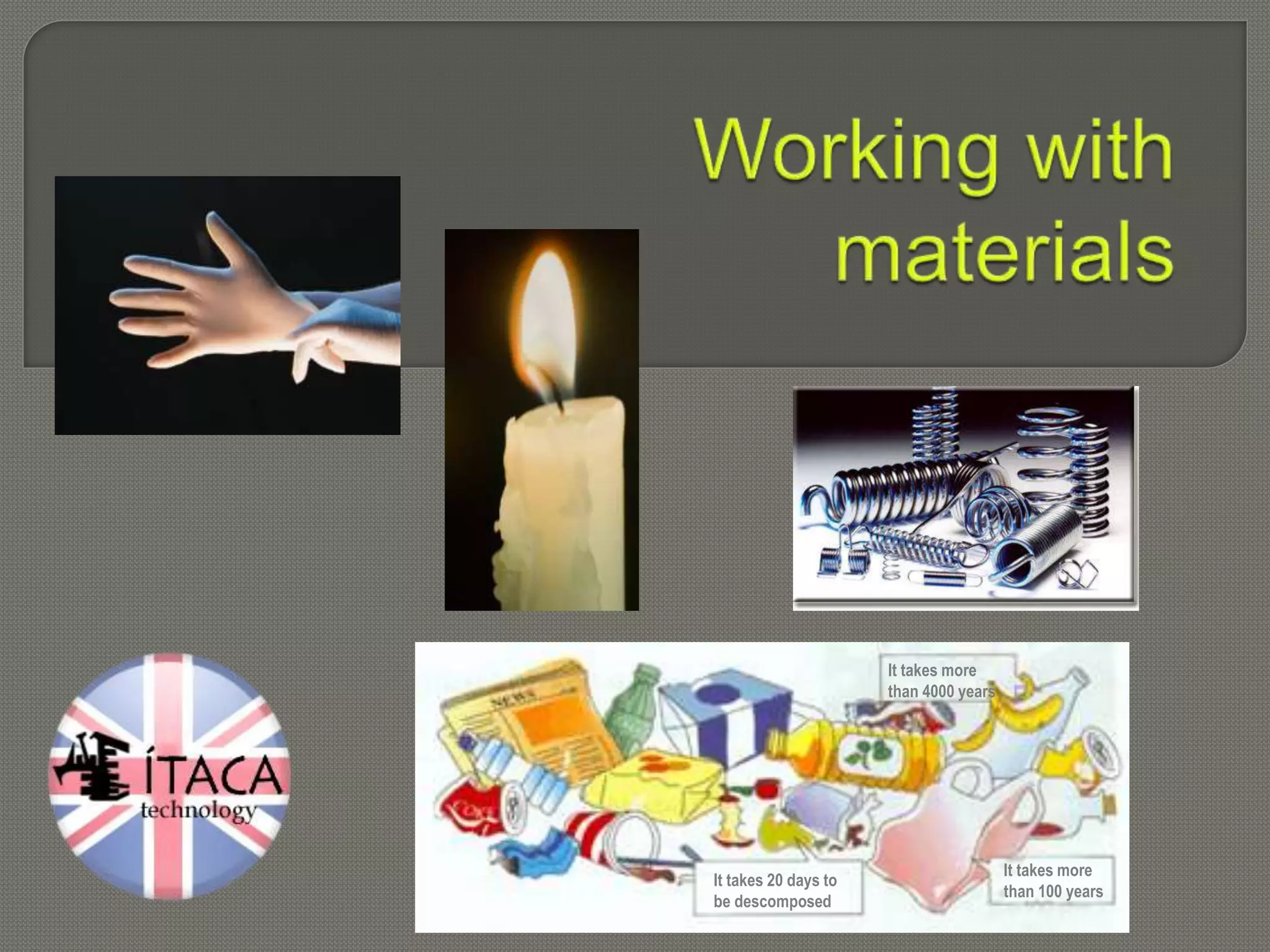
It takes 20 days to
be descomposed
It takes more
than 100 years
It takes more
than 4000 years
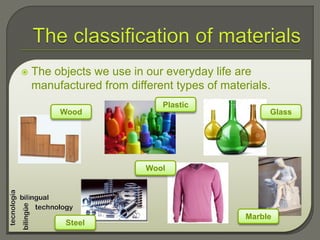
 The objects we use in our everyday life are
manufactured from different types of materials.
Wood
Steel
Plastic
Glass
Wool
Marble
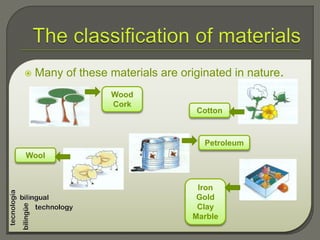
 Many of these materials are originated in nature.
Wood
Cork
Wool
Petroleum
Iron
Gold
Clay
Marble
Cotton
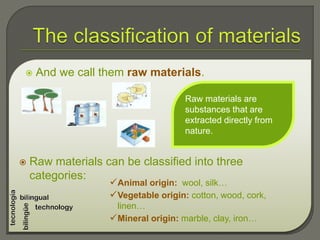
 And we call them raw materials.
Raw materials are
substances that are
extracted directly from
nature.
 Raw materials can be classified into three
categories:
Animal origin: wool, silk…
Vegetable origin: cotton, wood, cork,
linen…
Mineral origin: marble, clay, iron…
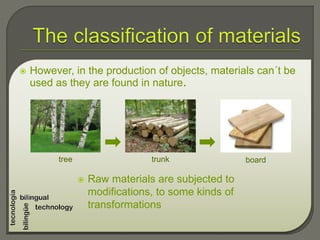
 However, in the production of objects, materials can´t be
used as they are found in nature.
tree trunk board
 Raw materials are subjected to
modifications, to some kinds of
transformations
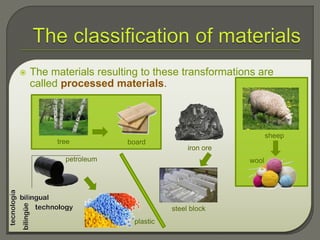
 The materials resulting to these transformations are
called processed materials.
tree board
plastic
petroleum
sheep
wool
iron ore
steel block
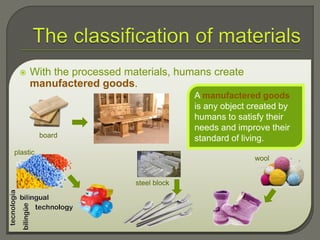
 With the processed materials, humans create
manufactered goods.
board
plastic
wool
steel block
A manufactered goods
is any object created by
humans to satisfy their
needs and improve their
standard of living.
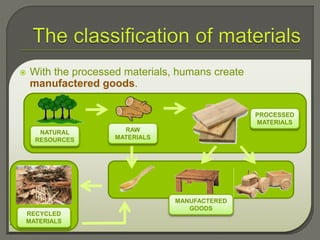
 With the processed materials, humans create
manufactered goods.
NATURAL
RESOURCES
RAW
MATERIALS
PROCESSED
MATERIALS
MANUFACTERED
GOODS
RECYCLED
MATERIALS
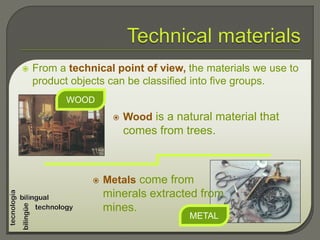
 From a technical point of view, the materials we use to
product objects can be classified into five groups.
 Wood is a natural material that
comes from trees.
METAL
WOOD
 Metals come from
minerals extracted from
mines.
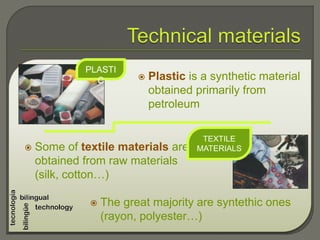
 Plastic is a synthetic material
obtained primarily from
petroleum
PLASTI
C
 Some of textile materials are
obtained from raw materials
(silk, cotton…)
TEXTILE
MATERIALS
 The great majority are syntethic ones
(rayon, polyester…)
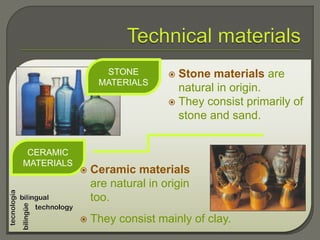
 Stone materials are
natural in origin.
 They consist primarily of
stone and sand.
 They consist mainly of clay.
CERAMIC
MATERIALS
STONE
MATERIALS
 Ceramic materials
are natural in origin
too.
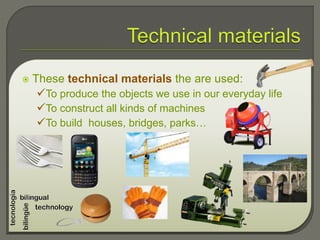
 These technical materials the are used:
To produce the objects we use in our everyday life
To construct all kinds of machines
To build houses, bridges, parks…

Working with materials

  • 1.
    It takes 20days to be descomposed It takes more than 100 years It takes more than 4000 years
  • 2.
     The objectswe use in our everyday life are manufactured from different types of materials. Wood Steel Plastic Glass Wool Marble
  • 3.
     Many ofthese materials are originated in nature. Wood Cork Wool Petroleum Iron Gold Clay Marble Cotton
  • 4.
     And wecall them raw materials. Raw materials are substances that are extracted directly from nature.  Raw materials can be classified into three categories: Animal origin: wool, silk… Vegetable origin: cotton, wood, cork, linen… Mineral origin: marble, clay, iron…
  • 5.
     However, inthe production of objects, materials can´t be used as they are found in nature. tree trunk board  Raw materials are subjected to modifications, to some kinds of transformations
  • 6.
     The materialsresulting to these transformations are called processed materials. tree board plastic petroleum sheep wool iron ore steel block
  • 7.
     With theprocessed materials, humans create manufactered goods. board plastic wool steel block A manufactered goods is any object created by humans to satisfy their needs and improve their standard of living.
  • 8.
     With theprocessed materials, humans create manufactered goods. NATURAL RESOURCES RAW MATERIALS PROCESSED MATERIALS MANUFACTERED GOODS RECYCLED MATERIALS
  • 9.
     From atechnical point of view, the materials we use to product objects can be classified into five groups.  Wood is a natural material that comes from trees. METAL WOOD  Metals come from minerals extracted from mines.
  • 10.
     Plastic isa synthetic material obtained primarily from petroleum PLASTI C  Some of textile materials are obtained from raw materials (silk, cotton…) TEXTILE MATERIALS  The great majority are syntethic ones (rayon, polyester…)
  • 11.
     Stone materialsare natural in origin.  They consist primarily of stone and sand.  They consist mainly of clay. CERAMIC MATERIALS STONE MATERIALS  Ceramic materials are natural in origin too.
  • 12.
     These technicalmaterials the are used: To produce the objects we use in our everyday life To construct all kinds of machines To build houses, bridges, parks…