Strategic Workforce Planning
What is Workforce Planning?“If  you fail to plan, you plan to fail.”		- Norman Vincent PealeStated simply, workforce planning is the process of having the right number of people with the right knowledge, diversity and skills working in the right jobs at the right time.
Why is Workforce Planning Important?"Baby boomers are going to be retiring in droves," says Arlene Dohm, an economist with the Bureau of Labor Statistics in Washington, D.C.Consider these statistics:Approximately 76 million people were born in the United States during the baby boom generation (1946-1964). The average retirement age is mid-sixties, meaning tens of millions of people will be exiting the workforce between now and 2020. Only about 46 million people comprise Generation X (1965-1982), the cohorts poised to fill the shortages left by baby boomers.
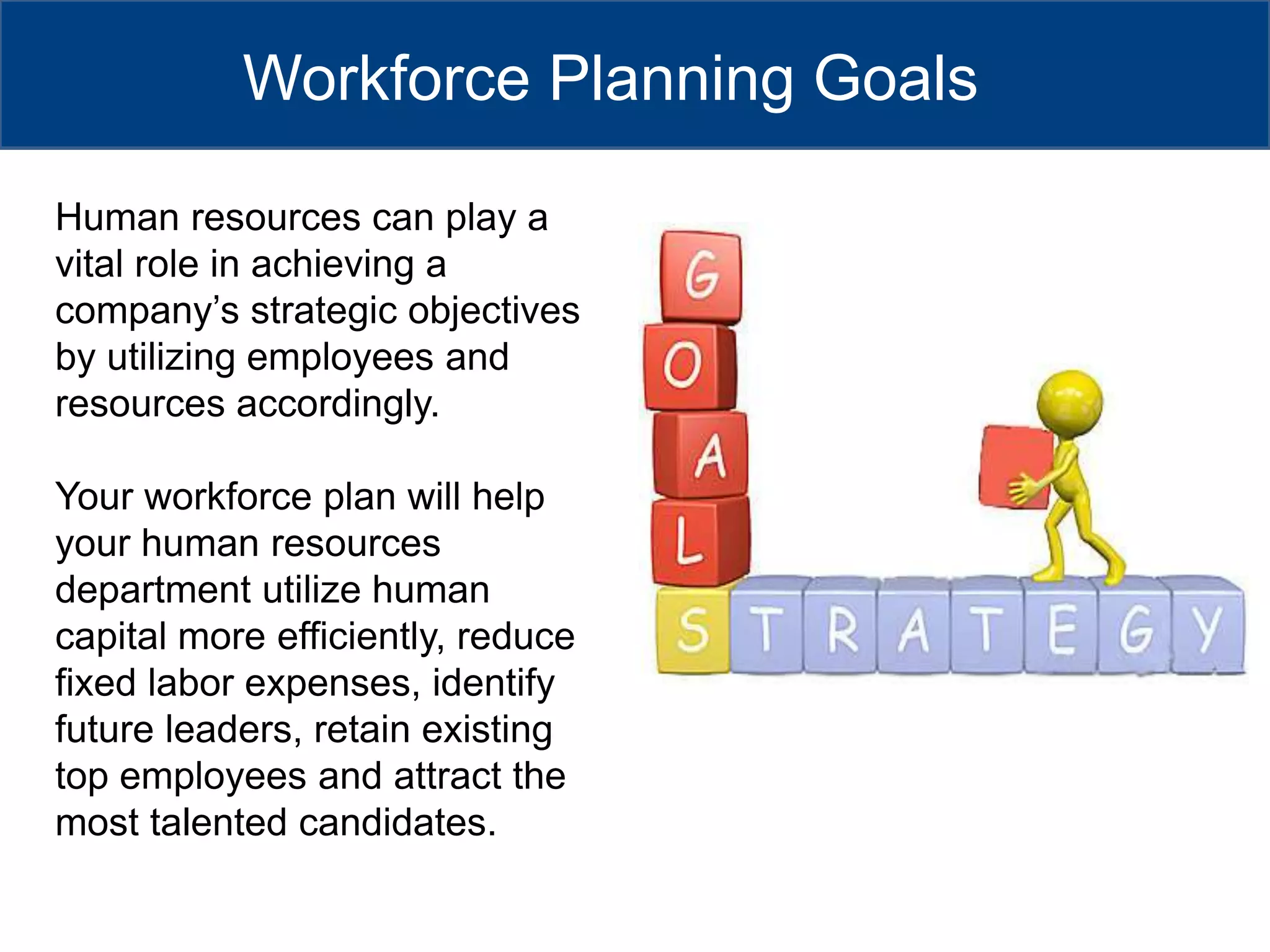
Workforce Planning GoalsHuman resources can play a vital role in achieving a company’s strategic objectives by utilizing employees and resources accordingly. Your workforce plan will help your human resources department utilize human capital more efficiently, reduce fixed labor expenses, identify future leaders, retain existing top employees and attract the most talented candidates.
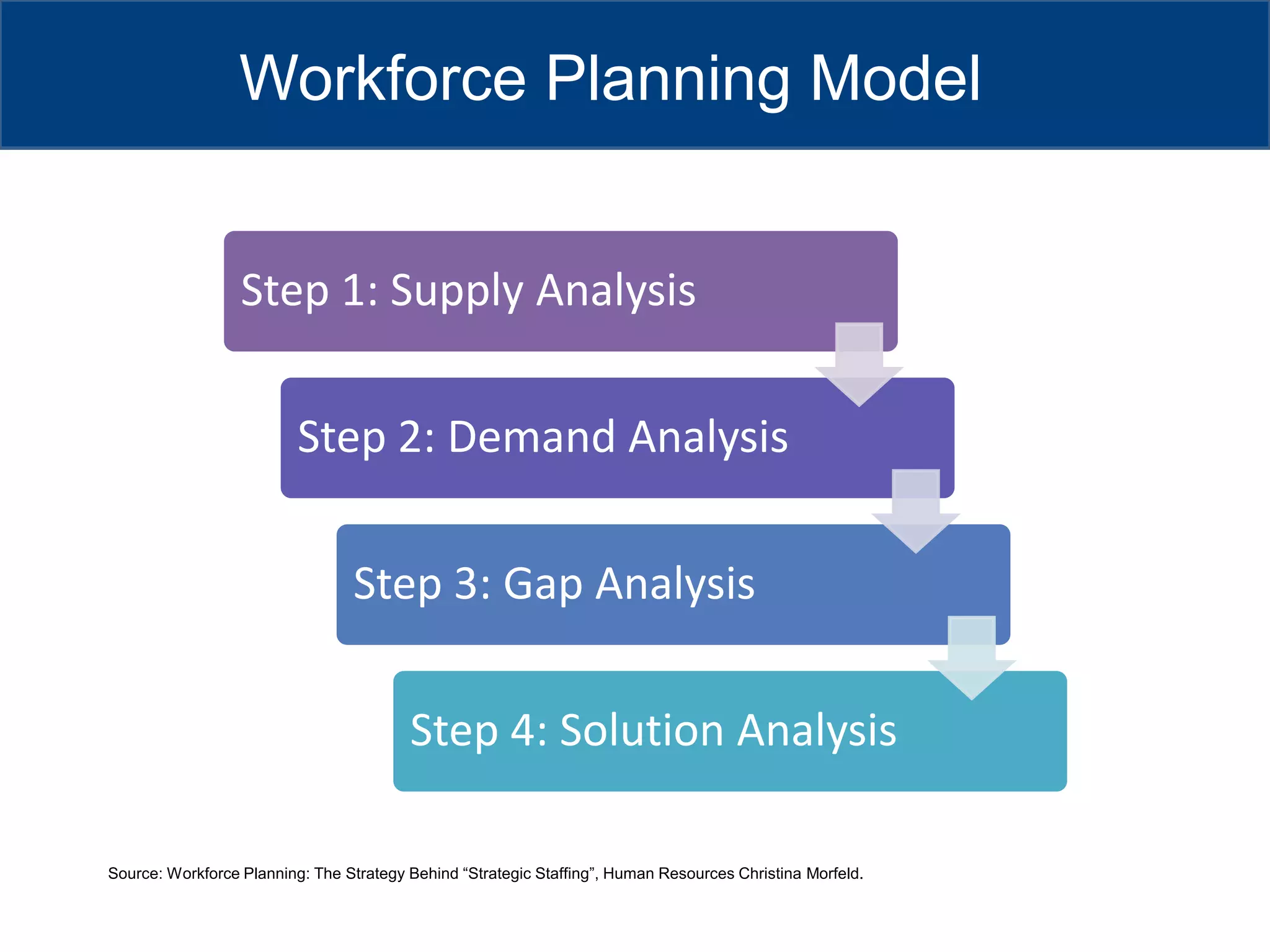
Workforce Planning ModelSource:Workforce Planning: The Strategy Behind “Strategic Staffing”, Human Resources Christina Morfeld.
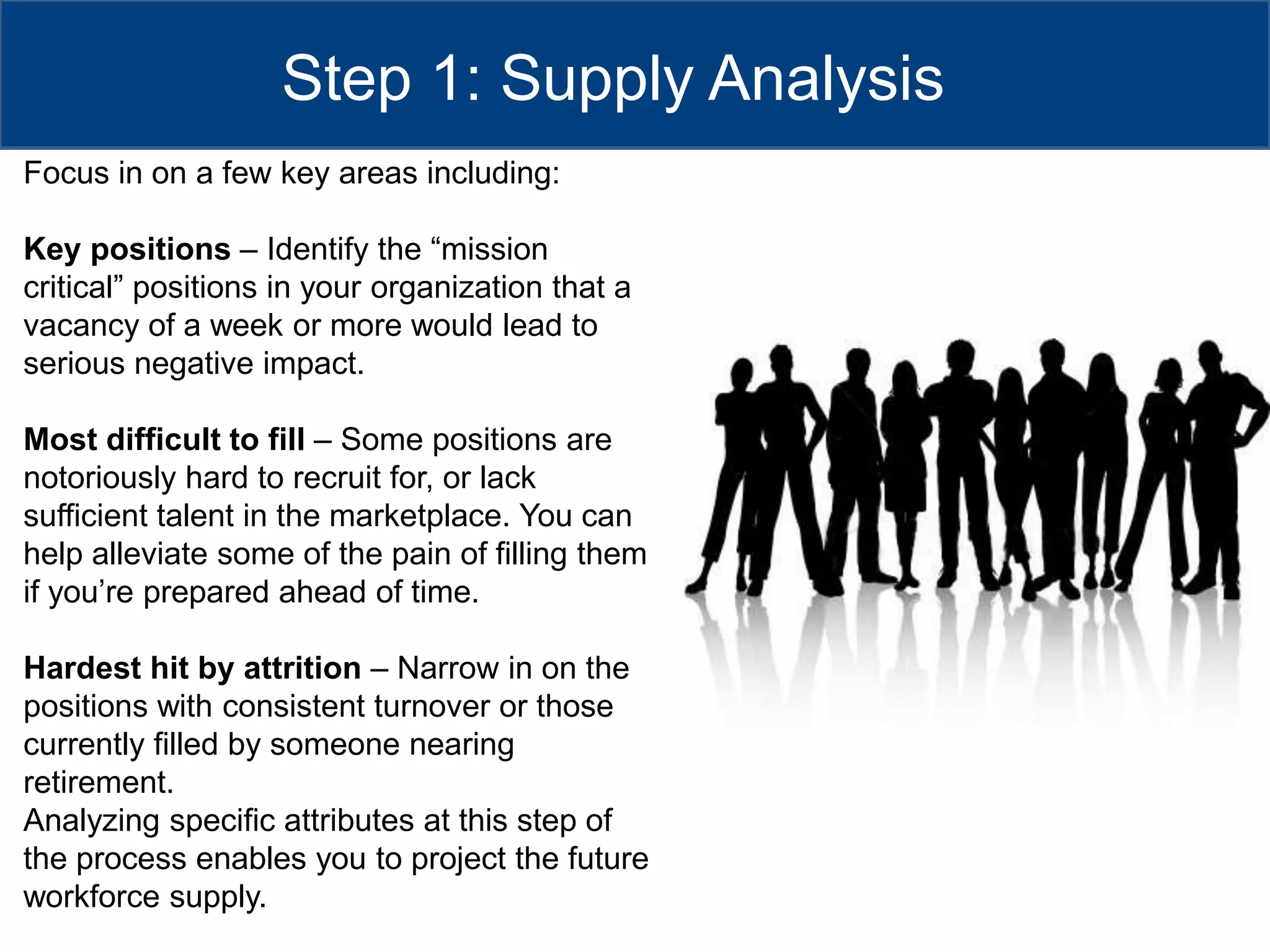
Step 1: Supply AnalysisFocus in on a few key areas including:Key positions – Identify the “mission critical” positions in your organization that a vacancy of a week or more would lead to serious negative impact. Most difficult to fill – Some positions are notoriously hard to recruit for, or lack sufficient talent in the marketplace. You can help alleviate some of the pain of filling them if you’re prepared ahead of time.Hardest hit by attrition – Narrow in on the positions with consistent turnover or those currently filled by someone nearing retirement. Analyzing specific attributes at this step of the process enables you to project the future workforce supply.
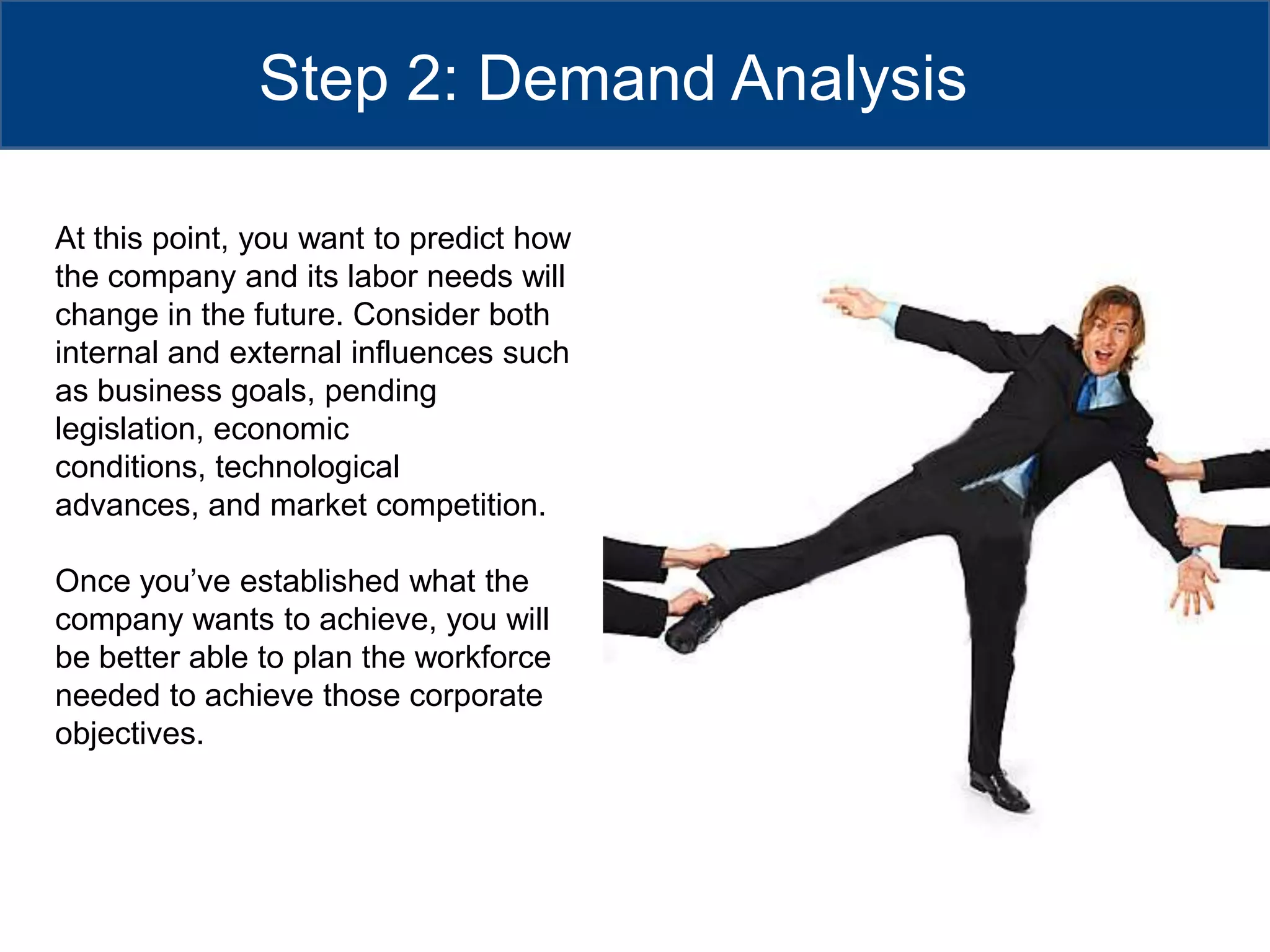
Step 2: Demand AnalysisAt this point, you want to predict how the company and its labor needs will change in the future. Consider both internal and external influences such as business goals, pending legislation, economic conditions, technological advances, and market competition.Once you’ve established what the company wants to achieve, you will be better able to plan the workforce needed to achieve those corporate objectives.
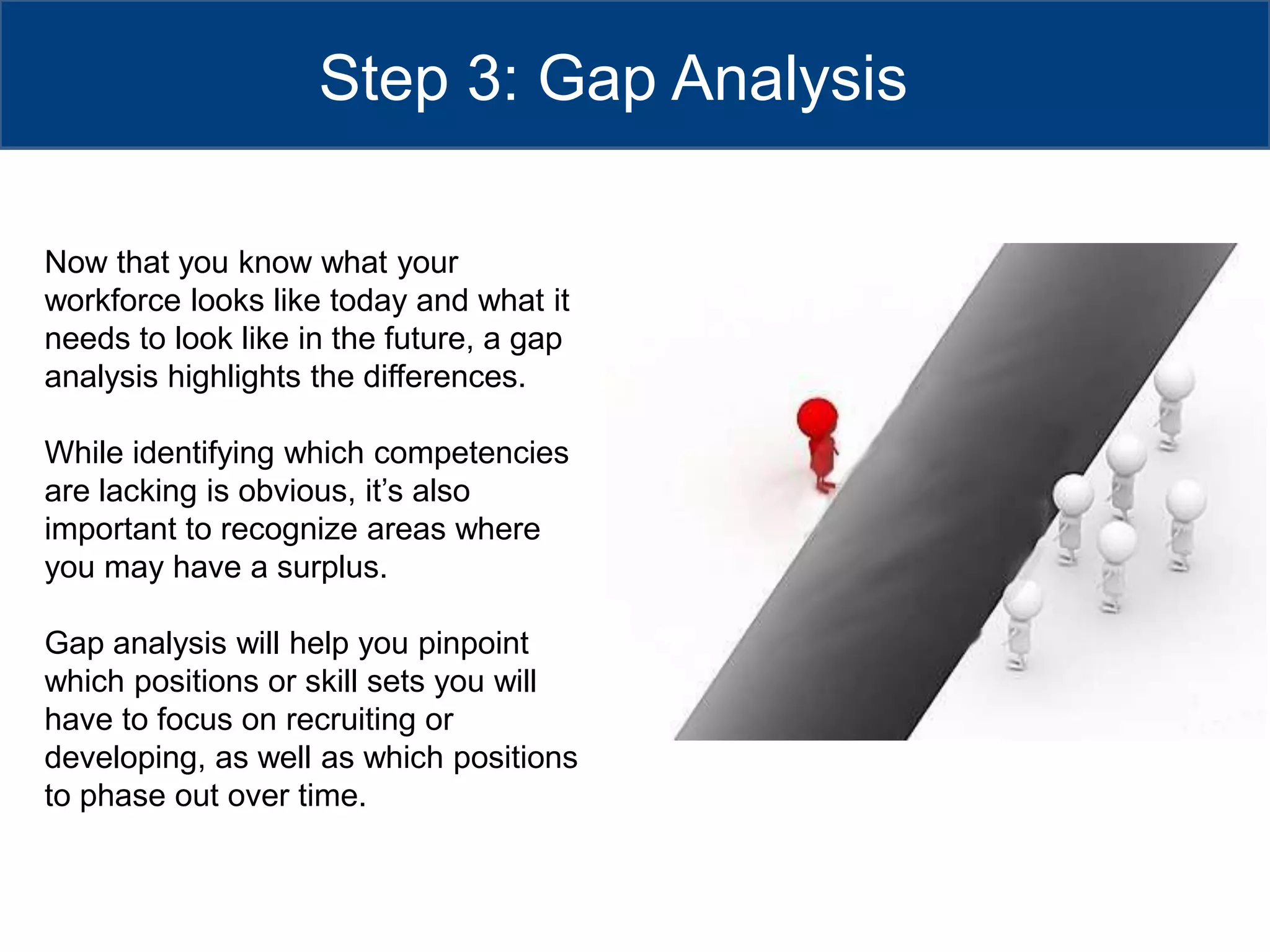
Step 3: Gap AnalysisNow that you know what your workforce looks like today and what it needs to look like in the future, a gap analysis highlights the differences. While identifying which competencies are lacking is obvious, it’s also important to recognize areas where you may have a surplus.  Gap analysis will help you pinpoint which positions or skill sets you will have to focus on recruiting or developing, as well as which positions to phase out over time.
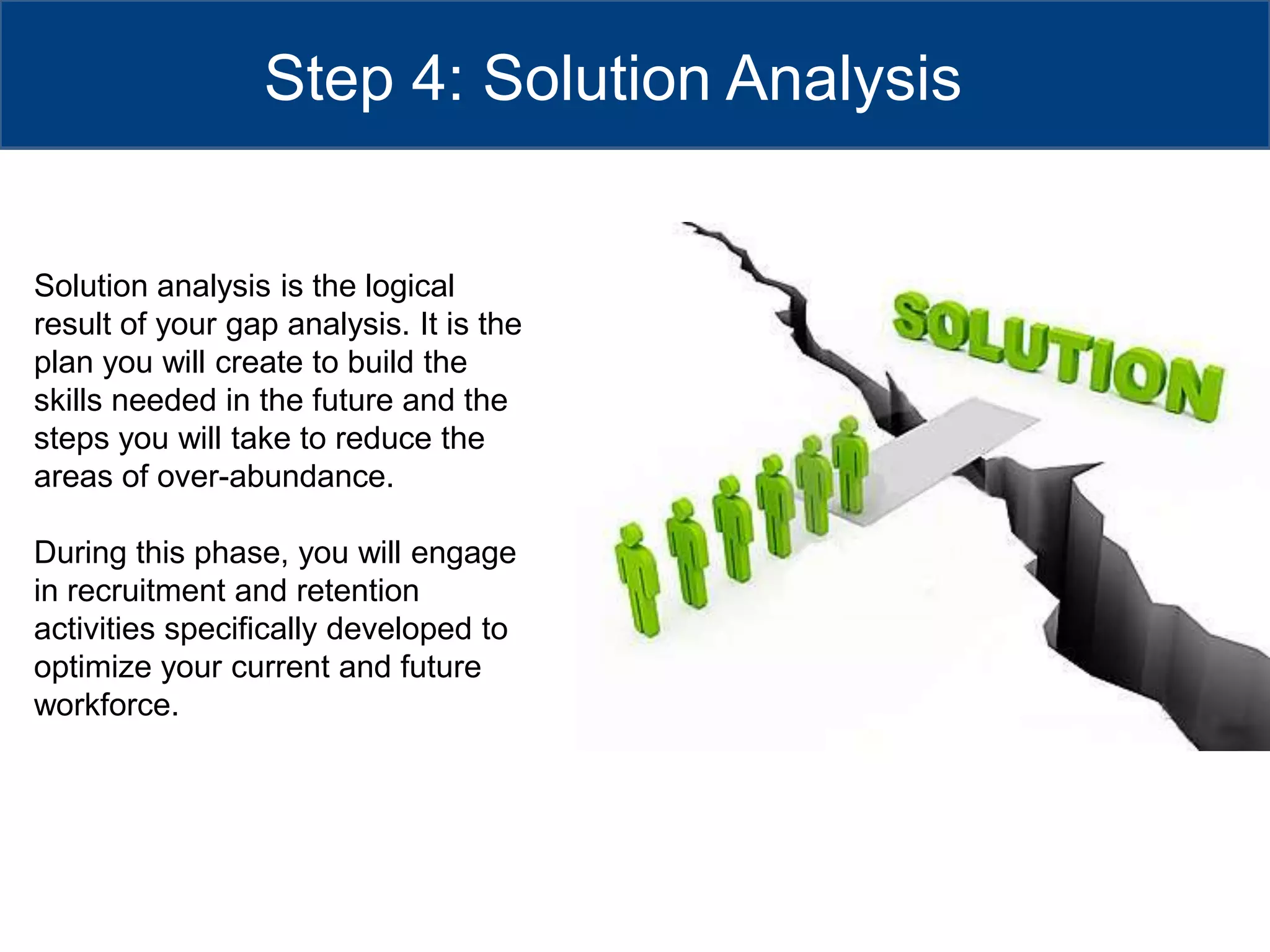
Step 4: Solution AnalysisSolution analysis is the logical result of your gap analysis. It is the plan you will create to build the skills needed in the future and the steps you will take to reduce the areas of over-abundance.During this phase, you will engage in recruitment and retention activities specifically developed to optimize your current and future workforce.
Involve Upper ManagementWhile the "blessing" of your organization's management team is essential, it alone will do little to inspire the cooperation of others. An executive-level "champion," on the other hand, will typically generate the buy-in that you need.Involve a variety of key stakeholders in the workforce planning process.  This ensures that multiple perspectives are considered and gives the plan legitimacy. Hold managers accountable for adhering to - and achieving desired results from - the workforce plan.
Involve Your Staffing ProviderBecause workforce planning includes supplementing your full time staff with temporary or contract support, it makes sense to work with a staffing partner who can provide these services to you.  But you need more than a provider, you need a partner! Doherty Staffing Solutions can help you design, plan, and execute a successful workforce strategy for your organization.Contact us today to learn more.
Workforce planning

Workforce planning

  • 1.
  • 2.
    What is WorkforcePlanning?“If you fail to plan, you plan to fail.” - Norman Vincent PealeStated simply, workforce planning is the process of having the right number of people with the right knowledge, diversity and skills working in the right jobs at the right time.
  • 3.
    Why is WorkforcePlanning Important?"Baby boomers are going to be retiring in droves," says Arlene Dohm, an economist with the Bureau of Labor Statistics in Washington, D.C.Consider these statistics:Approximately 76 million people were born in the United States during the baby boom generation (1946-1964). The average retirement age is mid-sixties, meaning tens of millions of people will be exiting the workforce between now and 2020. Only about 46 million people comprise Generation X (1965-1982), the cohorts poised to fill the shortages left by baby boomers.
  • 4.
    Workforce Planning GoalsHumanresources can play a vital role in achieving a company’s strategic objectives by utilizing employees and resources accordingly. Your workforce plan will help your human resources department utilize human capital more efficiently, reduce fixed labor expenses, identify future leaders, retain existing top employees and attract the most talented candidates.
  • 5.
    Workforce Planning ModelSource:WorkforcePlanning: The Strategy Behind “Strategic Staffing”, Human Resources Christina Morfeld.
  • 6.
    Step 1: SupplyAnalysisFocus in on a few key areas including:Key positions – Identify the “mission critical” positions in your organization that a vacancy of a week or more would lead to serious negative impact. Most difficult to fill – Some positions are notoriously hard to recruit for, or lack sufficient talent in the marketplace. You can help alleviate some of the pain of filling them if you’re prepared ahead of time.Hardest hit by attrition – Narrow in on the positions with consistent turnover or those currently filled by someone nearing retirement. Analyzing specific attributes at this step of the process enables you to project the future workforce supply.
  • 7.
    Step 2: DemandAnalysisAt this point, you want to predict how the company and its labor needs will change in the future. Consider both internal and external influences such as business goals, pending legislation, economic conditions, technological advances, and market competition.Once you’ve established what the company wants to achieve, you will be better able to plan the workforce needed to achieve those corporate objectives.
  • 8.
    Step 3: GapAnalysisNow that you know what your workforce looks like today and what it needs to look like in the future, a gap analysis highlights the differences. While identifying which competencies are lacking is obvious, it’s also important to recognize areas where you may have a surplus. Gap analysis will help you pinpoint which positions or skill sets you will have to focus on recruiting or developing, as well as which positions to phase out over time.
  • 9.
    Step 4: SolutionAnalysisSolution analysis is the logical result of your gap analysis. It is the plan you will create to build the skills needed in the future and the steps you will take to reduce the areas of over-abundance.During this phase, you will engage in recruitment and retention activities specifically developed to optimize your current and future workforce.
  • 10.
    Involve Upper ManagementWhilethe "blessing" of your organization's management team is essential, it alone will do little to inspire the cooperation of others. An executive-level "champion," on the other hand, will typically generate the buy-in that you need.Involve a variety of key stakeholders in the workforce planning process. This ensures that multiple perspectives are considered and gives the plan legitimacy. Hold managers accountable for adhering to - and achieving desired results from - the workforce plan.
  • 11.
    Involve Your StaffingProviderBecause workforce planning includes supplementing your full time staff with temporary or contract support, it makes sense to work with a staffing partner who can provide these services to you. But you need more than a provider, you need a partner! Doherty Staffing Solutions can help you design, plan, and execute a successful workforce strategy for your organization.Contact us today to learn more.