1
What is Workforce Planning?
Workforce planning is, simply stated, the
 Right number of people with the
 Right competencies in the
 Right jobs at the
 Right time
to accomplish the agency’s goals and
mission.
2
What is Workforce Planning?
Workforce Planning is a systematic process for identifying
and addressing the gaps between the workforce of
today and the workforce of tomorrow.
3
What is Workforce Planning?
Workforce planning is creating an integrated and
ongoing strategy for ensuring an organization is
prepared with the appropriate human capital to meet
current and future needs.
4
Why do Workforce Planning?
 Nearly 60% of state employees are
45 or older
 Helps the state compete in today’s
market
 Allows decision makers to
determine the workforce needed
for tomorrow’s success
 Gives managers the human
resource information they need to
manage their programs effectively
5
Workforce Planning Steps
6
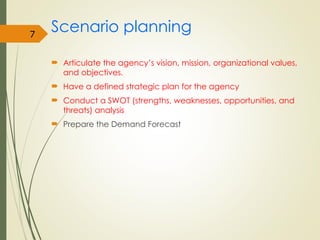
Scenario planning
 Articulate the agency’s vision, mission, organizational values,
and objectives.
 Have a defined strategic plan for the agency
 Conduct a SWOT (strengths, weaknesses, opportunities, and
threats) analysis
 Prepare the Demand Forecast
7
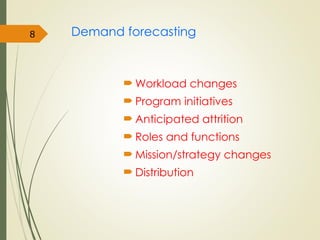
Demand forecasting
 Workload changes
 Program initiatives
 Anticipated attrition
 Roles and functions
 Mission/strategy changes
 Distribution
8
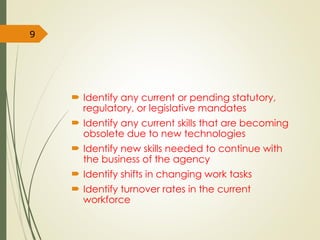
 Identify any current or pending statutory,
regulatory, or legislative mandates
 Identify any current skills that are becoming
obsolete due to new technologies
 Identify new skills needed to continue with
the business of the agency
 Identify shifts in changing work tasks
 Identify turnover rates in the current
workforce
9
The Demand Forecast
Generates:
 Quantitative and qualitative data on anticipated
workload and workforce changes during the planning
period
 Quantitative and qualitative data on future
competency and skill requirements
10
Supply forecasting
 Skills
 Distribution
 Demographics
 Workload/Productivity
 Staffing levels
 Succession
 Outsourcing
11
Profile Existing Workforce
Supply Projections
 Supply projection examines the current and future
composition of the workforce and workload.
 Quantitative data on current and projected workforce
 Quantitative data on current and projected
competencies
12
Supply Projections
Look at trend data
Workforce Profile
Hiring Patterns
Retirement Patterns
Turnover statistics
13
Identify Labor Market Influences
 Labor pool decline
 Changes in labor pool
 Downsizing outside State
Government
 Changing occupation outlook
14
Start by learning about your agency
determine the competencies that already exist in your
agency
15
•Conduct general assessment of employees’
current skills
•Ask employees to identify career goals and
future desired skill sets
•Review PDs and job descriptions
•Hold focus group interviews to determine
skill and competency levels
Forecasting technique
Gap Analysis
16
Gap Analysis
Use the Demand Forecast and the Supply Projections to
identify differences (gaps) between where your agency is
now and where it needs to be in the future
17
Gap Analysis
 Identifies situations where future demand will exceed
future supply
 Identifies situations where future supply will exceed
future demand
 In both types of situations, your workforce plan must
address eliminating these gaps
18
Action Plan
 Develop your plan around the most
mission critical gaps
 Define critical job competencies
 Define and redesign jobs
 Define recruiting needs
 Define training and development needs
 Identify restructuring opportunities
 Identify a timeline for making the changes
 Describe how the plan will be measured
(objectives)
19
Implementation Plan
 Obtain management leadership and support
 Develop change management strategy
 Communicate
20
Obtain Management
Leadership and Support
 Workforce Planning should be viewed as a significant
piece of an agency’s strategic plan
 Senior-level management should lead the planning
process
 Agency’s program managers will gain the most
benefit from the plan
21
Develop Change Management
Strategy
 Change must be managed
 Change involves all stakeholders in the agency
 Objective view of the change is needed—often
agencies will contract out for some portion of the
Workforce Planning process.
22
Communicate
 Make the process transparent—let your employees
know what’s going on
 Let your employees know what’s in it for them
 Planning for future workforce needs is an excellent
time to offer career growth and opportunities to
current employees
23
Monitor, Evaluate, Revise
Monitor
 Continuously monitor the plan and consider any internal or
external developments that may affect the action plan.
 Consider upcoming legislation, budgetary concerns, and other
external developments
 Monitor projections to determine if current conditions meet
projections
24
Evaluate
 Obtain feedback about the action plan and how it is
working
 Meetings
 Surveys
 Interviews
 Focus groups
25
Evaluate
 Measure the results of the plan
 Do the gaps still exist?
 Are skills being developed?
 Are staffing levels adequate to perform the critical
mission of the agency?
 Do new hires possess the needed competencies?
 Celebrate achievements!
26
Revise
Make necessary revisions
Communicate changes
Report on accomplishments
27
Typical Workforce Planning
Issues to Overcome
 No commitment from agency leadership to provide
the necessary staff
 Doing it half-heartedly - Do it right, or not at all.
 Not including agency employees
 Wanting it too quickly.
 Lack of available data.
28

Topic 1 Introduction to workforce Planning.ppt

  • 1.
  • 2.
    What is WorkforcePlanning? Workforce planning is, simply stated, the  Right number of people with the  Right competencies in the  Right jobs at the  Right time to accomplish the agency’s goals and mission. 2
  • 3.
    What is WorkforcePlanning? Workforce Planning is a systematic process for identifying and addressing the gaps between the workforce of today and the workforce of tomorrow. 3
  • 4.
    What is WorkforcePlanning? Workforce planning is creating an integrated and ongoing strategy for ensuring an organization is prepared with the appropriate human capital to meet current and future needs. 4
  • 5.
    Why do WorkforcePlanning?  Nearly 60% of state employees are 45 or older  Helps the state compete in today’s market  Allows decision makers to determine the workforce needed for tomorrow’s success  Gives managers the human resource information they need to manage their programs effectively 5
  • 6.
  • 7.
    Scenario planning  Articulatethe agency’s vision, mission, organizational values, and objectives.  Have a defined strategic plan for the agency  Conduct a SWOT (strengths, weaknesses, opportunities, and threats) analysis  Prepare the Demand Forecast 7
  • 8.
    Demand forecasting  Workloadchanges  Program initiatives  Anticipated attrition  Roles and functions  Mission/strategy changes  Distribution 8
  • 9.
     Identify anycurrent or pending statutory, regulatory, or legislative mandates  Identify any current skills that are becoming obsolete due to new technologies  Identify new skills needed to continue with the business of the agency  Identify shifts in changing work tasks  Identify turnover rates in the current workforce 9
  • 10.
    The Demand Forecast Generates: Quantitative and qualitative data on anticipated workload and workforce changes during the planning period  Quantitative and qualitative data on future competency and skill requirements 10
  • 11.
    Supply forecasting  Skills Distribution  Demographics  Workload/Productivity  Staffing levels  Succession  Outsourcing 11 Profile Existing Workforce
  • 12.
    Supply Projections  Supplyprojection examines the current and future composition of the workforce and workload.  Quantitative data on current and projected workforce  Quantitative data on current and projected competencies 12
  • 13.
    Supply Projections Look attrend data Workforce Profile Hiring Patterns Retirement Patterns Turnover statistics 13
  • 14.
    Identify Labor MarketInfluences  Labor pool decline  Changes in labor pool  Downsizing outside State Government  Changing occupation outlook 14
  • 15.
    Start by learningabout your agency determine the competencies that already exist in your agency 15 •Conduct general assessment of employees’ current skills •Ask employees to identify career goals and future desired skill sets •Review PDs and job descriptions •Hold focus group interviews to determine skill and competency levels
  • 16.
  • 17.
    Gap Analysis Use theDemand Forecast and the Supply Projections to identify differences (gaps) between where your agency is now and where it needs to be in the future 17
  • 18.
    Gap Analysis  Identifiessituations where future demand will exceed future supply  Identifies situations where future supply will exceed future demand  In both types of situations, your workforce plan must address eliminating these gaps 18
  • 19.
    Action Plan  Developyour plan around the most mission critical gaps  Define critical job competencies  Define and redesign jobs  Define recruiting needs  Define training and development needs  Identify restructuring opportunities  Identify a timeline for making the changes  Describe how the plan will be measured (objectives) 19
  • 20.
    Implementation Plan  Obtainmanagement leadership and support  Develop change management strategy  Communicate 20
  • 21.
    Obtain Management Leadership andSupport  Workforce Planning should be viewed as a significant piece of an agency’s strategic plan  Senior-level management should lead the planning process  Agency’s program managers will gain the most benefit from the plan 21
  • 22.
    Develop Change Management Strategy Change must be managed  Change involves all stakeholders in the agency  Objective view of the change is needed—often agencies will contract out for some portion of the Workforce Planning process. 22
  • 23.
    Communicate  Make theprocess transparent—let your employees know what’s going on  Let your employees know what’s in it for them  Planning for future workforce needs is an excellent time to offer career growth and opportunities to current employees 23
  • 24.
    Monitor, Evaluate, Revise Monitor Continuously monitor the plan and consider any internal or external developments that may affect the action plan.  Consider upcoming legislation, budgetary concerns, and other external developments  Monitor projections to determine if current conditions meet projections 24
  • 25.
    Evaluate  Obtain feedbackabout the action plan and how it is working  Meetings  Surveys  Interviews  Focus groups 25
  • 26.
    Evaluate  Measure theresults of the plan  Do the gaps still exist?  Are skills being developed?  Are staffing levels adequate to perform the critical mission of the agency?  Do new hires possess the needed competencies?  Celebrate achievements! 26
  • 27.
    Revise Make necessary revisions Communicatechanges Report on accomplishments 27
  • 28.
    Typical Workforce Planning Issuesto Overcome  No commitment from agency leadership to provide the necessary staff  Doing it half-heartedly - Do it right, or not at all.  Not including agency employees  Wanting it too quickly.  Lack of available data. 28