WORK MOTIVATION
MOTIVATION
   Motivation is a process that start with physiological and
    psychological deficiency or need that activates a
    behavior or a drive that is aimed at a goal or incentive
MOTIVATION THEORIES
 Maslow’s Hierarchy of Needs Theory
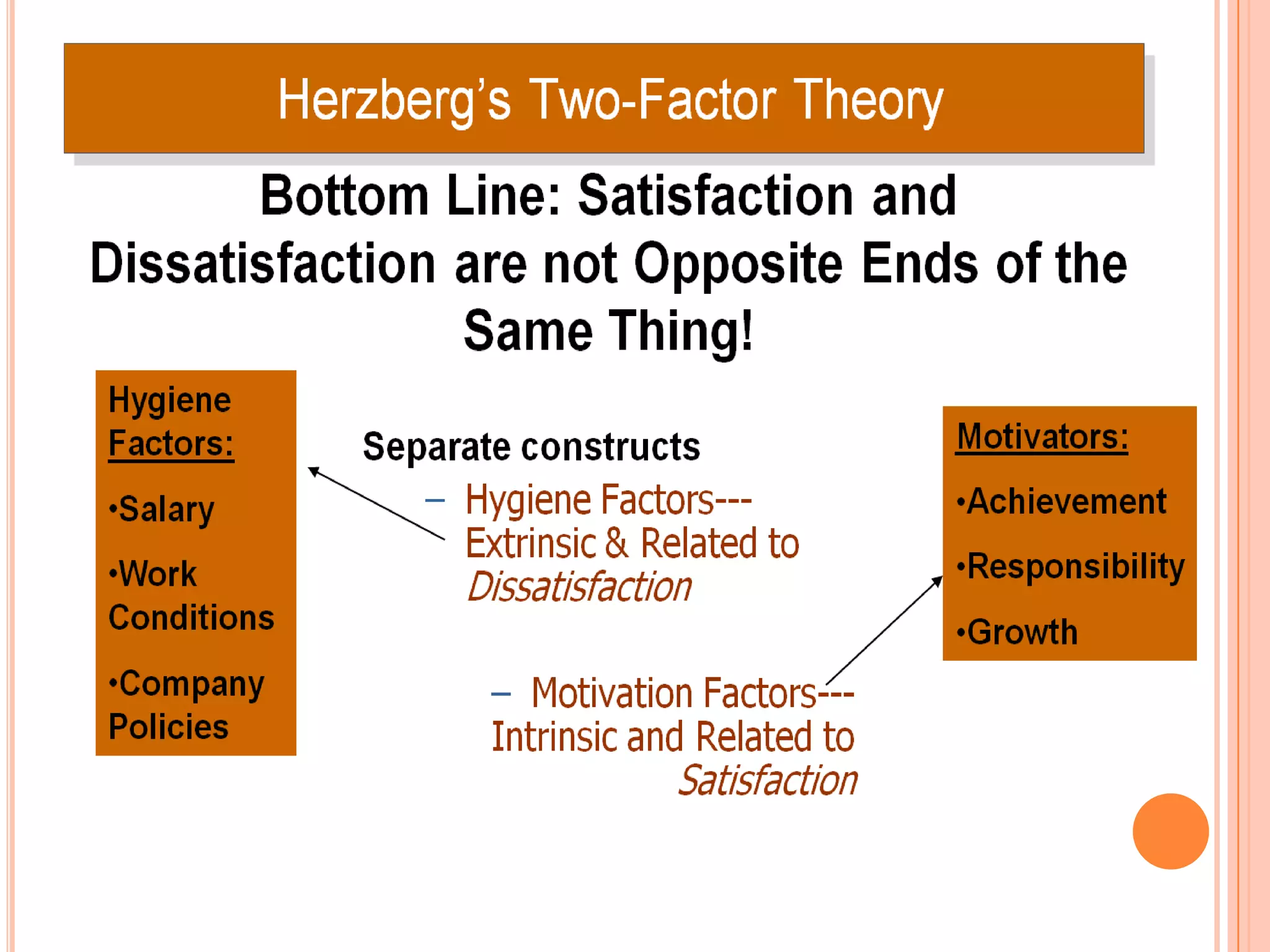
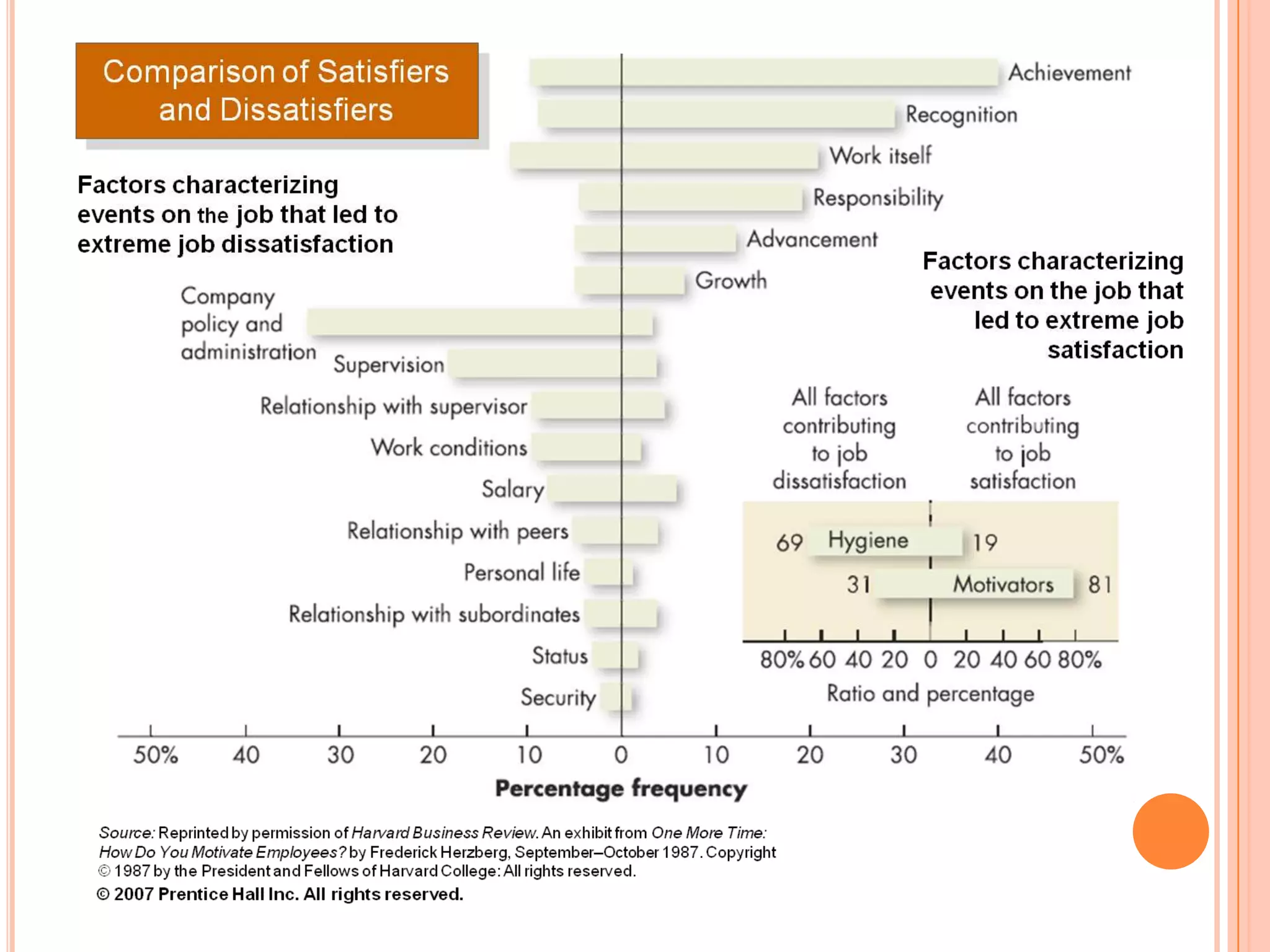
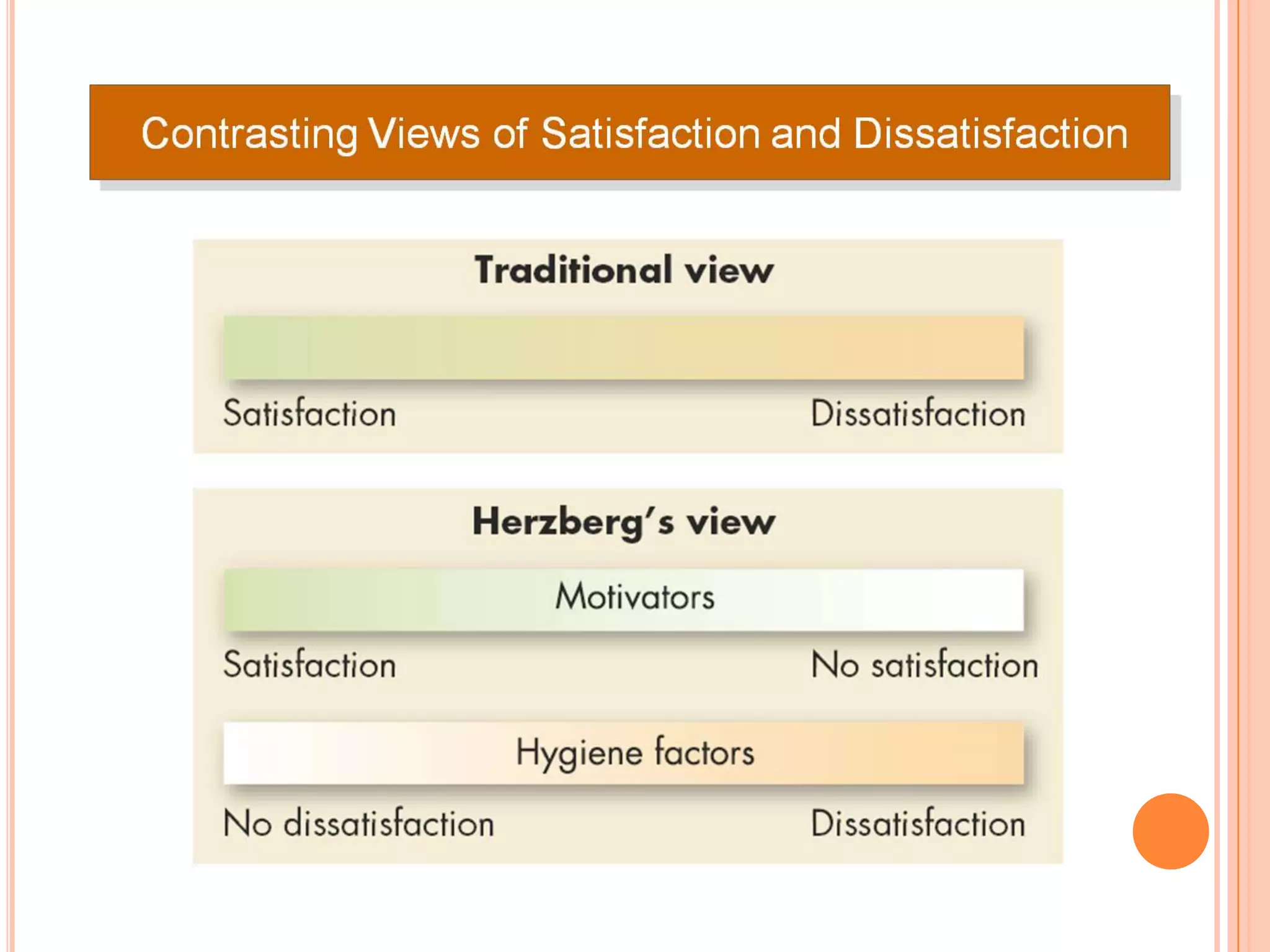
 Herzberg’s Two-Factor Theory

 Vroom’s Expectancy Theory
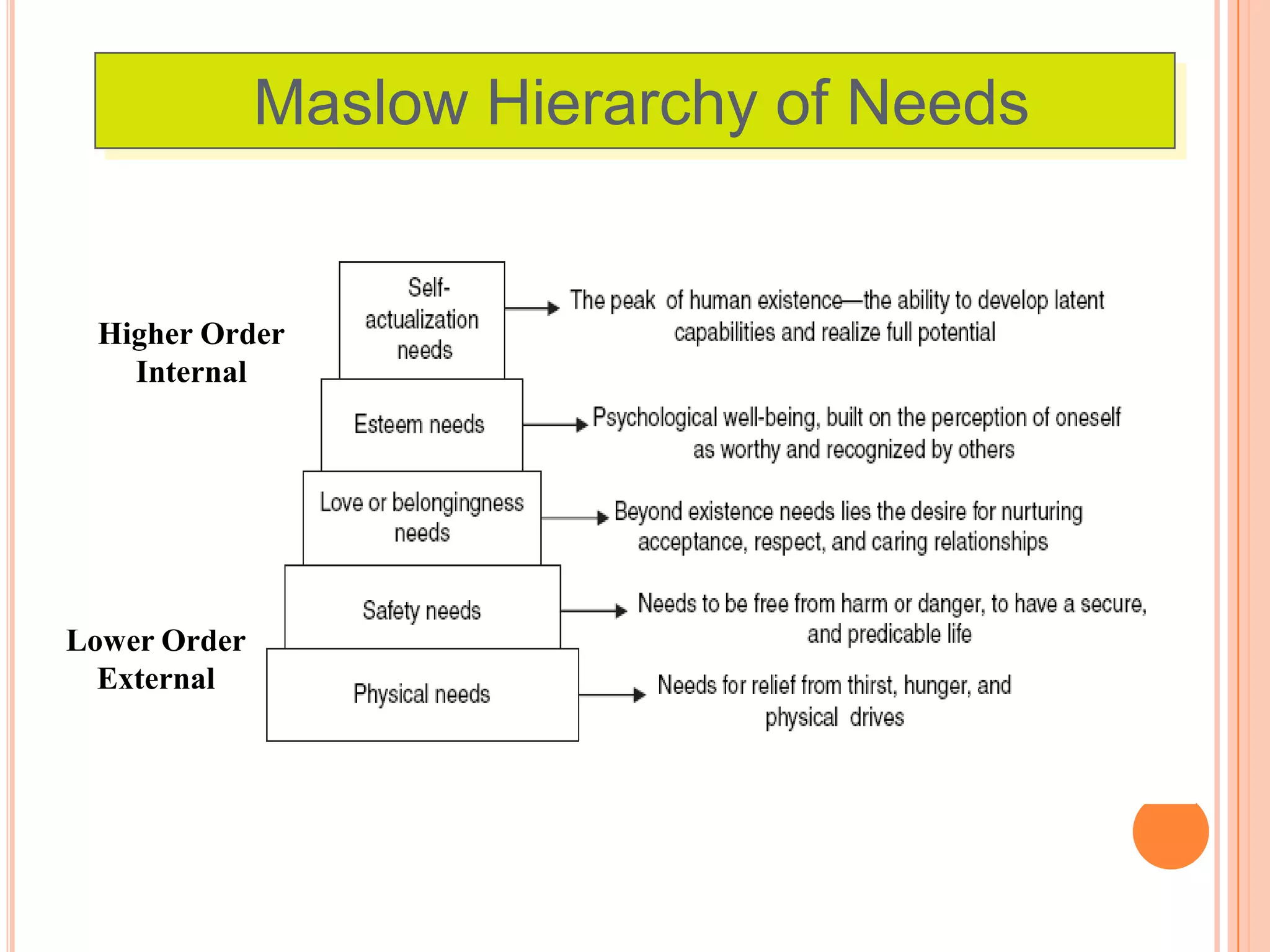
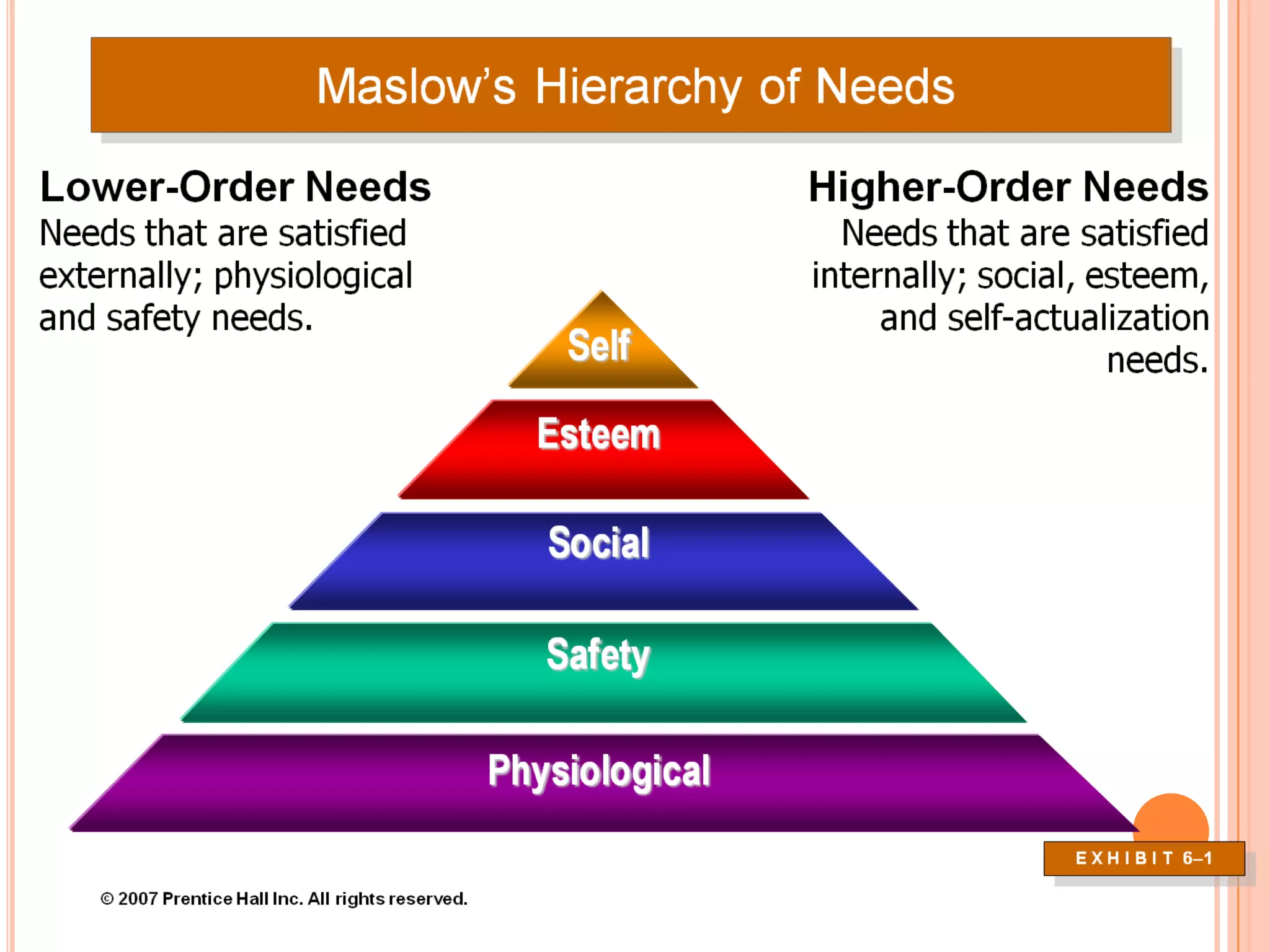
Maslow Hierarchy of Needs


 Higher Order
   Internal


Lower Order
  External
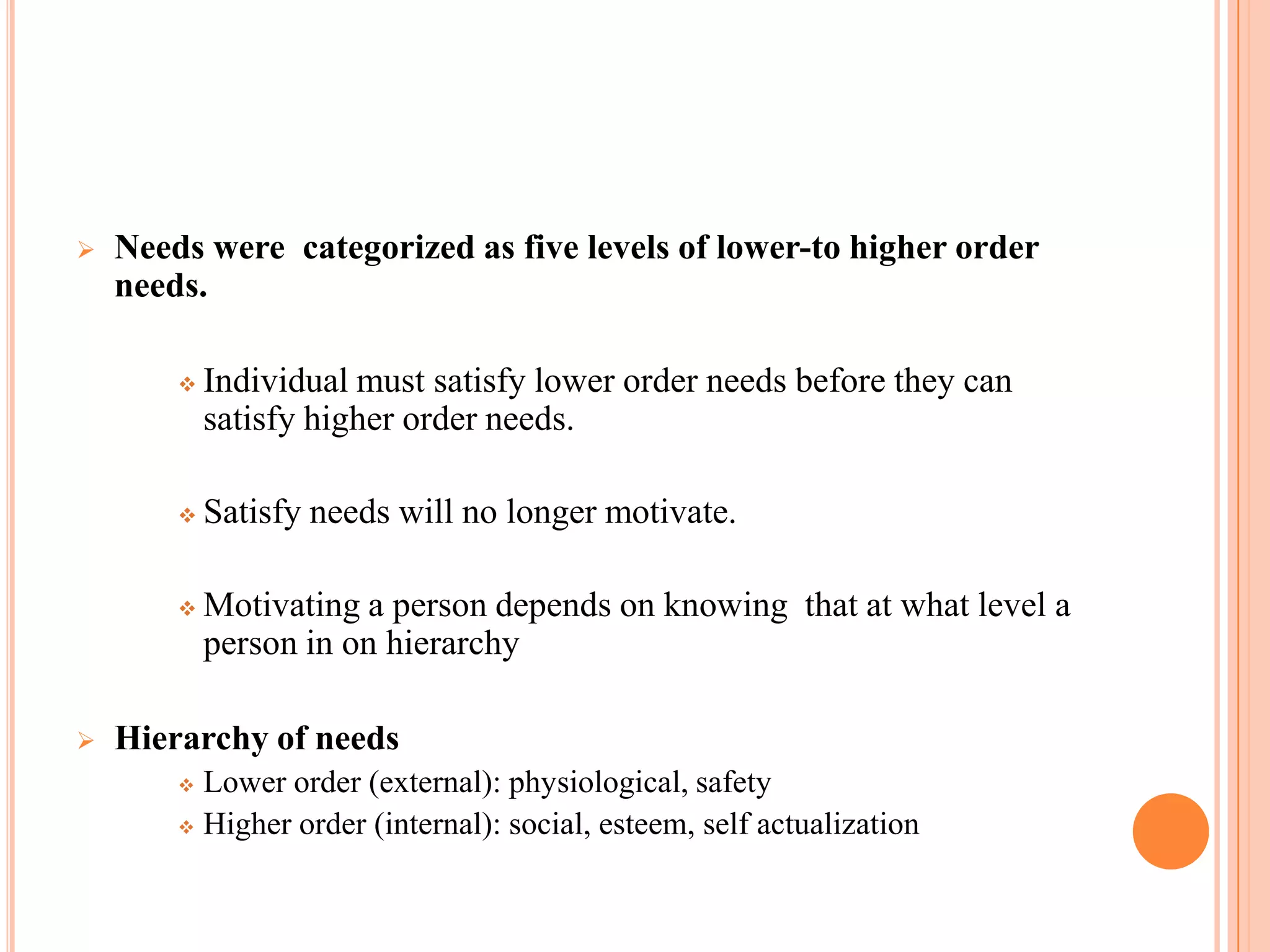
   Needs were categorized as five levels of lower-to higher order
    needs.

           Individual must satisfy lower order needs before they can
            satisfy higher order needs.

           Satisfy needs will no longer motivate.

           Motivating a person depends on knowing that at what level a
            person in on hierarchy

   Hierarchy of needs
         Lower order (external): physiological, safety
         Higher order (internal): social, esteem, self actualization
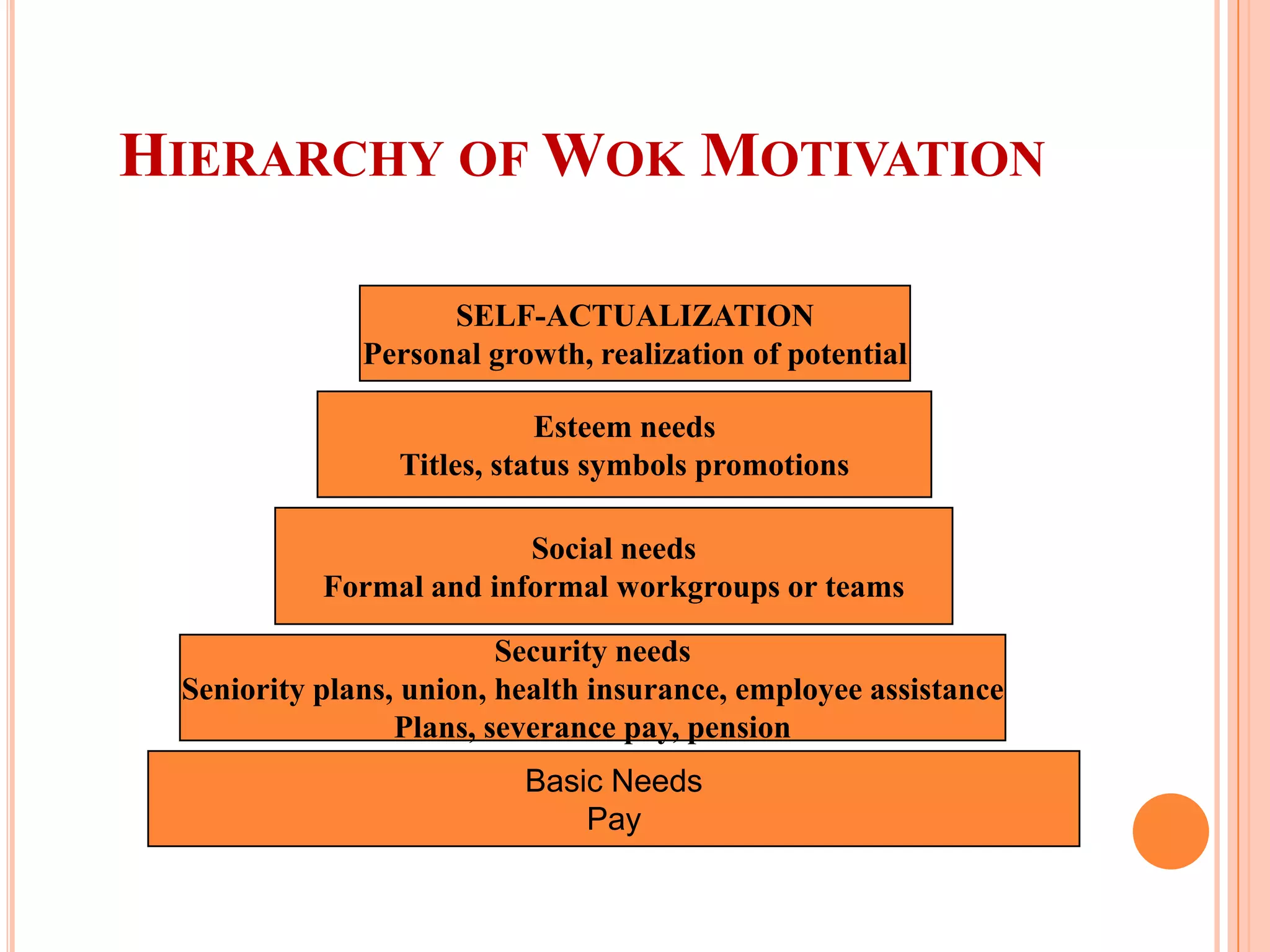
HIERARCHY OF WOK MOTIVATION

                    SELF-ACTUALIZATION
              Personal growth, realization of potential

                            Esteem needs
                 Titles, status symbols promotions

                         Social needs
           Formal and informal workgroups or teams

                         Security needs
 Seniority plans, union, health insurance, employee assistance
                 Plans, severance pay, pension
                          Basic Needs
                              Pay
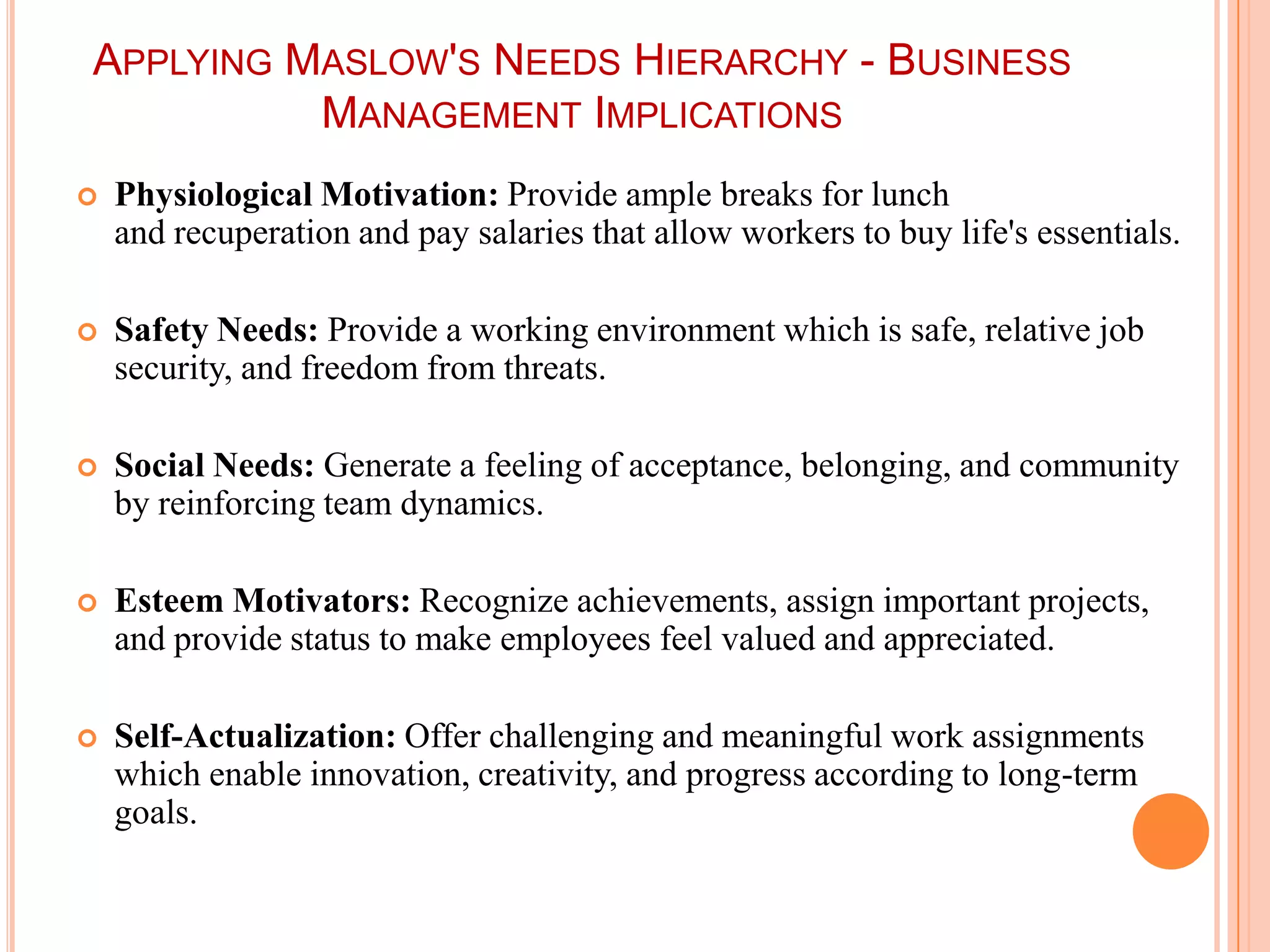
APPLYING MASLOW'S NEEDS HIERARCHY - BUSINESS
          MANAGEMENT IMPLICATIONS
   Physiological Motivation: Provide ample breaks for lunch
    and recuperation and pay salaries that allow workers to buy life's essentials.

   Safety Needs: Provide a working environment which is safe, relative job
    security, and freedom from threats.

   Social Needs: Generate a feeling of acceptance, belonging, and community
    by reinforcing team dynamics.

   Esteem Motivators: Recognize achievements, assign important projects,
    and provide status to make employees feel valued and appreciated.

   Self-Actualization: Offer challenging and meaningful work assignments
    which enable innovation, creativity, and progress according to long-term
    goals.
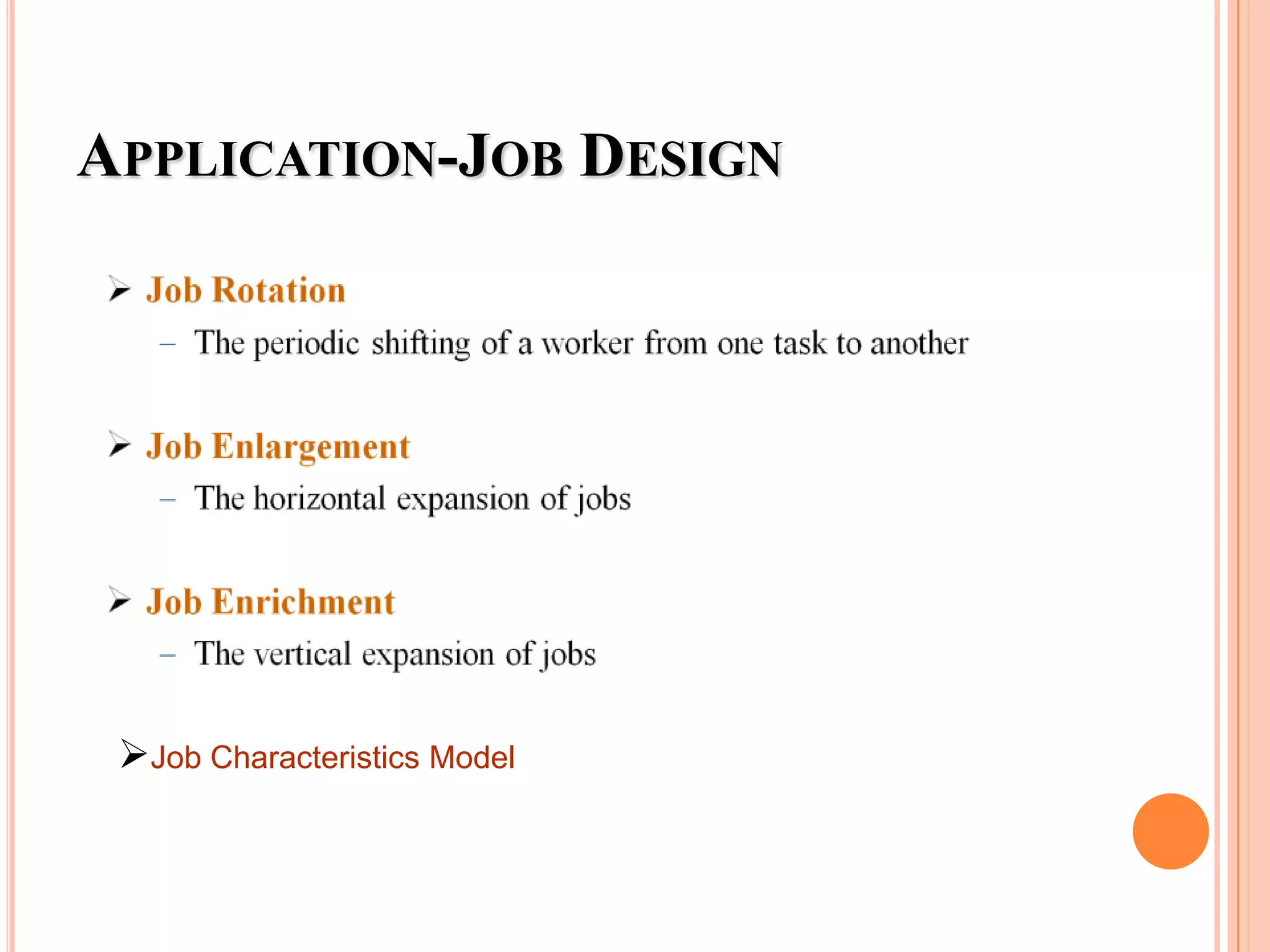
APPLICATION-JOB DESIGN


 Job Characteristics Model

Work motivation

  • 1.
  • 2.
    MOTIVATION  Motivation is a process that start with physiological and psychological deficiency or need that activates a behavior or a drive that is aimed at a goal or incentive
  • 3.
    MOTIVATION THEORIES  Maslow’sHierarchy of Needs Theory  Herzberg’s Two-Factor Theory  Vroom’s Expectancy Theory
  • 4.
    Maslow Hierarchy ofNeeds Higher Order Internal Lower Order External
  • 6.
    Needs were categorized as five levels of lower-to higher order needs.  Individual must satisfy lower order needs before they can satisfy higher order needs.  Satisfy needs will no longer motivate.  Motivating a person depends on knowing that at what level a person in on hierarchy  Hierarchy of needs  Lower order (external): physiological, safety  Higher order (internal): social, esteem, self actualization
  • 7.
    HIERARCHY OF WOKMOTIVATION SELF-ACTUALIZATION Personal growth, realization of potential Esteem needs Titles, status symbols promotions Social needs Formal and informal workgroups or teams Security needs Seniority plans, union, health insurance, employee assistance Plans, severance pay, pension Basic Needs Pay
  • 8.
    APPLYING MASLOW'S NEEDSHIERARCHY - BUSINESS MANAGEMENT IMPLICATIONS  Physiological Motivation: Provide ample breaks for lunch and recuperation and pay salaries that allow workers to buy life's essentials.  Safety Needs: Provide a working environment which is safe, relative job security, and freedom from threats.  Social Needs: Generate a feeling of acceptance, belonging, and community by reinforcing team dynamics.  Esteem Motivators: Recognize achievements, assign important projects, and provide status to make employees feel valued and appreciated.  Self-Actualization: Offer challenging and meaningful work assignments which enable innovation, creativity, and progress according to long-term goals.
  • 12.
    APPLICATION-JOB DESIGN JobCharacteristics Model