
Supervised by
Dr. Khaleel Al Bataineh
Done by: Mohammed Naljm Ali
Amman Arab University
Department of English language andTranslation
 Word-formation is a branch of lexicology
which studies the process of building new
words, derivative structures and patterns of
existing words.
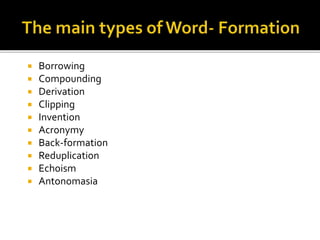
 Borrowing
 Compounding
 Derivation
 Clipping
 Invention
 Acronymy
 Back-formation
 Reduplication
 Echoism
 Antonomasia
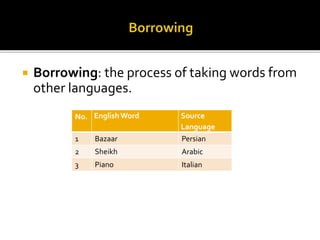
 Borrowing: the process of taking words from
other languages.
Source
Language
English Word
No.
Persian
Bazaar
1
Arabic
Sheikh
2
Italian
Piano
3
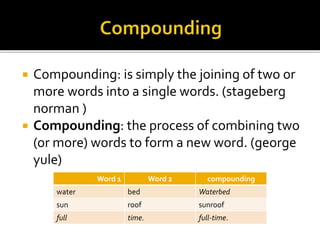
 Compounding: is simply the joining of two or
more words into a single words. (stageberg
norman )
 Compounding: the process of combining two
(or more) words to form a new word. (george
yule)
compounding
Word 2
Word 1
Waterbed
bed
water
sunroof
roof
sun
full-time.
time.
full
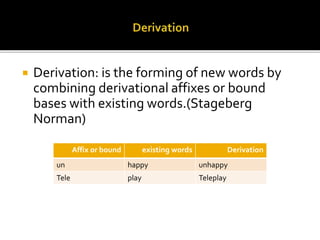
 Derivation: is the forming of new words by
combining derivational affixes or bound
bases with existing words.(Stageberg
Norman)
Derivation
existing words
Affix or bound
unhappy
happy
un
Teleplay
play
Tele
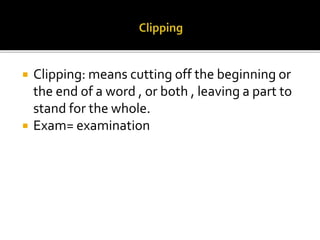
 Clipping: means cutting off the beginning or
the end of a word , or both , leaving a part to
stand for the whole.
 Exam= examination
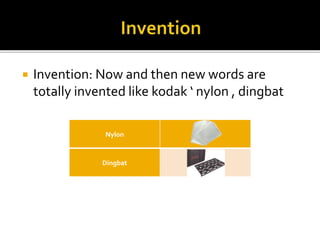
 Invention: Now and then new words are
totally invented like kodak ‘ nylon , dingbat
Nylon
Dingbat
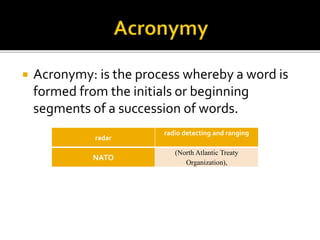
 Acronymy: is the process whereby a word is
formed from the initials or beginning
segments of a succession of words.
radar
radio detecting and ranging
NATO
(North Atlantic Treaty
Organization),
 Backformation: the process of reducing a
word such as a noun to a shorter version and
using it as a new word such as a verb (e.g.
babysit from babysitter)
 Reduplication: is the process of forming a new
word by doubling a morpheme, usually with a
change of vowel or initial consonant;
 Hanky-panky
 1-The base morpheme is repeated without
change ,as in clop-clop, tick-tick.
 2-The base morpheme is repeated with a change
of initial consonant, as in : fuddy-duddy , razzle-
dazzle.
 3-The base morpheme is repeated with a change
of vowel, as in chitchat, tiptop, criss-cross.
 Echoism : is the formation of words whose
sounds suggests their meaning . it is divided
into natural like the roar of a water, or
artificial like clang of a bell.
 It means the formation of a common noun, verb
or adjective from the name of a person or place.
 hamburger =Hamburg
 Samun :Written sources say that the Iraqis knew
Samun for the first time in 1920 after the fall of
the Ottoman Empire and during the British
occupation, when one of the British workers
entering with the British soldiers (and his name
was Simon) brought an oven with him and made
bread, and since that time it was named after its
owner, but the word was distorted to Samoun.
 The study of languageGeorge yule 5th
edition / chapter five
 An introductory English grammar - Stageberg
Norman second edition/ chapter ten
Word Formation

Word Formation

  • 1.
    Supervised by Dr. KhaleelAl Bataineh Done by: Mohammed Naljm Ali Amman Arab University Department of English language andTranslation
  • 2.
     Word-formation isa branch of lexicology which studies the process of building new words, derivative structures and patterns of existing words.
  • 3.
     Borrowing  Compounding Derivation  Clipping  Invention  Acronymy  Back-formation  Reduplication  Echoism  Antonomasia
  • 4.
     Borrowing: theprocess of taking words from other languages. Source Language English Word No. Persian Bazaar 1 Arabic Sheikh 2 Italian Piano 3
  • 5.
     Compounding: issimply the joining of two or more words into a single words. (stageberg norman )  Compounding: the process of combining two (or more) words to form a new word. (george yule) compounding Word 2 Word 1 Waterbed bed water sunroof roof sun full-time. time. full
  • 6.
     Derivation: isthe forming of new words by combining derivational affixes or bound bases with existing words.(Stageberg Norman) Derivation existing words Affix or bound unhappy happy un Teleplay play Tele
  • 7.
     Clipping: meanscutting off the beginning or the end of a word , or both , leaving a part to stand for the whole.  Exam= examination
  • 8.
     Invention: Nowand then new words are totally invented like kodak ‘ nylon , dingbat Nylon Dingbat
  • 9.
     Acronymy: isthe process whereby a word is formed from the initials or beginning segments of a succession of words. radar radio detecting and ranging NATO (North Atlantic Treaty Organization),
  • 10.
     Backformation: theprocess of reducing a word such as a noun to a shorter version and using it as a new word such as a verb (e.g. babysit from babysitter)
  • 11.
     Reduplication: isthe process of forming a new word by doubling a morpheme, usually with a change of vowel or initial consonant;  Hanky-panky  1-The base morpheme is repeated without change ,as in clop-clop, tick-tick.  2-The base morpheme is repeated with a change of initial consonant, as in : fuddy-duddy , razzle- dazzle.  3-The base morpheme is repeated with a change of vowel, as in chitchat, tiptop, criss-cross.
  • 12.
     Echoism :is the formation of words whose sounds suggests their meaning . it is divided into natural like the roar of a water, or artificial like clang of a bell.
  • 13.
     It meansthe formation of a common noun, verb or adjective from the name of a person or place.  hamburger =Hamburg  Samun :Written sources say that the Iraqis knew Samun for the first time in 1920 after the fall of the Ottoman Empire and during the British occupation, when one of the British workers entering with the British soldiers (and his name was Simon) brought an oven with him and made bread, and since that time it was named after its owner, but the word was distorted to Samoun.
  • 14.
     The studyof languageGeorge yule 5th edition / chapter five  An introductory English grammar - Stageberg Norman second edition/ chapter ten