The first thing you want to do is create a new canvas. 512 x 512 is
good for this texture.
Using a reference picture I was able to get the exact background
color I wanted using the eye dropper tool.
Click back to your canvas and using the paint bucket tool, paint the
background this saturation of grey.
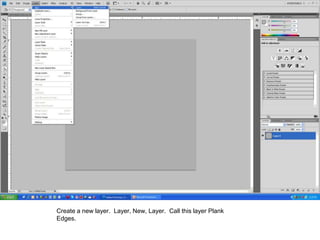
Create a new layer. Layer, New, Layer. Call this layer Plank
Edges.
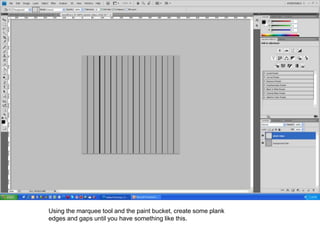
Using the marquee tool and the paint bucket, create some plank
edges and gaps until you have something like this.
Click on the background layer and click the FX button. Select
Bevel and Emboss. Set the adjustments as so.
We have added some depth to the top, bottom and edges. Now
select the plank edge layer and apply the same bevel and emboss
effect with one exception. Set the direction to down. Now for some
texture.
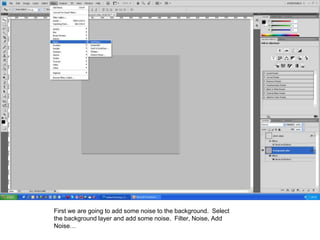
First we are going to add some noise to the background. Select
the background layer and add some noise. Filter, Noise, Add
Noise…
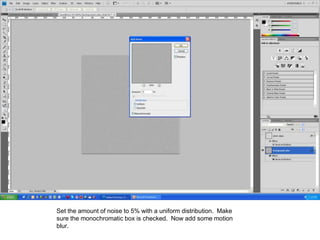
Set the amount of noise to 5% with a uniform distribution. Make
sure the monochromatic box is checked. Now add some motion
blur.
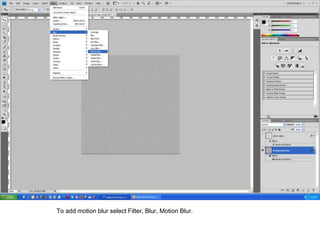
To add motion blur select Filter, Blur, Motion Blur.
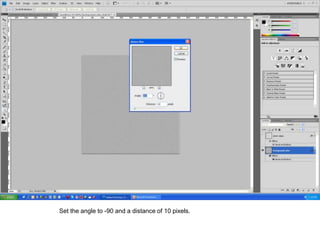
Set the angle to -90 and a distance of 10 pixels.
Now to make the grain more realistic. Go to Filter, Liquify. Leave
the settings alone. Use a large brush and pull the grain from top to
bottom. Play with it until it is like you want.
We need to add some nails to make this more realistic. Create a
new layer and call it Nails. Put the grid lines on so we can keep the
nails straight and even. Go to View, Show, Grid.
Get closer to your texture so we can add the nails. Click on the
color pallet and set a light color. I used a greyish white (eeeded).
Set your paint brush to 3 with 100% hardness.
Paint two nails.
We need to add some depth to the nails. Click the FX button.
Select Inner Shadow. Set the Distance and Size to 1. The nails
should look like this.
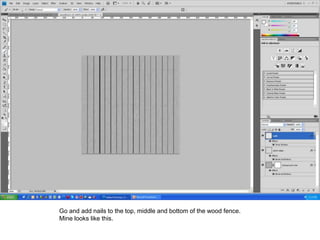
Go and add nails to the top, middle and bottom of the wood fence.
Mine looks like this.
Add a new layer and call it dark areas. Now we are going to add
the dark spots on the fence. Select the brush tool and add some
dark spots.
Now that you have some dark areas, take the blur tool and blur the
edges of the dark areas. Mine looks like this.
Now for some imperfections. Create a new layer called
imperfections. Bring up the color pallet and choose a darker grey
color I used 656563. Draw some imperfections on the fence.
Now that we have some imperfections lets add some grass stains
to the bottom. Bring up the color pallet at select a green. I used
67bc2e.
Set your paint brush to 9 and paint some grass stains.
Now for some dirt. Set the color pallet to 806d17 and paint some
dirt like you did the grass. Once you are done painting the dirt
select the blur tool and blur the grass and dirt.
Next set the opacity of the grass layer to 30%. Presto a wood
fence with some dirt and grass stains on the bottom. Now find a
nice plane to apply your texture to.

Woodfence texture tutorial

  • 1.
    The first thingyou want to do is create a new canvas. 512 x 512 is good for this texture.
  • 2.
    Using a referencepicture I was able to get the exact background color I wanted using the eye dropper tool.
  • 3.
    Click back toyour canvas and using the paint bucket tool, paint the background this saturation of grey.
  • 4.
    Create a newlayer. Layer, New, Layer. Call this layer Plank Edges.
  • 5.
    Using the marqueetool and the paint bucket, create some plank edges and gaps until you have something like this.
  • 6.
    Click on thebackground layer and click the FX button. Select Bevel and Emboss. Set the adjustments as so.
  • 7.
    We have addedsome depth to the top, bottom and edges. Now select the plank edge layer and apply the same bevel and emboss effect with one exception. Set the direction to down. Now for some texture.
  • 8.
    First we aregoing to add some noise to the background. Select the background layer and add some noise. Filter, Noise, Add Noise…
  • 9.
    Set the amountof noise to 5% with a uniform distribution. Make sure the monochromatic box is checked. Now add some motion blur.
  • 10.
    To add motionblur select Filter, Blur, Motion Blur.
  • 11.
    Set the angleto -90 and a distance of 10 pixels.
  • 12.
    Now to makethe grain more realistic. Go to Filter, Liquify. Leave the settings alone. Use a large brush and pull the grain from top to bottom. Play with it until it is like you want.
  • 13.
    We need toadd some nails to make this more realistic. Create a new layer and call it Nails. Put the grid lines on so we can keep the nails straight and even. Go to View, Show, Grid.
  • 14.
    Get closer toyour texture so we can add the nails. Click on the color pallet and set a light color. I used a greyish white (eeeded). Set your paint brush to 3 with 100% hardness.
  • 15.
  • 16.
    We need toadd some depth to the nails. Click the FX button. Select Inner Shadow. Set the Distance and Size to 1. The nails should look like this.
  • 17.
    Go and addnails to the top, middle and bottom of the wood fence. Mine looks like this.
  • 18.
    Add a newlayer and call it dark areas. Now we are going to add the dark spots on the fence. Select the brush tool and add some dark spots.
  • 19.
    Now that youhave some dark areas, take the blur tool and blur the edges of the dark areas. Mine looks like this.
  • 20.
    Now for someimperfections. Create a new layer called imperfections. Bring up the color pallet and choose a darker grey color I used 656563. Draw some imperfections on the fence.
  • 21.
    Now that wehave some imperfections lets add some grass stains to the bottom. Bring up the color pallet at select a green. I used 67bc2e.
  • 22.
    Set your paintbrush to 9 and paint some grass stains.
  • 23.
    Now for somedirt. Set the color pallet to 806d17 and paint some dirt like you did the grass. Once you are done painting the dirt select the blur tool and blur the grass and dirt.
  • 24.
    Next set theopacity of the grass layer to 30%. Presto a wood fence with some dirt and grass stains on the bottom. Now find a nice plane to apply your texture to.

Editor's Notes

  • #2 First thing you want to do is create a new canvas. 512 x 512 is good for this texture.
  • #3 Using a reference picture I got the exact background color I wanted using the eye dropper tool.
  • #4 Click back to your canvas and using the paint bucket, paint the background this saturation of grey.