Wolves
by: Samyra Smith
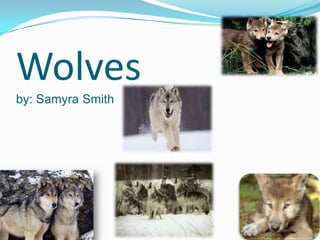
Where Wolves Live
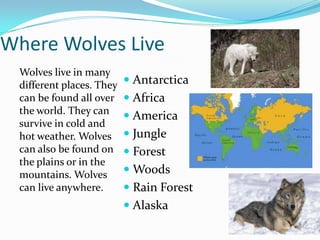
Wolves live in many
different places. They
can be found all over
the world. They can
survive in cold and
hot weather. Wolves
can also be found on
the plains or in the
mountains. Wolves
can live anywhere.
 Antarctica
 Africa
 America
 Jungle
 Forest
 Woods
 Rain Forest
 Alaska
Color of wolves
Wolves can be all kinds of
colors. Grey wolves are
the most common.
Arctic wolves are white
because they need to
blend in with the snow. A
red wolf is the color of
cinnamon with white
around their nose. A
black wolf is just a darker
grey wolf.
Wolf Life Cycle
A female wolf is pregnant for about two months.
A female will select a den for the pups. It takes
three weeks for a pup to see. A wolf is born blind.
They stay in their den for the first three weeks.
Their eyes open between 10-14 days. After a month
they would come out of their den and explore and
play. They learn to hunt at four months. After
three years it would be a grown wolf.
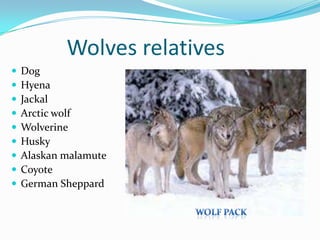
Wolves relatives
 Dog
 Hyena
 Jackal
 Arctic wolf
 Wolverine
 Husky
 Alaskan malamute
 Coyote
 German Sheppard
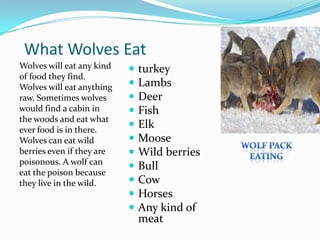
What Wolves Eat
Wolves will eat any kind
of food they find.
Wolves will eat anything
raw. Sometimes wolves
would find a cabin in
the woods and eat what
ever food is in there.
Wolves can eat wild
berries even if they are
poisonous. A wolf can
eat the poison because
they live in the wild.
 turkey
 Lambs
 Deer
 Fish
 Elk
 Moose
 Wild berries
 Bull
 Cow
 Horses
 Any kind of
meat
Wolves size
A wolf can weigh up to 150 or more
pounds. They can also be 38.5 pounds.
Wolves can be 26-38 inches tall. A wolf
can weigh up to 20 and 68 kilograms.
When wolf is born it weighs one pound.
Arctic wolves weigh up to 170 pounds. A
Grey wolf weighs about 160 pounds.
Thank you for watching and
reading my power point. Good bye

Wolves

  • 1.
  • 2.
    Where Wolves Live Wolveslive in many different places. They can be found all over the world. They can survive in cold and hot weather. Wolves can also be found on the plains or in the mountains. Wolves can live anywhere.  Antarctica  Africa  America  Jungle  Forest  Woods  Rain Forest  Alaska
  • 3.
    Color of wolves Wolvescan be all kinds of colors. Grey wolves are the most common. Arctic wolves are white because they need to blend in with the snow. A red wolf is the color of cinnamon with white around their nose. A black wolf is just a darker grey wolf.
  • 4.
    Wolf Life Cycle Afemale wolf is pregnant for about two months. A female will select a den for the pups. It takes three weeks for a pup to see. A wolf is born blind. They stay in their den for the first three weeks. Their eyes open between 10-14 days. After a month they would come out of their den and explore and play. They learn to hunt at four months. After three years it would be a grown wolf.
  • 5.
    Wolves relatives  Dog Hyena  Jackal  Arctic wolf  Wolverine  Husky  Alaskan malamute  Coyote  German Sheppard
  • 6.
    What Wolves Eat Wolveswill eat any kind of food they find. Wolves will eat anything raw. Sometimes wolves would find a cabin in the woods and eat what ever food is in there. Wolves can eat wild berries even if they are poisonous. A wolf can eat the poison because they live in the wild.  turkey  Lambs  Deer  Fish  Elk  Moose  Wild berries  Bull  Cow  Horses  Any kind of meat
  • 7.
    Wolves size A wolfcan weigh up to 150 or more pounds. They can also be 38.5 pounds. Wolves can be 26-38 inches tall. A wolf can weigh up to 20 and 68 kilograms. When wolf is born it weighs one pound. Arctic wolves weigh up to 170 pounds. A Grey wolf weighs about 160 pounds.
  • 8.
    Thank you forwatching and reading my power point. Good bye