BE PROJECT 
Domain : Wireless Sensor Network 
Problem statement :Data acquisition scheme for wireless 
sensor network
Contents 
 Introduction 
 Architecture of node application structure 
 Our project 
 Future scope and limitations 
 Conclusions
What is WSN? 
 WSN stands for “Wireless Sensor Network” 
 A wireless sensor network consists of three main 
components: 
1. Nodes 
2. Communication 
3. Computation 
 It consists of a number of nodes deployed at different 
locations, that sense their environment and sends the related 
data to the Base Station.
Categories of WSN 
 Category 1: 
 Almost invariably mesh-based systems with multi hop 
radio connectivity among or between WNs. 
 Category 2: 
 Point-to-point or multipoint-to-point (star based) systems 
generally with single-hop radio connectivity to WNs.
Why WSN? 
 Self – Organization 
 Concurrency processing 
 Low cost 
 Tiny 
 Portable
ARCHITECTURE OF NODE APPLICATION STRUCTURE 
 Node software has 3 parts 
o Operating System which performs device-specific tasks 
o Sensor Driver which initializes the sensor hardware and 
performs the measurements in the sensor 
o Host Middleware which organizes the co- operation of the 
distributed nodes in the network 
 Individual nodes interact with the distributed middleware 
layer to perform the functions dictated by the sensor network 
application 
 The general overall software architecture of the sensor net is 
shown in the figure on next slide.
Applications of WSN 
 Earthquake / Natural disaster Prevention 
 Air pollution Monitoring 
 Waste water Monitoring 
 Health care Monitoring 
 Military Surveillance 
 Inventory Tracking 
 Industrial Monitoring 
 Data Logging
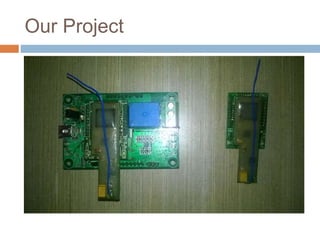
Our Project 
At Node Level: 
 Sensing data. 
 Storing it in a secondary memory. 
 Data aggregation 
At the Base Station(base station is connected to a 
computer): 
 Fetching the data from the database. 
 Displaying the results.
Our Project
Query based/Event based 
nodes 
 Query based node sends data to the base station only when 
we fire a query to that node from a base station(e.g. 
Temperature sensing , humidity sensing etc.) 
 Event based node sends data to the base station on the 
occurrence of a particular event (e.g. Forest fire , earthquake 
etc.)
Platform/Technology used 
Different Networking Technologies used : 
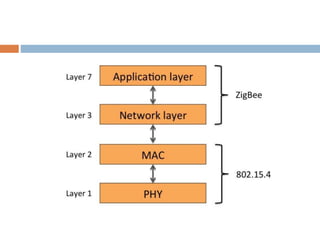
 ZIGBEE 
Nodes contains: 
 MSP430-Microcontroller 
 Secondary Storage/USB slots/Serial ports 
 Sensors 
 Power Supply
Platform/Technology used 
 C++ 
 PHP 
 HTML5.
Applications 
 Temperature sensing
Limitations 
 Power factors 
 Environmental factors 
 Transmission channel factors 
 Energy efficiency 
 Network topology 
 Failure in long range communication 
 Increase in traffic decreases the lifetime 
 Restricted energy resource
Future Scope 
 Data Aggregation 
 To display results on Android smartphones.
Conclusion 
 Thus, we would be able to store the data sensed by the node 
in a secondary storage and can obtain/access the data as and 
when required in the future.

WIRELESS SENSOR NETWORK

  • 1.
    BE PROJECT Domain: Wireless Sensor Network Problem statement :Data acquisition scheme for wireless sensor network
  • 2.
    Contents  Introduction  Architecture of node application structure  Our project  Future scope and limitations  Conclusions
  • 3.
    What is WSN?  WSN stands for “Wireless Sensor Network”  A wireless sensor network consists of three main components: 1. Nodes 2. Communication 3. Computation  It consists of a number of nodes deployed at different locations, that sense their environment and sends the related data to the Base Station.
  • 4.
    Categories of WSN  Category 1:  Almost invariably mesh-based systems with multi hop radio connectivity among or between WNs.  Category 2:  Point-to-point or multipoint-to-point (star based) systems generally with single-hop radio connectivity to WNs.
  • 6.
    Why WSN? Self – Organization  Concurrency processing  Low cost  Tiny  Portable
  • 7.
    ARCHITECTURE OF NODEAPPLICATION STRUCTURE  Node software has 3 parts o Operating System which performs device-specific tasks o Sensor Driver which initializes the sensor hardware and performs the measurements in the sensor o Host Middleware which organizes the co- operation of the distributed nodes in the network  Individual nodes interact with the distributed middleware layer to perform the functions dictated by the sensor network application  The general overall software architecture of the sensor net is shown in the figure on next slide.
  • 9.
    Applications of WSN  Earthquake / Natural disaster Prevention  Air pollution Monitoring  Waste water Monitoring  Health care Monitoring  Military Surveillance  Inventory Tracking  Industrial Monitoring  Data Logging
  • 11.
    Our Project AtNode Level:  Sensing data.  Storing it in a secondary memory.  Data aggregation At the Base Station(base station is connected to a computer):  Fetching the data from the database.  Displaying the results.
  • 12.
  • 13.
    Query based/Event based nodes  Query based node sends data to the base station only when we fire a query to that node from a base station(e.g. Temperature sensing , humidity sensing etc.)  Event based node sends data to the base station on the occurrence of a particular event (e.g. Forest fire , earthquake etc.)
  • 14.
    Platform/Technology used DifferentNetworking Technologies used :  ZIGBEE Nodes contains:  MSP430-Microcontroller  Secondary Storage/USB slots/Serial ports  Sensors  Power Supply
  • 15.
    Platform/Technology used C++  PHP  HTML5.
  • 17.
  • 18.
    Limitations  Powerfactors  Environmental factors  Transmission channel factors  Energy efficiency  Network topology  Failure in long range communication  Increase in traffic decreases the lifetime  Restricted energy resource
  • 19.
    Future Scope Data Aggregation  To display results on Android smartphones.
  • 20.
    Conclusion  Thus,we would be able to store the data sensed by the node in a secondary storage and can obtain/access the data as and when required in the future.