P R A B H A T C H A N D R A
R 0 1 0 5 1 4 0 4 4
C S E - O I L & G A S
WIRELESS COMMUNICATION
INTRODUCTION
• What is Wireless communication?
Wireless communication is the transfer of information between
two or more points that are not connected by an electrical
conductor.
The most common wireless technologies use radio.
 Early Wireless Work
David E. Hughes transmitted radio signals over a few hundred
yards by means of a clockwork keyed transmitter in 1878
The world's first wireless telephone conversation occurred in
1880, by Alexander Graham Bell called it photophone.
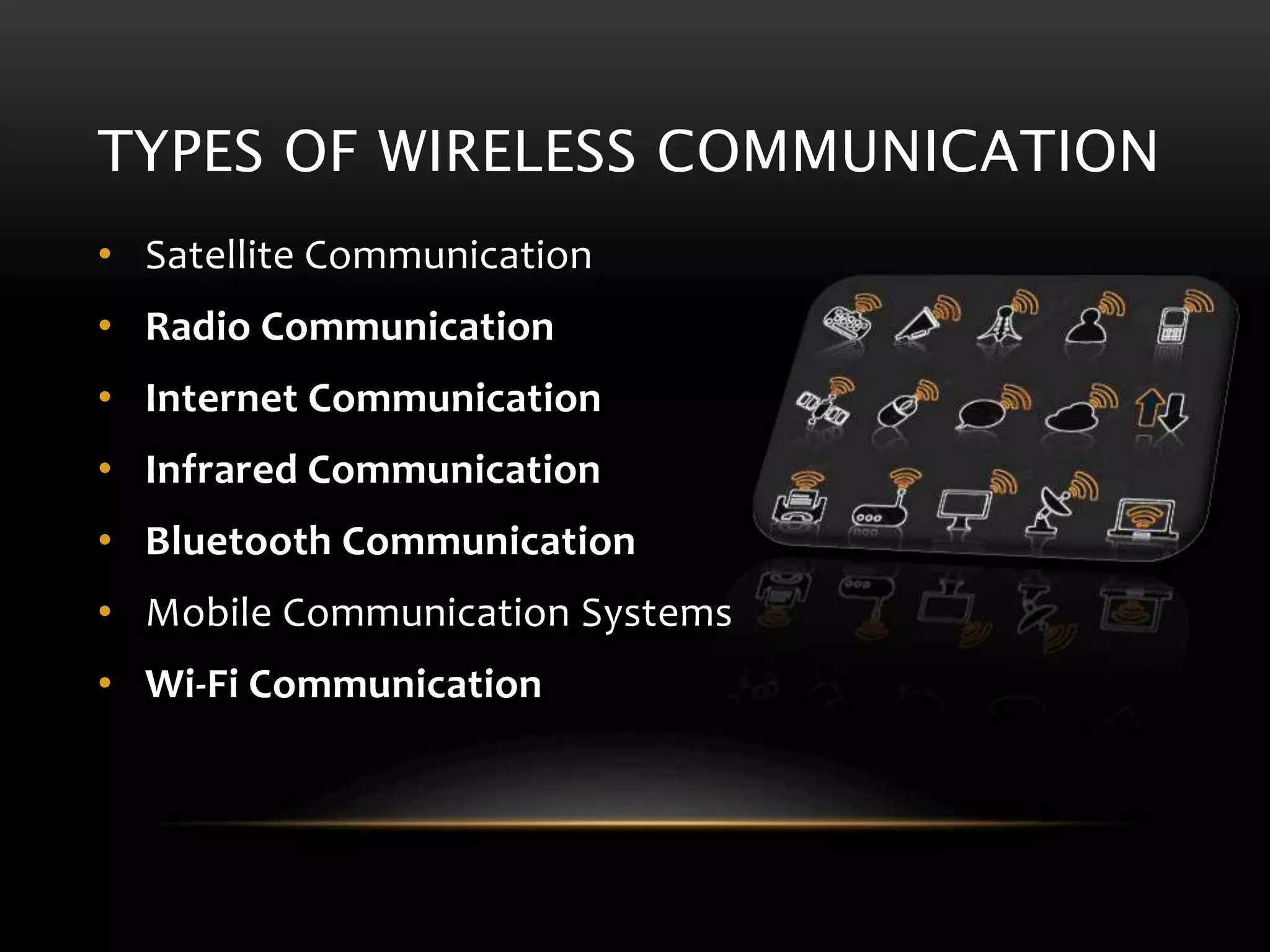
TYPES OF WIRELESS COMMUNICATION
• Satellite Communication
• Radio Communication
• Internet Communication
• Infrared Communication
• Bluetooth Communication
• Mobile Communication Systems
• Wi-Fi Communication
RESULTS
Advantages:
• Flexibility
• Ease of use
• Planning
• Durability
• Price
Disadvantages:
• Compatibility
• Ethernet
• Weak signals
CONCLUSION
We can easily connect, communicate and share faster.
Wireless made us wire-free and less the problem of
wiring long distance and usage of so much of wire. It
has made us to communicate very long distance easily
and cheaply. Wireless has come to so many devices and
products that everyone is getting connected to each of
them and making it more easy to use, where as it is
becoming faster and faster everyday to
transfer/communicate data.
THANK YOU

Wireless communication

  • 1.
    P R AB H A T C H A N D R A R 0 1 0 5 1 4 0 4 4 C S E - O I L & G A S WIRELESS COMMUNICATION
  • 2.
    INTRODUCTION • What isWireless communication? Wireless communication is the transfer of information between two or more points that are not connected by an electrical conductor. The most common wireless technologies use radio.  Early Wireless Work David E. Hughes transmitted radio signals over a few hundred yards by means of a clockwork keyed transmitter in 1878 The world's first wireless telephone conversation occurred in 1880, by Alexander Graham Bell called it photophone.
  • 3.
    TYPES OF WIRELESSCOMMUNICATION • Satellite Communication • Radio Communication • Internet Communication • Infrared Communication • Bluetooth Communication • Mobile Communication Systems • Wi-Fi Communication
  • 4.
    RESULTS Advantages: • Flexibility • Easeof use • Planning • Durability • Price Disadvantages: • Compatibility • Ethernet • Weak signals
  • 5.
    CONCLUSION We can easilyconnect, communicate and share faster. Wireless made us wire-free and less the problem of wiring long distance and usage of so much of wire. It has made us to communicate very long distance easily and cheaply. Wireless has come to so many devices and products that everyone is getting connected to each of them and making it more easy to use, where as it is becoming faster and faster everyday to transfer/communicate data.
  • 6.