 Cold Exposure
 Walking Safety
 Driving Safety
 Home Safety
 Holiday Safety
 Recreational Safety
 Snow Removal Safety
 Seasonal Affect Disorder (SAD)
Wear Loose-Fitting and Layered Clothing
Trapped Air Insulates
Layers can be removed to avoid perspiration and
chill
“Cotton Kills”…Use Polyester or Synthetic Material
Wool will insulate even when wet
Wear Hats, Hoods, and Scarves
Over Half of Heat Loss Comes From Your Head
Mittens are Better than Gloves
Cover Mouth To Protect Lungs In Extreme
Cold
Drink Water to Avoid Dehydration
Danger: Skin Cold Enough To Freeze
Signs and Symptoms:
Loss of Feeling
In Fingers, Toes, Ear Lobes, Nose
White/Pale Skin
Treatment:
Cover affected areas and gently soak in warm
water
When part warm and red, cover with dry, sterile
dressing
Cotton or gauze between fingers and toes
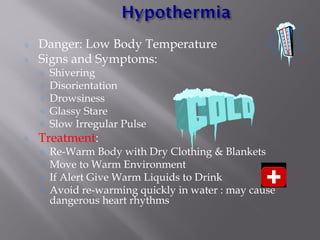
Danger: Low Body Temperature
Signs and Symptoms:
Shivering
Disorientation
Drowsiness
Glassy Stare
Slow Irregular Pulse
Treatment:
Re-Warm Body with Dry Clothing & Blankets
Move to Warm Environment
If Alert Give Warm Liquids to Drink
Avoid re-warming quickly in water : may cause
dangerous heart rhythms
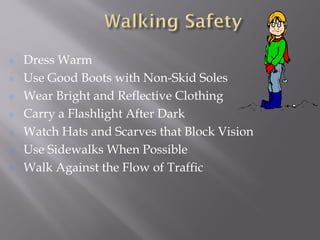
Dress Warm
Use Good Boots with Non-Skid Soles
Wear Bright and Reflective Clothing
Carry a Flashlight After Dark
Watch Hats and Scarves that Block Vision
Use Sidewalks When Possible
Walk Against the Flow of Traffic
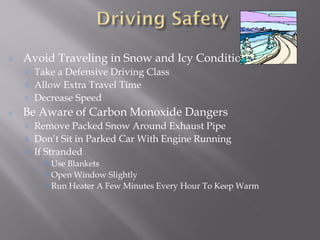
Avoid Traveling in Snow and Icy Conditions
Take a Defensive Driving Class
Allow Extra Travel Time
Decrease Speed
Be Aware of Carbon Monoxide Dangers
Remove Packed Snow Around Exhaust Pipe
Don’t Sit in Parked Car With Engine Running
If Stranded
Use Blankets
Open Window Slightly
Run Heater A Few Minutes Every Hour To Keep Warm
Have Your Car Winter Ready
Check Condition of:
Tires
Battery
Fluid Levels
Keep an Emergency Kit
cell phone
flashlight
blankets
sand & shovel
flares & reflectors
extra clothing
food & water
first aid kit
Inspect
Furnace
Fireplace Chimneys
Space Heaters
Replace Smoke and Carbon Monoxide Detector Batteries
Watch Children and Pets Around Heat Sources
Never Heat Home With Range or Oven
If gas heat, make sure vents are not blocked
Keep a Working Fire Extinguisher Handy
Post Emergency Phone Numbers Near Telephone
Use Humidifiers to Improve Air Quality
Watch Gifts with Small Parts for Children
Avoid Overloading Circuits with Decorative Lights
Use only UL approved lights
Use non-combustible or flame-resistant tree trim
Keep tree away from heat sources
Choose tinsel made of plastic or non-leaded materials
Practice Safe Fire Prevention in the Home
Keep Christmas Trees Well-Hydrated
Use Care when Burning Candles
Unplug Tree Lights when Away from Home
Avoid Shoveling If Out of Shape
Know Your Lift Limits
Avoid Twisting & Bending
Push Instead of Lift When Possible & Use Your Legs
Perform Warm-up Exercises and Take Rest Breaks
Help Prevent Slips and Falls
Use Rock Salt, Sand or De-Icing Compounds
Be Careful Operating Snow blowers
Never Clear Exhaust Chute When Running
Watch Loose Clothing Like Scarves and Jacket
Sleeves
Be Aware of Projectiles
Wear Personal Protective Equipment
Use Helmets and Eye or Face Protection for Hockey,
Snowmobiling, Skiing & Snowboarding
Ride Safely When Snowmobiling
Watch Excessive Speeds
Obey Trail Regulations
Ride With a Buddy
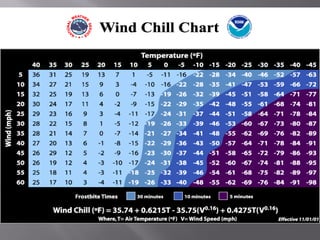
Remember Wind-chill and Frostbite Dangers
Ride Sober
Carry Repair and Emergency Kits
Avoid Thin Ice & Open Water
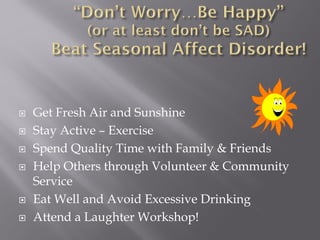
 Get Fresh Air and Sunshine
 Stay Active – Exercise
 Spend Quality Time with Family & Friends
 Help Others through Volunteer & Community
Service
 Eat Well and Avoid Excessive Drinking
 Attend a Laughter Workshop!
Winter Safety

Winter Safety

  • 2.
     Cold Exposure Walking Safety  Driving Safety  Home Safety  Holiday Safety  Recreational Safety  Snow Removal Safety  Seasonal Affect Disorder (SAD)
  • 3.
    Wear Loose-Fitting andLayered Clothing Trapped Air Insulates Layers can be removed to avoid perspiration and chill “Cotton Kills”…Use Polyester or Synthetic Material Wool will insulate even when wet Wear Hats, Hoods, and Scarves Over Half of Heat Loss Comes From Your Head Mittens are Better than Gloves Cover Mouth To Protect Lungs In Extreme Cold Drink Water to Avoid Dehydration
  • 4.
    Danger: Skin ColdEnough To Freeze Signs and Symptoms: Loss of Feeling In Fingers, Toes, Ear Lobes, Nose White/Pale Skin Treatment: Cover affected areas and gently soak in warm water When part warm and red, cover with dry, sterile dressing Cotton or gauze between fingers and toes
  • 5.
    Danger: Low BodyTemperature Signs and Symptoms: Shivering Disorientation Drowsiness Glassy Stare Slow Irregular Pulse Treatment: Re-Warm Body with Dry Clothing & Blankets Move to Warm Environment If Alert Give Warm Liquids to Drink Avoid re-warming quickly in water : may cause dangerous heart rhythms
  • 7.
    Dress Warm Use GoodBoots with Non-Skid Soles Wear Bright and Reflective Clothing Carry a Flashlight After Dark Watch Hats and Scarves that Block Vision Use Sidewalks When Possible Walk Against the Flow of Traffic
  • 8.
    Avoid Traveling inSnow and Icy Conditions Take a Defensive Driving Class Allow Extra Travel Time Decrease Speed Be Aware of Carbon Monoxide Dangers Remove Packed Snow Around Exhaust Pipe Don’t Sit in Parked Car With Engine Running If Stranded Use Blankets Open Window Slightly Run Heater A Few Minutes Every Hour To Keep Warm
  • 9.
    Have Your CarWinter Ready Check Condition of: Tires Battery Fluid Levels Keep an Emergency Kit cell phone flashlight blankets sand & shovel flares & reflectors extra clothing food & water first aid kit
  • 10.
    Inspect Furnace Fireplace Chimneys Space Heaters ReplaceSmoke and Carbon Monoxide Detector Batteries Watch Children and Pets Around Heat Sources Never Heat Home With Range or Oven If gas heat, make sure vents are not blocked Keep a Working Fire Extinguisher Handy Post Emergency Phone Numbers Near Telephone Use Humidifiers to Improve Air Quality
  • 11.
    Watch Gifts withSmall Parts for Children Avoid Overloading Circuits with Decorative Lights Use only UL approved lights Use non-combustible or flame-resistant tree trim Keep tree away from heat sources Choose tinsel made of plastic or non-leaded materials Practice Safe Fire Prevention in the Home Keep Christmas Trees Well-Hydrated Use Care when Burning Candles Unplug Tree Lights when Away from Home
  • 12.
    Avoid Shoveling IfOut of Shape Know Your Lift Limits Avoid Twisting & Bending Push Instead of Lift When Possible & Use Your Legs Perform Warm-up Exercises and Take Rest Breaks Help Prevent Slips and Falls Use Rock Salt, Sand or De-Icing Compounds Be Careful Operating Snow blowers Never Clear Exhaust Chute When Running Watch Loose Clothing Like Scarves and Jacket Sleeves Be Aware of Projectiles
  • 13.
    Wear Personal ProtectiveEquipment Use Helmets and Eye or Face Protection for Hockey, Snowmobiling, Skiing & Snowboarding Ride Safely When Snowmobiling Watch Excessive Speeds Obey Trail Regulations Ride With a Buddy Remember Wind-chill and Frostbite Dangers Ride Sober Carry Repair and Emergency Kits Avoid Thin Ice & Open Water
  • 14.
     Get FreshAir and Sunshine  Stay Active – Exercise  Spend Quality Time with Family & Friends  Help Others through Volunteer & Community Service  Eat Well and Avoid Excessive Drinking  Attend a Laughter Workshop!