Cold Stress
2
How Cold is Too Cold?
When the body is unable to warm itself, cold related
stress may result. This may include tissue damage and
possibly death. A cold environment forces the body to
work harder to maintain it's temperature. Cold air, water,
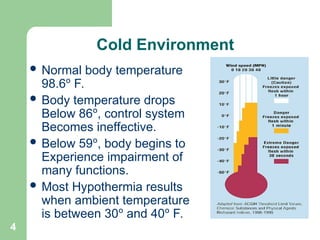
and snow all draw heat from the body. Wind chill is the
combination of air temperature and wind speed. For
example, when the air temperature is 40°F, and the wind
speed is 35 mph, your exposed skin receives conditions
equivalent to the air temperature being 11° F. While it is
obvious that below freezing conditions combined with
inadequate clothing could bring about cold stress, it is also
important to understand that it can also be brought about
by temperatures in the 50's coupled with some rain and
wind.
3
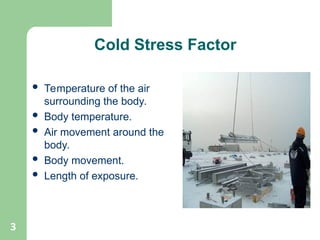
 Temperature of the air
surrounding the body.
 Body temperature.
 Air movement around the
body.
 Body movement.
 Length of exposure.
Cold Stress Factor
4
 Normal body temperature
98.6º F.
 Body temperature drops
Below 86º, control system
Becomes ineffective.
 Below 59º, body begins to
Experience impairment of
many functions.
 Most Hypothermia results
when ambient temperature
is between 30º and 40º F.
Cold Environment
5
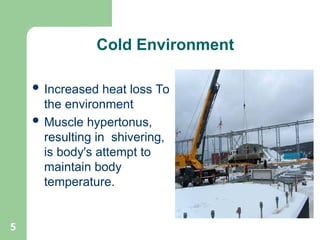
 Increased heat loss To
the environment
 Muscle hypertonus,
resulting in shivering,
is body’s attempt to
maintain body
temperature.
Cold Environment
6
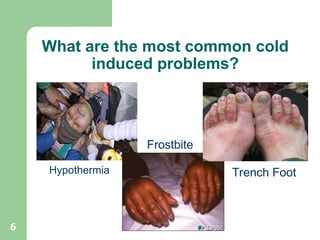
What are the most common cold
induced problems?
Trench Foot
Frostbite
Hypothermia
7
 Prolonged exposure to cold
causes the body to lose
energy faster than it is
produced.
 Body temperature drops to
lower than normal.
 Can happen when
temperatures are above
freezing.
Hypothermia
8
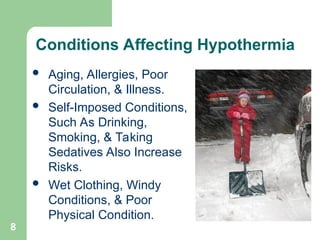
 Aging, Allergies, Poor
Circulation, & Illness.
 Self-Imposed Conditions,
Such As Drinking,
Smoking, & Taking
Sedatives Also Increase
Risks.
 Wet Clothing, Windy
Conditions, & Poor
Physical Condition.
Conditions Affecting Hypothermia
9
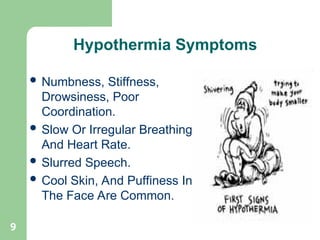
 Numbness, Stiffness,
Drowsiness, Poor
Coordination.
 Slow Or Irregular Breathing
And Heart Rate.
 Slurred Speech.
 Cool Skin, And Puffiness In
The Face Are Common.
Hypothermia Symptoms
10
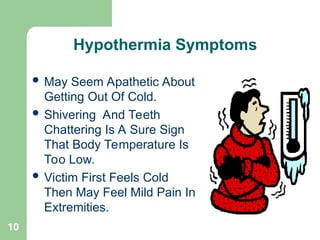
 May Seem Apathetic About
Getting Out Of Cold.
 Shivering And Teeth
Chattering Is A Sure Sign
That Body Temperature Is
Too Low.
 Victim First Feels Cold
Then May Feel Mild Pain In
Extremities.
Hypothermia Symptoms
11
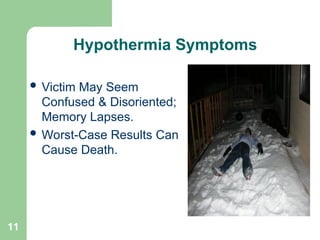
 Victim May Seem
Confused & Disoriented;
Memory Lapses.
 Worst-Case Results Can
Cause Death.
Hypothermia Symptoms
12
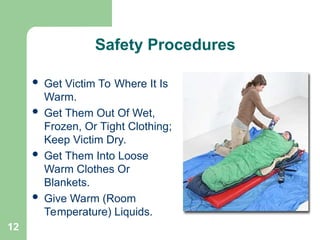
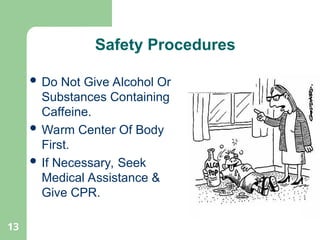
 Get Victim To Where It Is
Warm.
 Get Them Out Of Wet,
Frozen, Or Tight Clothing;
Keep Victim Dry.
 Get Them Into Loose
Warm Clothes Or
Blankets.
 Give Warm (Room
Temperature) Liquids.
Safety Procedures
13
 Do Not Give Alcohol Or
Substances Containing
Caffeine.
 Warm Center Of Body
First.
 If Necessary, Seek
Medical Assistance &
Give CPR.
Safety Procedures
14
 Most Serious, And
Second Most Common,
Cold Exposure Hazard.
 Nose, Ears, Cheeks,
Fingers, & Toes Most
Often Affected.
 Affected Area Doesn’t
Get Enough Heat &
Freezes.
Frostbite
15
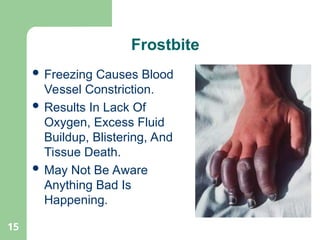
 Freezing Causes Blood
Vessel Constriction.
 Results In Lack Of
Oxygen, Excess Fluid
Buildup, Blistering, And
Tissue Death.
 May Not Be Aware
Anything Bad Is
Happening.
Frostbite
16
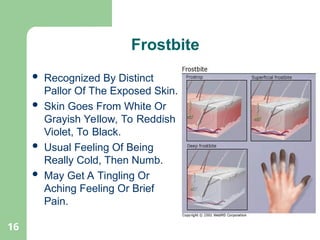
 Recognized By Distinct
Pallor Of The Exposed Skin.
 Skin Goes From White Or
Grayish Yellow, To Reddish
Violet, To Black.
 Usual Feeling Of Being
Really Cold, Then Numb.
 May Get A Tingling Or
Aching Feeling Or Brief
Pain.
Frostbite
17
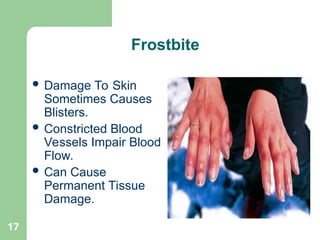
 Damage To Skin
Sometimes Causes
Blisters.
 Constricted Blood
Vessels Impair Blood
Flow.
 Can Cause
Permanent Tissue
Damage.
Frostbite
18
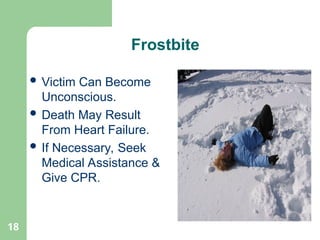
 Victim Can Become
Unconscious.
 Death May Result
From Heart Failure.
 If Necessary, Seek
Medical Assistance &
Give CPR.
Frostbite
19
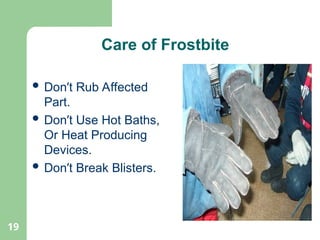
 Don’t Rub Affected
Part.
 Don’t Use Hot Baths,
Or Heat Producing
Devices.
 Don’t Break Blisters.
Care of Frostbite
20
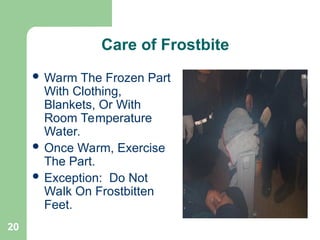
 Warm The Frozen Part
With Clothing,
Blankets, Or With
Room Temperature
Water.
 Once Warm, Exercise
The Part.
 Exception: Do Not
Walk On Frostbitten
Feet.
Care of Frostbite
21
Trench Foot
 Trench Foot or immersion foot is caused by
having feet immersed in cold water at
temperatures above freezing for long periods
of time. It is similar to frostbite, but considered
less severe.
 Symptoms usually consist of tingling, itching
or burning sensation. Blisters may be present.
22
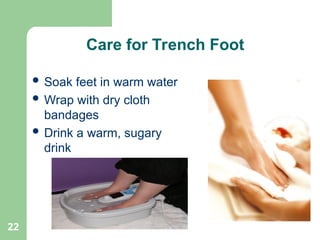
Care for Trench Foot
 Soak feet in warm water
 Wrap with dry cloth
bandages
 Drink a warm, sugary
drink
23
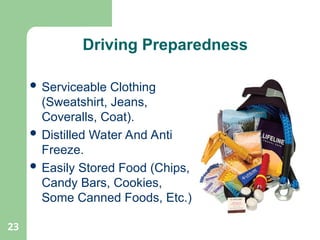
 Serviceable Clothing
(Sweatshirt, Jeans,
Coveralls, Coat).
 Distilled Water And Anti
Freeze.
 Easily Stored Food (Chips,
Candy Bars, Cookies,
Some Canned Foods, Etc.)
Driving Preparedness
24
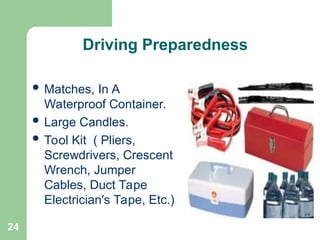
 Matches, In A
Waterproof Container.
 Large Candles.
 Tool Kit ( Pliers,
Screwdrivers, Crescent
Wrench, Jumper
Cables, Duct Tape
Electrician’s Tape, Etc.)
Driving Preparedness
25
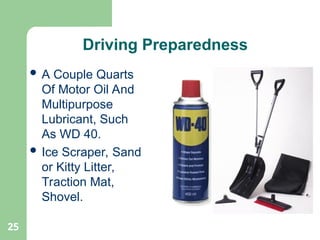
 A Couple Quarts
Of Motor Oil And
Multipurpose
Lubricant, Such
As WD 40.
 Ice Scraper, Sand
or Kitty Litter,
Traction Mat,
Shovel.
Driving Preparedness
26
Driving Preparedness
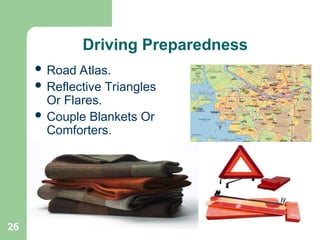
 Road Atlas.
 Reflective Triangles
Or Flares.
 Couple Blankets Or
Comforters.
27
THE TWO MOST
IMPORTANT ITEMS:
 A HEALTHY RESPECT
FOR YOUR SAFETY IN
COLD WEATHER !!
AND
 A CELLULAR PHONE!!
Driving Preparedness
28
 Prevention Is The Best
Way To Deal With Cold
Stress.
 Don’t Drink Alcohol,
Bathe, Smoke, Or Take
Drugs Before Being
Exposed To Cold.
 Dress In Loose Layers
Of Dry Clothing.
Protection
29
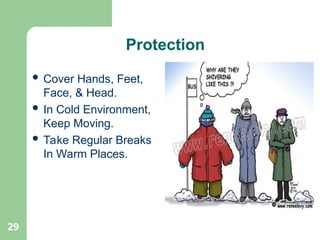
 Cover Hands, Feet,
Face, & Head.
 In Cold Environment,
Keep Moving.
 Take Regular Breaks
In Warm Places.
Protection
30
Engineering Controls
 Engineering controls can be
effective in reducing the risk of
cold stress.
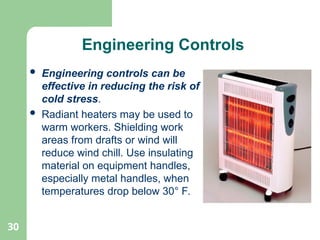
 Radiant heaters may be used to
warm workers. Shielding work
areas from drafts or wind will
reduce wind chill. Use insulating
material on equipment handles,
especially metal handles, when
temperatures drop below 30° F.
31
Training
 Training in recognition and treatment is important.
Supervisors, workers and coworkers should watch for
signs of cold stress and allow workers to interrupt their
work if they are extremely uncomfortable.
 Supervisors should also ensure that work schedules
allow appropriate rest periods and ensure liquids are
available.
 They should use appropriate engineering controls,
personal protective equipment and work practices to
reduce the risk of cold stress.
 All of these measures should be incorporated into the
relevant health and safety plans.

Cold Stress HSE Presentation HSE Formats.ppt

  • 1.
  • 2.
    2 How Cold isToo Cold? When the body is unable to warm itself, cold related stress may result. This may include tissue damage and possibly death. A cold environment forces the body to work harder to maintain it's temperature. Cold air, water, and snow all draw heat from the body. Wind chill is the combination of air temperature and wind speed. For example, when the air temperature is 40°F, and the wind speed is 35 mph, your exposed skin receives conditions equivalent to the air temperature being 11° F. While it is obvious that below freezing conditions combined with inadequate clothing could bring about cold stress, it is also important to understand that it can also be brought about by temperatures in the 50's coupled with some rain and wind.
  • 3.
    3  Temperature ofthe air surrounding the body.  Body temperature.  Air movement around the body.  Body movement.  Length of exposure. Cold Stress Factor
  • 4.
    4  Normal bodytemperature 98.6º F.  Body temperature drops Below 86º, control system Becomes ineffective.  Below 59º, body begins to Experience impairment of many functions.  Most Hypothermia results when ambient temperature is between 30º and 40º F. Cold Environment
  • 5.
    5  Increased heatloss To the environment  Muscle hypertonus, resulting in shivering, is body’s attempt to maintain body temperature. Cold Environment
  • 6.
    6 What are themost common cold induced problems? Trench Foot Frostbite Hypothermia
  • 7.
    7  Prolonged exposureto cold causes the body to lose energy faster than it is produced.  Body temperature drops to lower than normal.  Can happen when temperatures are above freezing. Hypothermia
  • 8.
    8  Aging, Allergies,Poor Circulation, & Illness.  Self-Imposed Conditions, Such As Drinking, Smoking, & Taking Sedatives Also Increase Risks.  Wet Clothing, Windy Conditions, & Poor Physical Condition. Conditions Affecting Hypothermia
  • 9.
    9  Numbness, Stiffness, Drowsiness,Poor Coordination.  Slow Or Irregular Breathing And Heart Rate.  Slurred Speech.  Cool Skin, And Puffiness In The Face Are Common. Hypothermia Symptoms
  • 10.
    10  May SeemApathetic About Getting Out Of Cold.  Shivering And Teeth Chattering Is A Sure Sign That Body Temperature Is Too Low.  Victim First Feels Cold Then May Feel Mild Pain In Extremities. Hypothermia Symptoms
  • 11.
    11  Victim MaySeem Confused & Disoriented; Memory Lapses.  Worst-Case Results Can Cause Death. Hypothermia Symptoms
  • 12.
    12  Get VictimTo Where It Is Warm.  Get Them Out Of Wet, Frozen, Or Tight Clothing; Keep Victim Dry.  Get Them Into Loose Warm Clothes Or Blankets.  Give Warm (Room Temperature) Liquids. Safety Procedures
  • 13.
    13  Do NotGive Alcohol Or Substances Containing Caffeine.  Warm Center Of Body First.  If Necessary, Seek Medical Assistance & Give CPR. Safety Procedures
  • 14.
    14  Most Serious,And Second Most Common, Cold Exposure Hazard.  Nose, Ears, Cheeks, Fingers, & Toes Most Often Affected.  Affected Area Doesn’t Get Enough Heat & Freezes. Frostbite
  • 15.
    15  Freezing CausesBlood Vessel Constriction.  Results In Lack Of Oxygen, Excess Fluid Buildup, Blistering, And Tissue Death.  May Not Be Aware Anything Bad Is Happening. Frostbite
  • 16.
    16  Recognized ByDistinct Pallor Of The Exposed Skin.  Skin Goes From White Or Grayish Yellow, To Reddish Violet, To Black.  Usual Feeling Of Being Really Cold, Then Numb.  May Get A Tingling Or Aching Feeling Or Brief Pain. Frostbite
  • 17.
    17  Damage ToSkin Sometimes Causes Blisters.  Constricted Blood Vessels Impair Blood Flow.  Can Cause Permanent Tissue Damage. Frostbite
  • 18.
    18  Victim CanBecome Unconscious.  Death May Result From Heart Failure.  If Necessary, Seek Medical Assistance & Give CPR. Frostbite
  • 19.
    19  Don’t RubAffected Part.  Don’t Use Hot Baths, Or Heat Producing Devices.  Don’t Break Blisters. Care of Frostbite
  • 20.
    20  Warm TheFrozen Part With Clothing, Blankets, Or With Room Temperature Water.  Once Warm, Exercise The Part.  Exception: Do Not Walk On Frostbitten Feet. Care of Frostbite
  • 21.
    21 Trench Foot  TrenchFoot or immersion foot is caused by having feet immersed in cold water at temperatures above freezing for long periods of time. It is similar to frostbite, but considered less severe.  Symptoms usually consist of tingling, itching or burning sensation. Blisters may be present.
  • 22.
    22 Care for TrenchFoot  Soak feet in warm water  Wrap with dry cloth bandages  Drink a warm, sugary drink
  • 23.
    23  Serviceable Clothing (Sweatshirt,Jeans, Coveralls, Coat).  Distilled Water And Anti Freeze.  Easily Stored Food (Chips, Candy Bars, Cookies, Some Canned Foods, Etc.) Driving Preparedness
  • 24.
    24  Matches, InA Waterproof Container.  Large Candles.  Tool Kit ( Pliers, Screwdrivers, Crescent Wrench, Jumper Cables, Duct Tape Electrician’s Tape, Etc.) Driving Preparedness
  • 25.
    25  A CoupleQuarts Of Motor Oil And Multipurpose Lubricant, Such As WD 40.  Ice Scraper, Sand or Kitty Litter, Traction Mat, Shovel. Driving Preparedness
  • 26.
    26 Driving Preparedness  RoadAtlas.  Reflective Triangles Or Flares.  Couple Blankets Or Comforters.
  • 27.
    27 THE TWO MOST IMPORTANTITEMS:  A HEALTHY RESPECT FOR YOUR SAFETY IN COLD WEATHER !! AND  A CELLULAR PHONE!! Driving Preparedness
  • 28.
    28  Prevention IsThe Best Way To Deal With Cold Stress.  Don’t Drink Alcohol, Bathe, Smoke, Or Take Drugs Before Being Exposed To Cold.  Dress In Loose Layers Of Dry Clothing. Protection
  • 29.
    29  Cover Hands,Feet, Face, & Head.  In Cold Environment, Keep Moving.  Take Regular Breaks In Warm Places. Protection
  • 30.
    30 Engineering Controls  Engineeringcontrols can be effective in reducing the risk of cold stress.  Radiant heaters may be used to warm workers. Shielding work areas from drafts or wind will reduce wind chill. Use insulating material on equipment handles, especially metal handles, when temperatures drop below 30° F.
  • 31.
    31 Training  Training inrecognition and treatment is important. Supervisors, workers and coworkers should watch for signs of cold stress and allow workers to interrupt their work if they are extremely uncomfortable.  Supervisors should also ensure that work schedules allow appropriate rest periods and ensure liquids are available.  They should use appropriate engineering controls, personal protective equipment and work practices to reduce the risk of cold stress.  All of these measures should be incorporated into the relevant health and safety plans.