Wind Loading
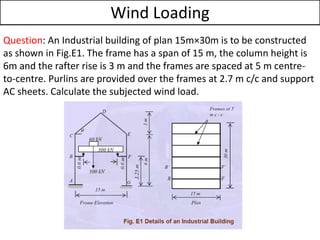
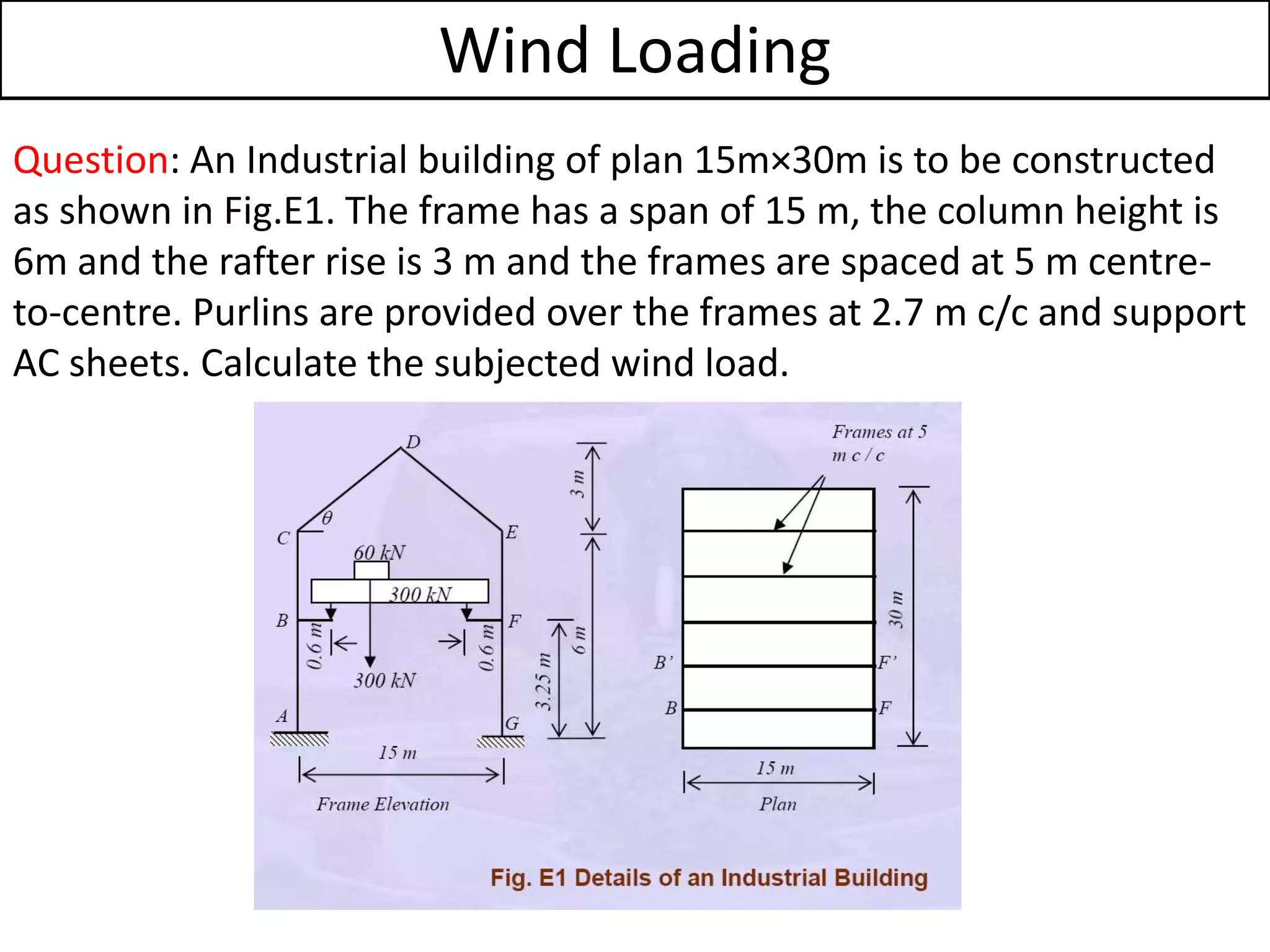
Question: An Industrial building of plan 15m×30m is to be constructed
as shown in Fig.E1. The frame has a span of 15 m, the column height is
6m and the rafter rise is 3 m and the frames are spaced at 5 m centre-
to-centre. Purlins are provided over the frames at 2.7 m c/c and support
AC sheets. Calculate the subjected wind load.
Solution:
Wind Load
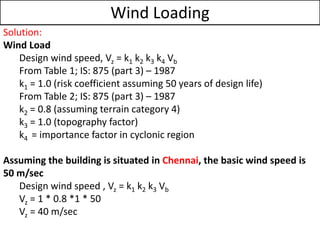
Design wind speed, Vz = k1 k2 k3 k4 Vb
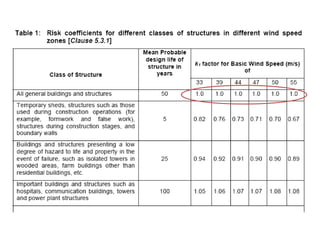
From Table 1; IS: 875 (part 3) – 1987
k1 = 1.0 (risk coefficient assuming 50 years of design life)
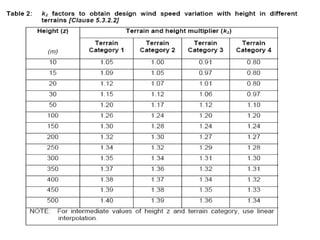
From Table 2; IS: 875 (part 3) – 1987
k2 = 0.8 (assuming terrain category 4)
k3 = 1.0 (topography factor)
k4 = importance factor in cyclonic region
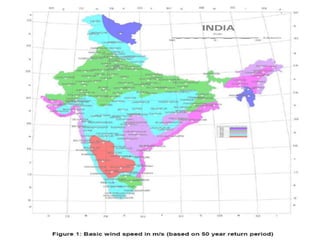
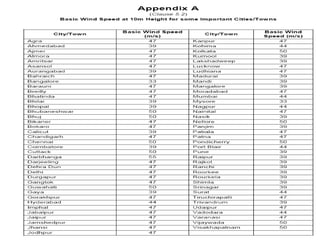
Assuming the building is situated in Chennai, the basic wind speed is
50 m/sec
Design wind speed , Vz = k1 k2 k3 Vb
Vz = 1 * 0.8 *1 * 50
Vz = 40 m/sec
Wind Loading
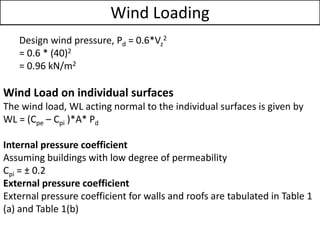
Design wind pressure, Pd = 0.6*Vz
2
= 0.6 * (40)2
= 0.96 kN/m2
Wind Load on individual surfaces
The wind load, WL acting normal to the individual surfaces is given by
WL = (Cpe – Cpi )*A* Pd
Internal pressure coefficient
Assuming buildings with low degree of permeability
Cpi = ± 0.2
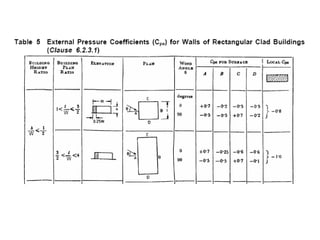
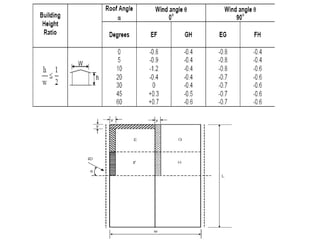
External pressure coefficient
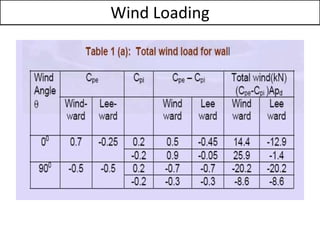
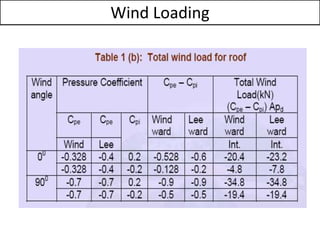
External pressure coefficient for walls and roofs are tabulated in Table 1
(a) and Table 1(b)
Wind Loading
Wind Loading
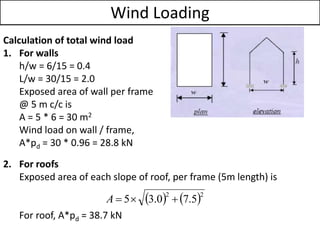
Calculation of total wind load
1. For walls
h/w = 6/15 = 0.4
L/w = 30/15 = 2.0
Exposed area of wall per frame
@ 5 m c/c is
A = 5 * 6 = 30 m2
Wind load on wall / frame,
A*pd = 30 * 0.96 = 28.8 kN
2. For roofs
Exposed area of each slope of roof, per frame (5m length) is
For roof, A*pd = 38.7 kN
   22
5.70.35 A
Wind Loading
Wind Loading
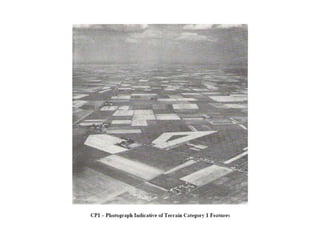
Category 1 – Exposed open terrain with a few or no obstructions and in
which the average height of any object surrounding the structure is less
than 1.5 m.
NOTE – This category includes open sea coasts and flat treeless plains.
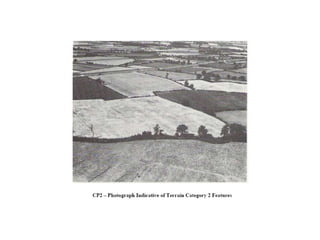
Category 2 – Open terrain with well-scattered obstructions having
height generally between 1.5 and 10 m.
NOTE – This is the criterion for measurement of regional basic wind
speeds and includes airfields, open parklands and undeveloped sparsely
built-up outskirts of towns and suburbs. Open land adjacent to seacoast
may also be classified as Category 2 due to roughness of large sea waves
at high winds.
Terrain Categories
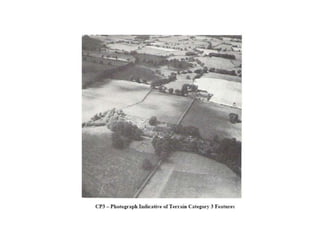
Category 3 – Terrain with numerous closely spaced obstructions having
the size of building-structures up to 10 m in height with or without a few
isolated tall structures.
NOTE 1 – This category includes well-wooded areas, and shrubs, towns
and industrial areas fully or partially developed.
NOTE 2 – It is likely that the next higher category than this will not exist
in most design situations and that selection of a more severe category
will be deliberate.
NOTE 3 – Particular attention must be given to performance of
obstructions in areas affected by fully developed tropical cyclones.
Vegetation, which is likely to be blown down or defoliated, cannot be
relied upon to maintain Category 3 conditions. Where such a situation
exists, either an intermediate category with speed multipliers midway
between the values for Category 2 and 3 given in Table 2 may be used,
or Category 2 be selected having due regard to local conditions.
Terrain Categories
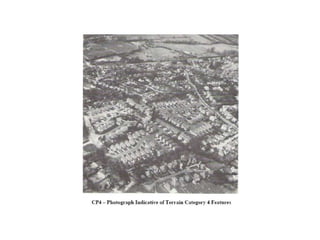
Category 4 – Terrain with numerous large high closely spaced
obstructions.
NOTE – This category includes large city centers, generally with
obstructions taller than 25 m and well-developed industrial complexes.
Terrain Categories
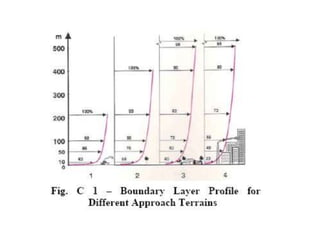
The effect of topography will be significant at a site when the upwind
slope (θ) is greater than about 3o, and below that, the value of k3 may be
taken to be equal to 1.0. The value of k3 is confined in the range of 1.0 to
1.36 for slopes greater than 3o. A method of evaluating the value of k3
for values greater than 1.0 is given in Appendix C. It may be noted that
the value of k3 varies with height above ground level, at a maximum
near the ground, and reducing to 1.0 at higher levels, for hill slope in
excess of 17o.
Topography (k3 factor)
Cyclonic storms usually occur on the east coast of the country in
addition to the Gujarat coast on the west. Studies of wind speed and
damage to buildings and structures point to the fact that the speeds
given in the basic wind speed map are often exceeded during the
cyclones. The effect of cyclonic storms is largely felt in a belt of
approximately 60 km width at the coast. In order to ensure greater
safety of structures in this region (60 km wide on the east coast as well
as on the Gujarat coast), the following values of k4 are stipulated, as
applicable according to the importance of the structure:
Structures of post–cyclone importance 1.30
Industrial structures 1.15
All other structures 1.00
Importance Factor for Cyclonic Region (k4)
Wind loading
Wind loading

Wind loading

  • 1.
    Wind Loading Question: AnIndustrial building of plan 15m×30m is to be constructed as shown in Fig.E1. The frame has a span of 15 m, the column height is 6m and the rafter rise is 3 m and the frames are spaced at 5 m centre- to-centre. Purlins are provided over the frames at 2.7 m c/c and support AC sheets. Calculate the subjected wind load.
  • 2.
    Solution: Wind Load Design windspeed, Vz = k1 k2 k3 k4 Vb From Table 1; IS: 875 (part 3) – 1987 k1 = 1.0 (risk coefficient assuming 50 years of design life) From Table 2; IS: 875 (part 3) – 1987 k2 = 0.8 (assuming terrain category 4) k3 = 1.0 (topography factor) k4 = importance factor in cyclonic region Assuming the building is situated in Chennai, the basic wind speed is 50 m/sec Design wind speed , Vz = k1 k2 k3 Vb Vz = 1 * 0.8 *1 * 50 Vz = 40 m/sec Wind Loading
  • 3.
    Design wind pressure,Pd = 0.6*Vz 2 = 0.6 * (40)2 = 0.96 kN/m2 Wind Load on individual surfaces The wind load, WL acting normal to the individual surfaces is given by WL = (Cpe – Cpi )*A* Pd Internal pressure coefficient Assuming buildings with low degree of permeability Cpi = ± 0.2 External pressure coefficient External pressure coefficient for walls and roofs are tabulated in Table 1 (a) and Table 1(b) Wind Loading
  • 4.
    Wind Loading Calculation oftotal wind load 1. For walls h/w = 6/15 = 0.4 L/w = 30/15 = 2.0 Exposed area of wall per frame @ 5 m c/c is A = 5 * 6 = 30 m2 Wind load on wall / frame, A*pd = 30 * 0.96 = 28.8 kN 2. For roofs Exposed area of each slope of roof, per frame (5m length) is For roof, A*pd = 38.7 kN    22 5.70.35 A
  • 5.
  • 6.
  • 12.
    Category 1 –Exposed open terrain with a few or no obstructions and in which the average height of any object surrounding the structure is less than 1.5 m. NOTE – This category includes open sea coasts and flat treeless plains. Category 2 – Open terrain with well-scattered obstructions having height generally between 1.5 and 10 m. NOTE – This is the criterion for measurement of regional basic wind speeds and includes airfields, open parklands and undeveloped sparsely built-up outskirts of towns and suburbs. Open land adjacent to seacoast may also be classified as Category 2 due to roughness of large sea waves at high winds. Terrain Categories
  • 13.
    Category 3 –Terrain with numerous closely spaced obstructions having the size of building-structures up to 10 m in height with or without a few isolated tall structures. NOTE 1 – This category includes well-wooded areas, and shrubs, towns and industrial areas fully or partially developed. NOTE 2 – It is likely that the next higher category than this will not exist in most design situations and that selection of a more severe category will be deliberate. NOTE 3 – Particular attention must be given to performance of obstructions in areas affected by fully developed tropical cyclones. Vegetation, which is likely to be blown down or defoliated, cannot be relied upon to maintain Category 3 conditions. Where such a situation exists, either an intermediate category with speed multipliers midway between the values for Category 2 and 3 given in Table 2 may be used, or Category 2 be selected having due regard to local conditions. Terrain Categories
  • 14.
    Category 4 –Terrain with numerous large high closely spaced obstructions. NOTE – This category includes large city centers, generally with obstructions taller than 25 m and well-developed industrial complexes. Terrain Categories
  • 20.
    The effect oftopography will be significant at a site when the upwind slope (θ) is greater than about 3o, and below that, the value of k3 may be taken to be equal to 1.0. The value of k3 is confined in the range of 1.0 to 1.36 for slopes greater than 3o. A method of evaluating the value of k3 for values greater than 1.0 is given in Appendix C. It may be noted that the value of k3 varies with height above ground level, at a maximum near the ground, and reducing to 1.0 at higher levels, for hill slope in excess of 17o. Topography (k3 factor)
  • 21.
    Cyclonic storms usuallyoccur on the east coast of the country in addition to the Gujarat coast on the west. Studies of wind speed and damage to buildings and structures point to the fact that the speeds given in the basic wind speed map are often exceeded during the cyclones. The effect of cyclonic storms is largely felt in a belt of approximately 60 km width at the coast. In order to ensure greater safety of structures in this region (60 km wide on the east coast as well as on the Gujarat coast), the following values of k4 are stipulated, as applicable according to the importance of the structure: Structures of post–cyclone importance 1.30 Industrial structures 1.15 All other structures 1.00 Importance Factor for Cyclonic Region (k4)