DESIGN WIND LOAD
Huzaif Bin Mohmad
M Tech : CTM
NITTTR Chandigarh
Introduction
 Wind is essentially the large scale horizontal moment
of free air. It plays an important role in the design of
tall structures because it exerts load on the building.
 High Rise Building- A building having height more
then 15m as per NBC 2005 of india is called High
rise building.
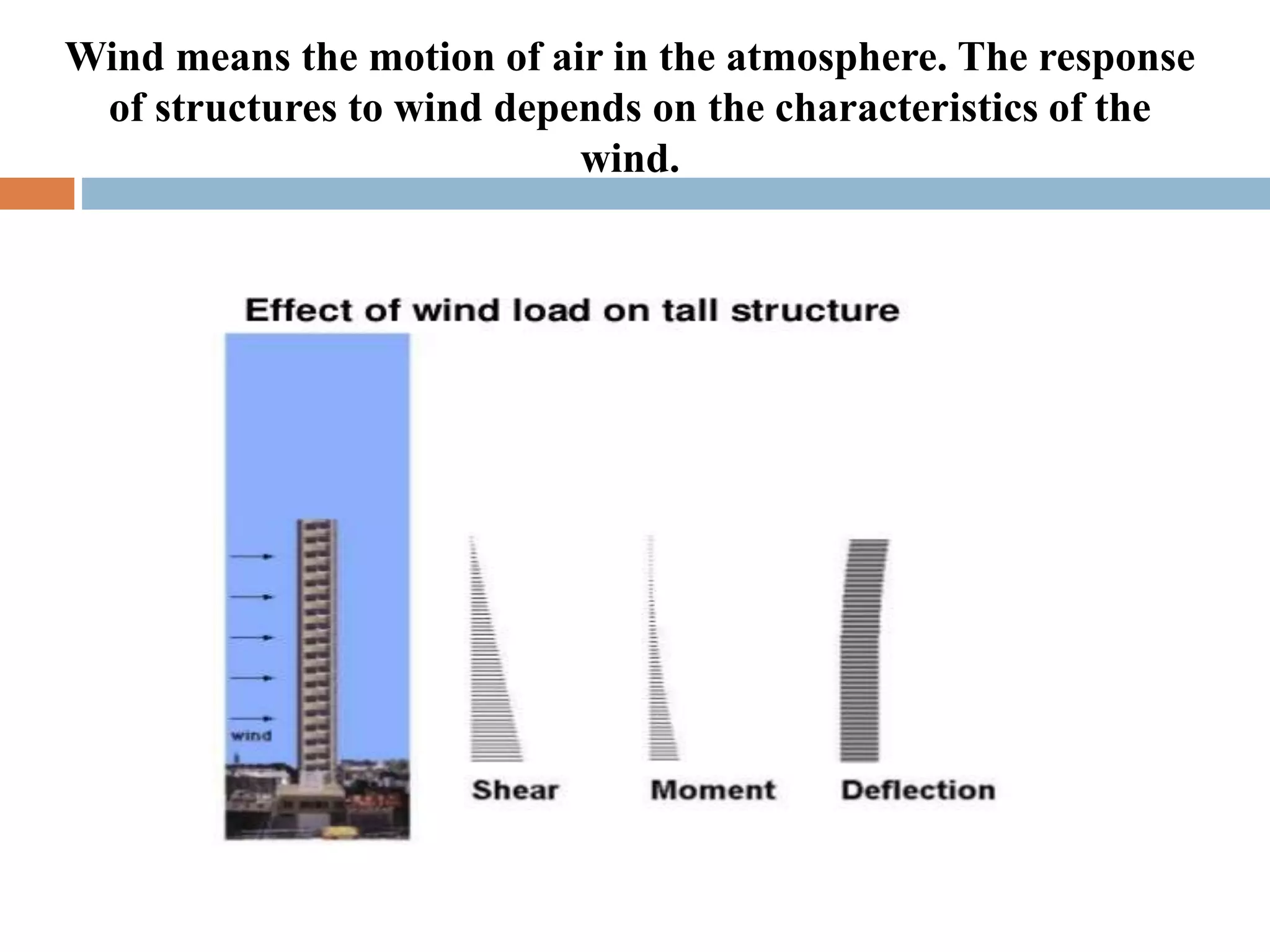
Wind means the motion of air in the atmosphere. The response
of structures to wind depends on the characteristics of the
wind.
DESIGN WIND LOAD
AS PER 875 (III)
Terminology
 For the purpose of wind loads, the following definitions
shall apply.
 Angle of attack — Angle between the direction of wind
and a reference axis of the structure.
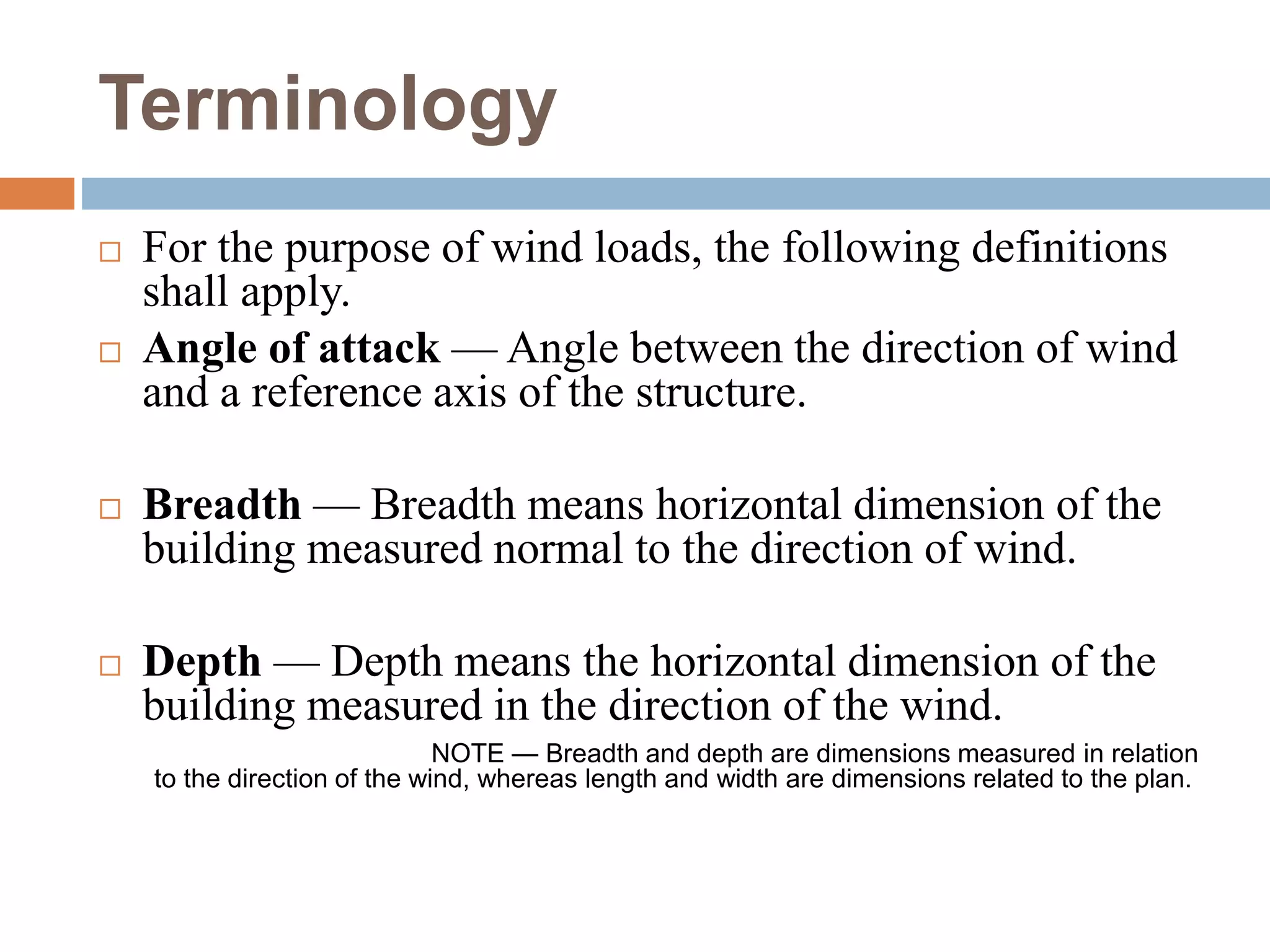
 Breadth — Breadth means horizontal dimension of the
building measured normal to the direction of wind.
 Depth — Depth means the horizontal dimension of the
building measured in the direction of the wind.
NOTE — Breadth and depth are dimensions measured in relation
to the direction of the wind, whereas length and width are dimensions related to the plan.
Terminology
 Developed height - is the height of upward
penetration of the velocity profile in a new terrain.
 Effective frontal area - The projected area of the
structure normal to the direction of the wind.
 Element surface area- The area of surface over
which the pressure coefficient is taken to be
constant.
Terminology
 Force coefficient- A non-dimensional coefficient
such that the total wind force on a body is the product
of the force coefficient, the dynamic pressure of the
incident design wind speed and the reference area
over which the force is required.
 Gust- A positive or negative departure of wind speed
from its mean value, lasting for not more than say 2
min over a specified interval of time.
 Peak gust- Peak gust or peak gust speed is the wind
speed associated with the maximum amplitude.
Terminology
 Fetch length- is the distance measured along the
wind from a boundary at which a change in the type
of terrain occurs.
 Gradient height- is the height above the mean
ground level at which the gradient wind blows as a
result of balance among pressure gradient force,
coriolis force and centrifugal force.
 Pressure coefficient- is the ratio of the difference
between the pressure acting at a point on a surface
and the static pressure of the incident wind to the
design wind pressure.
Terminology
 Suction- means pressure less than the atmospheric (static)
pressure and is taken to act away from the surface.
 Velocity profile- The variation of the horizontal
component of the atmospheric wind speed at different
heights above the mean ground level is termed as velocity
profile.
 Topography-The nature of the earth’s surface as
influenced by the hill and valley configurations.
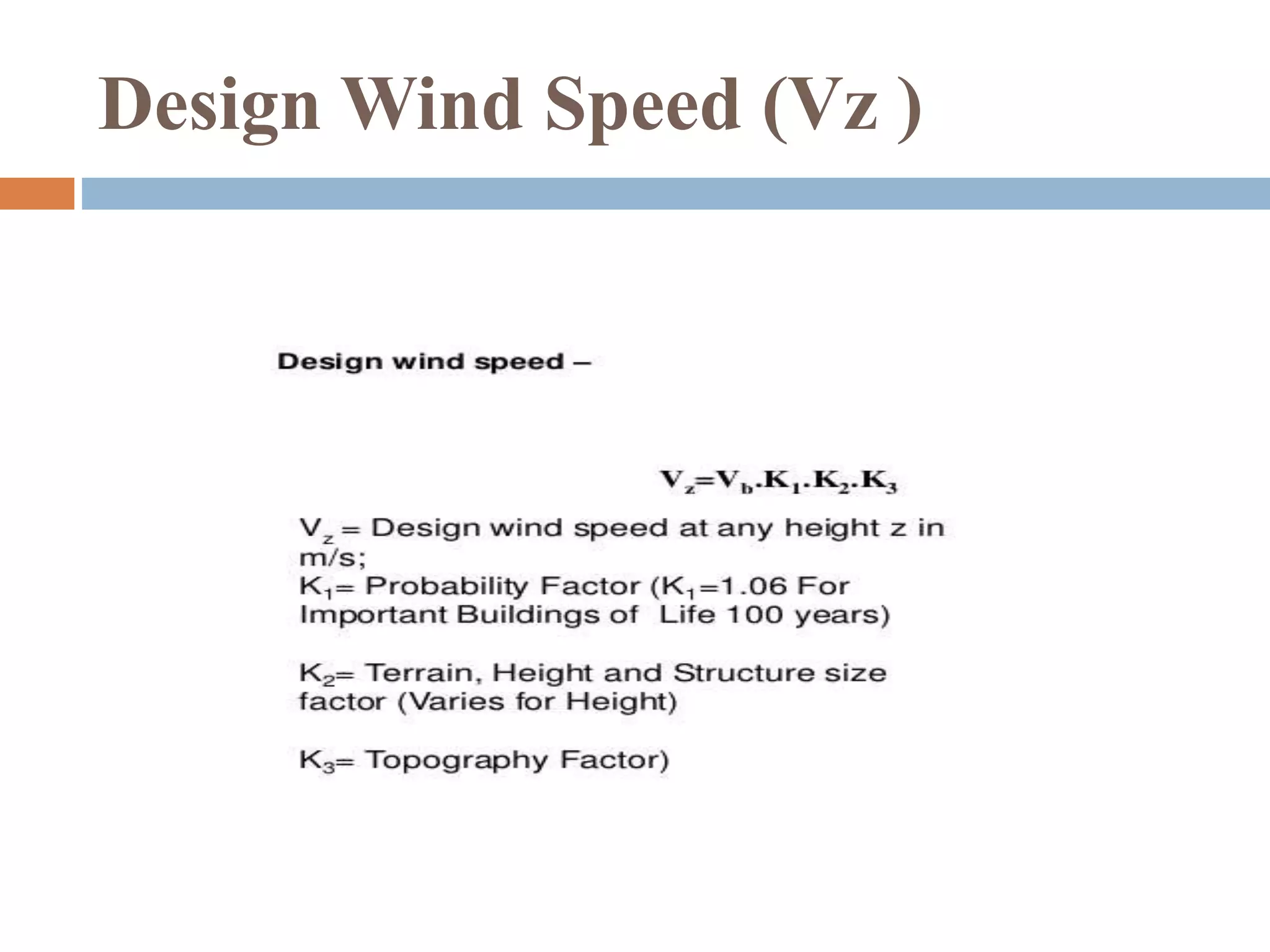
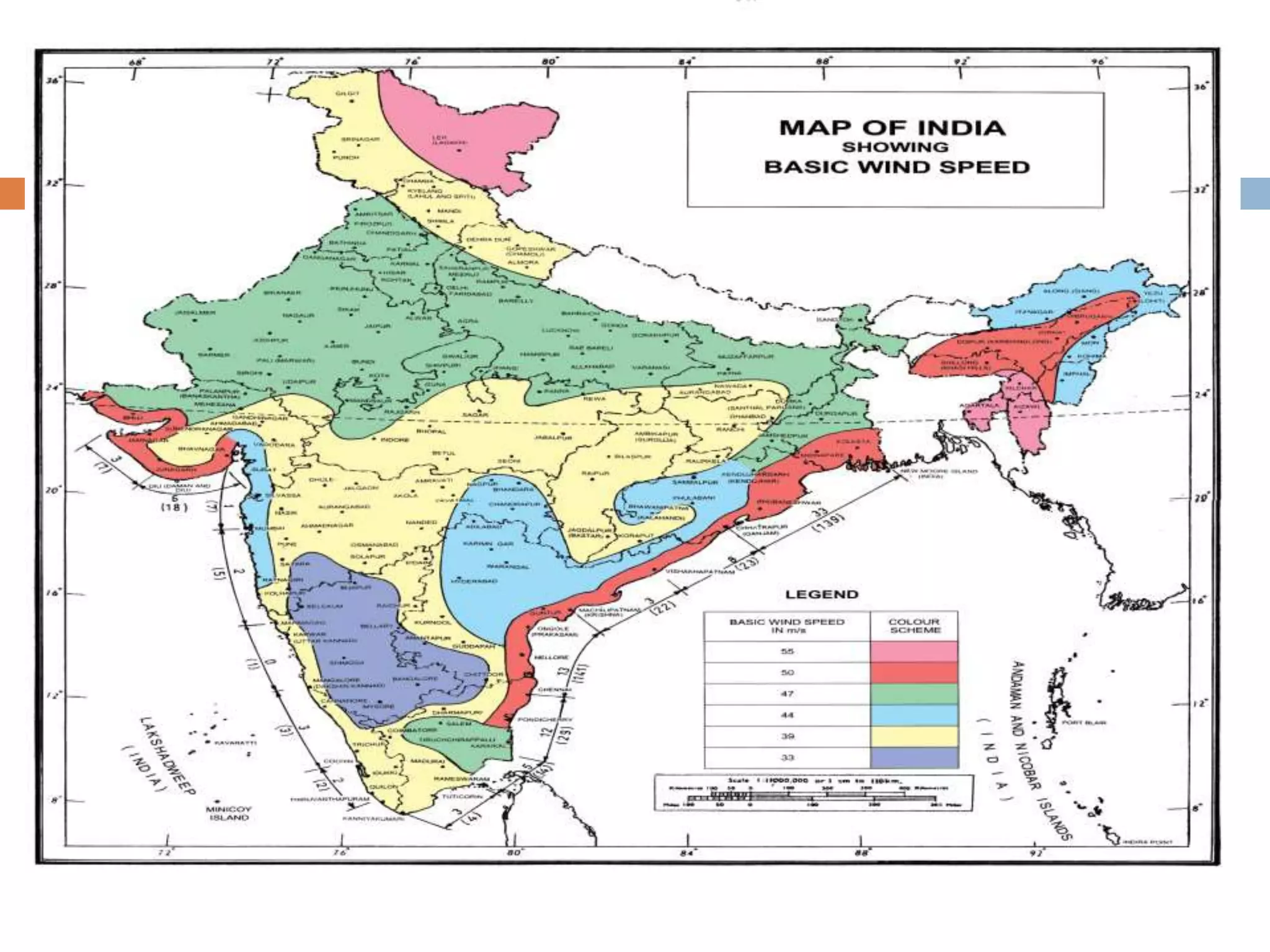
Design Wind Speed (Vz )
Risk coefficient (k1)
Terrain, height and structure size
factor (k2 )
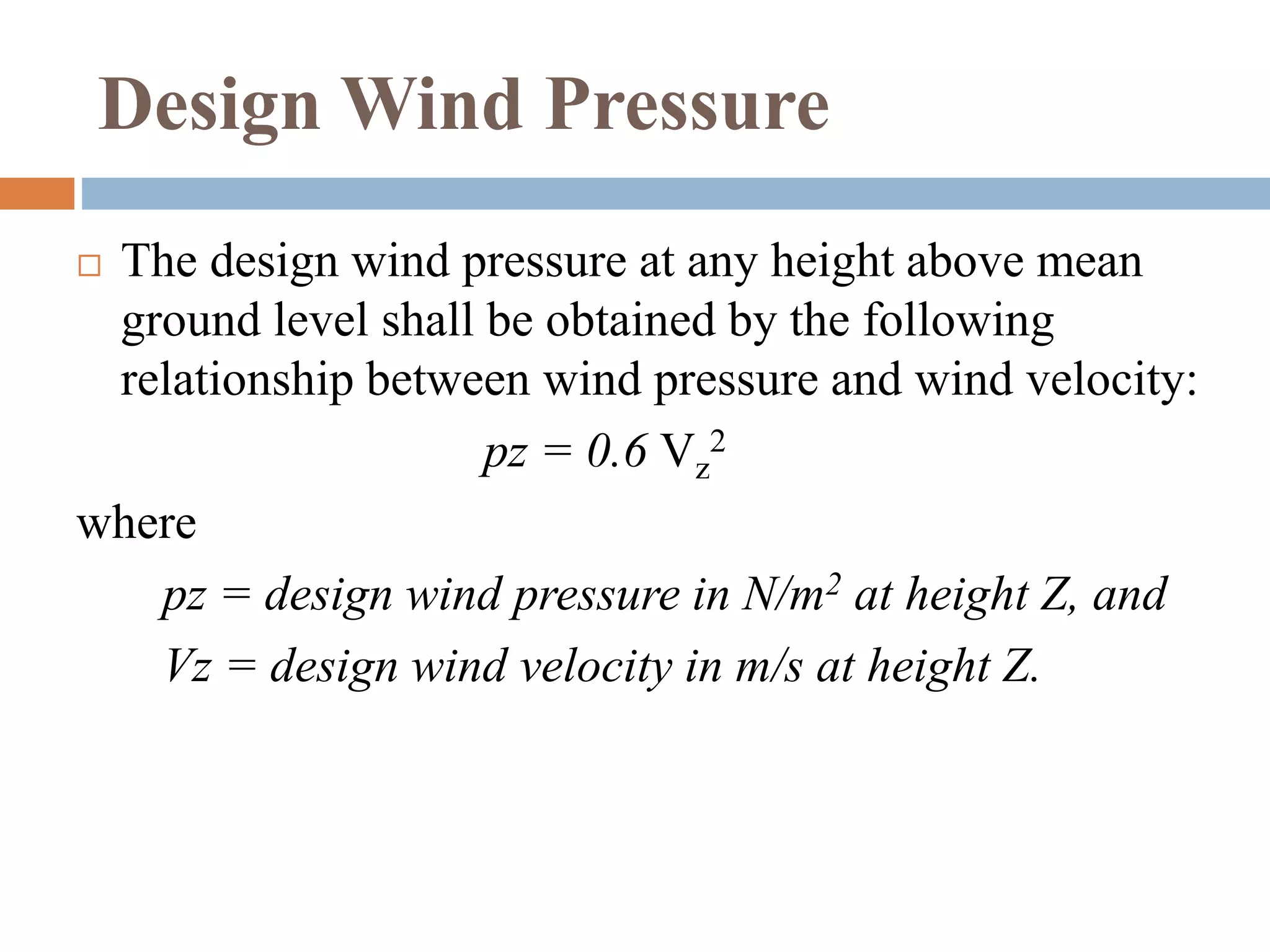
Design Wind Pressure
 The design wind pressure at any height above mean
ground level shall be obtained by the following
relationship between wind pressure and wind velocity:
pz = 0.6 Vz
2
where
pz = design wind pressure in N/m2 at height Z, and
Vz = design wind velocity in m/s at height Z.
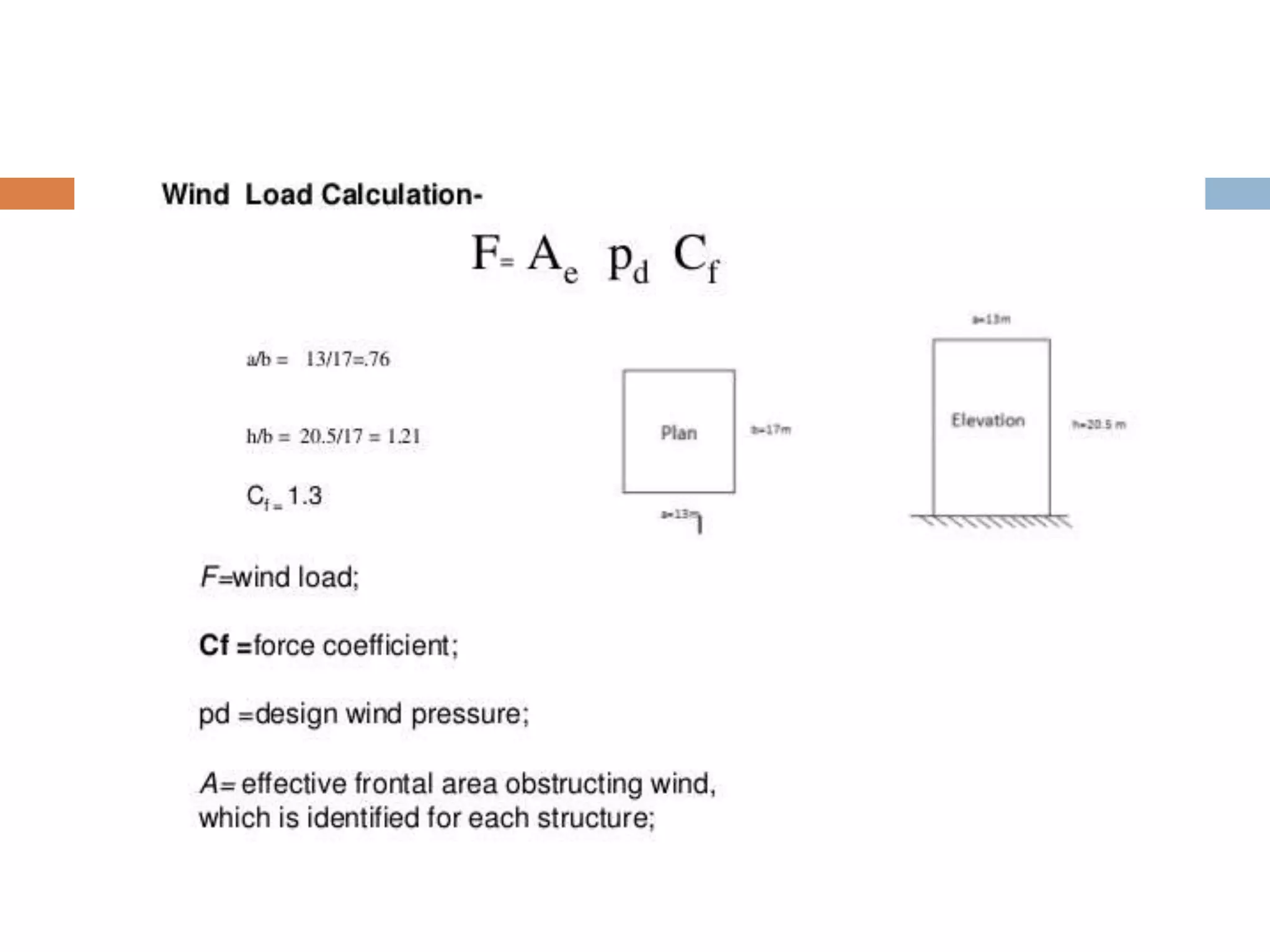
Force Coefficients
 The value of force coefficients apply to a building
or structure as a whole, and when multiplied by the
effective frontal area, Ae of the building or
structure and by design wind pressure, pd give the
total wind load on that particular building or
structure.
F = Cf Ae pd
where F is the force acting in a direction
specified in the respective tables and Cf is the force
coefficient for the building.
Design wind load
Design wind load

Design wind load

  • 1.
    DESIGN WIND LOAD HuzaifBin Mohmad M Tech : CTM NITTTR Chandigarh
  • 2.
    Introduction  Wind isessentially the large scale horizontal moment of free air. It plays an important role in the design of tall structures because it exerts load on the building.  High Rise Building- A building having height more then 15m as per NBC 2005 of india is called High rise building.
  • 3.
    Wind means themotion of air in the atmosphere. The response of structures to wind depends on the characteristics of the wind.
  • 4.
    DESIGN WIND LOAD ASPER 875 (III)
  • 5.
    Terminology  For thepurpose of wind loads, the following definitions shall apply.  Angle of attack — Angle between the direction of wind and a reference axis of the structure.  Breadth — Breadth means horizontal dimension of the building measured normal to the direction of wind.  Depth — Depth means the horizontal dimension of the building measured in the direction of the wind. NOTE — Breadth and depth are dimensions measured in relation to the direction of the wind, whereas length and width are dimensions related to the plan.
  • 6.
    Terminology  Developed height- is the height of upward penetration of the velocity profile in a new terrain.  Effective frontal area - The projected area of the structure normal to the direction of the wind.  Element surface area- The area of surface over which the pressure coefficient is taken to be constant.
  • 7.
    Terminology  Force coefficient-A non-dimensional coefficient such that the total wind force on a body is the product of the force coefficient, the dynamic pressure of the incident design wind speed and the reference area over which the force is required.  Gust- A positive or negative departure of wind speed from its mean value, lasting for not more than say 2 min over a specified interval of time.  Peak gust- Peak gust or peak gust speed is the wind speed associated with the maximum amplitude.
  • 8.
    Terminology  Fetch length-is the distance measured along the wind from a boundary at which a change in the type of terrain occurs.  Gradient height- is the height above the mean ground level at which the gradient wind blows as a result of balance among pressure gradient force, coriolis force and centrifugal force.  Pressure coefficient- is the ratio of the difference between the pressure acting at a point on a surface and the static pressure of the incident wind to the design wind pressure.
  • 9.
    Terminology  Suction- meanspressure less than the atmospheric (static) pressure and is taken to act away from the surface.  Velocity profile- The variation of the horizontal component of the atmospheric wind speed at different heights above the mean ground level is termed as velocity profile.  Topography-The nature of the earth’s surface as influenced by the hill and valley configurations.
  • 10.
  • 12.
  • 13.
    Terrain, height andstructure size factor (k2 )
  • 14.
    Design Wind Pressure The design wind pressure at any height above mean ground level shall be obtained by the following relationship between wind pressure and wind velocity: pz = 0.6 Vz 2 where pz = design wind pressure in N/m2 at height Z, and Vz = design wind velocity in m/s at height Z.
  • 15.
    Force Coefficients  Thevalue of force coefficients apply to a building or structure as a whole, and when multiplied by the effective frontal area, Ae of the building or structure and by design wind pressure, pd give the total wind load on that particular building or structure. F = Cf Ae pd where F is the force acting in a direction specified in the respective tables and Cf is the force coefficient for the building.