What’s New at NROC?   A Focus on Mathematics Jessica Everton Francisco Hernandez Ruth Rominger John Watson  
 
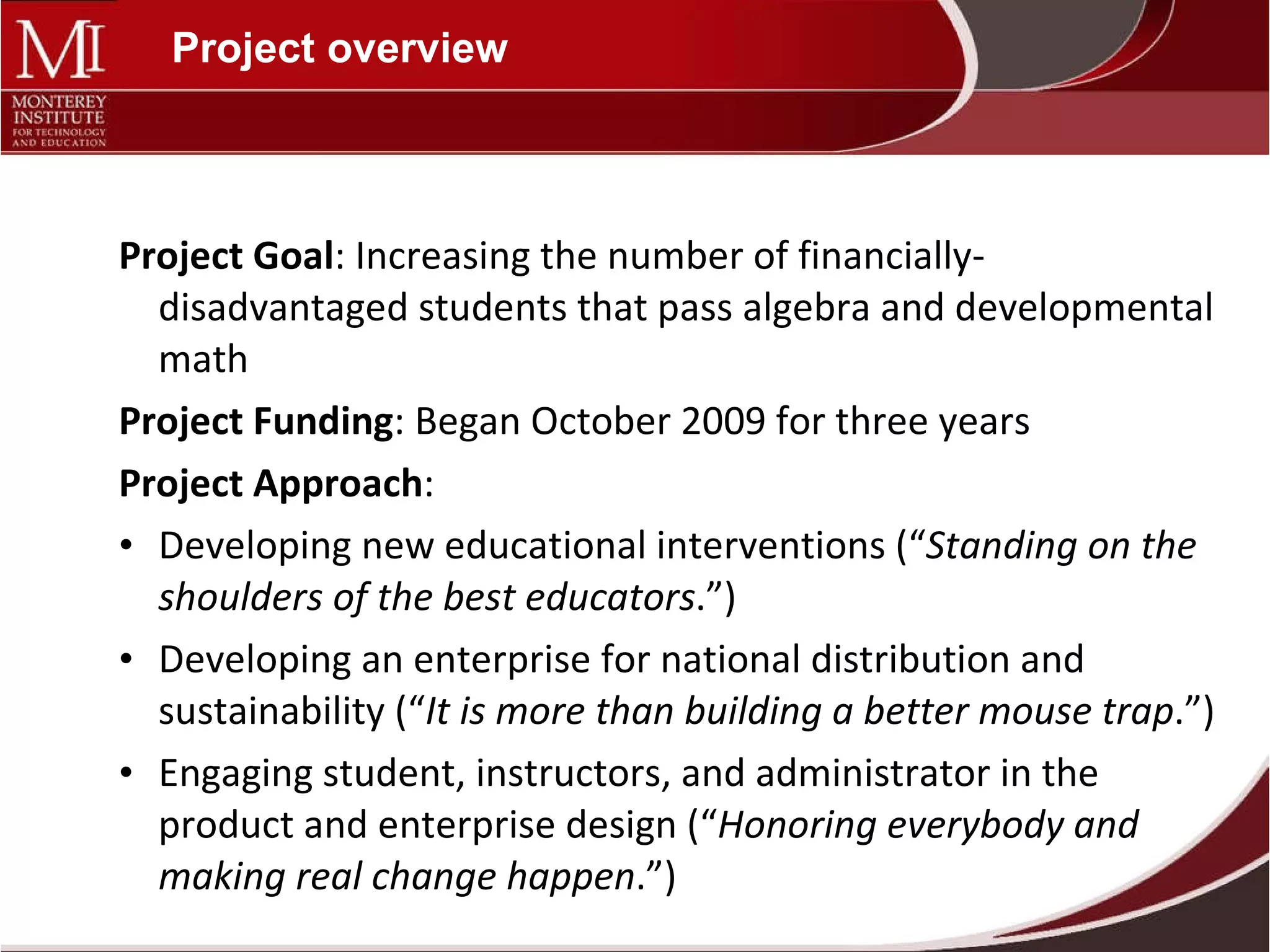
Project overview Project Goal : Increasing the number of financially-disadvantaged students that pass algebra and developmental math Project Funding : Began October 2009 for three years Project Approach : Developing new educational interventions (“ Standing on the shoulders of the best educators .”) Developing an enterprise for national distribution and sustainability (“ It is more than building a better mouse trap .”) Engaging student, instructors, and administrator in the product and enterprise design (“ Honoring everybody and making real change happen .”)
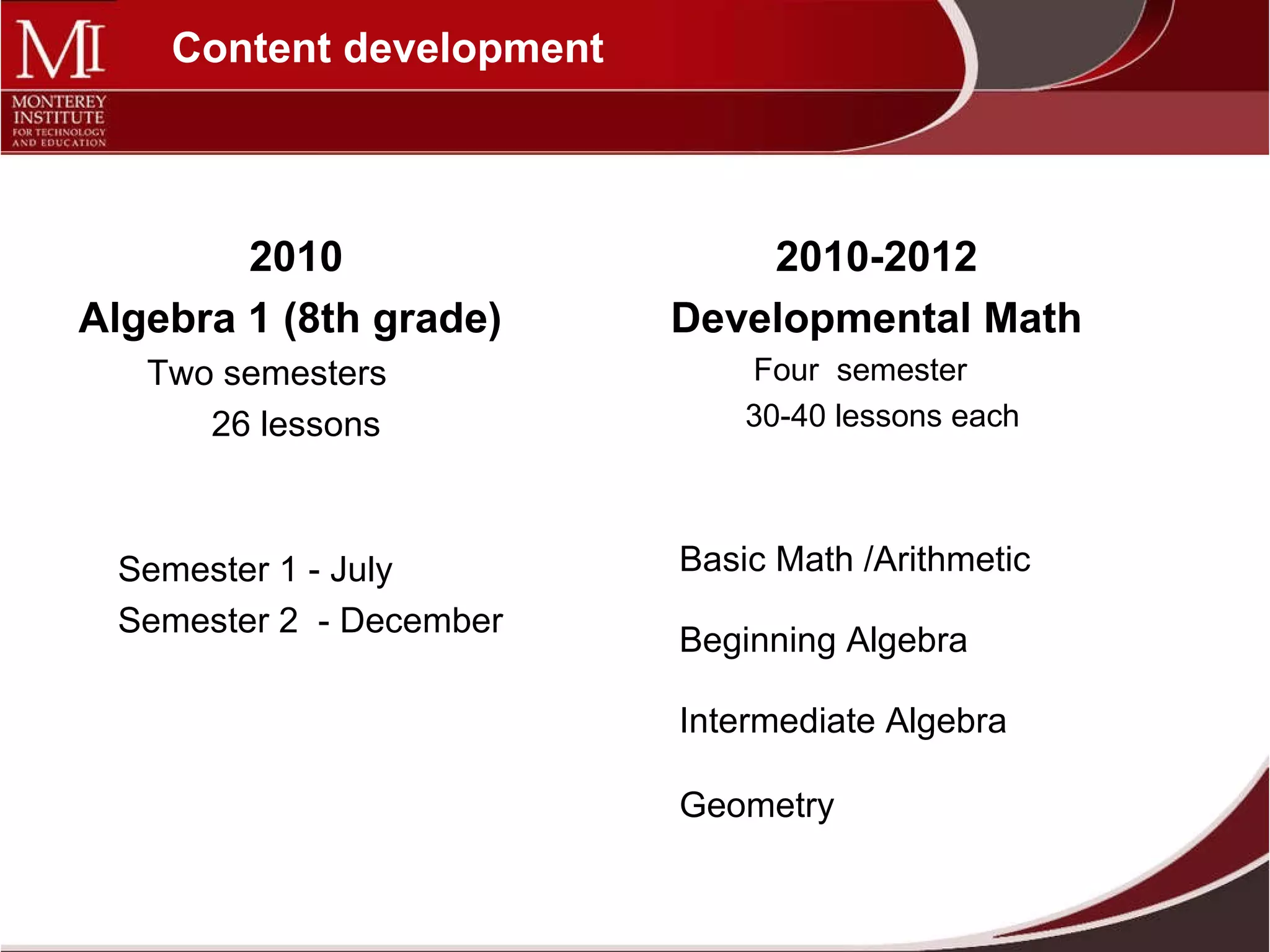
Content development Basic Math /Arithmetic  Beginning Algebra Intermediate Algebra Geometry 2010-2012  Developmental Math  Four  semester  30-40 lessons each 2010 Algebra 1 (8th grade)  Two semesters  26 lessons Semester 1 - July  Semester 2  - December
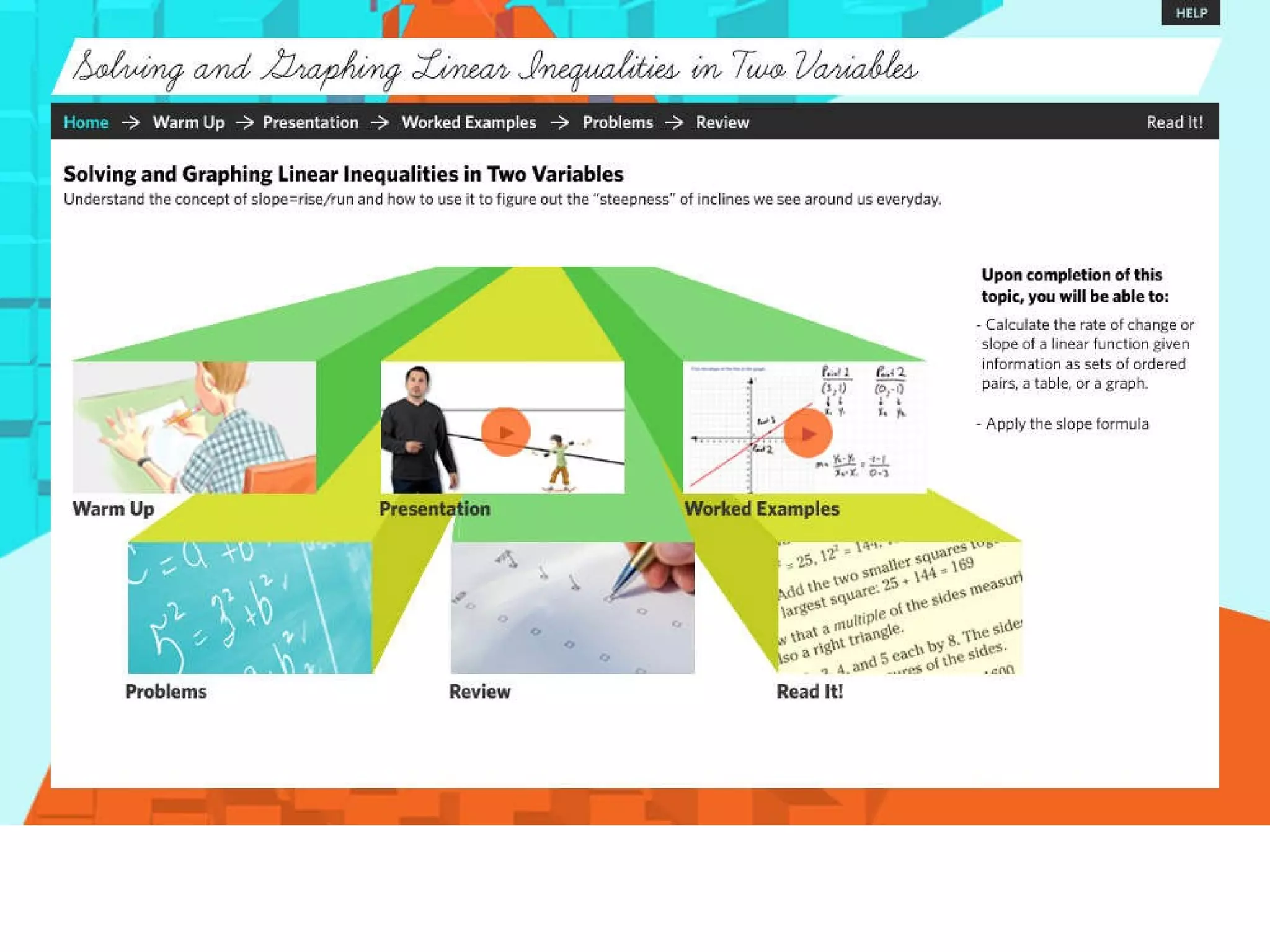
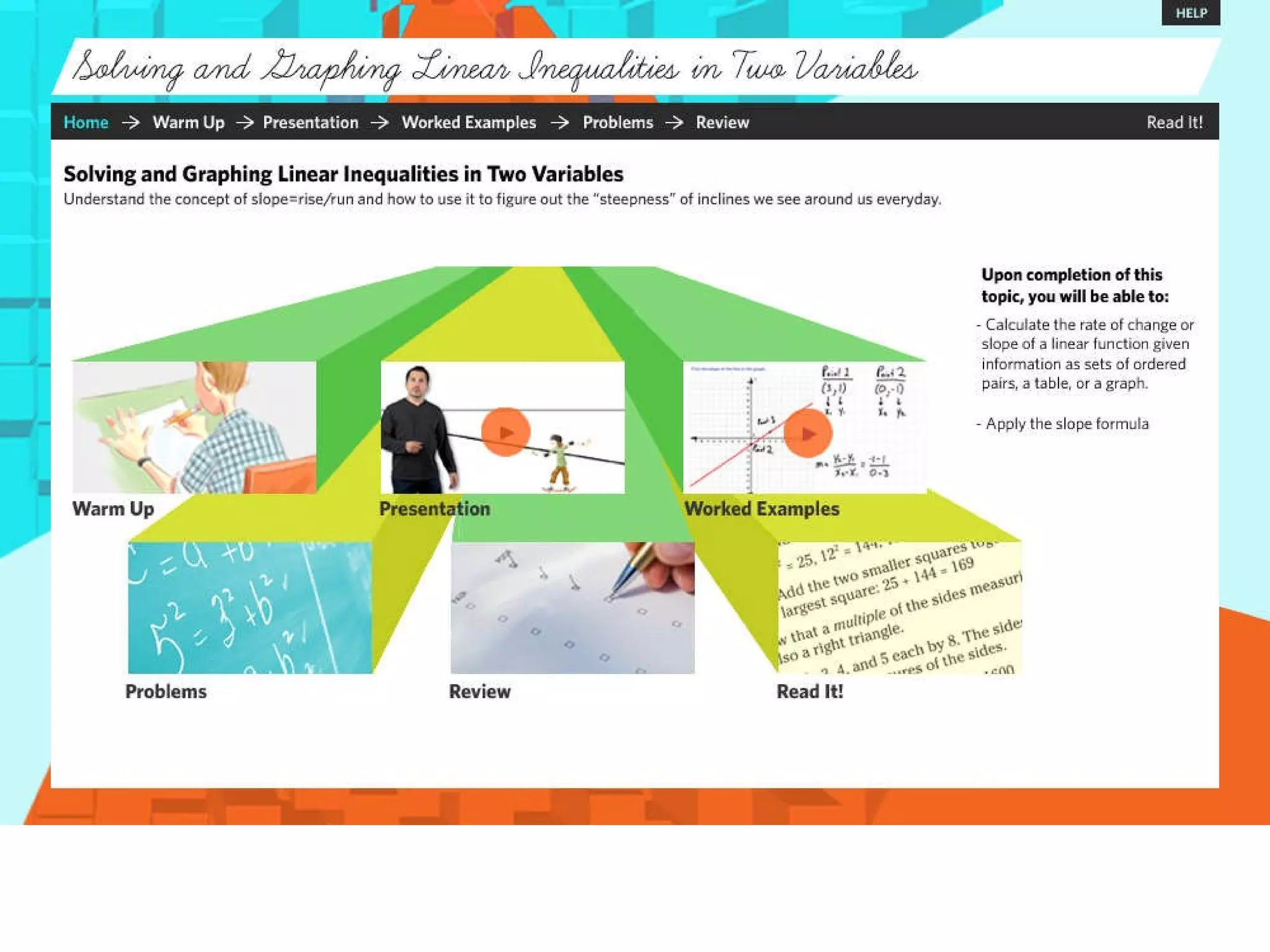
Warm-ups:  a series of problems to assess prior knowledge and recommend review. Presentations:  the new media equivalent of a session with a teacher and a blackboard. Worked Examples : narrated step-by-step presentations of a problem solved. Problems:  symbolic and word, designed in adaptive sets, giving students practice and feedback. Readings : excerpts that provide reinforcing or alternative explanations and examples. Review:  self-test mastery before moving to the next lesson. Projects:  promote collaboration in the project-based learning tradition to solve real-world problems. Peer-Tutor Simulations : pair students with simulated peer tutors to solve problems. Games:  simple challenges to engage students in “playing” with math  Learning Components
Multiple modes of learning - conceptual, procedural, problem-solving, project based, peer-based, simple games, and assessment  Opens the door to mathematical reasoning and critical thinking to a broad range of learners.  The learning object architecture allows institutions, instructors and students to adapt the content to different program and learner needs. “ Portfolio of Learning Approaches”
Call for “21st century” mathematics  Considering introductory statistics and probability concepts  Traditional curriculum may not best prepare learners for modern occupations or to be well informed citizens Informed by Achieve's Common Core and AMAYTC's proposal for a new developmental mathematics.  Developmental Math
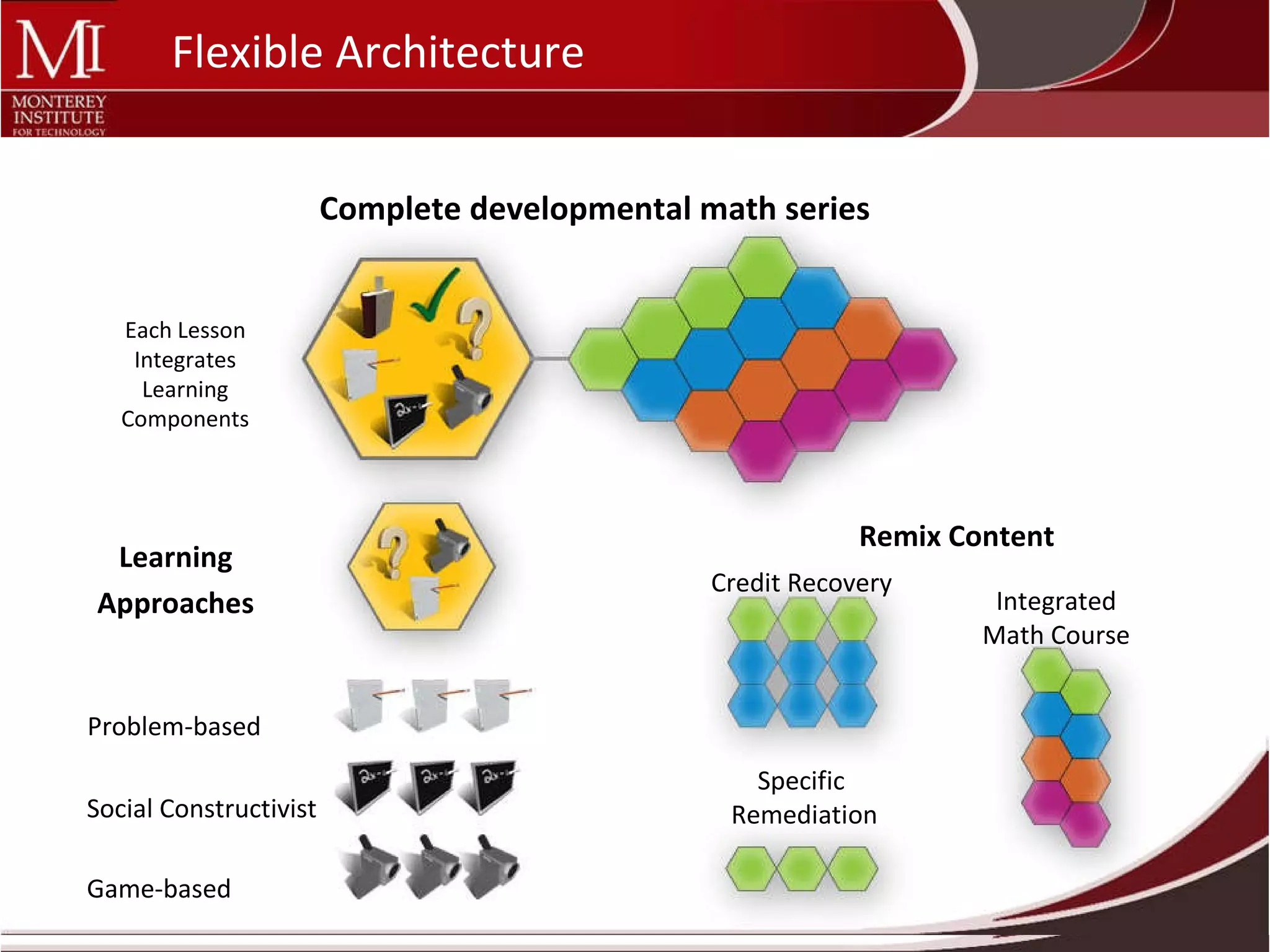
Allows for customized pathways through series based on pre- assessment and mastery Flexible Architecture  Complete developmental math series Specific  Remediation Credit Recovery Integrated Math Course Game-based Social Constructivist Problem-based Each Lesson Integrates Learning Components Learning  Approaches  Remix Content
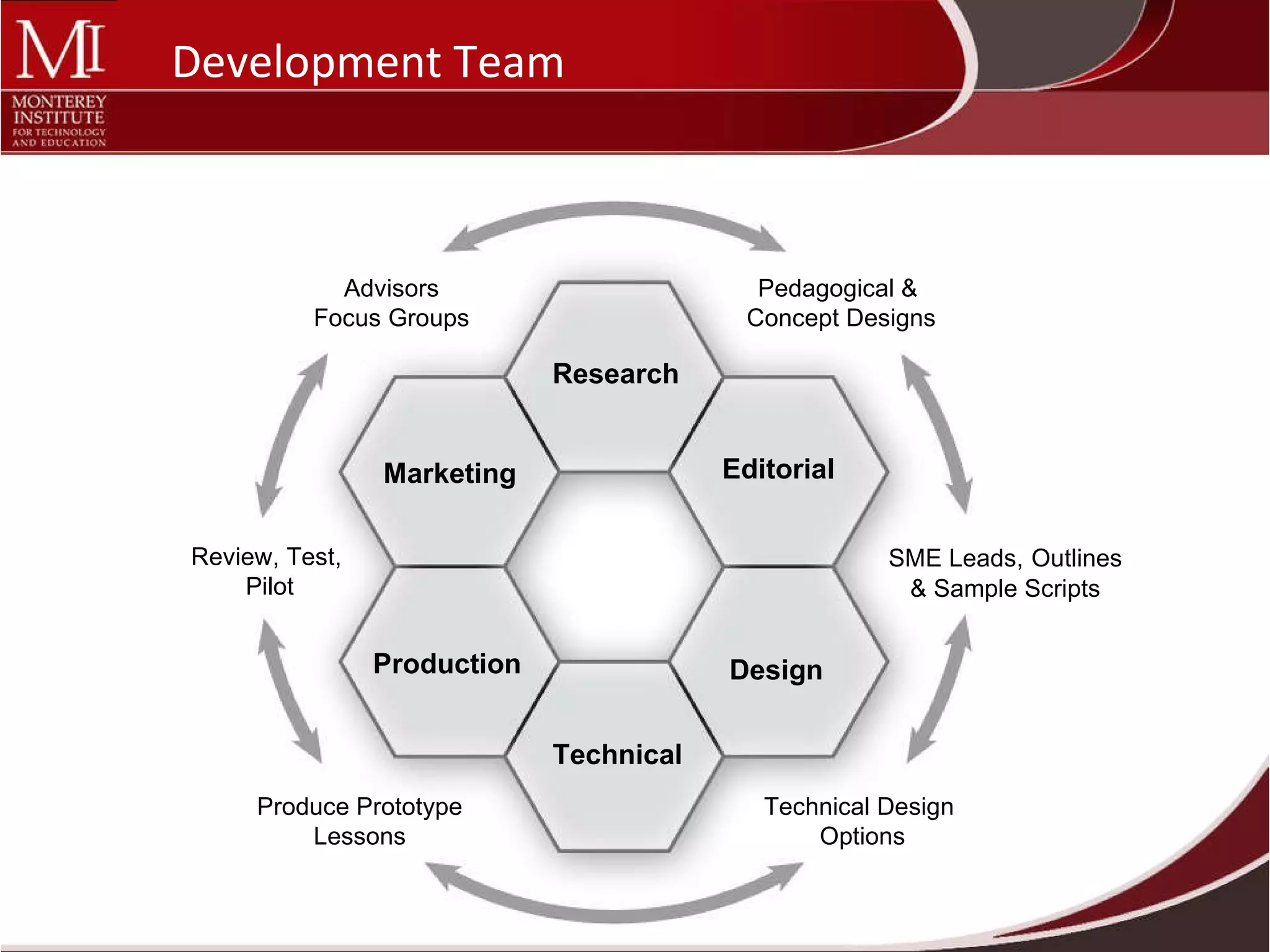
Technical Design  Options Pedagogical &  Concept Designs Produce Prototype Lessons Review, Test,  Pilot SME Leads,   Outlines  & Sample Scripts Development Team Advisors Focus Groups Design Editorial Technical Production Research Marketing
 
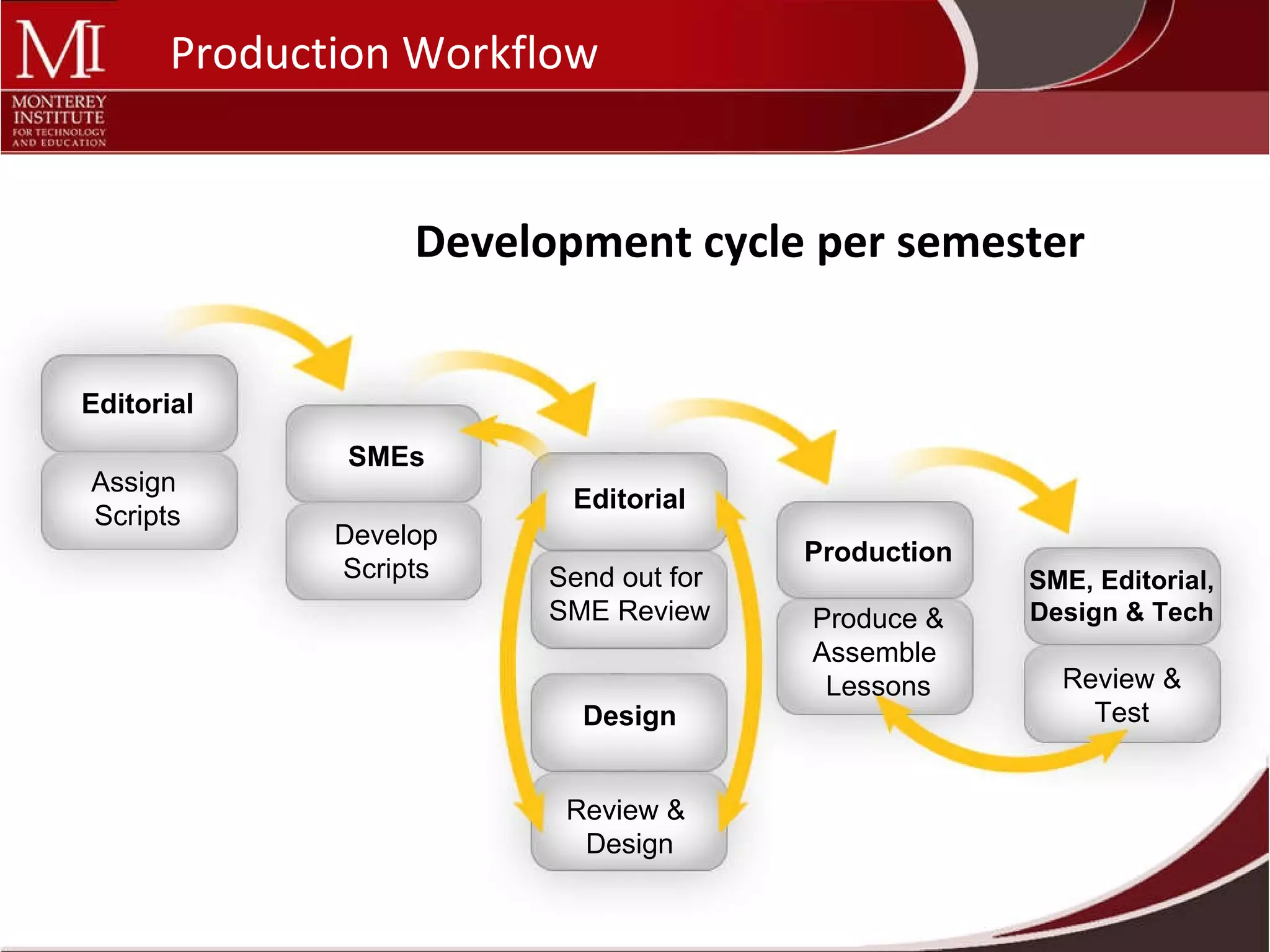
Editorial SMEs SME, Editorial,  Design & Tech Editorial Production Design Assign  Scripts Develop Scripts Review &  Design Send out for  SME Review Produce & Assemble  Lessons Review & Test Production Workflow Development cycle per semester
National and Regional Organizations Francisco Hernandez:  [email_address] American Association of Community Colleges National Council for Teachers of Mathematics Blacks in Higher Education Hispanic Association of Colleges and Universities Society for the Advancement of Chicanos and Native Americans in Science Benjamin Banneker Association
National and Regional Organizations Francisco Hernandez:  [email_address] Texas Association of Chicanos in Higher Education Center for the Mathematics Education of Latinos/as Achieving the Dream MESA -Western States AVID-All States
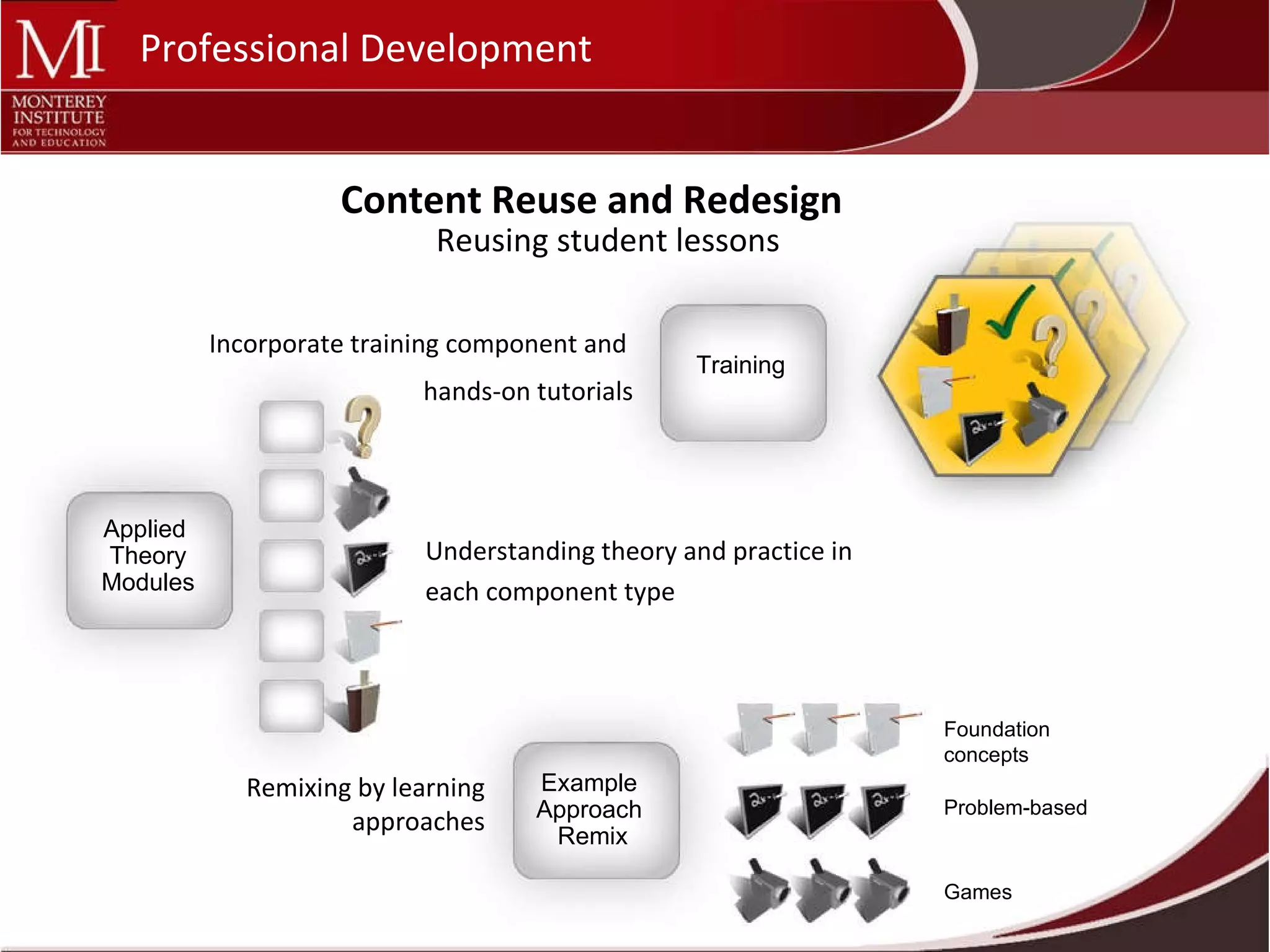
Content Reuse and Redesign Training Applied  Theory Modules Example  Approach  Remix Foundation concepts Games Problem-based Understanding theory and practice in each component type Incorporate training component and  hands-on tutorials Remixing by learning approaches Reusing student lessons Professional Development
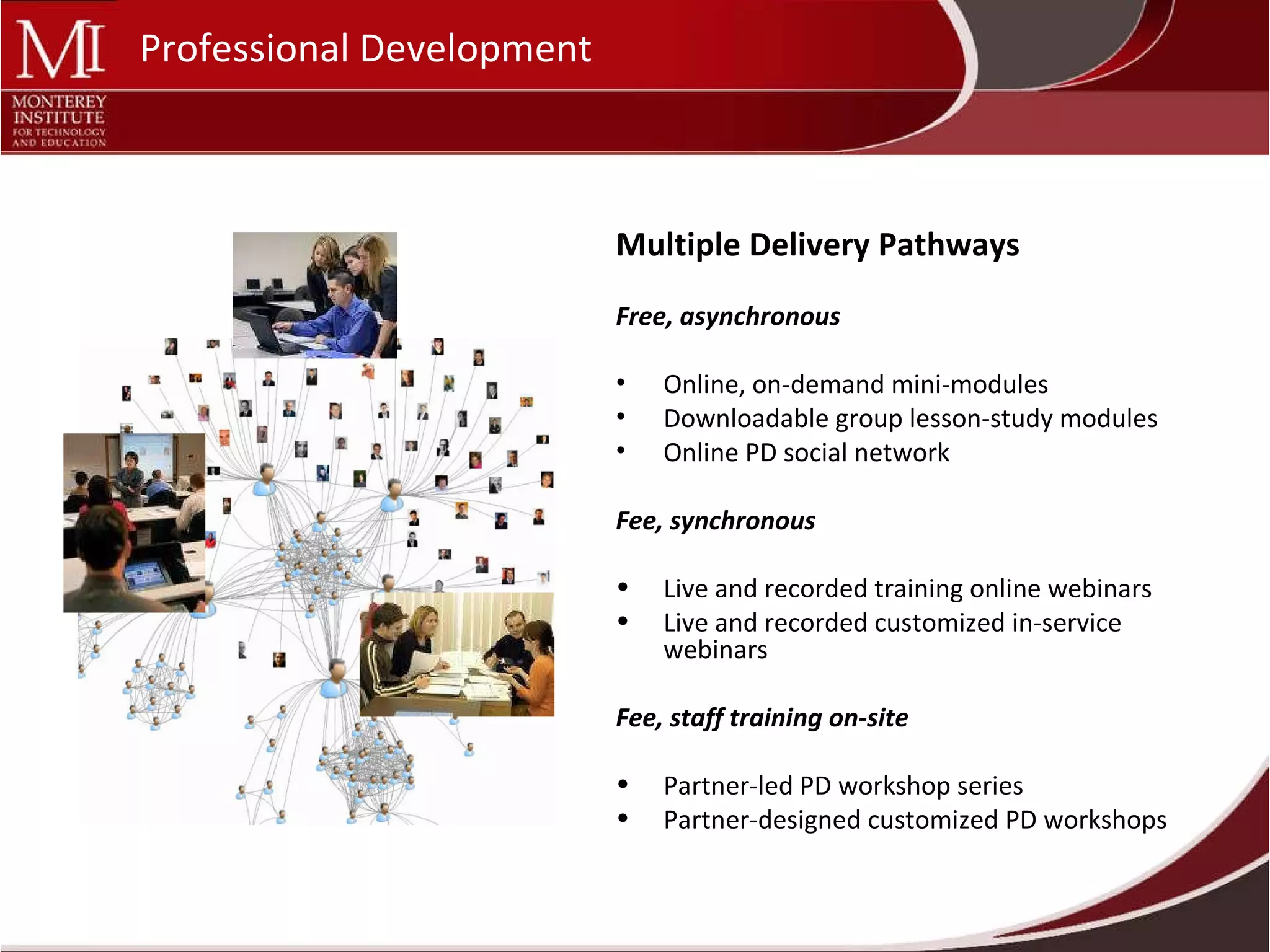
Multiple Delivery Pathways Free, asynchronous Online, on-demand mini-modules Downloadable group lesson-study modules Online PD social network Fee, synchronous  Live and recorded training online webinars Live and recorded customized in-service webinars Fee, staff training on-site Partner-led PD workshop series Partner-designed customized PD workshops Professional Development
Your feedback and discussion Product issues? Enterprise issues? Political issues?
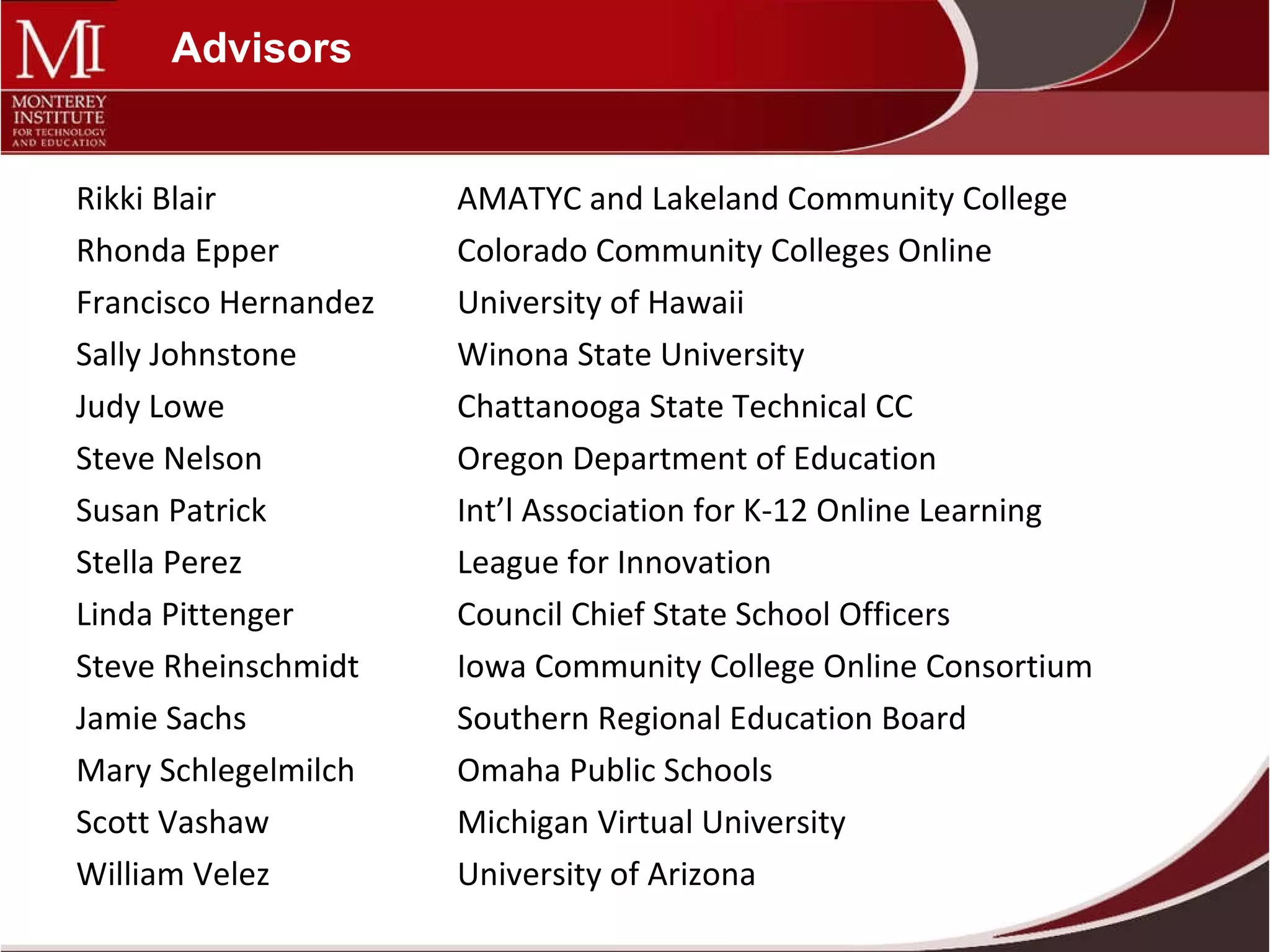
Advisors Rikki Blair AMATYC and Lakeland Community College Rhonda Epper Colorado Community Colleges Online Francisco Hernandez University of Hawaii Sally Johnstone Winona State University Judy Lowe Chattanooga State Technical CC Steve Nelson  Oregon Department of Education Susan Patrick  Int’l Association for K-12 Online Learning Stella Perez   League for Innovation Linda Pittenger Council Chief State School Officers Steve Rheinschmidt Iowa Community College Online Consortium Jamie Sachs Southern Regional Education Board Mary Schlegelmilch Omaha Public Schools Scott Vashaw Michigan Virtual University William Velez University of Arizona
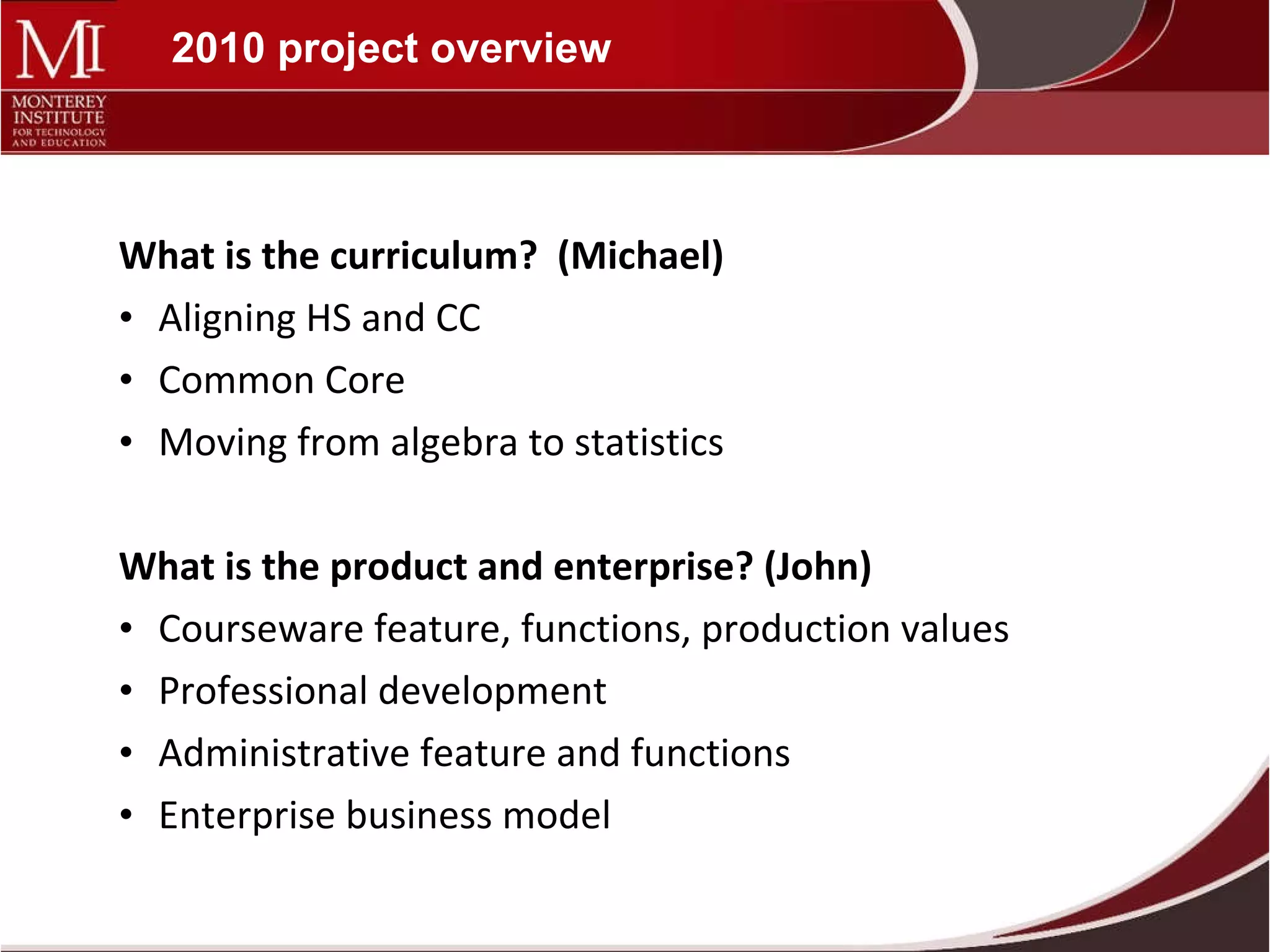
2010 project overview What is the curriculum?  (Michael) Aligning HS and CC Common Core Moving from algebra to statistics What is the product and enterprise? (John) Courseware feature, functions, production values Professional development Administrative feature and functions Enterprise business model
2010 project overview How do we reach the target audience? (Francisco) Financially-disadvantaged and minority students Financially-disadvantaged institutions Parents and families What are the product and business development processes? Learning from and leveraging algebra 1 development Learning from and leveraging NROC
Focus groups: 2009 key findings Keep it simple: developmental students and ELLs value simplicity Real-world examples are a key to engagement Students and instructors want support for multiple learning styles Challenges, animations, simple illustrations, and problem sets are important
Focus groups: 2009 key findings Professional development and staff adoption are key issues in community colleges Few instructors and institutions are locked into an existing teaching method or digital product Cost and flexibility of digital products are important ongoing concerns
Presentation Very well received Students liked the presenter Graphics; storyboard, pace: all worked well Students said this would help them and they would use it Worked example Promising; some changes needed in voice and pace; handwriting; diagrams Study group simulation Improvements in acting, dialogue, flow being implemented Phase 2: Student focus groups key findings
Focus groups: 2009 key findings Participants are looking for new ways to approach math Math redesigns in TN, AL and elsewhere Revisiting standards and requirements This is a dynamic and critical time in math instruction Student diversity makes it essential to provide content with different context and voices
Focus groups and conference discussions Engage students in content development Engage instructors and administrators in enterprise planning 2010 plan  New Mexico February California early March Innovations conference late March American Association Community Colleges April And more…

What's New at NROC: A Focus on Mathematics

  • 1.
    What’s New atNROC?   A Focus on Mathematics Jessica Everton Francisco Hernandez Ruth Rominger John Watson  
  • 2.
  • 3.
    Project overview ProjectGoal : Increasing the number of financially-disadvantaged students that pass algebra and developmental math Project Funding : Began October 2009 for three years Project Approach : Developing new educational interventions (“ Standing on the shoulders of the best educators .”) Developing an enterprise for national distribution and sustainability (“ It is more than building a better mouse trap .”) Engaging student, instructors, and administrator in the product and enterprise design (“ Honoring everybody and making real change happen .”)
  • 4.
    Content development BasicMath /Arithmetic Beginning Algebra Intermediate Algebra Geometry 2010-2012 Developmental Math Four semester 30-40 lessons each 2010 Algebra 1 (8th grade) Two semesters 26 lessons Semester 1 - July Semester 2 - December
  • 5.
    Warm-ups: aseries of problems to assess prior knowledge and recommend review. Presentations: the new media equivalent of a session with a teacher and a blackboard. Worked Examples : narrated step-by-step presentations of a problem solved. Problems: symbolic and word, designed in adaptive sets, giving students practice and feedback. Readings : excerpts that provide reinforcing or alternative explanations and examples. Review: self-test mastery before moving to the next lesson. Projects: promote collaboration in the project-based learning tradition to solve real-world problems. Peer-Tutor Simulations : pair students with simulated peer tutors to solve problems. Games: simple challenges to engage students in “playing” with math Learning Components
  • 6.
    Multiple modes oflearning - conceptual, procedural, problem-solving, project based, peer-based, simple games, and assessment Opens the door to mathematical reasoning and critical thinking to a broad range of learners. The learning object architecture allows institutions, instructors and students to adapt the content to different program and learner needs. “ Portfolio of Learning Approaches”
  • 7.
    Call for “21stcentury” mathematics Considering introductory statistics and probability concepts Traditional curriculum may not best prepare learners for modern occupations or to be well informed citizens Informed by Achieve's Common Core and AMAYTC's proposal for a new developmental mathematics. Developmental Math
  • 8.
    Allows for customizedpathways through series based on pre- assessment and mastery Flexible Architecture Complete developmental math series Specific Remediation Credit Recovery Integrated Math Course Game-based Social Constructivist Problem-based Each Lesson Integrates Learning Components Learning Approaches Remix Content
  • 9.
    Technical Design Options Pedagogical & Concept Designs Produce Prototype Lessons Review, Test, Pilot SME Leads, Outlines & Sample Scripts Development Team Advisors Focus Groups Design Editorial Technical Production Research Marketing
  • 10.
  • 11.
    Editorial SMEs SME,Editorial, Design & Tech Editorial Production Design Assign Scripts Develop Scripts Review & Design Send out for SME Review Produce & Assemble Lessons Review & Test Production Workflow Development cycle per semester
  • 12.
    National and RegionalOrganizations Francisco Hernandez: [email_address] American Association of Community Colleges National Council for Teachers of Mathematics Blacks in Higher Education Hispanic Association of Colleges and Universities Society for the Advancement of Chicanos and Native Americans in Science Benjamin Banneker Association
  • 13.
    National and RegionalOrganizations Francisco Hernandez: [email_address] Texas Association of Chicanos in Higher Education Center for the Mathematics Education of Latinos/as Achieving the Dream MESA -Western States AVID-All States
  • 14.
    Content Reuse andRedesign Training Applied Theory Modules Example Approach Remix Foundation concepts Games Problem-based Understanding theory and practice in each component type Incorporate training component and hands-on tutorials Remixing by learning approaches Reusing student lessons Professional Development
  • 15.
    Multiple Delivery PathwaysFree, asynchronous Online, on-demand mini-modules Downloadable group lesson-study modules Online PD social network Fee, synchronous Live and recorded training online webinars Live and recorded customized in-service webinars Fee, staff training on-site Partner-led PD workshop series Partner-designed customized PD workshops Professional Development
  • 16.
    Your feedback anddiscussion Product issues? Enterprise issues? Political issues?
  • 17.
    Advisors Rikki BlairAMATYC and Lakeland Community College Rhonda Epper Colorado Community Colleges Online Francisco Hernandez University of Hawaii Sally Johnstone Winona State University Judy Lowe Chattanooga State Technical CC Steve Nelson Oregon Department of Education Susan Patrick Int’l Association for K-12 Online Learning Stella Perez League for Innovation Linda Pittenger Council Chief State School Officers Steve Rheinschmidt Iowa Community College Online Consortium Jamie Sachs Southern Regional Education Board Mary Schlegelmilch Omaha Public Schools Scott Vashaw Michigan Virtual University William Velez University of Arizona
  • 18.
    2010 project overviewWhat is the curriculum? (Michael) Aligning HS and CC Common Core Moving from algebra to statistics What is the product and enterprise? (John) Courseware feature, functions, production values Professional development Administrative feature and functions Enterprise business model
  • 19.
    2010 project overviewHow do we reach the target audience? (Francisco) Financially-disadvantaged and minority students Financially-disadvantaged institutions Parents and families What are the product and business development processes? Learning from and leveraging algebra 1 development Learning from and leveraging NROC
  • 20.
    Focus groups: 2009key findings Keep it simple: developmental students and ELLs value simplicity Real-world examples are a key to engagement Students and instructors want support for multiple learning styles Challenges, animations, simple illustrations, and problem sets are important
  • 21.
    Focus groups: 2009key findings Professional development and staff adoption are key issues in community colleges Few instructors and institutions are locked into an existing teaching method or digital product Cost and flexibility of digital products are important ongoing concerns
  • 22.
    Presentation Very wellreceived Students liked the presenter Graphics; storyboard, pace: all worked well Students said this would help them and they would use it Worked example Promising; some changes needed in voice and pace; handwriting; diagrams Study group simulation Improvements in acting, dialogue, flow being implemented Phase 2: Student focus groups key findings
  • 23.
    Focus groups: 2009key findings Participants are looking for new ways to approach math Math redesigns in TN, AL and elsewhere Revisiting standards and requirements This is a dynamic and critical time in math instruction Student diversity makes it essential to provide content with different context and voices
  • 24.
    Focus groups andconference discussions Engage students in content development Engage instructors and administrators in enterprise planning 2010 plan New Mexico February California early March Innovations conference late March American Association Community Colleges April And more…