What makes up
the Atmosphere?
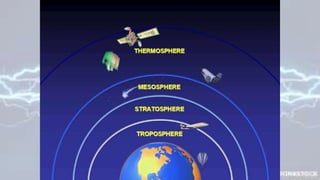
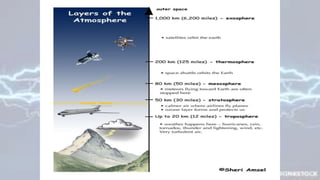
Layers of the atmosphere
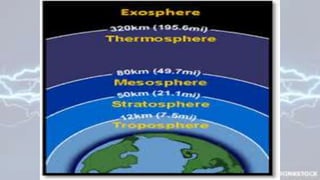
• There are 5 layers of the atmosphere :
(From the closet to the earth to the farthest)
1)Troposphere
2) Stratosphere
3) Mesosphere
4) Thermosphere
5)Exosphere
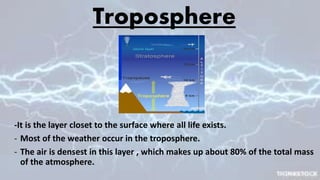
Troposphere
-It is the layer closet to the surface where all life exists.
- Most of the weather occur in the troposphere.
- The air is densest in this layer , which makes up about 80% of the total mass
of the atmosphere.
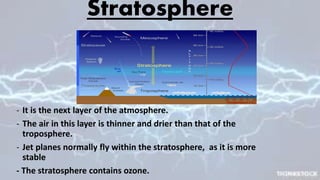
Stratosphere
- It is the next layer of the atmosphere.
- The air in this layer is thinner and drier than that of the
troposphere.
- Jet planes normally fly within the stratosphere, as it is more
stable
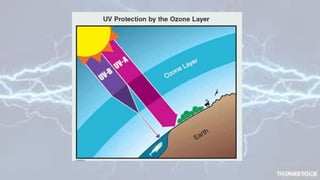
- The stratosphere contains ozone.
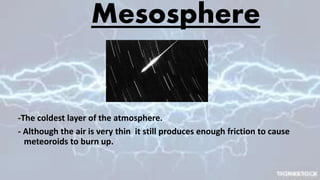
Mesosphere
-The coldest layer of the atmosphere.
- Although the air is very thin it still produces enough friction to cause
meteoroids to burn up.
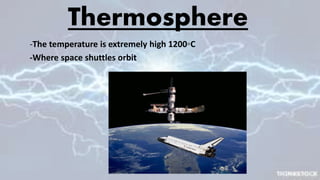
Thermosphere
-The temperature is extremely high 1200◦C
-Where space shuttles orbit
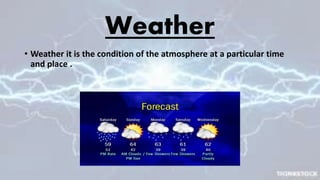
Weather
• Weather it is the condition of the atmosphere at a particular time
and place .
What can cause the changes of weather?
•Weather variables:
1) Temperature
2) Wind
3)Moisture
4)Precipitation
5)Cloud Cover
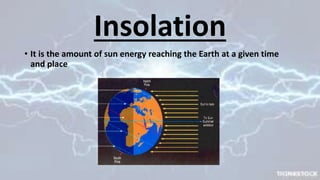
Insolation
• It is the amount of sun energy reaching the Earth at a given time
and place
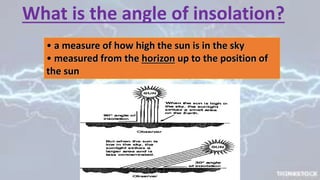
What is the angle of insolation?
• a measure of how high the sun is in the sky
• measured from the horizon up to the position of
the sun
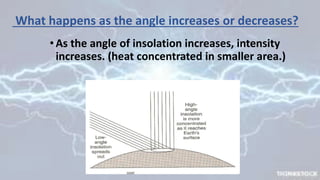
What happens as the angle increases or decreases?
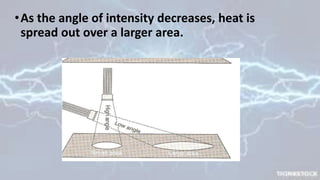
•As the angle of insolation increases, intensity
increases. (heat concentrated in smaller area.)
•As the angle of intensity decreases, heat is
spread out over a larger area.
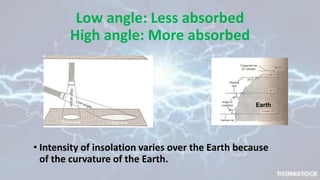
Low angle: Less absorbed
High angle: More absorbed
• Intensity of insolation varies over the Earth because
of the curvature of the Earth.
Earth
Where is intensity the greatest and lowest?
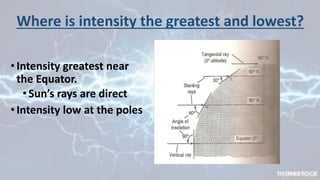
•Intensity greatest near
the Equator.
•Sun’s rays are direct
•Intensity low at the poles
At what time is the angle and intensity
of insolation greatest?
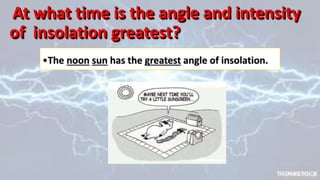
•The noon sun has the greatest angle of insolation.
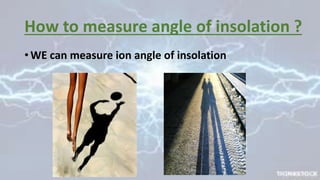
How to measure angle of insolation ?
• WE can measure ion angle of insolation
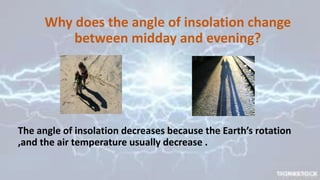
Why does the angle of insolation change
between midday and evening?
The angle of insolation decreases because the Earth’s rotation
,and the air temperature usually decrease .
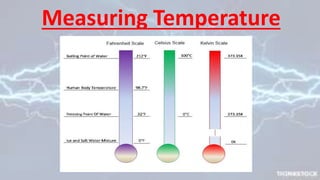
Measuring Temperature
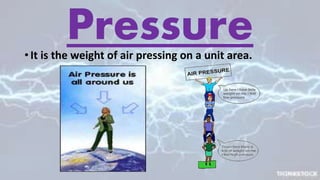
Pressure• It is the weight of air pressing on a unit area.
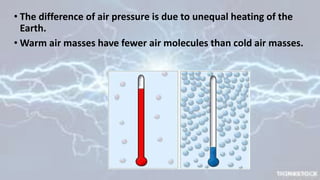
• The difference of air pressure is due to unequal heating of the
Earth.
• Warm air masses have fewer air molecules than cold air masses.
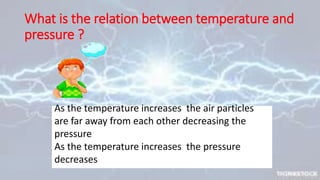
What is the relation between temperature and
pressure ?
As the temperature increases the air particles
are far away from each other decreasing the
pressure
As the temperature increases the pressure
decreases
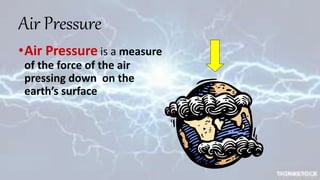
Air Pressure
•Air Pressure is a measure
of the force of the air
pressing down on the
earth’s surface
Air Pressure can vary at any
particular point on the Earth
depending on the density of the air
Density = mass / volume
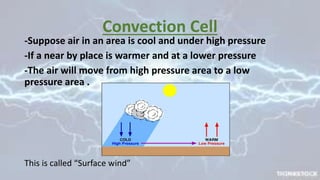
Convection Cell
-Suppose air in an area is cool and under high pressure
-If a near by place is warmer and at a lower pressure
-The air will move from high pressure area to a low
pressure area .
This is called “Surface wind”
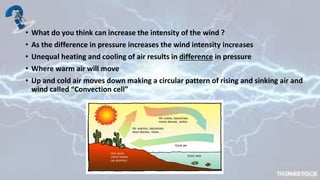
• What do you think can increase the intensity of the wind ?
• As the difference in pressure increases the wind intensity increases
• Unequal heating and cooling of air results in difference in pressure
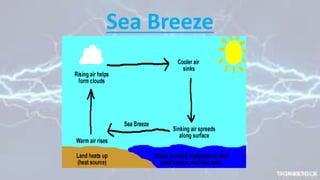
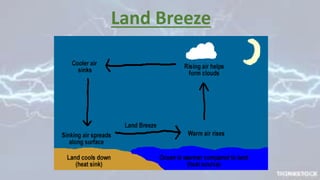
• Where warm air will move
• Up and cold air moves down making a circular pattern of rising and sinking air and
wind called “Convection cell”
Sea Breeze
Land Breeze

What makes up weather ( whole presentation )

  • 1.
    What makes up theAtmosphere?
  • 2.
    Layers of theatmosphere • There are 5 layers of the atmosphere : (From the closet to the earth to the farthest) 1)Troposphere 2) Stratosphere 3) Mesosphere 4) Thermosphere 5)Exosphere
  • 5.
    Troposphere -It is thelayer closet to the surface where all life exists. - Most of the weather occur in the troposphere. - The air is densest in this layer , which makes up about 80% of the total mass of the atmosphere.
  • 6.
    Stratosphere - It isthe next layer of the atmosphere. - The air in this layer is thinner and drier than that of the troposphere. - Jet planes normally fly within the stratosphere, as it is more stable - The stratosphere contains ozone.
  • 8.
    Mesosphere -The coldest layerof the atmosphere. - Although the air is very thin it still produces enough friction to cause meteoroids to burn up.
  • 9.
    Thermosphere -The temperature isextremely high 1200◦C -Where space shuttles orbit
  • 11.
    Weather • Weather itis the condition of the atmosphere at a particular time and place .
  • 12.
    What can causethe changes of weather? •Weather variables: 1) Temperature 2) Wind 3)Moisture 4)Precipitation 5)Cloud Cover
  • 13.
    Insolation • It isthe amount of sun energy reaching the Earth at a given time and place
  • 14.
    What is theangle of insolation? • a measure of how high the sun is in the sky • measured from the horizon up to the position of the sun
  • 15.
    What happens asthe angle increases or decreases? •As the angle of insolation increases, intensity increases. (heat concentrated in smaller area.)
  • 16.
    •As the angleof intensity decreases, heat is spread out over a larger area.
  • 17.
    Low angle: Lessabsorbed High angle: More absorbed • Intensity of insolation varies over the Earth because of the curvature of the Earth. Earth
  • 18.
    Where is intensitythe greatest and lowest? •Intensity greatest near the Equator. •Sun’s rays are direct •Intensity low at the poles
  • 19.
    At what timeis the angle and intensity of insolation greatest? •The noon sun has the greatest angle of insolation.
  • 20.
    How to measureangle of insolation ? • WE can measure ion angle of insolation
  • 21.
    Why does theangle of insolation change between midday and evening? The angle of insolation decreases because the Earth’s rotation ,and the air temperature usually decrease .
  • 22.
  • 23.
    Pressure• It isthe weight of air pressing on a unit area.
  • 24.
    • The differenceof air pressure is due to unequal heating of the Earth. • Warm air masses have fewer air molecules than cold air masses.
  • 25.
    What is therelation between temperature and pressure ? As the temperature increases the air particles are far away from each other decreasing the pressure As the temperature increases the pressure decreases
  • 26.
    Air Pressure •Air Pressureis a measure of the force of the air pressing down on the earth’s surface
  • 27.
    Air Pressure canvary at any particular point on the Earth depending on the density of the air Density = mass / volume
  • 28.
    Convection Cell -Suppose airin an area is cool and under high pressure -If a near by place is warmer and at a lower pressure -The air will move from high pressure area to a low pressure area . This is called “Surface wind”
  • 29.
    • What doyou think can increase the intensity of the wind ? • As the difference in pressure increases the wind intensity increases • Unequal heating and cooling of air results in difference in pressure • Where warm air will move • Up and cold air moves down making a circular pattern of rising and sinking air and wind called “Convection cell”
  • 30.
  • 31.