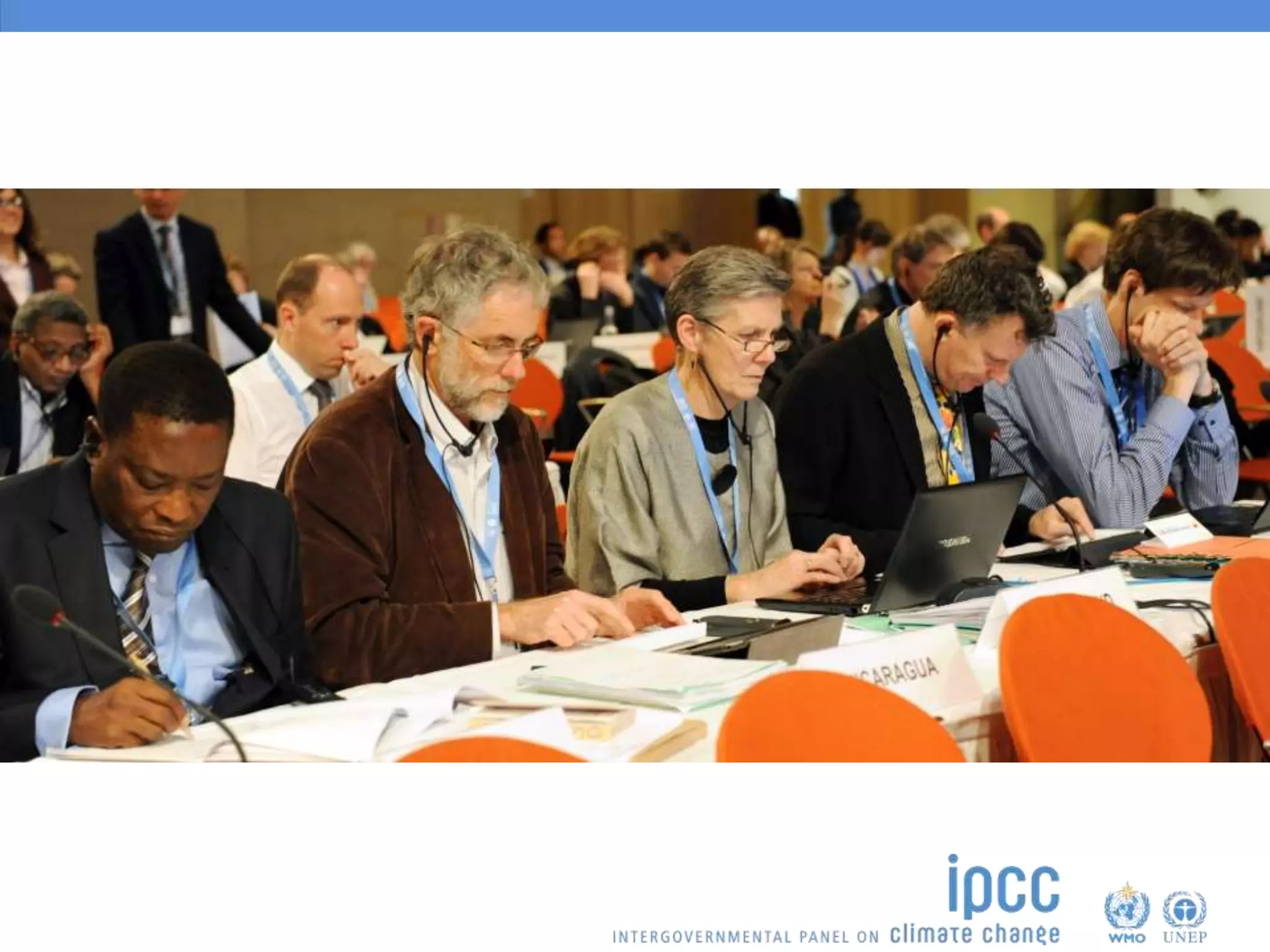
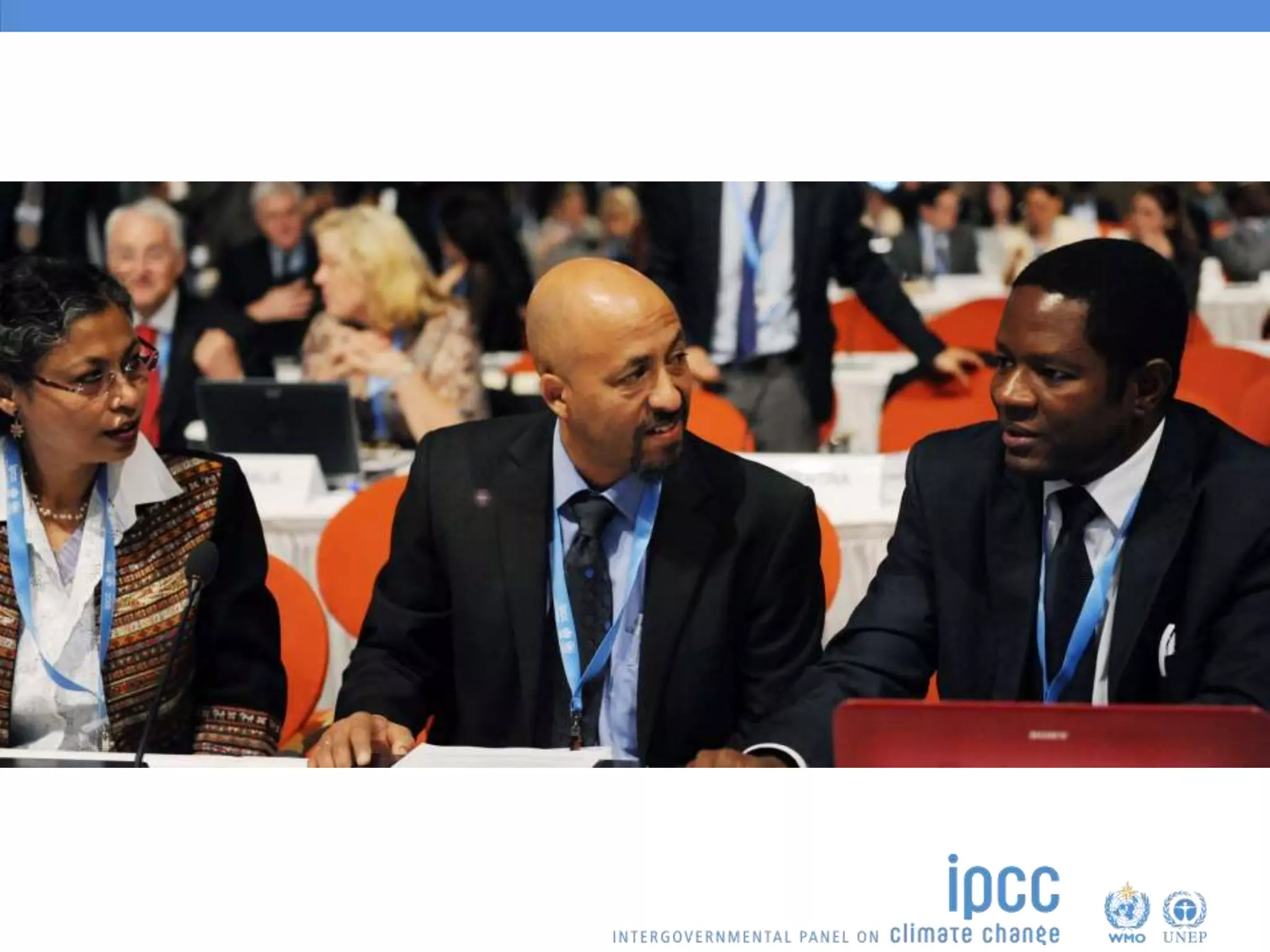
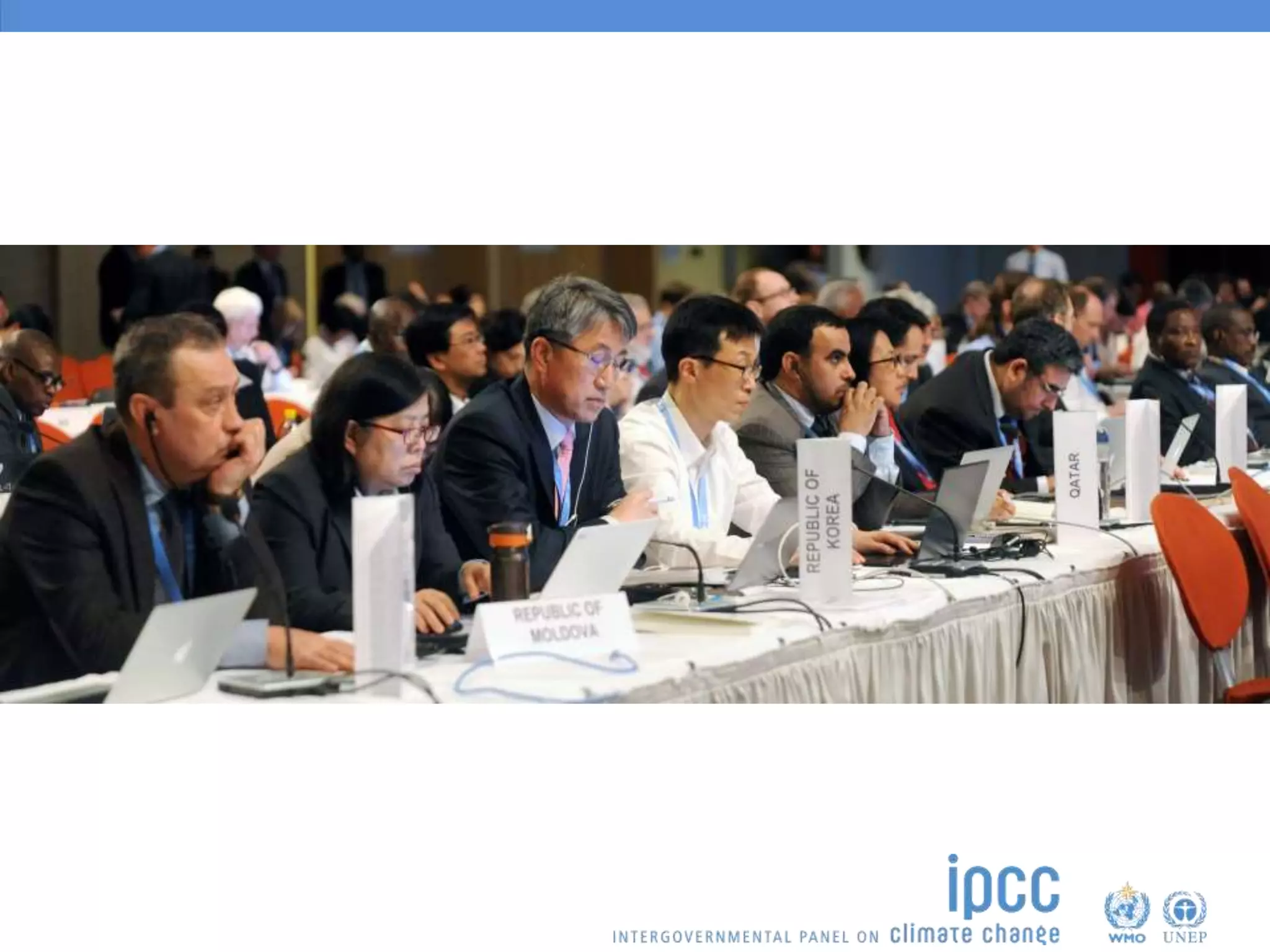
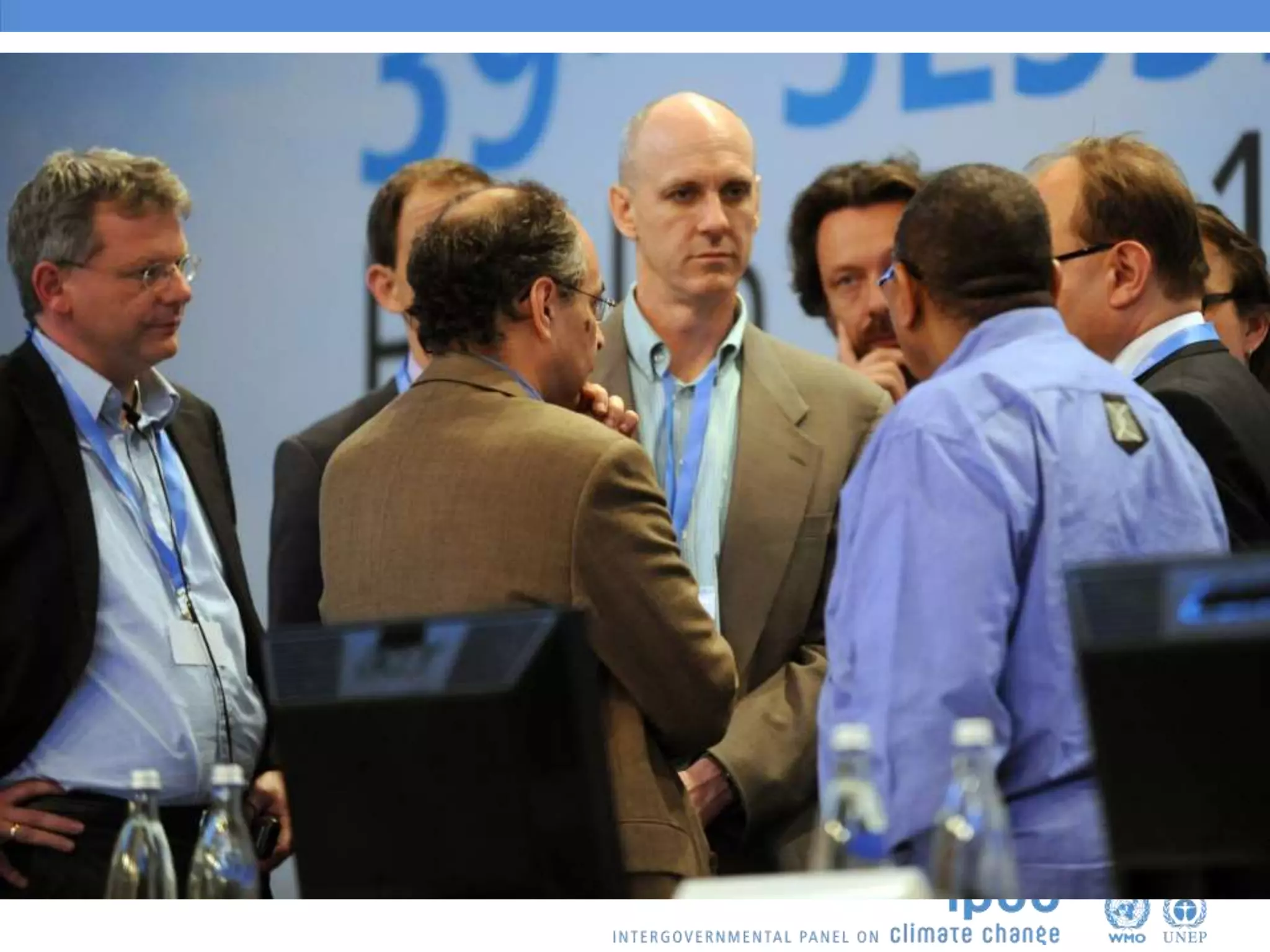
What is the IPCC?
Jonathan Lynn
Head of Communications
18 June 2018, Iran, Media Workshop
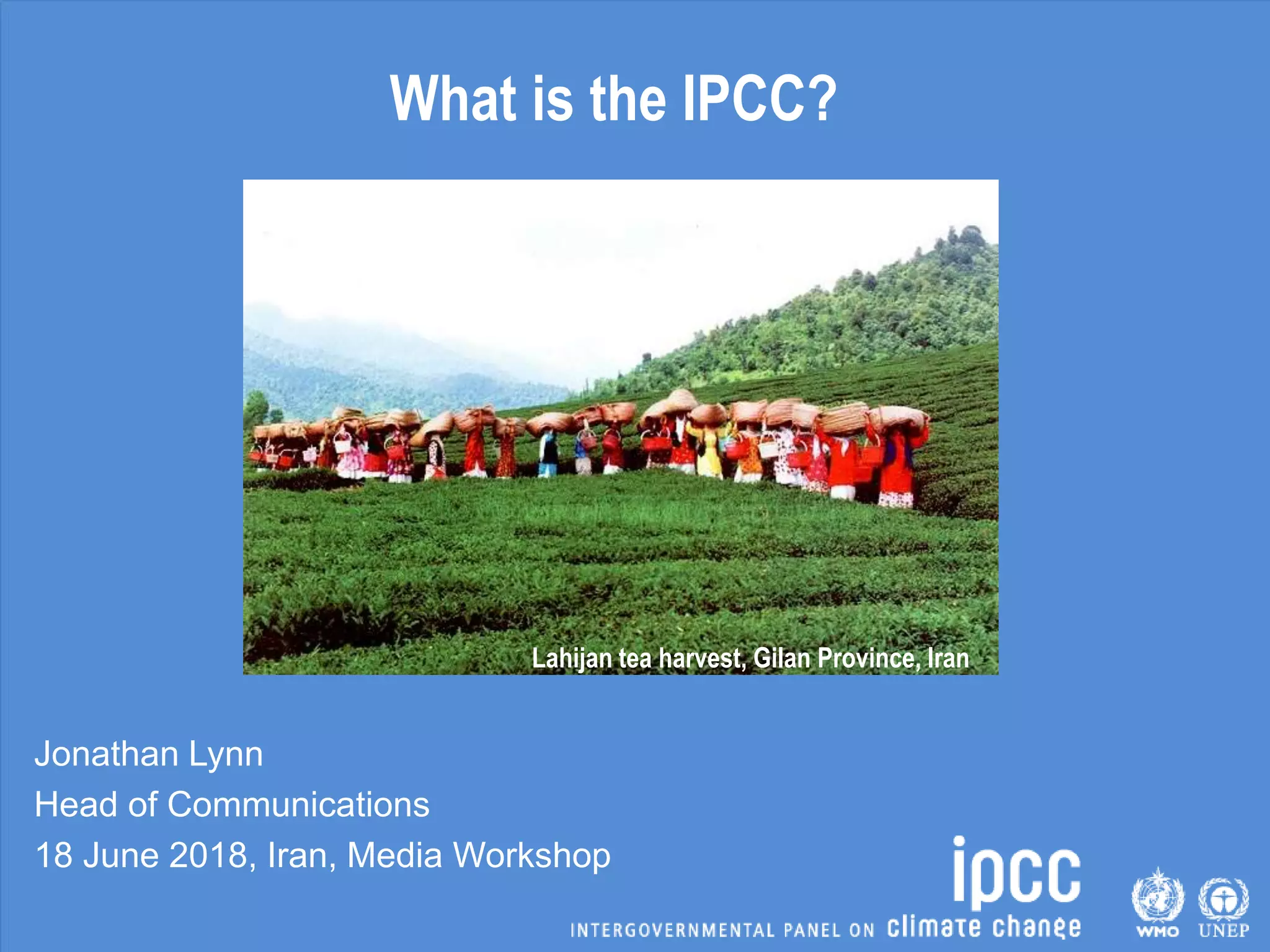
Lahijan tea harvest, Gilan Province, Iran
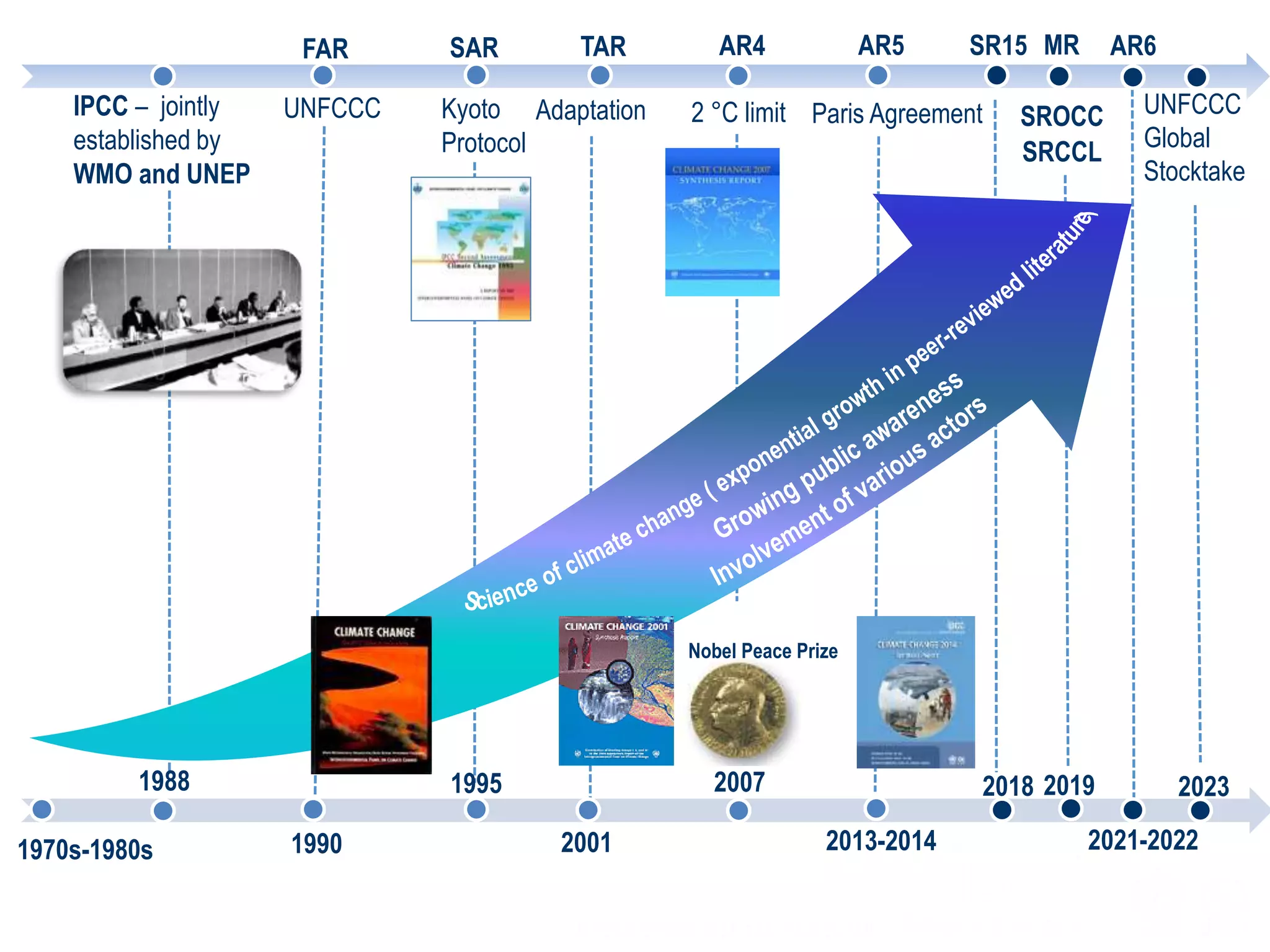
1988
IPCC – jointly
established by
WMO and UNEP
1990
FAR
1995
SAR
2001
TAR
2007
AR4 AR5 AR6
2013-2014 2021-2022
SR15
UNFCCC
Global
Stocktake
2018 2023
1970s-1980s
Kyoto
Protocol
UNFCCC Adaptation 2 °C limit Paris Agreement
2019
MR
SROCC
SRCCL
Nobel Peace Prize
The role of the IPCC is …
“… to assess on a comprehensive, objective, open and transparent
basis the scientific, technical and socio-economic information
relevant to understanding the scientific basis of risk of human-induced
climate change, its potential impacts and options for adaptation and
mitigation.”
“IPCC reports should be neutral with respect to policy, although they
may need to deal objectively with scientific, technical and socio-
economic factors relevant to the application of particular policies.”
Principles Governing IPCC Work, paragraph 2
Source: http://www.ipcc.ch/pdf/ipcc-principles/ipcc-principles.pdf
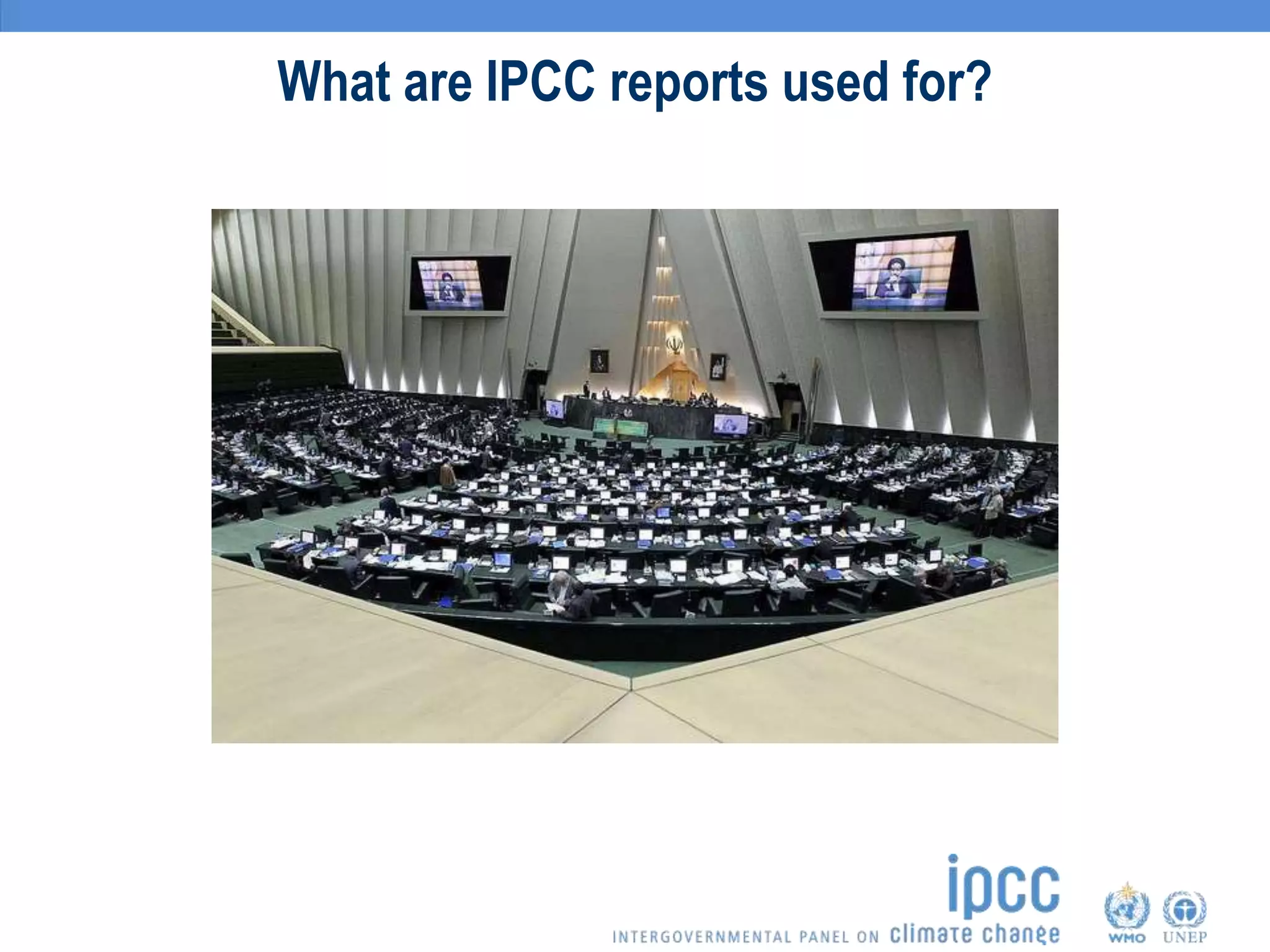
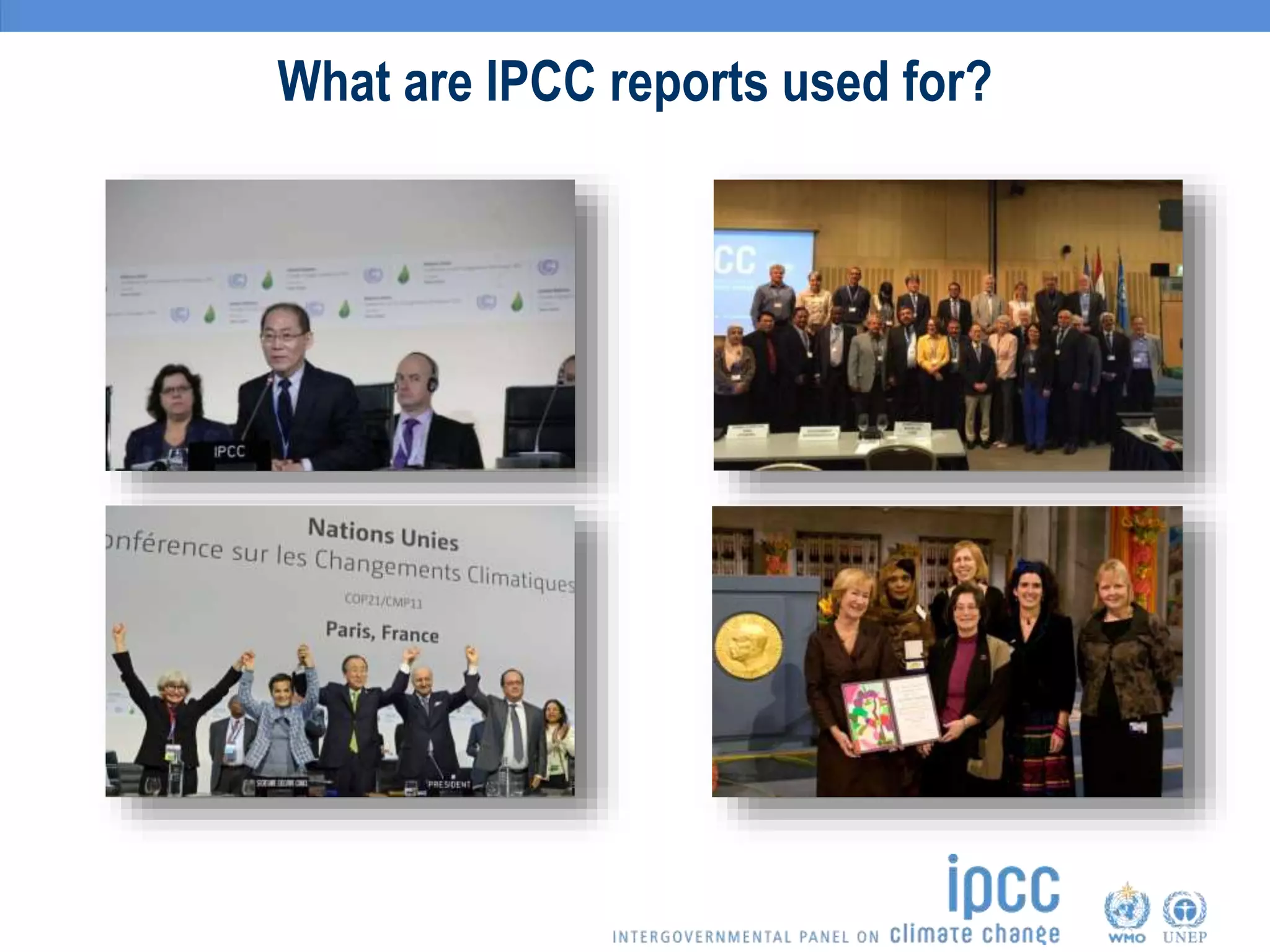
What are IPCC reports used for?
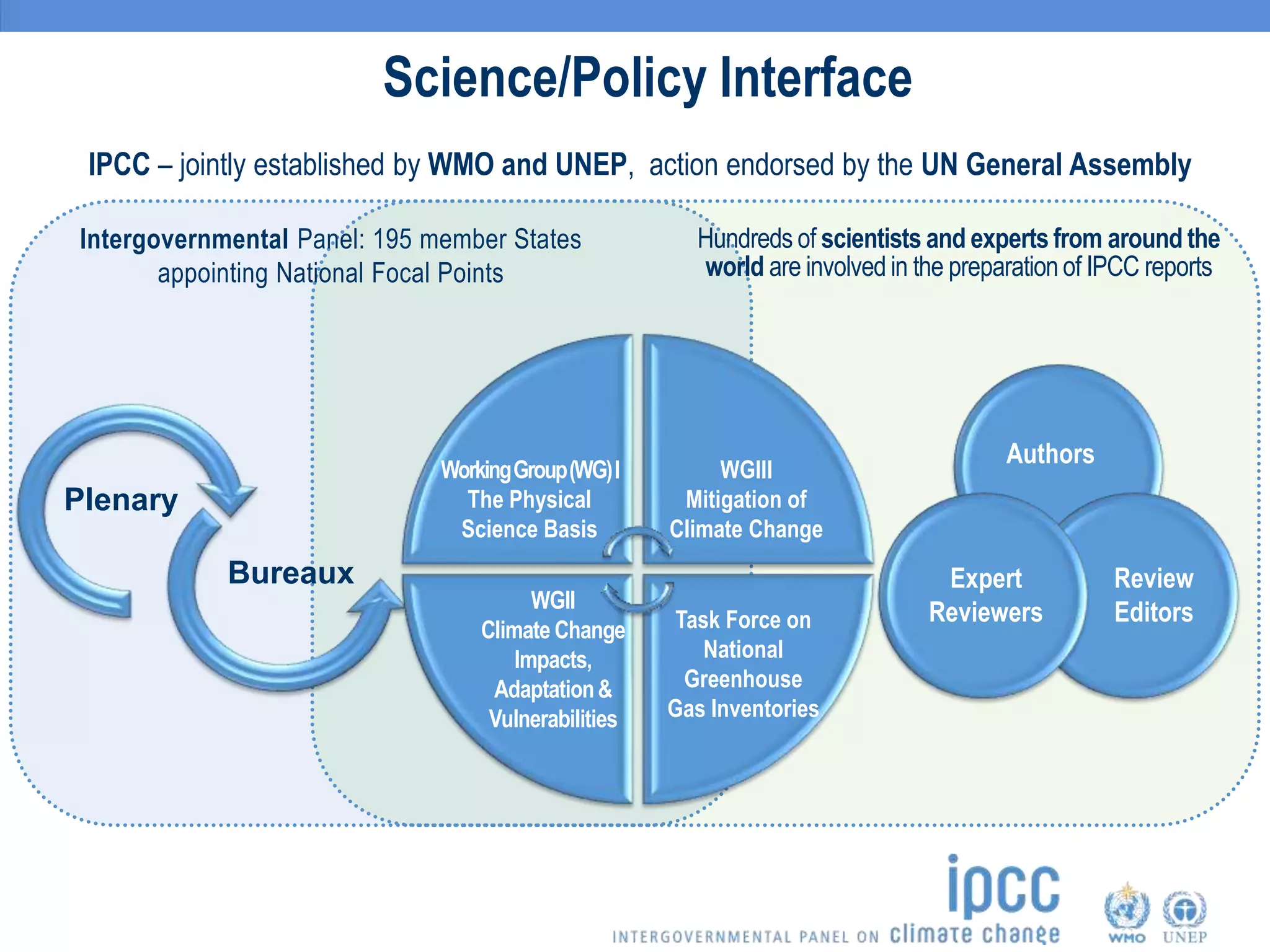
Science/Policy Interface
Plenary
Bureaux
WorkingGroup(WG)I
The Physical
Science Basis
WGIII
Mitigation of
Climate Change
WGII
Climate Change
Impacts,
Adaptation&
Vulnerabilities
Task Force on
National
Greenhouse
Gas Inventories
Authors
Expert
Reviewers
Review
Editors
Intergovernmental Panel: 195 member States
appointing National Focal Points
IPCC – jointly established by WMO and UNEP, action endorsed by the UN General Assembly
Hundreds of scientists and experts from around the
world are involved in the preparation of IPCC reports
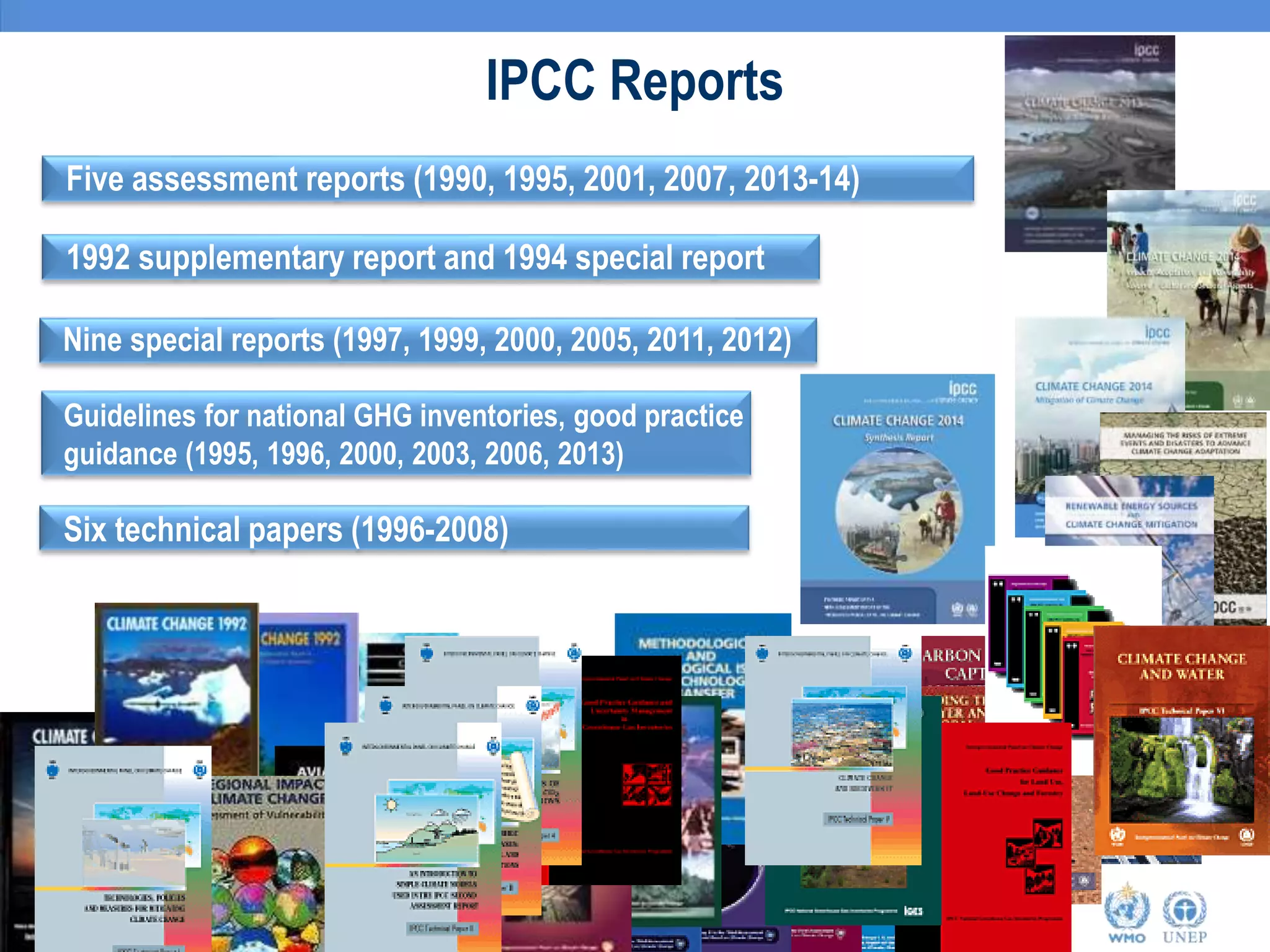
IPCC Reports
Five assessment reports (1990, 1995, 2001, 2007, 2013-14)
1992 supplementary report and 1994 special report
Nine special reports (1997, 1999, 2000, 2005, 2011, 2012)
Guidelines for national GHG inventories, good practice
guidance (1995, 1996, 2000, 2003, 2006, 2013)
Six technical papers (1996-2008)
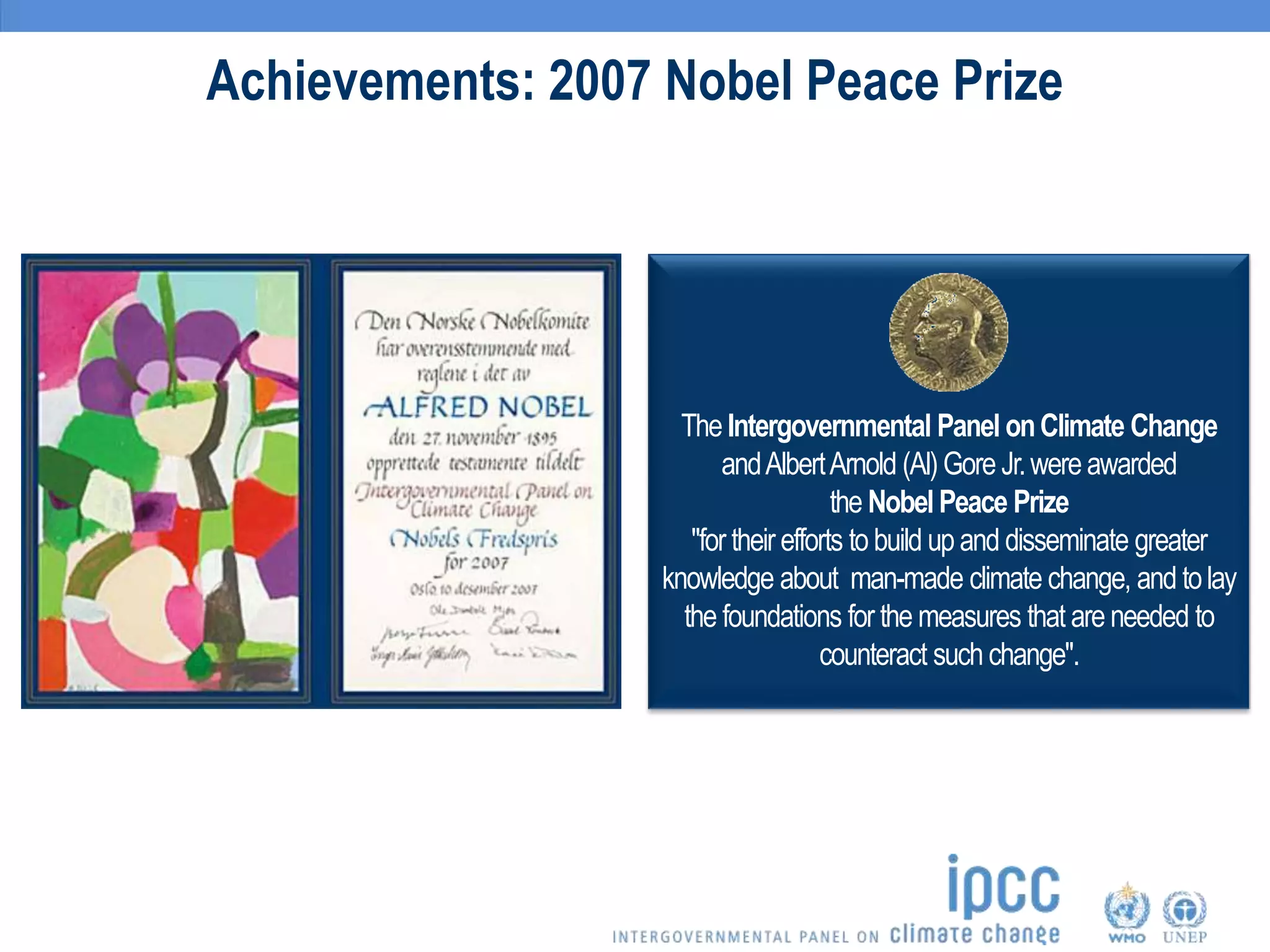
Achievements: 2007 Nobel Peace Prize
The Intergovernmental Panel onClimate Change
andAlbertArnold (Al)Gore Jr.wereawarded
the Nobel Peace Prize
"for their efforts to build up and disseminate greater
knowledge about man-made climate change, and tolay
the foundations for the measures that are needed to
counteract such change".
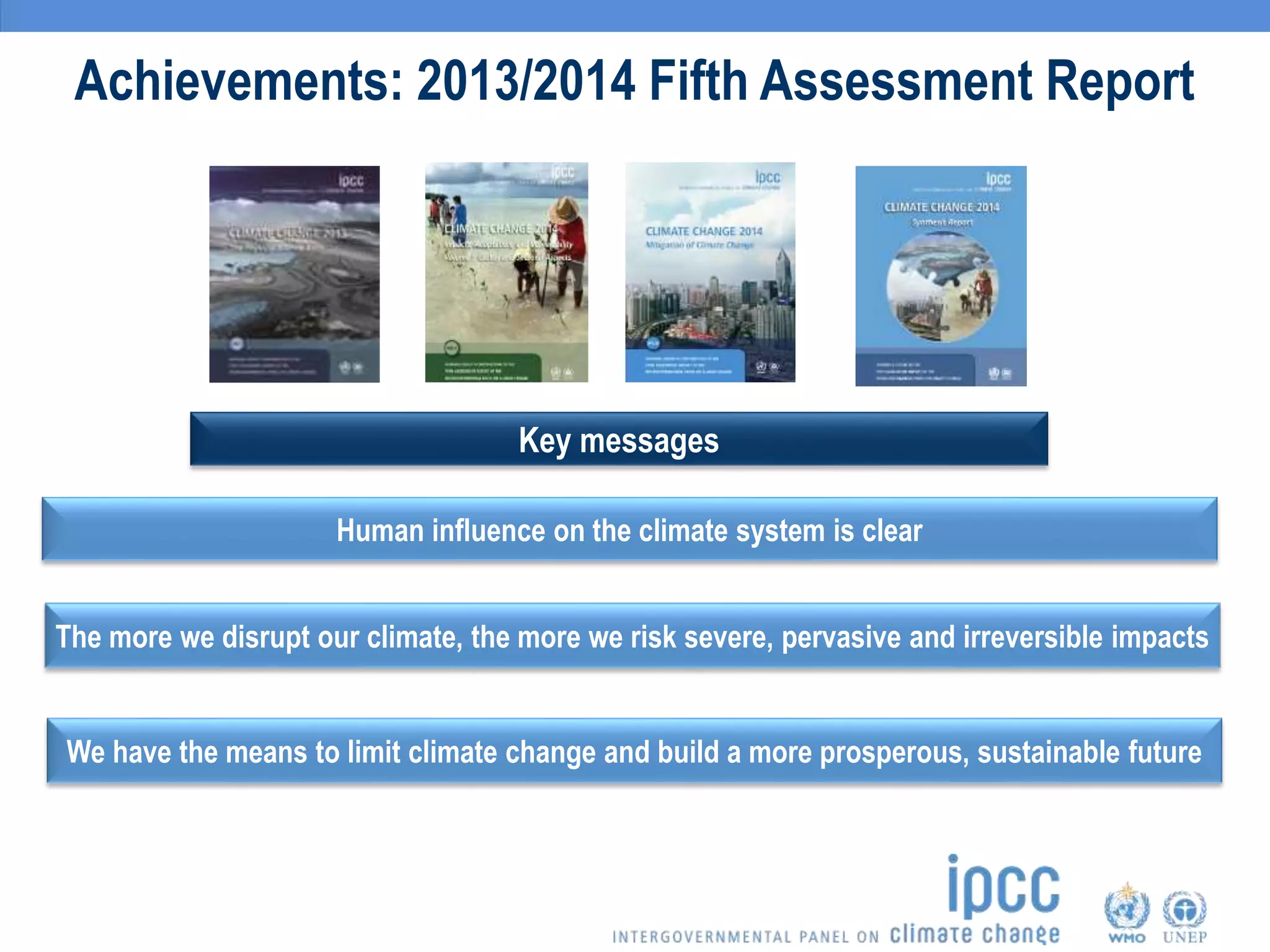
Achievements: 2013/2014 Fifth Assessment Report
Human influence on the climate system is clear
Key messages
The more we disrupt our climate, the more we risk severe, pervasive and irreversible impacts
We have the means to limit climate change and build a more prosperous, sustainable future
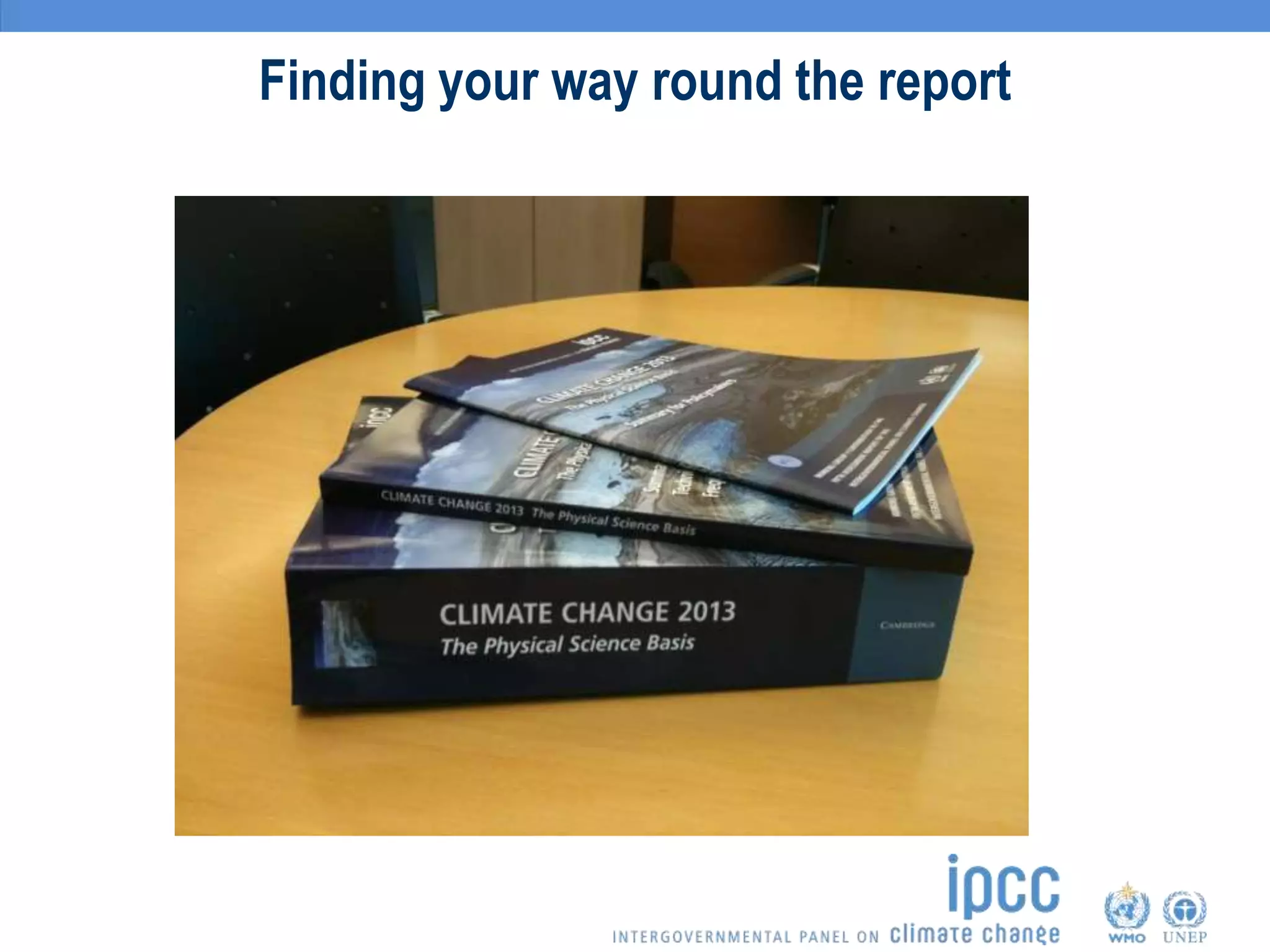
Finding your way round the report
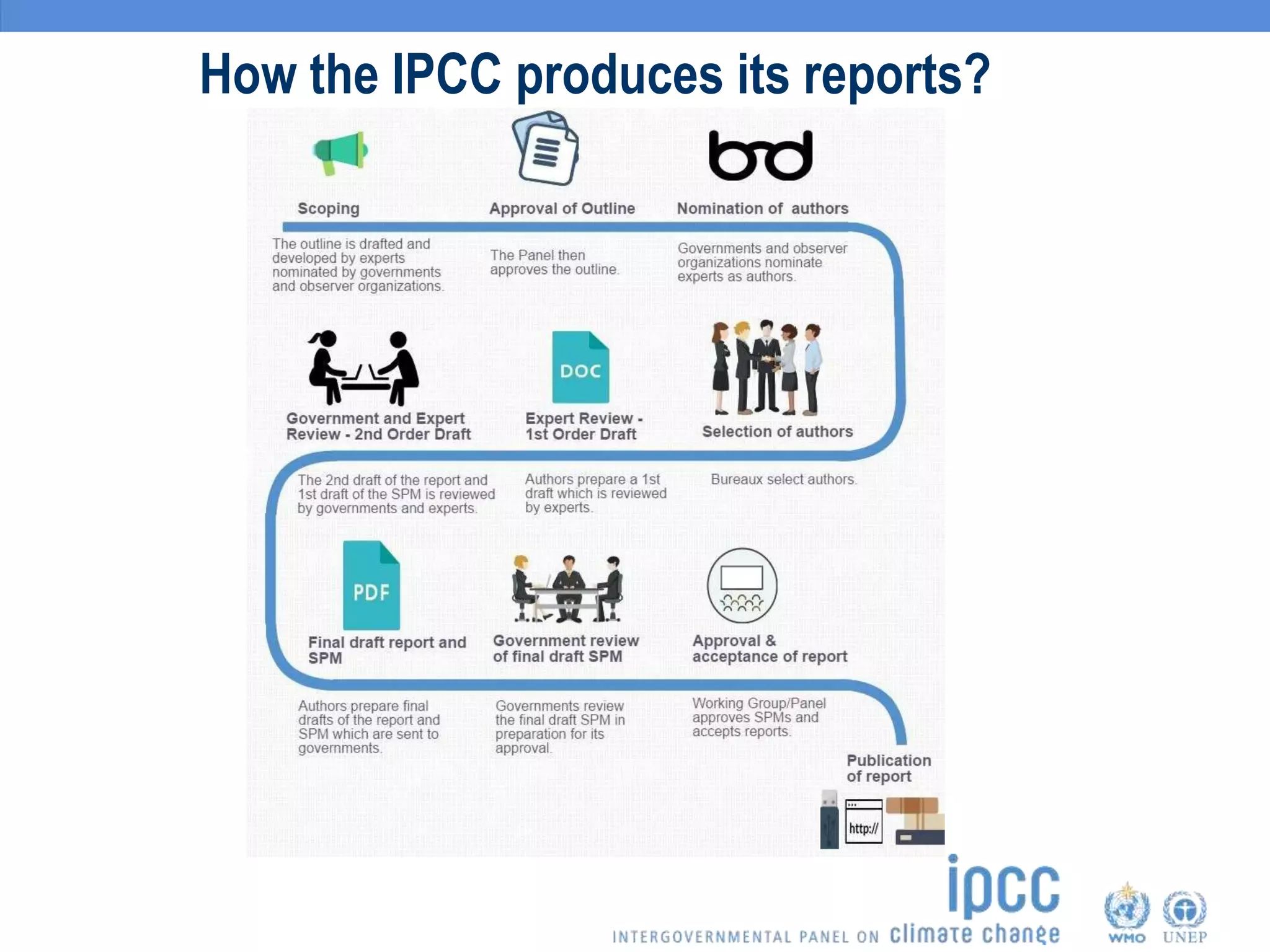
How the IPCC produces its reports?
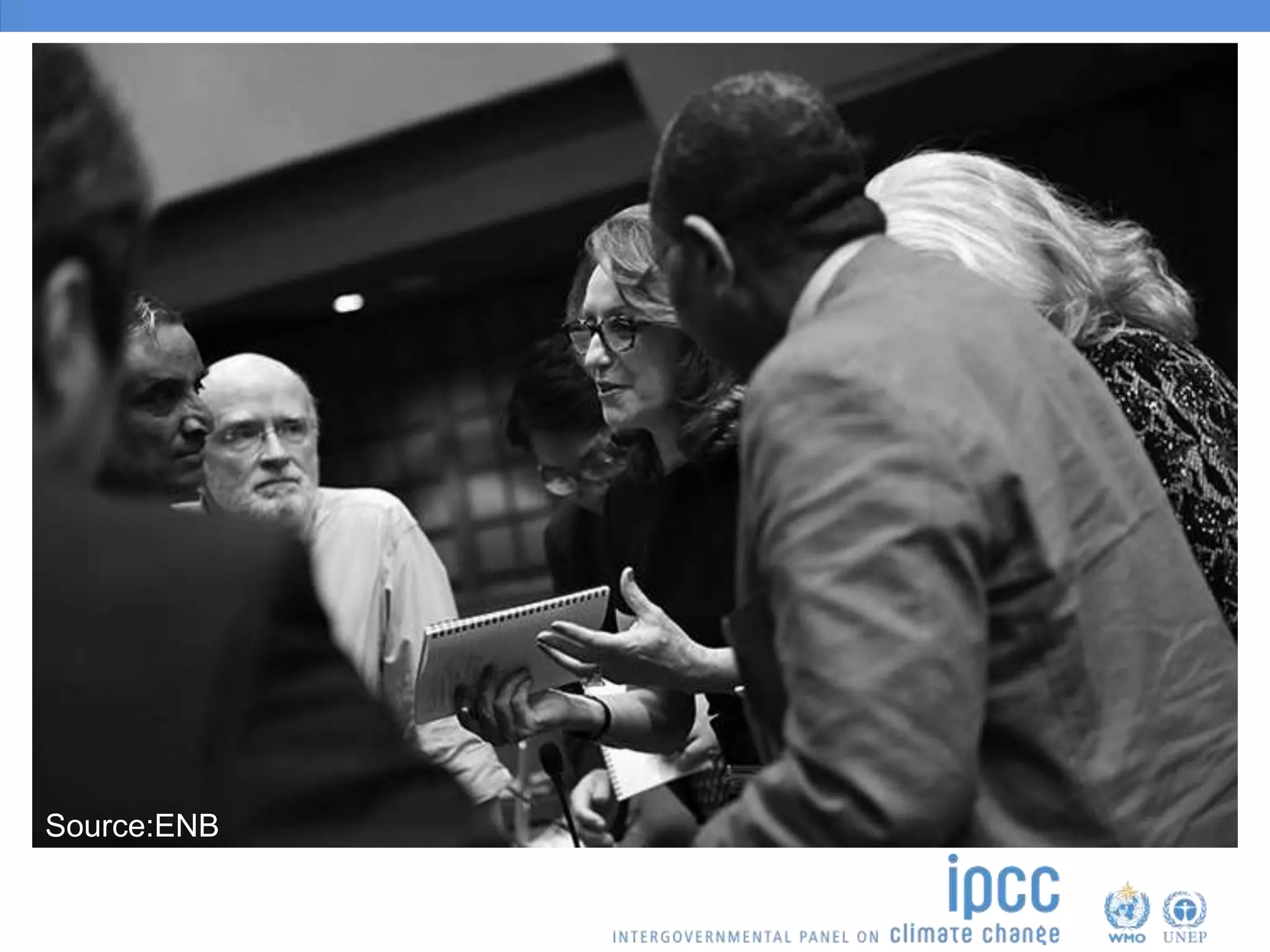
Source:ENB
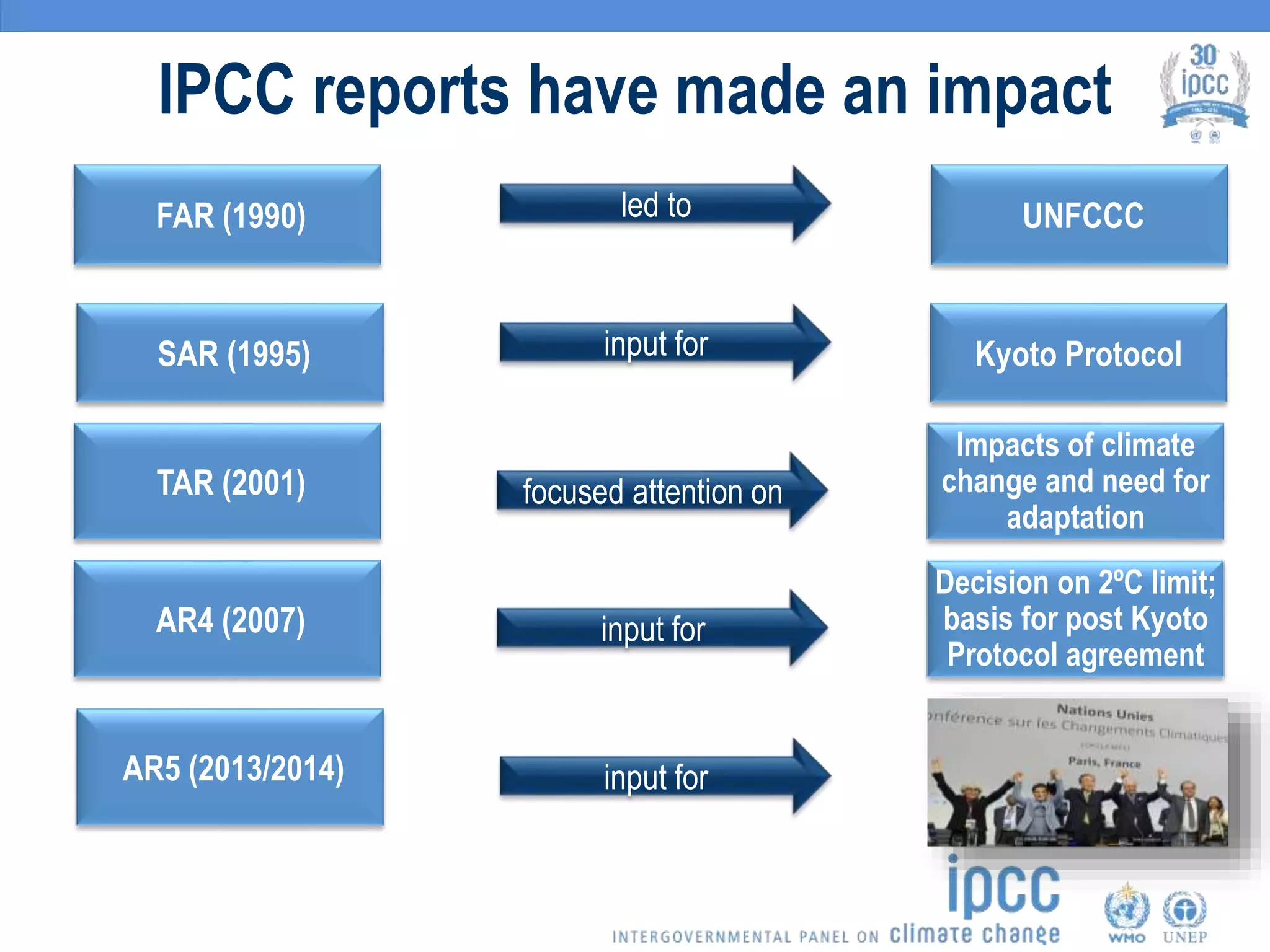
FAR (1990)
IPCC reports have made an impact
led to UNFCCC
SAR (1995) input for Kyoto Protocol
TAR (2001) focused attention on
Impacts of climate
change and need for
adaptation
AR4 (2007) input for
Decision on 2ºC limit;
basis for post Kyoto
Protocol agreement
AR5 (2013/2014) input for
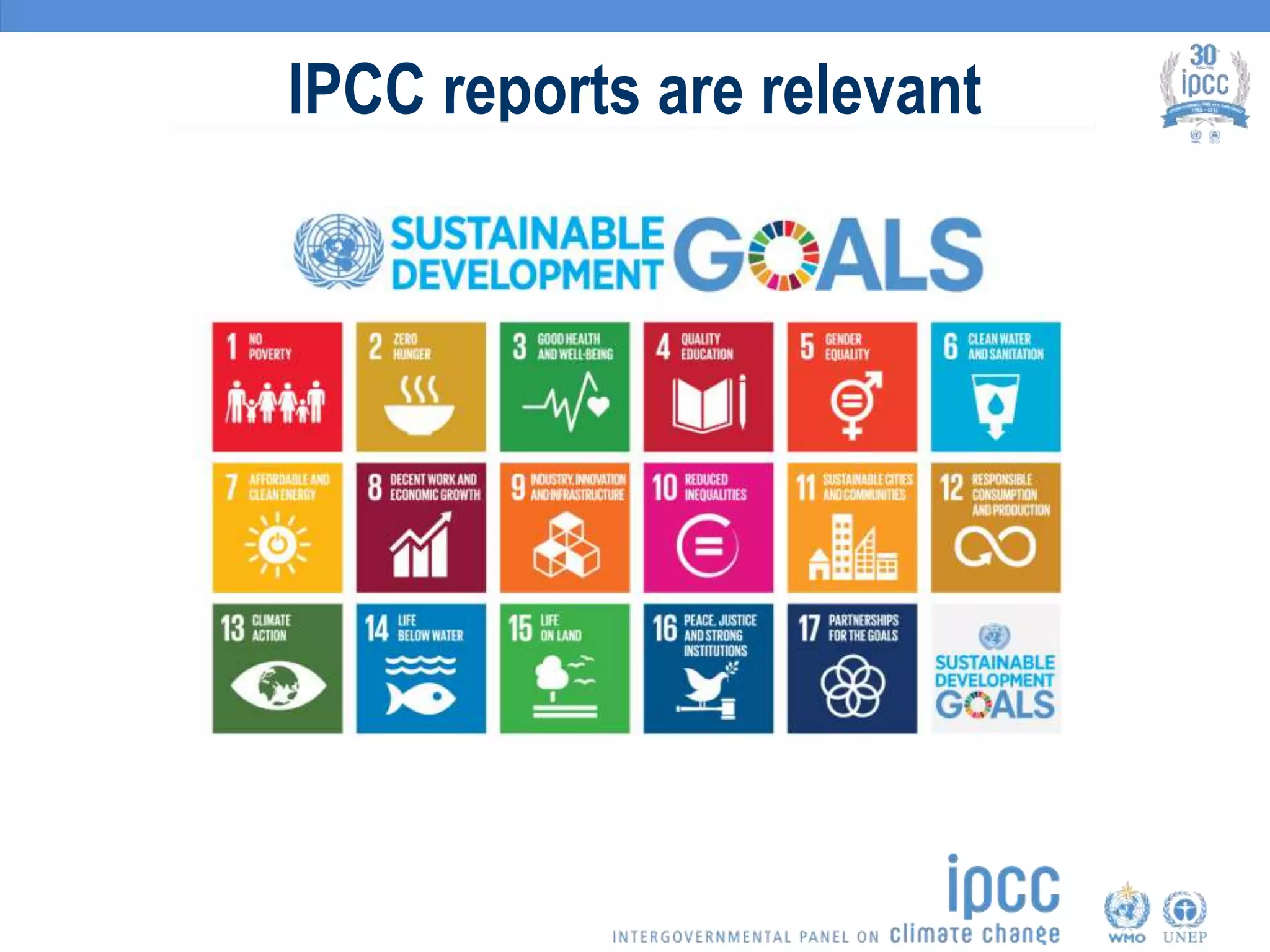
IPCC reports are relevant
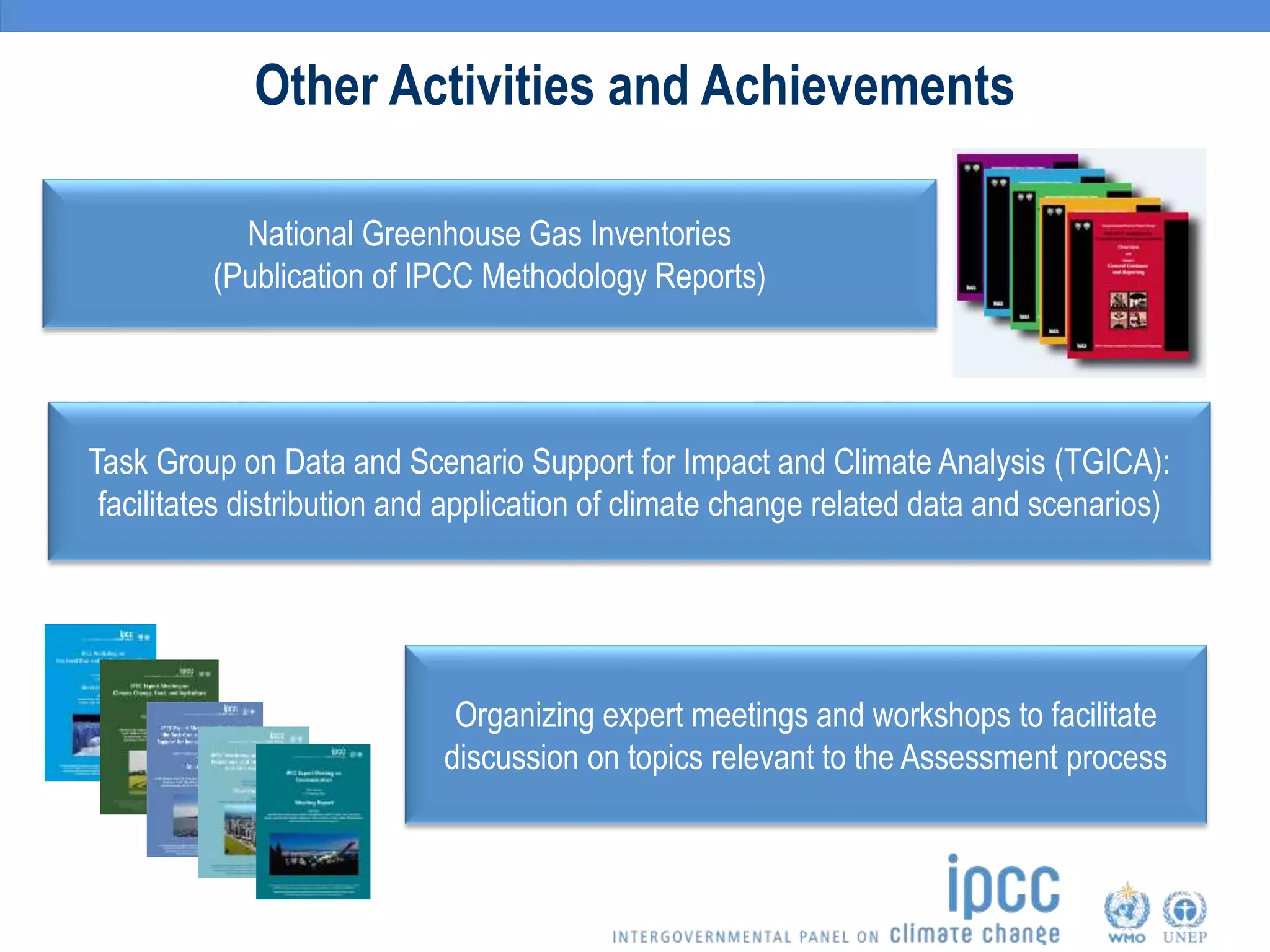
Other Activities and Achievements
National Greenhouse Gas Inventories
(Publication of IPCC Methodology Reports)
Organizing expert meetings and workshops to facilitate
discussion on topics relevant to the Assessment process
Task Group on Data and Scenario Support for Impact and Climate Analysis (TGICA):
facilitates distribution and application of climate change related data and scenarios)
Sixth assessment cycle
Special Reports
Global Warming of 1.5 °C, an IPCC special report on the impacts of global
warming of 1.5°C above pre-industrial levels and related global greenhouse gas
emission pathways, in the context of strengthening the global response to the
threat of climate change, sustainable development, and efforts to eradicate
poverty
October 2018
UNFCCC COP24 - Talanoa (facilitative) dialogue
* Dates are subject to change
Methodology Report update
2019 Refinement to the 2006 IPCC Guidelines for National Greenhouse Gas
Inventories
May 2019
Sixth assessment cycle
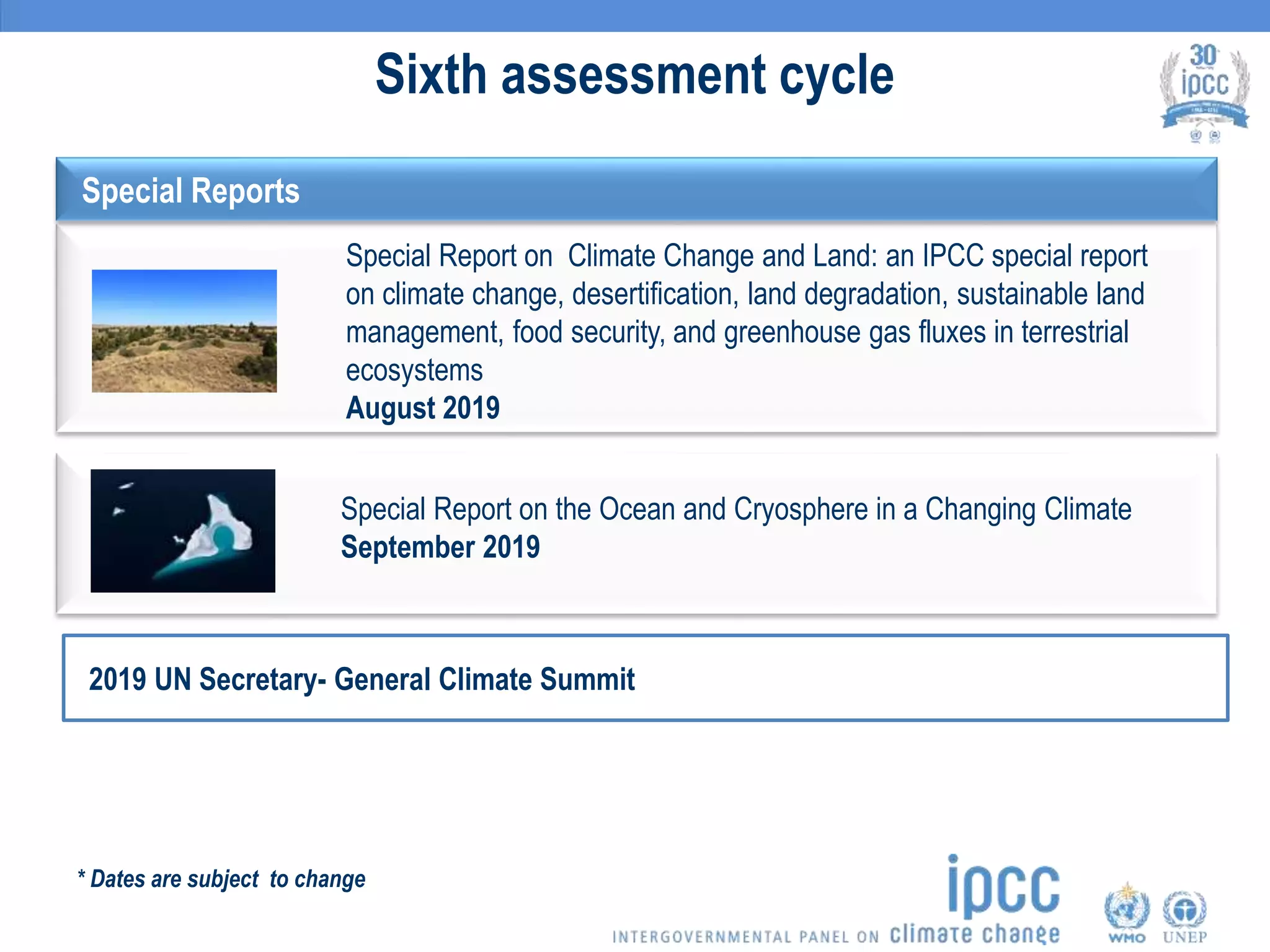
Special Report on the Ocean and Cryosphere in a Changing Climate
September 2019
Special Report on Climate Change and Land: an IPCC special report
on climate change, desertification, land degradation, sustainable land
management, food security, and greenhouse gas fluxes in terrestrial
ecosystems
August 2019
2019 UN Secretary- General Climate Summit
* Dates are subject to change
Special Reports
Sixth assessment cycle (cont)
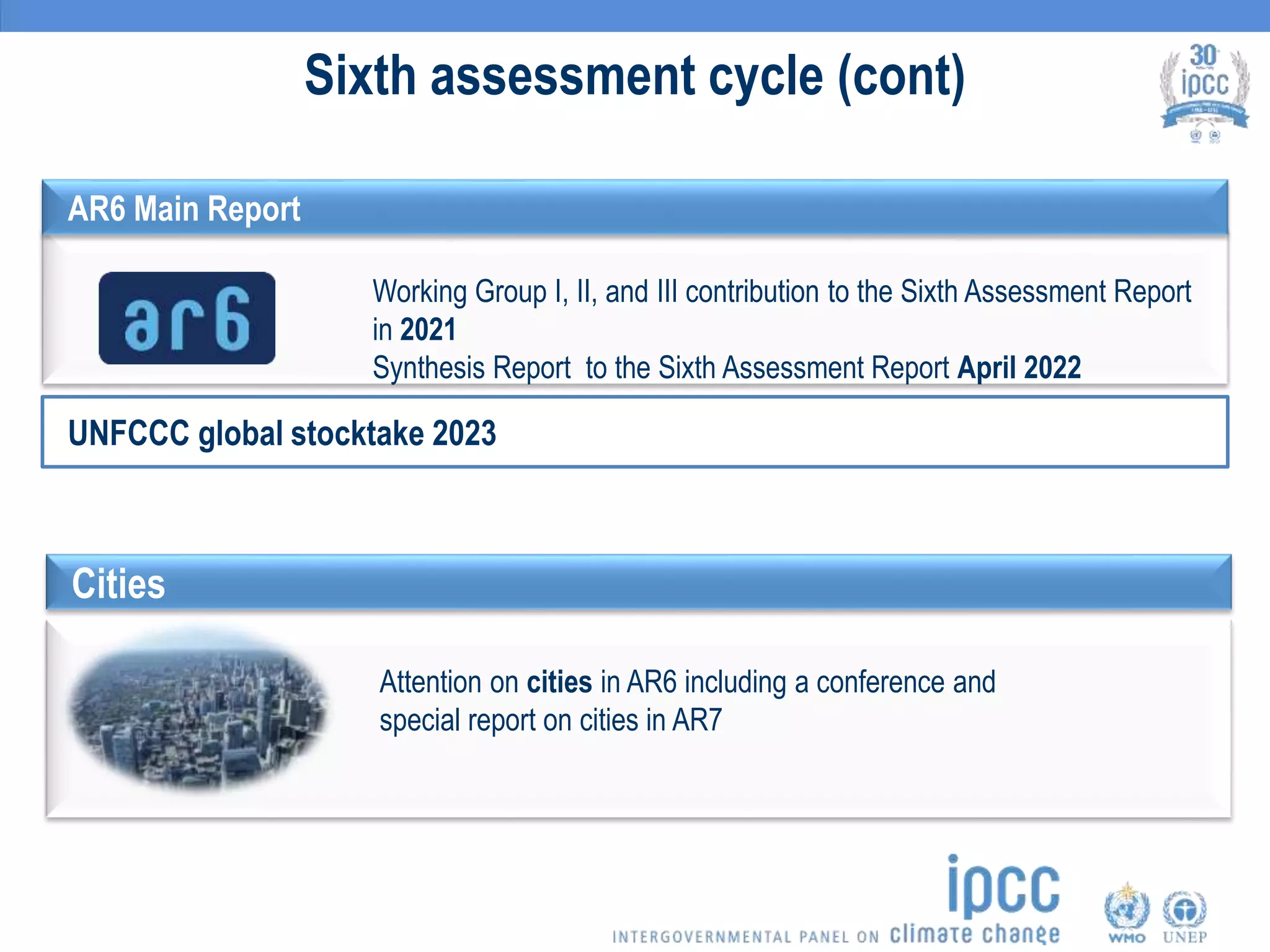
AR6 Main Report
Working Group I, II, and III contribution to the Sixth Assessment Report
in 2021
Synthesis Report to the Sixth Assessment Report April 2022
UNFCCC global stocktake 2023
Attention on cities in AR6 including a conference and
special report on cities in AR7
Cities
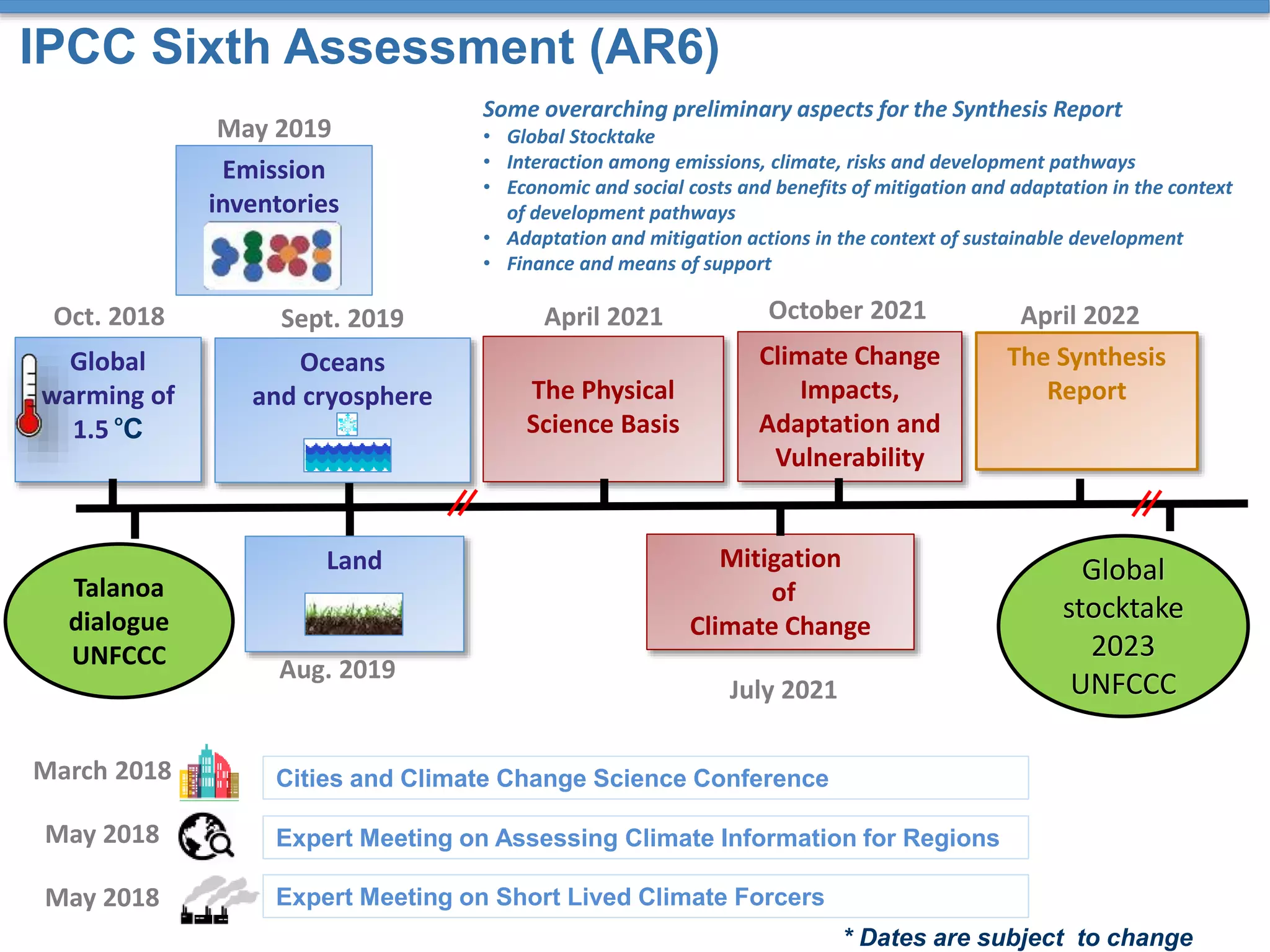
Emission
inventories
The Physical
Science Basis
The Synthesis
Report
Climate Change
Impacts,
Adaptation and
Vulnerability
Mitigation
of
Climate Change
April 2021 April 2022October 2021
July 2021
Global
warming of
1.5 o
C
Oct. 2018 Sept. 2019
Aug. 2019
Land
Oceans
and cryosphere
IPCC Sixth Assessment (AR6)
Cities and Climate Change Science ConferenceMarch 2018
May 2018 Expert Meeting on Short Lived Climate Forcers
May 2018 Expert Meeting on Assessing Climate Information for Regions
Talanoa
dialogue
UNFCCC
Global
stocktake
2023
UNFCCC
Some overarching preliminary aspects for the Synthesis Report
• Global Stocktake
• Interaction among emissions, climate, risks and development pathways
• Economic and social costs and benefits of mitigation and adaptation in the context
of development pathways
• Adaptation and mitigation actions in the context of sustainable development
• Finance and means of support
May 2019
* Dates are subject to change
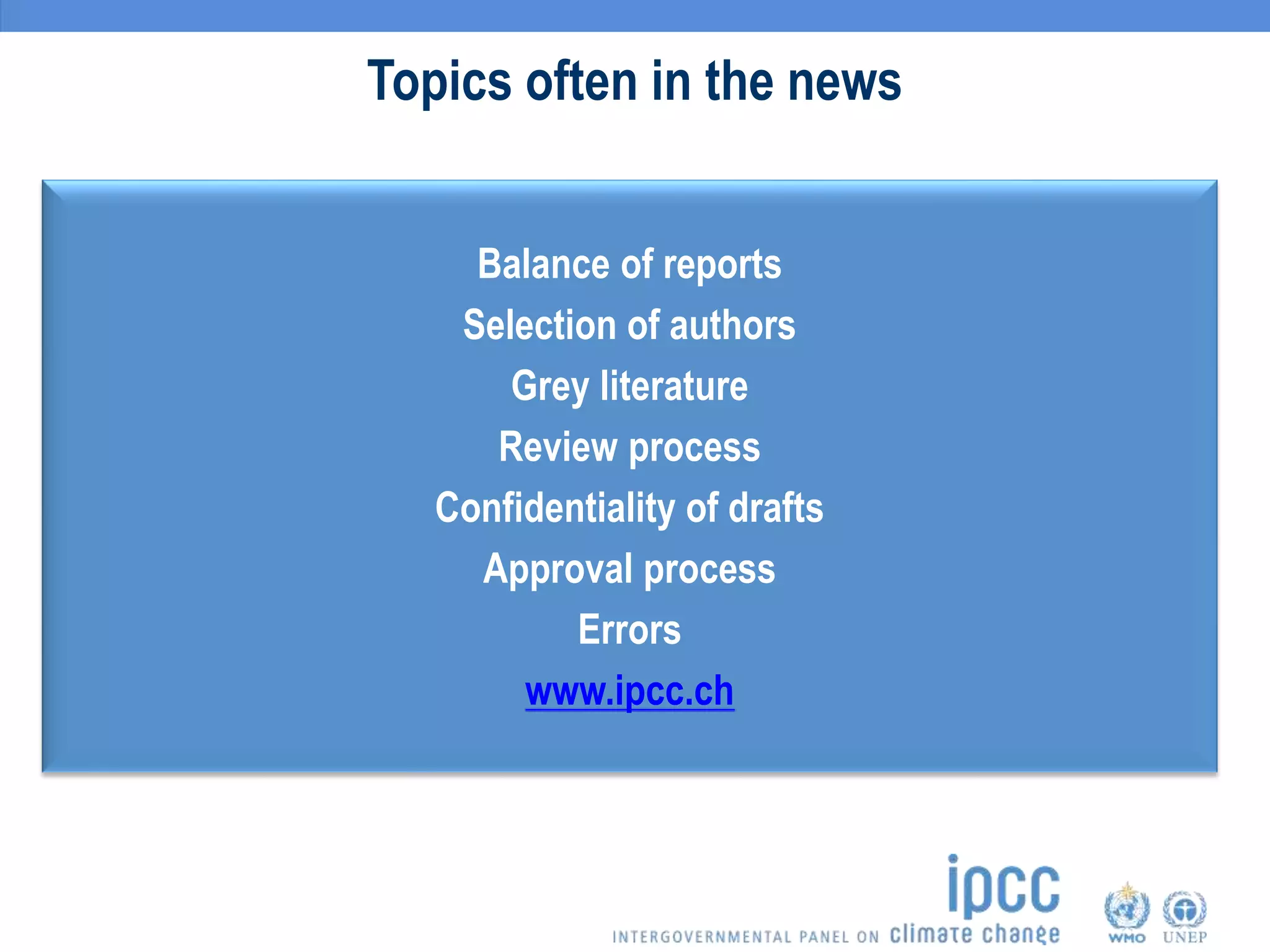
Topics often in the news
Balance of reports
Selection of authors
Grey literature
Review process
Confidentiality of drafts
Approval process
Errors
www.ipcc.ch
IPCC
IPCC
http://www.slideshare.net/ipcc-
media/presentations
https://www.youtube.com/c/ipccgeneva
Find us on:
Website: http://ipcc.ch/
IPCC Secretariat: ipcc-sec@wmo.int
IPCC Press Office: ipcc-media@wmo.int
@IPCC_CH
https://www.linkedin.com/company/ipcc
https://www.flickr.com/photos/ipccphoto/sets/
https://vimeo.com/ipcc
THANK YOU FOR YOUR ATTENTION!
For more information:

What is the IPCC?

  • 1.
    What is theIPCC? Jonathan Lynn Head of Communications 18 June 2018, Iran, Media Workshop Lahijan tea harvest, Gilan Province, Iran
  • 2.
    1988 IPCC – jointly establishedby WMO and UNEP 1990 FAR 1995 SAR 2001 TAR 2007 AR4 AR5 AR6 2013-2014 2021-2022 SR15 UNFCCC Global Stocktake 2018 2023 1970s-1980s Kyoto Protocol UNFCCC Adaptation 2 °C limit Paris Agreement 2019 MR SROCC SRCCL Nobel Peace Prize
  • 3.
    The role ofthe IPCC is … “… to assess on a comprehensive, objective, open and transparent basis the scientific, technical and socio-economic information relevant to understanding the scientific basis of risk of human-induced climate change, its potential impacts and options for adaptation and mitigation.” “IPCC reports should be neutral with respect to policy, although they may need to deal objectively with scientific, technical and socio- economic factors relevant to the application of particular policies.” Principles Governing IPCC Work, paragraph 2 Source: http://www.ipcc.ch/pdf/ipcc-principles/ipcc-principles.pdf
  • 4.
    What are IPCCreports used for?
  • 5.
    What are IPCCreports used for?
  • 6.
    Science/Policy Interface Plenary Bureaux WorkingGroup(WG)I The Physical ScienceBasis WGIII Mitigation of Climate Change WGII Climate Change Impacts, Adaptation& Vulnerabilities Task Force on National Greenhouse Gas Inventories Authors Expert Reviewers Review Editors Intergovernmental Panel: 195 member States appointing National Focal Points IPCC – jointly established by WMO and UNEP, action endorsed by the UN General Assembly Hundreds of scientists and experts from around the world are involved in the preparation of IPCC reports
  • 7.
    IPCC Reports Five assessmentreports (1990, 1995, 2001, 2007, 2013-14) 1992 supplementary report and 1994 special report Nine special reports (1997, 1999, 2000, 2005, 2011, 2012) Guidelines for national GHG inventories, good practice guidance (1995, 1996, 2000, 2003, 2006, 2013) Six technical papers (1996-2008)
  • 8.
    Achievements: 2007 NobelPeace Prize The Intergovernmental Panel onClimate Change andAlbertArnold (Al)Gore Jr.wereawarded the Nobel Peace Prize "for their efforts to build up and disseminate greater knowledge about man-made climate change, and tolay the foundations for the measures that are needed to counteract such change".
  • 9.
    Achievements: 2013/2014 FifthAssessment Report Human influence on the climate system is clear Key messages The more we disrupt our climate, the more we risk severe, pervasive and irreversible impacts We have the means to limit climate change and build a more prosperous, sustainable future
  • 10.
    Finding your wayround the report
  • 11.
    How the IPCCproduces its reports?
  • 12.
  • 17.
    FAR (1990) IPCC reportshave made an impact led to UNFCCC SAR (1995) input for Kyoto Protocol TAR (2001) focused attention on Impacts of climate change and need for adaptation AR4 (2007) input for Decision on 2ºC limit; basis for post Kyoto Protocol agreement AR5 (2013/2014) input for
  • 18.
  • 19.
    Other Activities andAchievements National Greenhouse Gas Inventories (Publication of IPCC Methodology Reports) Organizing expert meetings and workshops to facilitate discussion on topics relevant to the Assessment process Task Group on Data and Scenario Support for Impact and Climate Analysis (TGICA): facilitates distribution and application of climate change related data and scenarios)
  • 20.
    Sixth assessment cycle SpecialReports Global Warming of 1.5 °C, an IPCC special report on the impacts of global warming of 1.5°C above pre-industrial levels and related global greenhouse gas emission pathways, in the context of strengthening the global response to the threat of climate change, sustainable development, and efforts to eradicate poverty October 2018 UNFCCC COP24 - Talanoa (facilitative) dialogue * Dates are subject to change Methodology Report update 2019 Refinement to the 2006 IPCC Guidelines for National Greenhouse Gas Inventories May 2019
  • 21.
    Sixth assessment cycle SpecialReport on the Ocean and Cryosphere in a Changing Climate September 2019 Special Report on Climate Change and Land: an IPCC special report on climate change, desertification, land degradation, sustainable land management, food security, and greenhouse gas fluxes in terrestrial ecosystems August 2019 2019 UN Secretary- General Climate Summit * Dates are subject to change Special Reports
  • 22.
    Sixth assessment cycle(cont) AR6 Main Report Working Group I, II, and III contribution to the Sixth Assessment Report in 2021 Synthesis Report to the Sixth Assessment Report April 2022 UNFCCC global stocktake 2023 Attention on cities in AR6 including a conference and special report on cities in AR7 Cities
  • 23.
    Emission inventories The Physical Science Basis TheSynthesis Report Climate Change Impacts, Adaptation and Vulnerability Mitigation of Climate Change April 2021 April 2022October 2021 July 2021 Global warming of 1.5 o C Oct. 2018 Sept. 2019 Aug. 2019 Land Oceans and cryosphere IPCC Sixth Assessment (AR6) Cities and Climate Change Science ConferenceMarch 2018 May 2018 Expert Meeting on Short Lived Climate Forcers May 2018 Expert Meeting on Assessing Climate Information for Regions Talanoa dialogue UNFCCC Global stocktake 2023 UNFCCC Some overarching preliminary aspects for the Synthesis Report • Global Stocktake • Interaction among emissions, climate, risks and development pathways • Economic and social costs and benefits of mitigation and adaptation in the context of development pathways • Adaptation and mitigation actions in the context of sustainable development • Finance and means of support May 2019 * Dates are subject to change
  • 24.
    Topics often inthe news Balance of reports Selection of authors Grey literature Review process Confidentiality of drafts Approval process Errors www.ipcc.ch
  • 26.
    IPCC IPCC http://www.slideshare.net/ipcc- media/presentations https://www.youtube.com/c/ipccgeneva Find us on: Website:http://ipcc.ch/ IPCC Secretariat: ipcc-sec@wmo.int IPCC Press Office: ipcc-media@wmo.int @IPCC_CH https://www.linkedin.com/company/ipcc https://www.flickr.com/photos/ipccphoto/sets/ https://vimeo.com/ipcc THANK YOU FOR YOUR ATTENTION! For more information: