Introducing Open Platform for 
NFV 
Please direct any questions or comments 
to info@opnfv.org 
1
Communications Networks Evolving 
• Growth of data traversing the network 
• Cloud computing changing the way applications are 
delivered and consumed 
• Operators are under pressure to meet demands for 
services from consumers, enterprises and the Internet 
of Things 
• Industry shift towards Software-Defined Networking 
and Network Functions Virtualization 
10/23/14 OPNFV Introduction 2
Industry Needs 
• Flexibility, efficiency, new service offerings 
• Cloud-based delivery models 
• Dynamic bandwidth allocation 
• Common standards for core network elements 
• Integration of existing open source NFV building blocks 
• Ecosystem collaboration, coordination and testing 
• Carrier-grade service performance 
10/23/14 OPNFV Introduction 3
OPNFV is a carrier-grade, 
integrated, 
open source 
reference platform 
for NFV 
10/23/14 OPNFV Introduction 4
OPNFV Project Goals 
• Develop an integrated and tested open source platform that 
can be used to build NFV functionality, accelerating the 
introduction of new products and services 
• Include participation of leading end users to validate OPNFV 
meets the needs of user community 
• Contribute to and participate in relevant open source 
projects that will be leveraged in the OPNFV platform; ensure 
consistency, performance and interoperability among open 
source components 
• Establish an ecosystem for NFV solutions based on open 
standards and software 
• Promote OPNFV as the preferred open reference platform 
10/23/14 OPNFV Introduction 5
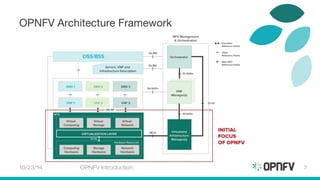
OPNFV Initial Scope 
To provide NFV Infrastructure (NFVI), Virtualized 
Infrastructure Management (VIM), and APIs to other NFV 
elements, which together form the basic infrastructure 
required for Virtualized Network Functions (VNFs) and 
Management and Network Orchestration (MANO) 
components. 
10/23/14 OPNFV Introduction 6
OPNFV Architecture Framework 
10/23/14 OPNFV Introduction 7
Why Open Source? 
• The promise of open source is better quality, higher reliability, 
more flexibility, lower cost and the opportunity to drive open 
standards. 
• Faster, lower cost and higher quality development through 
sharing of resources via collaboration. 
• Community decisions about new features and roadmaps. 
• A common environment for uses and App developers. 
• Ability to focus resources on differentiating development. 
Bottom Line: The open source model 
significantly accelerates consensus, 
delivering high performing, peer-reviewed 
10/23/14 
code that forms a basis for an 
OPNFV Introduction 8 
ecosystem of solutions.
Upstream OSS Projects Integration 
• Work directly with upstream standards bodies (ETSI and 
others) 
• Work directly with upstream open source projects 
(OpenDaylight, OpenStack, KVM and Xen, and many others) 
• Leverage existing codebases 
• Integrate existing open source components 
• Identify gaps to create new code 
• Provide a point of integration, testing and performance 
optimization 
10/23/14 
Result: Best reference 
platform for carrier-grade 
NFV 
OPNFV Introduction 9 
implementations
Ecosystem 
• IT solutions providers 
• Network solutions providers 
• End user network operator 
• Enterprise IT including financial services 
• Cloud services providers 
10/23/14 OPNFV Introduction 10
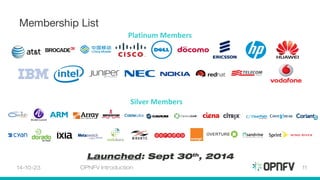
Membership List 
Platinum Members 
Silver Members 
Launched: Sept 30th, 2014 
14-10-23 OPNFV Introduction 11
What Members Are Saying 
• “OPNFV is a unique organization that provides an ecosystem for users to work directly 
with the Open Source development community for an NFV platform” –AT&T 
• “We expect OPNFV to lead the open source development of next generation core 
network elements and application.” –China Mobile 
• “It’s important to Vodafone to advance the state-of-the-art of telecommunications 
networks. OPNFV gives us a vehicle to do just that.” –Vodafone 
• “The time is right for OPNFV, as it brings the industry together to build a common platform 
to drive consistency and adoption.” -Juniper Networks 
• “There are important standards in place for SDN and NFV, as well as a variety of open 
source components. OPNFV will bring these elements together. -Ericsson 
10/23/14 OPNFV Introduction 12
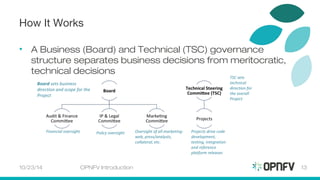
How It Works 
• A Business (Board) and Technical (TSC) governance 
structure separates business decisions from meritocratic, 
technical decisions 
Board sets business 
direction and scope for the 
Project 
10/23/14 
TSC sets 
technical 
direction for 
the overall 
Project 
Financial oversight Policy oversight Oversight of all marketing: 
web, press/analysts, 
collateral, etc. 
Projects drive code 
development, 
testing, integration 
and reference 
platform releases 
OPNFV Introduction 13
Why Join? 
• Showcase your support for a community-driven, open source 
controller platform 
• Accelerate the development of technology available to users 
• Enable widespread adoption of Network Functions Virtualization (NFV) 
• Create an open platform which supports NFV and is carrier grade (meets 
performance, scale & reliability requirements). 
– Take advantage of the innovation in the open source community 
– Coordinate upstream contributions to address gaps for supporting NFV, in current 
open source projects 
– Integrate open source components and develop glue-code to create an E2E 
solution. 
• Drive for faster traction and lower development cost on realizing a carrier 
grade NFV open platform 
– Take advantage of the resource multiplier effect due to multiple company support 
– Improve speed of development and 10/23/14 OPNFV Introduction breadth of features 14
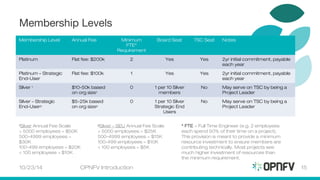
Membership Levels 
Membership Level Annual Fee Minimum 
10/23/14 
FTE* 
Requirement 
Board Seat TSC Seat Notes 
Platinum Flat fee: $200k 2 Yes Yes 2yr initial commitment, payable 
each year 
Platinum – Strategic 
End-User 
Flat fee: $100k 1 Yes Yes 2yr initial commitment, payable 
each year 
Silver 1 $10-50k based 
on org size1 
0 1 per 10 Silver 
members 
No May serve on TSC by being a 
Project Leader 
Silver – Strategic 
End-User2 
$5-25k based 
on org size2 
0 1 per 10 Silver 
Strategic End 
Users 
No May serve on TSC by being a 
Project Leader 
1Silver Annual Fee Scale 
> 5000 employees = $50K 
500-4999 employees = 
$30K 
100-499 employees = $20K 
< 100 employees = $10K 
2Silver – SEU Annual Fee Scale 
> 5000 employees = $25K 
500-4999 employees = $15K 
100-499 employees = $10K 
< 100 employees = $5K 
* FTE = Full Time Engineer (e.g. 2 employees 
each spend 50% of their time on a project). 
This provision is meant to provide a minimum 
resource investment to ensure members are 
contributing technically. Most projects see 
much higher investment of resources than 
the minimum requirement. 
OPNFV Introduction 15
OPNFV: An Open Community 
• Open Governance Model 
• Open Technical Decision Making 
• Open Design Discussion 
• Open Source License 
• Open to all 
10/23/14 OPNFV Introduction 16
Next Steps 
• Visit: http://www.opnfv.org/ 
• Read the FAQ 
• Subscribe to the newsletter 
• Join the conversation on the mailing lists and social 
media 
• Access our developer tools 
• Join as member 
10/23/14 OPNFV Introduction 17
10/23/14 
Questions? 
Please direct any questions or comments to 
info@opnfv.org 
OPNFV Introduction 18

What is OPNFV? An Introduction

  • 1.
    Introducing Open Platformfor NFV Please direct any questions or comments to info@opnfv.org 1
  • 2.
    Communications Networks Evolving • Growth of data traversing the network • Cloud computing changing the way applications are delivered and consumed • Operators are under pressure to meet demands for services from consumers, enterprises and the Internet of Things • Industry shift towards Software-Defined Networking and Network Functions Virtualization 10/23/14 OPNFV Introduction 2
  • 3.
    Industry Needs •Flexibility, efficiency, new service offerings • Cloud-based delivery models • Dynamic bandwidth allocation • Common standards for core network elements • Integration of existing open source NFV building blocks • Ecosystem collaboration, coordination and testing • Carrier-grade service performance 10/23/14 OPNFV Introduction 3
  • 4.
    OPNFV is acarrier-grade, integrated, open source reference platform for NFV 10/23/14 OPNFV Introduction 4
  • 5.
    OPNFV Project Goals • Develop an integrated and tested open source platform that can be used to build NFV functionality, accelerating the introduction of new products and services • Include participation of leading end users to validate OPNFV meets the needs of user community • Contribute to and participate in relevant open source projects that will be leveraged in the OPNFV platform; ensure consistency, performance and interoperability among open source components • Establish an ecosystem for NFV solutions based on open standards and software • Promote OPNFV as the preferred open reference platform 10/23/14 OPNFV Introduction 5
  • 6.
    OPNFV Initial Scope To provide NFV Infrastructure (NFVI), Virtualized Infrastructure Management (VIM), and APIs to other NFV elements, which together form the basic infrastructure required for Virtualized Network Functions (VNFs) and Management and Network Orchestration (MANO) components. 10/23/14 OPNFV Introduction 6
  • 7.
    OPNFV Architecture Framework 10/23/14 OPNFV Introduction 7
  • 8.
    Why Open Source? • The promise of open source is better quality, higher reliability, more flexibility, lower cost and the opportunity to drive open standards. • Faster, lower cost and higher quality development through sharing of resources via collaboration. • Community decisions about new features and roadmaps. • A common environment for uses and App developers. • Ability to focus resources on differentiating development. Bottom Line: The open source model significantly accelerates consensus, delivering high performing, peer-reviewed 10/23/14 code that forms a basis for an OPNFV Introduction 8 ecosystem of solutions.
  • 9.
    Upstream OSS ProjectsIntegration • Work directly with upstream standards bodies (ETSI and others) • Work directly with upstream open source projects (OpenDaylight, OpenStack, KVM and Xen, and many others) • Leverage existing codebases • Integrate existing open source components • Identify gaps to create new code • Provide a point of integration, testing and performance optimization 10/23/14 Result: Best reference platform for carrier-grade NFV OPNFV Introduction 9 implementations
  • 10.
    Ecosystem • ITsolutions providers • Network solutions providers • End user network operator • Enterprise IT including financial services • Cloud services providers 10/23/14 OPNFV Introduction 10
  • 11.
    Membership List PlatinumMembers Silver Members Launched: Sept 30th, 2014 14-10-23 OPNFV Introduction 11
  • 12.
    What Members AreSaying • “OPNFV is a unique organization that provides an ecosystem for users to work directly with the Open Source development community for an NFV platform” –AT&T • “We expect OPNFV to lead the open source development of next generation core network elements and application.” –China Mobile • “It’s important to Vodafone to advance the state-of-the-art of telecommunications networks. OPNFV gives us a vehicle to do just that.” –Vodafone • “The time is right for OPNFV, as it brings the industry together to build a common platform to drive consistency and adoption.” -Juniper Networks • “There are important standards in place for SDN and NFV, as well as a variety of open source components. OPNFV will bring these elements together. -Ericsson 10/23/14 OPNFV Introduction 12
  • 13.
    How It Works • A Business (Board) and Technical (TSC) governance structure separates business decisions from meritocratic, technical decisions Board sets business direction and scope for the Project 10/23/14 TSC sets technical direction for the overall Project Financial oversight Policy oversight Oversight of all marketing: web, press/analysts, collateral, etc. Projects drive code development, testing, integration and reference platform releases OPNFV Introduction 13
  • 14.
    Why Join? •Showcase your support for a community-driven, open source controller platform • Accelerate the development of technology available to users • Enable widespread adoption of Network Functions Virtualization (NFV) • Create an open platform which supports NFV and is carrier grade (meets performance, scale & reliability requirements). – Take advantage of the innovation in the open source community – Coordinate upstream contributions to address gaps for supporting NFV, in current open source projects – Integrate open source components and develop glue-code to create an E2E solution. • Drive for faster traction and lower development cost on realizing a carrier grade NFV open platform – Take advantage of the resource multiplier effect due to multiple company support – Improve speed of development and 10/23/14 OPNFV Introduction breadth of features 14
  • 15.
    Membership Levels MembershipLevel Annual Fee Minimum 10/23/14 FTE* Requirement Board Seat TSC Seat Notes Platinum Flat fee: $200k 2 Yes Yes 2yr initial commitment, payable each year Platinum – Strategic End-User Flat fee: $100k 1 Yes Yes 2yr initial commitment, payable each year Silver 1 $10-50k based on org size1 0 1 per 10 Silver members No May serve on TSC by being a Project Leader Silver – Strategic End-User2 $5-25k based on org size2 0 1 per 10 Silver Strategic End Users No May serve on TSC by being a Project Leader 1Silver Annual Fee Scale > 5000 employees = $50K 500-4999 employees = $30K 100-499 employees = $20K < 100 employees = $10K 2Silver – SEU Annual Fee Scale > 5000 employees = $25K 500-4999 employees = $15K 100-499 employees = $10K < 100 employees = $5K * FTE = Full Time Engineer (e.g. 2 employees each spend 50% of their time on a project). This provision is meant to provide a minimum resource investment to ensure members are contributing technically. Most projects see much higher investment of resources than the minimum requirement. OPNFV Introduction 15
  • 16.
    OPNFV: An OpenCommunity • Open Governance Model • Open Technical Decision Making • Open Design Discussion • Open Source License • Open to all 10/23/14 OPNFV Introduction 16
  • 17.
    Next Steps •Visit: http://www.opnfv.org/ • Read the FAQ • Subscribe to the newsletter • Join the conversation on the mailing lists and social media • Access our developer tools • Join as member 10/23/14 OPNFV Introduction 17
  • 18.
    10/23/14 Questions? Pleasedirect any questions or comments to info@opnfv.org OPNFV Introduction 18