
Being Brave:
Deploying OpenStack from Master
Fatih Degirmenci, Ericsson
Yolanda Robla Mota, RedHat
Markos Chandras, SUSE
• Story so far
• How can we improve?
• Bifrost and OpenStack Ansible
• Current status & Next steps
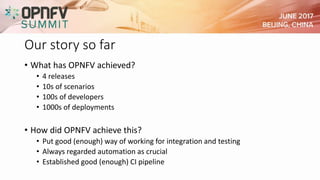
Our story so far
• What has OPNFV achieved?
• 4 releases
• 10s of scenarios
• 100s of developers
• 1000s of deployments
• How did OPNFV achieve this?
• Put good (enough) way of working for integration and testing
• Always regarded automation as crucial
• Established good (enough) CI pipeline
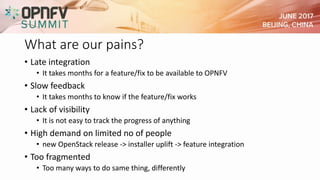
What are our pains?
• Late integration
• It takes months for a feature/fix to be available to OPNFV
• Slow feedback
• It takes months to know if the feature/fix works
• Lack of visibility
• It is not easy to track the progress of anything
• High demand on limited no of people
• new OpenStack release -> installer uplift -> feature integration
• Too fragmented
• Too many ways to do same thing, differently
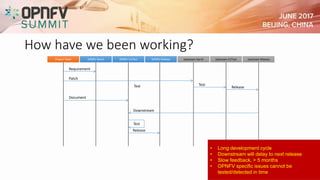
How have we been working?
Project Team OPNFV Gerrit OPNFV CI/Test OPNFV Release Upstream Gerrit Upstream CI/Test Upstream Release
Requirement
Patch
Test
Release
Downstream
Release
Test
Test
Document
• Long development cycle
• Downstream will delay to next release
• Slow feedback, > 5 months
• OPNFV specific issues cannot be
tested/detected in time
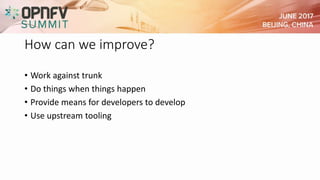
How can we improve?
• Work against trunk
• Do things when things happen
• Provide means for developers to develop
• Use upstream tooling
Enablers
+
bifrost openstack-ansible
Bifrost
• What is it?
• Standalone Ironic
• Tool for provisioning virtual and bare metal machines
• Ansible based
• Supports Ubuntu, Centos, and SUSE
• Easy to use – create inventory, install bifrost, enroll and deploy machines!
• Current Status
• Rock-solid!
• OPNFV runs 3rd Party CI for all the patches!
• Used by OPNFV XCI
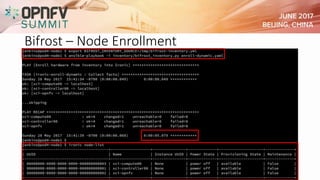
Bifrost – Node Enrollment
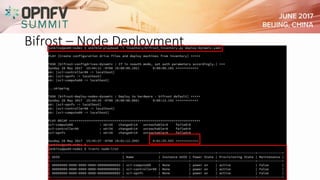
Bifrost – Node Deployment
OpenStack Ansible
• What is it?
• Tool for installing OpenStack
• Containerized (lxc) OpenStack services (or install them on baremetal too)
• Ansible based
• Easy integration – write your own role
• Ability to deploy using patches
• Supports Ubuntu, and Centos
• Current Status
• Possibility to be used for OpenStack gating
• SUSE support is on its way
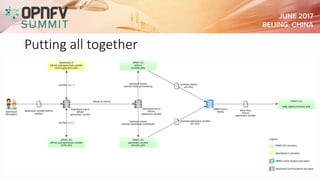
Putting all together
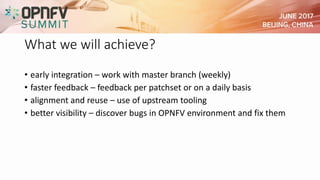
What we will achieve?
• early integration – work with master branch (weekly)
• faster feedback – feedback per patchset or on a daily basis
• alignment and reuse – use of upstream tooling
• better visibility – discover bugs in OPNFV environment and fix them
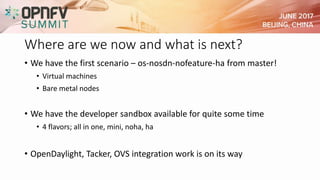
Where are we now and what is next?
• We have the first scenario – os-nosdn-nofeature-ha from master!
• Virtual machines
• Bare metal nodes
• We have the developer sandbox available for quite some time
• 4 flavors; all in one, mini, noha, ha
• OpenDaylight, Tacker, OVS integration work is on its way
QUESTIONS?

Being Brave: Deploying OpenStack from Master

  • 2.
    Being Brave: Deploying OpenStackfrom Master Fatih Degirmenci, Ericsson Yolanda Robla Mota, RedHat Markos Chandras, SUSE
  • 3.
    • Story sofar • How can we improve? • Bifrost and OpenStack Ansible • Current status & Next steps
  • 4.
    Our story sofar • What has OPNFV achieved? • 4 releases • 10s of scenarios • 100s of developers • 1000s of deployments • How did OPNFV achieve this? • Put good (enough) way of working for integration and testing • Always regarded automation as crucial • Established good (enough) CI pipeline
  • 5.
    What are ourpains? • Late integration • It takes months for a feature/fix to be available to OPNFV • Slow feedback • It takes months to know if the feature/fix works • Lack of visibility • It is not easy to track the progress of anything • High demand on limited no of people • new OpenStack release -> installer uplift -> feature integration • Too fragmented • Too many ways to do same thing, differently
  • 6.
    How have webeen working? Project Team OPNFV Gerrit OPNFV CI/Test OPNFV Release Upstream Gerrit Upstream CI/Test Upstream Release Requirement Patch Test Release Downstream Release Test Test Document • Long development cycle • Downstream will delay to next release • Slow feedback, > 5 months • OPNFV specific issues cannot be tested/detected in time
  • 7.
    How can weimprove? • Work against trunk • Do things when things happen • Provide means for developers to develop • Use upstream tooling
  • 8.
  • 9.
    Bifrost • What isit? • Standalone Ironic • Tool for provisioning virtual and bare metal machines • Ansible based • Supports Ubuntu, Centos, and SUSE • Easy to use – create inventory, install bifrost, enroll and deploy machines! • Current Status • Rock-solid! • OPNFV runs 3rd Party CI for all the patches! • Used by OPNFV XCI
  • 10.
    Bifrost – NodeEnrollment
  • 11.
    Bifrost – NodeDeployment
  • 12.
    OpenStack Ansible • Whatis it? • Tool for installing OpenStack • Containerized (lxc) OpenStack services (or install them on baremetal too) • Ansible based • Easy integration – write your own role • Ability to deploy using patches • Supports Ubuntu, and Centos • Current Status • Possibility to be used for OpenStack gating • SUSE support is on its way
  • 13.
  • 14.
    What we willachieve? • early integration – work with master branch (weekly) • faster feedback – feedback per patchset or on a daily basis • alignment and reuse – use of upstream tooling • better visibility – discover bugs in OPNFV environment and fix them
  • 15.
    Where are wenow and what is next? • We have the first scenario – os-nosdn-nofeature-ha from master! • Virtual machines • Bare metal nodes • We have the developer sandbox available for quite some time • 4 flavors; all in one, mini, noha, ha • OpenDaylight, Tacker, OVS integration work is on its way
  • 16.

Editor's Notes

  • #6 Backporting changes are possible for certain projects and in some cases but it is not always possible. It also takes extra effort and time to do that.