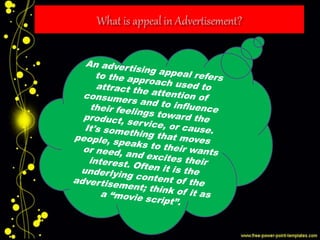
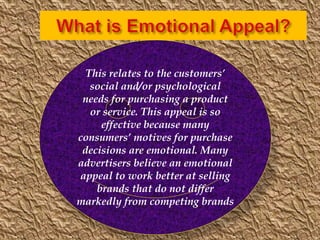
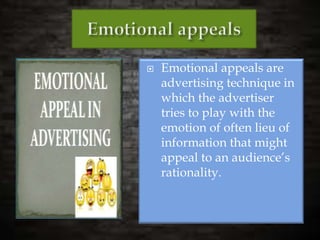
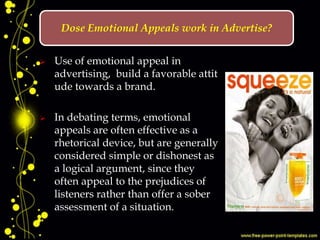
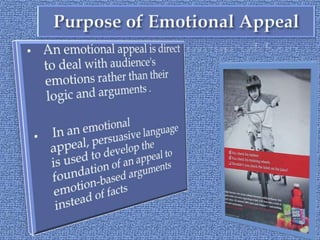
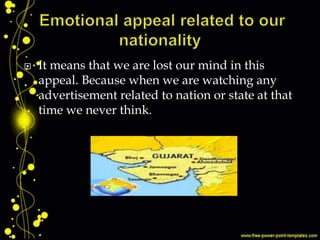
This document discusses emotional appeals in advertising. It defines emotional appeal as a technique where advertisers try to play on audiences' emotions rather than provide rational information. Emotional appeals work by building favorable attitudes towards brands and appealing to prejudices. While effective rhetorically, they are not considered strong logical arguments. The document argues that emotional appeals are often effective because thinking requires more energy than passive states, and people's brains are idle 95% of the time, making them more susceptible to emotional messaging. Advertisers use emotional appeals to touch on audiences' soft spots and desires.