ADVERTISING 
APPEAL 
Submitted by : 
Srishti Sachdeva 
MBA/4539/13
 The approach used to attract the attention of consumers 
and/or to influence their feelings toward the product, 
service, or cause. 
 “Something that moves people, speaks to their wants or 
needs, and excites their interest.”
The reasonable, practical and functional desirability of 
a product or service to a potential consumer. 
It is concerned with an appealing price point and with 
highlighting the benefits of owning the product. 
It encourages consumers to buy or to act on a cognitive 
rather than emotional basis. 
The rational appeal is widely used by small businesses to 
fend off competition.
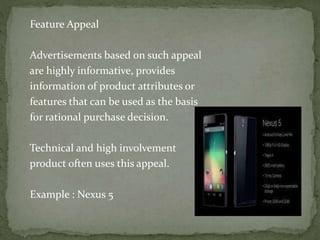
Feature Appeal 
Advertisements based on such appeal 
are highly informative, provides 
information of product attributes or 
features that can be used as the basis 
for rational purchase decision. 
Technical and high involvement 
product often uses this appeal. 
Example : Nexus 5
Competitive Advantage Appeal 
Such appeal is used to compare the product with the 
competitor's product directly or indirectly and 
advertiser try to present his product superior then 
competitor's product on one or more attributes.
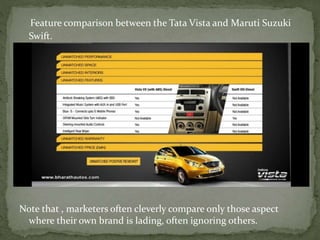
Feature comparison between the Tata Vista and Maruti Suzuki 
Swift. 
Note that , marketers often cleverly compare only those aspect 
where their own brand is lading, often ignoring others.
News Appeal 
In this appeal some type of news or announcements about 
product or company dominates the advertisement. 
This type of appeal can be used for new product or service 
or to inform consumer of significant modifications or 
improvements.
Favorable price appeal 
It makes the price offer the dominant point of the message. 
Price appeal advertising used most often by retailers to 
announce sales, special offers, or low everyday prices. 
Price appeal ads are often used by national advertisers 
during recessionary times.
BHARTI- AXA LIFE insurance in India stresses on the 
low premium for the term insurance
Product / Service Popularity Appeal 
Stress the popularity of a product or service by pointing out 
the number of consumers who use the brand, the number 
who have switched to it, the number of experts who 
recommend it, or its leadership position in the market.
EMOTIONAL 
APPEAL IN 
ADVERTISING
Type of advertising in which the copy is designed to stimulate one's emotions, 
rather than one's sense of the practical or impractical. 
Promotional activity aimed at highlighting emotional factors (such as 
looks, status value, popularity) of a product, instead of the logical 
or practical factors. 
When copywriters use emotional appeal in advertising, they are attempting to 
appeal to the consumer's psychological, social, or emotional needs. 
The copy is written to arouse fear, love, hate, greed, sexual desire, or humor, or 
otherwise create psychological tension that can best be resolved by purchase of 
the product or service.
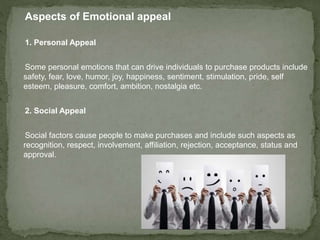
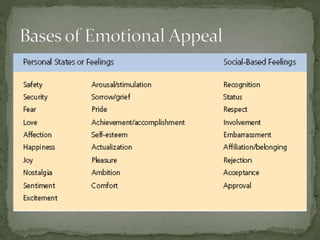
Aspects of Emotional appeal 
1. Personal Appeal 
Some personal emotions that can drive individuals to purchase products include 
safety, fear, love, humor, joy, happiness, sentiment, stimulation, pride, self 
esteem, pleasure, comfort, ambition, nostalgia etc. 
2. Social Appeal 
Social factors cause people to make purchases and include such aspects as 
recognition, respect, involvement, affiliation, rejection, acceptance, status and 
approval.
Hallmark, AT&T, Kodak, and Oscar Mayer often create 
commercials that evoke feelings of warmth, nostalgia, 
and/or sentiment. See this MasterCard ad as an 
example
Another reason for using emotional appeals is to influence 
consumers’ interpretations of their product usage 
experience. 
One way of doing this is through what is known 
as transformational advertising. 
A transformational ad is defined as “one which associates 
the experience of using (consuming) the advertised brand 
with a unique set of psychological characteristics which 
would not typically be associated with the brand 
experience to the same degree without exposure to the 
advertisement.”
In many advertising 
situations the decision facing 
the creative specialist is not 
whether to choose an 
emotional or a rational appeal 
but, rather, determining how to 
combine the two approaches.
Reminder advertising 
 Building brand awareness and/or keeping the brand 
name in front of consumers. 
 Products and services that have a seasonal pattern to 
their consumption also use reminder advertising, 
particularly around the appropriate period. 
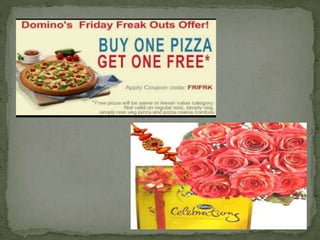
 For example, marketers of candy products often increase 
their media budgets and run reminder advertising 
around Valentine’s Day, Diwali, Raksha Bandhan and 
Christmas.
Teaser advertising 
 Designed to build curiosity, interest, and/or excitement 
about a product or brand by talking about it but not 
actually showing it. 
 They are used by marketer to draw attention to 
upcoming advertising campaigns and generate interest 
and publicity for them.
THANK 
YOU

Advertising appeal ppt

  • 1.
    ADVERTISING APPEAL Submittedby : Srishti Sachdeva MBA/4539/13
  • 2.
     The approachused to attract the attention of consumers and/or to influence their feelings toward the product, service, or cause.  “Something that moves people, speaks to their wants or needs, and excites their interest.”
  • 3.
    The reasonable, practicaland functional desirability of a product or service to a potential consumer. It is concerned with an appealing price point and with highlighting the benefits of owning the product. It encourages consumers to buy or to act on a cognitive rather than emotional basis. The rational appeal is widely used by small businesses to fend off competition.
  • 4.
    Feature Appeal Advertisementsbased on such appeal are highly informative, provides information of product attributes or features that can be used as the basis for rational purchase decision. Technical and high involvement product often uses this appeal. Example : Nexus 5
  • 5.
    Competitive Advantage Appeal Such appeal is used to compare the product with the competitor's product directly or indirectly and advertiser try to present his product superior then competitor's product on one or more attributes.
  • 6.
    Feature comparison betweenthe Tata Vista and Maruti Suzuki Swift. Note that , marketers often cleverly compare only those aspect where their own brand is lading, often ignoring others.
  • 7.
    News Appeal Inthis appeal some type of news or announcements about product or company dominates the advertisement. This type of appeal can be used for new product or service or to inform consumer of significant modifications or improvements.
  • 9.
    Favorable price appeal It makes the price offer the dominant point of the message. Price appeal advertising used most often by retailers to announce sales, special offers, or low everyday prices. Price appeal ads are often used by national advertisers during recessionary times.
  • 10.
    BHARTI- AXA LIFEinsurance in India stresses on the low premium for the term insurance
  • 11.
    Product / ServicePopularity Appeal Stress the popularity of a product or service by pointing out the number of consumers who use the brand, the number who have switched to it, the number of experts who recommend it, or its leadership position in the market.
  • 13.
    EMOTIONAL APPEAL IN ADVERTISING
  • 14.
    Type of advertisingin which the copy is designed to stimulate one's emotions, rather than one's sense of the practical or impractical. Promotional activity aimed at highlighting emotional factors (such as looks, status value, popularity) of a product, instead of the logical or practical factors. When copywriters use emotional appeal in advertising, they are attempting to appeal to the consumer's psychological, social, or emotional needs. The copy is written to arouse fear, love, hate, greed, sexual desire, or humor, or otherwise create psychological tension that can best be resolved by purchase of the product or service.
  • 15.
    Aspects of Emotionalappeal 1. Personal Appeal Some personal emotions that can drive individuals to purchase products include safety, fear, love, humor, joy, happiness, sentiment, stimulation, pride, self esteem, pleasure, comfort, ambition, nostalgia etc. 2. Social Appeal Social factors cause people to make purchases and include such aspects as recognition, respect, involvement, affiliation, rejection, acceptance, status and approval.
  • 18.
    Hallmark, AT&T, Kodak,and Oscar Mayer often create commercials that evoke feelings of warmth, nostalgia, and/or sentiment. See this MasterCard ad as an example
  • 19.
    Another reason forusing emotional appeals is to influence consumers’ interpretations of their product usage experience. One way of doing this is through what is known as transformational advertising. A transformational ad is defined as “one which associates the experience of using (consuming) the advertised brand with a unique set of psychological characteristics which would not typically be associated with the brand experience to the same degree without exposure to the advertisement.”
  • 20.
    In many advertising situations the decision facing the creative specialist is not whether to choose an emotional or a rational appeal but, rather, determining how to combine the two approaches.
  • 21.
    Reminder advertising Building brand awareness and/or keeping the brand name in front of consumers.  Products and services that have a seasonal pattern to their consumption also use reminder advertising, particularly around the appropriate period.  For example, marketers of candy products often increase their media budgets and run reminder advertising around Valentine’s Day, Diwali, Raksha Bandhan and Christmas.
  • 23.
    Teaser advertising Designed to build curiosity, interest, and/or excitement about a product or brand by talking about it but not actually showing it.  They are used by marketer to draw attention to upcoming advertising campaigns and generate interest and publicity for them.
  • 25.