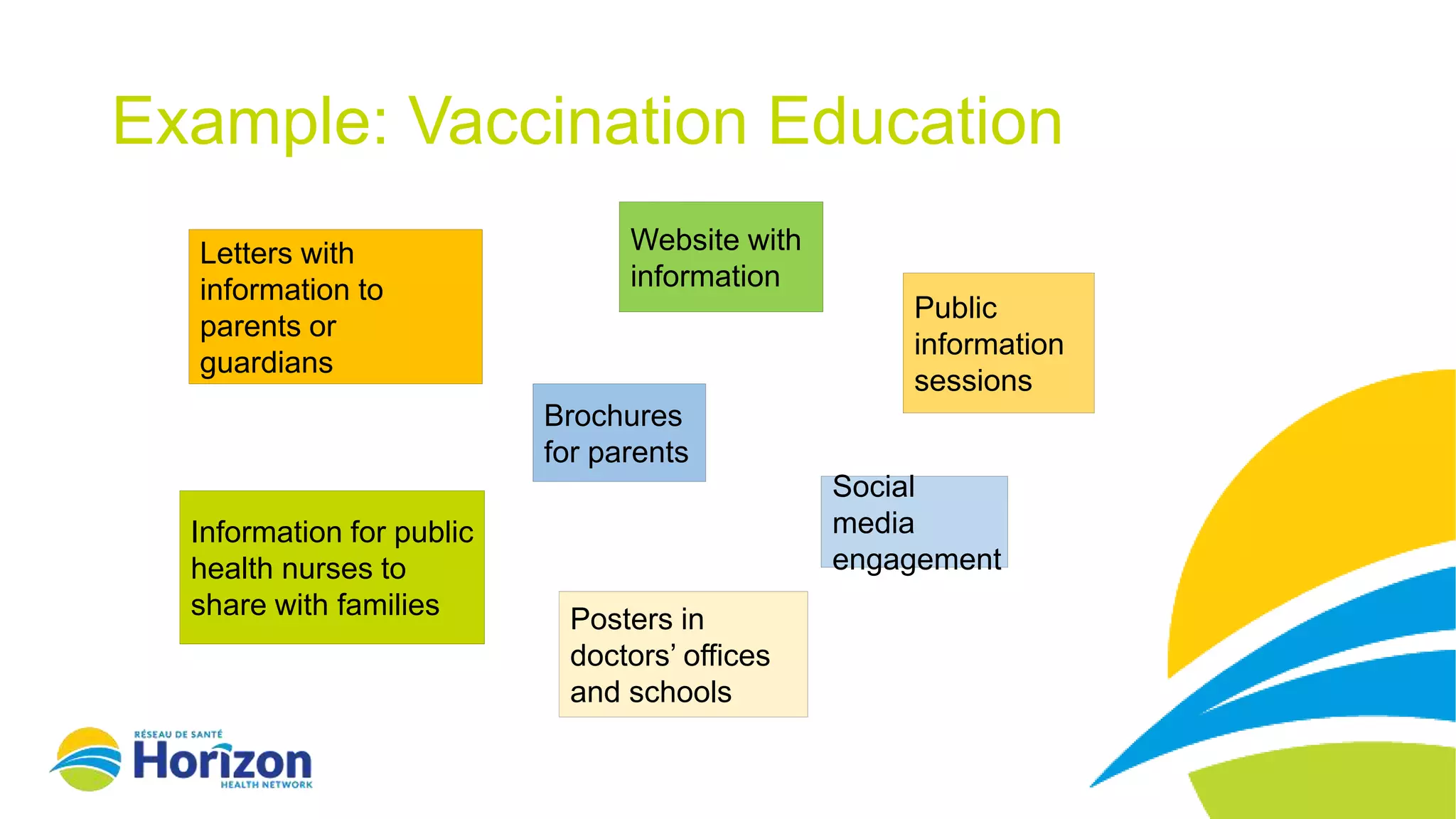
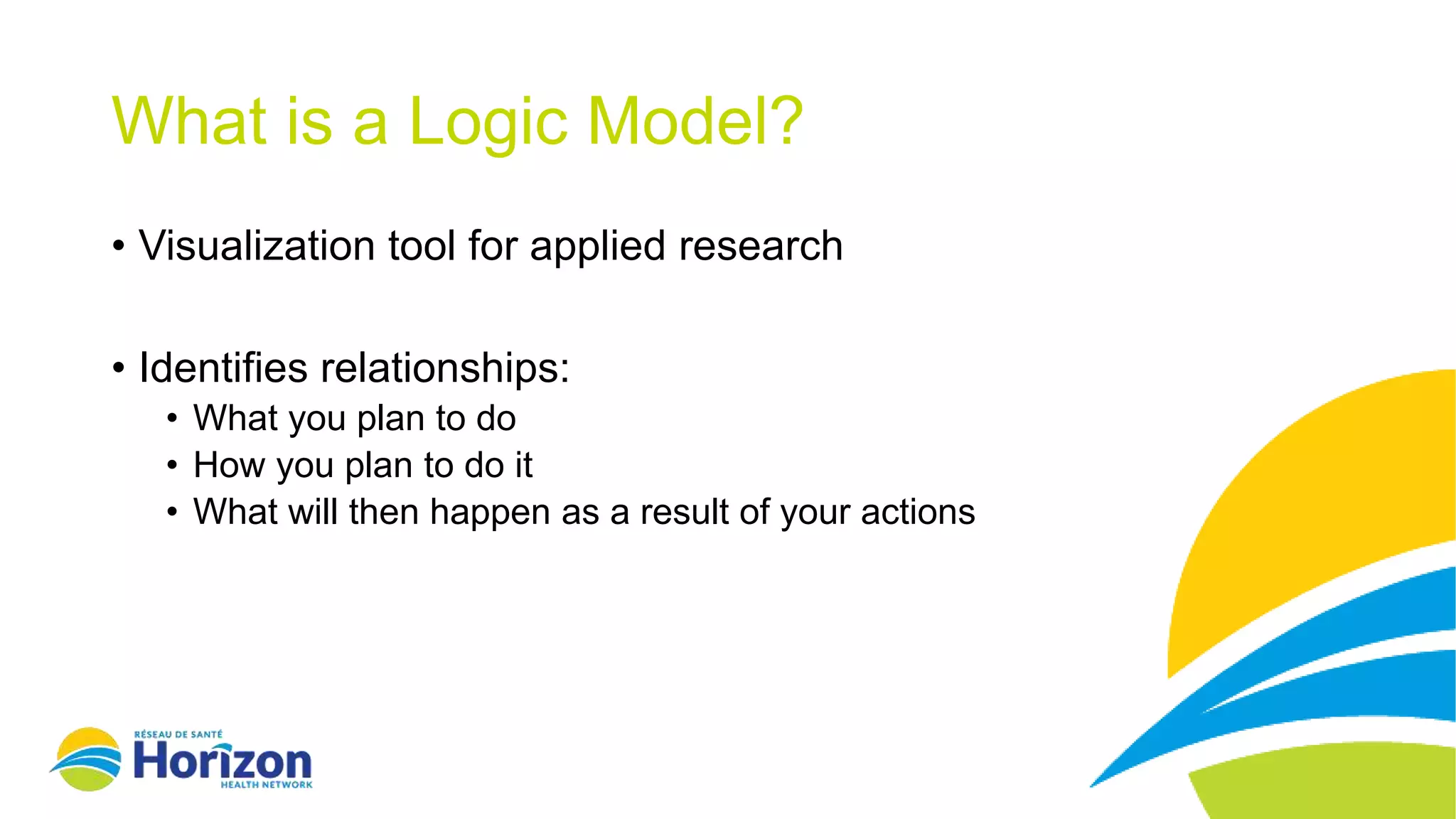
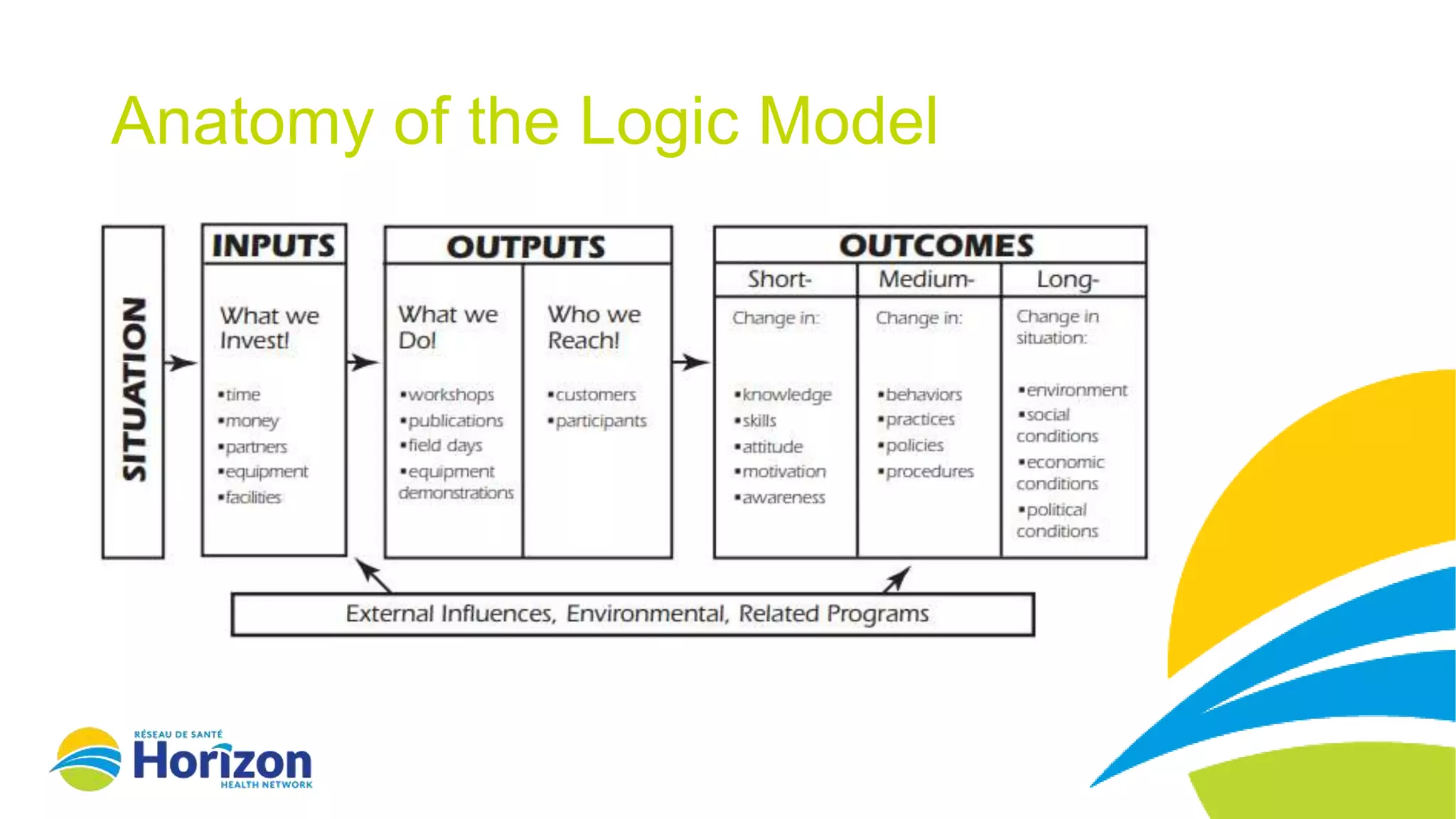
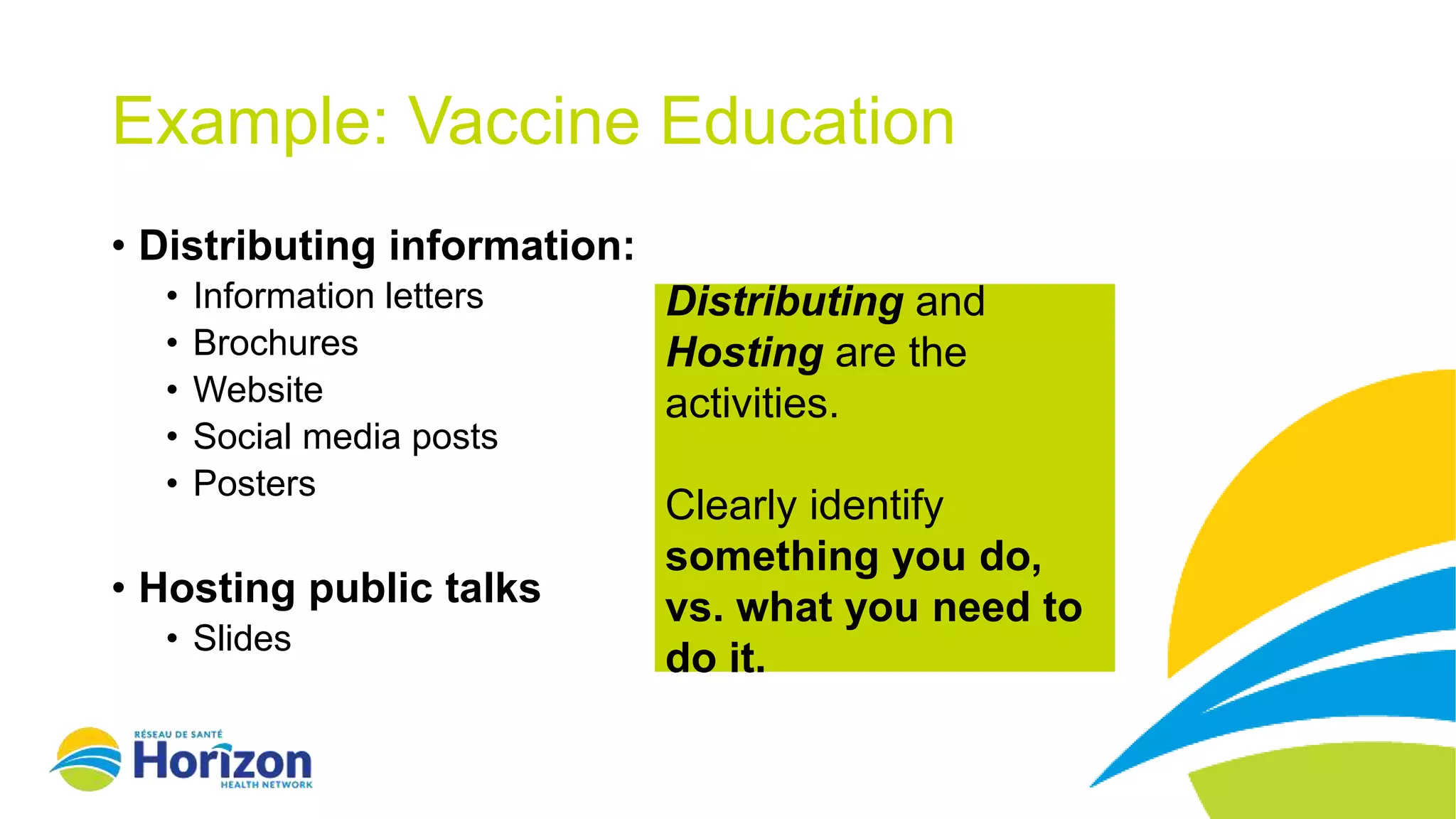
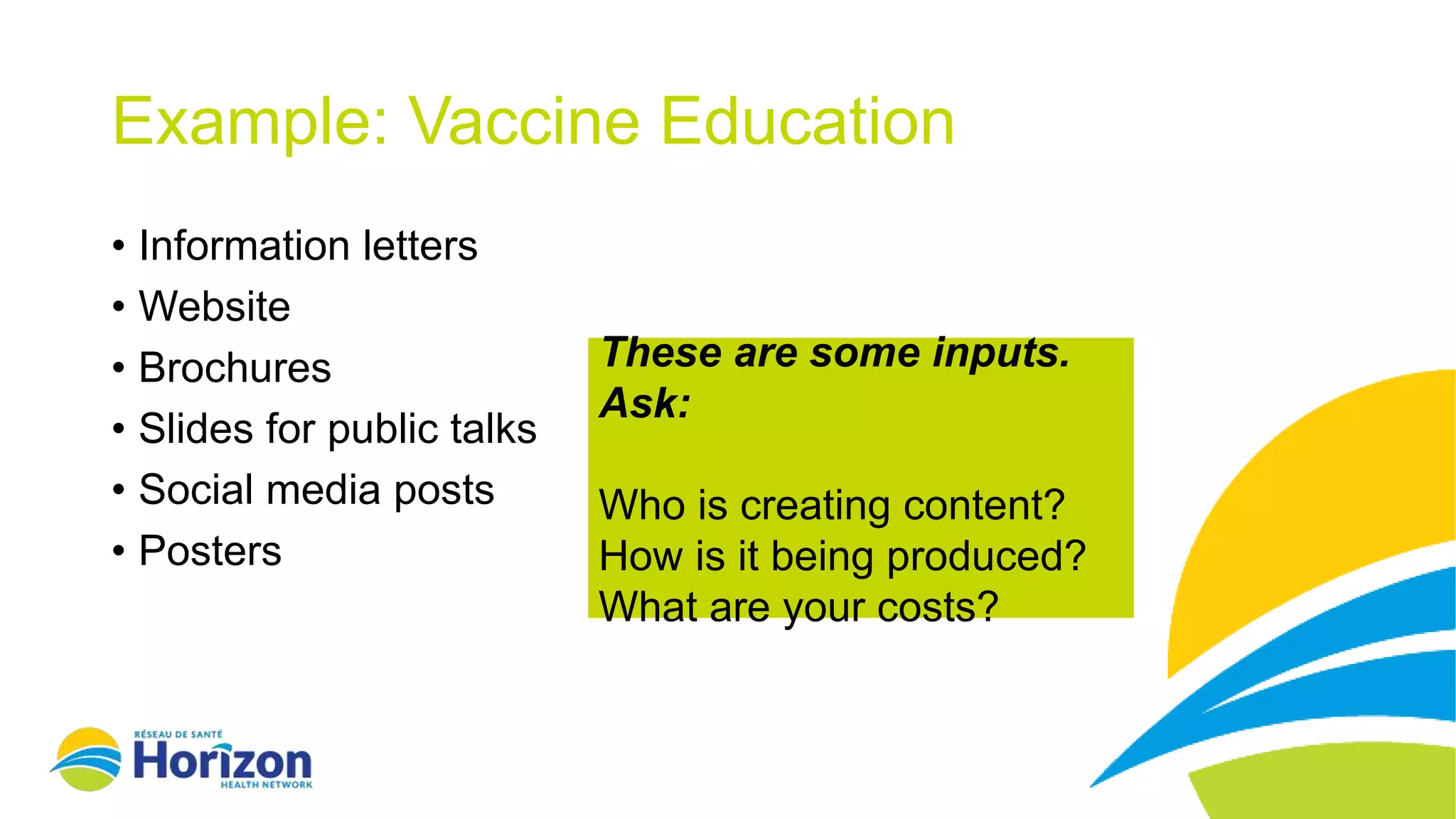
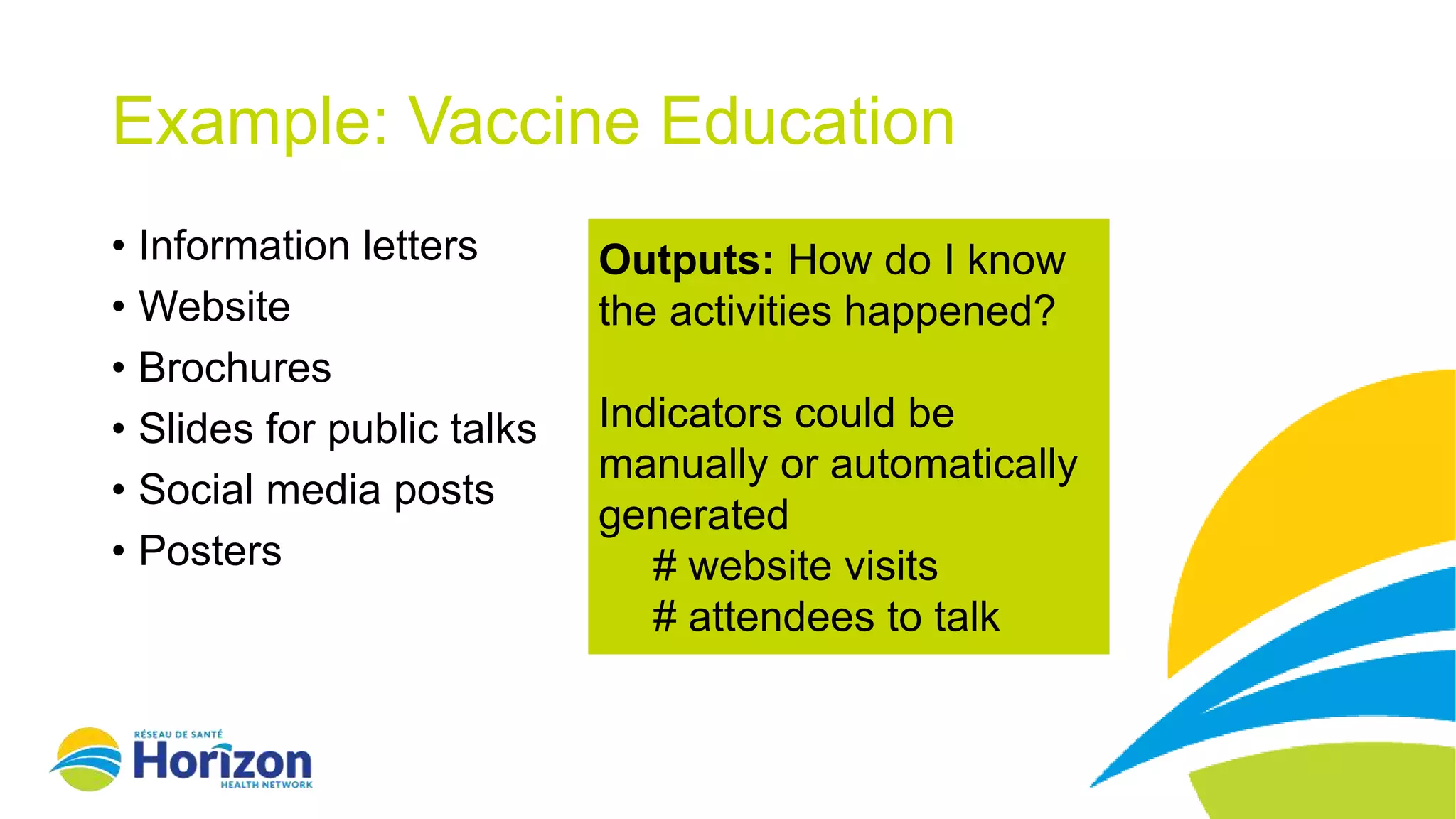
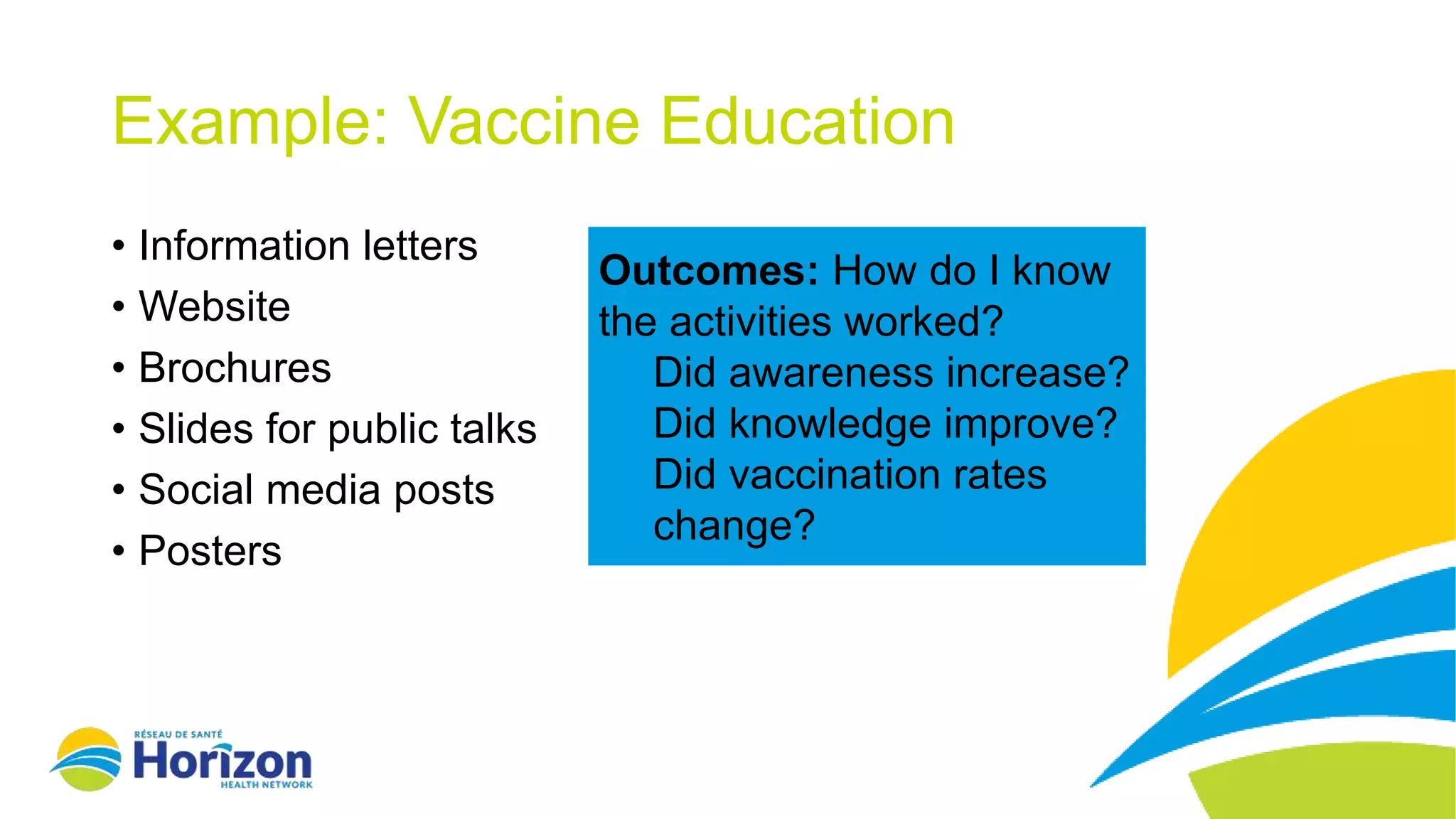
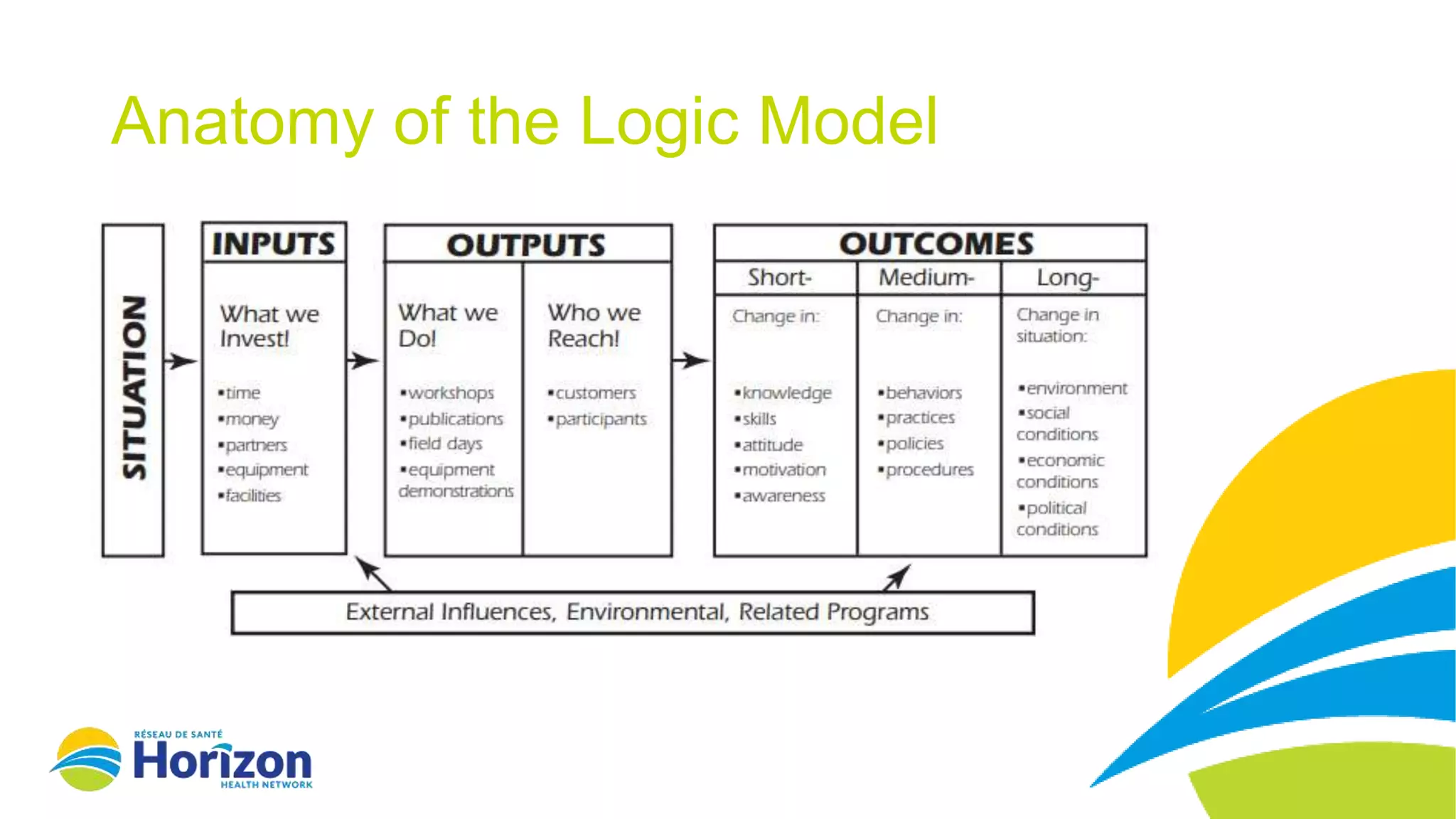
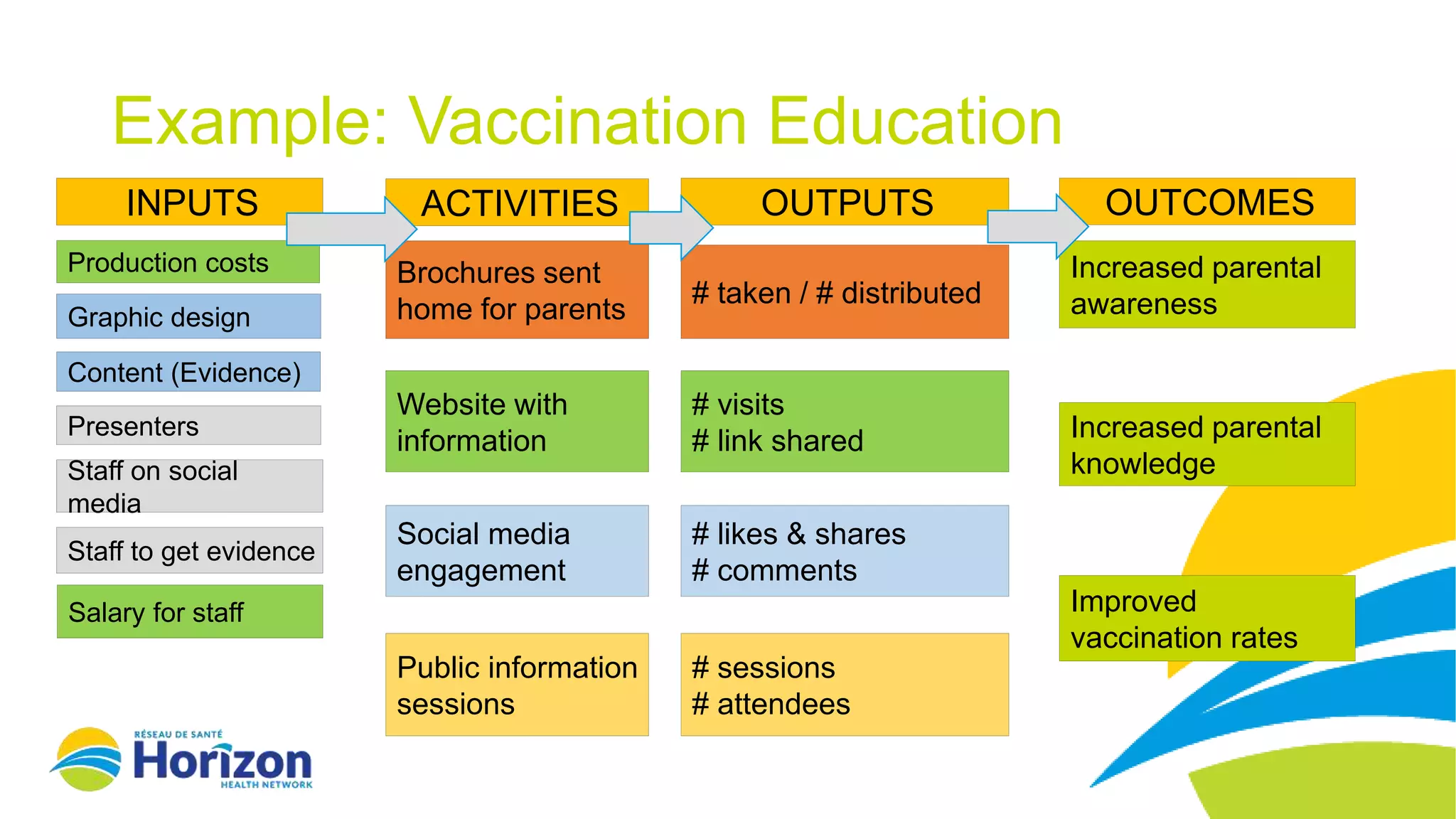
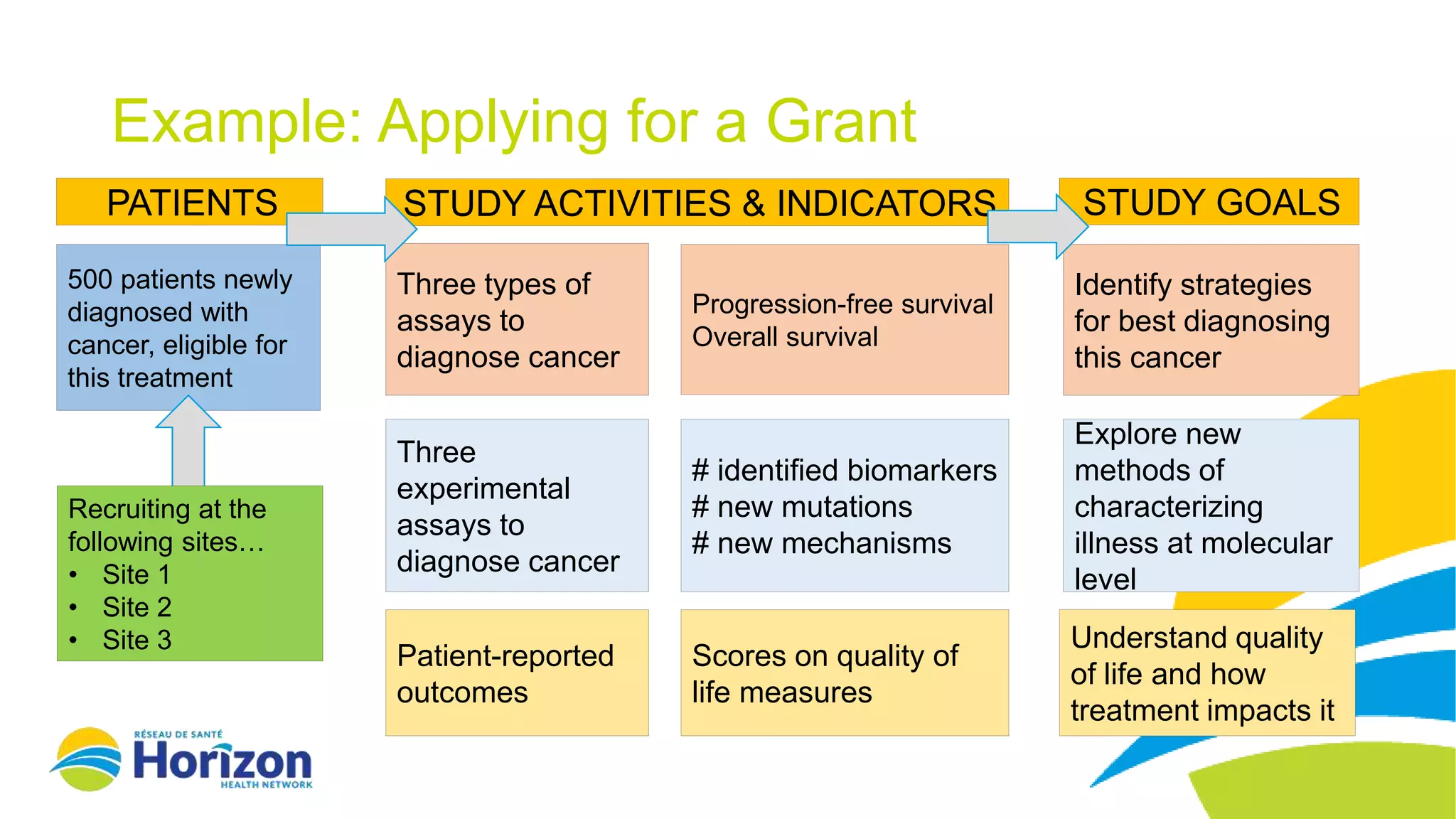
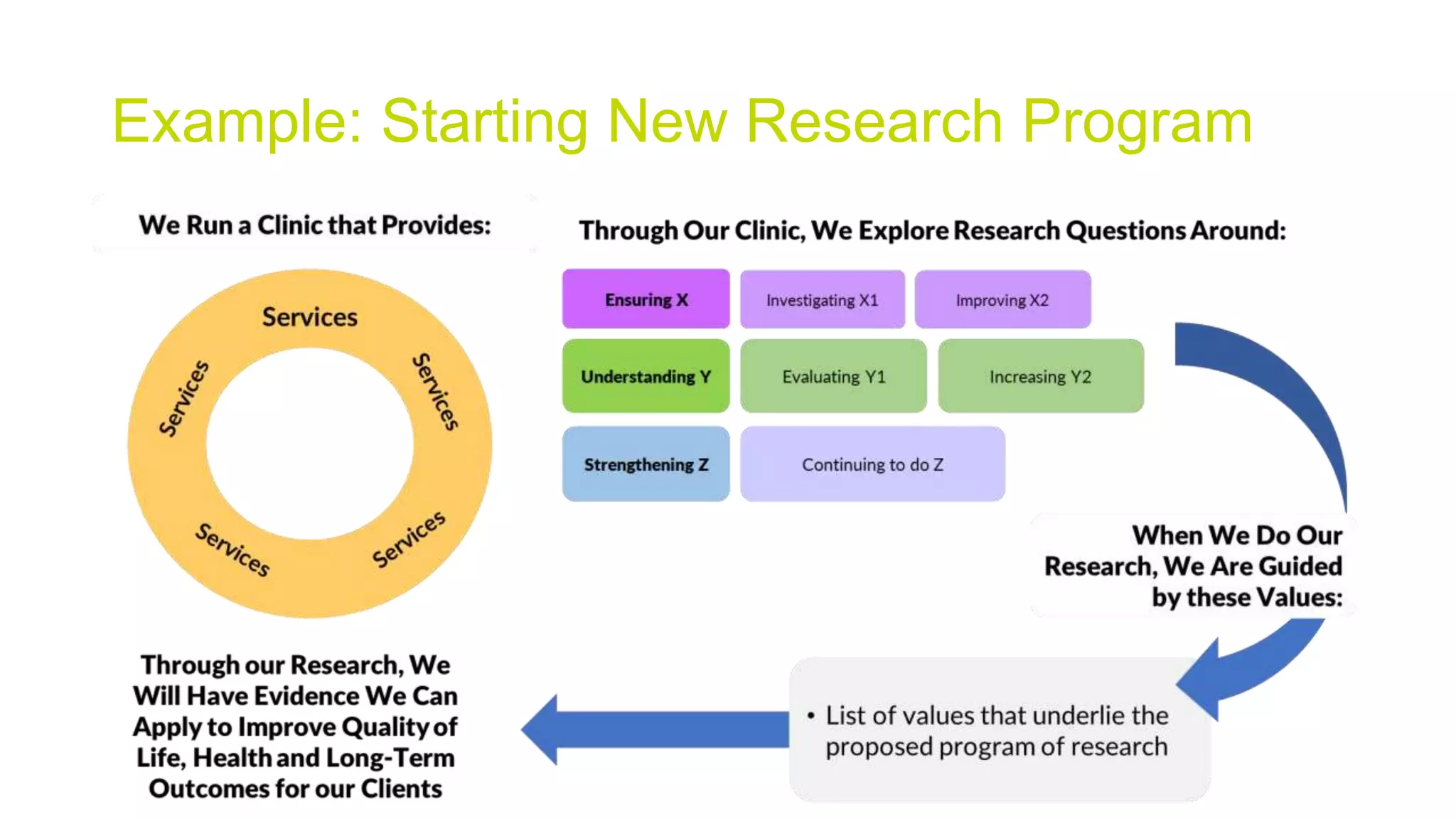
This document explains the concept of a logic model as a visualization tool for organizing and managing health research. It outlines the components of a logic model, including activities, inputs, outputs, outcomes, and assumptions, using examples like vaccine education initiatives. The document also provides resources for building logic models and emphasizes their role in identifying gaps, course correction, and enhancing knowledge translation.