is for: objective, output, &
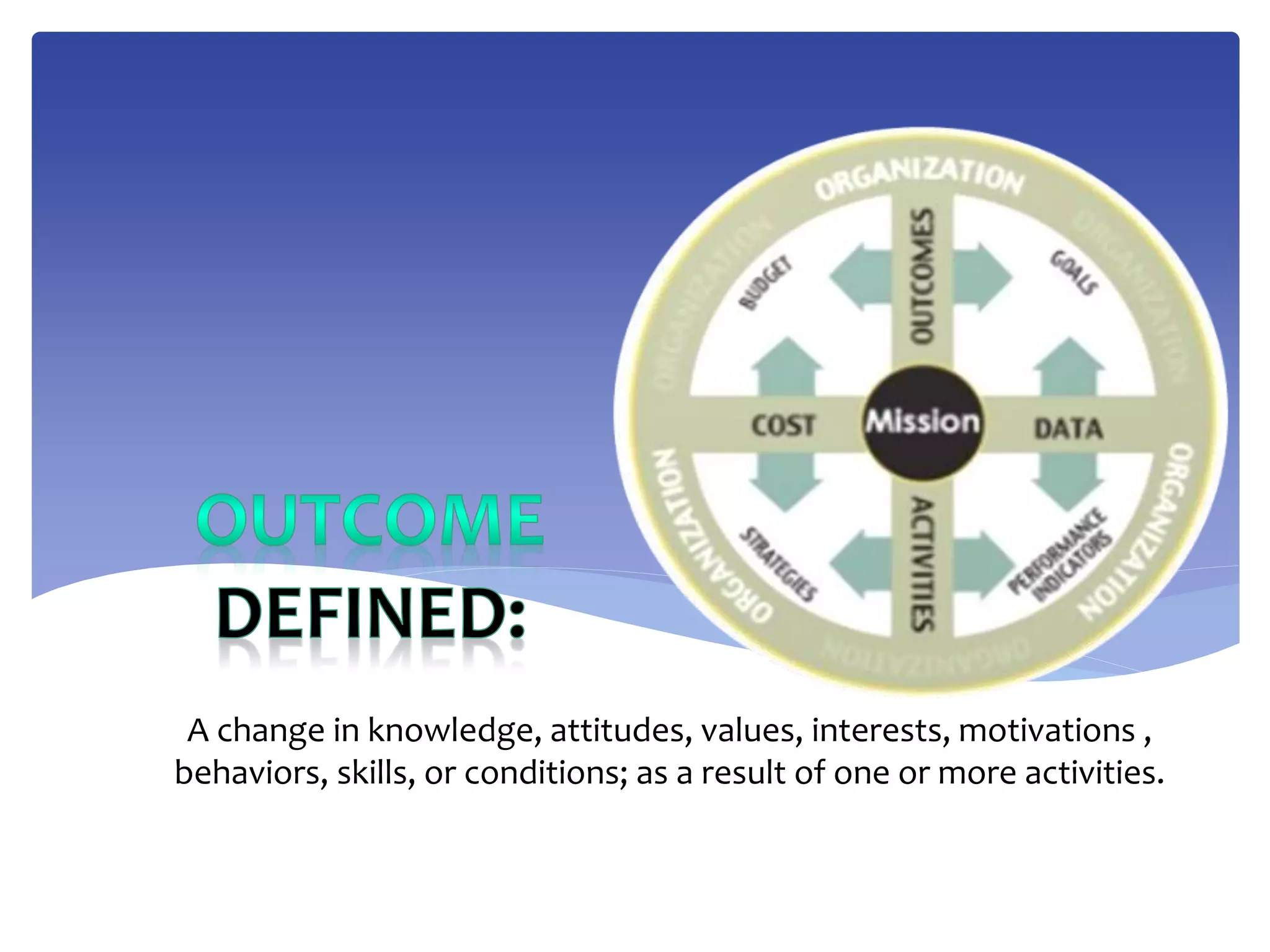
A change in knowledge, attitudes, values, interests, motivations ,
behaviors, skills, or conditions; as a result of one or more activities.
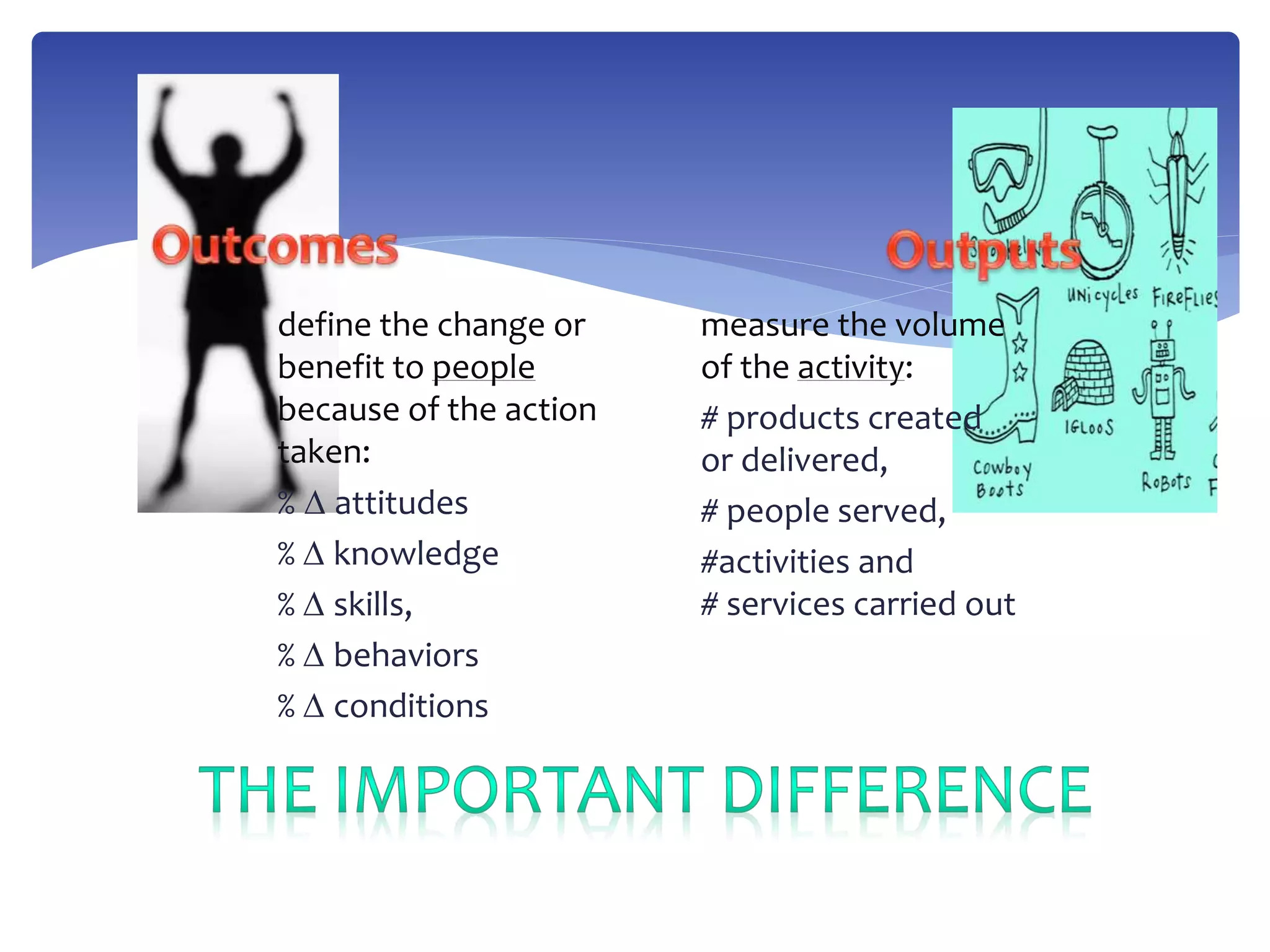
define the change or
benefit to people
because of the action
taken:
% D attitudes
% D knowledge
% D skills,
% D behaviors
% D conditions
measure the volume
of the activity:
# products created
or delivered,
# people served,
#activities and
# services carried out
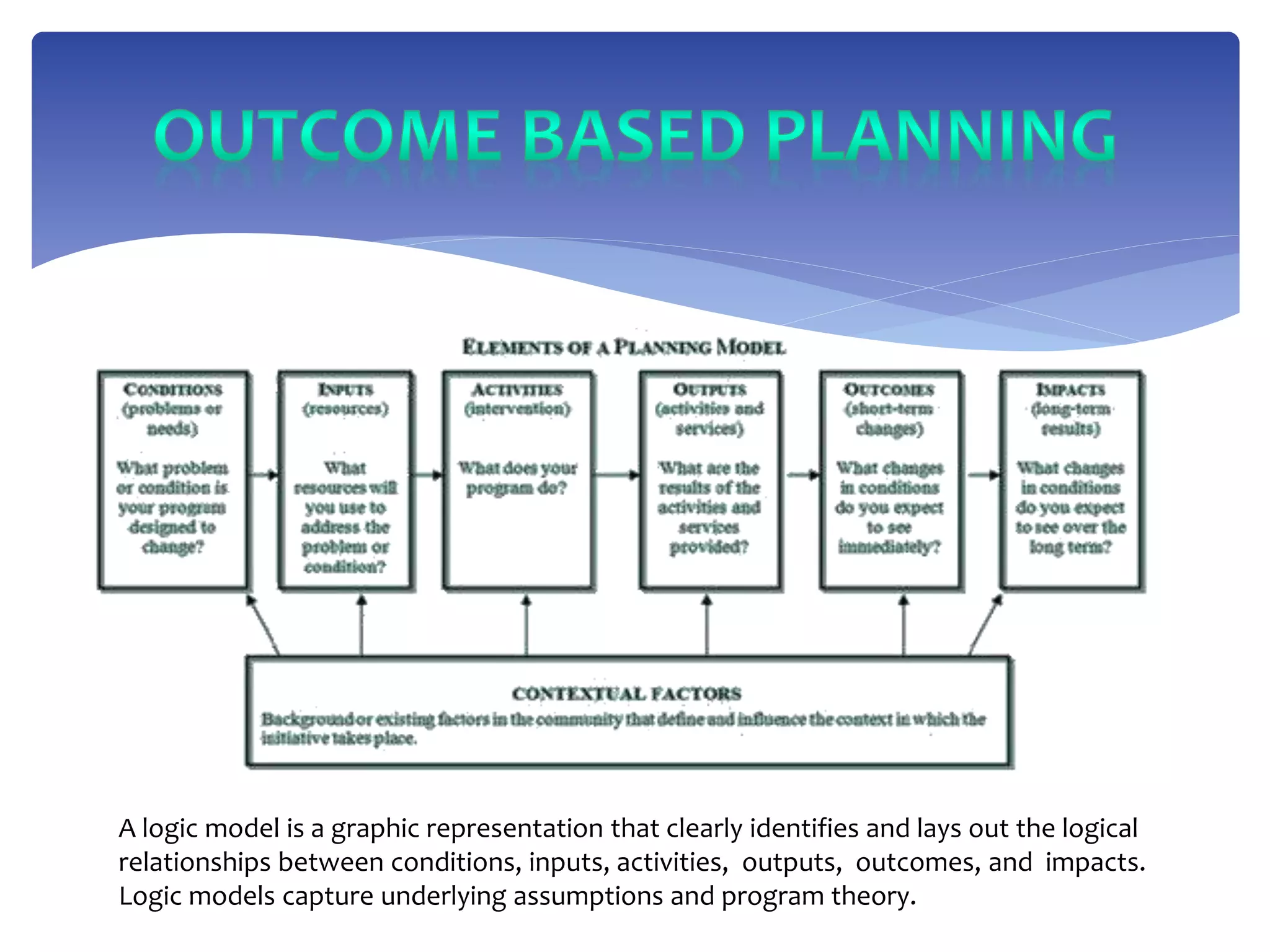
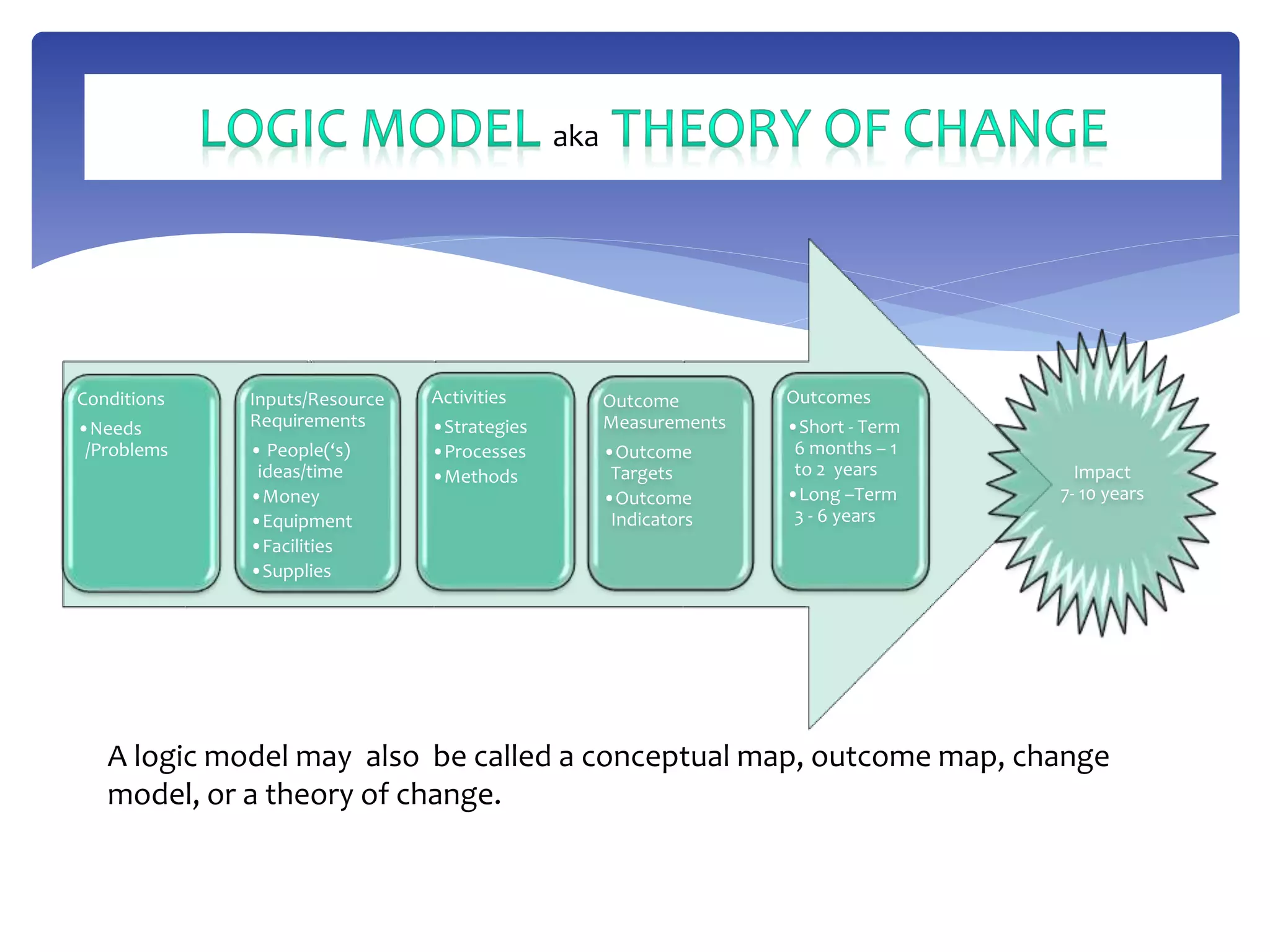
A logic model is a graphic representation that clearly identifies and lays out the logical
relationships between conditions, inputs, activities, outputs, outcomes, and impacts.
Logic models capture underlying assumptions and program theory.
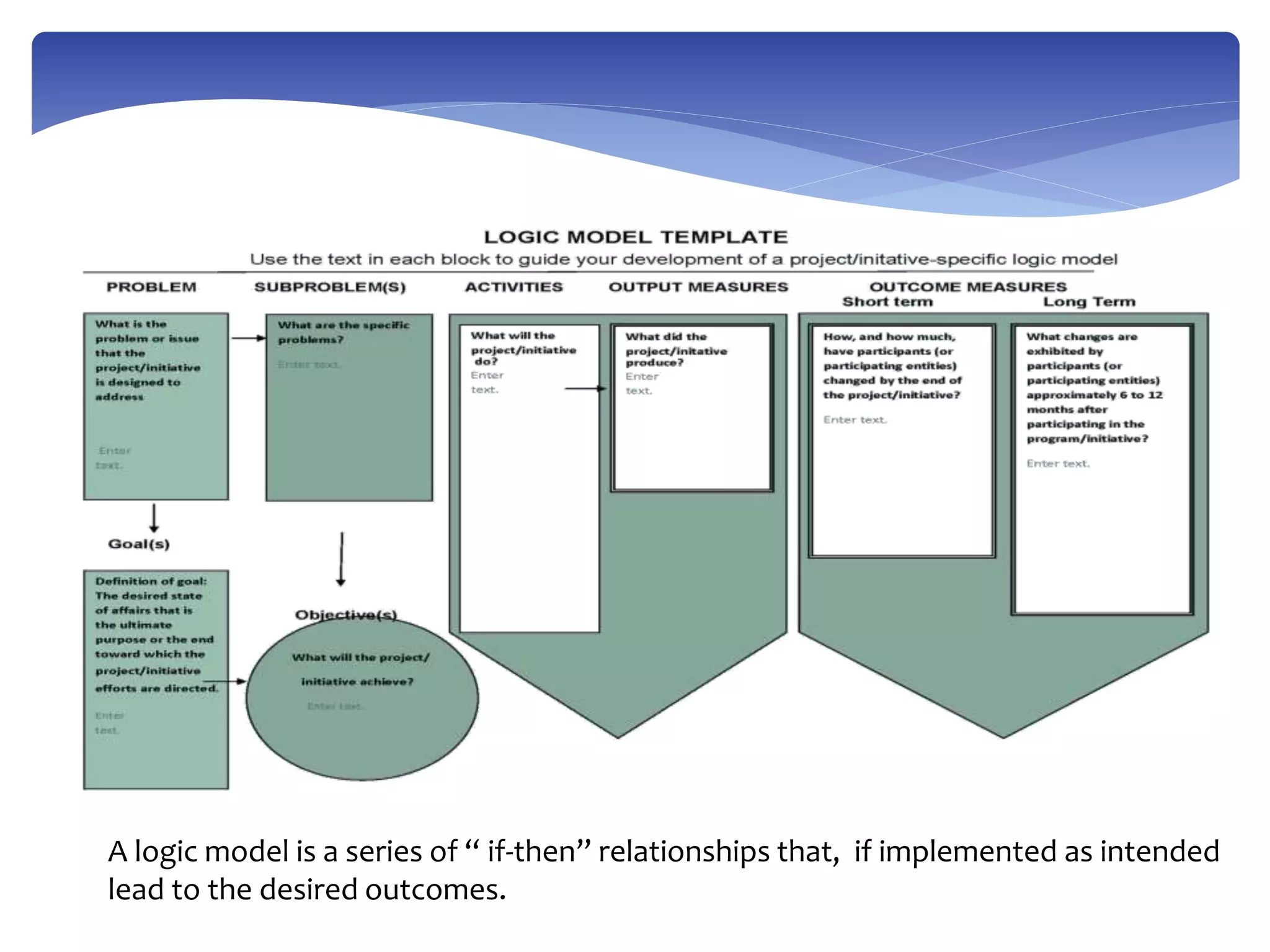
A logic model is a series of “ if-then” relationships that, if implemented as intended
lead to the desired outcomes.
KISS
keep it simple
sugar
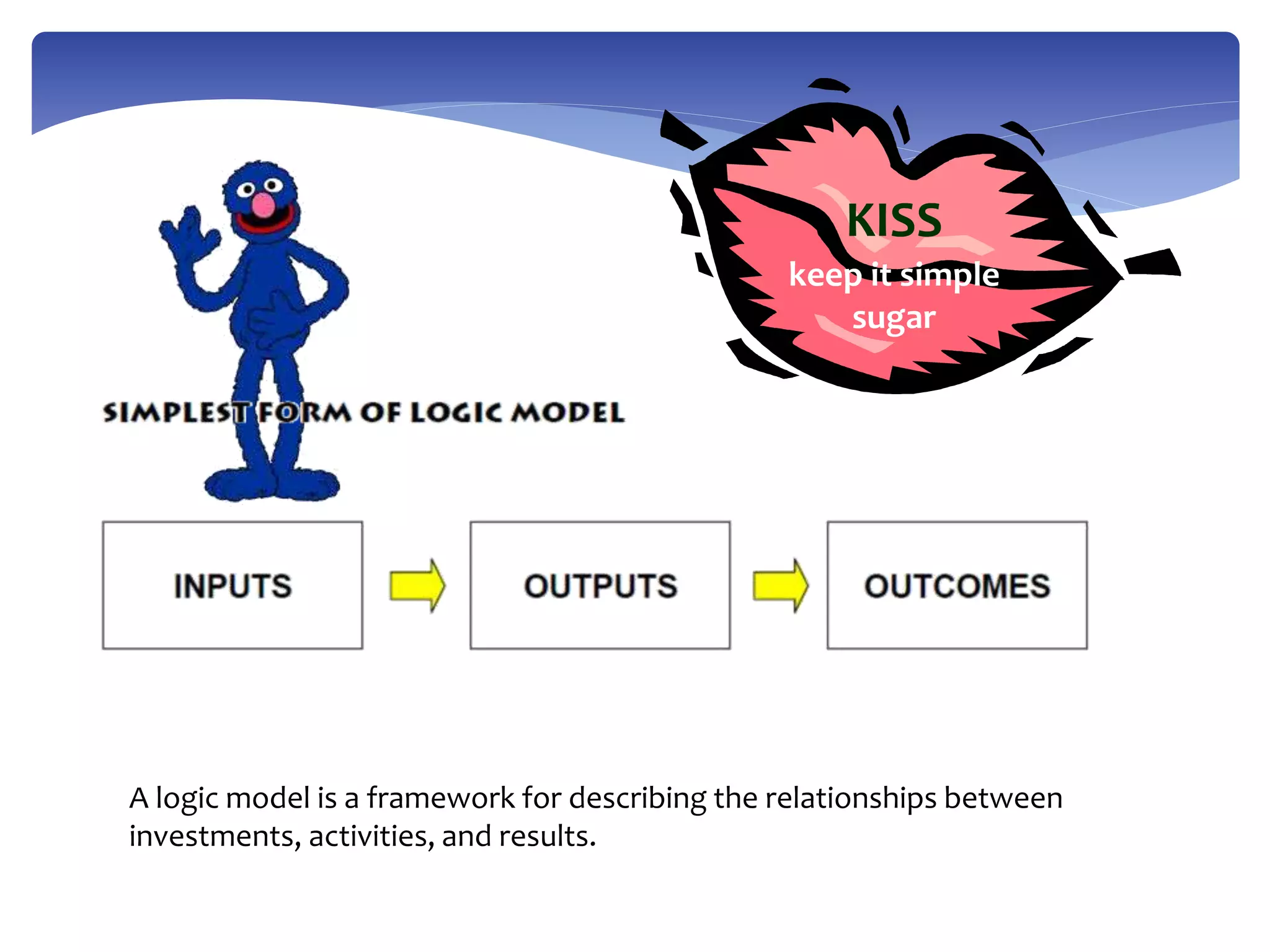
A logic model is a framework for describing the relationships between
investments, activities, and results.
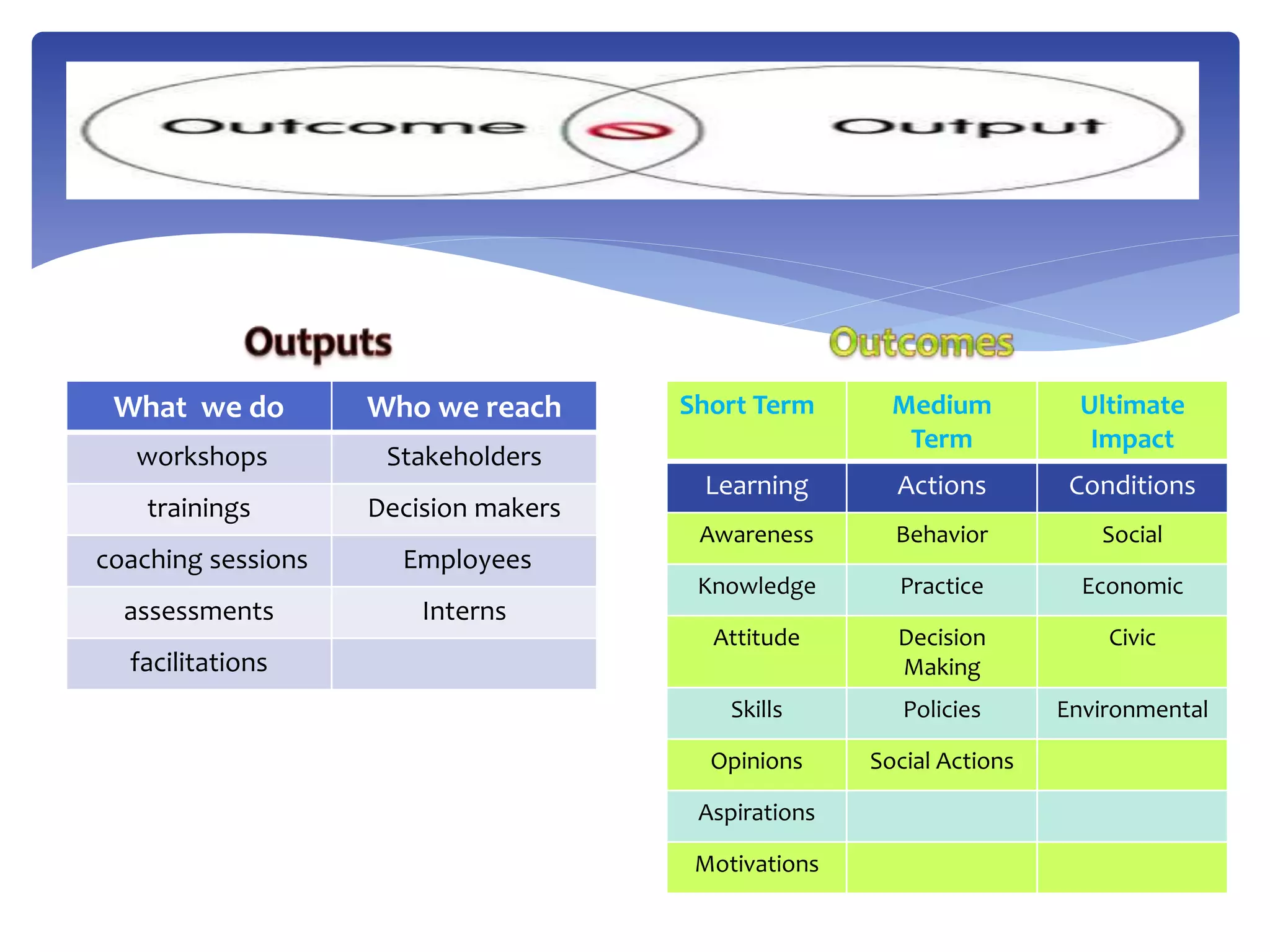
Short Term Medium
Term
Ultimate
Impact
Learning Actions Conditions
Awareness Behavior Social
Knowledge Practice Economic
Attitude Decision
Making
Civic
Skills Policies Environmental
Opinions Social Actions
Aspirations
Motivations
What we do Who we reach
workshops Stakeholders
trainings Decision makers
coaching sessions Employees
assessments Interns
facilitations
Conditions
•Needs
/Problems
Activities
•Strategies
•Processes
•Methods
Inputs/Resource
Requirements
• People(‘s)
ideas/time
•Money
•Equipment
•Facilities
•Supplies
Outcomes
•Short - Term
6 months – 1
to 2 years
•Long –Term
3 - 6 years
Outcome
Measurements
•Outcome
Targets
•Outcome
Indicators
Impact
7- 10 years
aka
A logic model may also be called a conceptual map, outcome map, change
model, or a theory of change.
6
Subjects Explored
outcomes, outputs, logic models- as
planning tools for change initiatives.
Some Ways to Apply Information
• Use as framework to relate and
reference relationships.
• Predetermine outcomes a/o output
indicators for effectiveness.
• Develop team goals and activities.
• Use to develop logic models for
grant/proposal submissions.

The ABCs of Outcome Based Evaluation

  • 3.
  • 4.
    A change inknowledge, attitudes, values, interests, motivations , behaviors, skills, or conditions; as a result of one or more activities.
  • 5.
    define the changeor benefit to people because of the action taken: % D attitudes % D knowledge % D skills, % D behaviors % D conditions measure the volume of the activity: # products created or delivered, # people served, #activities and # services carried out
  • 6.
    A logic modelis a graphic representation that clearly identifies and lays out the logical relationships between conditions, inputs, activities, outputs, outcomes, and impacts. Logic models capture underlying assumptions and program theory.
  • 7.
    A logic modelis a series of “ if-then” relationships that, if implemented as intended lead to the desired outcomes.
  • 8.
    KISS keep it simple sugar Alogic model is a framework for describing the relationships between investments, activities, and results.
  • 9.
    Short Term Medium Term Ultimate Impact LearningActions Conditions Awareness Behavior Social Knowledge Practice Economic Attitude Decision Making Civic Skills Policies Environmental Opinions Social Actions Aspirations Motivations What we do Who we reach workshops Stakeholders trainings Decision makers coaching sessions Employees assessments Interns facilitations
  • 10.
    Conditions •Needs /Problems Activities •Strategies •Processes •Methods Inputs/Resource Requirements • People(‘s) ideas/time •Money •Equipment •Facilities •Supplies Outcomes •Short -Term 6 months – 1 to 2 years •Long –Term 3 - 6 years Outcome Measurements •Outcome Targets •Outcome Indicators Impact 7- 10 years aka A logic model may also be called a conceptual map, outcome map, change model, or a theory of change.
  • 11.
  • 12.
    Subjects Explored outcomes, outputs,logic models- as planning tools for change initiatives. Some Ways to Apply Information • Use as framework to relate and reference relationships. • Predetermine outcomes a/o output indicators for effectiveness. • Develop team goals and activities. • Use to develop logic models for grant/proposal submissions.