Title : Implementation challenges and pragmatic concerns
of a family-based psychosocial intervention to
promote health and mental health among HIV+
early adolescents in health facilities in KwaZulu-
Natal.
The VUKA Family Program
Presenters : Arvin Bhana , PhD
Santhana Gengiah, MA
Sphindile Machanyangwa, Hons
Affiliation : Human and Social Development
Presentation Outline
 Background
 Results from the Pilot study
 Project Aims
 Methods
 The VUKA intervention
 Challenges
 Implementation and Sustainability
Background
 Prior to widespread ARV roll out large numbers of
infants were born HIV infected
 Access to ARVs has led to many HIV+ve children
growing into adolescents
 Effective and sustainable HIV prevention and care
approaches needed to reduce inequalities and
injustices among HIV+ve youth
 Few evidence-based interventions to reduce risk and
promote resilience in adolescents growing up with HIV.
 The VUKA program is an intervention designed to
promote well being of PHIV + youth and their families
VUKA
 VUKA is informed by extensive research and multiple
clinical trials (CHAMP, CHAMP US+ & CHAMP SA)
 One of the few pilot tested prevention interventions for
PHIV+ youth
 Focuses not only on health and behavioral risks but
also on social and contextual factors
 Involving caregivers, lay counselors and will help
towards sustainable implementation of the program
VUKA Pilot Study Data
 Data indicates high levels of feasibility and acceptability
 94% attending >8 of 10 sessions
 32/33 in VUKA condition completed the study
 VUKA participants improved in all psychosocial domains
 Regression analyses showed significant differences
 Reduced child behavior problems and experience of
stigma
VUKA Study Aims
 Identify behavioral , health, and psychosocial risks of
PHIV+ youth in SA
 Examine impact of VUKA on behavioral, health and
psychosocial outcomes
 Investigate how outcomes are mediated by theoretical
constructs in the Social Action Theory model
 Elucidate multi-level factors that influence
implementation and integration of VUKA
Methods
 Study design : Randomized controlled trial
 VUKA vs Standard of care (SOC)
 Eligibility criteria for adolescents
 Total sample size : N=360 HIV +ve adolescents
 Study locations:
- R.K. Khan Hospital
- Prince Mshiyeni Memorial Hospital
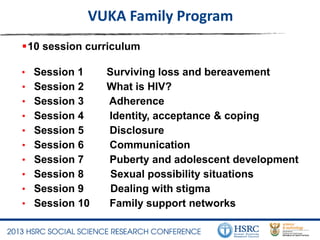
VUKA Family Program
10 session curriculum
• Session 1 Surviving loss and bereavement
• Session 2 What is HIV?
• Session 3 Adherence
• Session 4 Identity, acceptance & coping
• Session 5 Disclosure
• Session 6 Communication
• Session 7 Puberty and adolescent development
• Session 8 Sexual possibility situations
• Session 9 Dealing with stigma
• Session 10 Family support networks
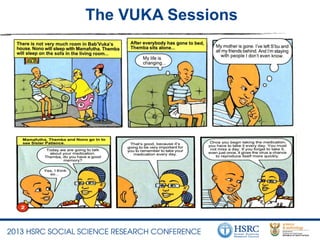
The VUKA Sessions
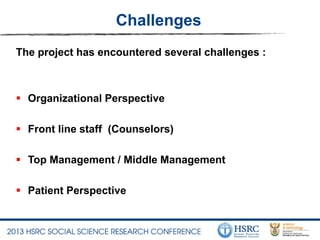
Challenges
The project has encountered several challenges :
 Organizational Perspective
 Front line staff (Counselors)
 Top Management / Middle Management
 Patient Perspective
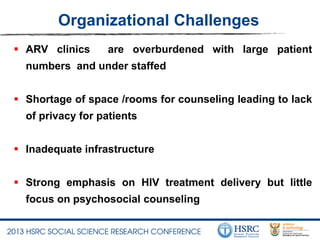
Organizational Challenges
 ARV clinics are overburdened with large patient
numbers and under staffed
 Shortage of space /rooms for counseling leading to lack
of privacy for patients
 Inadequate infrastructure
 Strong emphasis on HIV treatment delivery but little
focus on psychosocial counseling
Frontline Staff Challenges
 Lay counselors expected to perform tasks outside
their scope of practice
 Burnout and demotivation among counselors
 No mentorship or support for counselors to deal with
emotional burden
 Emphasis on meeting target numbers for counseling
Management Challenges
 Emphasize patient numbers
 No incentives for staff
 Aware of issues but unable to make changes
 Not accessible to junior level staff
Patient-level barriers
 Non-disclosure or partial disclosure to children
 HIV/AIDS Stigma
 Poverty & unemployment
 Time required by the intervention
Next steps
 Counselors
- Burnout sessions for counselors
- VUKA training sessions and ongoing repeat training
sessions
- Empowering counselors to facilitate VUKA sessions
- Identify ‘champions’ who will continue with VUKA
 Parents
- Assist with facilitating disclosure
- Implement a more youth –friendly program
(Saturday sessions)
Next steps
 Management
- Continue with keeping Managers informed of the
progress of the study
- Demonstrate effects of the programme to show
effectiveness and feasibility
- Engage with SA DOH for buy in and identification of
more sites
Implementation & Sustainability
 Pilot study demonstrated that VUKA is effective
 Effectiveness and efficacy trials render important
results
 Inadequate research into translating important findings
into practice
 Need to understand what factors need to be
considered and addressed to implement and sustain a
program
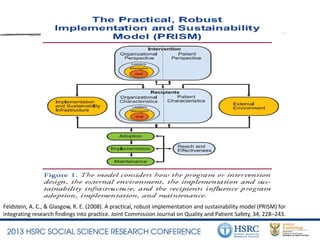
PRISM
 VUKA intervention will be approached using the PRISM
model
 Practical, Robust Implementation and Sustainability
Model (PRISM) is a model for translating research into
practice.
 Attempts to evaluate how the intervention interacts
with the recipients to influence programme adoption,
implementation maintenance, reach and effectiveness.
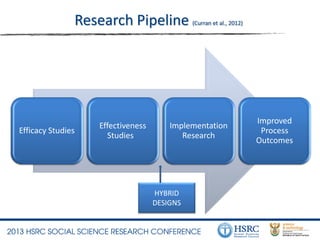
Research Pipeline (Curran et al., 2012)
Efficacy Studies
Effectiveness
Studies
Implementation
Research
Improved
Process
Outcomes
HYBRID
DESIGNS
Feldstein, A. C., & Glasgow, R. E. (2008). A practical, robust implementation and sustainability model (PRISM) for
integrating research findings into practice. Joint Commission Journal on Quality and Patient Safety, 34, 228–243.
Acknowledgement
SA-BASED TEAM
 Arvin Bhana, PhD
 Inge Petersen, PhD
 Meera Chhagan, MD, PhD
 Santhana Gengiah, M.A
 Sphindile Machanyangwa,
Honors
US-BASED TEAM
 Claude Ann Mellins, PhD,
 Mary McKay, PhD
 Danielle Friedman, MPH
 Latoya A. Smalls
US FUNDERS
 National Institutes of
Health (NIH) via New York
University (NYU)
SA DOH SITES
 Outreach Clinic – RK KHAN
Hospital
 Vusithemba ARV Clinic –
PMMH

Sphi's first presentation (2013)HSRC

  • 2.
    Title : Implementationchallenges and pragmatic concerns of a family-based psychosocial intervention to promote health and mental health among HIV+ early adolescents in health facilities in KwaZulu- Natal. The VUKA Family Program Presenters : Arvin Bhana , PhD Santhana Gengiah, MA Sphindile Machanyangwa, Hons Affiliation : Human and Social Development
  • 3.
    Presentation Outline  Background Results from the Pilot study  Project Aims  Methods  The VUKA intervention  Challenges  Implementation and Sustainability
  • 4.
    Background  Prior towidespread ARV roll out large numbers of infants were born HIV infected  Access to ARVs has led to many HIV+ve children growing into adolescents  Effective and sustainable HIV prevention and care approaches needed to reduce inequalities and injustices among HIV+ve youth  Few evidence-based interventions to reduce risk and promote resilience in adolescents growing up with HIV.  The VUKA program is an intervention designed to promote well being of PHIV + youth and their families
  • 5.
    VUKA  VUKA isinformed by extensive research and multiple clinical trials (CHAMP, CHAMP US+ & CHAMP SA)  One of the few pilot tested prevention interventions for PHIV+ youth  Focuses not only on health and behavioral risks but also on social and contextual factors  Involving caregivers, lay counselors and will help towards sustainable implementation of the program
  • 6.
    VUKA Pilot StudyData  Data indicates high levels of feasibility and acceptability  94% attending >8 of 10 sessions  32/33 in VUKA condition completed the study  VUKA participants improved in all psychosocial domains  Regression analyses showed significant differences  Reduced child behavior problems and experience of stigma
  • 7.
    VUKA Study Aims Identify behavioral , health, and psychosocial risks of PHIV+ youth in SA  Examine impact of VUKA on behavioral, health and psychosocial outcomes  Investigate how outcomes are mediated by theoretical constructs in the Social Action Theory model  Elucidate multi-level factors that influence implementation and integration of VUKA
  • 8.
    Methods  Study design: Randomized controlled trial  VUKA vs Standard of care (SOC)  Eligibility criteria for adolescents  Total sample size : N=360 HIV +ve adolescents  Study locations: - R.K. Khan Hospital - Prince Mshiyeni Memorial Hospital
  • 9.
    VUKA Family Program 10session curriculum • Session 1 Surviving loss and bereavement • Session 2 What is HIV? • Session 3 Adherence • Session 4 Identity, acceptance & coping • Session 5 Disclosure • Session 6 Communication • Session 7 Puberty and adolescent development • Session 8 Sexual possibility situations • Session 9 Dealing with stigma • Session 10 Family support networks
  • 10.
  • 11.
    Challenges The project hasencountered several challenges :  Organizational Perspective  Front line staff (Counselors)  Top Management / Middle Management  Patient Perspective
  • 12.
    Organizational Challenges  ARVclinics are overburdened with large patient numbers and under staffed  Shortage of space /rooms for counseling leading to lack of privacy for patients  Inadequate infrastructure  Strong emphasis on HIV treatment delivery but little focus on psychosocial counseling
  • 13.
    Frontline Staff Challenges Lay counselors expected to perform tasks outside their scope of practice  Burnout and demotivation among counselors  No mentorship or support for counselors to deal with emotional burden  Emphasis on meeting target numbers for counseling
  • 14.
    Management Challenges  Emphasizepatient numbers  No incentives for staff  Aware of issues but unable to make changes  Not accessible to junior level staff
  • 15.
    Patient-level barriers  Non-disclosureor partial disclosure to children  HIV/AIDS Stigma  Poverty & unemployment  Time required by the intervention
  • 16.
    Next steps  Counselors -Burnout sessions for counselors - VUKA training sessions and ongoing repeat training sessions - Empowering counselors to facilitate VUKA sessions - Identify ‘champions’ who will continue with VUKA  Parents - Assist with facilitating disclosure - Implement a more youth –friendly program (Saturday sessions)
  • 17.
    Next steps  Management -Continue with keeping Managers informed of the progress of the study - Demonstrate effects of the programme to show effectiveness and feasibility - Engage with SA DOH for buy in and identification of more sites
  • 18.
    Implementation & Sustainability Pilot study demonstrated that VUKA is effective  Effectiveness and efficacy trials render important results  Inadequate research into translating important findings into practice  Need to understand what factors need to be considered and addressed to implement and sustain a program
  • 19.
    PRISM  VUKA interventionwill be approached using the PRISM model  Practical, Robust Implementation and Sustainability Model (PRISM) is a model for translating research into practice.  Attempts to evaluate how the intervention interacts with the recipients to influence programme adoption, implementation maintenance, reach and effectiveness.
  • 20.
    Research Pipeline (Curranet al., 2012) Efficacy Studies Effectiveness Studies Implementation Research Improved Process Outcomes HYBRID DESIGNS
  • 21.
    Feldstein, A. C.,& Glasgow, R. E. (2008). A practical, robust implementation and sustainability model (PRISM) for integrating research findings into practice. Joint Commission Journal on Quality and Patient Safety, 34, 228–243.
  • 22.
    Acknowledgement SA-BASED TEAM  ArvinBhana, PhD  Inge Petersen, PhD  Meera Chhagan, MD, PhD  Santhana Gengiah, M.A  Sphindile Machanyangwa, Honors US-BASED TEAM  Claude Ann Mellins, PhD,  Mary McKay, PhD  Danielle Friedman, MPH  Latoya A. Smalls US FUNDERS  National Institutes of Health (NIH) via New York University (NYU) SA DOH SITES  Outreach Clinic – RK KHAN Hospital  Vusithemba ARV Clinic – PMMH